Developmental Considerations Chart
Age Group
Cognitive Development
(Piaget, 1936)
Psychosexual (Freud,
1905)
Psychosocial Development
Theory (Erikson, 1959)
Hospitalization
Stressors
Infancy
(0 to 1)
-Sensorimotor stage
-In infancy, the
sensorimotor stage is a time
where they have the “ability
to respond to feelings
associated with separation
from those who love him or
her” (Bolig, Mahan, &
Rollins, 2017, pg. 215).
This means that infants are
starting to recognize their
surroundings and people
around them and are able to
have feelings about when
they are separated.
-Oral Stage
-This stage occurs in infants
and explains how ages zero
to twelve months are
finding pleasure orally.
Specifically, this can come
from the mouth and how
infants are beginning to
experience gratification
(Lantz & Ray, 2021).
-Trust vs. Mistrust
-Each year or few years of
life, individual people
experience different
conflicts in hospitalization
(Bolig, Mahan, & Rollins,
2017, pg. 369). The first
stage is Trust vs. Mistrust,
and this is very present as
infants are longing to build
reliable relationships and
trust. Trust vs, mistrust is
ultimately determined by
the caregiver of the infant
and how they react.
In infancy, the most
common stressor present
is separation anxiety.
There are three different
stages associated with
separation anxiety in
infants. They are protest,
despair, and detachment.
These are all
repercussions of
separation anxiety in
infants (Bolig, Mahan,
& Rollins, 2017, pg.
10). Another stressor
among infants is over
stimulation. Too much
stimulation such as
bright lights, noise, and
more can negatively
impact infants, and it is
“important to reduce
potentially harmful
stimuli” (Bolig, Mahan,
& Rollins, 2017, pg. 7).
The third stressor
common in infants is
sleeping and feeding
difficulties. Infants can
experience orneriness if
there is lack of routine
and schedule in the
feeding area (Bolig,
Mahan, & Rollins, 2017,
pg. 6).
Toddlerhood
(1 to 3)
-Sensorimotor stage
-The sensorimotor stage
continued in toddlerhood is
a time where surroundings
start to make more sense
than in infancy. Although
surroundings and things
start to make more sense,
there is still a big lack of
processing and
understanding (Bolig,
Mahan, & Rollins, 2017, pg.
18).
-Anal Stage
-This stage impacts ages
one to three and the function
of the anal area and how it
works. This age is when
infants begin to have more
control over their anal and
bladder functions. (Lantz &
Ray, 2021).
-Autonomy vs. Shame and
Doubt
-This stage focuses on
toddlers and their ability to
know right from wrong
(Bolig, Mahan, & Rollins,
2017, pg. 369). Toddlers are
forming their own views
and opinions with the help
and guidance of their
caregivers.
A common stressor that
occurs in toddlerhood is
them viewing the
hospital as a type of
punishment. These
children are just now
experiencing pain, and it
may be confusing as to
why their parents won’t
take this pain away, so
they ultimately view it
as being punished
(Bolig, Mahan, &
Rollins, 2017, pg. 11).
Another stressor for
toddlers is
unpredictability and
change in routine. This
can be harmful to
toddlers because they
will start to regress if
their everyday routines
change too much (Bolig,
Mahan, & Rollins, 2017,
pg. 11). Lastly, a
stressor for toddlers is
anxiety stemmed from
procedures and tests.
This can lead to them
resisting these
procedures because it
brings them stress and
anxiety (Bolig, Mahan,
& Rollins, 2017, pg.
11).
Preschool
(3 to 5)
-Preoperational Stage
-The preoperational stage
occurs in ages three to five
and is a time where kids
start to process but not
necessarily in a beneficial
way. Preschoolers “in this
stage perceive death as
temporary and reversible,
somewhat like the concept
of sleep” (Bolig, Mahan, &
Rollins, 2017, pg. 219).
This type of processing is
the most common in
preschoolers because their
brains are not yet developed
to think like this.
-Phallic Stage
-The Phallic Stage occurs in
preschool age children, and
it is when pleasure becomes
associated with genitalia.
Kids of this age will be
experiencing sexual
development at its peak
state (Lantz & Ray, 2021).
-Initiative vs. Guilt
-In this stage, “Preschoolers
require self-assertion and
self-discipline, consistent
expectations, and
appropriate discipline”
(Bolig, Mahan, & Rollins,
2017, pg. 370). They can
recognize when they have
done wrong and feel guilt
from that occurrence.
Throughout the
preschool age, one main
hospital stressor is
magical thinking. Along
with toddlers,
preschoolers also tend to
assume that being
hospitalized is a type of
punishment (Bolig,
Mahan, & Rollins, 2017,
pg. 12). Another stressor
for preschoolers is that
they are vulnerable to
threats of bodily injury.
This often leads to fear
in their minds because
they feel as if their own
bodies will be mutilated
(Bolig, Mahan, &
Rollins, 2017, pg. 13). A
third stressor for
preschoolers is feeling a
sense of not having
control. This feeling
stems from the fact that
children this age like to
be able to make their
own rules and do what
they want. Overall, it
can cause these children
to feel held back (Bolig,
Mahan, & Rollins, 2017,
pg. 13).
School Age
(6 to 12)
-Concrete Operational Stage
-Unlike preschoolers, school
age children start to think
more logically (Bolig,
Mahan, & Rollins, 2017, pg.
219). Grief is also more
present in this stage because
kids start to mirror how
their parents react as well as
how they feel. (Bolig,
Mahan, & Rollins, 2017, pg.
219).
-Latency Stage
-During the Latency stage,
children are now focusing
more on relationships with
others. These children from
ages six to twelve are now
acting on impulses and
experiencing dysfunction
(Lantz & Ray, 2021).
-Industry vs. Inferiority
-As these children start
school, there is a sense of
problem solving that occurs
in their brains that continues
to develop for the next 6
years as they transition to
adolescence. During the
ages six to twelve, “They
are growing their
understanding of life and
death” (Bolig, Mahan, &
Rollins, 2017, pg. 271).
For children ages six to
twelve, this is when they
start to really understand
what it means to be in
the hospital and other
procedures. A common
stressor for school age
children is being away
from family. This
stressor is common
because children this
age need more
emotional support
because they are
understanding the
seriousness of their
condition (Bolig,
Mahan, & Rollins, 2017,
pg. 14). Another stressor
for school age students
is pain. This age is when
pain becomes more and
more aware and a time
they will remember in a
negative light (Bolig,
Mahan, & Rollins, 2017,
pg. 14). A third stressor
for school age kids is
just the unknown in
general. It is important
for school age children
to be able to express and
vocalize their feelings
and to be affirmed
(Bolig, Mahan, &
Rollins, 2017, pg. 17).
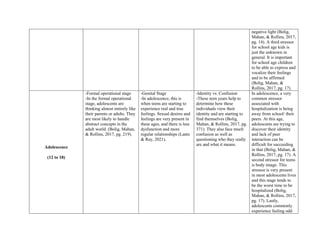
Adolescence
(12 to 18)
-Formal operational stage
-In the formal operational
stage, adolescents are
thinking almost entirely like
their parents or adults. They
are most likely to handle
abstract concepts in the
adult world. (Bolig, Mahan,
& Rollins, 2017, pg. 219).
-Genital Stage
-In adolescence, this is
when teens are starting to
experience real and true
feelings. Sexual desires and
feelings are very present in
these ages, and there is less
dysfunction and more
regular relationships (Lantz
& Ray, 2021).
-Identity vs. Confusion
-These teen years help to
determine how these
individuals view their
identity and are starting to
find themselves (Bolig,
Mahan, & Rollins, 2017, pg.
371). They also face much
confusion as well as
questioning who they really
are and what it means.
In adolescence, a very
common stressor
associated with
hospitalization is being
away from school/ their
peers. At this age,
adolescents are trying to
discover their identity
and lack of peer
interaction can be
difficult for succeeding
in that (Bolig, Mahan, &
Rollins, 2017, pg. 17). A
second stressor for teens
is body image. This
stressor is very present
in most adolescents lives
and this stage tends to
be the worst time to be
hospitalized (Bolig,
Mahan, & Rollins, 2017,
pg. 17). Lastly,
adolescents commonly
experience feeling odd
or not being normal.
This stems from the
different way they live
their lives. Other kids
their age are
experiencing
relationships,
friendships, school, and
more whereas
hospitalized teens are
feeling lonely and like
the odd man out (Bolig,
Mahan, & Rollins, 2017,
pg. 17).
References for website:
Lantz SE, Ray S. Freud Developmental Theory. [Updated 2021 Dec 11]. In: StatPearls [Internet]. Treasure Island (FL):
StatPearls Publishing; 2022 Jan-. Available from: https://www.ncbi.nlm.nih.gov/books/NBK557526/

Developmental Considerations Chart 4810.docx

  • 1.
    Developmental Considerations Chart AgeGroup Cognitive Development (Piaget, 1936) Psychosexual (Freud, 1905) Psychosocial Development Theory (Erikson, 1959) Hospitalization Stressors Infancy (0 to 1) -Sensorimotor stage -In infancy, the sensorimotor stage is a time where they have the “ability to respond to feelings associated with separation from those who love him or her” (Bolig, Mahan, & Rollins, 2017, pg. 215). This means that infants are starting to recognize their surroundings and people around them and are able to have feelings about when they are separated. -Oral Stage -This stage occurs in infants and explains how ages zero to twelve months are finding pleasure orally. Specifically, this can come from the mouth and how infants are beginning to experience gratification (Lantz & Ray, 2021). -Trust vs. Mistrust -Each year or few years of life, individual people experience different conflicts in hospitalization (Bolig, Mahan, & Rollins, 2017, pg. 369). The first stage is Trust vs. Mistrust, and this is very present as infants are longing to build reliable relationships and trust. Trust vs, mistrust is ultimately determined by the caregiver of the infant and how they react. In infancy, the most common stressor present is separation anxiety. There are three different stages associated with separation anxiety in infants. They are protest, despair, and detachment. These are all repercussions of separation anxiety in infants (Bolig, Mahan, & Rollins, 2017, pg. 10). Another stressor among infants is over stimulation. Too much stimulation such as bright lights, noise, and more can negatively impact infants, and it is “important to reduce potentially harmful stimuli” (Bolig, Mahan, & Rollins, 2017, pg. 7). The third stressor common in infants is sleeping and feeding difficulties. Infants can experience orneriness if there is lack of routine and schedule in the feeding area (Bolig,
  • 2.
    Mahan, & Rollins,2017, pg. 6). Toddlerhood (1 to 3) -Sensorimotor stage -The sensorimotor stage continued in toddlerhood is a time where surroundings start to make more sense than in infancy. Although surroundings and things start to make more sense, there is still a big lack of processing and understanding (Bolig, Mahan, & Rollins, 2017, pg. 18). -Anal Stage -This stage impacts ages one to three and the function of the anal area and how it works. This age is when infants begin to have more control over their anal and bladder functions. (Lantz & Ray, 2021). -Autonomy vs. Shame and Doubt -This stage focuses on toddlers and their ability to know right from wrong (Bolig, Mahan, & Rollins, 2017, pg. 369). Toddlers are forming their own views and opinions with the help and guidance of their caregivers. A common stressor that occurs in toddlerhood is them viewing the hospital as a type of punishment. These children are just now experiencing pain, and it may be confusing as to why their parents won’t take this pain away, so they ultimately view it as being punished (Bolig, Mahan, & Rollins, 2017, pg. 11). Another stressor for toddlers is unpredictability and change in routine. This can be harmful to toddlers because they will start to regress if their everyday routines change too much (Bolig, Mahan, & Rollins, 2017,
  • 3.
    pg. 11). Lastly,a stressor for toddlers is anxiety stemmed from procedures and tests. This can lead to them resisting these procedures because it brings them stress and anxiety (Bolig, Mahan, & Rollins, 2017, pg. 11). Preschool (3 to 5) -Preoperational Stage -The preoperational stage occurs in ages three to five and is a time where kids start to process but not necessarily in a beneficial way. Preschoolers “in this stage perceive death as temporary and reversible, somewhat like the concept of sleep” (Bolig, Mahan, & Rollins, 2017, pg. 219). This type of processing is the most common in preschoolers because their brains are not yet developed to think like this. -Phallic Stage -The Phallic Stage occurs in preschool age children, and it is when pleasure becomes associated with genitalia. Kids of this age will be experiencing sexual development at its peak state (Lantz & Ray, 2021). -Initiative vs. Guilt -In this stage, “Preschoolers require self-assertion and self-discipline, consistent expectations, and appropriate discipline” (Bolig, Mahan, & Rollins, 2017, pg. 370). They can recognize when they have done wrong and feel guilt from that occurrence. Throughout the preschool age, one main hospital stressor is magical thinking. Along with toddlers, preschoolers also tend to assume that being hospitalized is a type of punishment (Bolig, Mahan, & Rollins, 2017, pg. 12). Another stressor for preschoolers is that they are vulnerable to threats of bodily injury. This often leads to fear in their minds because they feel as if their own bodies will be mutilated (Bolig, Mahan, & Rollins, 2017, pg. 13). A third stressor for preschoolers is feeling a sense of not having
  • 4.
    control. This feeling stemsfrom the fact that children this age like to be able to make their own rules and do what they want. Overall, it can cause these children to feel held back (Bolig, Mahan, & Rollins, 2017, pg. 13). School Age (6 to 12) -Concrete Operational Stage -Unlike preschoolers, school age children start to think more logically (Bolig, Mahan, & Rollins, 2017, pg. 219). Grief is also more present in this stage because kids start to mirror how their parents react as well as how they feel. (Bolig, Mahan, & Rollins, 2017, pg. 219). -Latency Stage -During the Latency stage, children are now focusing more on relationships with others. These children from ages six to twelve are now acting on impulses and experiencing dysfunction (Lantz & Ray, 2021). -Industry vs. Inferiority -As these children start school, there is a sense of problem solving that occurs in their brains that continues to develop for the next 6 years as they transition to adolescence. During the ages six to twelve, “They are growing their understanding of life and death” (Bolig, Mahan, & Rollins, 2017, pg. 271). For children ages six to twelve, this is when they start to really understand what it means to be in the hospital and other procedures. A common stressor for school age children is being away from family. This stressor is common because children this age need more emotional support because they are understanding the seriousness of their condition (Bolig, Mahan, & Rollins, 2017, pg. 14). Another stressor for school age students is pain. This age is when pain becomes more and more aware and a time they will remember in a
  • 5.
    negative light (Bolig, Mahan,& Rollins, 2017, pg. 14). A third stressor for school age kids is just the unknown in general. It is important for school age children to be able to express and vocalize their feelings and to be affirmed (Bolig, Mahan, & Rollins, 2017, pg. 17). Adolescence (12 to 18) -Formal operational stage -In the formal operational stage, adolescents are thinking almost entirely like their parents or adults. They are most likely to handle abstract concepts in the adult world. (Bolig, Mahan, & Rollins, 2017, pg. 219). -Genital Stage -In adolescence, this is when teens are starting to experience real and true feelings. Sexual desires and feelings are very present in these ages, and there is less dysfunction and more regular relationships (Lantz & Ray, 2021). -Identity vs. Confusion -These teen years help to determine how these individuals view their identity and are starting to find themselves (Bolig, Mahan, & Rollins, 2017, pg. 371). They also face much confusion as well as questioning who they really are and what it means. In adolescence, a very common stressor associated with hospitalization is being away from school/ their peers. At this age, adolescents are trying to discover their identity and lack of peer interaction can be difficult for succeeding in that (Bolig, Mahan, & Rollins, 2017, pg. 17). A second stressor for teens is body image. This stressor is very present in most adolescents lives and this stage tends to be the worst time to be hospitalized (Bolig, Mahan, & Rollins, 2017, pg. 17). Lastly, adolescents commonly experience feeling odd
  • 6.
    or not beingnormal. This stems from the different way they live their lives. Other kids their age are experiencing relationships, friendships, school, and more whereas hospitalized teens are feeling lonely and like the odd man out (Bolig, Mahan, & Rollins, 2017, pg. 17). References for website: Lantz SE, Ray S. Freud Developmental Theory. [Updated 2021 Dec 11]. In: StatPearls [Internet]. Treasure Island (FL): StatPearls Publishing; 2022 Jan-. Available from: https://www.ncbi.nlm.nih.gov/books/NBK557526/