DEVELOPMENT OF TONGUE
 At the end of the lecture, the students
should be able to describe in detail the-
,Development of tongue, Nerve Supply of tongue,
Formation of frenum and papillae
,Development of musculature of tongue, Enlist
clinical Considerations.
Purpose Statement
Learning Objectives
 At the end of the lecture the student should be able to
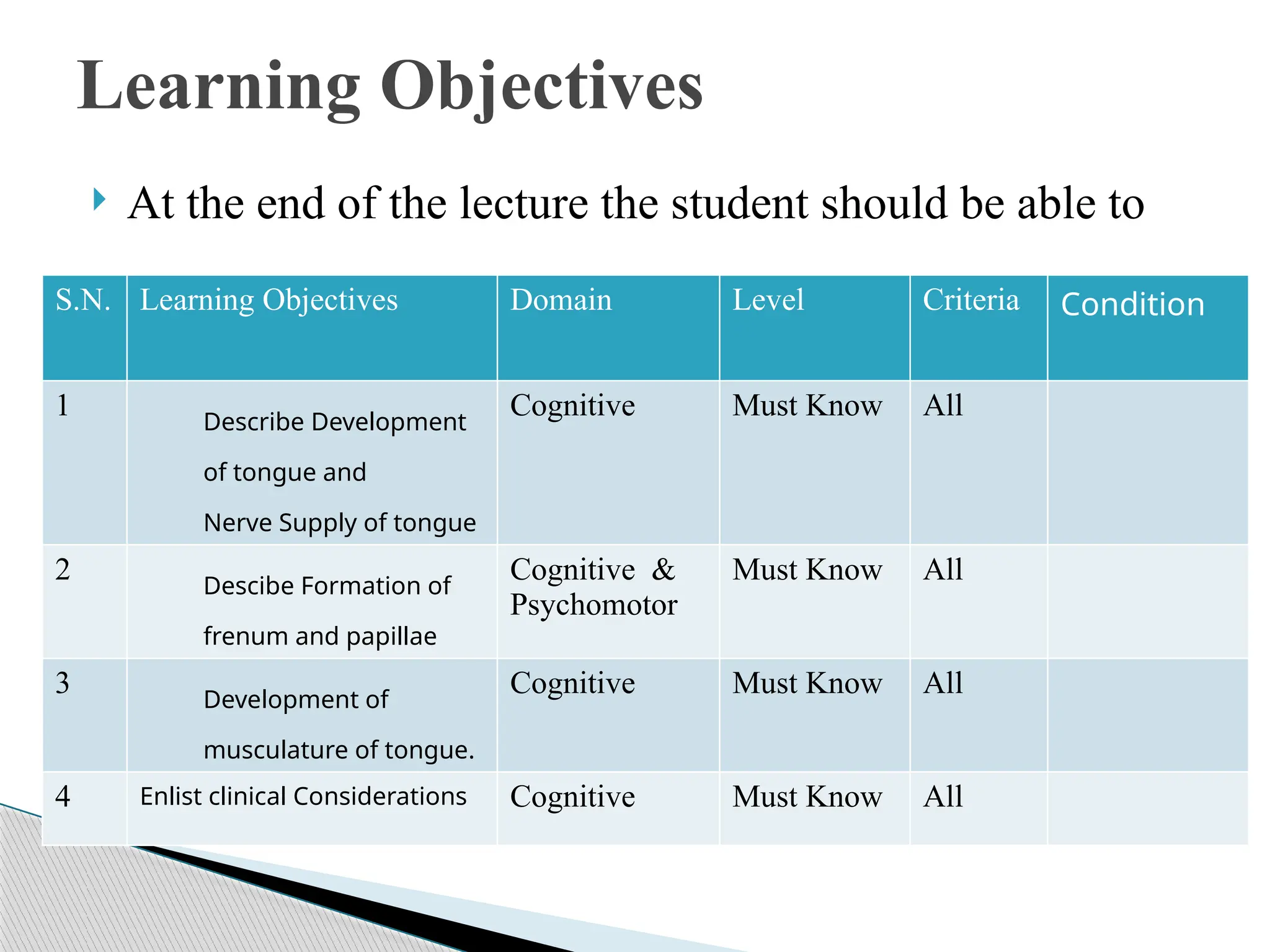
S.N. Learning Objectives Domain Level Criteria Condition
1 Describe Development
of tongue and
Nerve Supply of tongue
Cognitive Must Know All
2 Descibe Formation of
frenum and papillae
Cognitive &
Psychomotor
Must Know All
3 Development of
musculature of tongue.
Cognitive Must Know All
4 Enlist clinical Considerations Cognitive Must Know All
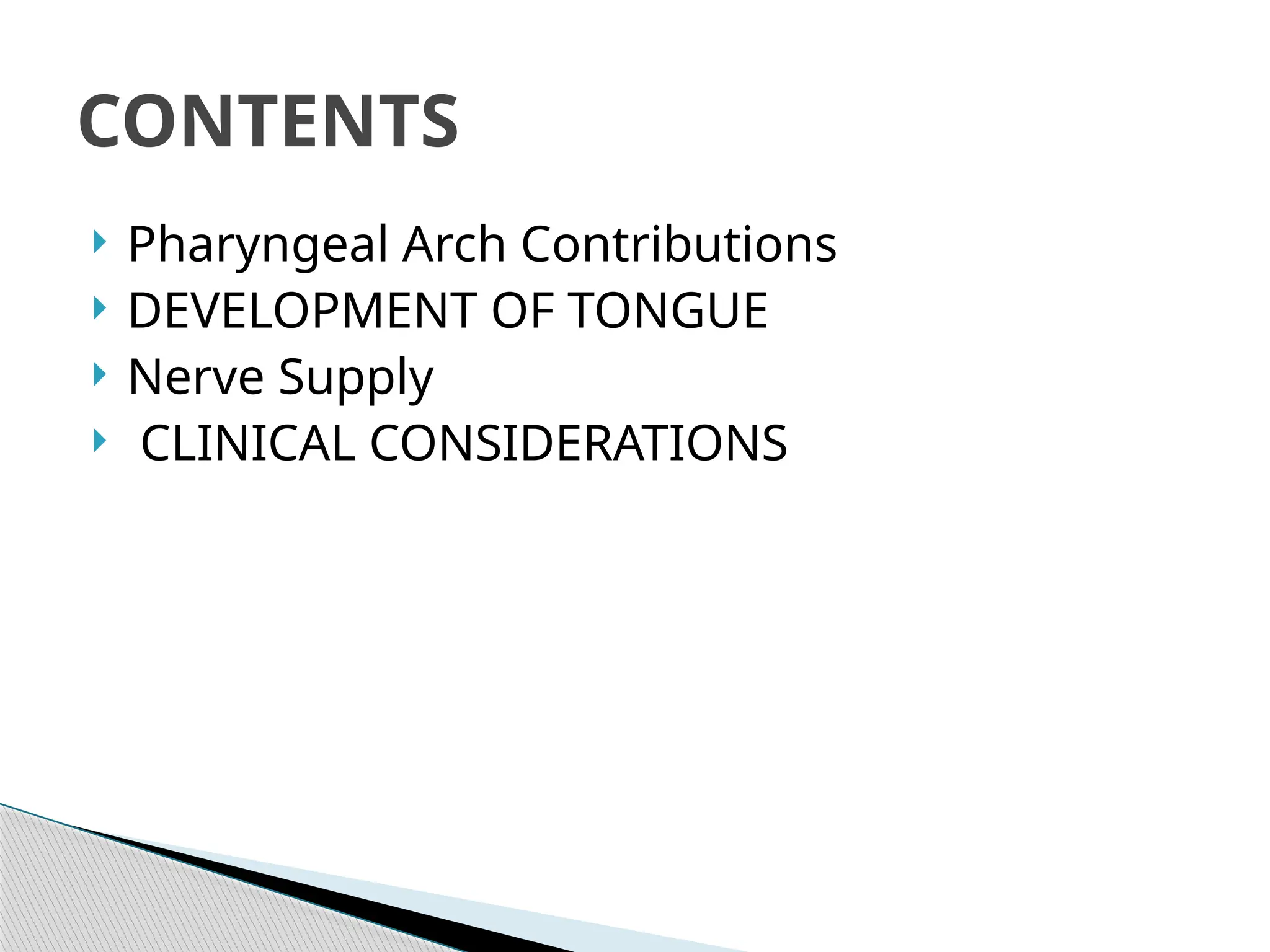
 Pharyngeal Arch Contributions
 DEVELOPMENT OF TONGUE
 Nerve Supply
 CLINICAL CONSIDERATIONS
CONTENTS
INTRODUCTION
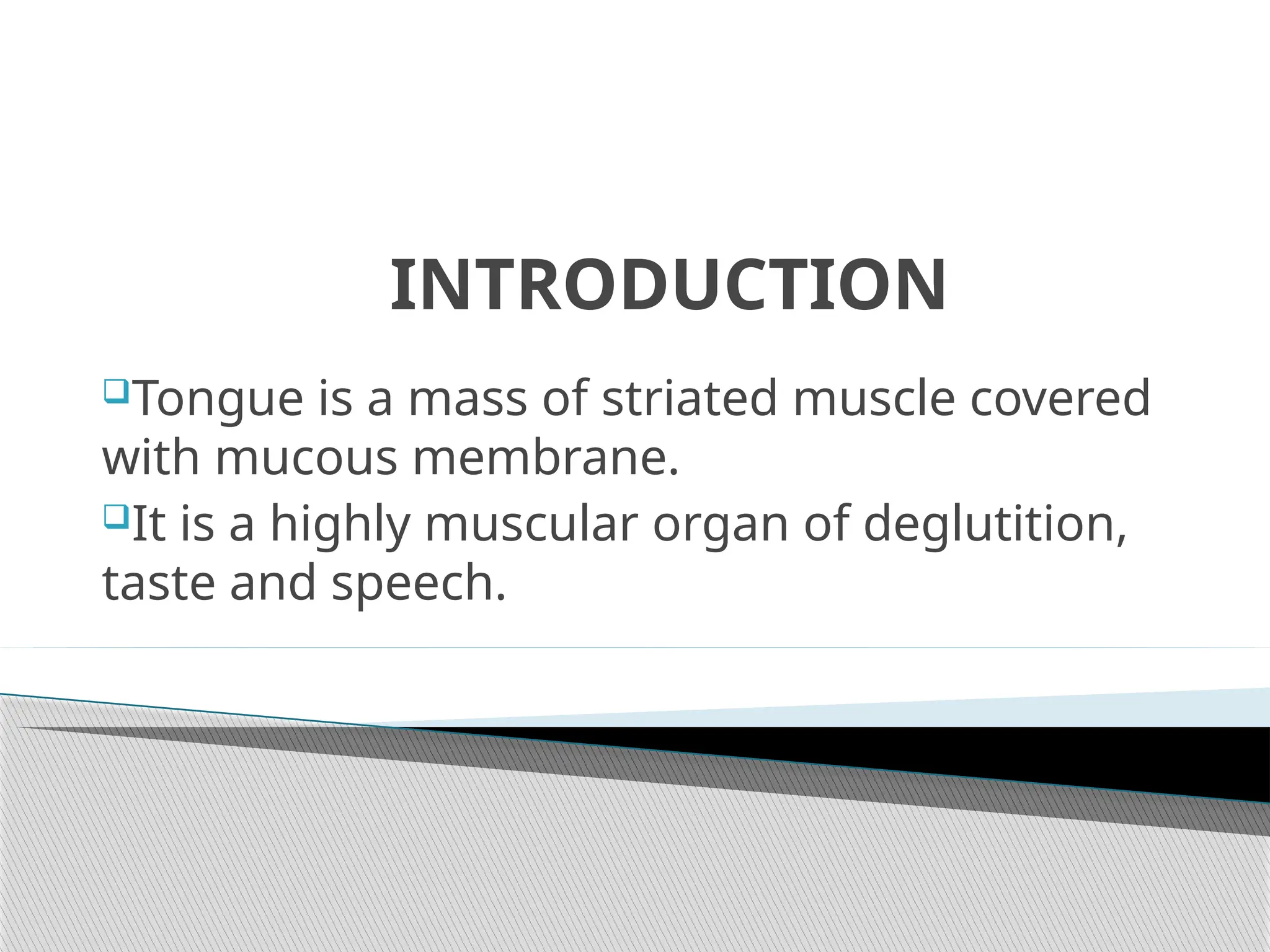
Tongue is a mass of striated muscle covered
with mucous membrane.
It is a highly muscular organ of deglutition,
taste and speech.
Overview Development of the Tongue
 The tongue has contributions from all
pharyngeal arches which changes with time.
 The tongue initially begins as swelling rostral
to foramen cecum, the median tongue bud.
Pharyngeal Arch Contributions
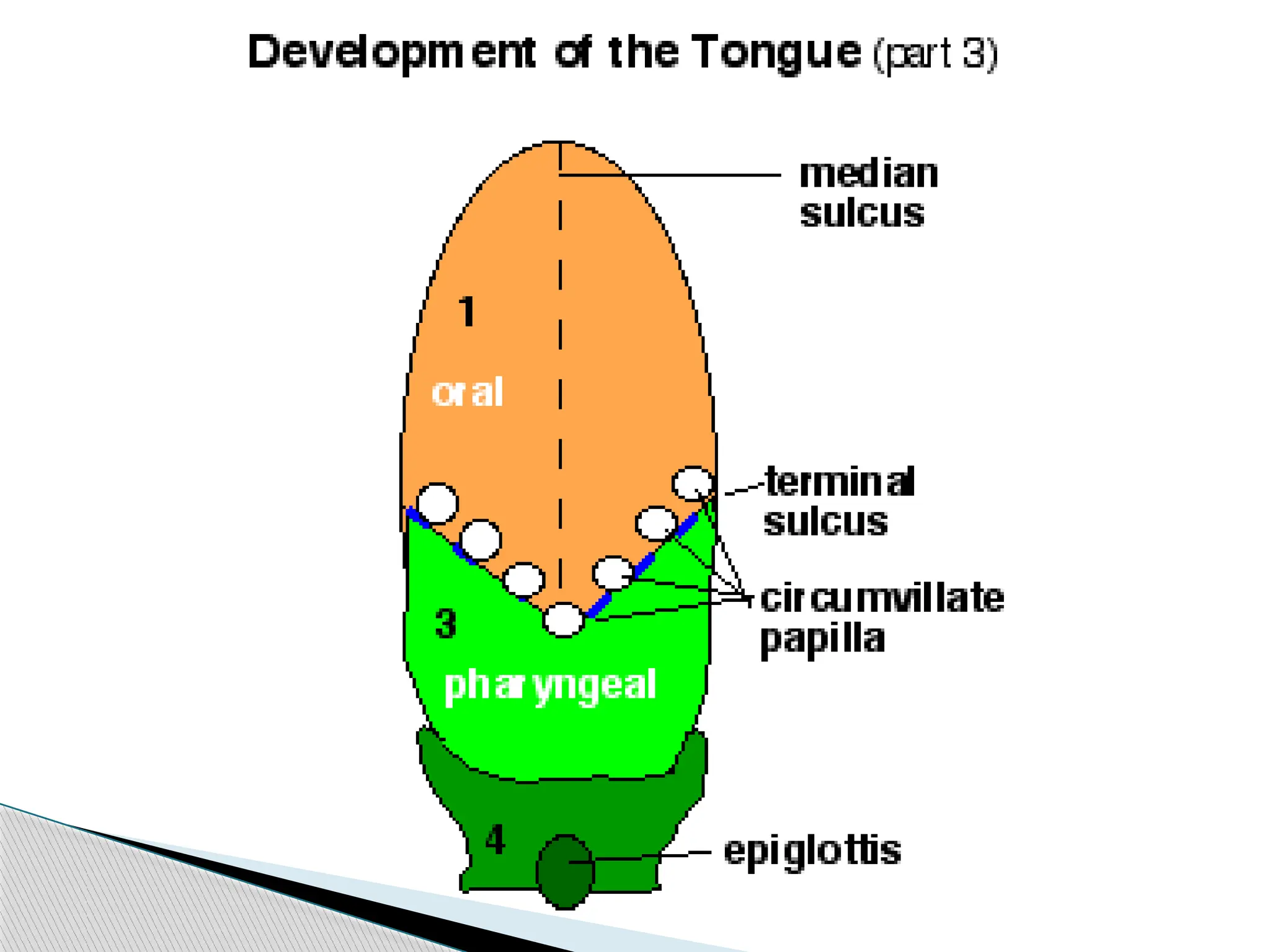
Arch 1 - oral part of tongue (anterior 2/3)
Arch 2 - initial contribution to surface is lost
Arch 3 - pharyngeal part of tongue
(posterior 1/3)
Arch 4 - epiglottis and adjacent regions
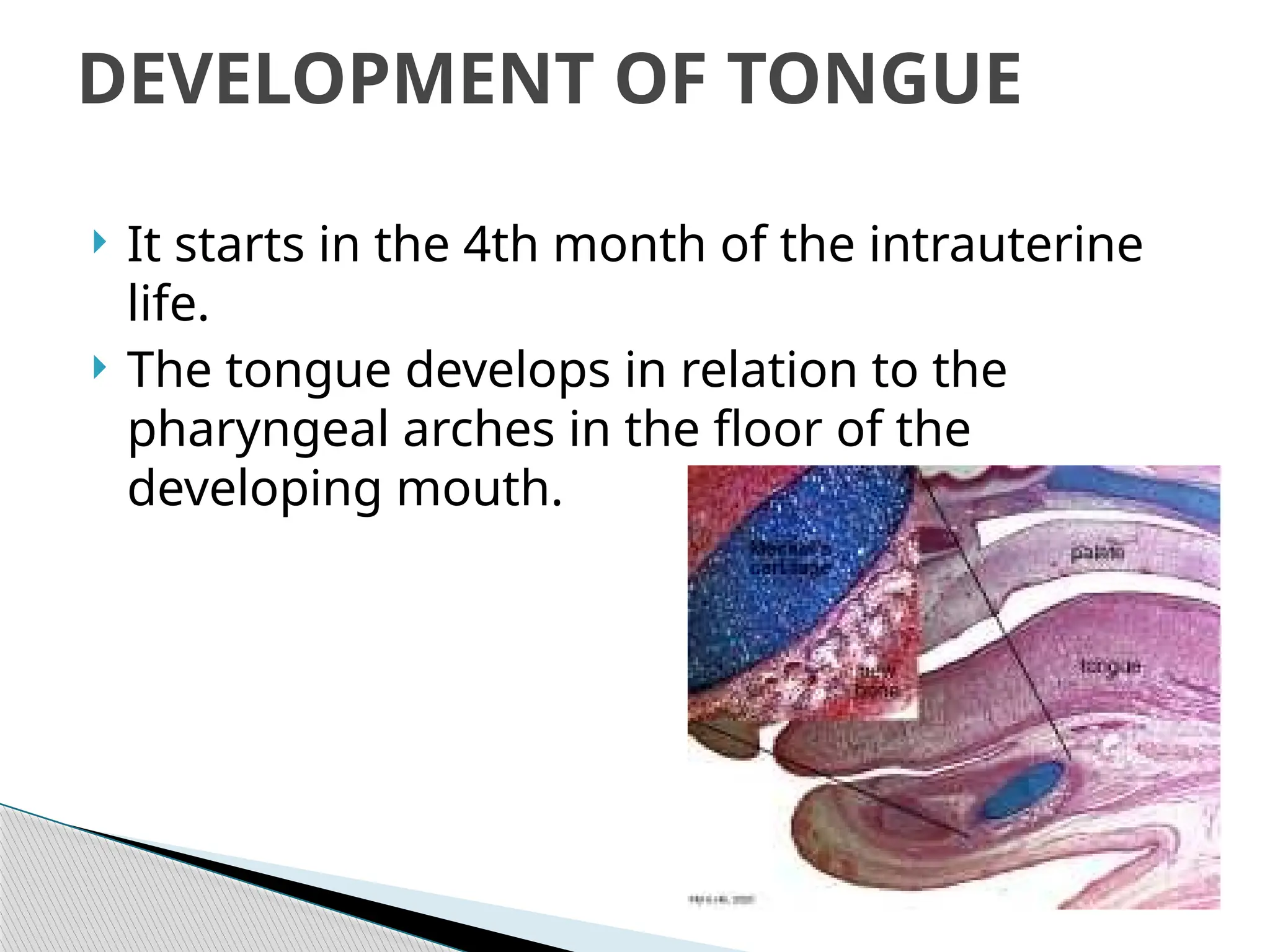
 It starts in the 4th month of the intrauterine
life.
 The tongue develops in relation to the
pharyngeal arches in the floor of the
developing mouth.
DEVELOPMENT OF TONGUE
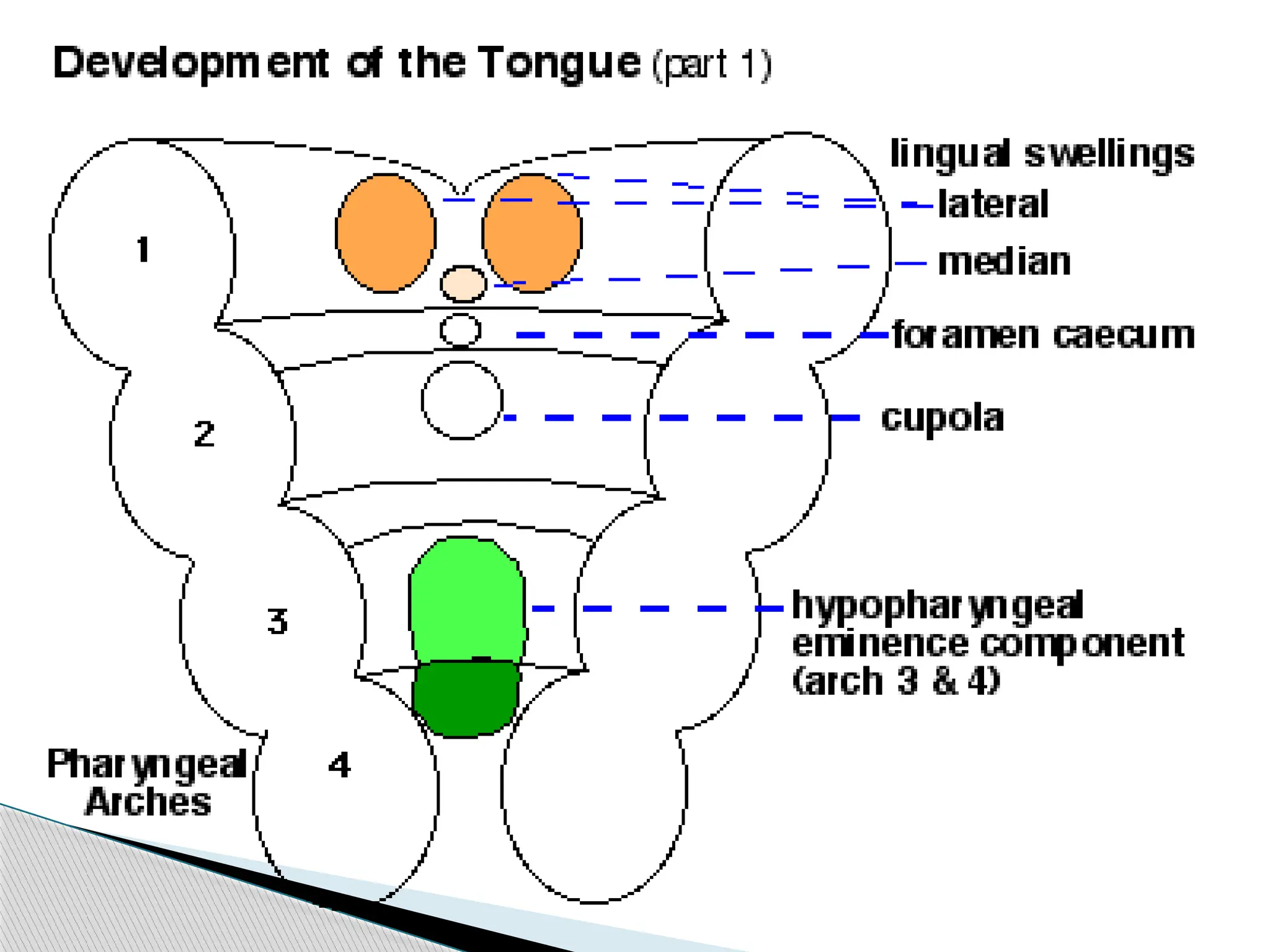
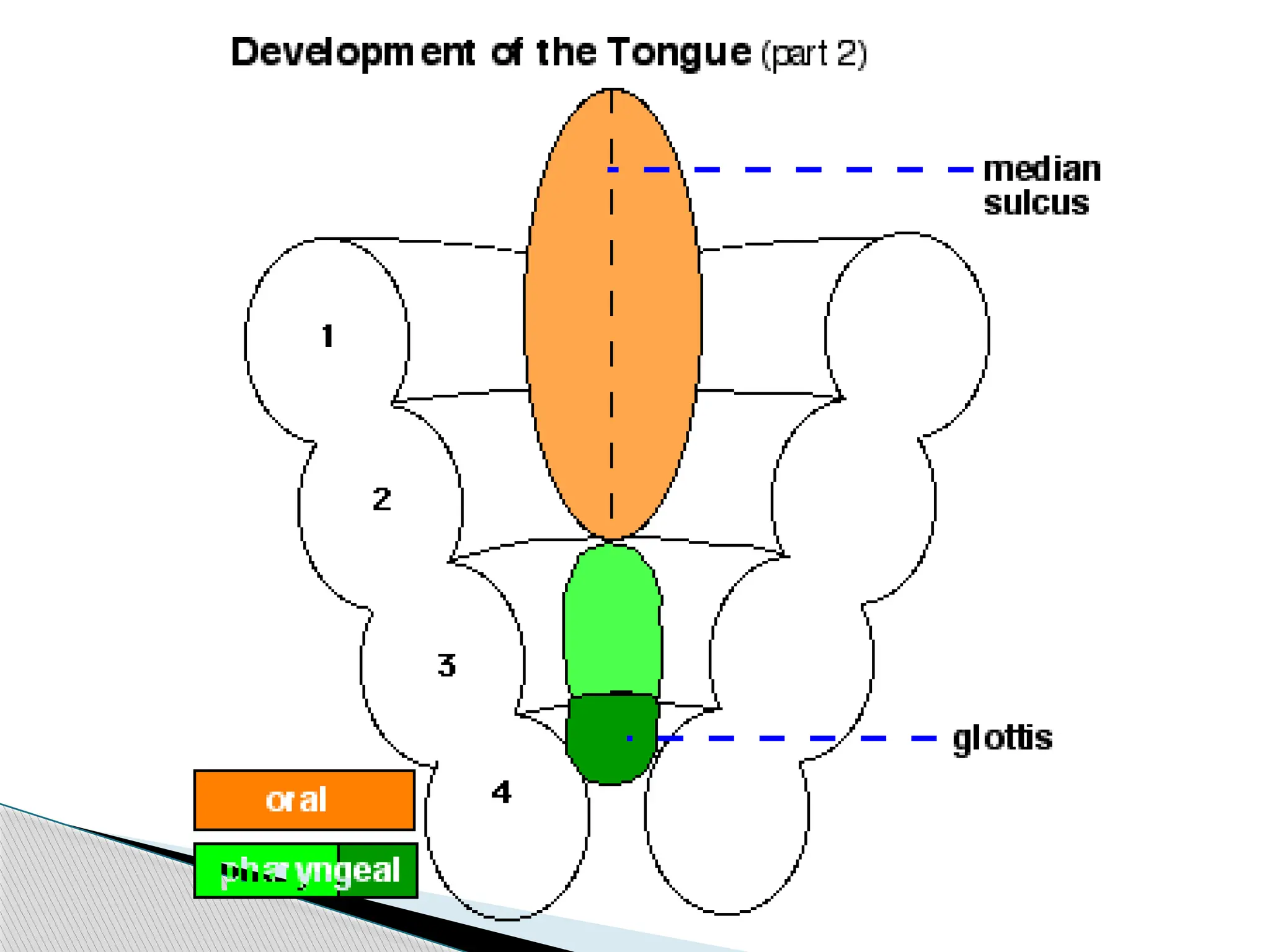
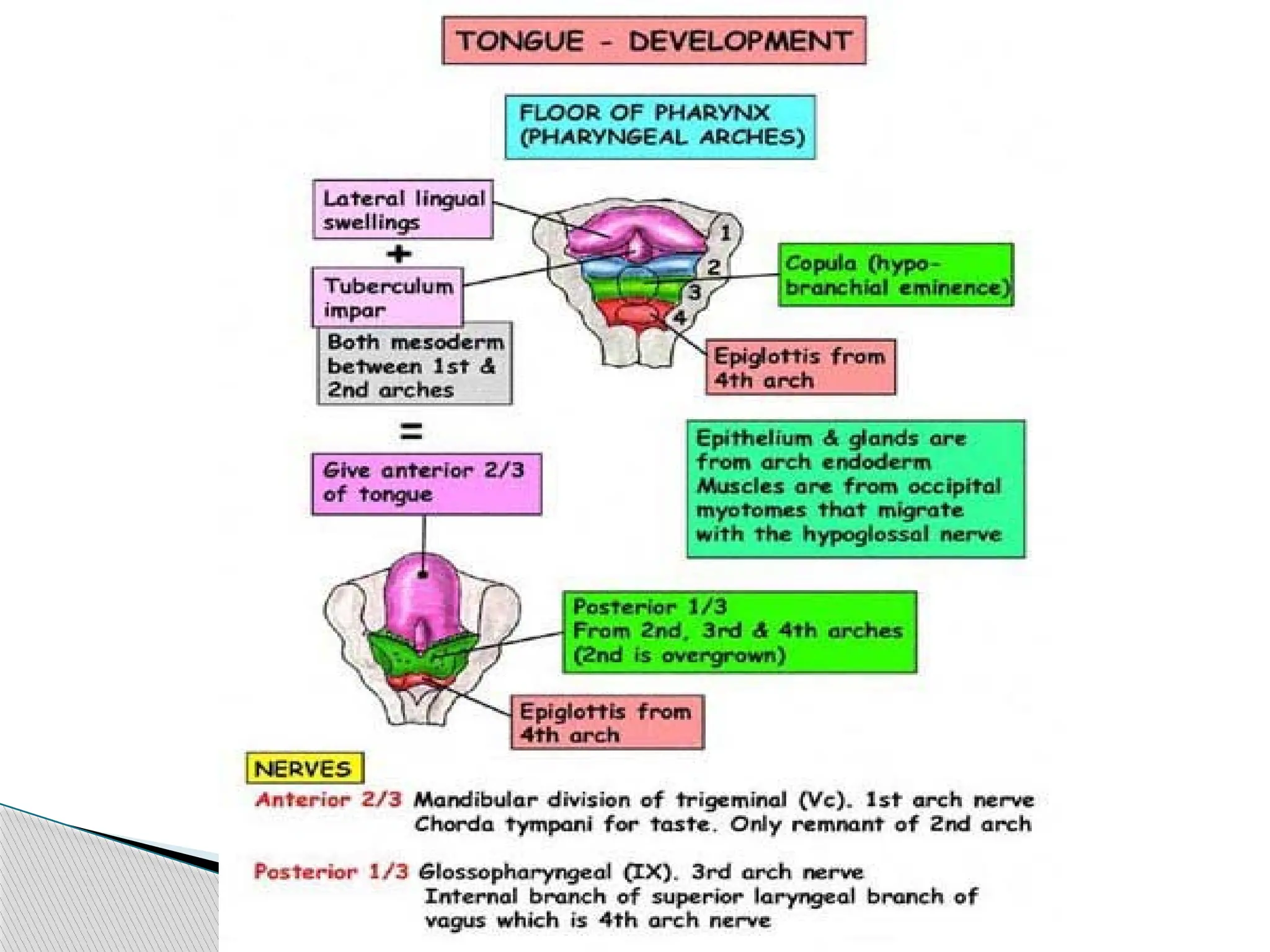
 The medial most part of the mandibular
arches proliferate to form 2 lingual swelling
(derived from the anterior end of each first
pharyngeal arch )
 The lingual swelling are partially separated
from each other by another swelling that
appears in midline , at about 4th
wk
 The median swelling is called the tuberculum
impar .
 Immediately behind the tuberculum impar , the
epithelium proliferates to form a down growth
( thyroglossal duct) from which thyroid gland
develops.
 The site of this downgrowth is subsequently
marked by a depression called the foramen
caecum .

 The lateral swelling now enlarge,grow
medially and fuse with each other and the
tuberculum impar .
 The lingual swelling thus form the anterior
2/3 or body of the tongue.
 Another midline swelling is seen in relation to
the medial ends of the 2nd
, 3rd
, and 4th
arches.
 This swelling is called the hypobrachial
eminence.
 The eminence soon shows a subdivision into
a cranial part related to the 2nd
and 3rd
arches
(called the copula) and a caudal part related
to the 4th
arch.
 The caudal part forms the epiglottis.
 The anterior 2/3 of the tongue is thus
derived from the mandibular arch .
 According to some the tuberculum impar
does not make any significant contribution
to the tongue.
 The posterior 1/3 of the tongue is thus derived
from the cranial part of the hypobrachial
eminence (copula).
 In this situation , the 2nd
arch mesoderm gets
buried below the surface .
 The 3rd
arch mesoderm grows over it to fuse
with the mesoderm of the 1st
arch.
 The posterior 1/3 of the tongue is thus
formed by 3rd
arch mesoderm .
 The posterior most part of the tongue is
derived from the 4th
arch.
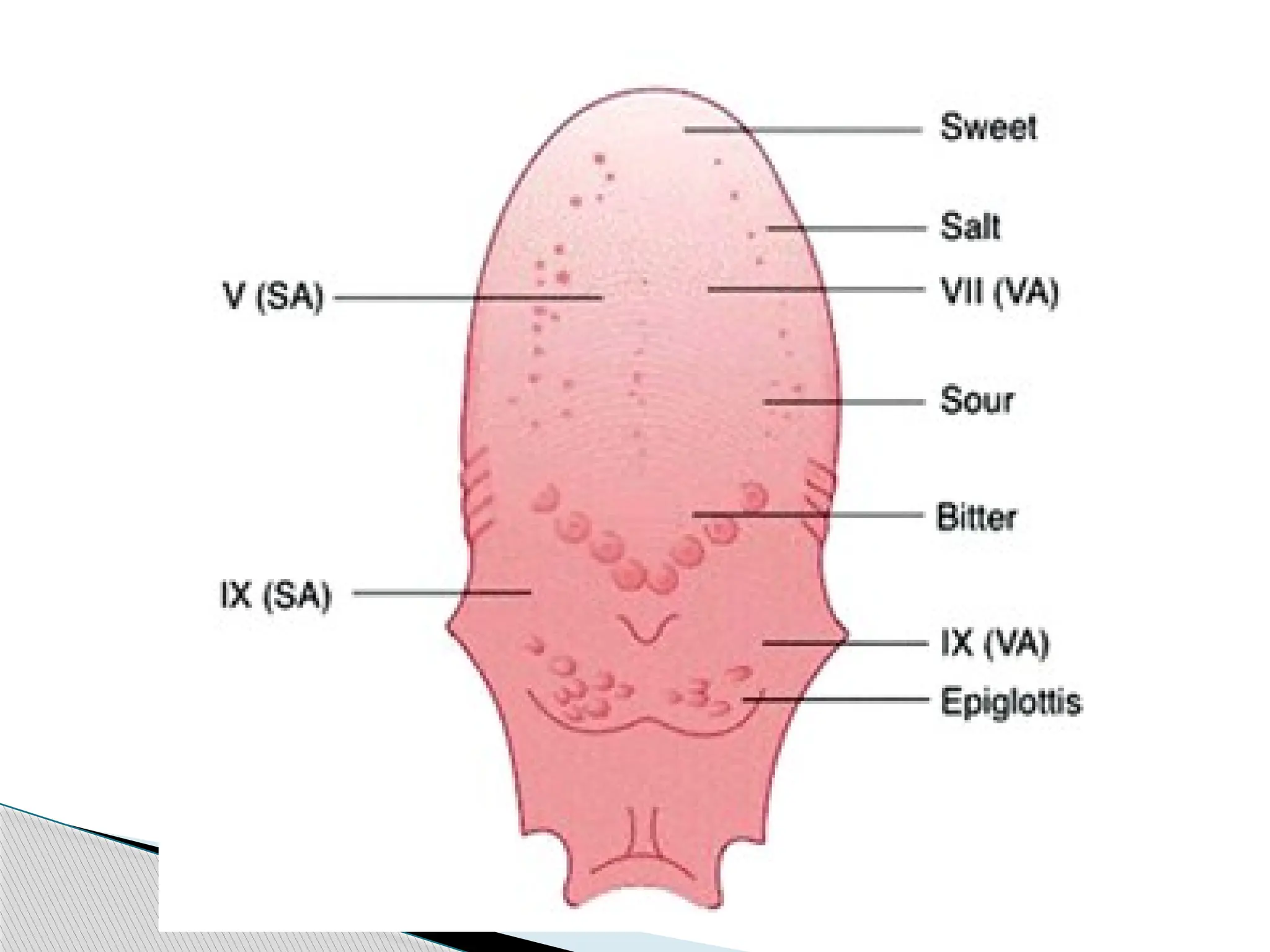
 Anterior 2/3 of the tongue -lingual branch of
the mandibular nerve, which is the post
trematic nerve of the 1st
arch and by the chorda
tympani which is the pretrematic nerve .
 Posterior 1/3 of the tongue -superior laryngeal
nerve, which is the nerve of the 4th
arch.
Nerve Supply
 The sulcus terminalis represents the interval
between the lingual swellings of the 1st
pharyngeal arches & the anterior ends of the
3rd
pharyngeal arches.
 Around the edge of the anterior 2/3 rd of the
tongue , the ectodermal cell proliferate & grow
inferiorly into the underlying mesenchyme.
Formation of frenum and papillae
 Later, these cells degenerate so that this part
of the tongue becomes free. Some of the
entodermal cells remain in the midline and
help form the frenum of the tongue.
 It is derived from the occipital myotomes
and is thus supplied by the hypoglossal
nerve , which is the nerve of these
myotomes.
Development of musculature of tongue
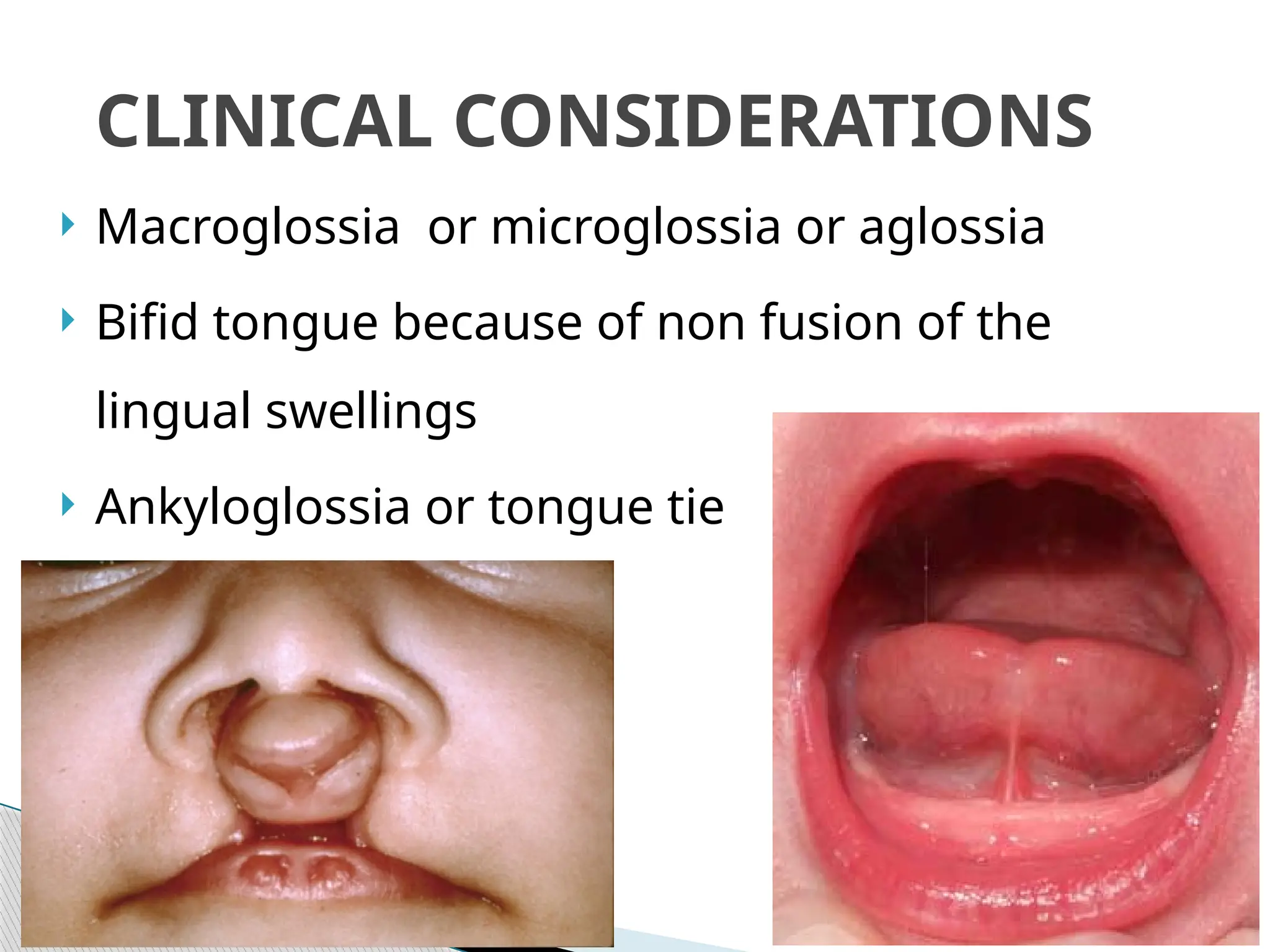
 Macroglossia or microglossia or aglossia
 Bifid tongue because of non fusion of the
lingual swellings
 Ankyloglossia or tongue tie
CLINICAL CONSIDERATIONS
Summary
 Development of tongue
 Nerve Supply of tongue
 Formation of frenum and papillae
 Development of musculature of tongue
 Clinical Considerations
BIBLIOGRAPHY
 Color Atlas And Text Book Of Oral Anatomy,
Histology Berkovitz, B. 1ST
edition.
 Oral Development and Histology Avery, j. K.1st
edition.
 Oral Histology : Development, Structure and Function
Tencate, 4th
edition.
 Dental Embryology, Histology & Anatomy. Marry
Bath- Balogh Inergaret. 2nd
edition.
THANK YOU

Development-of-Tongue in Systemic Embryology

  • 1.
  • 2.
     At theend of the lecture, the students should be able to describe in detail the- ,Development of tongue, Nerve Supply of tongue, Formation of frenum and papillae ,Development of musculature of tongue, Enlist clinical Considerations. Purpose Statement
  • 3.
    Learning Objectives  Atthe end of the lecture the student should be able to S.N. Learning Objectives Domain Level Criteria Condition 1 Describe Development of tongue and Nerve Supply of tongue Cognitive Must Know All 2 Descibe Formation of frenum and papillae Cognitive & Psychomotor Must Know All 3 Development of musculature of tongue. Cognitive Must Know All 4 Enlist clinical Considerations Cognitive Must Know All
  • 4.
     Pharyngeal ArchContributions  DEVELOPMENT OF TONGUE  Nerve Supply  CLINICAL CONSIDERATIONS CONTENTS
  • 5.
    INTRODUCTION Tongue is amass of striated muscle covered with mucous membrane. It is a highly muscular organ of deglutition, taste and speech.
  • 7.
    Overview Development ofthe Tongue  The tongue has contributions from all pharyngeal arches which changes with time.  The tongue initially begins as swelling rostral to foramen cecum, the median tongue bud.
  • 8.
    Pharyngeal Arch Contributions Arch1 - oral part of tongue (anterior 2/3) Arch 2 - initial contribution to surface is lost Arch 3 - pharyngeal part of tongue (posterior 1/3) Arch 4 - epiglottis and adjacent regions
  • 9.
     It startsin the 4th month of the intrauterine life.  The tongue develops in relation to the pharyngeal arches in the floor of the developing mouth. DEVELOPMENT OF TONGUE
  • 11.
     The medialmost part of the mandibular arches proliferate to form 2 lingual swelling (derived from the anterior end of each first pharyngeal arch )
  • 12.
     The lingualswelling are partially separated from each other by another swelling that appears in midline , at about 4th wk  The median swelling is called the tuberculum impar .
  • 13.
     Immediately behindthe tuberculum impar , the epithelium proliferates to form a down growth ( thyroglossal duct) from which thyroid gland develops.  The site of this downgrowth is subsequently marked by a depression called the foramen caecum . 
  • 14.
     The lateralswelling now enlarge,grow medially and fuse with each other and the tuberculum impar .  The lingual swelling thus form the anterior 2/3 or body of the tongue.
  • 15.
     Another midlineswelling is seen in relation to the medial ends of the 2nd , 3rd , and 4th arches.  This swelling is called the hypobrachial eminence.
  • 16.
     The eminencesoon shows a subdivision into a cranial part related to the 2nd and 3rd arches (called the copula) and a caudal part related to the 4th arch.  The caudal part forms the epiglottis.
  • 17.
     The anterior2/3 of the tongue is thus derived from the mandibular arch .  According to some the tuberculum impar does not make any significant contribution to the tongue.
  • 18.
     The posterior1/3 of the tongue is thus derived from the cranial part of the hypobrachial eminence (copula).  In this situation , the 2nd arch mesoderm gets buried below the surface .
  • 19.
     The 3rd archmesoderm grows over it to fuse with the mesoderm of the 1st arch.  The posterior 1/3 of the tongue is thus formed by 3rd arch mesoderm .  The posterior most part of the tongue is derived from the 4th arch.
  • 21.
     Anterior 2/3of the tongue -lingual branch of the mandibular nerve, which is the post trematic nerve of the 1st arch and by the chorda tympani which is the pretrematic nerve .  Posterior 1/3 of the tongue -superior laryngeal nerve, which is the nerve of the 4th arch. Nerve Supply
  • 23.
     The sulcusterminalis represents the interval between the lingual swellings of the 1st pharyngeal arches & the anterior ends of the 3rd pharyngeal arches.  Around the edge of the anterior 2/3 rd of the tongue , the ectodermal cell proliferate & grow inferiorly into the underlying mesenchyme. Formation of frenum and papillae
  • 24.
     Later, thesecells degenerate so that this part of the tongue becomes free. Some of the entodermal cells remain in the midline and help form the frenum of the tongue.
  • 26.
     It isderived from the occipital myotomes and is thus supplied by the hypoglossal nerve , which is the nerve of these myotomes. Development of musculature of tongue
  • 27.
     Macroglossia ormicroglossia or aglossia  Bifid tongue because of non fusion of the lingual swellings  Ankyloglossia or tongue tie CLINICAL CONSIDERATIONS
  • 29.
    Summary  Development oftongue  Nerve Supply of tongue  Formation of frenum and papillae  Development of musculature of tongue  Clinical Considerations
  • 30.
    BIBLIOGRAPHY  Color AtlasAnd Text Book Of Oral Anatomy, Histology Berkovitz, B. 1ST edition.  Oral Development and Histology Avery, j. K.1st edition.  Oral Histology : Development, Structure and Function Tencate, 4th edition.  Dental Embryology, Histology & Anatomy. Marry Bath- Balogh Inergaret. 2nd edition.
  • 31.