DEVELOPMENT OF
RUMEN
Submitted by,
Neha H
MVHK2305
INTRODUCTION
 At birth, the rumen is not completely developed, and significant physciological
and metabolic changes in rumen have to occur first before the calves can digest
solid feed
 The specific changes include the development of the rumen organ, rumen
epithelium and the establishment of rumen microbiota.
 Most critical period is the first 2 to 3 weeks of life
 Calves are challenged by a series of stress factors after they are born
a)Change in living environment
b)Poor immunity
c)Incomplete development of digestive system
d)Change in environment
e)Changes in the nutrition
f)High mortality and morbidity due to diarrhea, respiratory diseases and
slow weight gain
 Digestive tract development in calves is unique as it undergoes physiologically
transitions from a pseudo-monogastric animal to a functioning ruminant.
 The development of rumen in calves can directly affect the intake of feed,
nutrient digestibility and overall growth of the animal later in life
 Even minor changes in the early feeding regime and nutrition can drastically
influence rumen development, resulting in long-term effects on growth, health,
and milk yields in adult cattle.
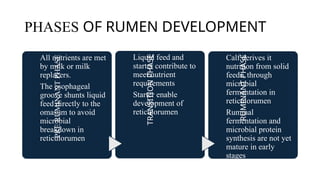
PHASES OF RUMEN DEVELOPMENT
PRE
RUMINANT
PHASE
All nutrients are met
by milk or milk
replacers.
The esophageal
groove shunts liquid
feed directly to the
omasum to avoid
microbial
breakdown in
reticulorumen
TRANSITION
PHASE
Liquid feed and
starter contribute to
meet nutrient
requirements
Starter enable
development of
reticulorumen
RUMINANT
PHASE
Calf derives it
nutrition from solid
feeds, through
microbial
fermentation in
reticulorumen
Ruminal
fermentation and
microbial protein
synthesis are not yet
mature in early
stages
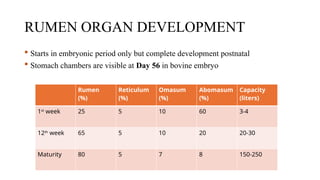
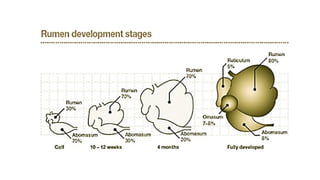
RUMEN ORGAN DEVELOPMENT
 Starts in embryonic period only but complete development postnatal
 Stomach chambers are visible at Day 56 in bovine embryo
Rumen
(%)
Reticulum
(%)
Omasum
(%)
Abomasum
(%)
Capacity
(liters)
1st
week 25 5 10 60 3-4
12th
week 65 5 10 20 20-30
Maturity 80 5 7 8 150-250
ESOPHAGEAL GROOVE
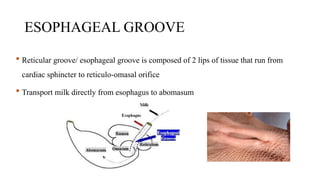
 Reticular groove/ esophageal groove is composed of 2 lips of tissue that run from
cardiac sphincter to reticulo-omasal orifice
 Transport milk directly from esophagus to abomasum
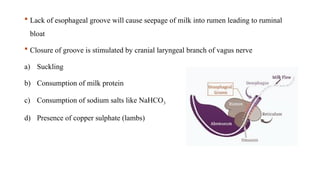
 Lack of esophageal groove will cause seepage of milk into rumen leading to ruminal
bloat
 Closure of groove is stimulated by cranial laryngeal branch of vagus nerve
a) Suckling
b) Consumption of milk protein
c) Consumption of sodium salts like NaHCO3
d) Presence of copper sulphate (lambs)
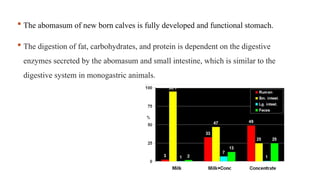
 The abomasum of new born calves is fully developed and functional stomach.
 The digestion of fat, carbohydrates, and protein is dependent on the digestive
enzymes secreted by the abomasum and small intestine, which is similar to the
digestive system in monogastric animals.
NUTRITIONAL IMPACT OF RUMEN BYPASS
 More efficient use of energy and protein
 No methane loss, heat of fermentation loss
 Unable to utilize non protein nitrogen
 Require Vitamin B supplementation ( no microbial synthesis)
 NEm value adopted by NRC (2001) was 0.086 Mcal/kg BW0.75
 Allowance for activity, typically 10 percent of NEm.
ENZYMES IN DIGESTION
 Digestion of carbohydrates
a) Intestinal lactase : Activity high at birth , weaning decreases activity (substrate no longer
present)
b) Pancreatic amylase : Activity low at birth , increases by 8 weeks of age
c) Intestinal maltase : low at birth , increases by 8-14 weeks of age
 Digestion of proteins
a) Pepsin : may or may not be secreted by pepsinogen , HCl secretion inadequate in
newborn sufficient to lower abomasal pH enough for pepsin activity
b) Pancreatic proteases : Activity low at birth rapidly increases within a week
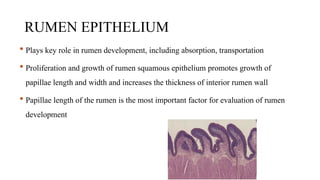
RUMEN EPITHELIUM
 Plays key role in rumen development, including absorption, transportation
 Proliferation and growth of rumen squamous epithelium promotes growth of
papillae length and width and increases the thickness of interior rumen wall
 Papillae length of the rumen is the most important factor for evaluation of rumen
development
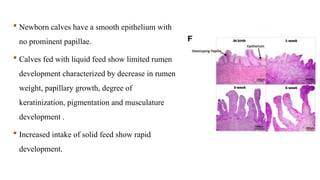
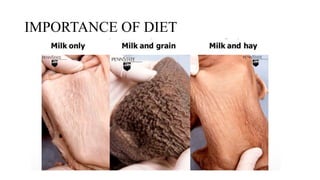
 Newborn calves have a smooth epithelium with
no prominent papillae.
 Calves fed with liquid feed show limited rumen
development characterized by decrease in rumen
weight, papillary growth, degree of
keratinization, pigmentation and musculature
development .
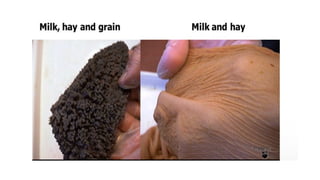
 Increased intake of solid feed show rapid
development.
 As calves consume more starter feed, pH of digesta decreases, production and
absorption of VFAs in the rumen provides chemical stimuli required for the
proliferation of rumen epithelium .
 The molar proportion of acetate decreases during the first two months, and then
starts to increase as forage intake increases .
 Intraruminal administration of acetate, propionate, and butyrate can stimulate the
growth of rumen epithelium (increased blood supply), with the effect of butyrate
being the most prominent
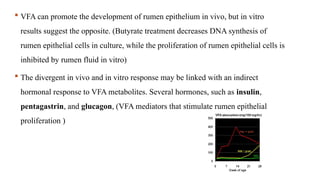
 VFA can promote the development of rumen epithelium in vivo, but in vitro
results suggest the opposite. (Butyrate treatment decreases DNA synthesis of
rumen epithelial cells in culture, while the proliferation of rumen epithelial cells is
inhibited by rumen fluid in vitro)
 The divergent in vivo and in vitro response may be linked with an indirect
hormonal response to VFA metabolites. Several hormones, such as insulin,
pentagastrin, and glucagon, (VFA mediators that stimulate rumen epithelial
proliferation )
RUMINAL MICROBIOTA
 At birth, the GI tract of young ruminants is sterile.
 During the first hours of life, the forestomach becomes rapidly colonized with an
abundant bacterial population. The neonates acquire bacteria from the dam(45%),
partners, feed, housing(12%) and environment(30%).
 Facultative anaerobes such as Streptococcus and Enterococcus are the early
colonizers of rumen
RUMEN BACTERIA
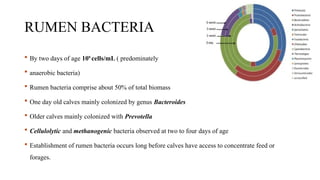
 By two days of age 109
cells/mL ( predominately
 anaerobic bacteria)
 Rumen bacteria comprise about 50% of total biomass
 One day old calves mainly colonized by genus Bacteroides
 Older calves mainly colonized with Prevotella
 Cellulolytic and methanogenic bacteria observed at two to four days of age
 Establishment of rumen bacteria occurs long before calves have access to concentrate feed or
forages.
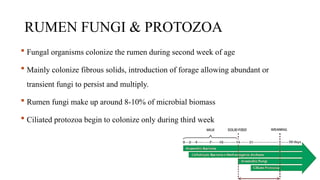
RUMEN FUNGI & PROTOZOA
 Fungal organisms colonize the rumen during second week of age
 Mainly colonize fibrous solids, introduction of forage allowing abundant or
transient fungi to persist and multiply.
 Rumen fungi make up around 8-10% of microbial biomass
 Ciliated protozoa begin to colonize only during third week
STRATEGIES TO PROMOTE RUMEN
DEVELOPMENT
 Alteration of the diet composition
 Physical forms
 New types of feed additives
 Feeding management
DIET – LIQUID FEED
 Liquid feed affect the plasma concentration of Insulin and IGF -1 that stimulate
proliferation of rumen epithelial cells
 Colostrum contains biologically active substances ( steroid hormones and polypeptide
growth factors) i.e. associated with development , digestion and absorption ability of
gastrointestinal tract
 Whole milk effects the development of the rumen
 Reduction of the pH of milk replacer beneficial for development of rumen epithelium
STARTER FEED
 Feeding readily fermentable carbohydrates to calves increases VFA production,
stimulating the development of rumen epithelium
 Butyrate has most stimulatory effect (provides energy for rumen wall thickening,
formation of papillae and stimulating capillary development)
 High concentration of ammonia, acetate, propionate and butyrate detected in corn
and wheat based diets
 Excessive consumption leads to acidosis (reduced rumen Ph, decreased motility,
keratinization of papillae, decreased VFA absorption)
FORAGE
 Less energy intensive
 Low digestibility of forages in rumen , increases gut fill, decreases voluntary feed
intake resulting in insufficient level of VFAs
 Dietary forages , mitigate ruminal acidosis and induce changes in ruminal bacterial
diversity
 Inclusion of starter feed positively linked with development of rumen and
morphological appearances of rumen epithelial cells and decreased plaque formation
IMPORTANCE OF DIET
PHYSICAL FORMS
 Influence anatomical and microbial development of the rumen
 Ground diet – shorter papillae with smaller surface area , decrease in cellulolytic
bacteria and increase in amylolytic bacteria , reduces ruminal ph. leading to
rumen parakeratosis
 Chopping of hay grasses , reduces chewing time
 Increasing length of chopped hay ,increases nutrient digestibility
FEED ADDITIVES - PROBIOTICS
 Viable and beneficial microorganisms helps to maintain microbial balance and
promote rumen development
 Helps in transition from liquid feed to dry feed and forages
 Bacillus licheniformis and Saccharomyces cerevisiae increase nitrogen
utilization of rumen microbes
 Oral dose of Megasphaera elsdenii NCIMB41125 increases ruminal butyrate ,
papillae growth and reticulorumen weight
 Supplementing Bacillus subtilis in starter feed increases growth of cellulolytic
bacteria
PLANT EXTRACTS
 Adding Aloe barbadensis to milk increases VFA concentration and bacterial count
 Supplementing Mulberry leaf flavonoids in mixed ration increases alpha
amylase activity in ruminal digesta and protease activity in abomasal digesta
 Adding Caraway and Garlic in concentrated feed improve fermentation
parameters and increase total VFA
 Thyme and cinnamon essential oils show decrease acetate and increase
propionate and butyrate
 Prevent calf diarrhea
FEEDING MANAGEMENT
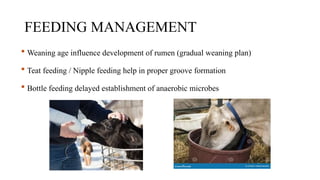
 Weaning age influence development of rumen (gradual weaning plan)
 Teat feeding / Nipple feeding help in proper groove formation
 Bottle feeding delayed establishment of anaerobic microbes
 The colonization pattern varies between those naturally fed and those fed on milk
replacers
 Early weaning reduced protozoal and methanogen population
 Intensive feeding of milk or milk replacer may delay starter feed intake and delay
rumen development
 Enhanced milk replacer feeding increased concentration of plasma IGF-1 and
insulin
 Restricting milk replacer greater rumen papillae density but lowers villus surface
area , height / crypt depth
THANK YOU

development of rumennnnnnnnnnnnnnnnnn.pptx

  • 1.
  • 2.
    INTRODUCTION  At birth,the rumen is not completely developed, and significant physciological and metabolic changes in rumen have to occur first before the calves can digest solid feed  The specific changes include the development of the rumen organ, rumen epithelium and the establishment of rumen microbiota.  Most critical period is the first 2 to 3 weeks of life
  • 3.
     Calves arechallenged by a series of stress factors after they are born a)Change in living environment b)Poor immunity c)Incomplete development of digestive system d)Change in environment e)Changes in the nutrition f)High mortality and morbidity due to diarrhea, respiratory diseases and slow weight gain
  • 4.
     Digestive tractdevelopment in calves is unique as it undergoes physiologically transitions from a pseudo-monogastric animal to a functioning ruminant.  The development of rumen in calves can directly affect the intake of feed, nutrient digestibility and overall growth of the animal later in life  Even minor changes in the early feeding regime and nutrition can drastically influence rumen development, resulting in long-term effects on growth, health, and milk yields in adult cattle.
  • 5.
    PHASES OF RUMENDEVELOPMENT PRE RUMINANT PHASE All nutrients are met by milk or milk replacers. The esophageal groove shunts liquid feed directly to the omasum to avoid microbial breakdown in reticulorumen TRANSITION PHASE Liquid feed and starter contribute to meet nutrient requirements Starter enable development of reticulorumen RUMINANT PHASE Calf derives it nutrition from solid feeds, through microbial fermentation in reticulorumen Ruminal fermentation and microbial protein synthesis are not yet mature in early stages
  • 6.
    RUMEN ORGAN DEVELOPMENT Starts in embryonic period only but complete development postnatal  Stomach chambers are visible at Day 56 in bovine embryo Rumen (%) Reticulum (%) Omasum (%) Abomasum (%) Capacity (liters) 1st week 25 5 10 60 3-4 12th week 65 5 10 20 20-30 Maturity 80 5 7 8 150-250
  • 8.
    ESOPHAGEAL GROOVE  Reticulargroove/ esophageal groove is composed of 2 lips of tissue that run from cardiac sphincter to reticulo-omasal orifice  Transport milk directly from esophagus to abomasum
  • 9.
     Lack ofesophageal groove will cause seepage of milk into rumen leading to ruminal bloat  Closure of groove is stimulated by cranial laryngeal branch of vagus nerve a) Suckling b) Consumption of milk protein c) Consumption of sodium salts like NaHCO3 d) Presence of copper sulphate (lambs)
  • 10.
     The abomasumof new born calves is fully developed and functional stomach.  The digestion of fat, carbohydrates, and protein is dependent on the digestive enzymes secreted by the abomasum and small intestine, which is similar to the digestive system in monogastric animals.
  • 11.
    NUTRITIONAL IMPACT OFRUMEN BYPASS  More efficient use of energy and protein  No methane loss, heat of fermentation loss  Unable to utilize non protein nitrogen  Require Vitamin B supplementation ( no microbial synthesis)  NEm value adopted by NRC (2001) was 0.086 Mcal/kg BW0.75  Allowance for activity, typically 10 percent of NEm.
  • 12.
    ENZYMES IN DIGESTION Digestion of carbohydrates a) Intestinal lactase : Activity high at birth , weaning decreases activity (substrate no longer present) b) Pancreatic amylase : Activity low at birth , increases by 8 weeks of age c) Intestinal maltase : low at birth , increases by 8-14 weeks of age  Digestion of proteins a) Pepsin : may or may not be secreted by pepsinogen , HCl secretion inadequate in newborn sufficient to lower abomasal pH enough for pepsin activity b) Pancreatic proteases : Activity low at birth rapidly increases within a week
  • 13.
    RUMEN EPITHELIUM  Playskey role in rumen development, including absorption, transportation  Proliferation and growth of rumen squamous epithelium promotes growth of papillae length and width and increases the thickness of interior rumen wall  Papillae length of the rumen is the most important factor for evaluation of rumen development
  • 14.
     Newborn calveshave a smooth epithelium with no prominent papillae.  Calves fed with liquid feed show limited rumen development characterized by decrease in rumen weight, papillary growth, degree of keratinization, pigmentation and musculature development .  Increased intake of solid feed show rapid development.
  • 15.
     As calvesconsume more starter feed, pH of digesta decreases, production and absorption of VFAs in the rumen provides chemical stimuli required for the proliferation of rumen epithelium .  The molar proportion of acetate decreases during the first two months, and then starts to increase as forage intake increases .  Intraruminal administration of acetate, propionate, and butyrate can stimulate the growth of rumen epithelium (increased blood supply), with the effect of butyrate being the most prominent
  • 16.
     VFA canpromote the development of rumen epithelium in vivo, but in vitro results suggest the opposite. (Butyrate treatment decreases DNA synthesis of rumen epithelial cells in culture, while the proliferation of rumen epithelial cells is inhibited by rumen fluid in vitro)  The divergent in vivo and in vitro response may be linked with an indirect hormonal response to VFA metabolites. Several hormones, such as insulin, pentagastrin, and glucagon, (VFA mediators that stimulate rumen epithelial proliferation )
  • 17.
    RUMINAL MICROBIOTA  Atbirth, the GI tract of young ruminants is sterile.  During the first hours of life, the forestomach becomes rapidly colonized with an abundant bacterial population. The neonates acquire bacteria from the dam(45%), partners, feed, housing(12%) and environment(30%).  Facultative anaerobes such as Streptococcus and Enterococcus are the early colonizers of rumen
  • 18.
    RUMEN BACTERIA  Bytwo days of age 109 cells/mL ( predominately  anaerobic bacteria)  Rumen bacteria comprise about 50% of total biomass  One day old calves mainly colonized by genus Bacteroides  Older calves mainly colonized with Prevotella  Cellulolytic and methanogenic bacteria observed at two to four days of age  Establishment of rumen bacteria occurs long before calves have access to concentrate feed or forages.
  • 19.
    RUMEN FUNGI &PROTOZOA  Fungal organisms colonize the rumen during second week of age  Mainly colonize fibrous solids, introduction of forage allowing abundant or transient fungi to persist and multiply.  Rumen fungi make up around 8-10% of microbial biomass  Ciliated protozoa begin to colonize only during third week
  • 20.
    STRATEGIES TO PROMOTERUMEN DEVELOPMENT  Alteration of the diet composition  Physical forms  New types of feed additives  Feeding management
  • 21.
    DIET – LIQUIDFEED  Liquid feed affect the plasma concentration of Insulin and IGF -1 that stimulate proliferation of rumen epithelial cells  Colostrum contains biologically active substances ( steroid hormones and polypeptide growth factors) i.e. associated with development , digestion and absorption ability of gastrointestinal tract  Whole milk effects the development of the rumen  Reduction of the pH of milk replacer beneficial for development of rumen epithelium
  • 23.
    STARTER FEED  Feedingreadily fermentable carbohydrates to calves increases VFA production, stimulating the development of rumen epithelium  Butyrate has most stimulatory effect (provides energy for rumen wall thickening, formation of papillae and stimulating capillary development)  High concentration of ammonia, acetate, propionate and butyrate detected in corn and wheat based diets  Excessive consumption leads to acidosis (reduced rumen Ph, decreased motility, keratinization of papillae, decreased VFA absorption)
  • 24.
    FORAGE  Less energyintensive  Low digestibility of forages in rumen , increases gut fill, decreases voluntary feed intake resulting in insufficient level of VFAs  Dietary forages , mitigate ruminal acidosis and induce changes in ruminal bacterial diversity  Inclusion of starter feed positively linked with development of rumen and morphological appearances of rumen epithelial cells and decreased plaque formation
  • 25.
  • 27.
    PHYSICAL FORMS  Influenceanatomical and microbial development of the rumen  Ground diet – shorter papillae with smaller surface area , decrease in cellulolytic bacteria and increase in amylolytic bacteria , reduces ruminal ph. leading to rumen parakeratosis  Chopping of hay grasses , reduces chewing time  Increasing length of chopped hay ,increases nutrient digestibility
  • 28.
    FEED ADDITIVES -PROBIOTICS  Viable and beneficial microorganisms helps to maintain microbial balance and promote rumen development  Helps in transition from liquid feed to dry feed and forages  Bacillus licheniformis and Saccharomyces cerevisiae increase nitrogen utilization of rumen microbes  Oral dose of Megasphaera elsdenii NCIMB41125 increases ruminal butyrate , papillae growth and reticulorumen weight  Supplementing Bacillus subtilis in starter feed increases growth of cellulolytic bacteria
  • 29.
    PLANT EXTRACTS  AddingAloe barbadensis to milk increases VFA concentration and bacterial count  Supplementing Mulberry leaf flavonoids in mixed ration increases alpha amylase activity in ruminal digesta and protease activity in abomasal digesta  Adding Caraway and Garlic in concentrated feed improve fermentation parameters and increase total VFA  Thyme and cinnamon essential oils show decrease acetate and increase propionate and butyrate  Prevent calf diarrhea
  • 30.
    FEEDING MANAGEMENT  Weaningage influence development of rumen (gradual weaning plan)  Teat feeding / Nipple feeding help in proper groove formation  Bottle feeding delayed establishment of anaerobic microbes
  • 31.
     The colonizationpattern varies between those naturally fed and those fed on milk replacers  Early weaning reduced protozoal and methanogen population  Intensive feeding of milk or milk replacer may delay starter feed intake and delay rumen development  Enhanced milk replacer feeding increased concentration of plasma IGF-1 and insulin  Restricting milk replacer greater rumen papillae density but lowers villus surface area , height / crypt depth
  • 32.