Development Diary

   Contents Page
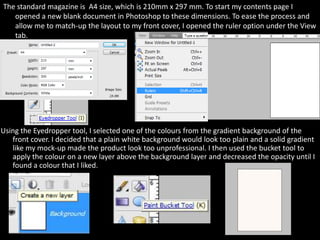
The standard magazine is A4 size, which is 210mm x 297 mm. To start my contents page I
   opened a new blank document in Photoshop to these dimensions. To ease the process and
   allow me to match-up the layout to my front cover, I opened the ruler option under the View
   tab.


Using the Eyedropper tool, I selected one of the colours from the gradient background of the
   front cover. I decided that a plain white background would look too plain and a solid gradient
   like my mock-up made the product look too unprofessional. I then used the bucket tool to
   apply the colour on a new layer above the background layer and decreased the opacity until I
   found a colour that I liked.
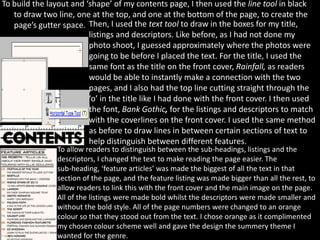
To build the layout and ‘shape’ of my contents page, I then used the line tool in black
   to draw two line, one at the top, and one at the bottom of the page, to create the
   page’s gutter space. Then, I used the text tool to draw in the boxes for my title,
                         listings and descriptors. Like before, as I had not done my
                         photo shoot, I guessed approximately where the photos were
                         going to be before I placed the text. For the title, I used the
                         same font as the title on the front cover, Rainfall, as readers
                         would be able to instantly make a connection with the two
                         pages, and I also had the top line cutting straight through the
                         ‘o’ in the title like I had done with the front cover. I then used
                         the font, Bank Gothic, for the listings and descriptors to match
                         with the coverlines on the front cover. I used the same method
                         as before to draw lines in between certain sections of text to
                         help distinguish between different features.
                To allow readers to distinguish between the sub-headings, listings and the
                descriptors, I changed the text to make reading the page easier. The
                sub-heading, ‘feature articles’ was made the biggest of all the text in that
                section of the page, and the feature listing was made bigger than all the rest, to
                allow readers to link this with the front cover and the main image on the page.
                All of the listings were made bold whilst the descriptors were made smaller and
                without the bold style. All of the page numbers were changed to an orange
                colour so that they stood out from the text. I chose orange as it complimented
                my chosen colour scheme well and gave the design the summery theme I
                wanted for the genre.
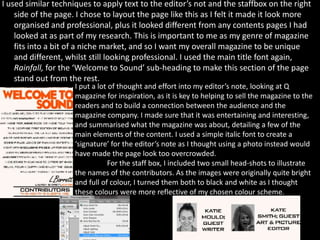
I used similar techniques to apply text to the editor’s not and the staffbox on the right
    side of the page. I chose to layout the page like this as I felt it made it look more
    organised and professional, plus it looked different from any contents pages I had
    looked at as part of my research. This is important to me as my genre of magazine
    fits into a bit of a niche market, and so I want my overall magazine to be unique
    and different, whilst still looking professional. I used the main title font again,
    Rainfall, for the ‘Welcome to Sound’ sub-heading to make this section of the page
    stand out from the rest.
                     I put a lot of thought and effort into my editor’s note, looking at Q
                     magazine for inspiration, as it is key to helping to sell the magazine to the
                     readers and to build a connection between the audience and the
                     magazine company. I made sure that it was entertaining and interesting,
                     and summarised what the magazine was about, detailing a few of the
                     main elements of the content. I used a simple italic font to create a
                     ‘signature’ for the editor’s note as I thought using a photo instead would
                     have made the page look too overcrowded.
                                For the staff box, I included two small head-shots to illustrate
                     the names of the contributors. As the images were originally quite bright
                     and full of colour, I turned them both to black and white as I thought
                     these colours were more reflective of my chosen colour scheme.
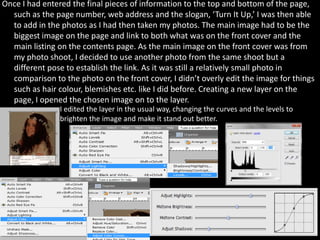
Once I had entered the final pieces of information to the top and bottom of the page,
  such as the page number, web address and the slogan, ‘Turn It Up,’ I was then able
  to add in the photos as I had then taken my photos. The main image had to be the
  biggest image on the page and link to both what was on the front cover and the
  main listing on the contents page. As the main image on the front cover was from
  my photo shoot, I decided to use another photo from the same shoot but a
  different pose to establish the link. As it was still a relatively small photo in
  comparison to the photo on the front cover, I didn’t overly edit the image for things
  such as hair colour, blemishes etc. like I did before. Creating a new layer on the
  page, I opened the chosen image on to the layer.
                I edited the layer in the usual way, changing the curves and the levels to
                brighten the image and make it stand out better.
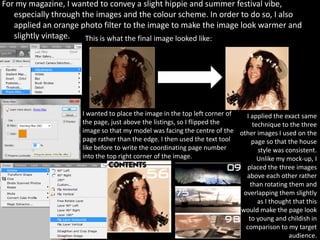
For my magazine, I wanted to convey a slight hippie and summer festival vibe,
   especially through the images and the colour scheme. In order to do so, I also
   applied an orange photo filter to the image to make the image look warmer and
   slightly vintage.   This is what the final image looked like:


                     I wanted to place the image in the top left corner of   I applied the exact same
                     the page, just above the listings, so I flipped the        technique to the three
                     image so that my model was facing the centre of the other images I used on the
                     page rather than the edge. I then used the text tool      page so that the house
                     like before to write the coordinating page number            style was consistent.
                     into the top right corner of the image.                      Unlike my mock-up, I
                                                                             placed the three images
                                                                             above each other rather
                                                                               than rotating them and
                                                                            overlapping them slightly
                                                                                  as I thought that this
                                                                           would make the page look
                                                                              to young and childish in
                                                                             comparison to my target
                                                                                             audience.

Development diary contents page

  • 1.
    Development Diary Contents Page
  • 2.
    The standard magazineis A4 size, which is 210mm x 297 mm. To start my contents page I opened a new blank document in Photoshop to these dimensions. To ease the process and allow me to match-up the layout to my front cover, I opened the ruler option under the View tab. Using the Eyedropper tool, I selected one of the colours from the gradient background of the front cover. I decided that a plain white background would look too plain and a solid gradient like my mock-up made the product look too unprofessional. I then used the bucket tool to apply the colour on a new layer above the background layer and decreased the opacity until I found a colour that I liked.
  • 3.
    To build thelayout and ‘shape’ of my contents page, I then used the line tool in black to draw two line, one at the top, and one at the bottom of the page, to create the page’s gutter space. Then, I used the text tool to draw in the boxes for my title, listings and descriptors. Like before, as I had not done my photo shoot, I guessed approximately where the photos were going to be before I placed the text. For the title, I used the same font as the title on the front cover, Rainfall, as readers would be able to instantly make a connection with the two pages, and I also had the top line cutting straight through the ‘o’ in the title like I had done with the front cover. I then used the font, Bank Gothic, for the listings and descriptors to match with the coverlines on the front cover. I used the same method as before to draw lines in between certain sections of text to help distinguish between different features. To allow readers to distinguish between the sub-headings, listings and the descriptors, I changed the text to make reading the page easier. The sub-heading, ‘feature articles’ was made the biggest of all the text in that section of the page, and the feature listing was made bigger than all the rest, to allow readers to link this with the front cover and the main image on the page. All of the listings were made bold whilst the descriptors were made smaller and without the bold style. All of the page numbers were changed to an orange colour so that they stood out from the text. I chose orange as it complimented my chosen colour scheme well and gave the design the summery theme I wanted for the genre.
  • 4.
    I used similartechniques to apply text to the editor’s not and the staffbox on the right side of the page. I chose to layout the page like this as I felt it made it look more organised and professional, plus it looked different from any contents pages I had looked at as part of my research. This is important to me as my genre of magazine fits into a bit of a niche market, and so I want my overall magazine to be unique and different, whilst still looking professional. I used the main title font again, Rainfall, for the ‘Welcome to Sound’ sub-heading to make this section of the page stand out from the rest. I put a lot of thought and effort into my editor’s note, looking at Q magazine for inspiration, as it is key to helping to sell the magazine to the readers and to build a connection between the audience and the magazine company. I made sure that it was entertaining and interesting, and summarised what the magazine was about, detailing a few of the main elements of the content. I used a simple italic font to create a ‘signature’ for the editor’s note as I thought using a photo instead would have made the page look too overcrowded. For the staff box, I included two small head-shots to illustrate the names of the contributors. As the images were originally quite bright and full of colour, I turned them both to black and white as I thought these colours were more reflective of my chosen colour scheme.
  • 5.
    Once I hadentered the final pieces of information to the top and bottom of the page, such as the page number, web address and the slogan, ‘Turn It Up,’ I was then able to add in the photos as I had then taken my photos. The main image had to be the biggest image on the page and link to both what was on the front cover and the main listing on the contents page. As the main image on the front cover was from my photo shoot, I decided to use another photo from the same shoot but a different pose to establish the link. As it was still a relatively small photo in comparison to the photo on the front cover, I didn’t overly edit the image for things such as hair colour, blemishes etc. like I did before. Creating a new layer on the page, I opened the chosen image on to the layer. I edited the layer in the usual way, changing the curves and the levels to brighten the image and make it stand out better.
  • 6.
    For my magazine,I wanted to convey a slight hippie and summer festival vibe, especially through the images and the colour scheme. In order to do so, I also applied an orange photo filter to the image to make the image look warmer and slightly vintage. This is what the final image looked like: I wanted to place the image in the top left corner of I applied the exact same the page, just above the listings, so I flipped the technique to the three image so that my model was facing the centre of the other images I used on the page rather than the edge. I then used the text tool page so that the house like before to write the coordinating page number style was consistent. into the top right corner of the image. Unlike my mock-up, I placed the three images above each other rather than rotating them and overlapping them slightly as I thought that this would make the page look to young and childish in comparison to my target audience.