DEVELOPING
IDEAS
Instructional
Approches
for Writing
TODAY'S
AGENDA
1
2
3
Debunk some myths about Dengue
4
Pre-Writing Background
Instructional Approaches and/or
Techniques in Pre-writing
Summary
DISCUSSANT AND
OBJECTIVES
Marc Lester S. Marquez
The objective of this discussion is to
introduce some instructional approaches
and/or techniques for Pre-writing.
Specifically, this will immerse the
participants to some real-life examples in
order to be familiar with the concept
being discussed.
Lester
Still Lester
TEAM
CHECK-IN
How are you feeling?
Choose an Emoji, GIF, or image from a pool
of emojis from your key boards that best
represents how you feel at the moment and
do send them in our chat pane.
Time: 1 minute
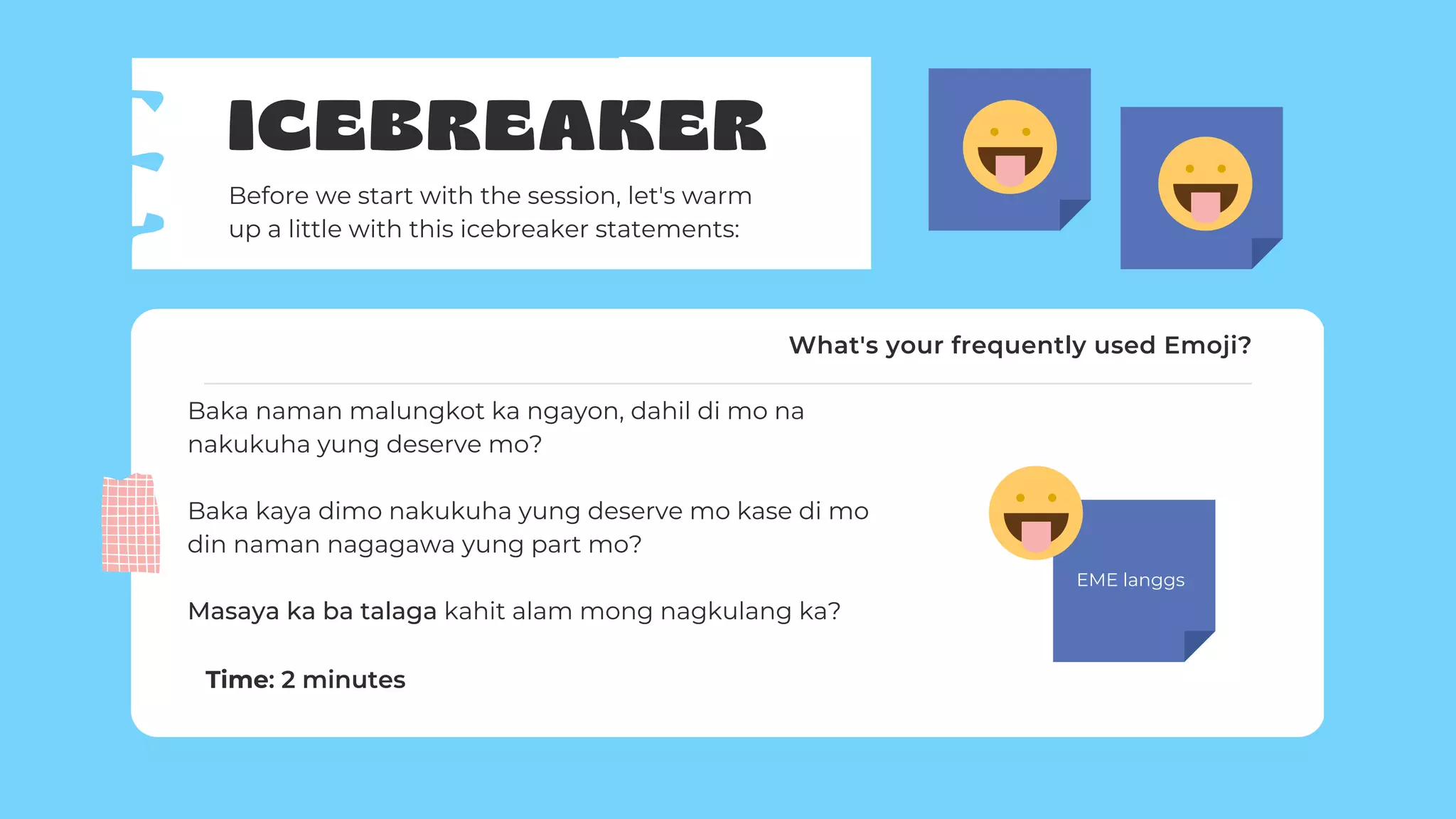
EME langgs
ICEBREAKER
Before we start with the session, let's warm
up a little with this icebreaker statements:
Baka naman malungkot ka ngayon, dahil di mo na
nakukuha yung deserve mo?
Baka kaya dimo nakukuha yung deserve mo kase di mo
din naman nagagawa yung part mo?
Masaya ka ba talaga kahit alam mong nagkulang ka?
Time: 2 minutes
What's your frequently used Emoji?
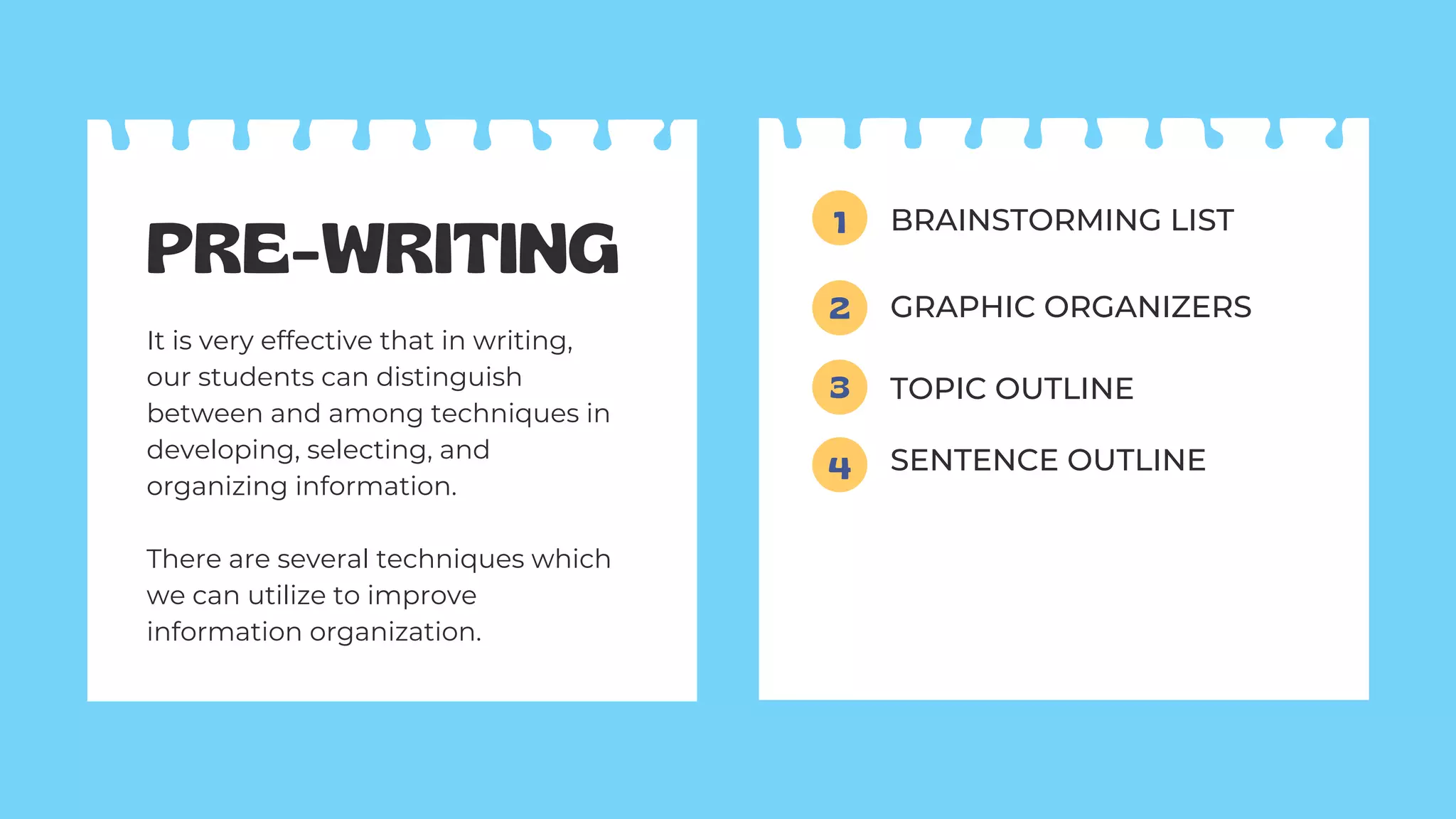
PRE-WRITING
It is very effective that in writing,
our students can distinguish
between and among techniques in
developing, selecting, and
organizing information.
There are several techniques which
we can utilize to improve
information organization.
BRAINSTORMING LIST
1
2
3
GRAPHIC ORGANIZERS
TOPIC OUTLINE
4 SENTENCE OUTLINE
BRAINSTORMING LIST
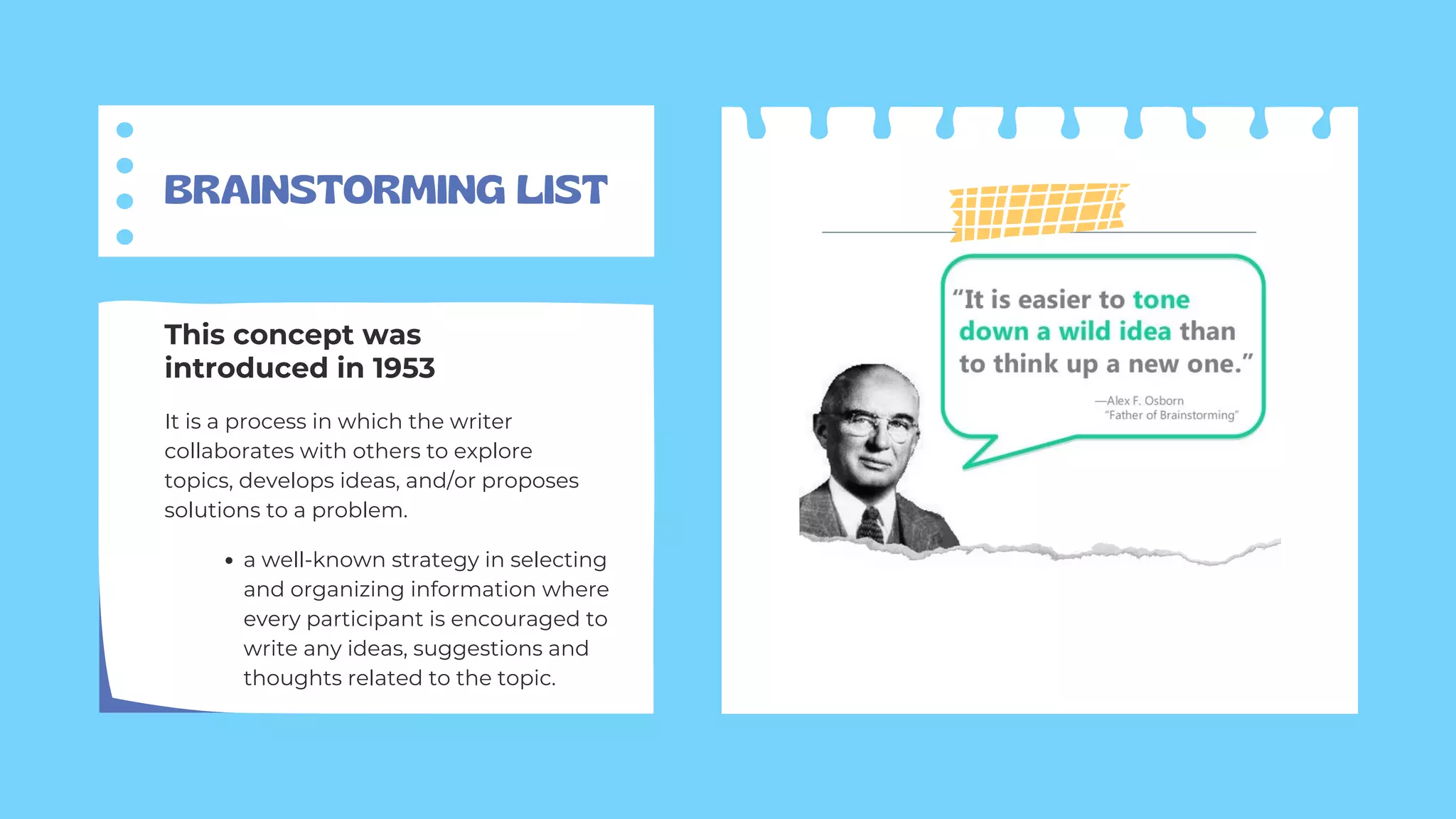
It is a process in which the writer
collaborates with others to explore
topics, develops ideas, and/or proposes
solutions to a problem.
This concept was
introduced in 1953
a well-known strategy in selecting
and organizing information where
every participant is encouraged to
write any ideas, suggestions and
thoughts related to the topic.
FOUR BASIC RULES IN
BRAINSTORMING
1 NO CRITICISM
Criticism of ideas are withheld during the brainstorming
session as the purpose is generating varied and unusual
ideals and extending or adding these ideas. This allows
the participants to feel comfortable with the idea of
generating unusual ideas.
WELCOME UNUSUAL IDEAS
2
Unusual ideas are welcomed as it is normally easier to
"tame down" than "tame up" as new ways of thinking
and looking at the world may provide better solutions.
FOUR BASIC RULES IN
BRAINSTORMING
3 QUANTITY WANTED
The greater the number of ideas generated, the greater
the chance of producing a radical and effective solution.
COMBINE AND IMRPOVE IDEAS
4
Not only a variety of ideals wanted, but also ways to
combine ideas in order to make them better.
BASIC TECHNIQUES
in having the best results of
brainstorming lists as enumerated
by Gordon (2014)
NOMINAL GROUP TECHNIQUE
1
2
3
GROUP PASSING TECHNIQUE
ELECTRONIC BRAINSTORMING
4 QUESTION BRAINSTORMING
5 MIND MAPPING
GRAPHIC ORGANIZER
This helps students organize ideas, see
relationships, and retain information
through the use of icons and symbols.
Simply, it is an organization
of thoughts through a visual
and/or graphic presentation.
Many organizers have more than
one purpose depending on their
usage. They also come in many
forms.
NETWORK TREE
1
2
3
PROBLEM AND SOLUTION
VENN DIAGRAM
4 SERIES OF EVENTS CHAIN
5 CYCLE
6 FISHBONE MAP
NETWORK TREE
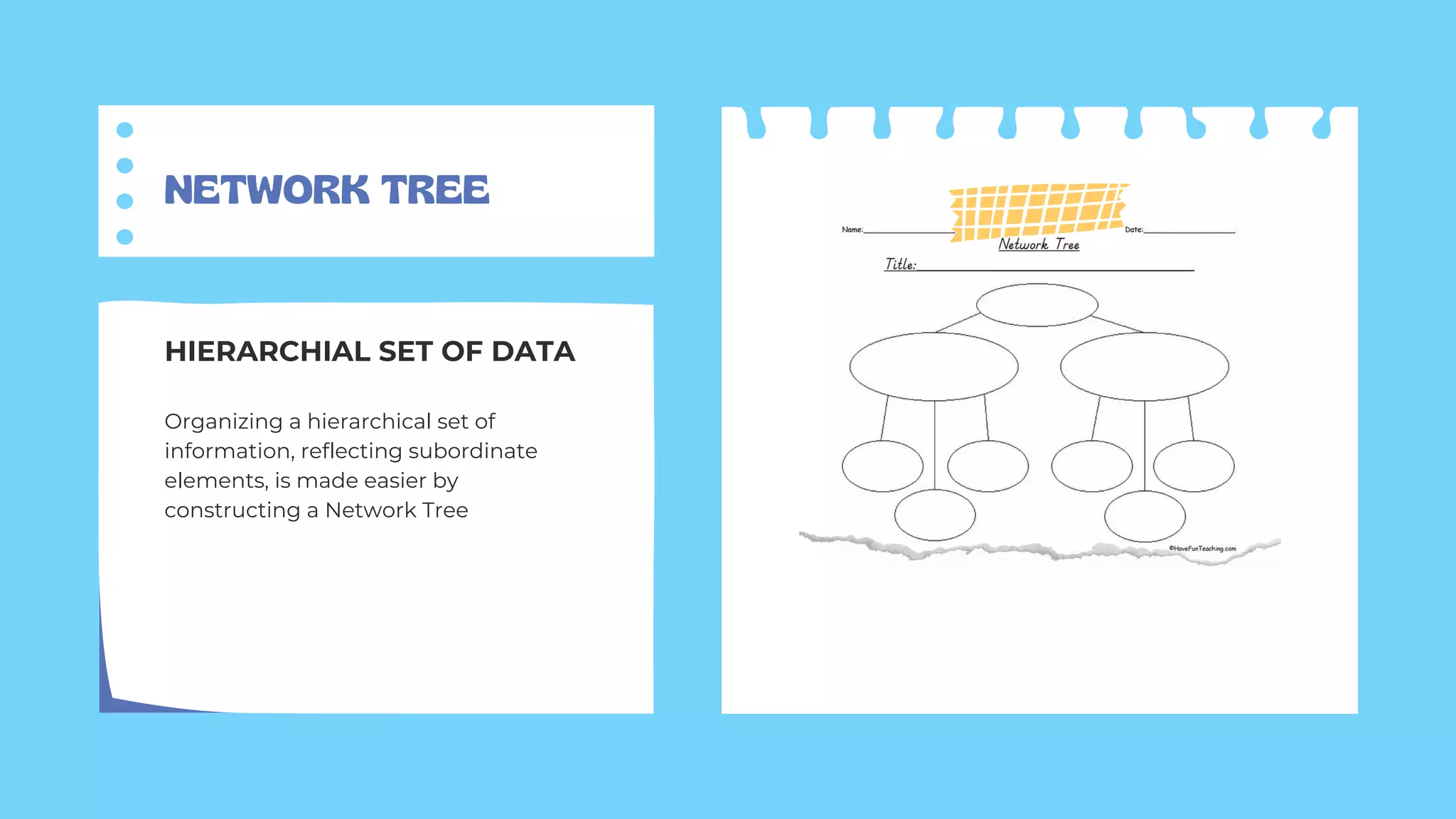
Organizing a hierarchical set of
information, reflecting subordinate
elements, is made easier by
constructing a Network Tree
HIERARCHIAL SET OF DATA
PROBLEM AND
SOLUTION
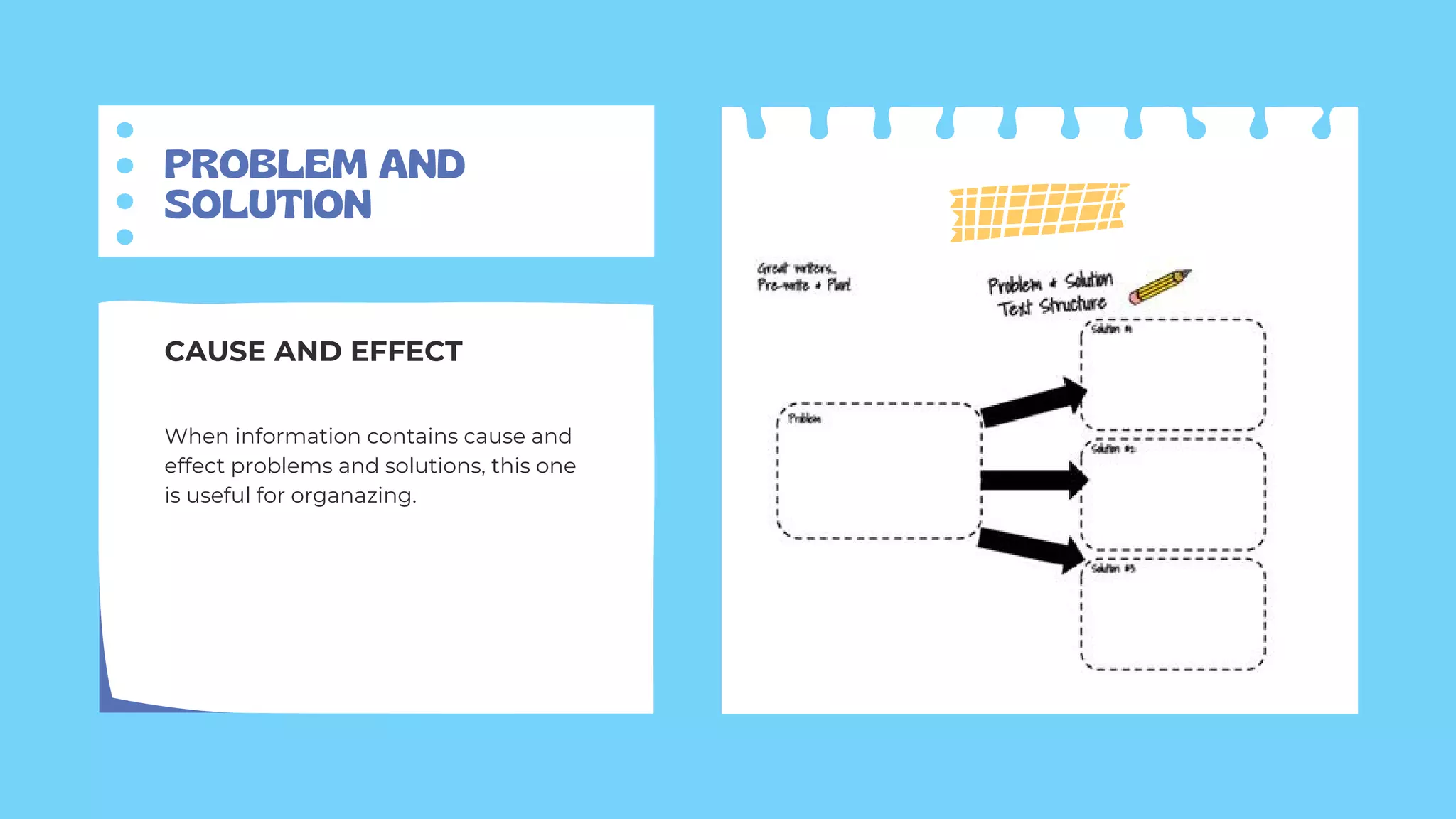
When information contains cause and
effect problems and solutions, this one
is useful for organazing.
CAUSE AND EFFECT
VENN DIAGRAM
COMPARE AND CONTRAST
SERIES OF EVENTS
CHAIN
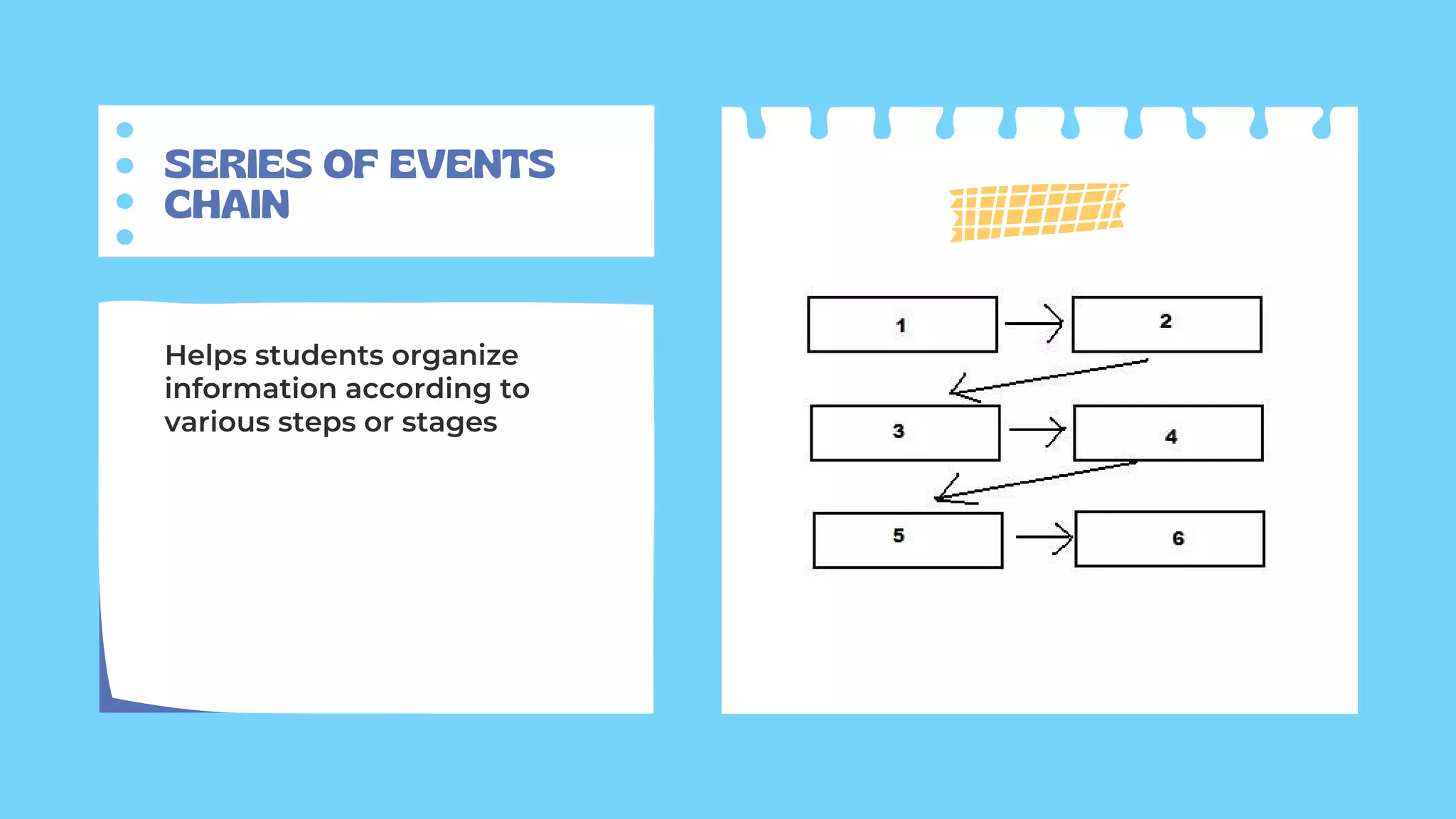
Helps students organize
information according to
various steps or stages
CYCLE MAP
useful for organizing
information that is circular
or cyclical, with no absolute
beginning or ending
FISHBONE
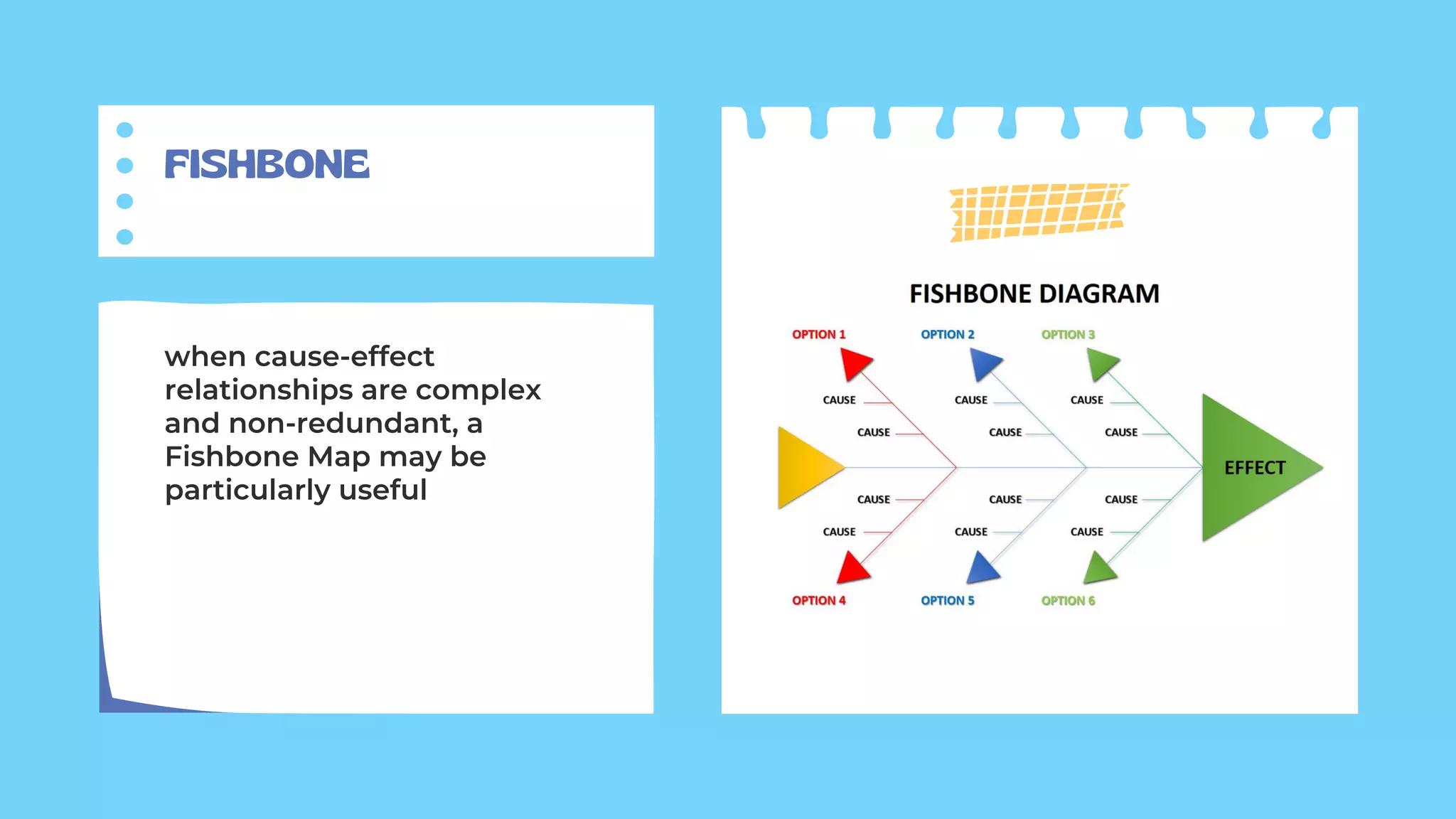
when cause-effect
relationships are complex
and non-redundant, a
Fishbone Map may be
particularly useful
OUTLINE
TOPIC OUTLINE lists words or phrases.
As the name implies, it identifies all the
little mini-topics that your paper will
comprise, and shows how they relate.
TOPIC and SENTENCE OUTLINE
In a SENTENCE OUTLINE, the thesis
and topic sentence of each supporting
paragraph are fully written out. This
forces part of the write-up to be written
out in sentences before the first draft.
MYTHS ABOUT
DENGUE
Here are some of the
traditional myths and
misconceptions about
dengue fever that you must
clear once and for all:
You cannot get dengue fever
twice.
1
2
3
Dengue is contagious.
An infected mosquito breeds
only in dirty stagnant water.
4
Dengue fever is only prevalent
during the rainy season.
5
Your body may heal itself
naturally from dengue fever.
THANK
YOU!
Have a
great day
ahead.

Developing-ideas.pdf

  • 1.
  • 2.
    TODAY'S AGENDA 1 2 3 Debunk some mythsabout Dengue 4 Pre-Writing Background Instructional Approaches and/or Techniques in Pre-writing Summary
  • 3.
    DISCUSSANT AND OBJECTIVES Marc LesterS. Marquez The objective of this discussion is to introduce some instructional approaches and/or techniques for Pre-writing. Specifically, this will immerse the participants to some real-life examples in order to be familiar with the concept being discussed. Lester Still Lester
  • 4.
    TEAM CHECK-IN How are youfeeling? Choose an Emoji, GIF, or image from a pool of emojis from your key boards that best represents how you feel at the moment and do send them in our chat pane. Time: 1 minute
  • 5.
    EME langgs ICEBREAKER Before westart with the session, let's warm up a little with this icebreaker statements: Baka naman malungkot ka ngayon, dahil di mo na nakukuha yung deserve mo? Baka kaya dimo nakukuha yung deserve mo kase di mo din naman nagagawa yung part mo? Masaya ka ba talaga kahit alam mong nagkulang ka? Time: 2 minutes What's your frequently used Emoji?
  • 6.
    PRE-WRITING It is veryeffective that in writing, our students can distinguish between and among techniques in developing, selecting, and organizing information. There are several techniques which we can utilize to improve information organization. BRAINSTORMING LIST 1 2 3 GRAPHIC ORGANIZERS TOPIC OUTLINE 4 SENTENCE OUTLINE
  • 7.
    BRAINSTORMING LIST It isa process in which the writer collaborates with others to explore topics, develops ideas, and/or proposes solutions to a problem. This concept was introduced in 1953 a well-known strategy in selecting and organizing information where every participant is encouraged to write any ideas, suggestions and thoughts related to the topic.
  • 8.
    FOUR BASIC RULESIN BRAINSTORMING 1 NO CRITICISM Criticism of ideas are withheld during the brainstorming session as the purpose is generating varied and unusual ideals and extending or adding these ideas. This allows the participants to feel comfortable with the idea of generating unusual ideas. WELCOME UNUSUAL IDEAS 2 Unusual ideas are welcomed as it is normally easier to "tame down" than "tame up" as new ways of thinking and looking at the world may provide better solutions.
  • 9.
    FOUR BASIC RULESIN BRAINSTORMING 3 QUANTITY WANTED The greater the number of ideas generated, the greater the chance of producing a radical and effective solution. COMBINE AND IMRPOVE IDEAS 4 Not only a variety of ideals wanted, but also ways to combine ideas in order to make them better.
  • 10.
    BASIC TECHNIQUES in havingthe best results of brainstorming lists as enumerated by Gordon (2014) NOMINAL GROUP TECHNIQUE 1 2 3 GROUP PASSING TECHNIQUE ELECTRONIC BRAINSTORMING 4 QUESTION BRAINSTORMING 5 MIND MAPPING
  • 11.
    GRAPHIC ORGANIZER This helpsstudents organize ideas, see relationships, and retain information through the use of icons and symbols. Simply, it is an organization of thoughts through a visual and/or graphic presentation. Many organizers have more than one purpose depending on their usage. They also come in many forms. NETWORK TREE 1 2 3 PROBLEM AND SOLUTION VENN DIAGRAM 4 SERIES OF EVENTS CHAIN 5 CYCLE 6 FISHBONE MAP
  • 12.
    NETWORK TREE Organizing ahierarchical set of information, reflecting subordinate elements, is made easier by constructing a Network Tree HIERARCHIAL SET OF DATA
  • 13.
    PROBLEM AND SOLUTION When informationcontains cause and effect problems and solutions, this one is useful for organazing. CAUSE AND EFFECT
  • 14.
  • 15.
    SERIES OF EVENTS CHAIN Helpsstudents organize information according to various steps or stages
  • 16.
    CYCLE MAP useful fororganizing information that is circular or cyclical, with no absolute beginning or ending
  • 17.
    FISHBONE when cause-effect relationships arecomplex and non-redundant, a Fishbone Map may be particularly useful
  • 18.
    OUTLINE TOPIC OUTLINE listswords or phrases. As the name implies, it identifies all the little mini-topics that your paper will comprise, and shows how they relate. TOPIC and SENTENCE OUTLINE In a SENTENCE OUTLINE, the thesis and topic sentence of each supporting paragraph are fully written out. This forces part of the write-up to be written out in sentences before the first draft.
  • 19.
    MYTHS ABOUT DENGUE Here aresome of the traditional myths and misconceptions about dengue fever that you must clear once and for all: You cannot get dengue fever twice. 1 2 3 Dengue is contagious. An infected mosquito breeds only in dirty stagnant water. 4 Dengue fever is only prevalent during the rainy season. 5 Your body may heal itself naturally from dengue fever.
  • 20.