Developing Research Proposal
Systematic Review
Mohammed TA, Omar Ph.D. PT
Rehabilitation Health Science
What is a systematic Review ?
•A systematic review is defined as “a review of the
evidence on a clearly formulated question that uses
systematic and explicit methods to identify, select
and critically appraise relevant primary research, and
to extract and synthesis, analyze data from the
studies that are included in the review.”
3
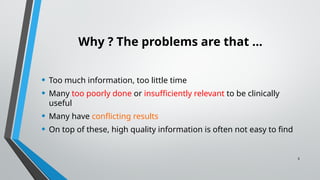
Why ? The problems are that …
• Too much information, too little time
• Many too poorly done or insufficiently relevant to be clinically
useful
• Many have conflicting results
• On top of these, high quality information is often not easy to find
Why do systematic reviews?
• Support Evidence Based Practice
• Research
• Inform clinical policy
• Publication
• Personal professional development
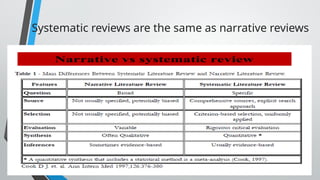
Systematic reviews are the same as narrative reviews
Narrative vs systematic review
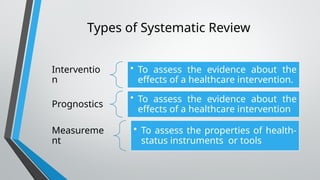
Types of Systematic Review
Interventio
n
• To assess the evidence about the
effects of a healthcare intervention.
Prognostics
• To assess the evidence about the
effects of a healthcare intervention
Measureme
nt
• To assess the properties of health-
status instruments or tools
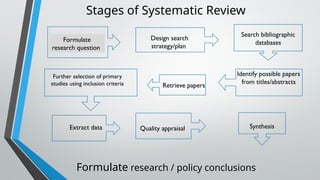
Stages of Systematic Review
Formulate research / policy conclusions
Search bibliographic
databases
Identify possible papers
from titles/abstracts
Retrieve papers
Extract data
Further selection of primary
studies using inclusion criteria
Synthesis
Formulate
research question
Design search
strategy/plan
Quality appraisal
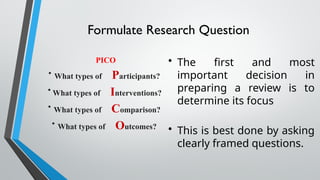
Formulate Research Question
PICO
• What types of Participants?
• What types of Interventions?
• What types of Comparison?
• What types of Outcomes?
• The first and most
important decision in
preparing a review is to
determine its focus
• This is best done by asking
clearly framed questions.
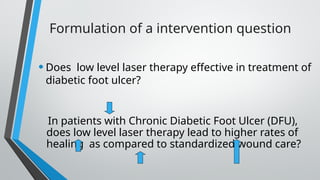
Formulation of a intervention question
•Does low level laser therapy effective in treatment of
diabetic foot ulcer?
In patients with Chronic Diabetic Foot Ulcer (DFU),
does low level laser therapy lead to higher rates of
healing as compared to standardized wound care?
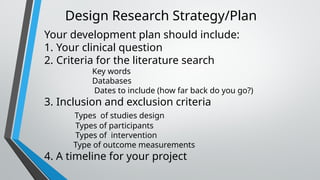
Design Research Strategy/Plan
Your development plan should include:
1. Your clinical question
2. Criteria for the literature search
Key words
Databases
Dates to include (how far back do you go?)
3. Inclusion and exclusion criteria
Types of studies design
Types of participants
Types of intervention
Type of outcome measurements
4. A timeline for your project
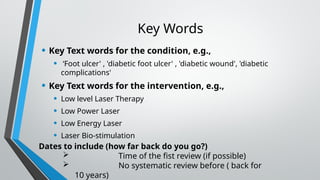
Key Words
• Key Text words for the condition, e.g.,
• ‘Foot ulcer' , 'diabetic foot ulcer' , 'diabetic wound', 'diabetic
complications'
• Key Text words for the intervention, e.g.,
• Low level Laser Therapy
• Low Power Laser
• Low Energy Laser
• Laser Bio-stimulation
Dates to include (how far back do you go?)
 Time of the fist review (if possible)
 No systematic review before ( back for
10 years)
12
Data sources for a systematic review
• Electronic databases
• MEDLINE and EMBASE
• Specialized or local databases (CINAHL, CENTRAL, AMED,…)
• Hand searching
• “Grey literature” ( thesis, Internal reports, pharmaceutical
industry files)
• Checking reference lists
• Unpublished sources known to experts in the specialty (seek by
personal communication)
• Raw data from published trials
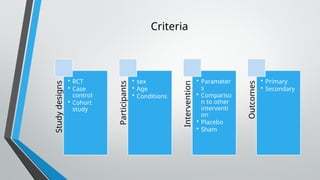
Criteria
Study
designs
• RCT
• Case
control
• Cohort
study
Participants
• sex
• Age
• Conditions
Intervention
• Parameter
s
• Compariso
n to other
interventi
on
• Placebo
• Sham
Outcomes
• Primary
• Secondary
Exercises:
As group carful read the following paper and selected the following
• Research questions
• Keywords
• Date of search
• Language of search
• Types of data base
• Criteria of search
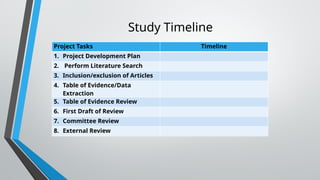
Study Timeline
Project Tasks Timeline
1. Project Development Plan
2. Perform Literature Search
3. Inclusion/exclusion of Articles
4. Table of Evidence/Data
Extraction
5. Table of Evidence Review
6. First Draft of Review
7. Committee Review
8. External Review
Synthesis and Critical Appraisal
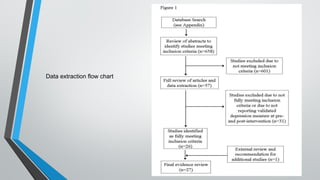
• Data Extraction (draw diagram )
• Create Tables of Evidence
• Methodological Quality
Data extraction flow chart
Create Tables of Evidence
Most common approaches to classification and
grading of the evidence
•Sackett 's 5 levels of evidence
•Oxford Centre for Evidence-Based Medicine levels
of evidence
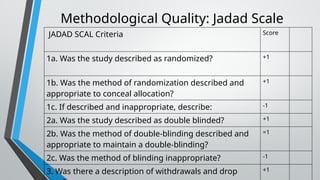
Methodological Quality: Jadad Scale
JADAD SCAL Criteria Score
1a. Was the study described as randomized? +1
1b. Was the method of randomization described and
appropriate to conceal allocation?
+1
1c. If described and inappropriate, describe: -1
2a. Was the study described as double blinded? +1
2b. Was the method of double-blinding described and
appropriate to maintain a double-blinding?
=1
2c. Was the method of blinding inappropriate? -1
3. Was there a description of withdrawals and drop +1
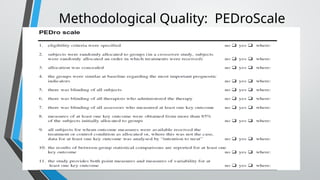
Methodological Quality: PEDroScale
Methodological Quality: Van Tulder
Systematic Review to User Product
Using the synthesis of evidence resulting from
you review
What would you take as a next step for each of
the following audiences
• CLINICIANS
• RESEARCHERS
• CONSUMERS

Developing Research Proposal Systematic Review

  • 1.
    Developing Research Proposal SystematicReview Mohammed TA, Omar Ph.D. PT Rehabilitation Health Science
  • 2.
    What is asystematic Review ? •A systematic review is defined as “a review of the evidence on a clearly formulated question that uses systematic and explicit methods to identify, select and critically appraise relevant primary research, and to extract and synthesis, analyze data from the studies that are included in the review.”
  • 3.
    3 Why ? Theproblems are that … • Too much information, too little time • Many too poorly done or insufficiently relevant to be clinically useful • Many have conflicting results • On top of these, high quality information is often not easy to find
  • 4.
    Why do systematicreviews? • Support Evidence Based Practice • Research • Inform clinical policy • Publication • Personal professional development
  • 5.
    Systematic reviews arethe same as narrative reviews Narrative vs systematic review
  • 6.
    Types of SystematicReview Interventio n • To assess the evidence about the effects of a healthcare intervention. Prognostics • To assess the evidence about the effects of a healthcare intervention Measureme nt • To assess the properties of health- status instruments or tools
  • 7.
    Stages of SystematicReview Formulate research / policy conclusions Search bibliographic databases Identify possible papers from titles/abstracts Retrieve papers Extract data Further selection of primary studies using inclusion criteria Synthesis Formulate research question Design search strategy/plan Quality appraisal
  • 8.
    Formulate Research Question PICO •What types of Participants? • What types of Interventions? • What types of Comparison? • What types of Outcomes? • The first and most important decision in preparing a review is to determine its focus • This is best done by asking clearly framed questions.
  • 9.
    Formulation of aintervention question •Does low level laser therapy effective in treatment of diabetic foot ulcer? In patients with Chronic Diabetic Foot Ulcer (DFU), does low level laser therapy lead to higher rates of healing as compared to standardized wound care?
  • 10.
    Design Research Strategy/Plan Yourdevelopment plan should include: 1. Your clinical question 2. Criteria for the literature search Key words Databases Dates to include (how far back do you go?) 3. Inclusion and exclusion criteria Types of studies design Types of participants Types of intervention Type of outcome measurements 4. A timeline for your project
  • 11.
    Key Words • KeyText words for the condition, e.g., • ‘Foot ulcer' , 'diabetic foot ulcer' , 'diabetic wound', 'diabetic complications' • Key Text words for the intervention, e.g., • Low level Laser Therapy • Low Power Laser • Low Energy Laser • Laser Bio-stimulation Dates to include (how far back do you go?)  Time of the fist review (if possible)  No systematic review before ( back for 10 years)
  • 12.
    12 Data sources fora systematic review • Electronic databases • MEDLINE and EMBASE • Specialized or local databases (CINAHL, CENTRAL, AMED,…) • Hand searching • “Grey literature” ( thesis, Internal reports, pharmaceutical industry files) • Checking reference lists • Unpublished sources known to experts in the specialty (seek by personal communication) • Raw data from published trials
  • 13.
    Criteria Study designs • RCT • Case control •Cohort study Participants • sex • Age • Conditions Intervention • Parameter s • Compariso n to other interventi on • Placebo • Sham Outcomes • Primary • Secondary
  • 14.
    Exercises: As group carfulread the following paper and selected the following • Research questions • Keywords • Date of search • Language of search • Types of data base • Criteria of search
  • 15.
    Study Timeline Project TasksTimeline 1. Project Development Plan 2. Perform Literature Search 3. Inclusion/exclusion of Articles 4. Table of Evidence/Data Extraction 5. Table of Evidence Review 6. First Draft of Review 7. Committee Review 8. External Review
  • 16.
    Synthesis and CriticalAppraisal • Data Extraction (draw diagram ) • Create Tables of Evidence • Methodological Quality
  • 17.
  • 18.
    Create Tables ofEvidence Most common approaches to classification and grading of the evidence •Sackett 's 5 levels of evidence •Oxford Centre for Evidence-Based Medicine levels of evidence
  • 19.
    Methodological Quality: JadadScale JADAD SCAL Criteria Score 1a. Was the study described as randomized? +1 1b. Was the method of randomization described and appropriate to conceal allocation? +1 1c. If described and inappropriate, describe: -1 2a. Was the study described as double blinded? +1 2b. Was the method of double-blinding described and appropriate to maintain a double-blinding? =1 2c. Was the method of blinding inappropriate? -1 3. Was there a description of withdrawals and drop +1
  • 20.
  • 21.
  • 22.
    Systematic Review toUser Product Using the synthesis of evidence resulting from you review What would you take as a next step for each of the following audiences • CLINICIANS • RESEARCHERS • CONSUMERS

Editor's Notes

  • #2 A clearly stated set of objectives with pre-defined eligibility criteria; An explicit, reproducible methodology; A systematic search that attempts to identify all the studies that meet the eligibility criteria; An assessment of the validity of the findings
  • #3 New evidence changes patient management Delay in implementation can harm patient. It is difficult to get evidence when it is needed Knowledge and clinical performance deteriorates with time without an attempt to keep up-to-date Traditional continuing education programs do not improve clinical performance EBM keeps its practitioners up-to date
  • #8 To write a good clinical question, you should ask yourself Why am I conducting the review? What do I hope to learn? Who is this information for? Consumers, clinicians, researchers, others?
  • #16 Katherine