Developing Research-
Based LessonPlans
Research-based lesson planning is an instructor’s strategic roadmap to
maximize learning outcomes and student engagement. It focuses on
integrating evidence-based strategies into every aspect of lesson design
to create impactful and effective educational experiences.
3.
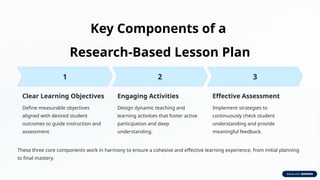
Key Components ofa
Research-Based Lesson Plan
Clear Learning Objectives
Define measurable objectives
aligned with desired student
outcomes to guide instruction and
assessment.
Engaging Activities
Design dynamic teaching and
learning activities that foster active
participation and deep
understanding.
Effective Assessment
Implement strategies to
continuously check student
understanding and provide
meaningful feedback.
These three core components work in harmony to ensure a cohesive and effective learning experience, from initial planning
to final mastery.
4.
Step-by-Step Process toDevelop Lesson Plans
1
Prioritize Objectives
Identify and focus on key learning goals.
2
Research & Gather
Explore topics and collect relevant materials.
3
Engage Prior Knowledge
Design introductions to activate student’s existing understanding.
4
Plan Core Activities
Develop varied, active learning tasks.
5
Prepare Assessment & Closure
Strategize how to check understanding and conclude the lesson.
Each step in this process is critical for building a comprehensive and impactful lesson. Reflect on each stage to maximize effectiveness.
5.
Instructional Strategies forEffective Lessons
Embrace active learning methods such as vibrant discussions, engaging
problem-solving scenarios, and hands-on tasks to keep students fully involved
and thinking critically throughout the lesson.
Incorporate explicit direct instruction (EDI) for clear and concise delivery of new
concepts, ensuring every student grasps foundational knowledge effectively.
6.
Scaffolding and Differentiation
Model& Guide
Begin by modeling tasks and
providing guided practice,
slowly releasing responsibility
to students.
Meet Diverse Needs
Differentiate instruction to
support all learners, including
English learners, ensuring
accessibility.
Utilize Visuals
Employ visual aids, sentence
frames, and realia to enhance
comprehension for all
students.
These techniques, rooted in educational psychology, ensure all students can access and master new content at their own
pace.
7.
Assessment and FeedbackStrategies
Integrate formative assessments like polls, quick quizzes, and
"think-pair-share" activities to continually monitor student
understanding.
Provide timely, specific, and actionable feedback that directly
guides student learning and improvement.
Adjust lesson pacing and content based on real-time checks of
student comprehension to ensure effective teaching.
8.
Enhancing Lessons withVisuals and
Technology
Interactive Activities
Utilize digital tools for engaging,
collaborative learning.
Dynamic Multimedia
Integrate videos, images, and charts to
clarify complex concepts.
Enhanced Comprehension
Visual aids support diverse learning
styles and boost retention.
Technology and visuals can transform passive learning into active, memorable experiences. Explore various tools and
examples to maximize their impact.
9.
Summary & BestPractices
1
Plan with Purpose
Set clear objectives and apply research-based
methodologies.
2
Engage & Support
Foster active learning and provide targeted scaffolding.
3
Assess & Adapt
Continuously check understanding and adjust
instruction.
4
Innovate with Tools
Leverage visuals and technology for richer learning.
Embrace these principles for continuous improvement in your lesson planning and teaching practice.