Determinants of Gender Based Wage Discrimination of
Agriculture Wage Laborer in Bangladesh
M. Wakilur Rahman, PhD
Department Rural Sociology
Bangladesh Agricultural University, Mymensingh-2202
Bangladesh
Seeds of Change Conference
3rd April, 2019
1
Narrowing of wage gap between similarly
qualified male and female workers.
National Agriculture Policy-2018
13.6 Reducing the wage
discrimination and take
initiatives towards ensuring
equal wages for male and
female.
MOTIVATION
2
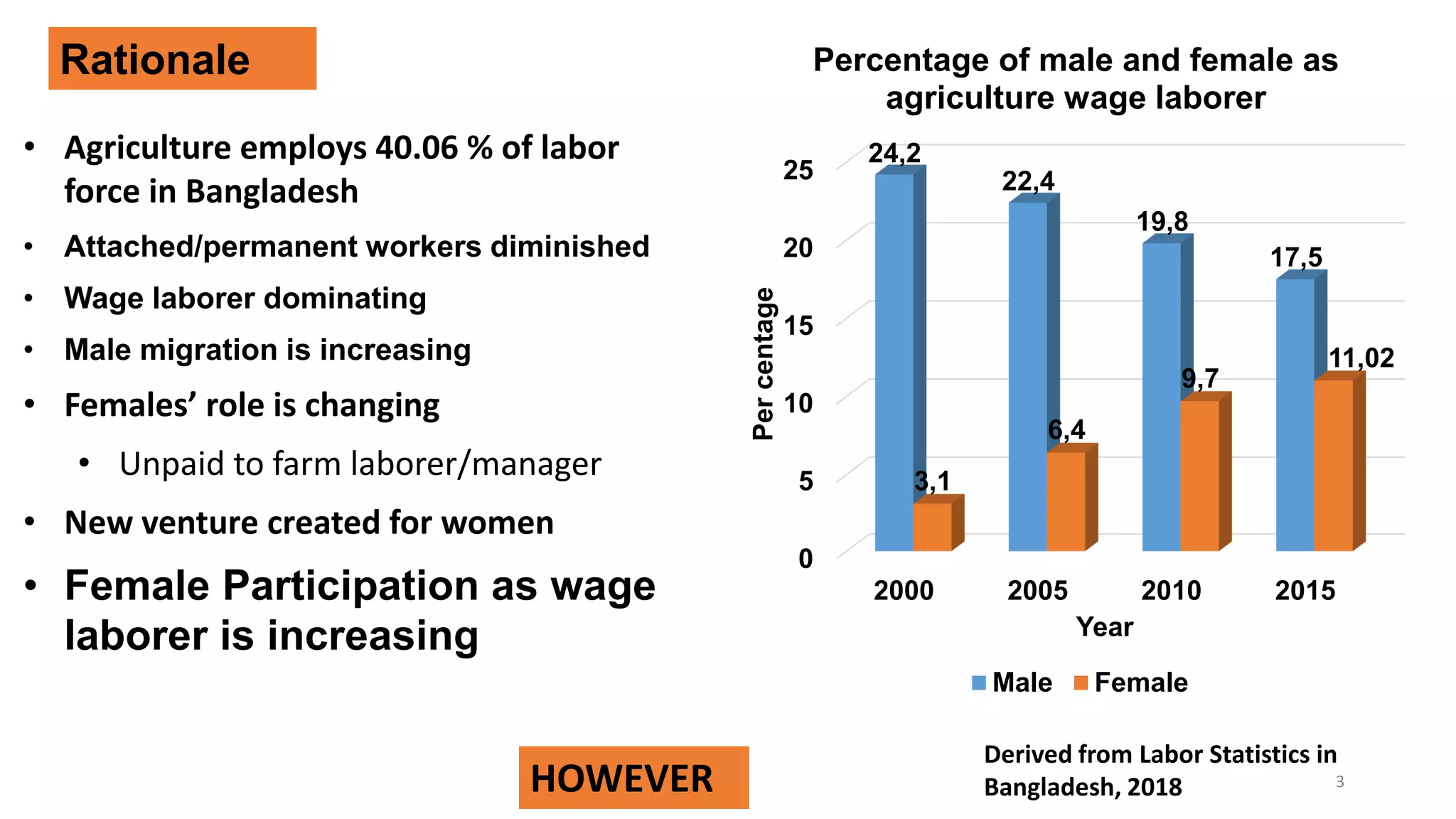
Rationale
• Agriculture employs 40.06 % of labor
force in Bangladesh
• Attached/permanent workers diminished
• Wage laborer dominating
• Male migration is increasing
• Females’ role is changing
• Unpaid to farm laborer/manager
• New venture created for women
• Female Participation as wage
laborer is increasing
HOWEVER
0
5
10
15
20
25
2000 2005 2010 2015
24,2
22,4
19,8
17,5
3,1
6,4
9,7
11,02
Percentage
Year
Percentage of male and female as
agriculture wage laborer
Male Female
Derived from Labor Statistics in
Bangladesh, 2018 3
Wage difference is reported at around 40% (FPMU, 2014);
Not equally valued, even for performing similar task;
In Rangpur region, the wage gap of agricultural workers was as 30% in
2010 that declined to 17% in 2014 (SPYP, 2015).
IFPRI research have not found positive relations between declining
wage gap and women’s participation as laborer
Rationale
4
Objectives
1. Document the existing nature of agriculture work and wage rate by
gender;
2. Identify the factors that induce wage discrimination between male and
female;
3. Propose some pragmatic strategies to reduce the wage discrimination by
gender.
5
Methodological Framework
Data &
Information
Gathering
Cross validation Outcomes
FGD with
large/medi
um farmer
FGD with
wage laborer
Analysis
Hilly areas,
Northern part,
Southern part,
and Western
part
National Seminar ?
6
Gender based task distribution
Fifty two (52) activities
(Seed germination to marketing)
Types of works
Heavy
work
33%
Medium
work
25%
Light
work
42%
Types of works
??
Major Findings
Male dominated=72 %
Female dominated=28%
7
Male
alone
27%
Both
65%
Female
alone
8%
Distribution of activities
Similar Task Done by Male and Female
WHY?
• Productivity
• Privileged position
• Working hour
• Labor availability
Actual Scenario
Male=Tk. 340
($4.15)
Female=Tk. 210
($2.56)
Ideal Scenario
Male wage Female wage
Amount varies across regions
and seasons
8
Different Task Done by
Male and Female
Why do males get
always higher?
Heavy/risky work!
Skillfull work!
Negotiation benefits
Ideal Scenario
Male wage Female wage
Actual Scenario
Male=Tk. 340 Female=Tk. 180
9
I work with male members and can do the same
work (heavy works) so receive similar wages-
Rangpur Region
Individual Case# 1
Individual Case# 2
I do similar task with male and also work
longer hour but get paid lower wages-
Jamalpur
Individual Case# 3
We are very good at transplanting
paddy but get paid lower wages than
male- Ethnic minority in Rajshahi10
DECISION FACT- Induce Factors
Greater confidence on male task
Independent working ability
Experience benefits
Negotiation advantage
Market availability
Mobility advantages
Supplementary work
Working hour…….
11
Wage Determination
Wage RATE
Owner
Wage laborer
Male
Female
Wages
increased
by 8-12%
PEAK SEASON
OFF SEASON
Wages
increased by
10-15%
Wages reduced
by 10-15%
Gainer GAINER
OWNER
Bonus
12
WAY FORWARD
Proposed strategy to reducing the gaps
National seminar
Policy brief
Alignment with 7th Five Year Plan
Determining minimum wages
Defining heavy and light works
Awareness building program
Women’s wage laborer associations
13
Acknowledgement:
• Survey participants
• Lunch Funding from ACIAR for participating the conference
• Co-authors 14

Determinants of gender based wage discrimination of agriculture wage laborer in Bangladesh

  • 1.
    Determinants of GenderBased Wage Discrimination of Agriculture Wage Laborer in Bangladesh M. Wakilur Rahman, PhD Department Rural Sociology Bangladesh Agricultural University, Mymensingh-2202 Bangladesh Seeds of Change Conference 3rd April, 2019 1
  • 2.
    Narrowing of wagegap between similarly qualified male and female workers. National Agriculture Policy-2018 13.6 Reducing the wage discrimination and take initiatives towards ensuring equal wages for male and female. MOTIVATION 2
  • 3.
    Rationale • Agriculture employs40.06 % of labor force in Bangladesh • Attached/permanent workers diminished • Wage laborer dominating • Male migration is increasing • Females’ role is changing • Unpaid to farm laborer/manager • New venture created for women • Female Participation as wage laborer is increasing HOWEVER 0 5 10 15 20 25 2000 2005 2010 2015 24,2 22,4 19,8 17,5 3,1 6,4 9,7 11,02 Percentage Year Percentage of male and female as agriculture wage laborer Male Female Derived from Labor Statistics in Bangladesh, 2018 3
  • 4.
    Wage difference isreported at around 40% (FPMU, 2014); Not equally valued, even for performing similar task; In Rangpur region, the wage gap of agricultural workers was as 30% in 2010 that declined to 17% in 2014 (SPYP, 2015). IFPRI research have not found positive relations between declining wage gap and women’s participation as laborer Rationale 4
  • 5.
    Objectives 1. Document theexisting nature of agriculture work and wage rate by gender; 2. Identify the factors that induce wage discrimination between male and female; 3. Propose some pragmatic strategies to reduce the wage discrimination by gender. 5
  • 6.
    Methodological Framework Data & Information Gathering Crossvalidation Outcomes FGD with large/medi um farmer FGD with wage laborer Analysis Hilly areas, Northern part, Southern part, and Western part National Seminar ? 6
  • 7.
    Gender based taskdistribution Fifty two (52) activities (Seed germination to marketing) Types of works Heavy work 33% Medium work 25% Light work 42% Types of works ?? Major Findings Male dominated=72 % Female dominated=28% 7 Male alone 27% Both 65% Female alone 8% Distribution of activities
  • 8.
    Similar Task Doneby Male and Female WHY? • Productivity • Privileged position • Working hour • Labor availability Actual Scenario Male=Tk. 340 ($4.15) Female=Tk. 210 ($2.56) Ideal Scenario Male wage Female wage Amount varies across regions and seasons 8
  • 9.
    Different Task Doneby Male and Female Why do males get always higher? Heavy/risky work! Skillfull work! Negotiation benefits Ideal Scenario Male wage Female wage Actual Scenario Male=Tk. 340 Female=Tk. 180 9
  • 10.
    I work withmale members and can do the same work (heavy works) so receive similar wages- Rangpur Region Individual Case# 1 Individual Case# 2 I do similar task with male and also work longer hour but get paid lower wages- Jamalpur Individual Case# 3 We are very good at transplanting paddy but get paid lower wages than male- Ethnic minority in Rajshahi10
  • 11.
    DECISION FACT- InduceFactors Greater confidence on male task Independent working ability Experience benefits Negotiation advantage Market availability Mobility advantages Supplementary work Working hour……. 11
  • 12.
    Wage Determination Wage RATE Owner Wagelaborer Male Female Wages increased by 8-12% PEAK SEASON OFF SEASON Wages increased by 10-15% Wages reduced by 10-15% Gainer GAINER OWNER Bonus 12
  • 13.
    WAY FORWARD Proposed strategyto reducing the gaps National seminar Policy brief Alignment with 7th Five Year Plan Determining minimum wages Defining heavy and light works Awareness building program Women’s wage laborer associations 13
  • 14.
    Acknowledgement: • Survey participants •Lunch Funding from ACIAR for participating the conference • Co-authors 14