Cybersecurity In
FinTech
Detecting frauds and identifying security challenges to
develop a secure FinTech.
Table Of Contents
Overview
Importance of Cybersecurity in
FinTech
Impact on business and its
customers
Key to developing a secure
FinTech
Major security challenges in the
evolving FinTech landscape
Overview
The FinTech industry is driving the digital transformation among all the industries.
With a rise in digital transactions amongst private and public organizations,
financial frauds and scams have been keeping a solid pace too.
Since the financial industry is now more than ever, connected globally, the
complexity in tracking these frauds has also increased. Understanding the types of
threats to cybersecurity, the challenges in the ever-evolving FinTech space, and
learning about advanced ways of fraud-detection and scam investigation is the key
to finding solutions to protect against these malicious activities.
UNDERSTANDING THE IMPORTANCE OF
CYBERSECURITY IN FINTECH
According to a recent security research, most companies have
unprotected data and poor cybersecurity practices in place, making
them highly vulnerable to data loss. To successfully fight against
malicious intent, it’s imperative that fintech companies make
cybersecurity awareness, prevention and security best practices an
imperative part of their culture.
Because of the high amount of customers across the world that use
financial technologies nowadays, the amount of people at risk of data
breaches of sensitive information and other cyber scams is at a high
risk. This makes it crucial to ensure that fintech companies keep their
security up for both, their staff and customers’ safety, and the overall
wellbeing of the business.
This is where staying one step ahead of the cyber attackers and
spammers becomes imperative.
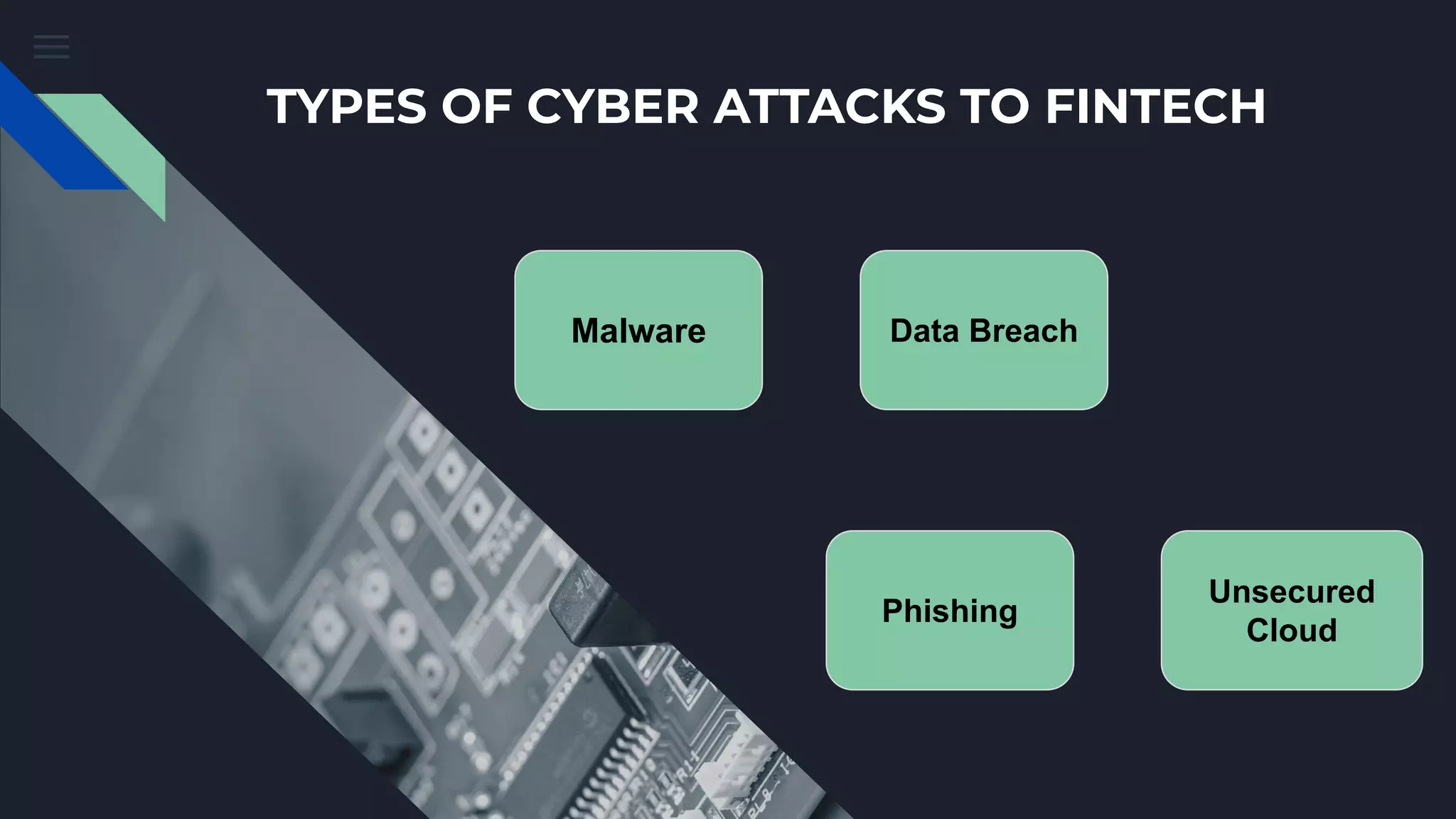
TYPES OF CYBER ATTACKS TO FINTECH
Malware Data Breach
Phishing
Unsecured
Cloud
CYBER ATTACKS IN NUMBERS
➢ According to a recent study, 94% of malware is delivered through emails.
➢ As per a study conducted by Cisco, about 60% of malicious domains are
associated with spam campaigns.
➢ Phishing attacks and frauds account for more than 80% of reported security
incidents.
➢ According to Symantec, after a decline in 2019, phishing increased in 2020 to
account for 1 in every 4,200 emails.
➢ 30% of data breaches involve internal actors.
➢ The average cost of a financial services data breach is $5.85 million USD.
➢ Cloud-based cyber attacks rose 630% between January and April 2020.
➢ Americans lost more than $97.39 million to COVID-19 and stimulus check
scams.
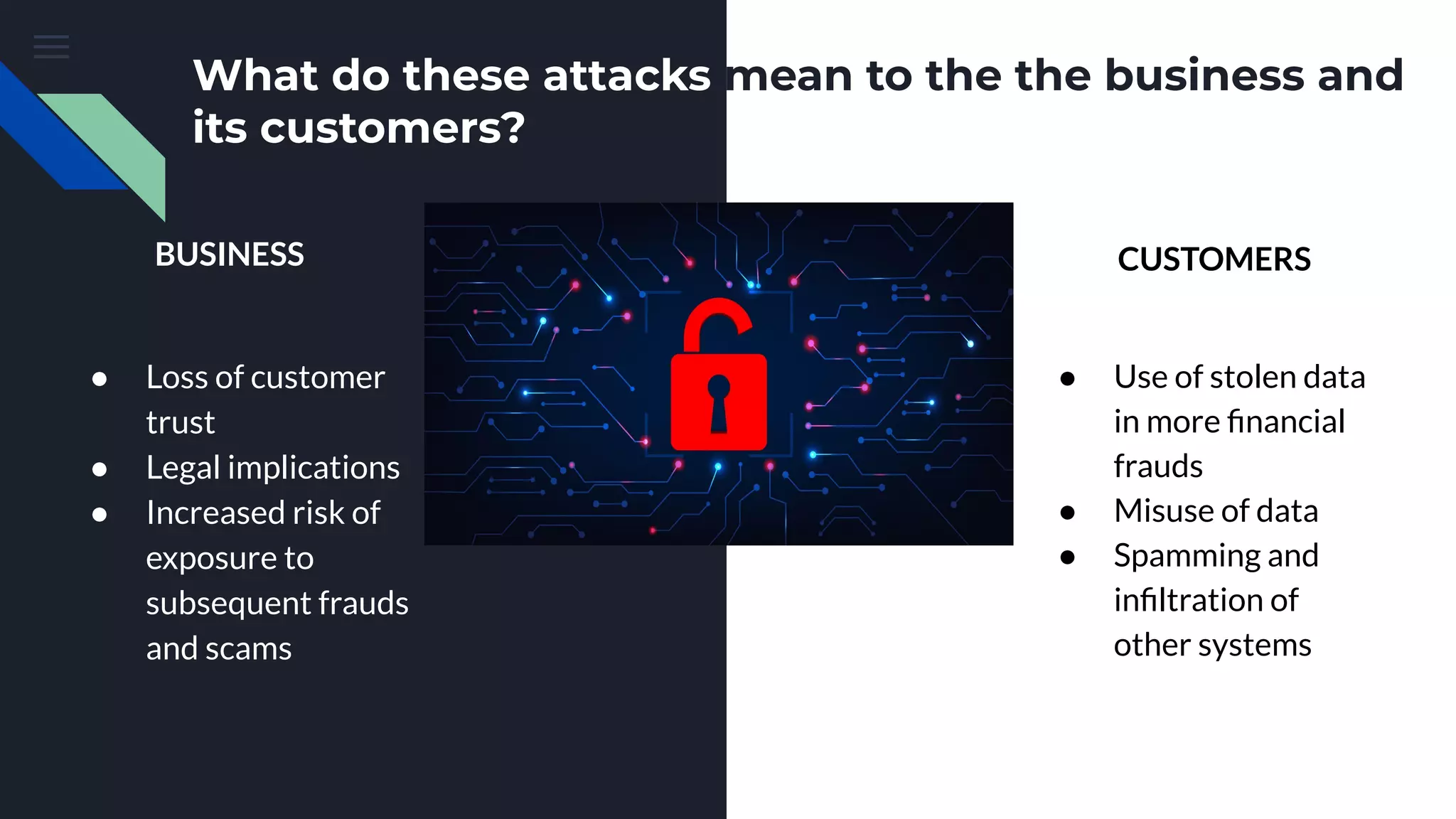
What do these attacks mean to the the business and
its customers?
● Loss of customer
trust
● Legal implications
● Increased risk of
exposure to
subsequent frauds
and scams
● Use of stolen data
in more financial
frauds
● Misuse of data
● Spamming and
infiltration of
other systems
BUSINESS CUSTOMERS
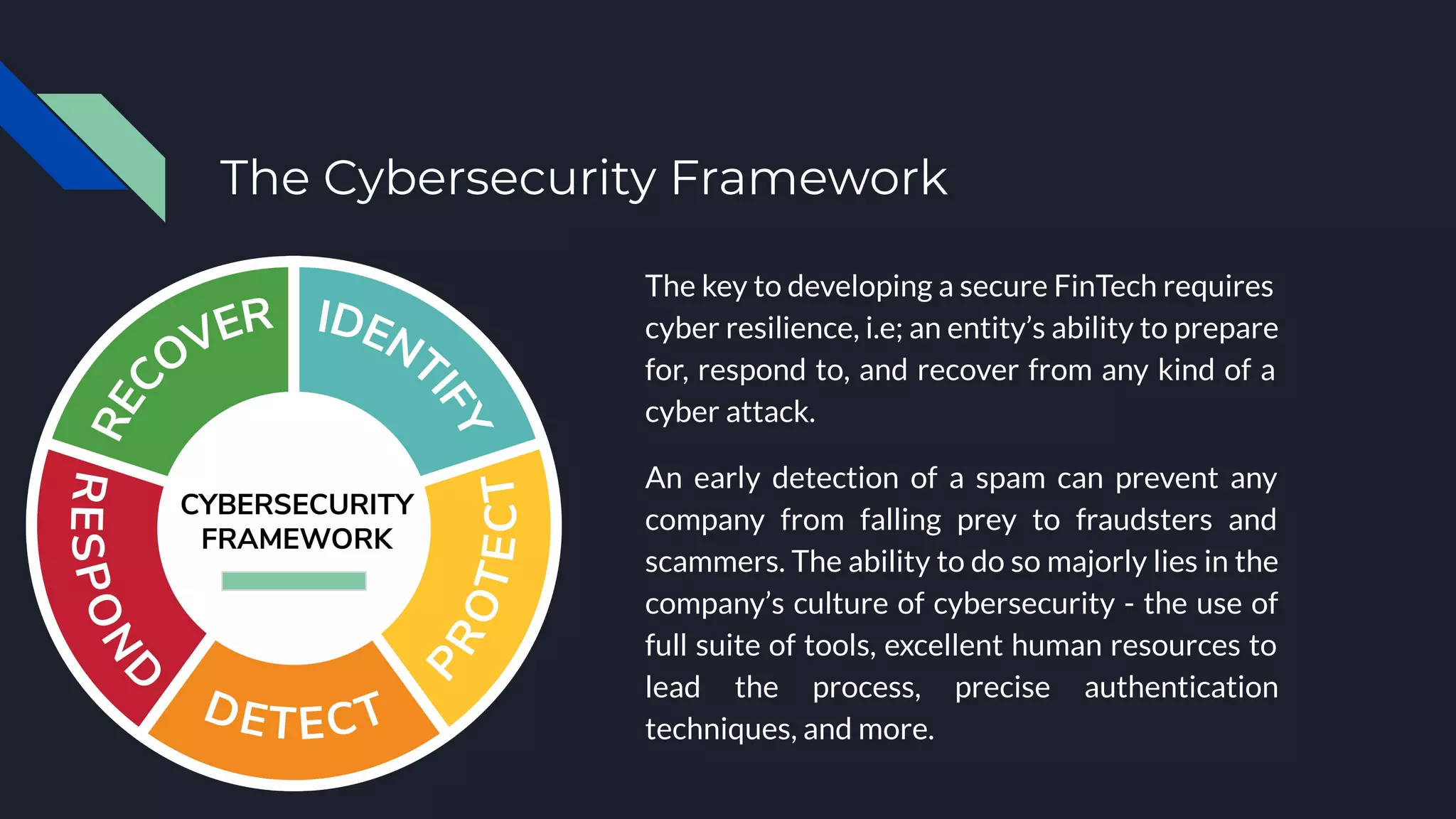
The Cybersecurity Framework
The key to developing a secure FinTech requires
cyber resilience, i.e; an entity’s ability to prepare
for, respond to, and recover from any kind of a
cyber attack.
An early detection of a spam can prevent any
company from falling prey to fraudsters and
scammers. The ability to do so majorly lies in the
company’s culture of cybersecurity - the use of
full suite of tools, excellent human resources to
lead the process, precise authentication
techniques, and more.
Thank you!
Prepared by Lakshay Mohanpuriya
Manager, Money 2.0 Conference
https://www.money2conf.com/

Detecting Frauds and Identifying Security Challenge | by Money2Conf

  • 1.
    Cybersecurity In FinTech Detecting fraudsand identifying security challenges to develop a secure FinTech.
  • 2.
    Table Of Contents Overview Importanceof Cybersecurity in FinTech Impact on business and its customers Key to developing a secure FinTech Major security challenges in the evolving FinTech landscape
  • 3.
    Overview The FinTech industryis driving the digital transformation among all the industries. With a rise in digital transactions amongst private and public organizations, financial frauds and scams have been keeping a solid pace too. Since the financial industry is now more than ever, connected globally, the complexity in tracking these frauds has also increased. Understanding the types of threats to cybersecurity, the challenges in the ever-evolving FinTech space, and learning about advanced ways of fraud-detection and scam investigation is the key to finding solutions to protect against these malicious activities.
  • 4.
    UNDERSTANDING THE IMPORTANCEOF CYBERSECURITY IN FINTECH According to a recent security research, most companies have unprotected data and poor cybersecurity practices in place, making them highly vulnerable to data loss. To successfully fight against malicious intent, it’s imperative that fintech companies make cybersecurity awareness, prevention and security best practices an imperative part of their culture. Because of the high amount of customers across the world that use financial technologies nowadays, the amount of people at risk of data breaches of sensitive information and other cyber scams is at a high risk. This makes it crucial to ensure that fintech companies keep their security up for both, their staff and customers’ safety, and the overall wellbeing of the business. This is where staying one step ahead of the cyber attackers and spammers becomes imperative.
  • 5.
    TYPES OF CYBERATTACKS TO FINTECH Malware Data Breach Phishing Unsecured Cloud
  • 6.
    CYBER ATTACKS INNUMBERS ➢ According to a recent study, 94% of malware is delivered through emails. ➢ As per a study conducted by Cisco, about 60% of malicious domains are associated with spam campaigns. ➢ Phishing attacks and frauds account for more than 80% of reported security incidents. ➢ According to Symantec, after a decline in 2019, phishing increased in 2020 to account for 1 in every 4,200 emails. ➢ 30% of data breaches involve internal actors. ➢ The average cost of a financial services data breach is $5.85 million USD. ➢ Cloud-based cyber attacks rose 630% between January and April 2020. ➢ Americans lost more than $97.39 million to COVID-19 and stimulus check scams.
  • 7.
    What do theseattacks mean to the the business and its customers? ● Loss of customer trust ● Legal implications ● Increased risk of exposure to subsequent frauds and scams ● Use of stolen data in more financial frauds ● Misuse of data ● Spamming and infiltration of other systems BUSINESS CUSTOMERS
  • 8.
    The Cybersecurity Framework Thekey to developing a secure FinTech requires cyber resilience, i.e; an entity’s ability to prepare for, respond to, and recover from any kind of a cyber attack. An early detection of a spam can prevent any company from falling prey to fraudsters and scammers. The ability to do so majorly lies in the company’s culture of cybersecurity - the use of full suite of tools, excellent human resources to lead the process, precise authentication techniques, and more.
  • 9.
    Thank you! Prepared byLakshay Mohanpuriya Manager, Money 2.0 Conference https://www.money2conf.com/