Addressing Current Challenges and Preparing for Emerging Threats A secure digital padlock on a financial background.
1.
1
1
Cybersecurity in thebanking and Finance Sector
Addressing Current Challenges and Preparing for Emerging Threats
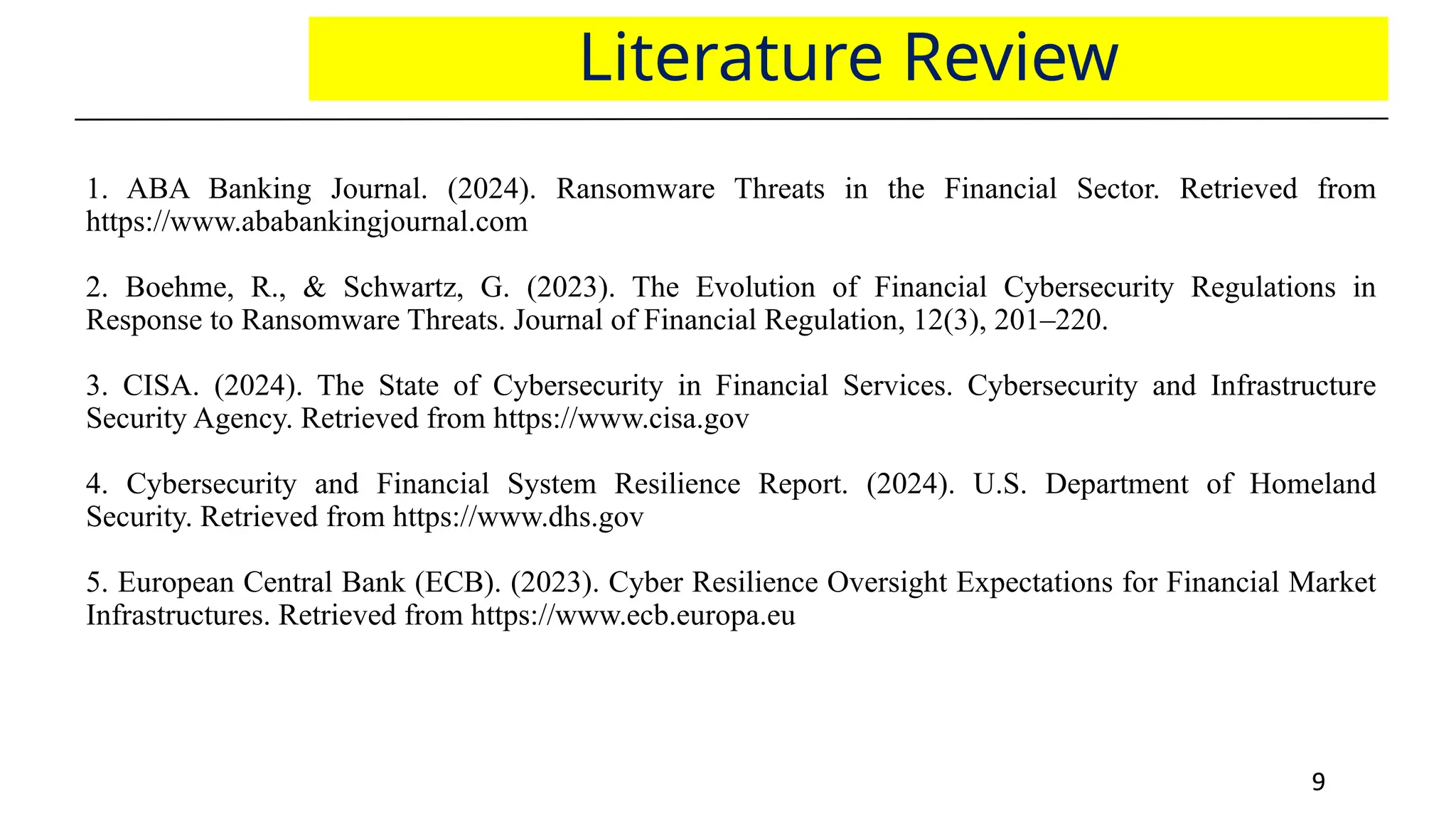
A secure digital padlock on a financial background.
2.
2
2
Introduction
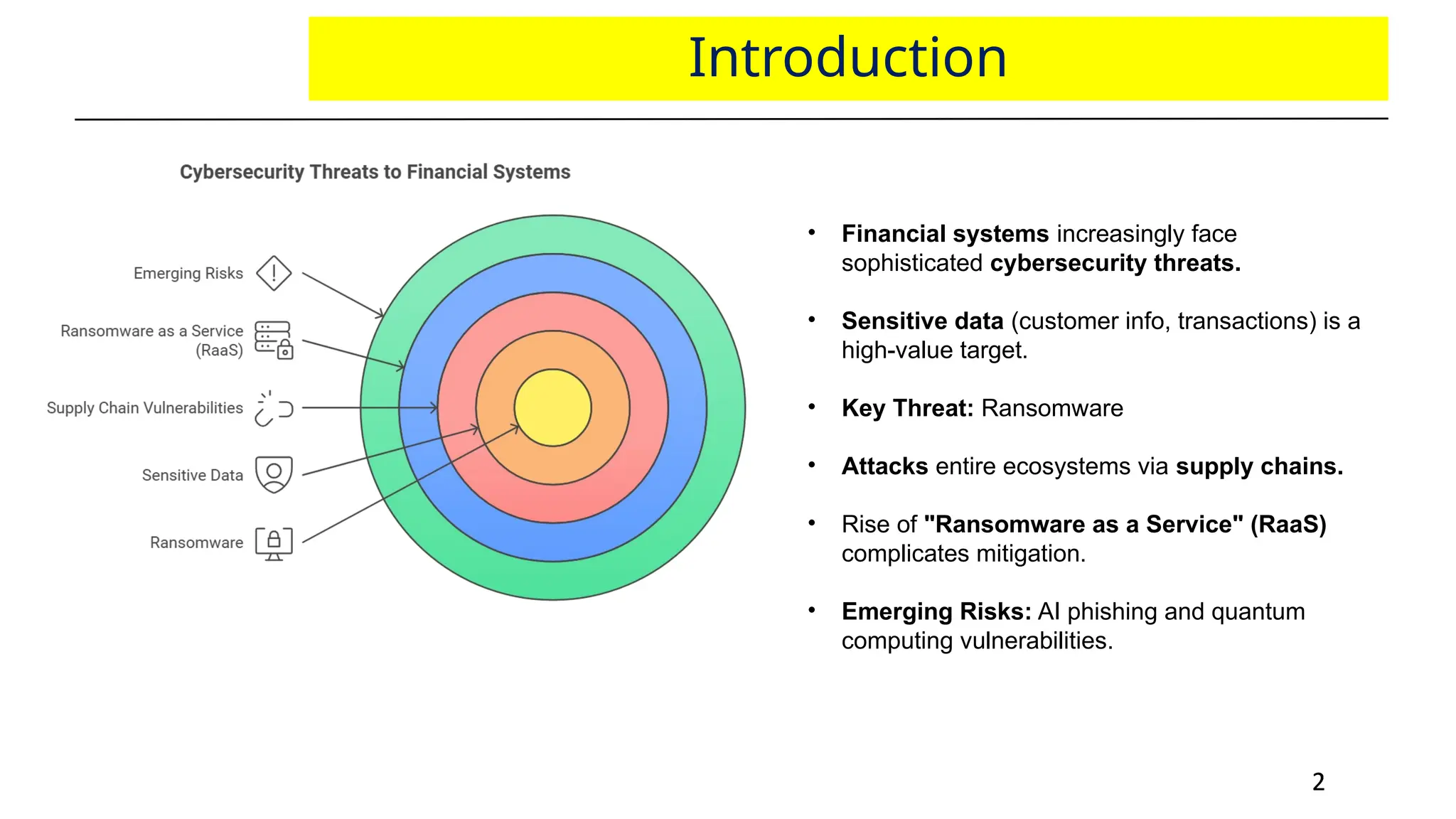
• Financial systemsincreasingly face
sophisticated cybersecurity threats.
• Sensitive data (customer info, transactions) is a
high-value target.
• Key Threat: Ransomware
• Attacks entire ecosystems via supply chains.
• Rise of "Ransomware as a Service" (RaaS)
complicates mitigation.
• Emerging Risks: AI phishing and quantum
computing vulnerabilities.
3.
3
3
Current Cybersecurity Measures
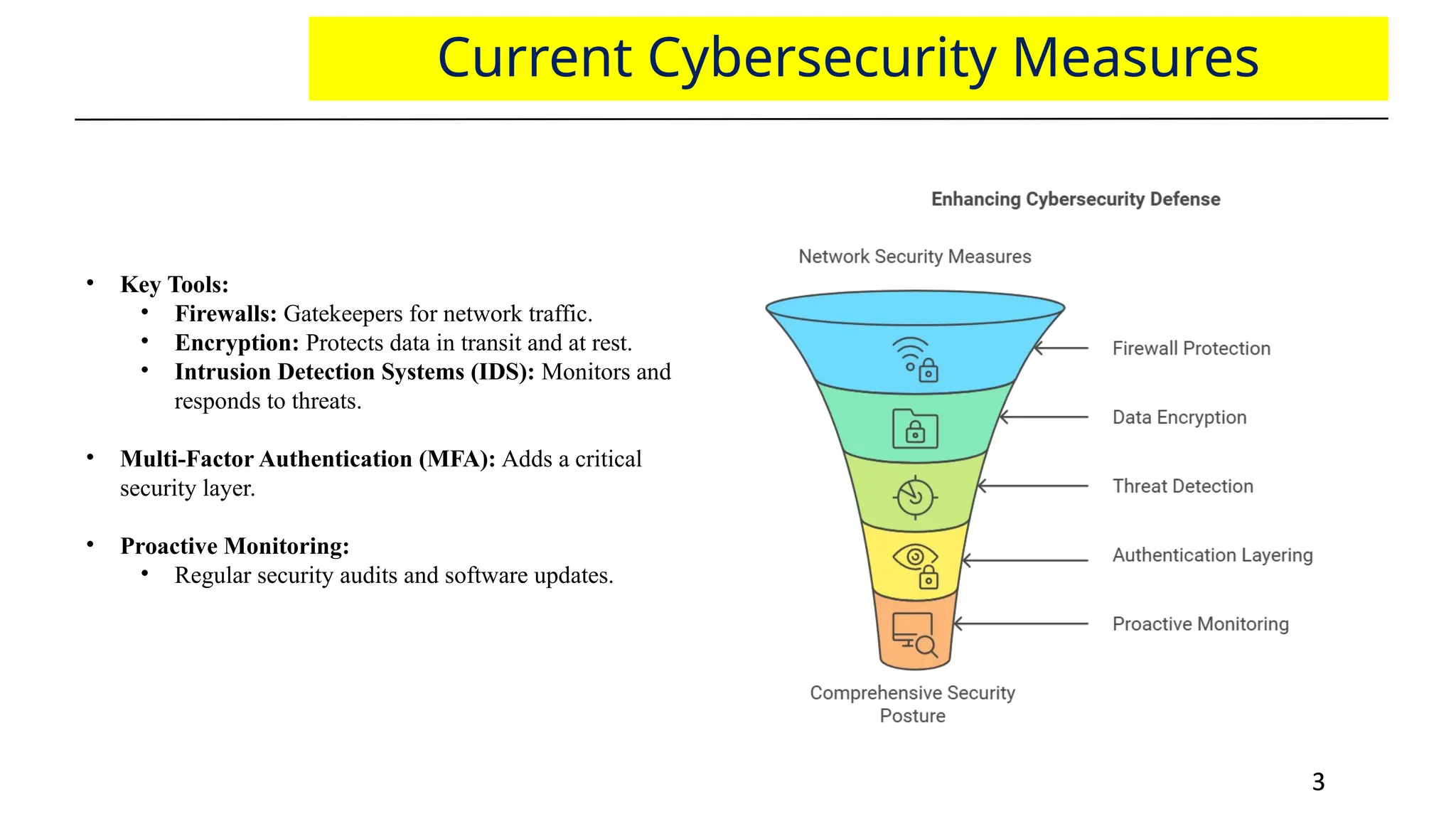
•Key Tools:
• Firewalls: Gatekeepers for network traffic.
• Encryption: Protects data in transit and at rest.
• Intrusion Detection Systems (IDS): Monitors and
responds to threats.
• Multi-Factor Authentication (MFA): Adds a critical
security layer.
• Proactive Monitoring:
• Regular security audits and software updates.
4.
4
4
Vulnerabilities and Risks
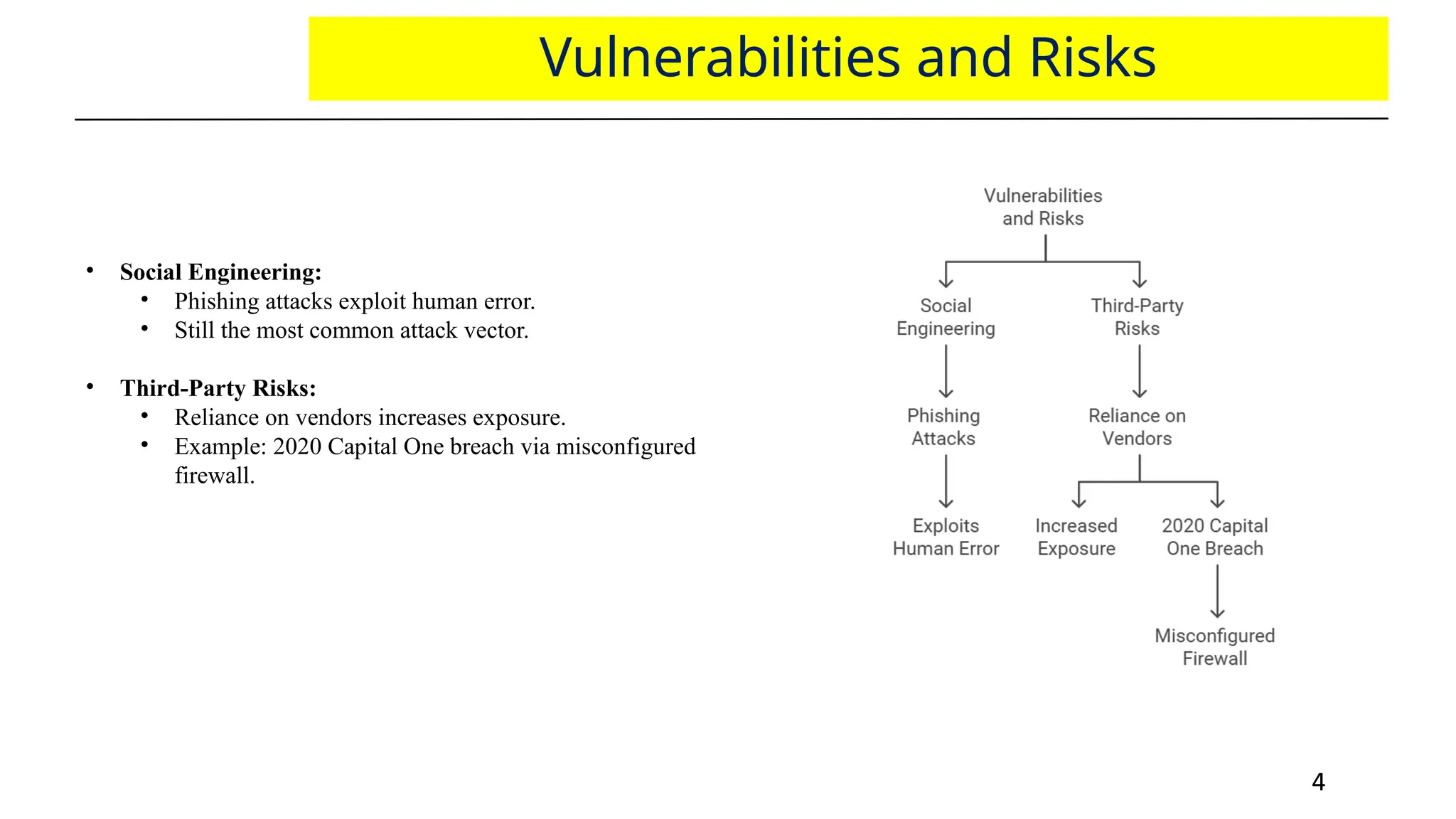
•Social Engineering:
• Phishing attacks exploit human error.
• Still the most common attack vector.
• Third-Party Risks:
• Reliance on vendors increases exposure.
• Example: 2020 Capital One breach via misconfigured
firewall.
5.
5
5
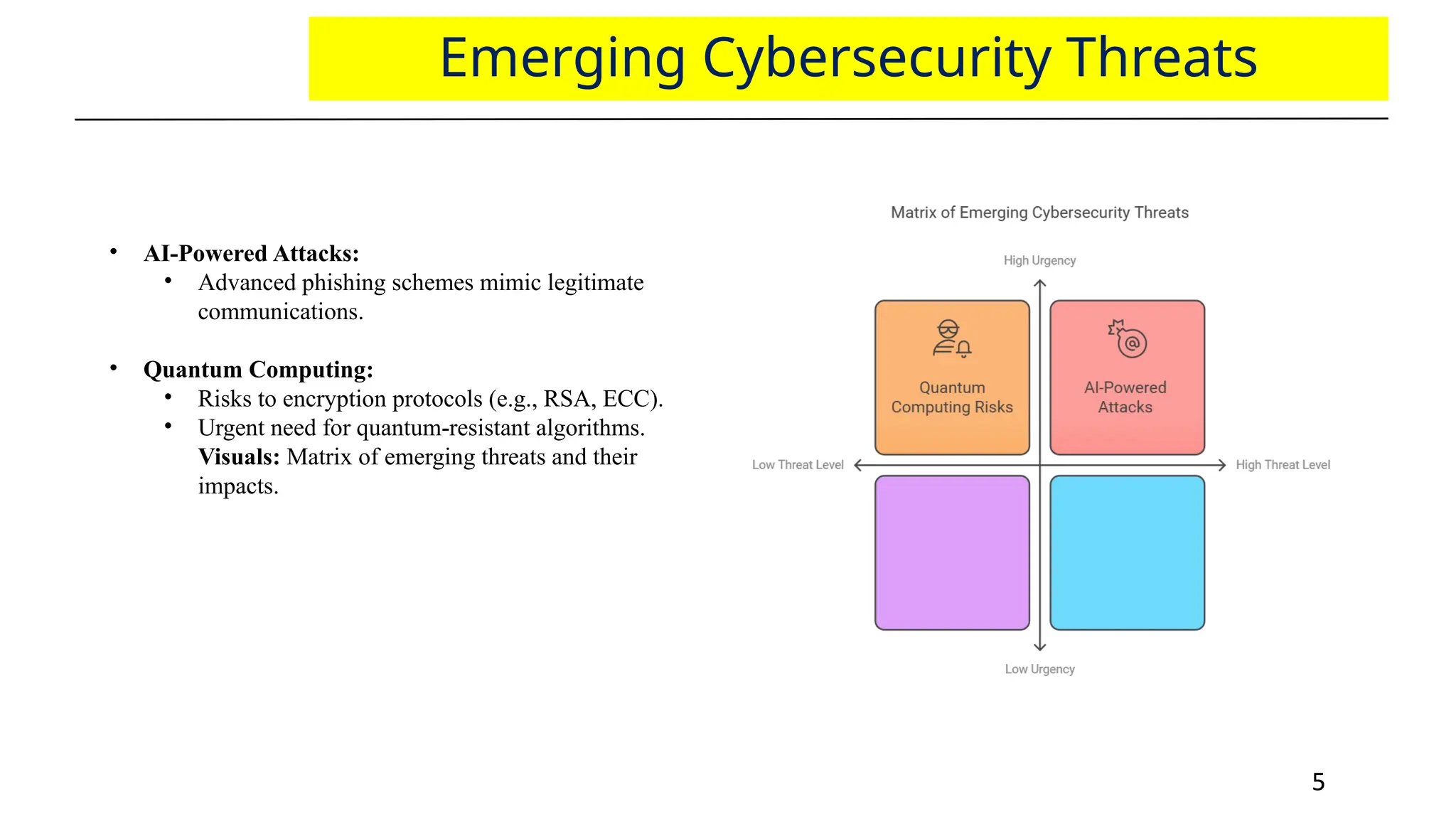
Emerging Cybersecurity Threats
•AI-Powered Attacks:
• Advanced phishing schemes mimic legitimate
communications.
• Quantum Computing:
• Risks to encryption protocols (e.g., RSA, ECC).
• Urgent need for quantum-resistant algorithms.
Visuals: Matrix of emerging threats and their
impacts.
6.
6
6
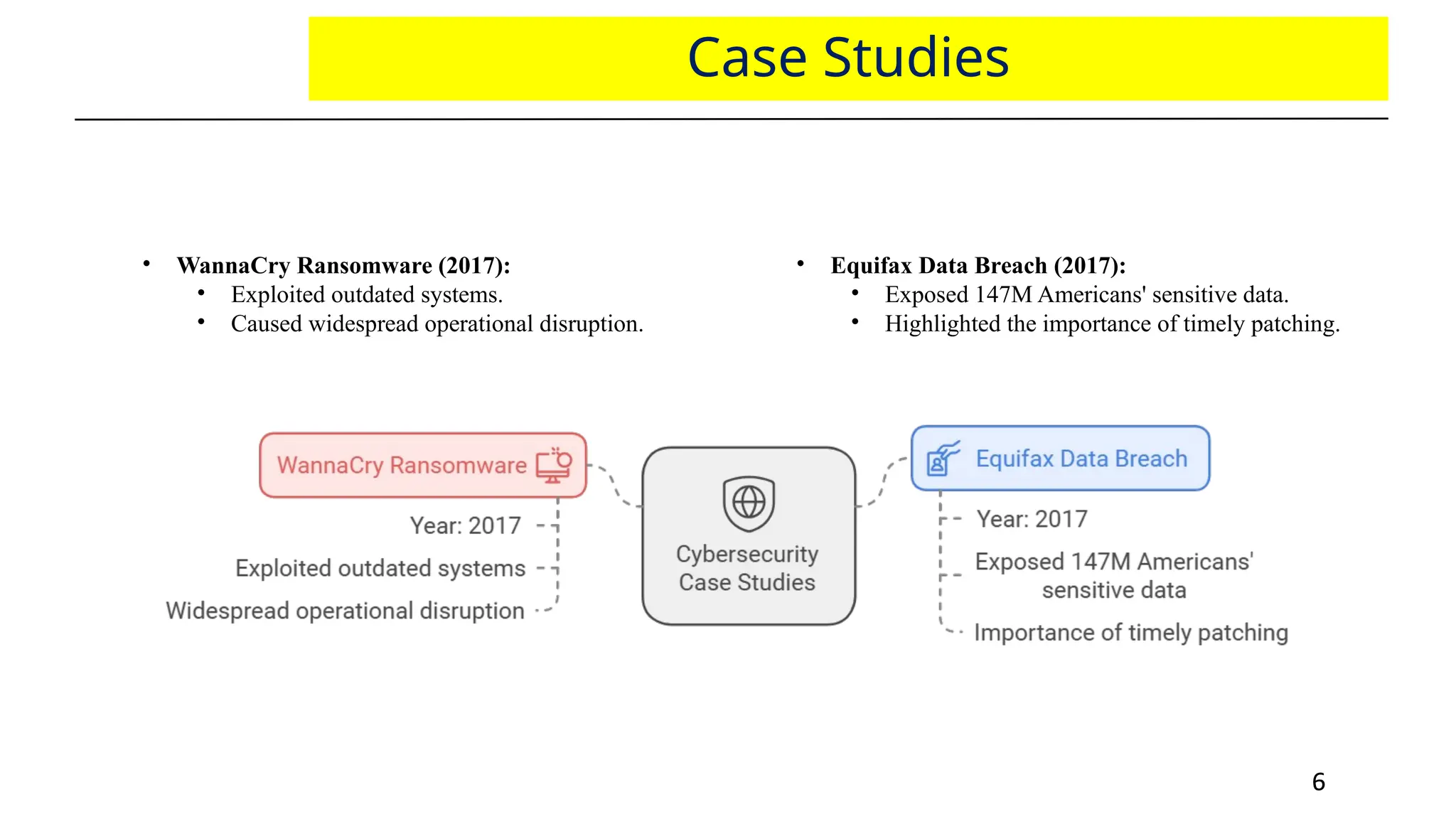
Case Studies
• WannaCryRansomware (2017):
• Exploited outdated systems.
• Caused widespread operational disruption.
• Equifax Data Breach (2017):
• Exposed 147M Americans' sensitive data.
• Highlighted the importance of timely patching.
7.
7
7
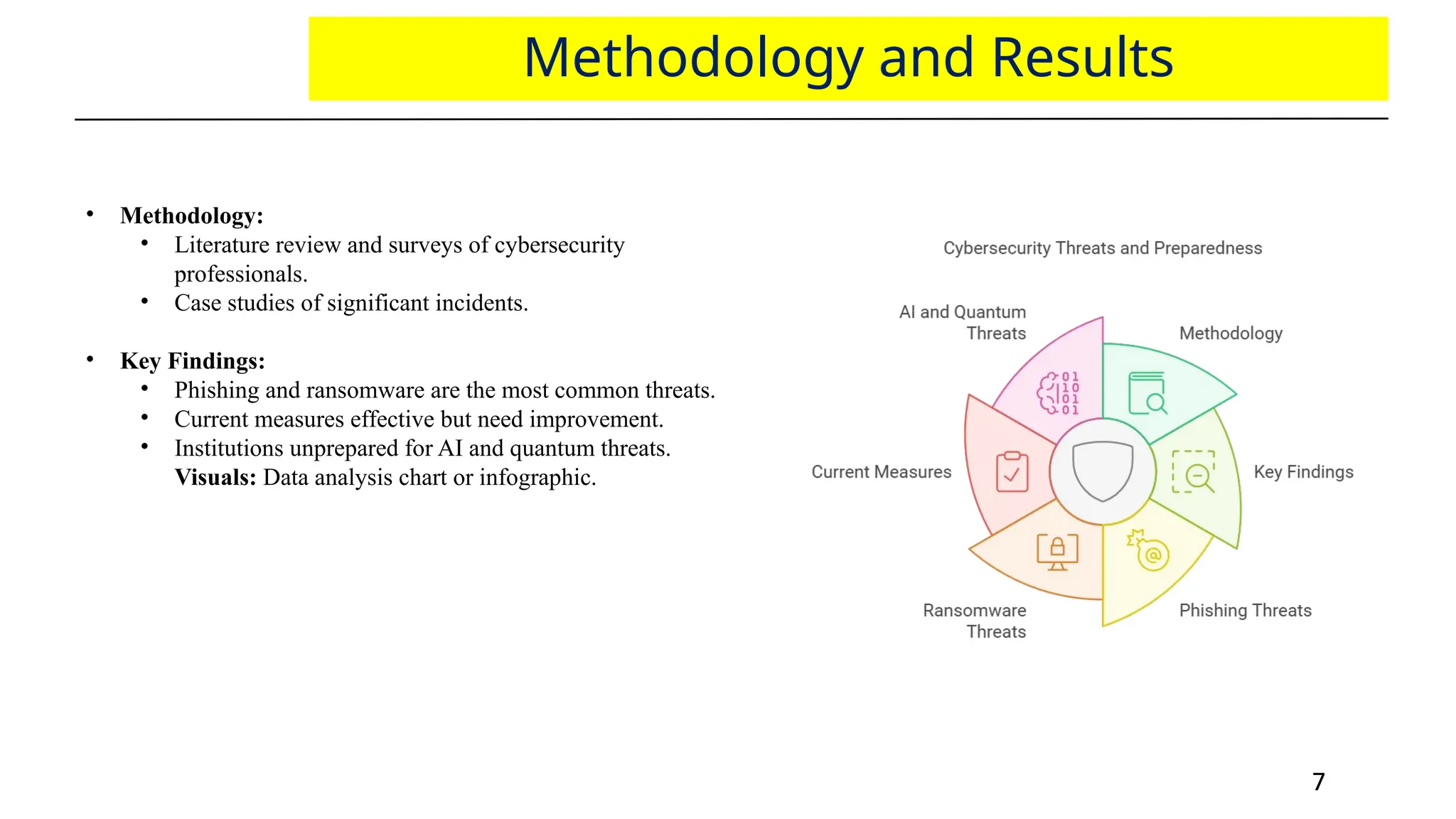
Methodology and Results
•Methodology:
• Literature review and surveys of cybersecurity
professionals.
• Case studies of significant incidents.
• Key Findings:
• Phishing and ransomware are the most common threats.
• Current measures effective but need improvement.
• Institutions unprepared for AI and quantum threats.
Visuals: Data analysis chart or infographic.
8.
8
8
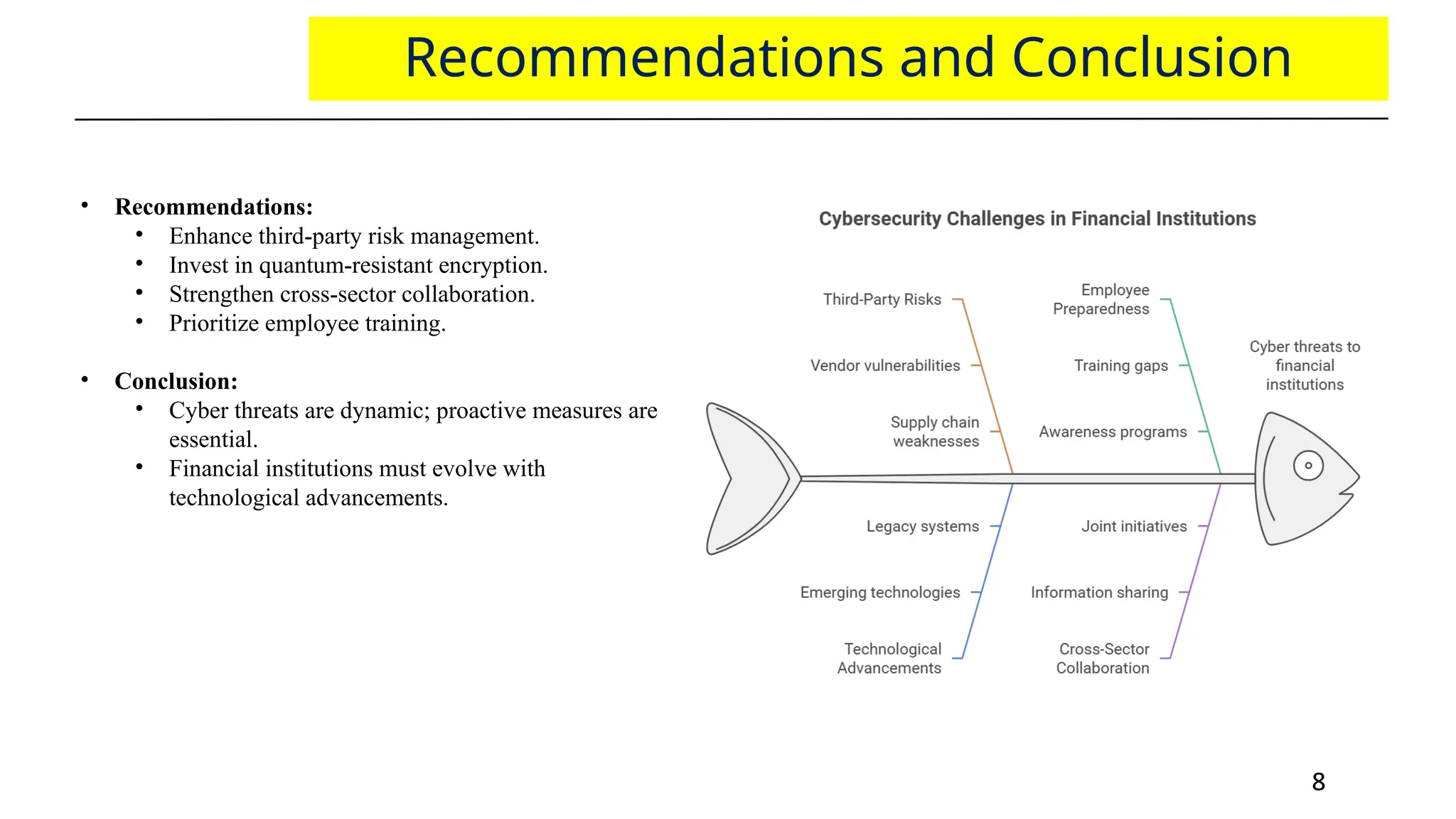
Recommendations and Conclusion
•Recommendations:
• Enhance third-party risk management.
• Invest in quantum-resistant encryption.
• Strengthen cross-sector collaboration.
• Prioritize employee training.
• Conclusion:
• Cyber threats are dynamic; proactive measures are
essential.
• Financial institutions must evolve with
technological advancements.
9.
9
9
Literature Review
1. ABABanking Journal. (2024). Ransomware Threats in the Financial Sector. Retrieved from
https://www.ababankingjournal.com
2. Boehme, R., & Schwartz, G. (2023). The Evolution of Financial Cybersecurity Regulations in
Response to Ransomware Threats. Journal of Financial Regulation, 12(3), 201–220.
3. CISA. (2024). The State of Cybersecurity in Financial Services. Cybersecurity and Infrastructure
Security Agency. Retrieved from https://www.cisa.gov
4. Cybersecurity and Financial System Resilience Report. (2024). U.S. Department of Homeland
Security. Retrieved from https://www.dhs.gov
5. European Central Bank (ECB). (2023). Cyber Resilience Oversight Expectations for Financial Market
Infrastructures. Retrieved from https://www.ecb.europa.eu
10.
10
10
Literature Review
6. Gartner,Inc. (2024). Top Cybersecurity Trends in Banking 2024. Gartner Research. Retrieved from
https://www.gartner.com
7. Gupta, A., & De, R. (2023). Quantum Computing and Financial Services: Preparing for the Future of
Cryptography. IEEE Security & Privacy, 21(5), 45–52.
8. IMF. (2024). Risks and Opportunities in the Digital Economy. International Monetary Fund. Retrieved
from https://www.imf.org
9. Jones, K., & Thompson, L. (2023). Addressing Third-Party Risk in Financial Services: A New
Approach to Vendor Security. Journal of Financial Cybersecurity, 8(2), 138–150.
10. Kaspersky Lab. (2023). The Role of AI in Modern Phishing Attacks: A Financial Sector Perspective.
Retrieved from https://www.kaspersky.com
11.
11
11
Literature Review
11. NationalInstitute of Standards and Technology (NIST). (2024). Cybersecurity Framework for
Financial Services. Retrieved from https://www.nist.gov
12. Office of the Comptroller of the Currency (OCC). (2024). The Future of Cybersecurity in the Finance
Sector: Quantum Computing and Cybersecurity Challenges. Retrieved from https://www.occ.gov
13. Payment Card Industry Data Security Standard (PCI DSS). (2024). PCI DSS Requirements and Best
Practices for Credit Card Data Protection. Retrieved from https://www.pcisecuritystandards.org
14. Symantec Corporation. (2023). Financial Industry Threat Report 2023: From 14 Ransomware to
Quantum Threats. Retrieved from https://www.symantec.com
15. Thales Group. (2024). Data Encryption in the Financial Sector: Trends, Challenges, and Solutions