Dissertation Thesis 2015-16
Synthesis,Characterisation and Biological activity of some
Sulfonamides
GUIDEDE BY:
Dr. S Sreenivasa Ph.D., D.Sc.
Associate professor and Co-ordinator
Department of study and research in chemistry
Tumkur university
SUBMITTED BY:
Shwetha S N
Reg.No. 14PCH138
2.
INTRODUCTION :
• Modernchemotherapy and concept of prodrug was successfully utilised
with the introduction of sulfonamides.
• Prontosil Red an azodye-1932, Gerhard Domagk at Bayer laboratory 1932.
• Nobel prize in medicine-1932
• Popularity of sulfonamides as antibacterial agents declined after 1945
because of
i ) Publication of reports regarding sulfonamide toxicity in some patients.
ii ) Development of sulfonamide-resistant bacterial strains and
iii ) introduction of clinically more effective antibiotics.
• After realizing the clinical deficiencies associated with the use of antibiotics,
attempts to synthesize the sulfonamides with improved qualities began in
1957. Nowadays Many sulfonamides are employed in combination therapy
in the treatment of various bacterial, protazoal and viral infections.
3.
Classification
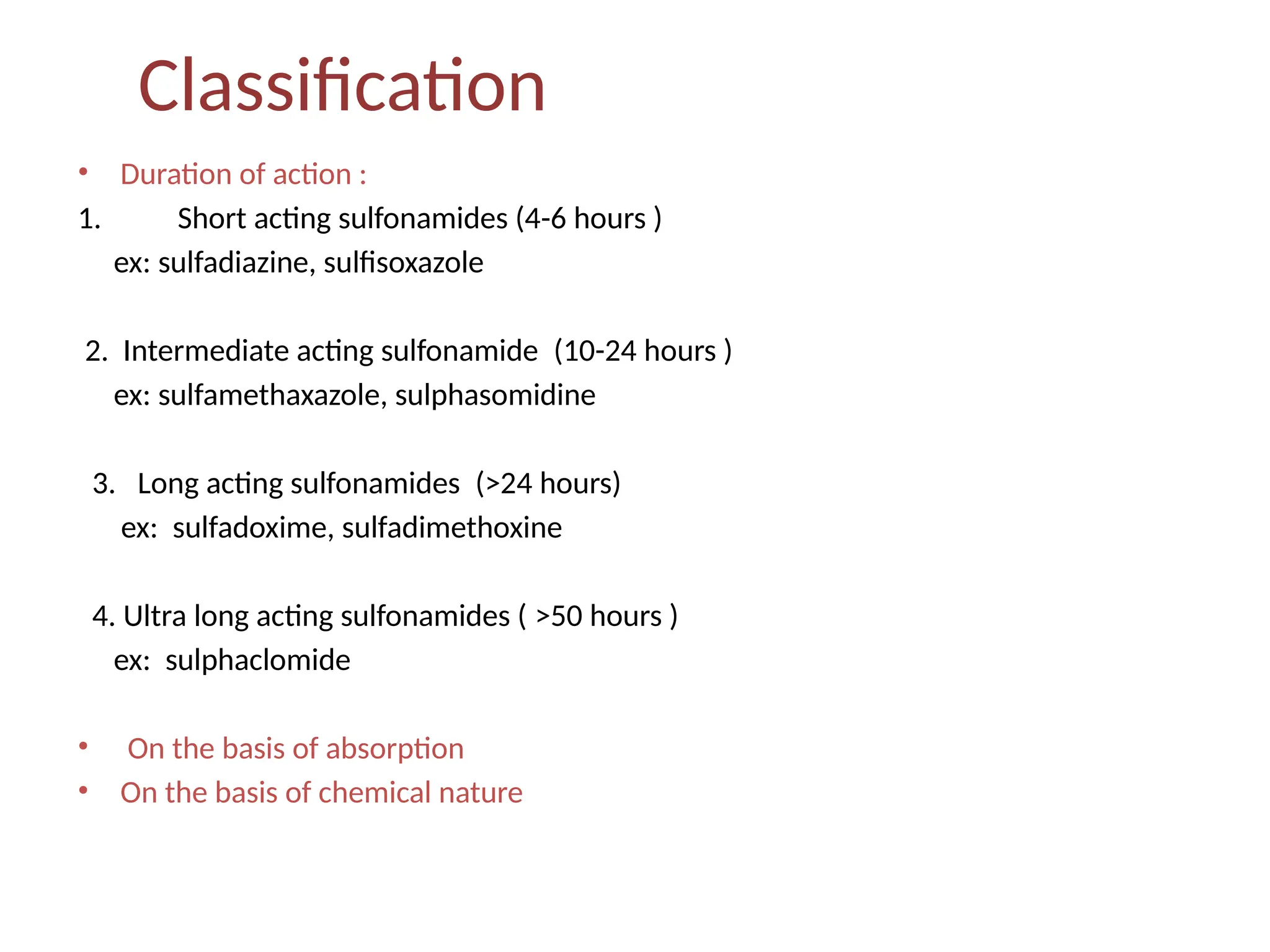
• Duration ofaction :
1. Short acting sulfonamides (4-6 hours )
ex: sulfadiazine, sulfisoxazole
2. Intermediate acting sulfonamide (10-24 hours )
ex: sulfamethaxazole, sulphasomidine
3. Long acting sulfonamides (>24 hours)
ex: sulfadoxime, sulfadimethoxine
4. Ultra long acting sulfonamides ( >50 hours )
ex: sulphaclomide
• On the basis of absorption
• On the basis of chemical nature
4.
Sulfa Drugs-Mechanism ofaction
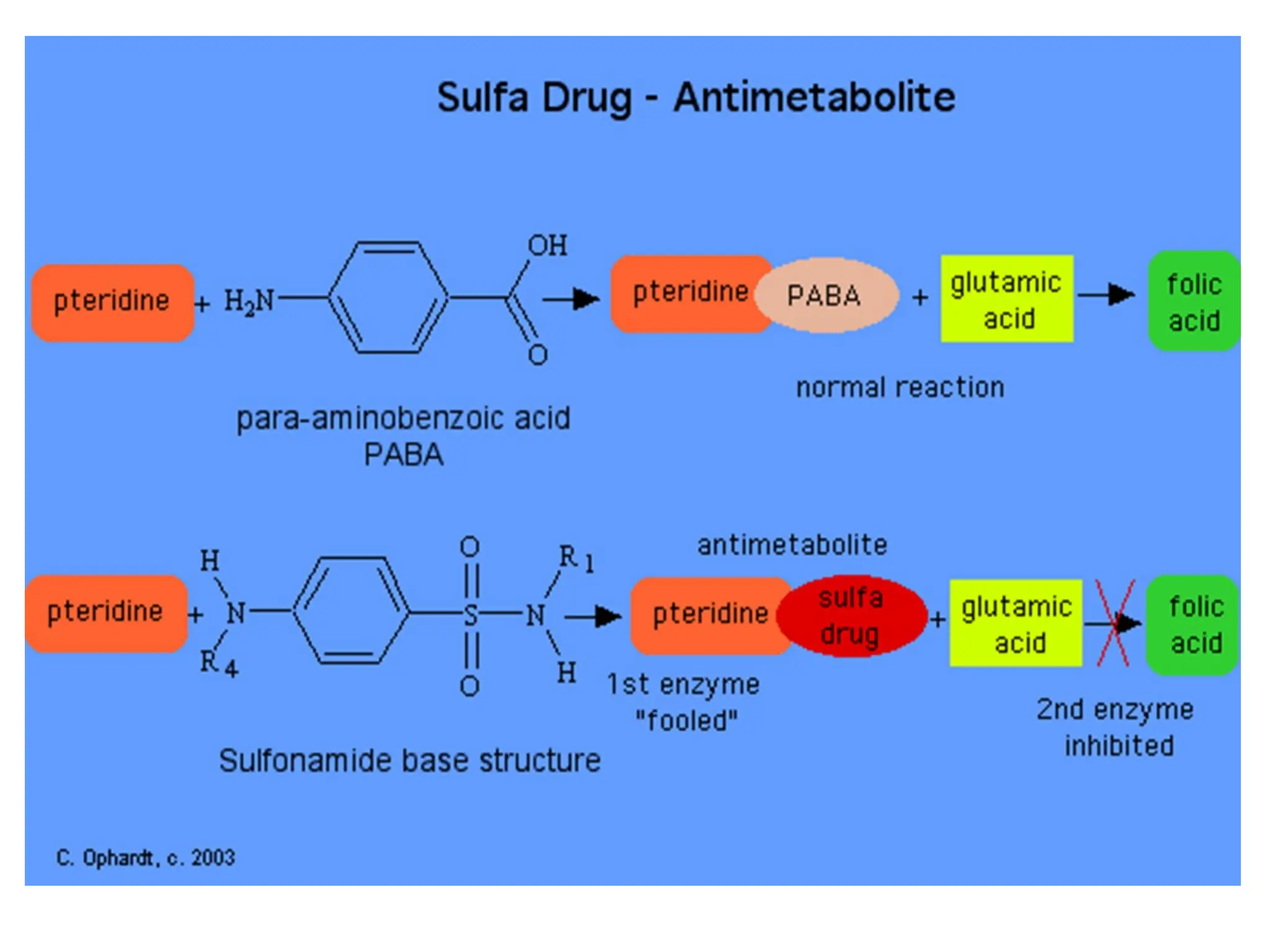
• In 1940 Filds and woods suggested that
• PABA (p-amino benzoic acid ) is essential in the biosynthesis of various folate enzymes.
• Folate derivatives like, folic acid, N5, N10- methylenetetrahydrofolic acid acts as
coenzymes in
a) carbon transfer reactions
b) synthesis of purines , thymidine and
c) some amino acids
• structural similarities between PABA and sulfonamides results in competition inhibition,
as a result sulfonamides binds to dihydropteroic acid which is a precursor of folic acid.
• Folic acid formation hindered and cell multiplication also fails and eventually leads to the
death of bacteria.
• Mammalian cells uses Pteroylglutamic acid ( PGA) present in diet and synthesises folic
acid.
8.
According to literaturesurvey, sulfonamides having aryl or alkyl groups exhibits different
biological activities such as
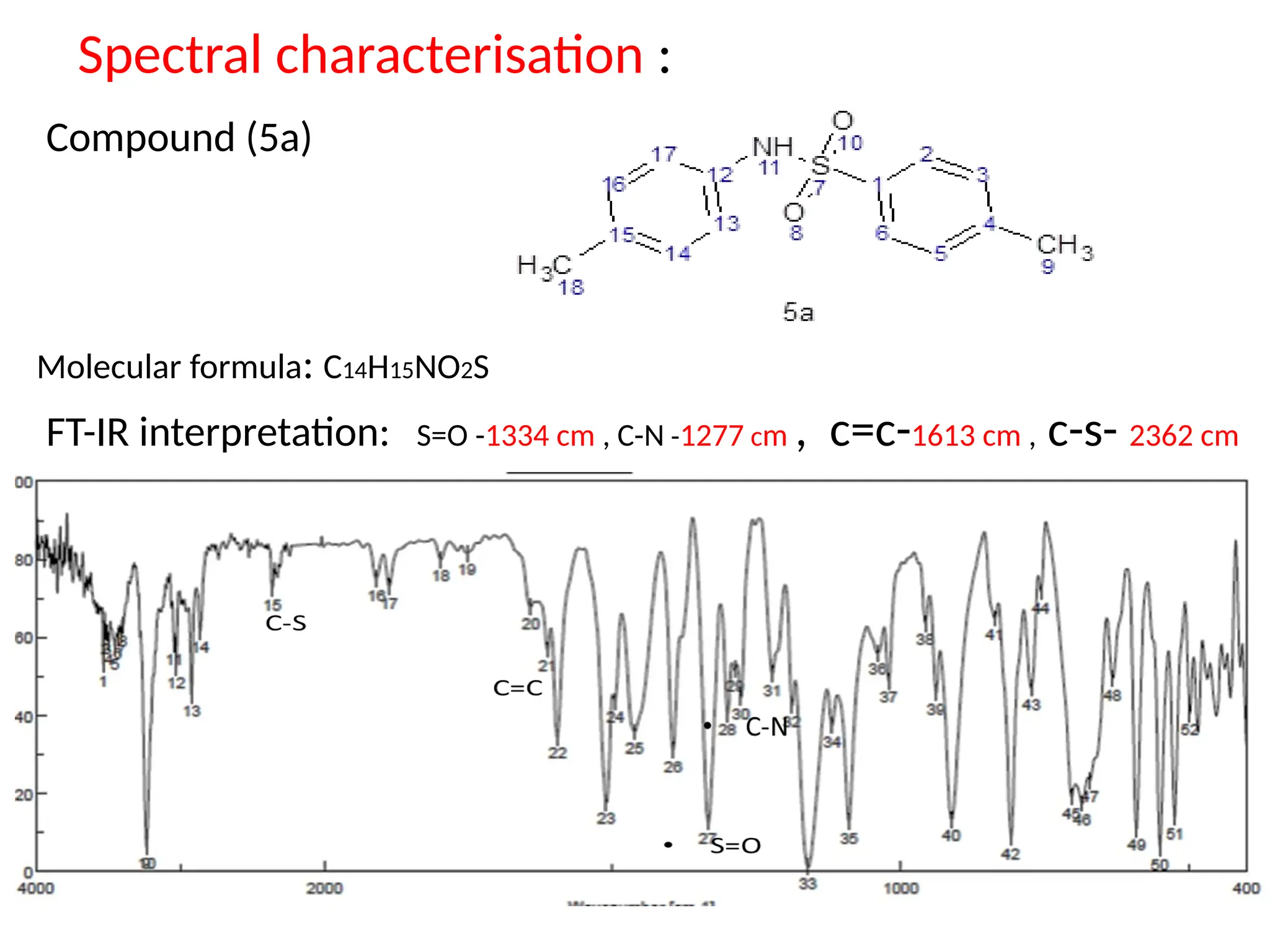
Spectral characterisation :
Compound(5a)
Molecular formula: C14H15NO2S
FT-IR interpretation: S=O -1334 cm , C-N -1277 cm , c=c-1613 cm , c-s- 2362 cm
12.
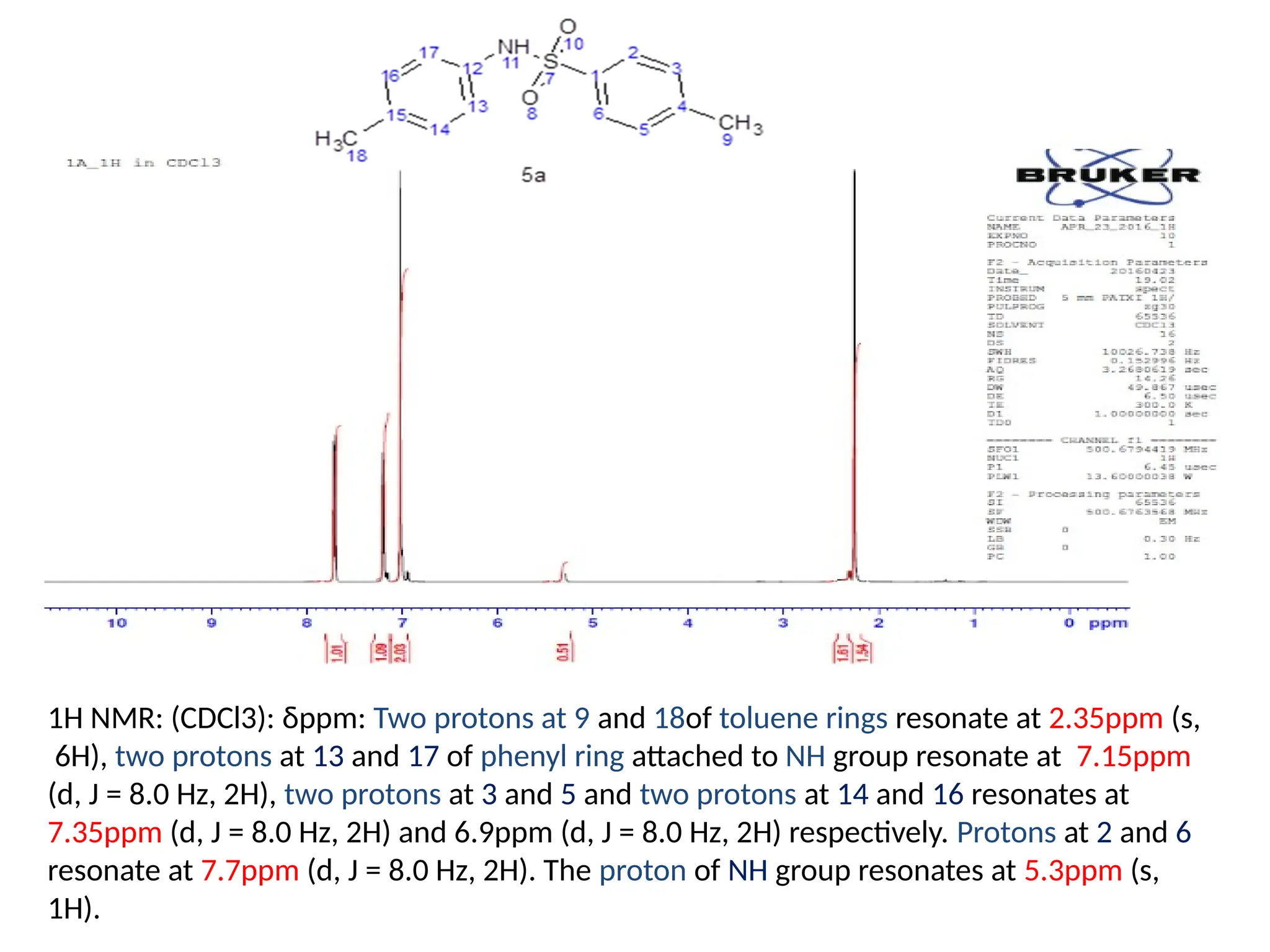
1H NMR: (CDCl3):δppm: Two protons at 9 and 18of toluene rings resonate at 2.35ppm (s,
6H), two protons at 13 and 17 of phenyl ring attached to NH group resonate at 7.15ppm
(d, J = 8.0 Hz, 2H), two protons at 3 and 5 and two protons at 14 and 16 resonates at
7.35ppm (d, J = 8.0 Hz, 2H) and 6.9ppm (d, J = 8.0 Hz, 2H) respectively. Protons at 2 and 6
resonate at 7.7ppm (d, J = 8.0 Hz, 2H). The proton of NH group resonates at 5.3ppm (s,
1H).
13.
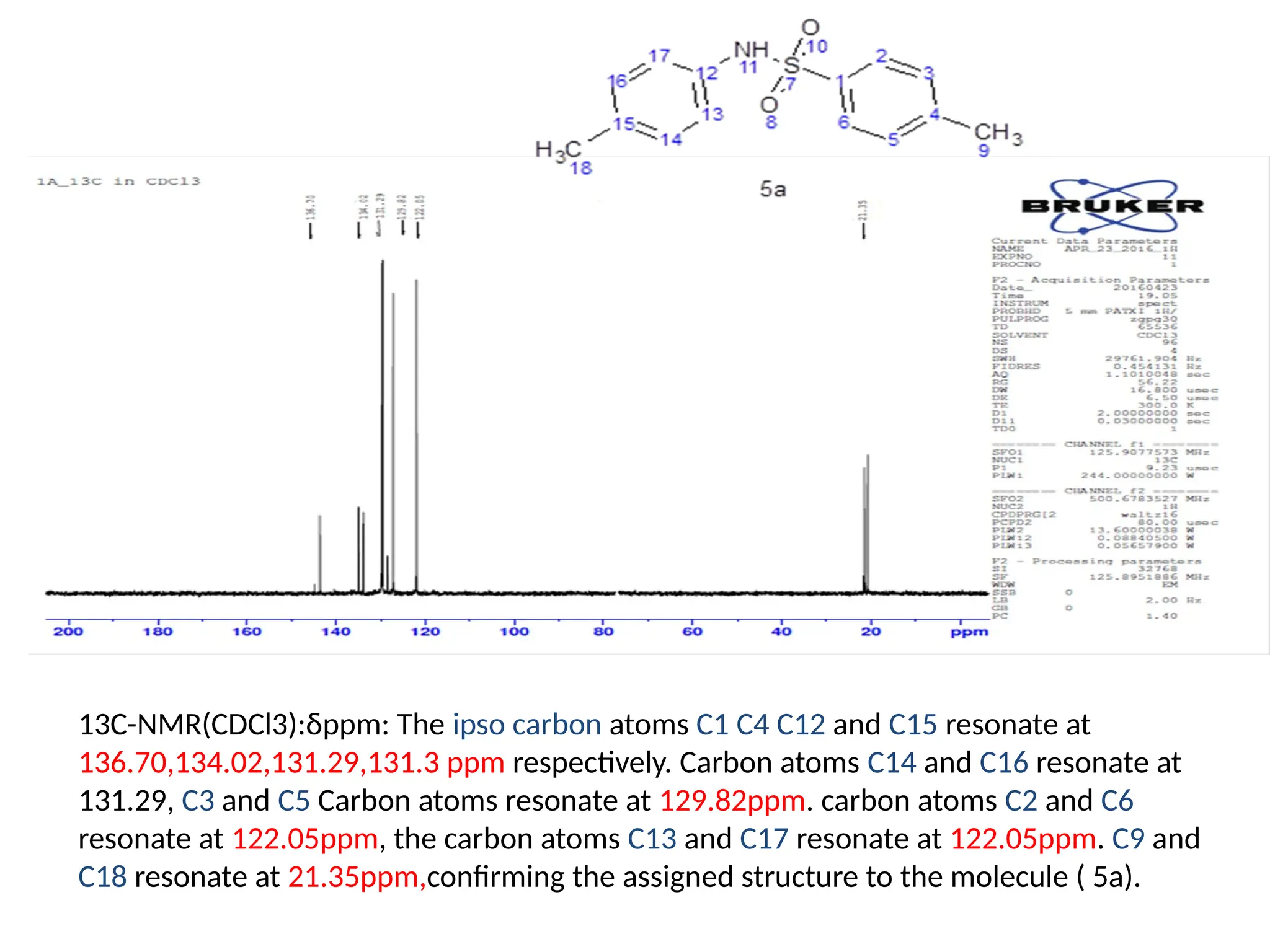
13C-NMR(CDCl3):δppm: The ipsocarbon atoms C1 C4 C12 and C15 resonate at
136.70,134.02,131.29,131.3 ppm respectively. Carbon atoms C14 and C16 resonate at
131.29, C3 and C5 Carbon atoms resonate at 129.82ppm. carbon atoms C2 and C6
resonate at 122.05ppm, the carbon atoms C13 and C17 resonate at 122.05ppm. C9 and
C18 resonate at 21.35ppm,confirming the assigned structure to the molecule ( 5a).
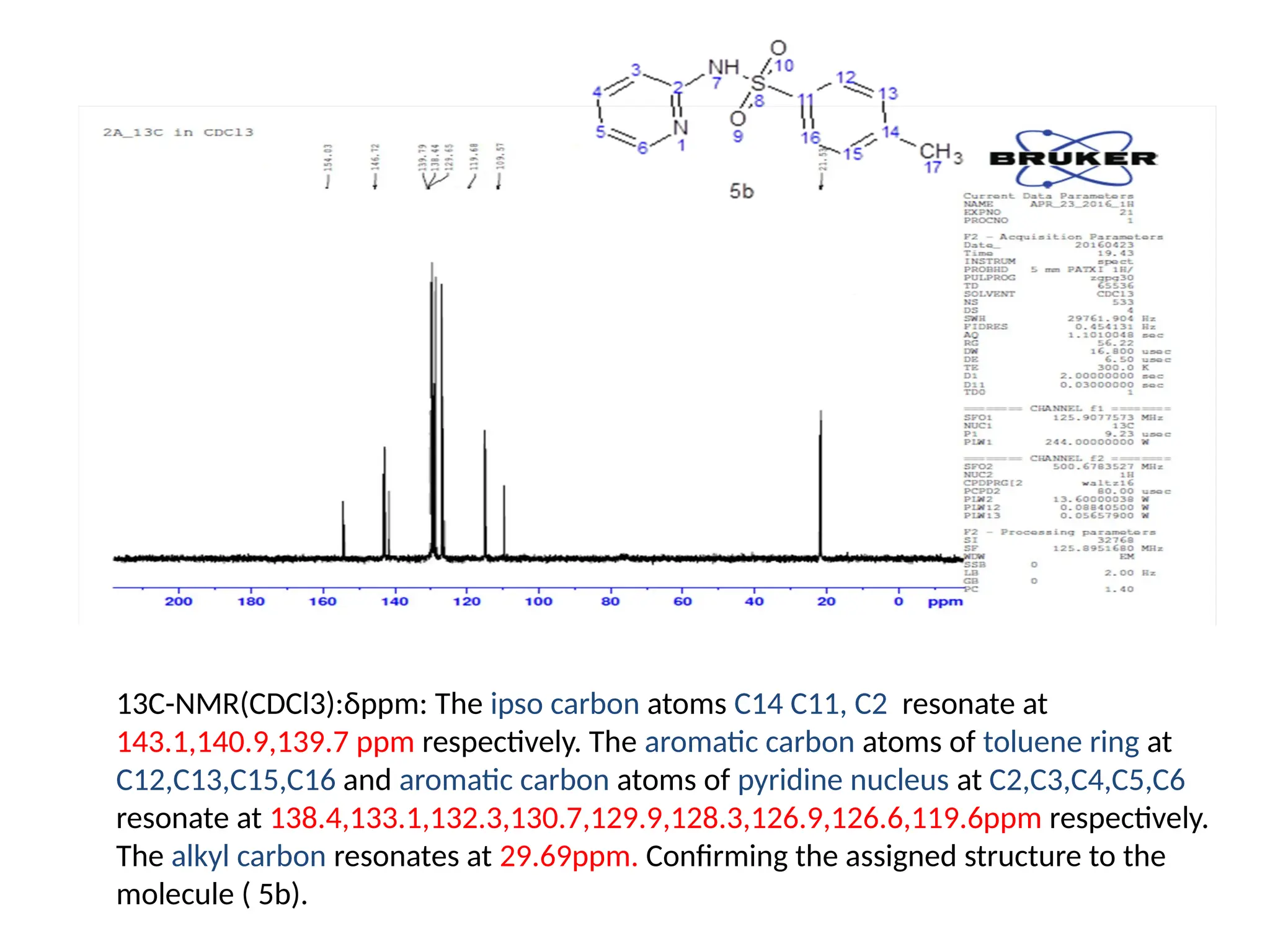
13C-NMR(CDCl3):δppm: The ipsocarbon atoms C14 C11, C2 resonate at
143.1,140.9,139.7 ppm respectively. The aromatic carbon atoms of toluene ring at
C12,C13,C15,C16 and aromatic carbon atoms of pyridine nucleus at C2,C3,C4,C5,C6
resonate at 138.4,133.1,132.3,130.7,129.9,128.3,126.9,126.6,119.6ppm respectively.
The alkyl carbon resonates at 29.69ppm. Confirming the assigned structure to the
molecule ( 5b).
16.
• Compound (5c)
•Molecular formula: C18H19N3O3S
• FT IR : C=C-1633cm ,C-N-1299cm ,C-S -2339cm ,S=O—1367cm ,C=O-1672cm
c=o
17.
1H NMR: (CDCl3):δppm: Three protons at 13 resonate at 2.25ppm(s, 3H) and the protons
of N-Methyl group resonate at 3.1ppm(s, 3H). protons of methyl group attached to phenyl
group resonate at 2.35ppm(s, 3H). NH proton resonate at 6.2ppm(s, 1H). two protons at 7
and 11 resonate at 7.2ppm(d, J = 7.5, 2H).two protons at 8 and 10 resonate at 7.2-7.4
ppm (m, 5H), single proton at 9 resonate at 6.9ppm(t, 3H). protons at 21 and 23
resonates at 7.5ppm (d, J = 7.5,2H). protons at 20 and 24 resonate at 7.7ppm (d, J = 7.5,
2H).
18.
13C-NMR(CDCl3):δppm: The ipsocarbon atoms C6,C9,C19, C22, C3 and C4 resonate at
134.49,125.29,135.8,136.3129.31,124.40ppm respectively. The carbon atoms
C13,C25,C12 resonate at 11.39,21.72,35.08 respectively. The carbonyl carbon resonate at
161.8ppm. carbon atoms C8,C10,C21,C23 resonate at 129.02 ppm. The two carbon
atoms C20 and C24 resonate at 127.53ppm. C7 and C11 carbon atoms resonate at
127.21.Confirming the assigned structure to the molecule ( 5c).
1H NMR: (CDCl3):δppm: Two protons at 2and 6 of phenyl ring attached to sulfonyl
group resonate at 7.8ppm (d, J = 7.5 Hz, 2H), two protons at 3 and 5 of phenyl ring
resonate at 7.4ppm (d, J = 7.5 Hz, 2H), proton at 9 resonate at 2.4ppm (s, 3H) . nine
protons of three methyl groups 13,14,15 resonate at 1.2ppm (s, 9H),. The proton of NH
group resonates at 5.0ppm (s, 1H).
21.
13C-NMR(CDCl3):δppm: The ipsocarbon atoms C1 C4 resonate at 142.77,140.60ppm
respectively. The aromatic carbon atoms at C2 and C6 resonate at 127.05ppm. the
carbon atoms C3 and C5 at 129.46 ppm. The carbon atom C12 resonate at 54.51ppm.
three carbon atoms of three methyl groups resonate at 30.12ppm. the carbon atom C9
resonates at 21.47ppm. Confirming the assigned structure to the molecule ( 5d)
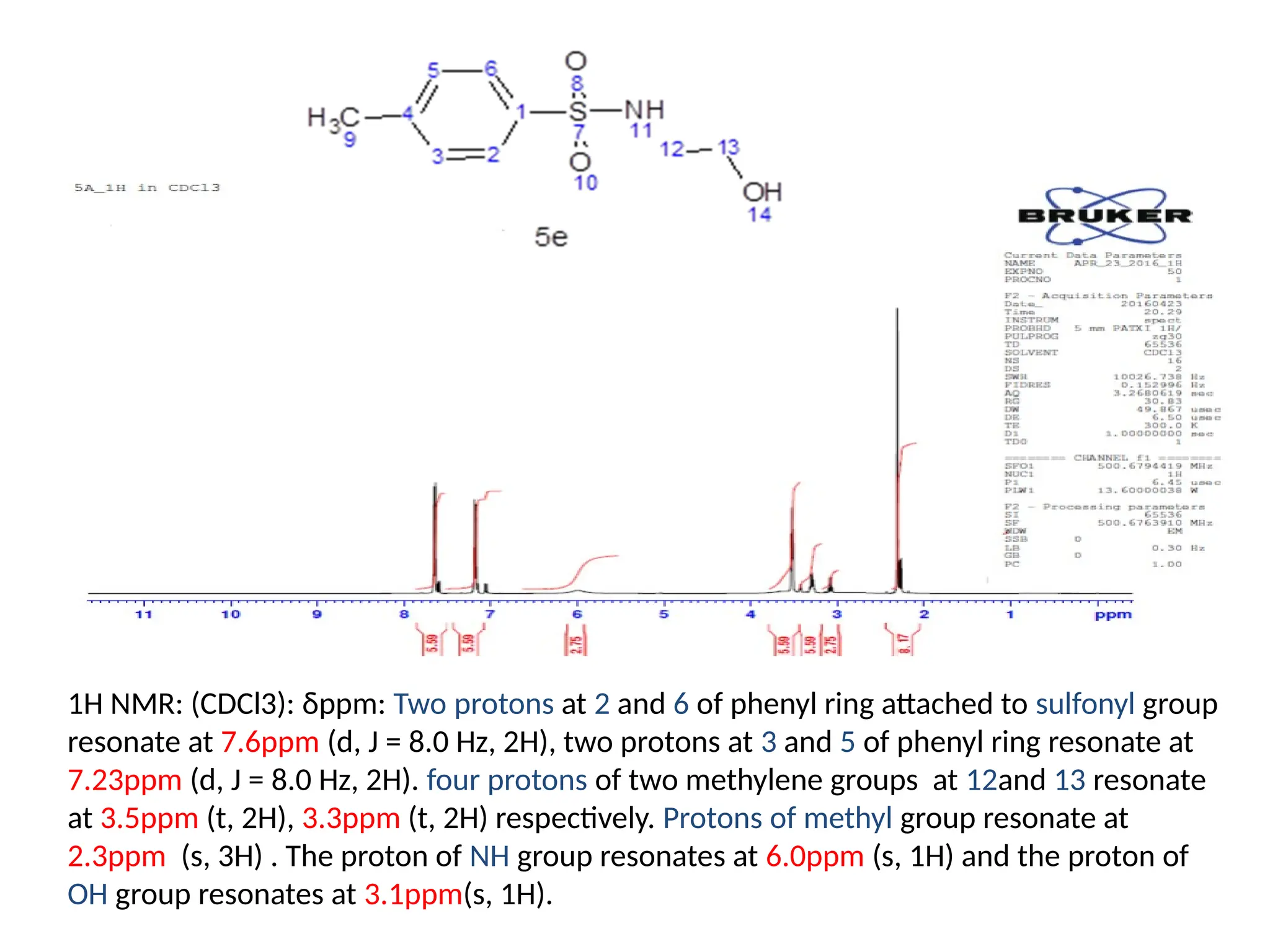
1H NMR: (CDCl3):δppm: Two protons at 2 and 6 of phenyl ring attached to sulfonyl group
resonate at 7.6ppm (d, J = 8.0 Hz, 2H), two protons at 3 and 5 of phenyl ring resonate at
7.23ppm (d, J = 8.0 Hz, 2H). four protons of two methylene groups at 12and 13 resonate
at 3.5ppm (t, 2H), 3.3ppm (t, 2H) respectively. Protons of methyl group resonate at
2.3ppm (s, 3H) . The proton of NH group resonates at 6.0ppm (s, 1H) and the proton of
OH group resonates at 3.1ppm(s, 1H).
24.
13C-NMR(CDCl3):δppm: The ipsocarbon atoms C1 C4 resonate at 136.6,140.25
ppm respectively. The aromatic carbon atoms C2 and C6 resonate at 128.81ppm.
the aromatic carbon atoms C3 and C5 resonate at 129.3ppm. The alkyl carbon
atoms C9,C12, C13 resonates at 21.36,45.20,60.90 ppm respectively. Confirming
the assigned structure to the molecule ( 5e)
25.
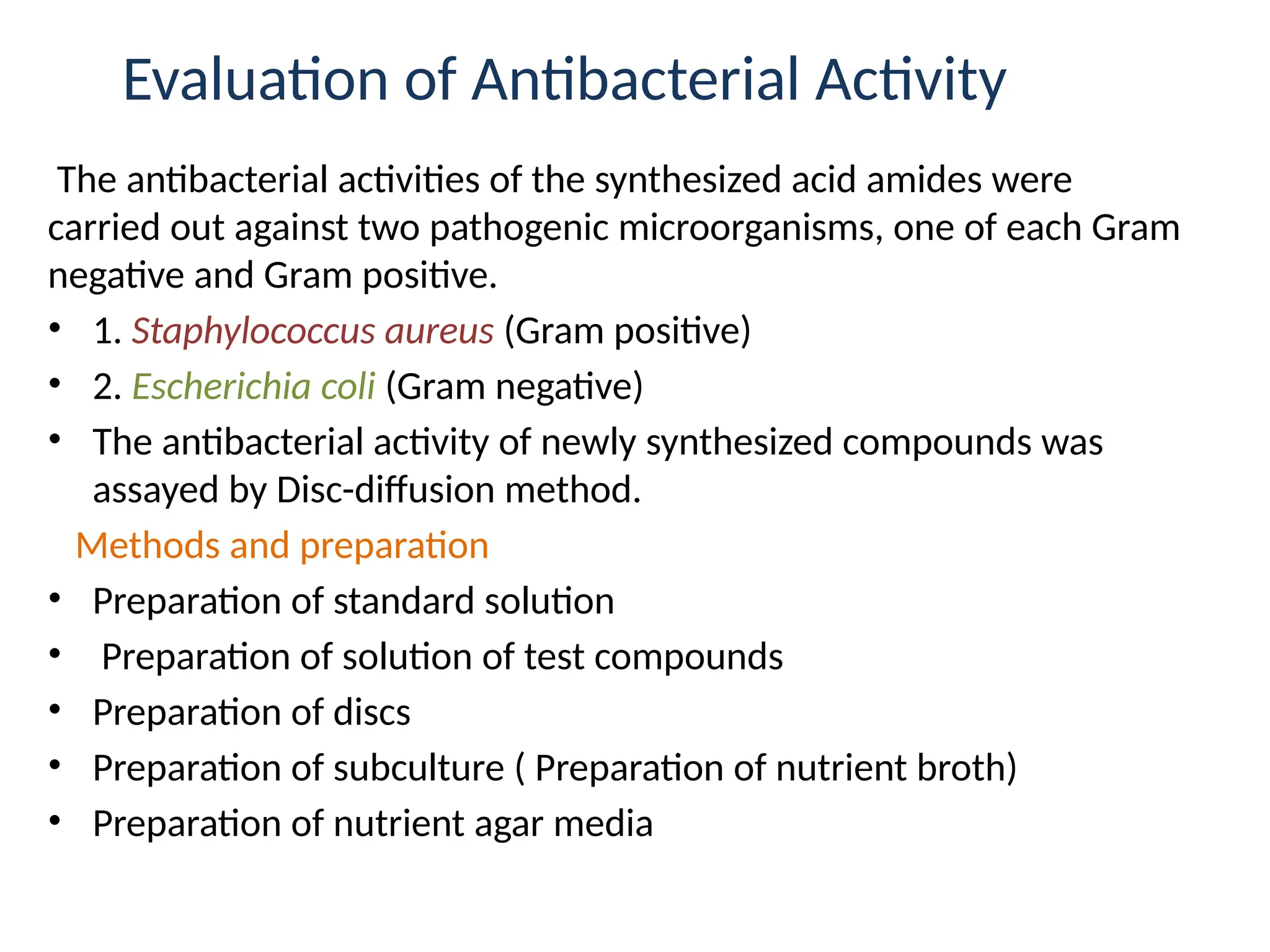
Evaluation of AntibacterialActivity
The antibacterial activities of the synthesized acid amides were
carried out against two pathogenic microorganisms, one of each Gram
negative and Gram positive.
• 1. Staphylococcus aureus (Gram positive)
• 2. Escherichia coli (Gram negative)
• The antibacterial activity of newly synthesized compounds was
assayed by Disc-diffusion method.
Methods and preparation
• Preparation of standard solution
• Preparation of solution of test compounds
• Preparation of discs
• Preparation of subculture ( Preparation of nutrient broth)
• Preparation of nutrient agar media
Molecular Docking
Introduction
The threedimensional structures known may be represented to show different views of the
structures. With complex molecular mechanics programs it is possible to superimpose one
structure on another. The same approach is used to superimpose the three dimensional structure
of a potential drug on its possible target site. This process, which is often automated, is known as
docking.
Major steps in molecular docking
• Step I – Building the Receptor
• Step II – Identification of the Active Site
• Step III – Ligand Preparation
• Step IV- Docking
Software’s available for Molecular Docking:
SANJEEVINI, SCHRODINGER DOCK, AUTOLOCK TOOLS, DISCOVERY STUDIO, iGemDock
Software’s used for our Molecular Docking studies:
Discovery studio 3.1, 3.5, 4.0.
Lead IT software
28.
Molecular docking ofnew compounds
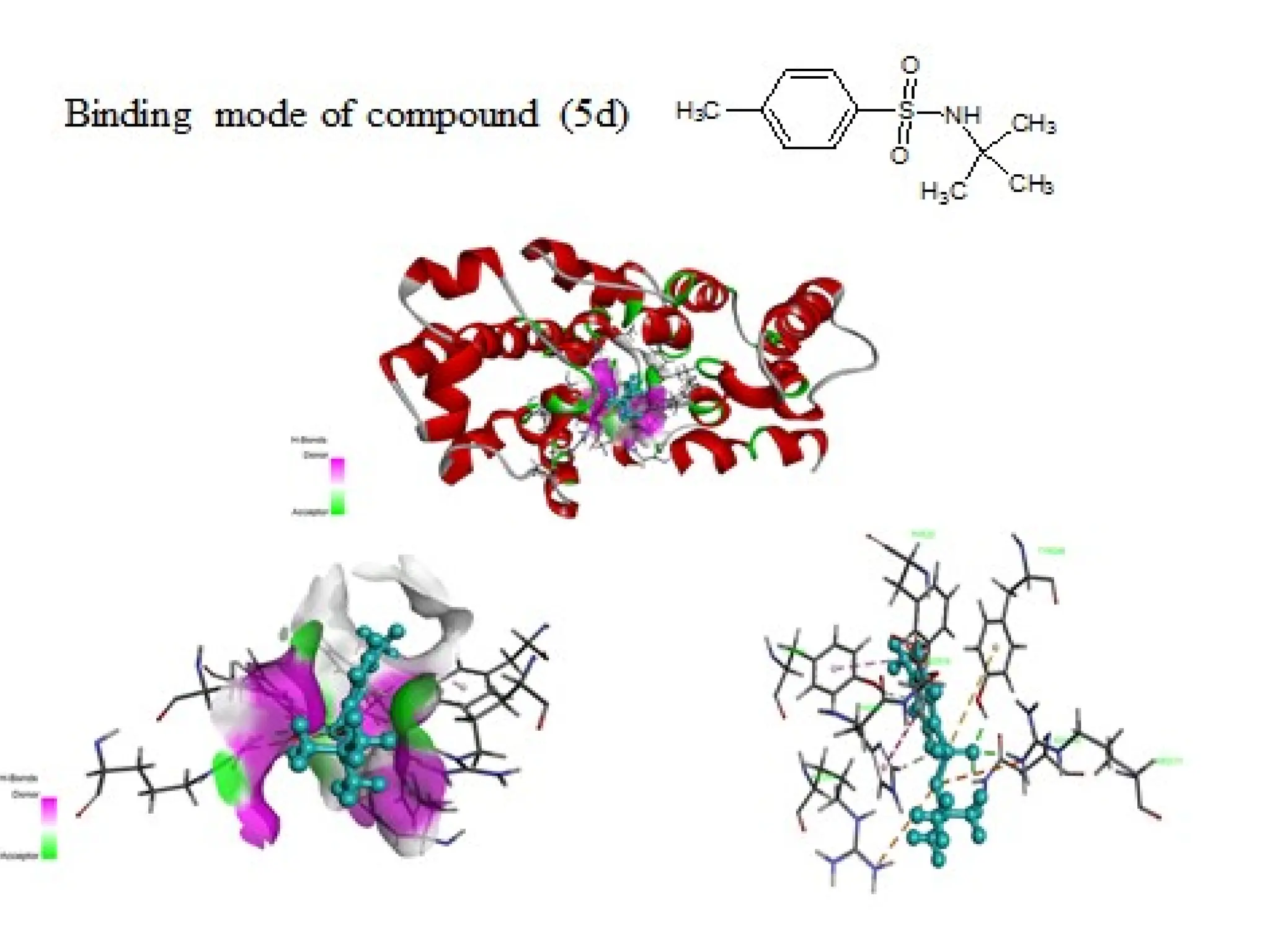
The molecular docking studies were carried out to understand the
binding mode and mechanism of active inhibitors with the crystal
structure of the C(30) carotenoid dehydrosqualene synthase (PDB ID:
3ACX).
Dehydrosqualene synthase of S. aureus was considered as a major
enzyme for the bacterium to survive inside the host cell.
All the compounds could dock in the active site of dehydrosqualene
synthase effectively
and were involved in H-bonding with the active site residues Asp48,
Tyr41, and His18 with the high docking energies indicating that those
are directly involved in inhibiting the dehydrosqualene synthase.
33.
RESULT AND DISCUSSION:
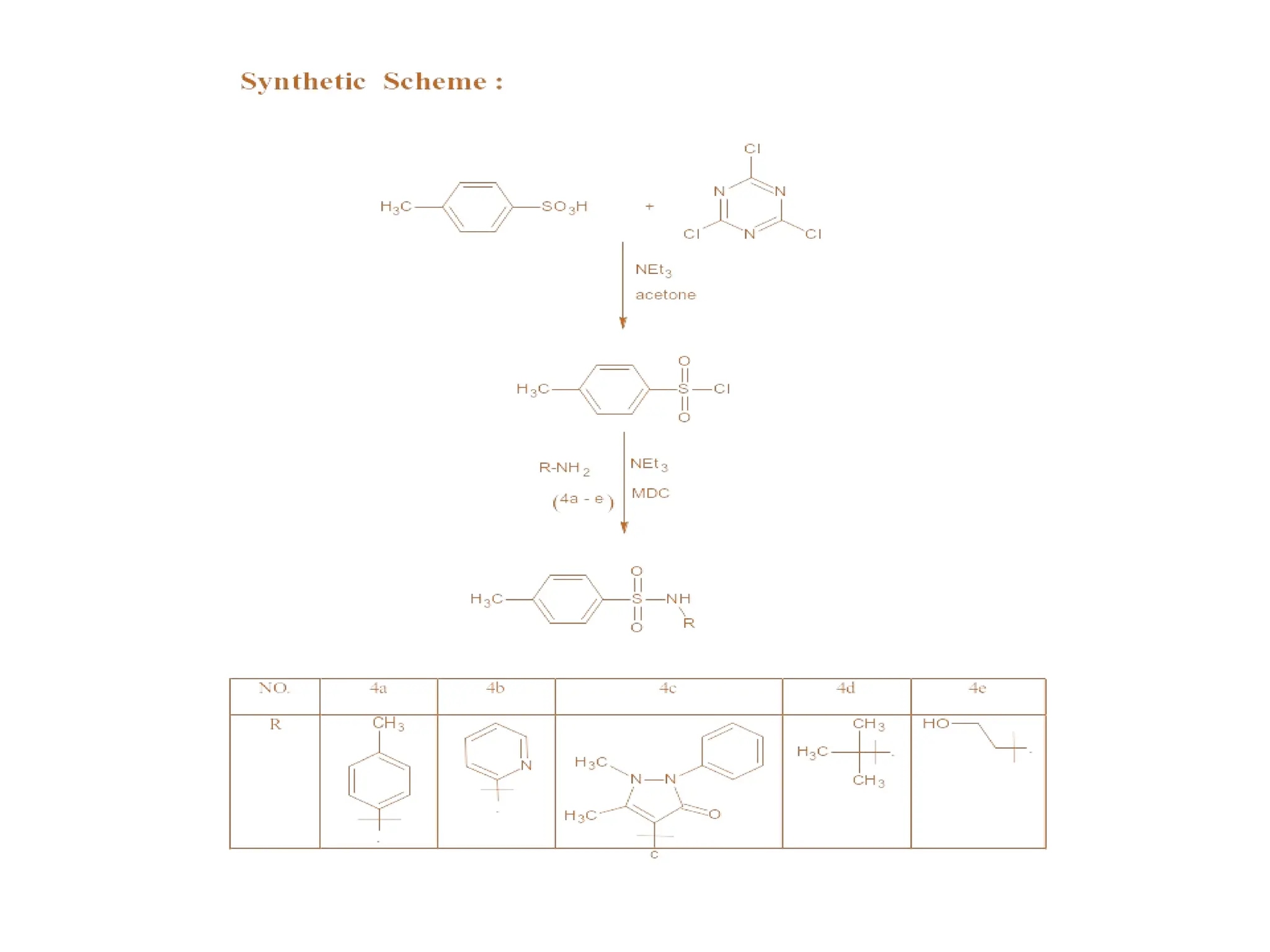
Presentwork describes a convenient and efficient synthetic route to synthesize sulfonamide
derivatives, we believe the procedure can be conveniently reproduced. Synthesized
sulfonamides structures were supported by IR, 1H NMR, 13C NMR spectral data. The newly
synthesized sulfonamides were tested for their invitro antibacterial activity against
Staphylococcus aureus and Escherichia coli. Among the tested compounds, compound 5b, 5d
and 5e showed good antibacterial activity against the tested organisms. However, the overall
antibacterial activity of new sulfonamides is less when compared to the standard drug
ciprofloxacin