Our consultants come from a wide
range of industry backgrounds with
experience in:
• Academic research
• Digital Technology
• Government entities
• Design
• Psychologists
About us
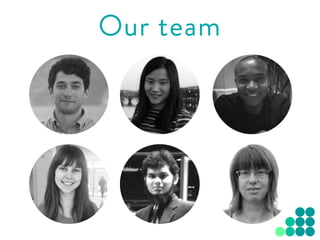
Our team
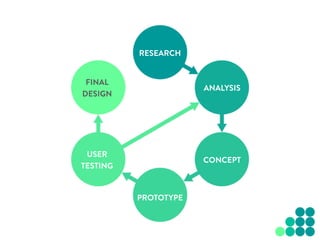
USER
TESTING
RESEARCH
ANALYSIS
CONCEPT
PROTOTYPE
FINAL
DESIGN
Briefing
Enhance speed of service for frequent
travellers and reduce receptionists workload
through redesigning self-check in machine
Represent the solution through the following tasks:
Check in and out, select type of room)
Check out with payment and delivery of receipt
Frequent travellers of all genders
who are above the age of 16
Including the following users:
• Tallest and shortest (standing)
• Wheelchair (sitting)
• With arthritis
• Visually impaired
Target User
*All our designs follow the equality act laws
• Reduce workload of receptionists
• Enhance the speed of service
• Cover as much of our customers’ needs as possible
• Good cost benefit
Business objectives
How we addressed
carried out 15
interviews with
users / staff
User research
Observed 9
different hotels
with self -check-in
65+ frequent
travellers answered
questionnaires
Current Issues
Visibility Speed Mental model
Some of our findings
“I get tired of traveling, usually.
I hate wasting time on queues
for check-in. The self-service
machines are very practical…”
“I like the warm cookies that
Doubletrees always give you in
the check in and how "warm"
their receptionists are…”
“People seldom ask for a receptionist to check them in.
It does happen but only on rare occasions.”
“... more people can be checked in at the same time
and this gives us more time to pay attention
to some other needs”
• Support different languages
• Reduce staff workload
• Reduce time for check-in
• Be within reach (and convenient
viewing angle) of the target
population
• Be easy to install and maintain
User requirements
Our
Personas
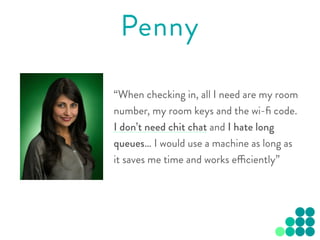
“When checking in, all I need are my room
number, my room keys and the wi-fi code.
I don’t need chit chat and I hate long
queues… I would use a machine as long as
it saves me time and works efficiently”
Penny
“I hate it when we have to check in
separately from my mates… It would be a
lot better for us if we could check in
together. This way, we can all go to the bar
at the same time and have drinks for
longer”
Tyler
“I think self-service machines would
definitely make me a more versatile
receptionist… It will reduce my workload
but I’m afraid that it would eventually
mean that my services are no longer
required”
Marylin
Project focus
Workload Accessibility Speed Smart-Card
Our design process
CREATE CHOICES MAKE CHOICES
Our Solutions
Check-in
3 Step Check-In Process
1
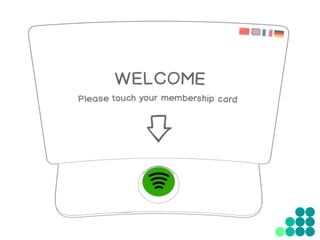
• Touch in SmartCard
2
• Check Details
• Change Details(Room, Meals, Late Checkout)
3
• Touch to Confirm (Card becomes Key)
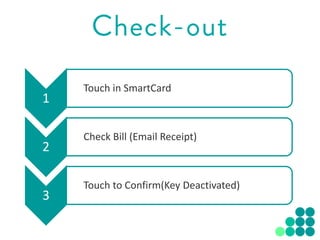
Check-out
3 Step Check-Out Process
3
• Touch to Confirm (Card becomes Key)
1
• Touch in SmartCard
2
• Check Bill (Email Receipt)
3
• Touch to Confirm(Key Deactivated)
Accessibility
*All our designs follow the British standards
All users
Positioning
&
Lighting
*All our designs follow the British standards
Speed
&
Workload
*All our designs follow the British standards
4 customers 12 customers
BEFORE AFTER
6 minutes
• Reduce the workload of receptionists
• Quicker alternative for frequent travellers
• Enhance accessibility
• Simultaneous check ins and check outs
Design benefits
USER
TESTING
RESEARCH
ANALYSIS
CONCEPT
PROTOTYPE
FINAL
DESIGN
Timeline
Building mockups
User testing
Risk Analysis
Posture analysis Etc
User Research
Data Collection
Equality Act
British Standards
3 person-days
5 person-days
5 person-days 10 person-days
5 person-days 12 person-days
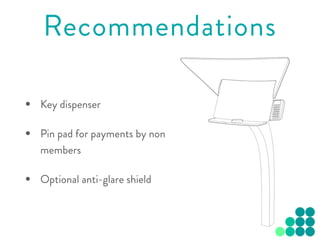
• Key dispenser
• Pin pad for payments by non
members
• Optional anti-glare shield
Recommendations
Enhance speed of
service for frequent
travellers and reduce
receptionists workload
through redesigning
self-check in machine
Thanks!
Appendices
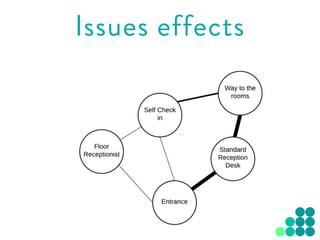
Issues effects
Design Experience 1 - Pitch

Design Experience 1 - Pitch

  • 2.
    Our consultants comefrom a wide range of industry backgrounds with experience in: • Academic research • Digital Technology • Government entities • Design • Psychologists About us
  • 3.
  • 4.
  • 5.
    Briefing Enhance speed ofservice for frequent travellers and reduce receptionists workload through redesigning self-check in machine Represent the solution through the following tasks: Check in and out, select type of room) Check out with payment and delivery of receipt
  • 6.
    Frequent travellers ofall genders who are above the age of 16 Including the following users: • Tallest and shortest (standing) • Wheelchair (sitting) • With arthritis • Visually impaired Target User *All our designs follow the equality act laws
  • 7.
    • Reduce workloadof receptionists • Enhance the speed of service • Cover as much of our customers’ needs as possible • Good cost benefit Business objectives
  • 8.
  • 9.
    carried out 15 interviewswith users / staff User research Observed 9 different hotels with self -check-in 65+ frequent travellers answered questionnaires
  • 10.
  • 11.
    Some of ourfindings “I get tired of traveling, usually. I hate wasting time on queues for check-in. The self-service machines are very practical…” “I like the warm cookies that Doubletrees always give you in the check in and how "warm" their receptionists are…” “People seldom ask for a receptionist to check them in. It does happen but only on rare occasions.” “... more people can be checked in at the same time and this gives us more time to pay attention to some other needs”
  • 12.
    • Support differentlanguages • Reduce staff workload • Reduce time for check-in • Be within reach (and convenient viewing angle) of the target population • Be easy to install and maintain User requirements
  • 13.
  • 14.
    “When checking in,all I need are my room number, my room keys and the wi-fi code. I don’t need chit chat and I hate long queues… I would use a machine as long as it saves me time and works efficiently” Penny
  • 15.
    “I hate itwhen we have to check in separately from my mates… It would be a lot better for us if we could check in together. This way, we can all go to the bar at the same time and have drinks for longer” Tyler
  • 16.
    “I think self-servicemachines would definitely make me a more versatile receptionist… It will reduce my workload but I’m afraid that it would eventually mean that my services are no longer required” Marylin
  • 17.
  • 18.
    Our design process CREATECHOICES MAKE CHOICES
  • 19.
  • 22.
    Check-in 3 Step Check-InProcess 1 • Touch in SmartCard 2 • Check Details • Change Details(Room, Meals, Late Checkout) 3 • Touch to Confirm (Card becomes Key)
  • 23.
    Check-out 3 Step Check-OutProcess 3 • Touch to Confirm (Card becomes Key) 1 • Touch in SmartCard 2 • Check Bill (Email Receipt) 3 • Touch to Confirm(Key Deactivated)
  • 25.
    Accessibility *All our designsfollow the British standards
  • 26.
  • 28.
    Positioning & Lighting *All our designsfollow the British standards
  • 31.
    Speed & Workload *All our designsfollow the British standards
  • 32.
    4 customers 12customers BEFORE AFTER 6 minutes
  • 34.
    • Reduce theworkload of receptionists • Quicker alternative for frequent travellers • Enhance accessibility • Simultaneous check ins and check outs Design benefits
  • 35.
  • 36.
    Timeline Building mockups User testing RiskAnalysis Posture analysis Etc User Research Data Collection Equality Act British Standards 3 person-days 5 person-days 5 person-days 10 person-days 5 person-days 12 person-days
  • 37.
    • Key dispenser •Pin pad for payments by non members • Optional anti-glare shield Recommendations
  • 38.
    Enhance speed of servicefor frequent travellers and reduce receptionists workload through redesigning self-check in machine
  • 39.
  • 40.
  • 41.