Describing Pictures
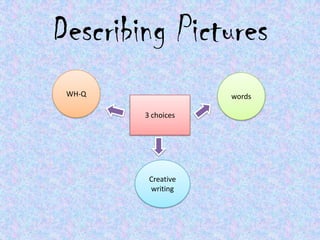
 WH-Q               words

        3 choices


         Creative
         writing
WH-Q
• You may use WH-Q in order to stimulate
  curiosity or suspense and to make your
  audience thinking.
• For example:
1)What do you think will happen next?
2) Who do you think I met there?
3) Don’t you think this is awesome?
Words
• Instead of using common words, You may
  want to use new words.
• Visual thesaurus helps you to give other words
  that have same meaning.
• Try this out!

    http://www.visualthesaurus.com/vocabgrabber/
Creative Writing
After examining the picture, try these five easy steps to jump start
your creativity:

1. EMOTIONAL OBSERVATION: Write your initial response of the
   feeling you get from it (ie. happiness, sadness, serenity, grief)

2. COLORS: Write down the colors that you see (skin tone, colors of
clothing or objects, background colors, etc.)

3. OBJECTS: Write down single items that you observe (ie. shirt,
hands, arms, teeth, chair, lights, sky, clouds)

4. ADJECTIVES: Write down descriptive words next to your objects
(ie. wrinkled dress, bloodshot eyes, grass stained tennis shoes, dirty
water, broken chair)

5. COMPOSE: Unscramble the individual words you’ve compiled to
begin creating a sentence, even if it doesn’t immediately make sense.
Think about what type of literary composition you could turn this
picture into (ie. poem, short story, screenplay, novel)
http://www.eslteachersboard.com/cgi-bin/writing/index.pl?read=236

Describing Pictures

  • 1.
    Describing Pictures WH-Q words 3 choices Creative writing
  • 2.
    WH-Q • You mayuse WH-Q in order to stimulate curiosity or suspense and to make your audience thinking. • For example: 1)What do you think will happen next? 2) Who do you think I met there? 3) Don’t you think this is awesome?
  • 3.
    Words • Instead ofusing common words, You may want to use new words. • Visual thesaurus helps you to give other words that have same meaning. • Try this out! http://www.visualthesaurus.com/vocabgrabber/
  • 4.
    Creative Writing After examiningthe picture, try these five easy steps to jump start your creativity: 1. EMOTIONAL OBSERVATION: Write your initial response of the feeling you get from it (ie. happiness, sadness, serenity, grief) 2. COLORS: Write down the colors that you see (skin tone, colors of clothing or objects, background colors, etc.) 3. OBJECTS: Write down single items that you observe (ie. shirt, hands, arms, teeth, chair, lights, sky, clouds) 4. ADJECTIVES: Write down descriptive words next to your objects (ie. wrinkled dress, bloodshot eyes, grass stained tennis shoes, dirty water, broken chair) 5. COMPOSE: Unscramble the individual words you’ve compiled to begin creating a sentence, even if it doesn’t immediately make sense. Think about what type of literary composition you could turn this picture into (ie. poem, short story, screenplay, novel) http://www.eslteachersboard.com/cgi-bin/writing/index.pl?read=236