Chemistry of
GLYCOLYSIS
NAFIH AFTHAB V K
Glucose
 Glucose is a sugar with the molecular
formula C6H12O6
 Glucose molecules can exist in either
an open-chain (acyclic) or ring (cyclic)
form
Adenosin Diphosphate
(ADP)
Adenosin Triphosphate
(ATP)
Glycolysis
 Glycolysis is a metabolic pathway that converts the six-carbon glucose
into two molecules of three-carbon pyruvate
 At the end of glycolysis we will have 2 molecules of pyruvate, 2 NADH, and
2 ATP
( 10 Steps)
Preparatory Phase Pay-Off Phase
• First five steps
• Phosphorylation of glucose and its
conversion to glyceraldehyde 3-
phosphate
• Energy is invested in the form of
ATP. (2 ATP is consumed)
• Next five steps
• Conversion of glyceraldehyde 3-
phosphate to pyruvate
• Energy gain occurs. (4 ATP is
produced)
Preparatory Phase
Phosphorylation of Glucose
Conversion of Glucose 6-Phosphate to Fructose 6 -Phosphate
Phosphorylation of Fructose 6-Phosphate to Fructose 1,6-
Bisphosphate
Cleavage of Fructose 1,6-Bisphosphate
Interconversion of the Triose Phosphates
Phosphorylation of Glucose
• Glucose is activated for subsequent reactions by its phosphorylation at C-6 to yield
glucose 6-phosphate, with ATP as the phosphoryl donor
• Catalyzed by the enzyme hexokinase and 1 ATP is used
1
Conversion of Glucose 6-Phosphate to Fructose 6 -
Phosphate
2
• The enzyme phosphohexose isomerase catalyzes the reversible isomerization of
glucose 6-phosphate, an aldose, to fructose 6-phosphate, a ketose
Phosphorylation of Fructose 6-Phosphate to
Fructose 1,6-Bisphosphate
3
• Phosphofructokinase-1 (PFK-1) catalyzes the transfer of a phosphoryl group from ATP to
fructose 6-phosphate to yield fructose 1,6-bisphosphate
• 1 ATP is used
Cleavage of Fructose 1,6-Bisphosphate
4
• Fructose 1,6-bisphosphate is cleaved to yield two different triose phosphates,
glyceraldehyde 3-phosphate, an aldose, and dihydroxyacetone phosphate, a ketose
Interconversion of the Triose Phosphates
5
• Only glyceraldehyde 3-phosphate, can be directly degraded in the subsequent steps of
glycolysis.
• The other product, dihydroxyacetone phosphate, is rapidly and reversibly converted to
glyceraldehyde 3-phosphate by the fifth enzyme of the sequence, triose phosphate
isomerase
• At the end of preparatory phase we have two molecule of glyceraldehyde 3-
phosphate
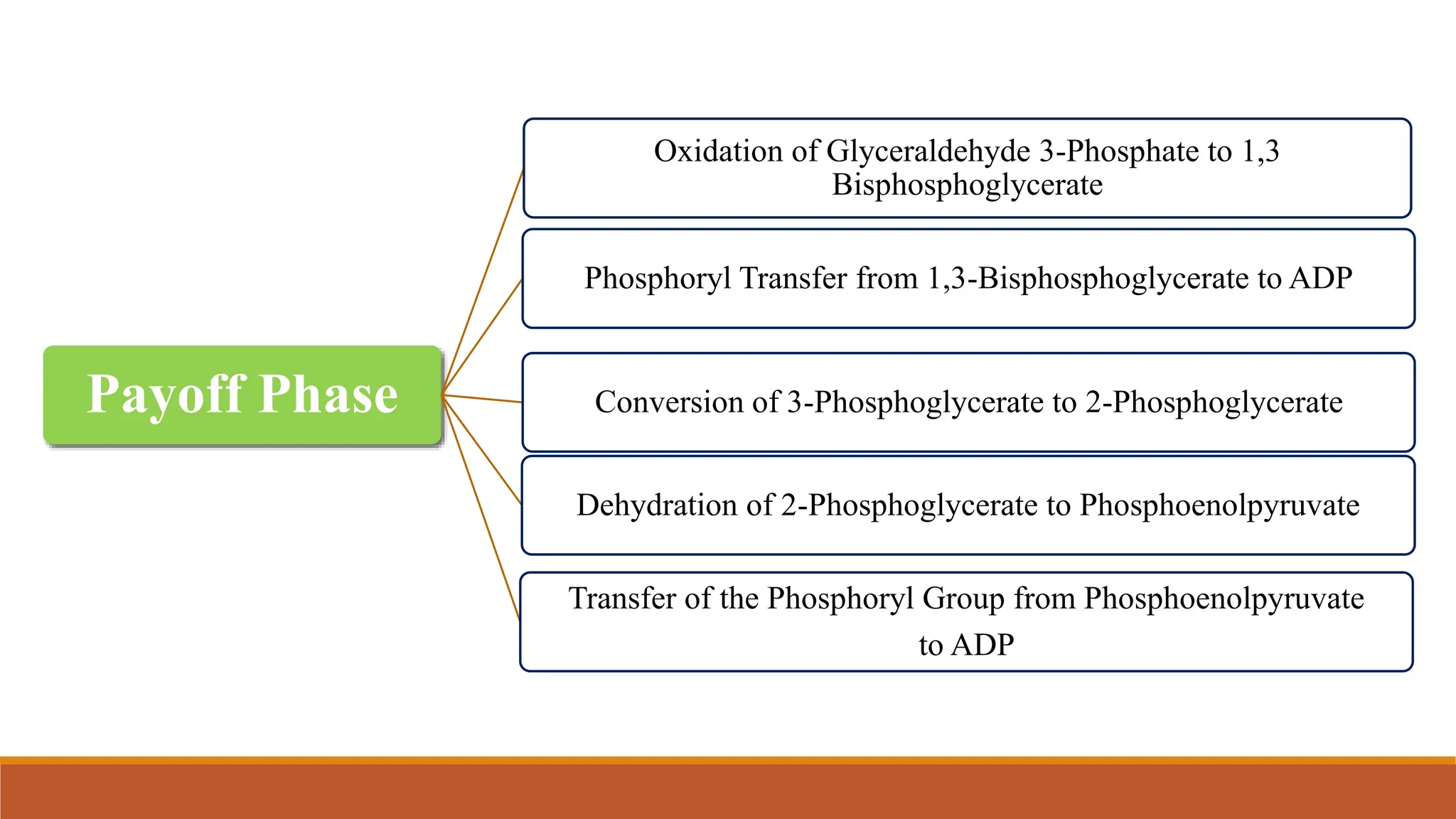
Payoff Phase
Oxidation of Glyceraldehyde 3-Phosphate to 1,3
Bisphosphoglycerate
Phosphoryl Transfer from 1,3-Bisphosphoglycerate to ADP
Conversion of 3-Phosphoglycerate to 2-Phosphoglycerate
Dehydration of 2-Phosphoglycerate to Phosphoenolpyruvate
Transfer of the Phosphoryl Group from Phosphoenolpyruvate
to ADP
Oxidation of Glyceraldehyde 3-Phosphate to 1,3
Bisphosphoglycerate
6
• The first step in the payoff phase is the oxidation of glyceraldehyde 3 phosphate to 1,3-
bisphosphoglycerate, catalyzed by glyceraldehyde 3- phosphate dehydrogenase
Phosphoryl Transfer from 1,3-Bisphosphoglycerate to ADP
7
• The enzyme phosphoglycerate kinase transfers phosphoryl group from the carboxyl
group of 1,3-bisphosphoglycerate to ADP, forming ATP and 3- phosphoglycerate
Conversion of 3-Phosphoglycerate to 2-Phosphoglycerate
8
• The enzyme phosphoglycerate mutase catalyzes a reversible shift of the phosphoryl
group between C-2 and C-3 of glycerate.
• Mg2+ is essential for this reaction
Dehydration of 2-Phosphoglycerate to Phosphoenolpyruvate
9
• The enolase promotes reversible removal of a molecule of water from 2-phosphoglycerate to yield
phosphoenolpyruvate (PEP)
Transfer of the Phosphoryl Group from Phosphoenolpyruvate
to ADP
10
• The last step in glycolysis is the transfer of the phosphoryl group from
phosphoenolpyruvate to ADP, catalyzed by pyruvate kinase, which requires K+ and either
Mg2+or Mn2+

DESCRIBES THE CHEMISTRY OF GLYCOLYSIS.pptx

  • 1.
  • 2.
    Glucose  Glucose isa sugar with the molecular formula C6H12O6  Glucose molecules can exist in either an open-chain (acyclic) or ring (cyclic) form
  • 3.
  • 4.
    Glycolysis  Glycolysis isa metabolic pathway that converts the six-carbon glucose into two molecules of three-carbon pyruvate  At the end of glycolysis we will have 2 molecules of pyruvate, 2 NADH, and 2 ATP
  • 5.
    ( 10 Steps) PreparatoryPhase Pay-Off Phase • First five steps • Phosphorylation of glucose and its conversion to glyceraldehyde 3- phosphate • Energy is invested in the form of ATP. (2 ATP is consumed) • Next five steps • Conversion of glyceraldehyde 3- phosphate to pyruvate • Energy gain occurs. (4 ATP is produced)
  • 6.
    Preparatory Phase Phosphorylation ofGlucose Conversion of Glucose 6-Phosphate to Fructose 6 -Phosphate Phosphorylation of Fructose 6-Phosphate to Fructose 1,6- Bisphosphate Cleavage of Fructose 1,6-Bisphosphate Interconversion of the Triose Phosphates
  • 7.
    Phosphorylation of Glucose •Glucose is activated for subsequent reactions by its phosphorylation at C-6 to yield glucose 6-phosphate, with ATP as the phosphoryl donor • Catalyzed by the enzyme hexokinase and 1 ATP is used 1
  • 8.
    Conversion of Glucose6-Phosphate to Fructose 6 - Phosphate 2 • The enzyme phosphohexose isomerase catalyzes the reversible isomerization of glucose 6-phosphate, an aldose, to fructose 6-phosphate, a ketose
  • 9.
    Phosphorylation of Fructose6-Phosphate to Fructose 1,6-Bisphosphate 3 • Phosphofructokinase-1 (PFK-1) catalyzes the transfer of a phosphoryl group from ATP to fructose 6-phosphate to yield fructose 1,6-bisphosphate • 1 ATP is used
  • 10.
    Cleavage of Fructose1,6-Bisphosphate 4 • Fructose 1,6-bisphosphate is cleaved to yield two different triose phosphates, glyceraldehyde 3-phosphate, an aldose, and dihydroxyacetone phosphate, a ketose
  • 11.
    Interconversion of theTriose Phosphates 5 • Only glyceraldehyde 3-phosphate, can be directly degraded in the subsequent steps of glycolysis. • The other product, dihydroxyacetone phosphate, is rapidly and reversibly converted to glyceraldehyde 3-phosphate by the fifth enzyme of the sequence, triose phosphate isomerase • At the end of preparatory phase we have two molecule of glyceraldehyde 3- phosphate
  • 12.
    Payoff Phase Oxidation ofGlyceraldehyde 3-Phosphate to 1,3 Bisphosphoglycerate Phosphoryl Transfer from 1,3-Bisphosphoglycerate to ADP Conversion of 3-Phosphoglycerate to 2-Phosphoglycerate Dehydration of 2-Phosphoglycerate to Phosphoenolpyruvate Transfer of the Phosphoryl Group from Phosphoenolpyruvate to ADP
  • 13.
    Oxidation of Glyceraldehyde3-Phosphate to 1,3 Bisphosphoglycerate 6 • The first step in the payoff phase is the oxidation of glyceraldehyde 3 phosphate to 1,3- bisphosphoglycerate, catalyzed by glyceraldehyde 3- phosphate dehydrogenase
  • 14.
    Phosphoryl Transfer from1,3-Bisphosphoglycerate to ADP 7 • The enzyme phosphoglycerate kinase transfers phosphoryl group from the carboxyl group of 1,3-bisphosphoglycerate to ADP, forming ATP and 3- phosphoglycerate
  • 15.
    Conversion of 3-Phosphoglycerateto 2-Phosphoglycerate 8 • The enzyme phosphoglycerate mutase catalyzes a reversible shift of the phosphoryl group between C-2 and C-3 of glycerate. • Mg2+ is essential for this reaction
  • 16.
    Dehydration of 2-Phosphoglycerateto Phosphoenolpyruvate 9 • The enolase promotes reversible removal of a molecule of water from 2-phosphoglycerate to yield phosphoenolpyruvate (PEP)
  • 17.
    Transfer of thePhosphoryl Group from Phosphoenolpyruvate to ADP 10 • The last step in glycolysis is the transfer of the phosphoryl group from phosphoenolpyruvate to ADP, catalyzed by pyruvate kinase, which requires K+ and either Mg2+or Mn2+