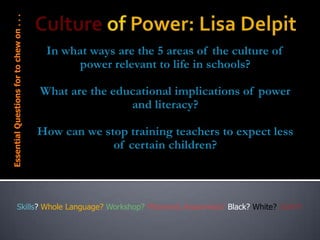
Essential Questions for to chew on . . .

In what ways are the 5 areas of the culture of
power relevant to life in schools?
What are the educational implications of power
and literacy?

How can we stop training teachers to expect less
of certain children?

Skills? Whole Language? Workshop? Phonemic Awareness? Black? White? UGH!!!
A little bit of
background

 Remember, this is a

course about the
historical,
multicultural, &
philosophical roots of
American schooling.

Lisa Delpit


Delpit emerged during the
“great Ebonics debate;



Dr. Ernie Smith- Ebonics and
The Afrikan Tongue (it is really
interesting from an historical
point of view); please watch the
video



Please read Delpit’s bio.

 Consequently, we

need to understand
where we have been
so as to know where
we are going
Recall a time in your life when you felt that you
were left out of a secret. When you were left
out of something that everyone else, but you,
knew….
Do Blacks and Whites and Others see the world of
education differently?

In other words: Do Blacks and Whites approach
teaching and learning differently?

What are the common grounds?
A Black Educator in a White World?

A White Educator in a White Word?
Process

Skills

What are the differences between the two? What is
Delpit’s position on the two?
• OK, WE ALL HAVE BEEN RAISED OUR WHOLE LIVES TO BE “RACE NEUTRAL” IN ONE WAY OR
ANOTHER

•HOWEVER, DELPIT’S ARTICLE, IN SOME WAYS, IS A VICIOUS ATTACK ON THE “WHITE WAY” OF
KNOWING THE WORLD. DELPIT POINTS OUT TO THE READER THAT WE (COLLEGE PROFESSORS &
TEACHERS) HAVE BEEN SOOOOOO “VYGOTSKIED” OUT THAT WE THINK ALL PEOPLE LEARN BY:
COOPERATION, EXPLORING, DOING, ETC. . . .
•DELPIT IS LIKE A SLEDGE HAMMER THAT SCREAMS, “WHAT ABOUT TEACHING KIDS
SKILLS!!!!!!!!!!!!!!!!!!!”
Ways of
knowing
 How do you feel

about this issue?
What is Delpit

challenging us to see?
Are you mad when

you read her? If yes,
you might not like
what she has to say
because she is
challenging some
basic assumptions.

Do children of different races learn differently?
2

1

3
POWER

4

5

 Where have you seen each of these aspects?
 What the heck does power have to do with skills vs. process instruction?
 Do you see the five points Delpit talks about?
Statement Made

Differing Perspective

“I want the same thing for everyone
else’s children as I want for mine”

Parents outside of the culture of
power often want something else:
“My kids know how to be black – you
all teach them how to be successful in
the white man’s world.”

“Child-centered, whole language,
and process approached are needed
in order to allow a democratic state
of free, empowered adults, and
because research has shown that
children learn best through these
methods”

Teachers do students no service to
suggest that product is not
important. They will be judged on
their product, regardless the
process, in life.
Statement Made

Differing Perspectives

“Children have the right to their
own language, their own culture.
We must fight cultural hegemony
and fight the system by insisting that
children be allowed to express
themselves in their own language
style”
“It’s really a shame that she seems
to be so authoritarian, so focused
on skills and so teacher directed.
Those poor kids never seem to be
allowed to really express their
creativity”

We must accept students but also
take responsibility to teach them.
Tell students that their language and
cultural style is unique and
wonderful but that there is a
political power game in America –
they have to access the power codes.
Different cultures address each other
in different styles. Take Shirley
Brice Heath’s study, “What no
bedtime story means” for example.
We can’t judge one culture by the
values of our own.
Please read this excerpt from. . .

Lisa Delpit

Delpit spring 2014_revised

  • 1.
    Essential Questions forto chew on . . . In what ways are the 5 areas of the culture of power relevant to life in schools? What are the educational implications of power and literacy? How can we stop training teachers to expect less of certain children? Skills? Whole Language? Workshop? Phonemic Awareness? Black? White? UGH!!!
  • 2.
    A little bitof background  Remember, this is a course about the historical, multicultural, & philosophical roots of American schooling. Lisa Delpit  Delpit emerged during the “great Ebonics debate;  Dr. Ernie Smith- Ebonics and The Afrikan Tongue (it is really interesting from an historical point of view); please watch the video  Please read Delpit’s bio.  Consequently, we need to understand where we have been so as to know where we are going
  • 3.
    Recall a timein your life when you felt that you were left out of a secret. When you were left out of something that everyone else, but you, knew….
  • 4.
    Do Blacks andWhites and Others see the world of education differently? In other words: Do Blacks and Whites approach teaching and learning differently? What are the common grounds?
  • 5.
    A Black Educatorin a White World? A White Educator in a White Word?
  • 6.
    Process Skills What are thedifferences between the two? What is Delpit’s position on the two?
  • 7.
    • OK, WEALL HAVE BEEN RAISED OUR WHOLE LIVES TO BE “RACE NEUTRAL” IN ONE WAY OR ANOTHER •HOWEVER, DELPIT’S ARTICLE, IN SOME WAYS, IS A VICIOUS ATTACK ON THE “WHITE WAY” OF KNOWING THE WORLD. DELPIT POINTS OUT TO THE READER THAT WE (COLLEGE PROFESSORS & TEACHERS) HAVE BEEN SOOOOOO “VYGOTSKIED” OUT THAT WE THINK ALL PEOPLE LEARN BY: COOPERATION, EXPLORING, DOING, ETC. . . . •DELPIT IS LIKE A SLEDGE HAMMER THAT SCREAMS, “WHAT ABOUT TEACHING KIDS SKILLS!!!!!!!!!!!!!!!!!!!”
  • 8.
    Ways of knowing  Howdo you feel about this issue? What is Delpit challenging us to see? Are you mad when you read her? If yes, you might not like what she has to say because she is challenging some basic assumptions. Do children of different races learn differently?
  • 9.
    2 1 3 POWER 4 5  Where haveyou seen each of these aspects?  What the heck does power have to do with skills vs. process instruction?  Do you see the five points Delpit talks about?
  • 10.
    Statement Made Differing Perspective “Iwant the same thing for everyone else’s children as I want for mine” Parents outside of the culture of power often want something else: “My kids know how to be black – you all teach them how to be successful in the white man’s world.” “Child-centered, whole language, and process approached are needed in order to allow a democratic state of free, empowered adults, and because research has shown that children learn best through these methods” Teachers do students no service to suggest that product is not important. They will be judged on their product, regardless the process, in life.
  • 11.
    Statement Made Differing Perspectives “Childrenhave the right to their own language, their own culture. We must fight cultural hegemony and fight the system by insisting that children be allowed to express themselves in their own language style” “It’s really a shame that she seems to be so authoritarian, so focused on skills and so teacher directed. Those poor kids never seem to be allowed to really express their creativity” We must accept students but also take responsibility to teach them. Tell students that their language and cultural style is unique and wonderful but that there is a political power game in America – they have to access the power codes. Different cultures address each other in different styles. Take Shirley Brice Heath’s study, “What no bedtime story means” for example. We can’t judge one culture by the values of our own.
  • 12.
    Please read thisexcerpt from. . . Lisa Delpit