

Dell’s Dilemma in Brazil


  Cheryl Correa
  Ramya C
  Rhea Locker
  Gitanjali
Contents
 Case Overview
 Listing of Problems
 Available Options
 Our Analysis
 Conclusion
Case Overview
 Entry into manufacturing in Latin
  America
 Choice of site in Brazil
 State incentives to attract FDI
 Why Rio Grande do Sul?
 Change in political atmosphere
 What next for Dell?
Methods of doing business in a
foreign country
 Export the product
 Allow local company to produce
  product under license
 Joint venture with a local firm
 Wholly owned subsidiary
Listing of Problems
 Political opposition to incentives given
 Nature of investment promotion
  organization in states
 State-specific deterrents to investment
 Choice of negotiation strategy with
  governor Dutra
Available Options
 Exit the country
 Move the plant to another state
 Negotiate with the governor
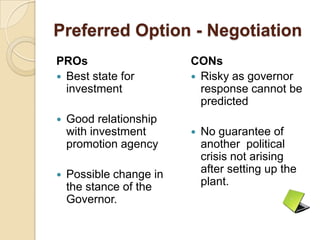
Preferred Option - Negotiation
PROs                     CONs
 Best state for          Risky as governor
  investment               response cannot be
                           predicted
   Good relationship
    with investment         No guarantee of
    promotion agency         another political
                             crisis not arising
   Possible change in       after setting up the
    the stance of the        plant.
    Governor.
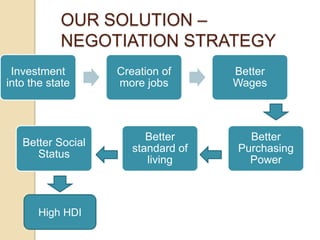
OUR SOLUTION –
            NEGOTIATION STRATEGY
 Investment        Creation of      Better
into the state     more jobs        Wages


                         Better       Better
   Better Social
                      standard of   Purchasing
      Status
                         living       Power


       High HDI
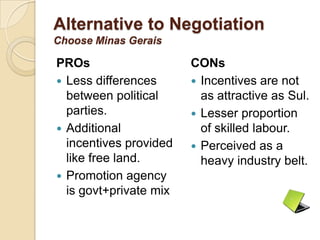
Alternative to Negotiation
Choose Minas Gerais

PROs                    CONs
 Less differences       Incentives are not
  between political       as attractive as Sul.
  parties.               Lesser proportion
 Additional              of skilled labour.
  incentives provided    Perceived as a
  like free land.         heavy industry belt.
 Promotion agency
  is govt+private mix
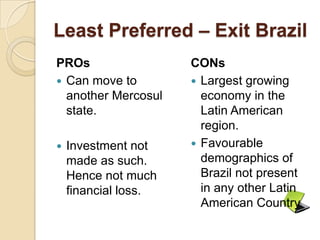
Least Preferred – Exit Brazil
PROs                  CONs
 Can move to          Largest growing
  another Mercosul      economy in the
  state.                Latin American
                        region.
   Investment not     Favourable
    made as such.       demographics of
    Hence not much      Brazil not present
    financial loss.     in any other Latin
                        American Country.
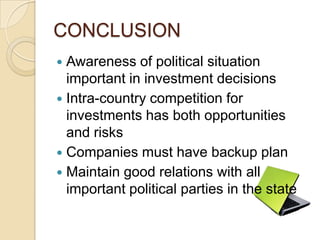
CONCLUSION
 Awareness of political situation
  important in investment decisions
 Intra-country competition for
  investments has both opportunities
  and risks
 Companies must have backup plan
 Maintain good relations with all
  important political parties in the state

Dell’s dilemma in brazil

  • 1.
    Dell’s Dilemma inBrazil Cheryl Correa Ramya C Rhea Locker Gitanjali
  • 2.
    Contents  Case Overview Listing of Problems  Available Options  Our Analysis  Conclusion
  • 3.
    Case Overview  Entryinto manufacturing in Latin America  Choice of site in Brazil  State incentives to attract FDI  Why Rio Grande do Sul?  Change in political atmosphere  What next for Dell?
  • 4.
    Methods of doingbusiness in a foreign country  Export the product  Allow local company to produce product under license  Joint venture with a local firm  Wholly owned subsidiary
  • 5.
    Listing of Problems Political opposition to incentives given  Nature of investment promotion organization in states  State-specific deterrents to investment  Choice of negotiation strategy with governor Dutra
  • 6.
    Available Options  Exitthe country  Move the plant to another state  Negotiate with the governor
  • 7.
    Preferred Option -Negotiation PROs CONs  Best state for  Risky as governor investment response cannot be predicted  Good relationship with investment  No guarantee of promotion agency another political crisis not arising  Possible change in after setting up the the stance of the plant. Governor.
  • 8.
    OUR SOLUTION – NEGOTIATION STRATEGY Investment Creation of Better into the state more jobs Wages Better Better Better Social standard of Purchasing Status living Power High HDI
  • 9.
    Alternative to Negotiation ChooseMinas Gerais PROs CONs  Less differences  Incentives are not between political as attractive as Sul. parties.  Lesser proportion  Additional of skilled labour. incentives provided  Perceived as a like free land. heavy industry belt.  Promotion agency is govt+private mix
  • 10.
    Least Preferred –Exit Brazil PROs CONs  Can move to  Largest growing another Mercosul economy in the state. Latin American region.  Investment not  Favourable made as such. demographics of Hence not much Brazil not present financial loss. in any other Latin American Country.
  • 11.
    CONCLUSION  Awareness ofpolitical situation important in investment decisions  Intra-country competition for investments has both opportunities and risks  Companies must have backup plan  Maintain good relations with all important political parties in the state

Editor's Notes

  • #4 Entry into manufacturing in Latin America – globalization of marketsTHEORY:Changing world order – rise of Latin AmericaDeclining barriers in free flow of goods, services and capital.Globalization of productionDifferences in cost and quality of factors of productionDecline in protectionism for computer manufacturersWhy brazil – population, import tariffs, mercosul
  • #8 Intro into state -> job -> better wages -> better purchasing power -> better standards of living -> better social status -> Happy people  -> high human development index Pro’s of Minas Gerais: less differences between political parties, incentives provided like free land, promotion agency is govt+private mixCon’s of moving out of Brazil: largest growing economy in Latin America, favorable demographics not present in other Latin American countries
  • #9 Public opinion may change the governors stiff stance.
  • #10 Dell provides jobs to people and improves their standard of living
  • #11 s
  • #13 Companies – must have backup plan, must be aware of socio-cultural and economic conditions, maintain cordial relations with ruling and opposition parties (union-leaders),