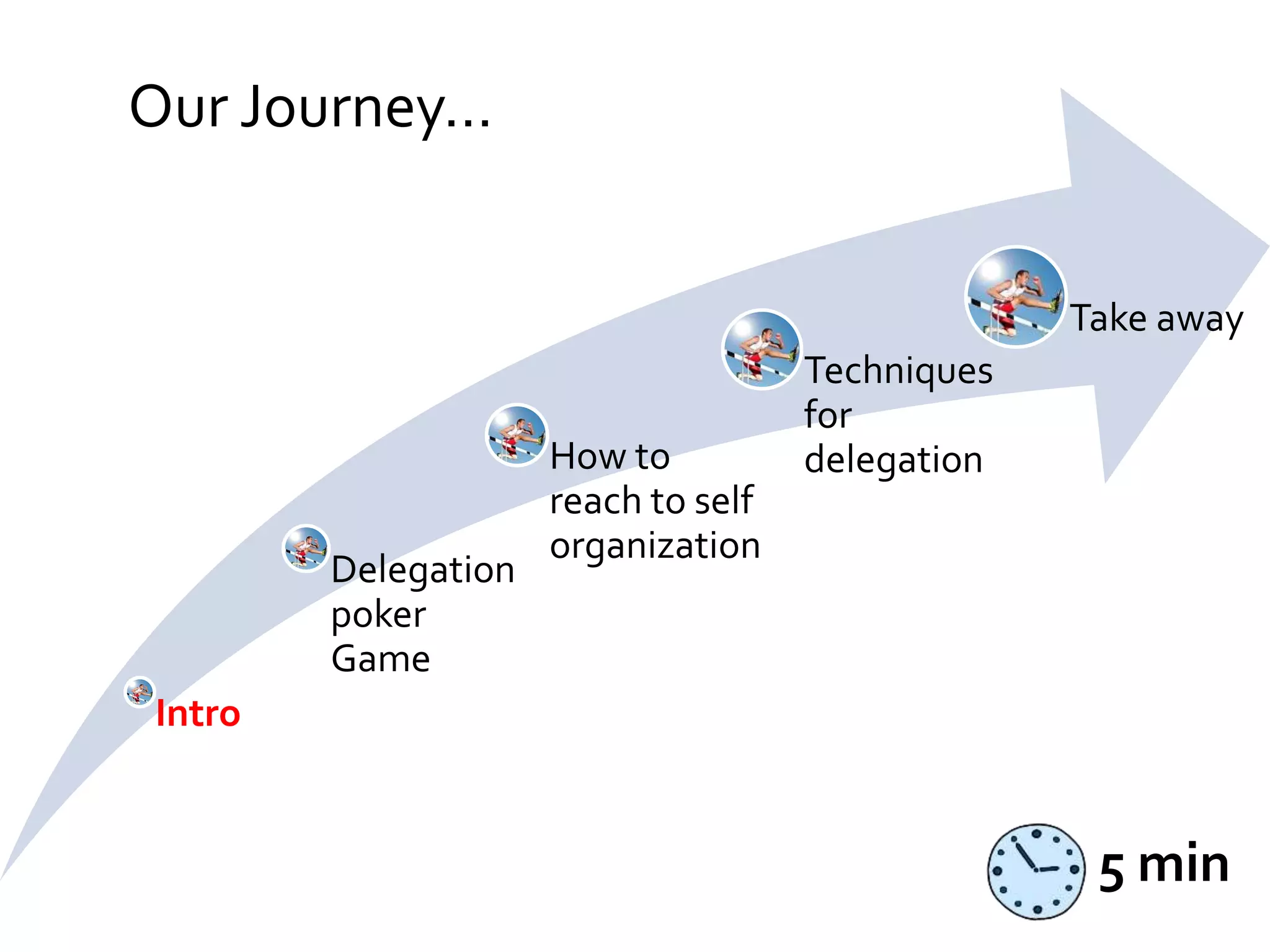
Intro 
Delegation 
poker 
Game 
How to 
reach to self 
organization 
Techniques 
for 
delegation 
Take away 
Our Journey… 
5 min
Individuals and interactions over 
processes and tools
Agile principle: 
The best architectures, requirements, 
and designs 
emerge from self-organizing teams.
Goal: 
Self Organized Team
What do you think Self Organized 
teams look like?
Any Challenges?
Intro 
Delegation 
poker 
Game 
How to 
reach to self 
organization 
Techniques 
for 
delegation 
Take away 
Our Journey… 
55 min
Delegation Poker 
© Jurgen Appelo  version 0.99 management30.com 
Facilitated by Jad HARB
Delegation Poker 
version 1.01 
This game is part of the 
Management 3.0 
course. You can find a 
description of the game 
at the following 
location: 
http://www.management30 
.com/delegation-poker/
1.Tell: you tell how it has to be done, you decide 
2.Sell: you sell a decision, but you decide 
3.Consult: You consult the other before making the decision 
4.Agree: All agree on the decision (best via consensus) 
5.Advise:You advise the others, but the others decide (even 
without your agreement) 
6.Inquire: ask feedback after decision by team 
others decide and inform you about the decision 
7.Delegate: no influence, let team work it out 
others decide and it can be that you even don't get 
informed about it
Game: Delegation Poker 
Good news!? You have been promoted to manager, and you 
have to deal with various and different situations you face. 
1. Everyone read the displayed story 
2. Everyone choose (privately) one of the 7 cards 
3. After everyone has decided, show all cards 
4. look at the highest number that was played 
5. If the highest number is minority then the score is not counted 
6. Keep track of the points people earned 
30 minutes
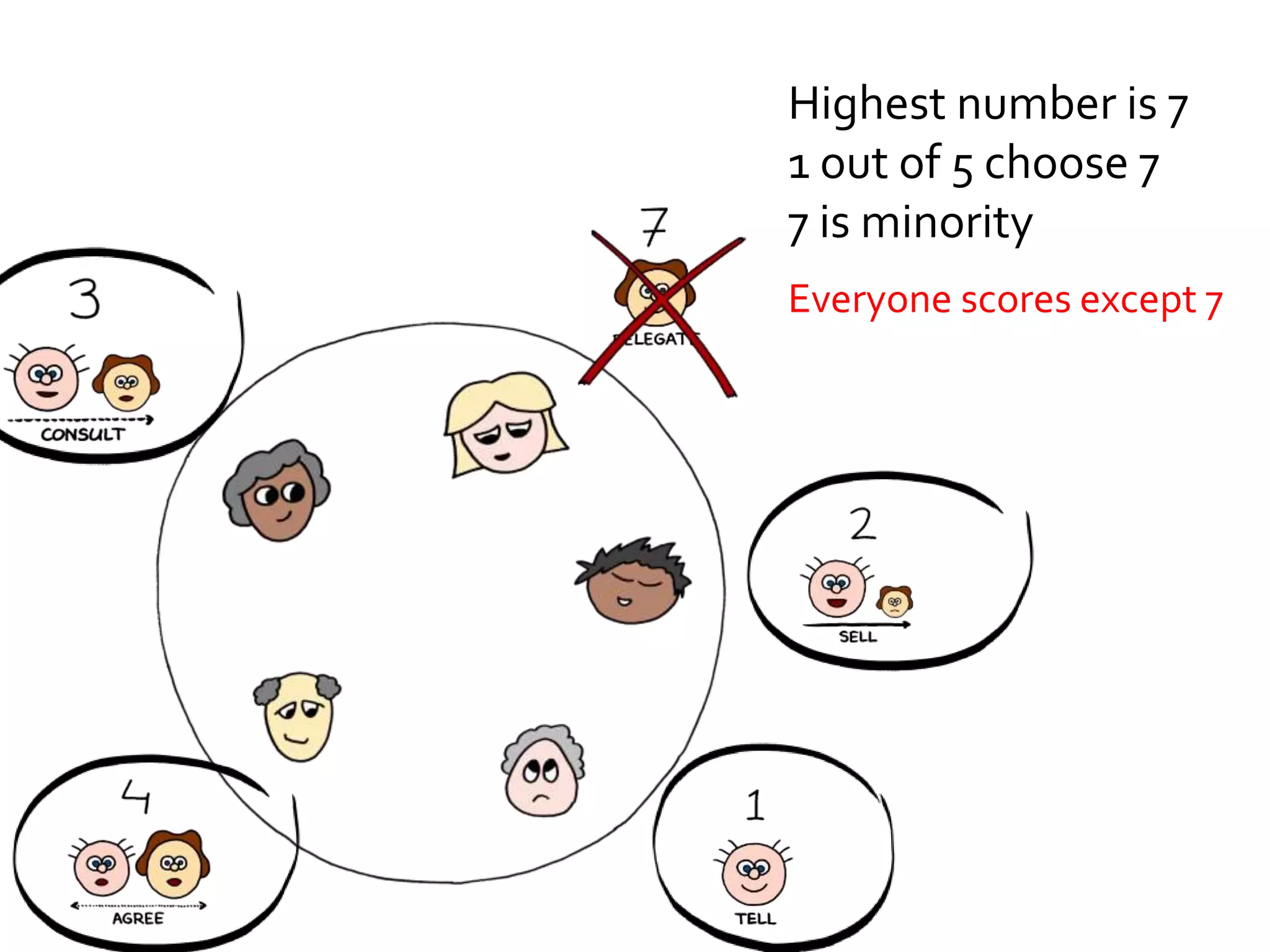
Highest number is 7 
1 out of 5 choose 7 
7 is minority 
Everyone scores except 7
Highest number is 6 
3 out of 5 choose 6 
6 is majority 
Everyone scores
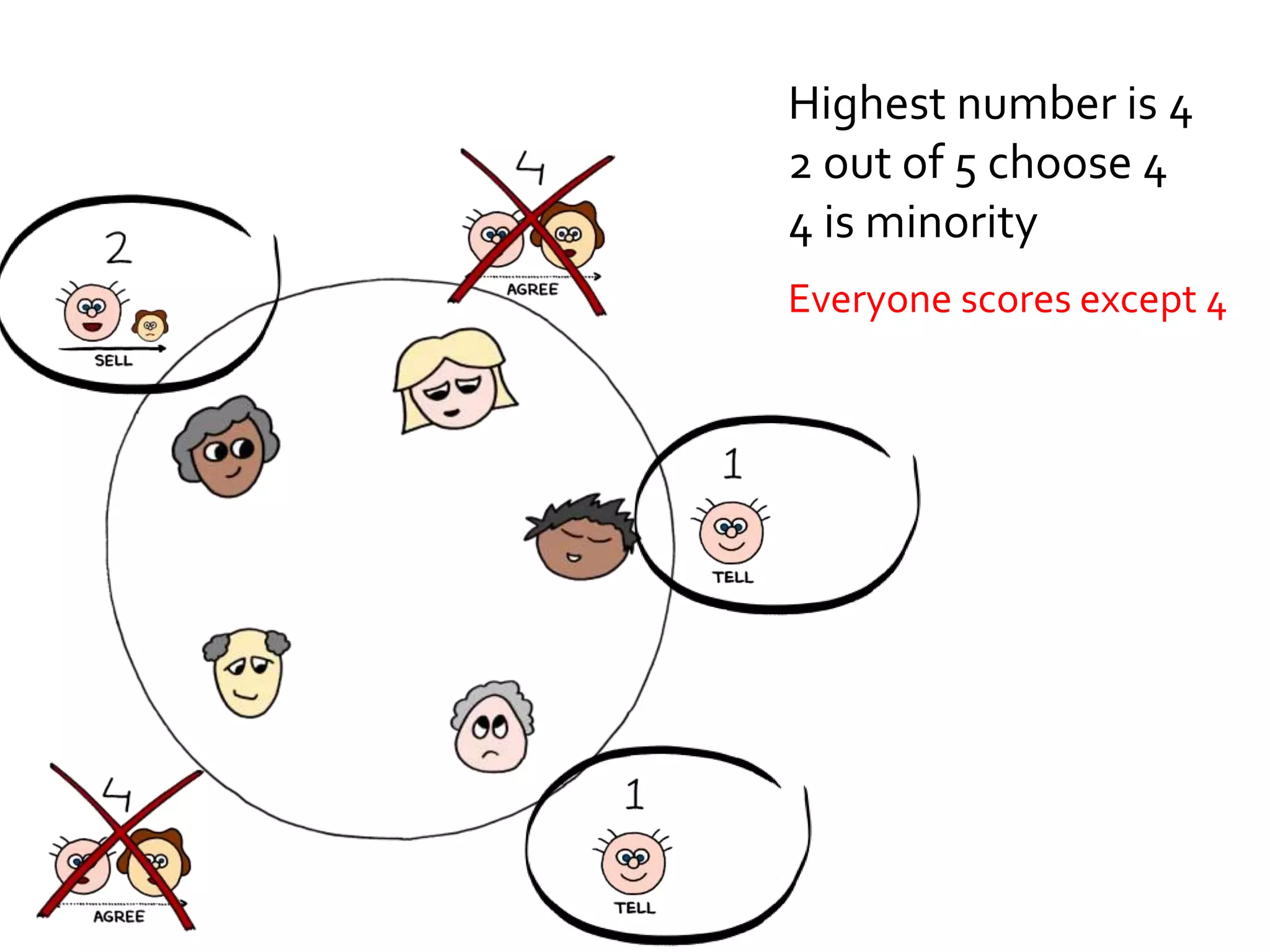
Highest number is 4 
2 out of 5 choose 4 
4 is minority 
Everyone scores except 4
Delegation Poker Stories 
1. Create Design: A new team consists of five 
developers, none of them with experience in Agile 
software development. They are going to build a 
small e- commerce web application. The team has 
learned about emergent design, and they tell you 
(their manager) that they want to make their own 
decisions about software design issues. You have a 
little experience with design yourself, but not 
much. What authority level will you give them?
2. Create Architecture: An experienced software 
team is asked to build a component that monitors 
and regulates the flow of car traffic with smart 
traffic lights. There is nothing they can reuse, so 
they have to start from scratch. What authority 
level for creating the architecture will you give 
them now?
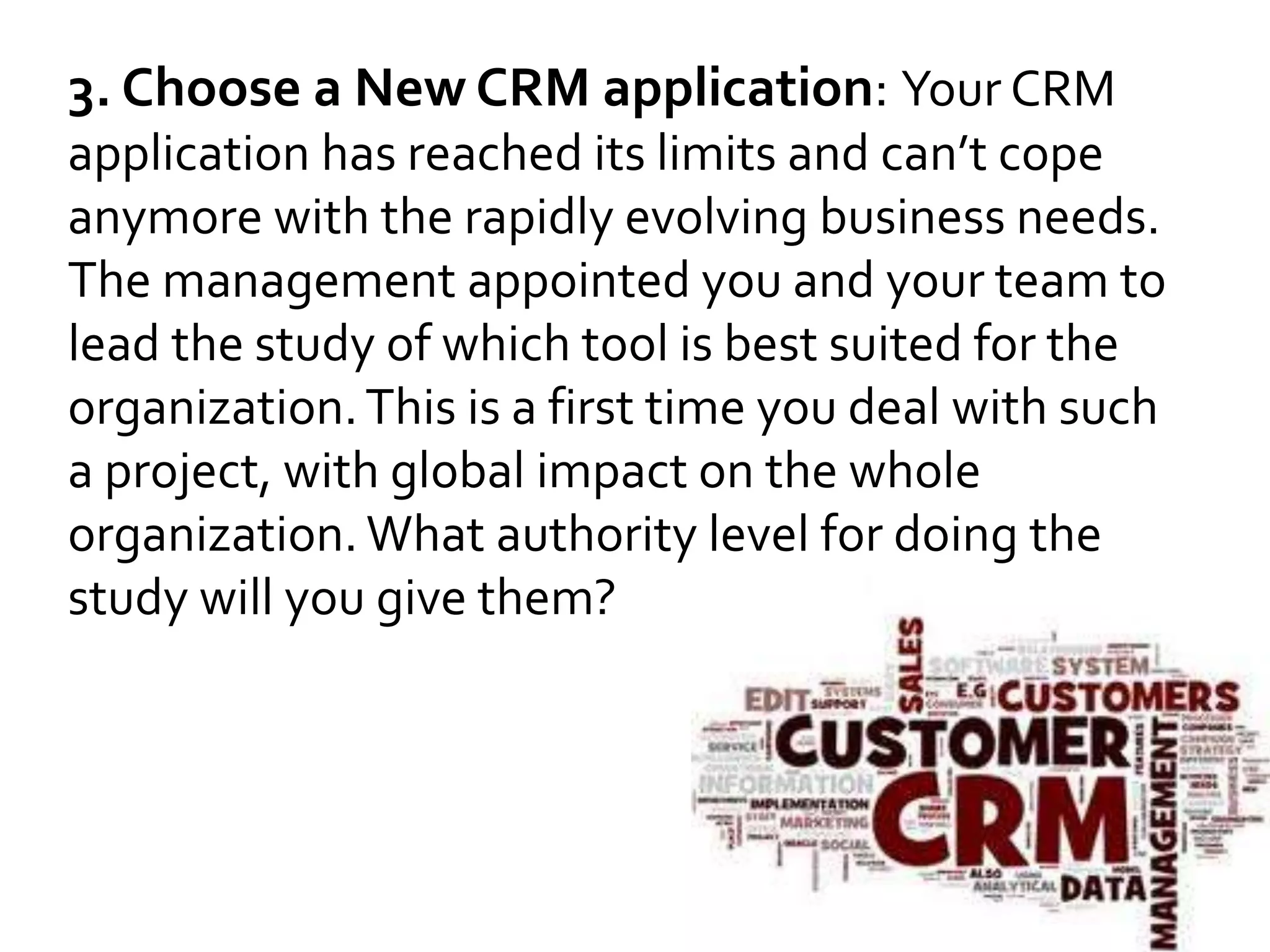
3. Choose a New CRM application: Your CRM 
application has reached its limits and can’t cope 
anymore with the rapidly evolving business needs. 
The management appointed you and your team to 
lead the study of which tool is best suited for the 
organization. This is a first time you deal with such 
a project, with global impact on the whole 
organization. What authority level for doing the 
study will you give them?
4. Organize Entertainment: A new team 
consists of a mix of experienced and inexperienced 
employees. They plan to organize a game night for 
all employees at the office on a Friday night. There 
is a fixed budget available. How will you authorize 
the team to organize this event?
5. Form Teams: A number of experienced agile 
employees claim that the traditional way of 
forming teams by management doesn’t work well. 
They believe they are capable of forming their own 
teams around the projects that are handed to 
them. What will you do?
6. Hire Employees: You wish to involve existing 
team members in the recruitment and hiring of 
new employees. What authority level will you give 
them for decisions concerning various job 
candidates?
7. Design Product: You’re starting a new 
business unit within your company, and you were 
able to select a few employees to join you in 
building and launching an innovative new product. 
A new logo is needed to represent that product. 
What authority level will you give the team to 
design the logo?
8. Design Process: One of your teams has 
delivered an application with major bugs in it, 
which cost their customer a lot of money. The team 
claims that the custom in-house process was to 
blame, and for their next project they want full 
authority over their own process, so that they can 
implement a bigger and stricter process. What will 
you do?
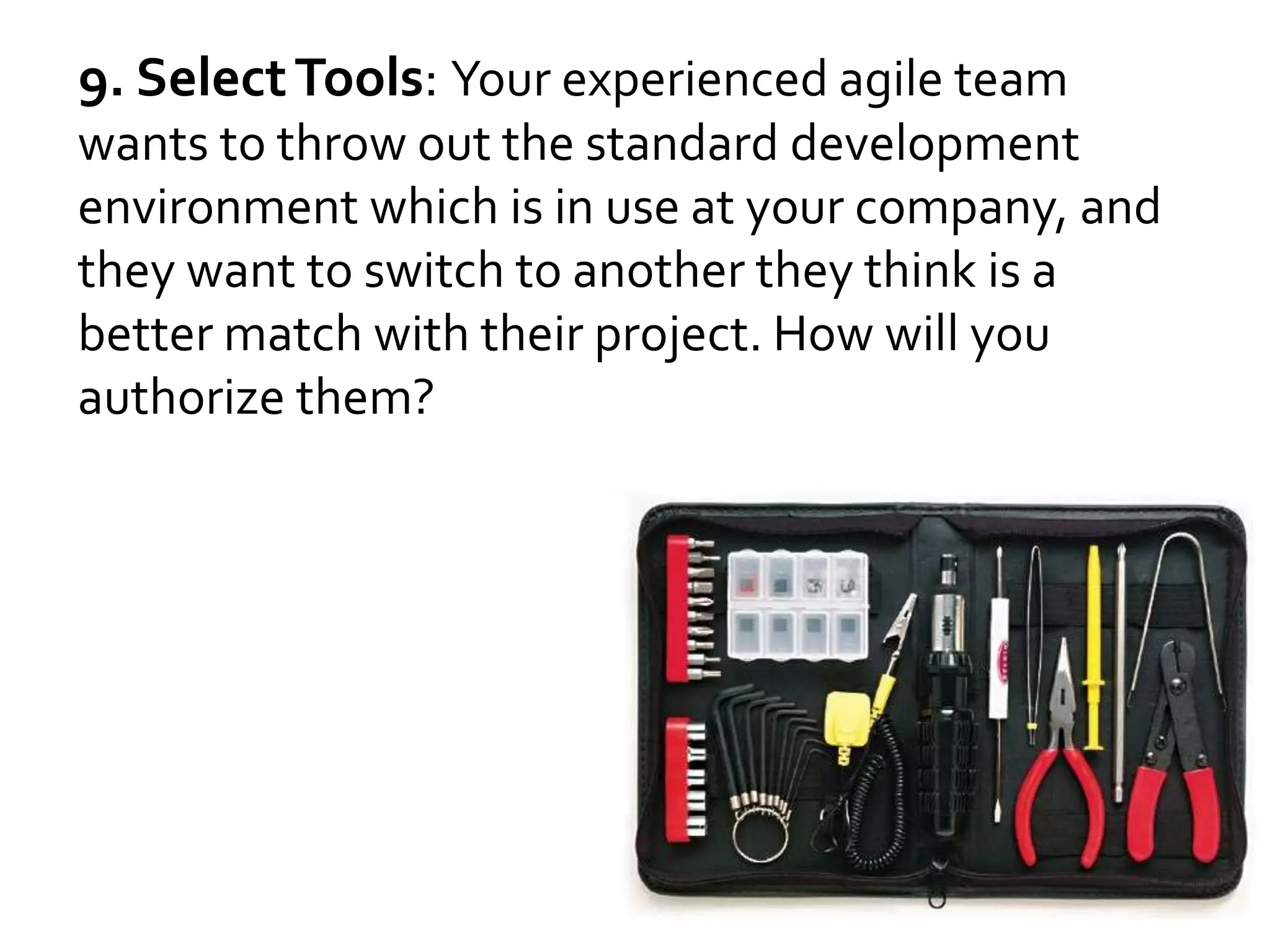
9. Select Tools: Your experienced agile team 
wants to throw out the standard development 
environment which is in use at your company, and 
they want to switch to another they think is a 
better match with their project. How will you 
authorize them?
10. Organize Trips: Some employees get 
together and plan to organize a day trip to the local 
zoo for all employees and their families. They ask 
the company to provide a small fixed budget for 
tickets and some food. What authority level will 
you give them?
Conclusion 
Delegation of authority is not trivial 
Delegation of authority is gradual
Intro 
Delegation 
poker Game 
How to reach 
to self 
organization 
Techniques 
for 
delegation 
Take away 
Our Journey… 
5 min
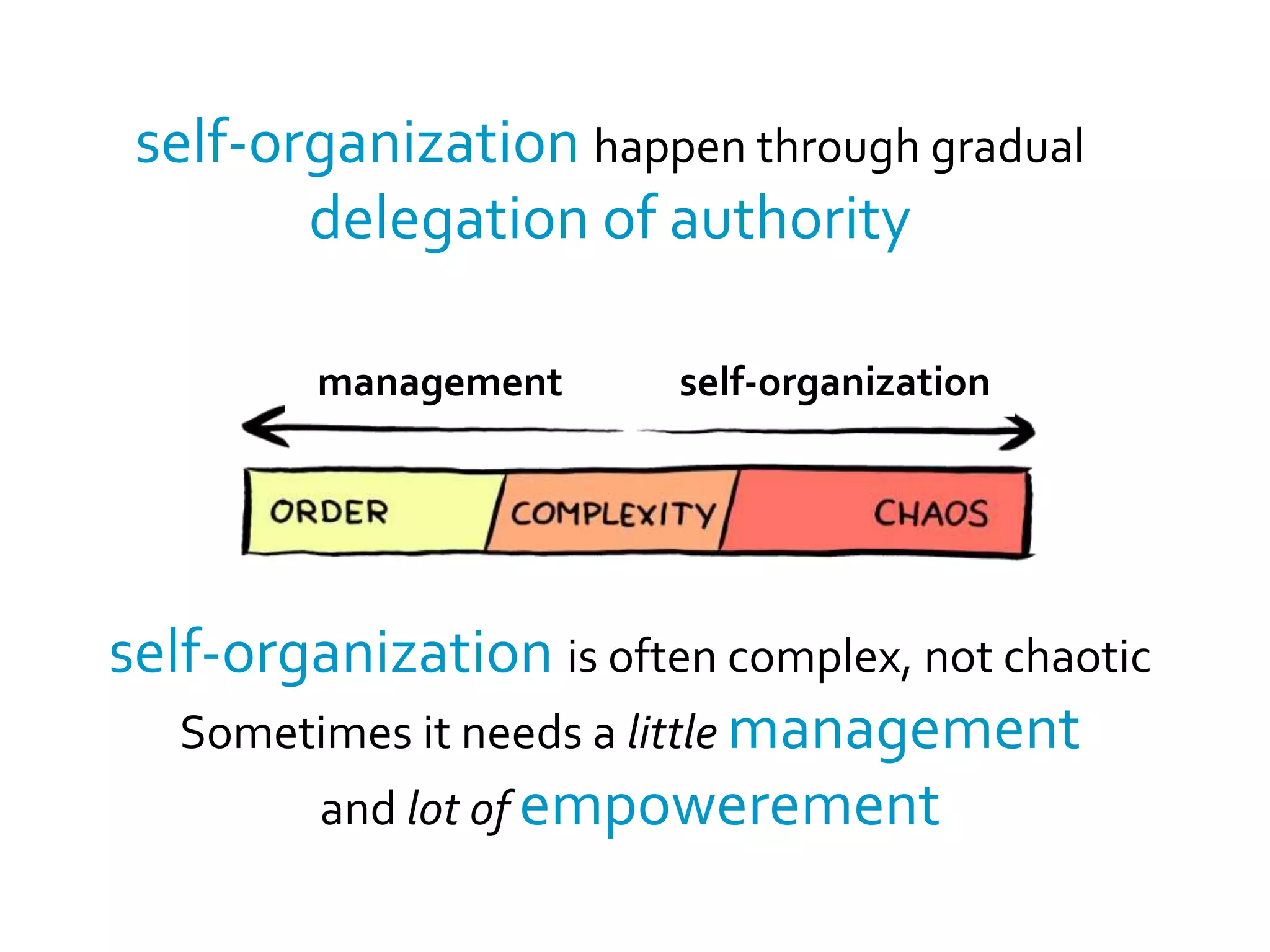
self-organization happen through gradual 
delegation of authority 
management self-organization 
self-organization is often complex, not chaotic 
Sometimes it needs a little management 
and lot of empowerement
Empowerment 
is implementing 
distributed control by 
delegating authority
Empowerment 
Happens only when 4 
types of trust exist 
1) Trust your people 
(communicate this clearly)
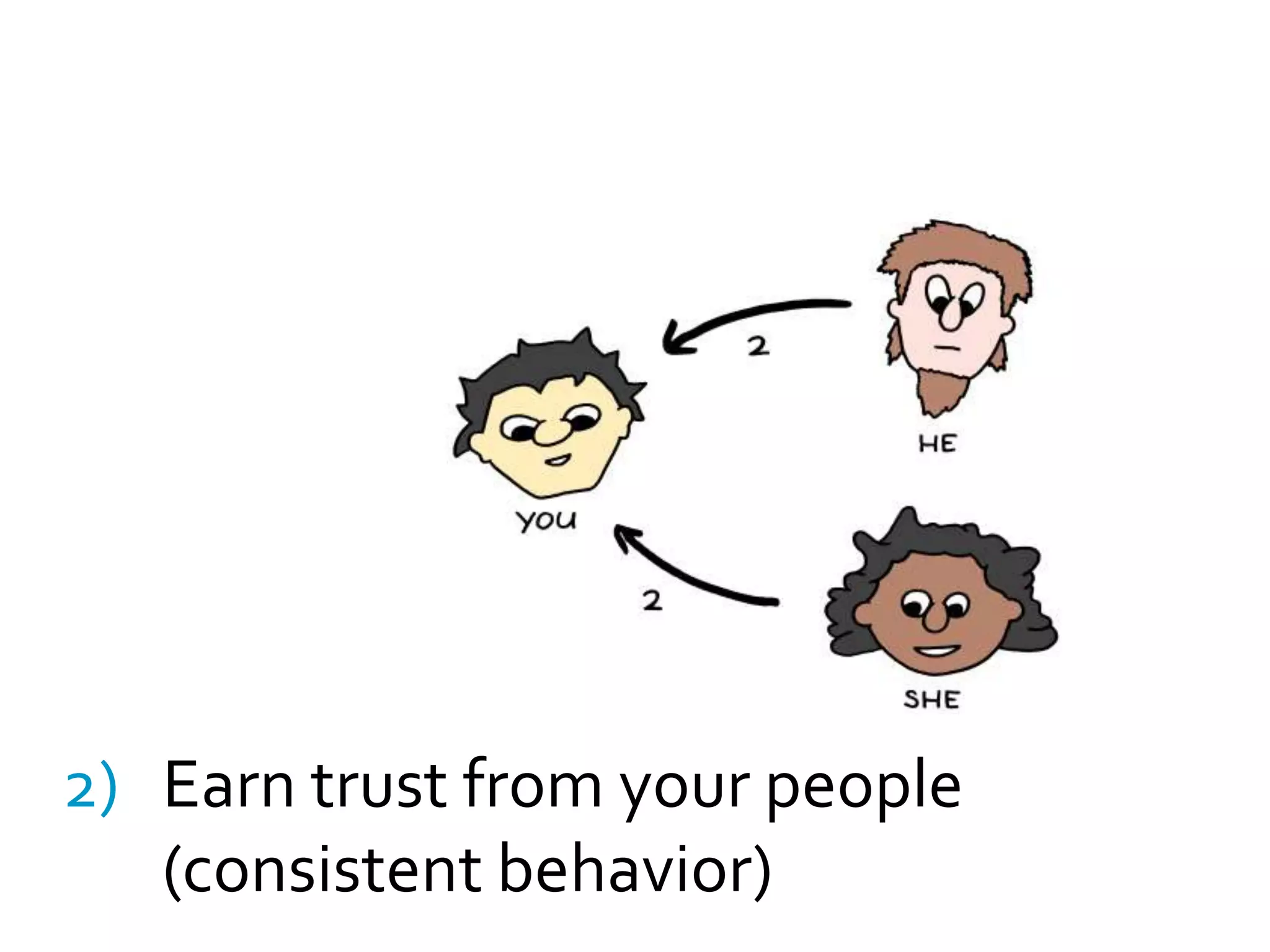
2) Earn trust from your people 
(consistent behavior)
3) Help people to trust each other 
(mingle, don’t meddle)
4) Trust yourself 
(stay true to your own values)
The four types 
of trust
How to reach self organization? 
• Gradual delegation of authority 
• Empowerment 
• Trust
Intro 
Delegation 
poker 
Game 
How to 
reach to self 
organization 
Techniques 
for 
delegation 
Take away 
Our Journey… 
10 min
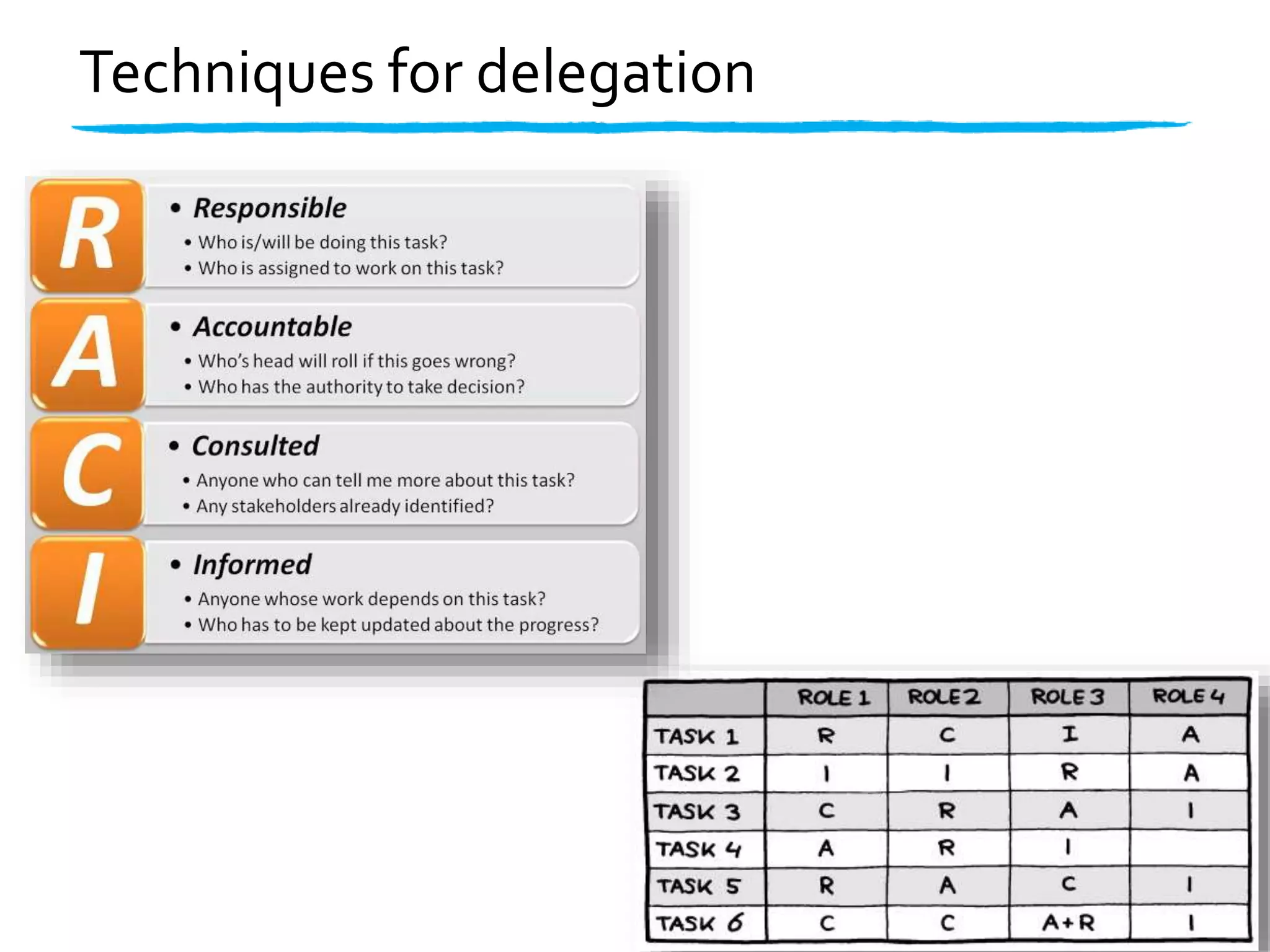
Techniques for delegation
RACI Matrix 
However… 
Key decision areas are better than tasks. 
There should be no separation of accountable versus 
responsible in Agile teams
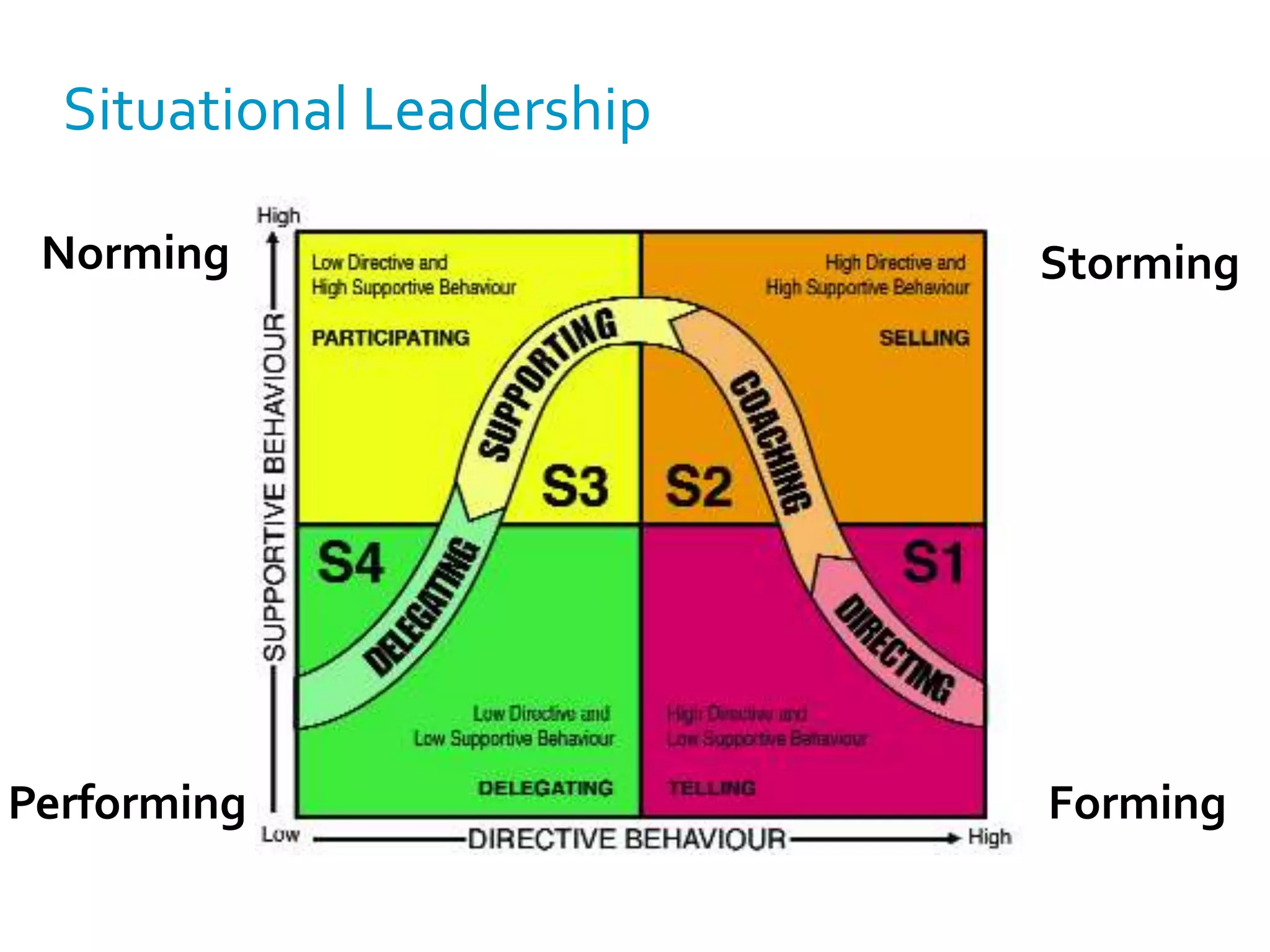
Situational Leadership
Situational Leadership 
Storming 
Forming 
Norming 
Performing
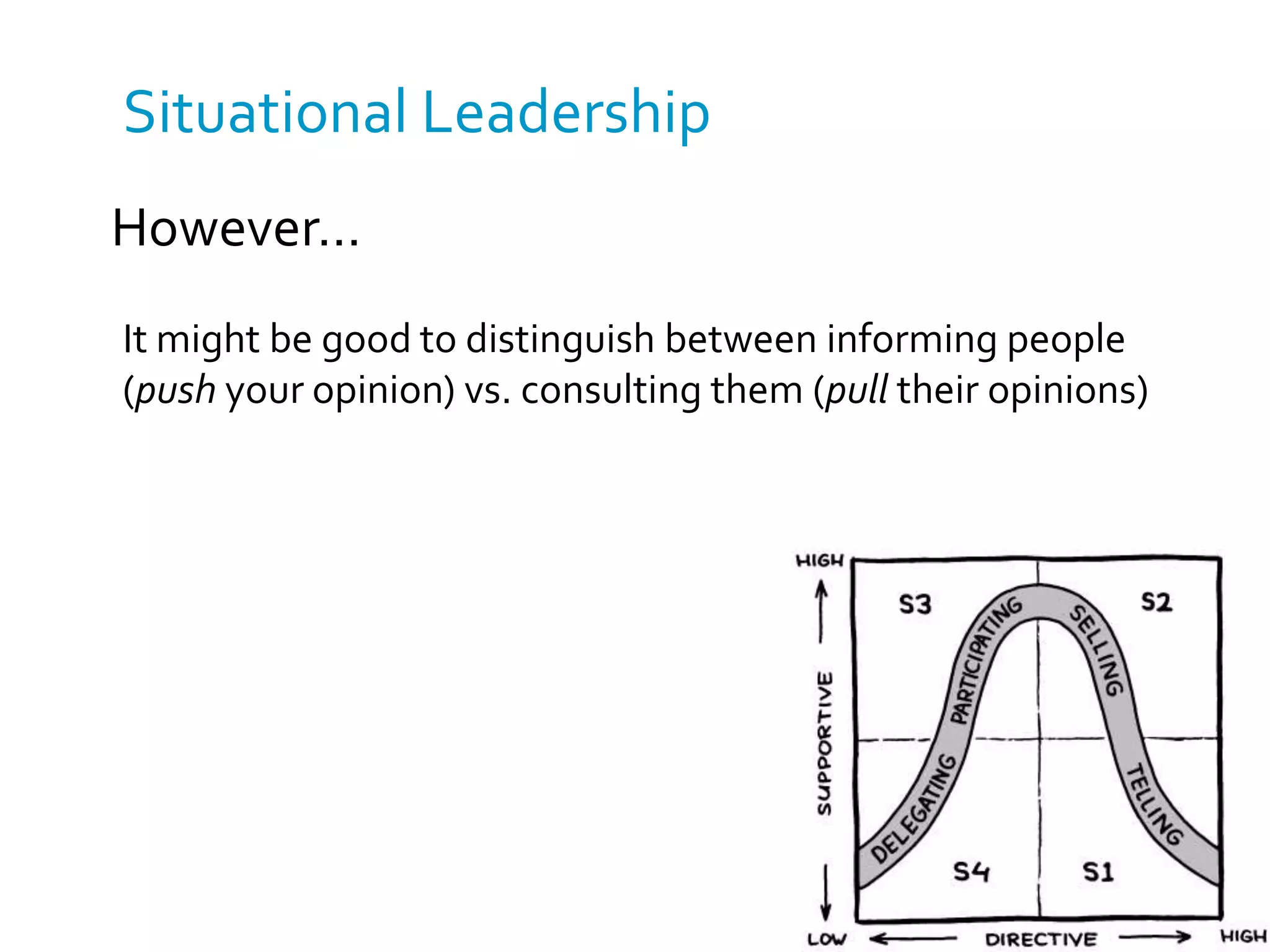
Situational Leadership 
However… 
It might be good to distinguish between informing people 
(push your opinion) vs. consulting them (pull their opinions)
Now let’s get inspired by the two 
previous techniques and try to come 
up with something that adresses 
their limitations
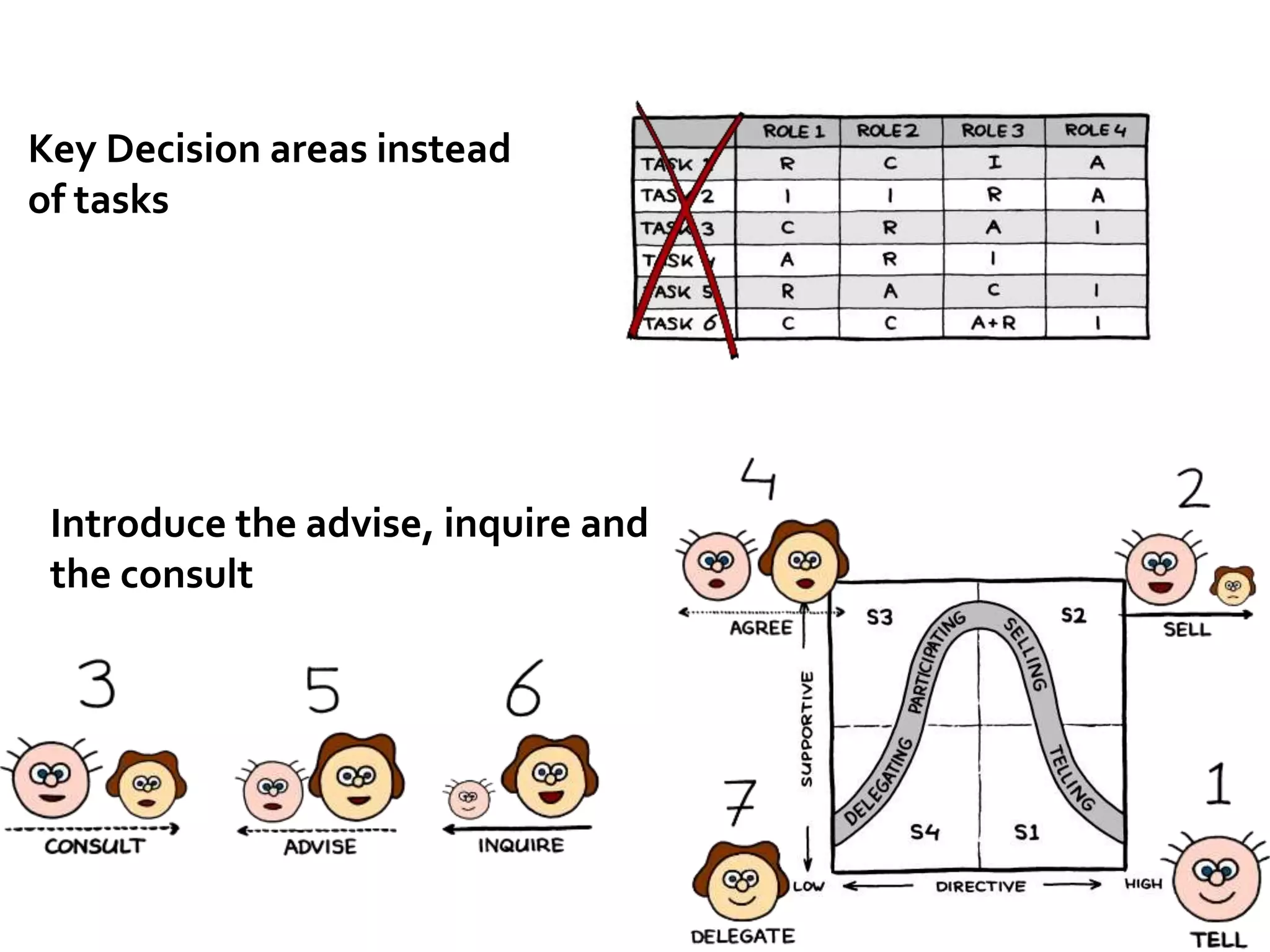
Key Decision areas instead 
of tasks 
Introduce the advise, inquire and 
the consult
Delegation Boards Seven Levels of Authority 
Key Decision Areas 
teams or people
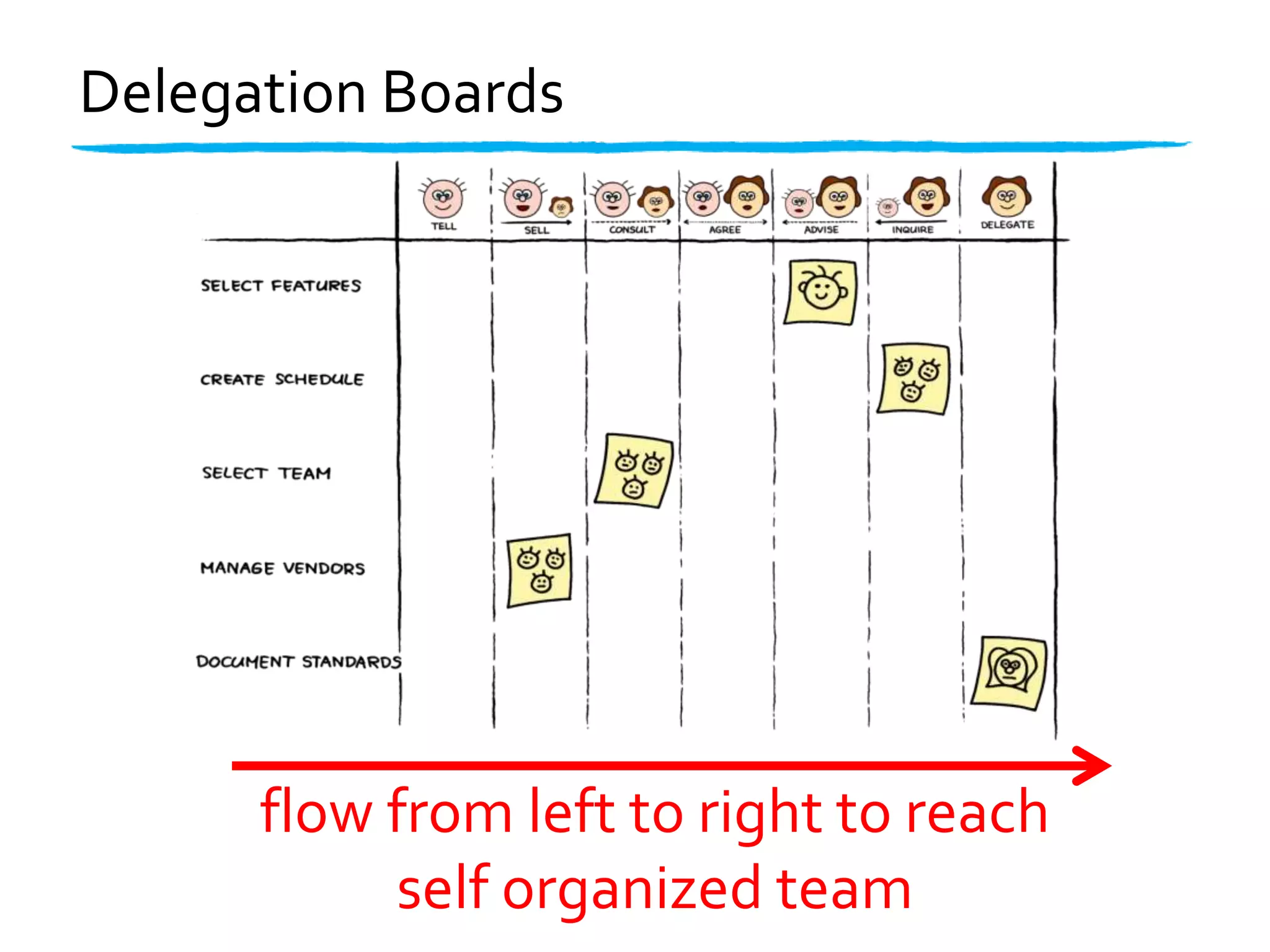
Delegation Boards 
flow from left to right to reach 
self organized team
Delegation/authority boards are 
controlled by the manager
Delegation Boards 
• Aligns manager vision with team vision 
• Removes doubts about roles and 
responsibilities 
• Roadmap for self-organization
Treat delegation as an 
investment
Intro 
Delegation 
poker 
Game 
How to 
reach to self 
organization 
Techniques 
for 
delegation 
Take away 
Our Journey… 
10 min
Take away 
• Delegation is not something trivial 
• Delegation depends on the team maturity and level of 
experience 
• Self-organization happens through gradual 
delegation of authority 
• Self-organization happens through 
empowerment 
• Empowerment requires the existence 
of 4 types of trust 
• Delegation board serves as roadmap 
for self-organization
شكرا
Thank to our sponsors
Thanks to 
our support sponsors & partners 
Partner Partner Partner 
Support Sponsor Support Sponsor Media Partners

Delegation poker pres v3.0

  • 2.
    Intro Delegation poker Game How to reach to self organization Techniques for delegation Take away Our Journey… 5 min
  • 3.
    Individuals and interactionsover processes and tools
  • 4.
    Agile principle: Thebest architectures, requirements, and designs emerge from self-organizing teams.
  • 5.
  • 6.
    What do youthink Self Organized teams look like?
  • 7.
  • 8.
    Intro Delegation poker Game How to reach to self organization Techniques for delegation Take away Our Journey… 55 min
  • 9.
    Delegation Poker ©Jurgen Appelo  version 0.99 management30.com Facilitated by Jad HARB
  • 10.
    Delegation Poker version1.01 This game is part of the Management 3.0 course. You can find a description of the game at the following location: http://www.management30 .com/delegation-poker/
  • 11.
    1.Tell: you tellhow it has to be done, you decide 2.Sell: you sell a decision, but you decide 3.Consult: You consult the other before making the decision 4.Agree: All agree on the decision (best via consensus) 5.Advise:You advise the others, but the others decide (even without your agreement) 6.Inquire: ask feedback after decision by team others decide and inform you about the decision 7.Delegate: no influence, let team work it out others decide and it can be that you even don't get informed about it
  • 12.
    Game: Delegation Poker Good news!? You have been promoted to manager, and you have to deal with various and different situations you face. 1. Everyone read the displayed story 2. Everyone choose (privately) one of the 7 cards 3. After everyone has decided, show all cards 4. look at the highest number that was played 5. If the highest number is minority then the score is not counted 6. Keep track of the points people earned 30 minutes
  • 13.
    Highest number is7 1 out of 5 choose 7 7 is minority Everyone scores except 7
  • 14.
    Highest number is6 3 out of 5 choose 6 6 is majority Everyone scores
  • 15.
    Highest number is4 2 out of 5 choose 4 4 is minority Everyone scores except 4
  • 16.
    Delegation Poker Stories 1. Create Design: A new team consists of five developers, none of them with experience in Agile software development. They are going to build a small e- commerce web application. The team has learned about emergent design, and they tell you (their manager) that they want to make their own decisions about software design issues. You have a little experience with design yourself, but not much. What authority level will you give them?
  • 17.
    2. Create Architecture:An experienced software team is asked to build a component that monitors and regulates the flow of car traffic with smart traffic lights. There is nothing they can reuse, so they have to start from scratch. What authority level for creating the architecture will you give them now?
  • 18.
    3. Choose aNew CRM application: Your CRM application has reached its limits and can’t cope anymore with the rapidly evolving business needs. The management appointed you and your team to lead the study of which tool is best suited for the organization. This is a first time you deal with such a project, with global impact on the whole organization. What authority level for doing the study will you give them?
  • 19.
    4. Organize Entertainment:A new team consists of a mix of experienced and inexperienced employees. They plan to organize a game night for all employees at the office on a Friday night. There is a fixed budget available. How will you authorize the team to organize this event?
  • 20.
    5. Form Teams:A number of experienced agile employees claim that the traditional way of forming teams by management doesn’t work well. They believe they are capable of forming their own teams around the projects that are handed to them. What will you do?
  • 21.
    6. Hire Employees:You wish to involve existing team members in the recruitment and hiring of new employees. What authority level will you give them for decisions concerning various job candidates?
  • 22.
    7. Design Product:You’re starting a new business unit within your company, and you were able to select a few employees to join you in building and launching an innovative new product. A new logo is needed to represent that product. What authority level will you give the team to design the logo?
  • 23.
    8. Design Process:One of your teams has delivered an application with major bugs in it, which cost their customer a lot of money. The team claims that the custom in-house process was to blame, and for their next project they want full authority over their own process, so that they can implement a bigger and stricter process. What will you do?
  • 24.
    9. Select Tools:Your experienced agile team wants to throw out the standard development environment which is in use at your company, and they want to switch to another they think is a better match with their project. How will you authorize them?
  • 25.
    10. Organize Trips:Some employees get together and plan to organize a day trip to the local zoo for all employees and their families. They ask the company to provide a small fixed budget for tickets and some food. What authority level will you give them?
  • 26.
    Conclusion Delegation ofauthority is not trivial Delegation of authority is gradual
  • 27.
    Intro Delegation pokerGame How to reach to self organization Techniques for delegation Take away Our Journey… 5 min
  • 28.
    self-organization happen throughgradual delegation of authority management self-organization self-organization is often complex, not chaotic Sometimes it needs a little management and lot of empowerement
  • 29.
    Empowerment is implementing distributed control by delegating authority
  • 30.
    Empowerment Happens onlywhen 4 types of trust exist 1) Trust your people (communicate this clearly)
  • 31.
    2) Earn trustfrom your people (consistent behavior)
  • 32.
    3) Help peopleto trust each other (mingle, don’t meddle)
  • 33.
    4) Trust yourself (stay true to your own values)
  • 34.
    The four types of trust
  • 35.
    How to reachself organization? • Gradual delegation of authority • Empowerment • Trust
  • 36.
    Intro Delegation poker Game How to reach to self organization Techniques for delegation Take away Our Journey… 10 min
  • 37.
  • 38.
    RACI Matrix However… Key decision areas are better than tasks. There should be no separation of accountable versus responsible in Agile teams
  • 39.
  • 40.
    Situational Leadership Storming Forming Norming Performing
  • 41.
    Situational Leadership However… It might be good to distinguish between informing people (push your opinion) vs. consulting them (pull their opinions)
  • 42.
    Now let’s getinspired by the two previous techniques and try to come up with something that adresses their limitations
  • 43.
    Key Decision areasinstead of tasks Introduce the advise, inquire and the consult
  • 44.
    Delegation Boards SevenLevels of Authority Key Decision Areas teams or people
  • 45.
    Delegation Boards flowfrom left to right to reach self organized team
  • 46.
    Delegation/authority boards are controlled by the manager
  • 47.
    Delegation Boards •Aligns manager vision with team vision • Removes doubts about roles and responsibilities • Roadmap for self-organization
  • 48.
    Treat delegation asan investment
  • 50.
    Intro Delegation poker Game How to reach to self organization Techniques for delegation Take away Our Journey… 10 min
  • 51.
    Take away •Delegation is not something trivial • Delegation depends on the team maturity and level of experience • Self-organization happens through gradual delegation of authority • Self-organization happens through empowerment • Empowerment requires the existence of 4 types of trust • Delegation board serves as roadmap for self-organization
  • 52.
  • 53.
    Thank to oursponsors
  • 54.
    Thanks to oursupport sponsors & partners Partner Partner Partner Support Sponsor Support Sponsor Media Partners

Editor's Notes

  • #5 This is an agile principle, what do you think self organized teams are? Agile teams are self organized in a given framework, in the light of achieving the ultimate objective which is deliver the maximum amount of value to the customer. What we gonna see today throughout the game are the challenges faced in having self organized teams and then come up with maybe something that can help to reach to this stage a self organized team! The game will let us identify where to put the cursor, is it towards a complete anarchy or a complete dictatorship…
  • #13  If the people with the highest number are not a minority, everybody wins points. But you only win points according to your card’s value.
  • #14 Another example: suppose only one person chooses 7.
  • #15 Make sure everyone pays attention to these examples. They make it quite clear how it works. Suppose 3 people at the table choose 6, the others choose 4 and 5. You always look at the highest number that was played, in this case 6.
  • #16 Make sure everyone pays attention to these examples. They make it quite clear how it works. Suppose 3 people at the table choose 6, the others choose 4 and 5. You always look at the highest number that was played, in this case 6.
  • #29 Most Agile books seem to assume that organizations come from the ordered part of the spectrum, and have to “let go” over strict management. But many other organizations (like in my own experience) are in the chaotic part of the spectrum. They need a little bit more management. (I did that by imposing Scrum, and it worked.) See book: page 102-103
  • #31 Some managers forget to tell their teams that they trust them. If you explicitly tell people you trust them you may increase their commitment and loyalty. See book: page 138-139
  • #32 I have seen managers requiring certain behavior from employees (for example, “be more disciplined”) while they rarely showed such behavior themselves (for example, never being on time in meetings). You destroy trust if you don’t lead by example and show the behavior you also expect from others. See book: page 139-140
  • #33 Sometimes team members keep asking the manager to help them solve issues. This may be an indication that they don’t trust each other enough to make good decisions. You can increase trust between people in a team by not giving them solutions to their problems. Let them figure it out together first. See book: page 140
  • #34 This seems a bit cheesy. But I have it from a book by Scott Berkun. If you don’t trust your own behavior, if you don’t live up to your own value system, then how can you expect other people to trust you? Trust yourself first, before building trust relationships with others. See book: page 140-141
  • #35 So these are the four types of trust. A manager needs to work on all of them.
  • #38 Now we get more practical...
  • #40 Adaptive leadership refers to the concept of adapting how we lead a team based on the specific circumstances and how mature the team is in its formation. Team formation follows the stages of Forming, Storming, Norming and Performing
  • #41 Adaptive leadership refers to the concept of adapting how we lead a team based on the specific circumstances and how mature the team is in its formation. Team formation follows the stages of Forming, Storming, Norming and Performing
  • #45 Put the 7 levels of authority horizontally on a board. Determine which teams or individuals are authorized to do what, and at what level.
  • #46 Put the 7 levels of authority horizontally on a board. Determine which teams or individuals are authorized to do what, and at what level.
  • #48 Aligns manager vision with team vision through a common ground on maturity levels on key decision areas Aligns manager vision with team vision through a common ground on maturity levels on key decision areas Removes doubts about roles and responsibilities People should not walk into “invisible electric fences” Serves as roadmap for gradual delegation of authority and empowerment.
  • #49 You must treat delegation as an investment. It doesn’t pay back for itself immediately. It takes a while... See book: page 133-134