
PANEL 11 - Asian Directions-
Palate & Perception

Moderator: Jeannie Cho Lee MW
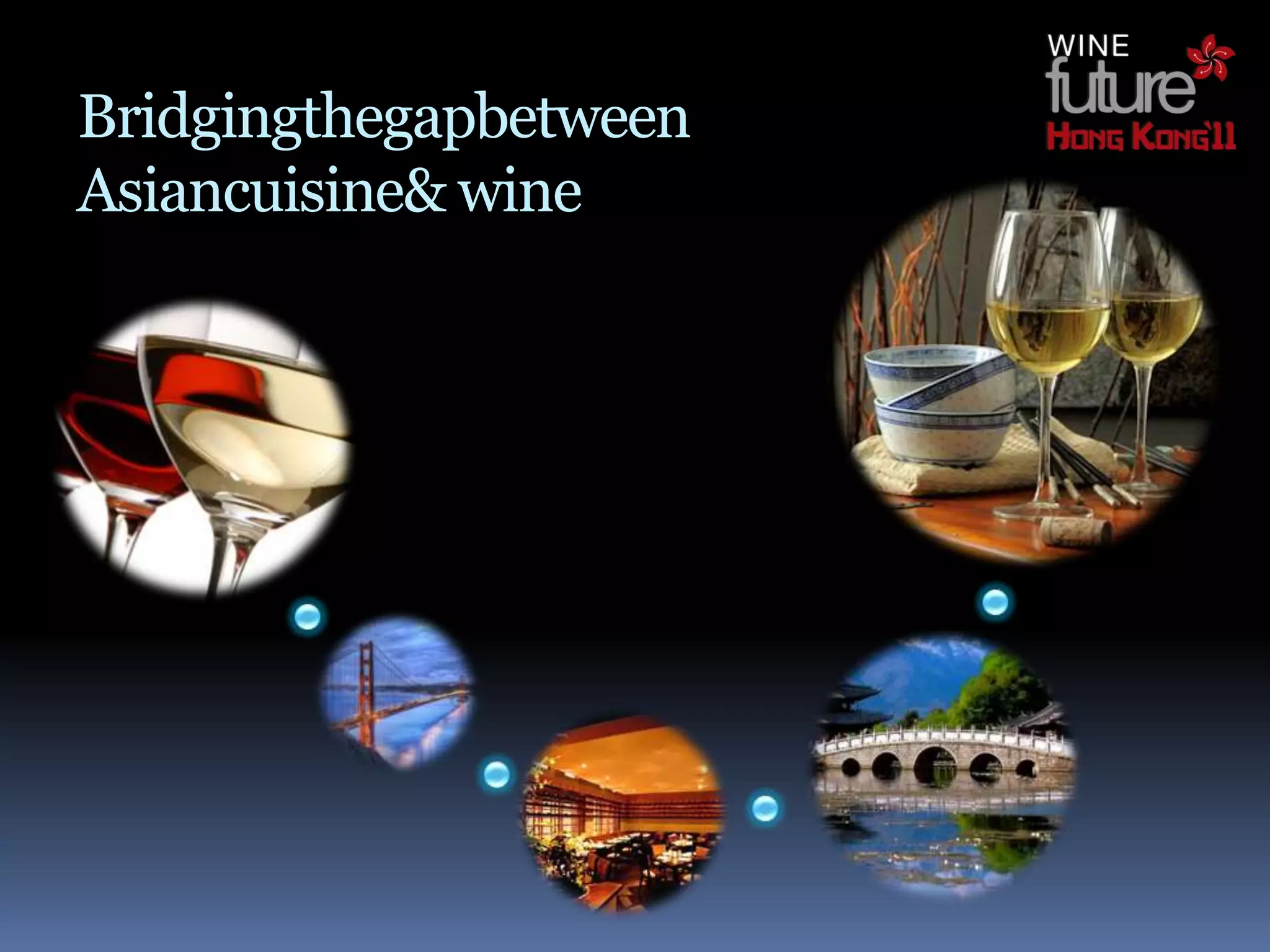
Bridgingthegapbetween
Asiancuisine& wine
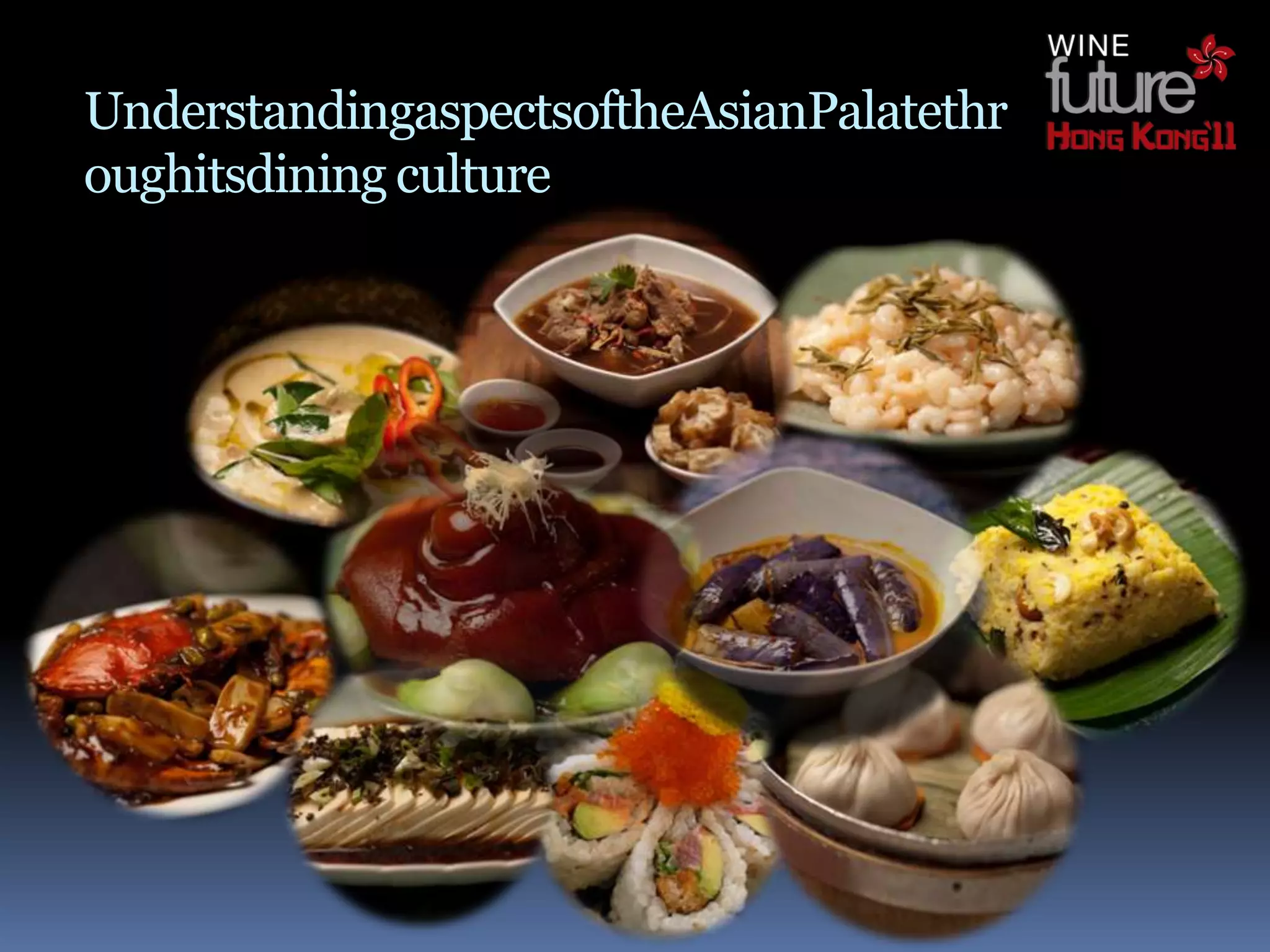
UnderstandingaspectsoftheAsianPalatethr
oughitsdining culture
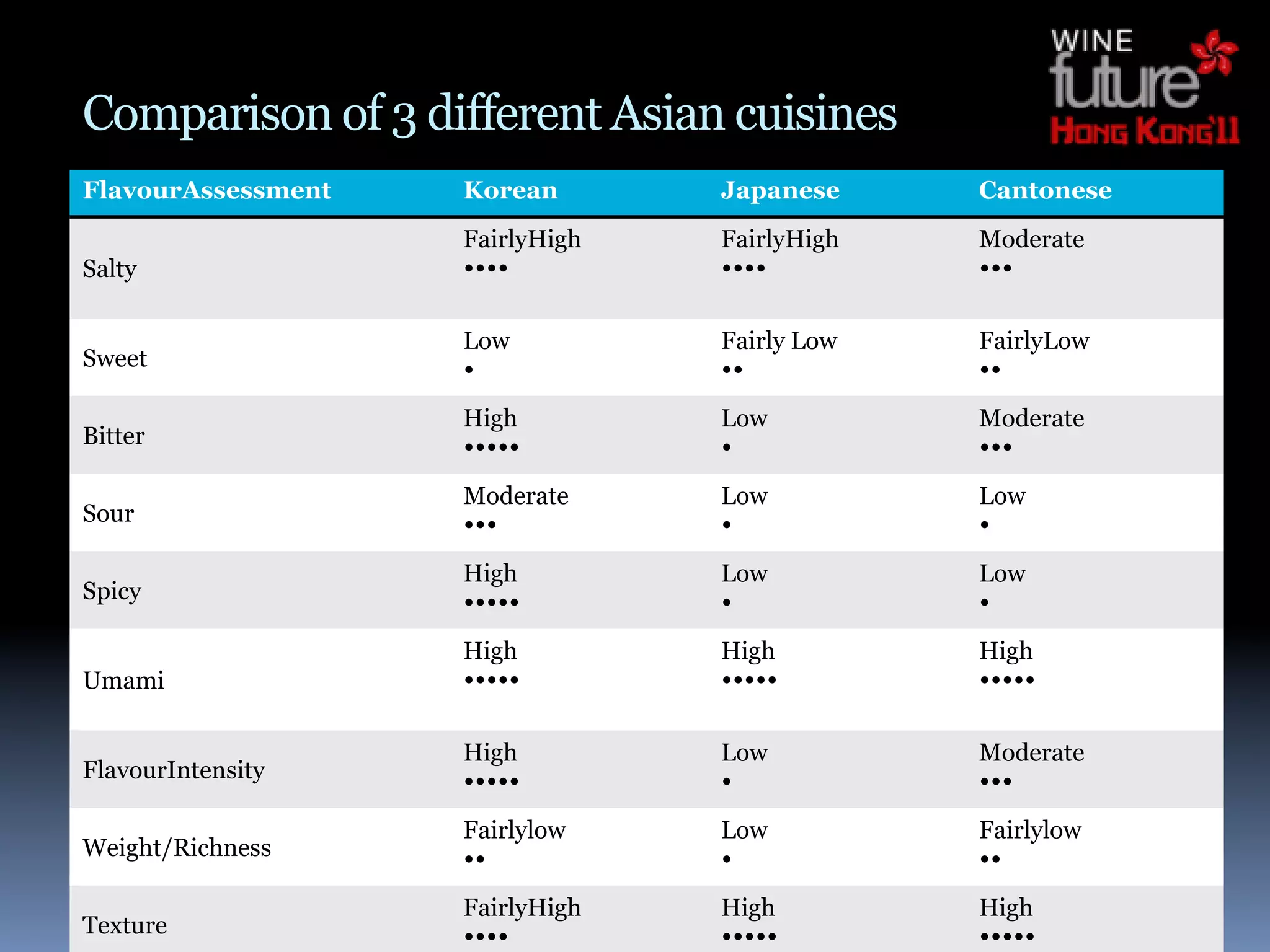
Comparison of 3 different Asian cuisines
FlavourAssessment   Korean       Japanese     Cantonese
                    FairlyHigh   FairlyHigh   Moderate
Salty                                 

                    Low          Fairly Low   FairlyLow
Sweet                                      
                    High         Low          Moderate
Bitter                                  
                    Moderate     Low          Low
Sour                                      
                    High         Low          Low
Spicy                                   
                    High         High         High
Umami                               

                    High         Low          Moderate
FlavourIntensity                        
                    Fairlylow    Low          Fairlylow
Weight/Richness                            
                    FairlyHigh   High         High
Texture                              
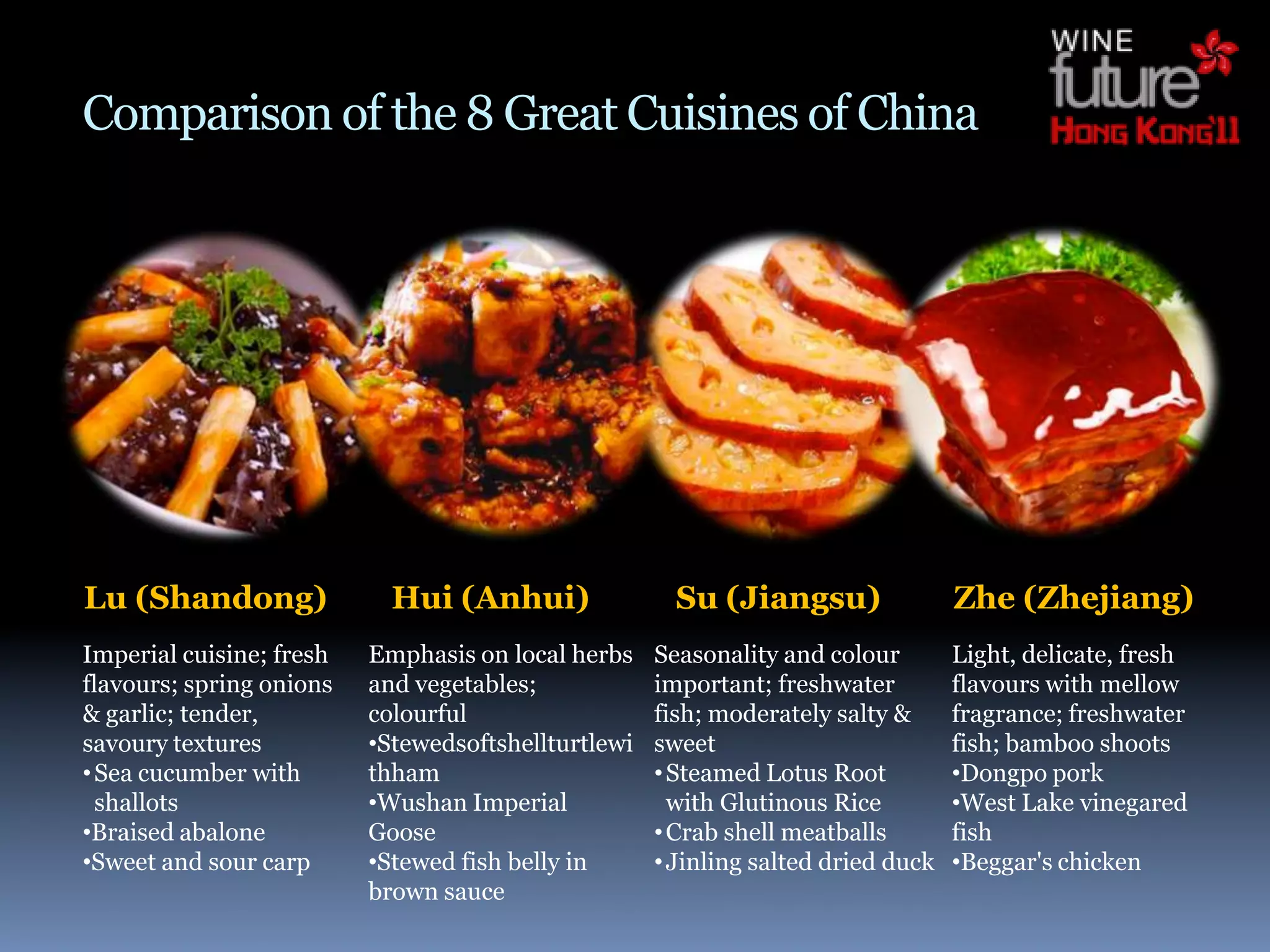
Comparison of the 8 Great Cuisines of China


Lu (Shandong)               Hui (Anhui)                Su (Jiangsu)                Zhe (Zhejiang)
Imperial cuisine; fresh   Emphasis on local herbs    Seasonality and colour        Light, delicate, fresh
flavours; spring onions   and vegetables;            important; freshwater         flavours with mellow
& garlic; tender,         colourful                  fish; moderately salty &      fragrance; freshwater
savoury textures          •Stewedsoftshellturtlewi   sweet                         fish; bamboo shoots
• Sea cucumber with       thham                      • Steamed Lotus Root          •Dongpo pork
  shallots                •Wushan Imperial             with Glutinous Rice         •West Lake vinegared
•Braised abalone          Goose                      • Crab shell meatballs        fish
•Sweet and sour carp      •Stewed fish belly in      • Jinling salted dried duck   •Beggar's chicken
                          brown sauce
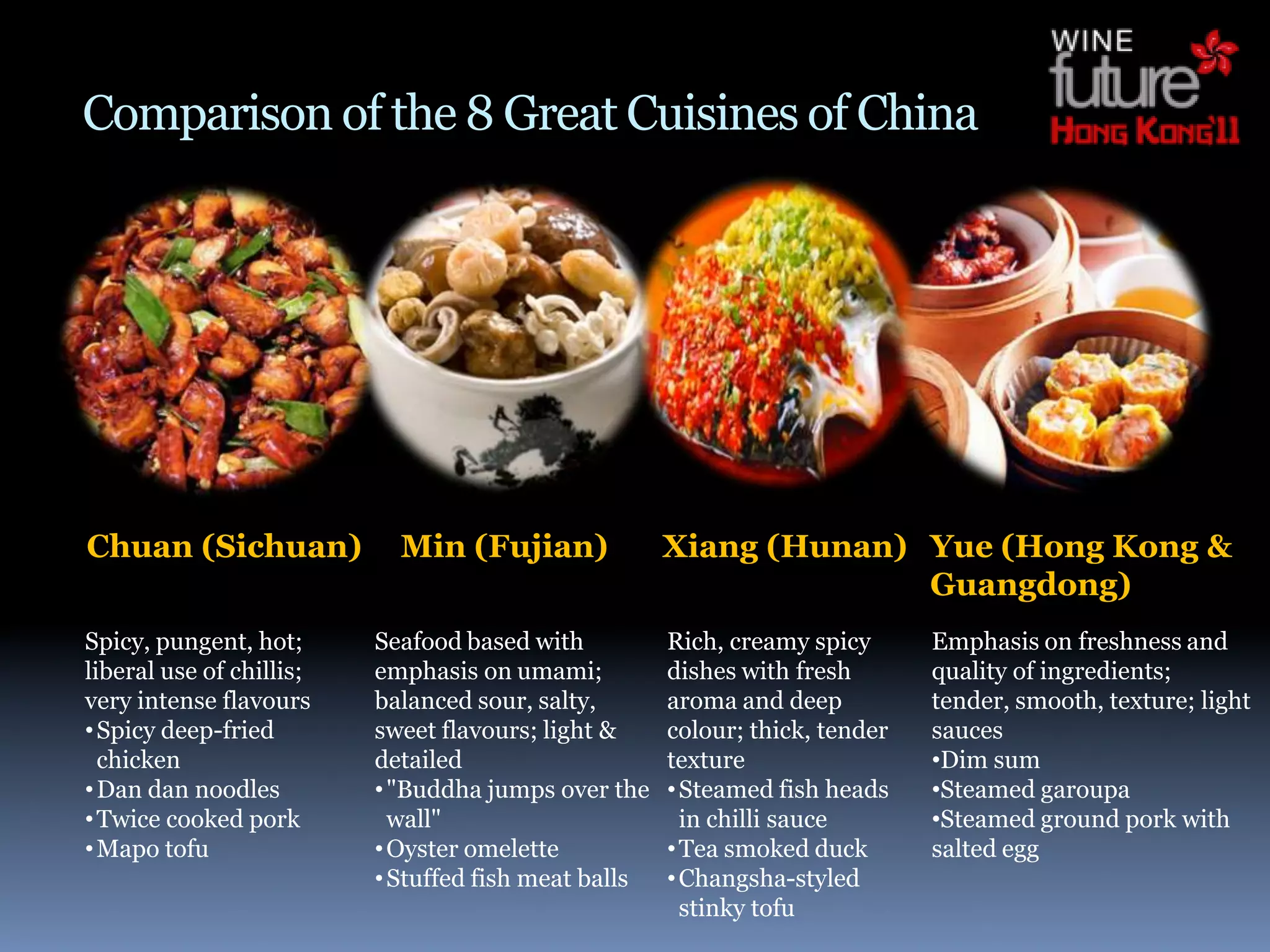
Comparison of the 8 Great Cuisines of China


Chuan (Sichuan)             Min (Fujian)              Xiang (Hunan) Yue (Hong Kong &
                                                                    Guangdong)
Spicy, pungent, hot;      Seafood based with          Rich, creamy spicy      Emphasis on freshness and
liberal use of chillis;   emphasis on umami;          dishes with fresh       quality of ingredients;
very intense flavours     balanced sour, salty,       aroma and deep          tender, smooth, texture; light
• Spicy deep-fried        sweet flavours; light &     colour; thick, tender   sauces
  chicken                 detailed                    texture                 •Dim sum
• Dan dan noodles         • "Buddha jumps over the    • Steamed fish heads    •Steamed garoupa
• Twice cooked pork         wall"                       in chilli sauce       •Steamed ground pork with
• Mapo tofu               • Oyster omelette           • Tea smoked duck       salted egg
                          • Stuffed fish meat balls   • Changsha-styled
                                                        stinky tofu
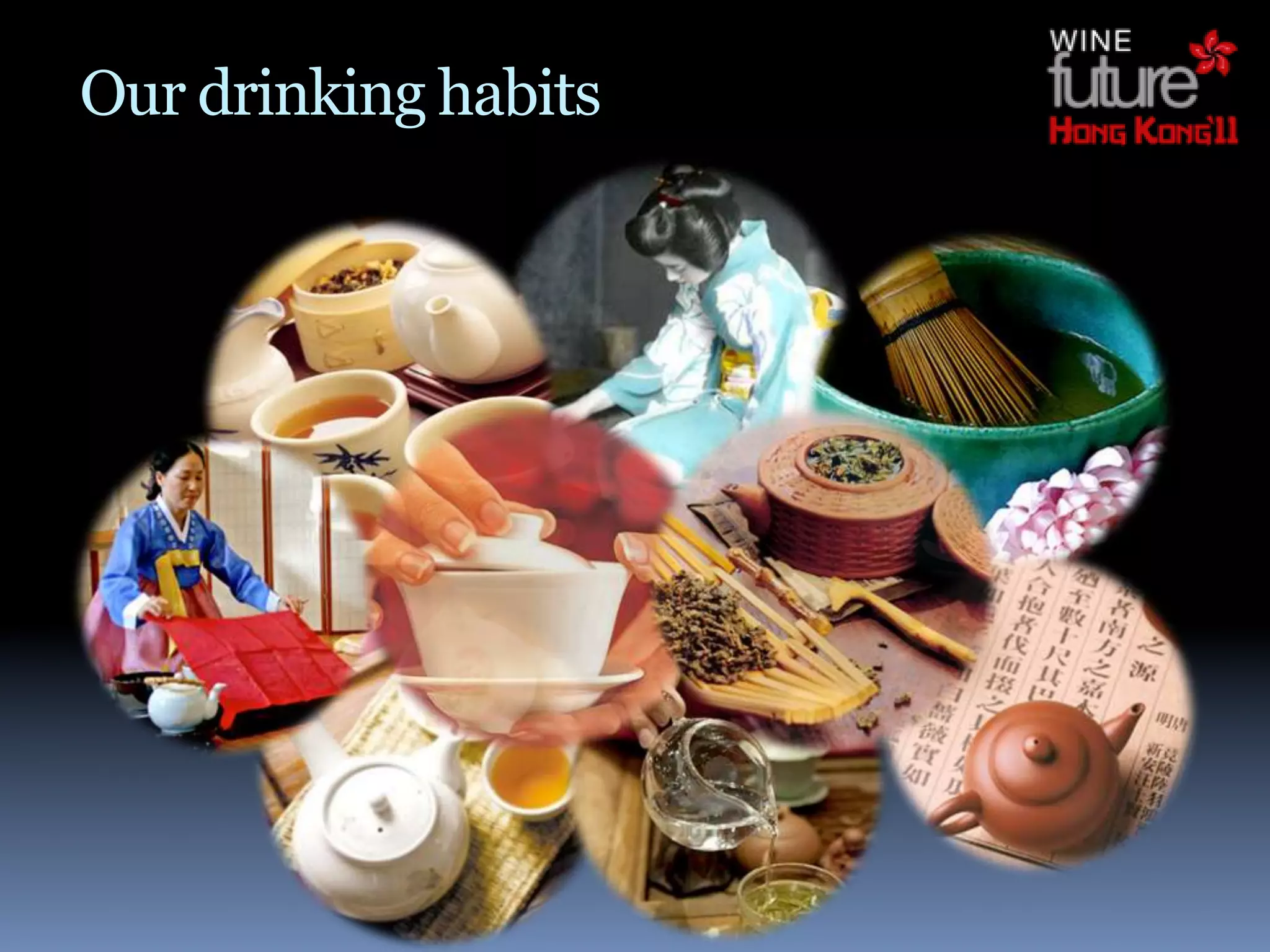
Our drinking habits
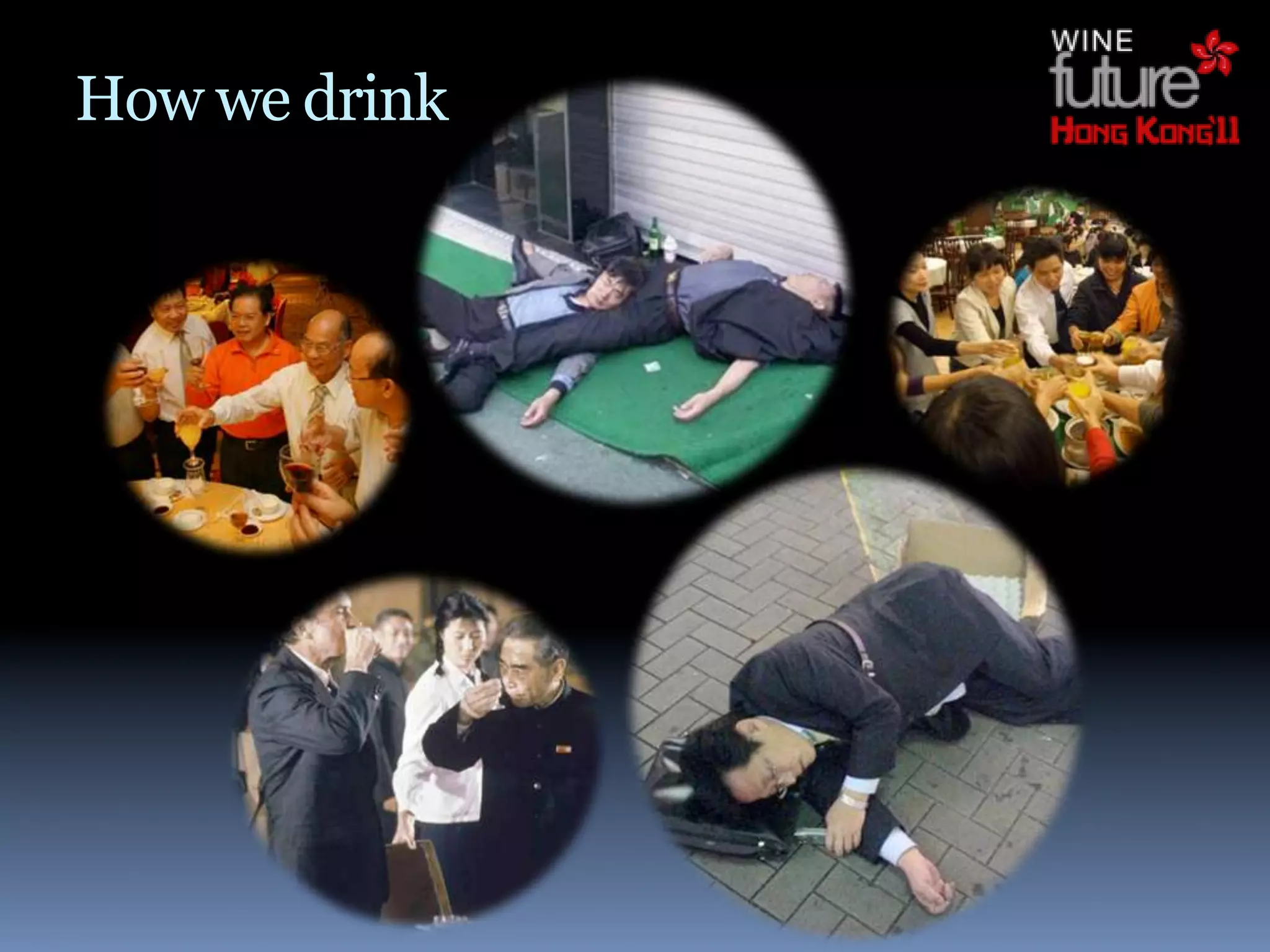
How we drink
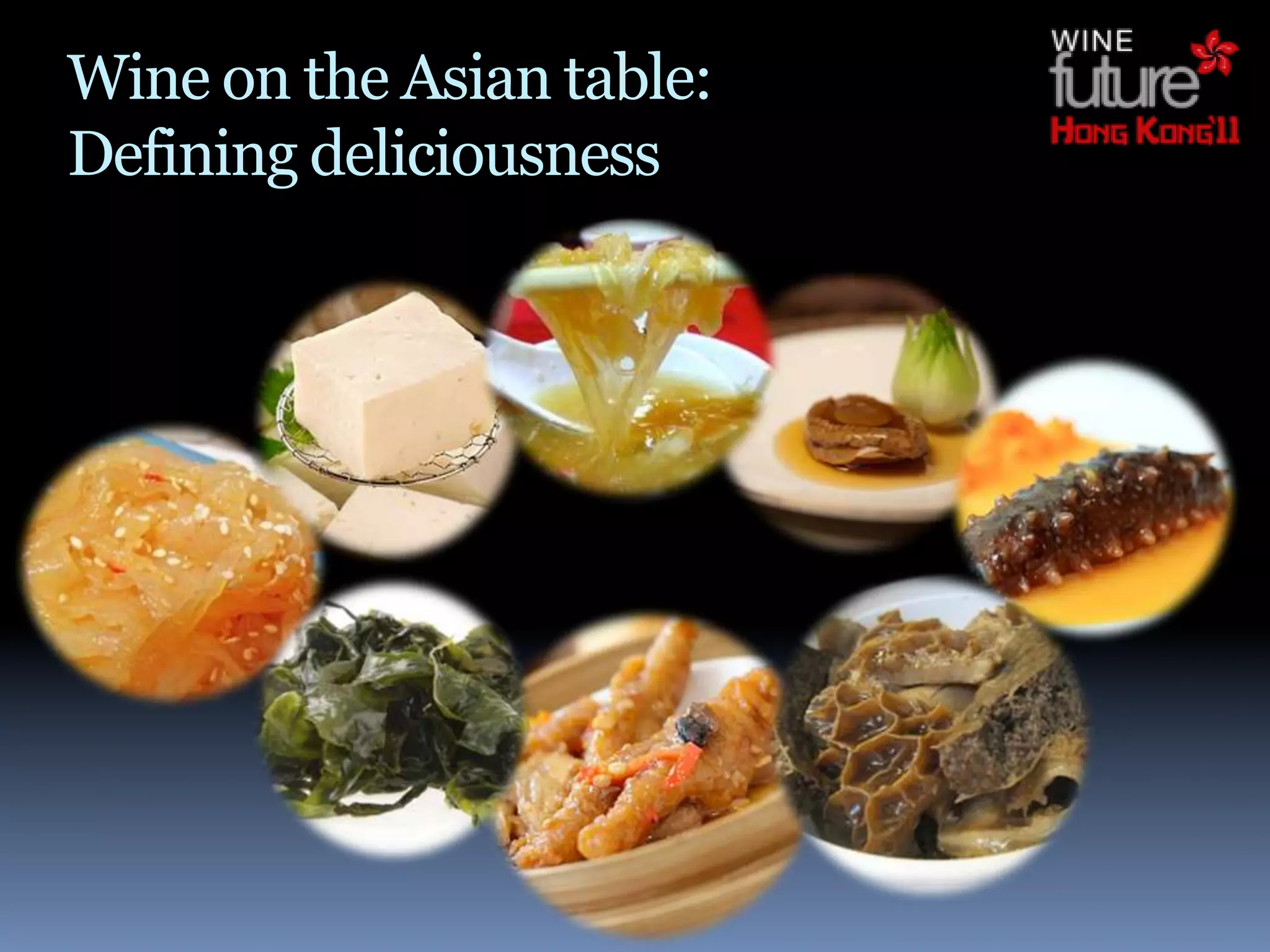
Wine on the Asian table:
Defining deliciousness
The golden era of wine in Asia


is NOW.
Thankyou.

Defining the Chinese Palate

  • 1.
    PANEL 11 -Asian Directions- Palate & Perception Moderator: Jeannie Cho Lee MW
  • 2.
  • 3.
  • 4.
    Comparison of 3different Asian cuisines FlavourAssessment Korean Japanese Cantonese FairlyHigh FairlyHigh Moderate Salty    Low Fairly Low FairlyLow Sweet    High Low Moderate Bitter    Moderate Low Low Sour    High Low Low Spicy    High High High Umami    High Low Moderate FlavourIntensity    Fairlylow Low Fairlylow Weight/Richness    FairlyHigh High High Texture   
  • 5.
    Comparison of the8 Great Cuisines of China Lu (Shandong) Hui (Anhui) Su (Jiangsu) Zhe (Zhejiang) Imperial cuisine; fresh Emphasis on local herbs Seasonality and colour Light, delicate, fresh flavours; spring onions and vegetables; important; freshwater flavours with mellow & garlic; tender, colourful fish; moderately salty & fragrance; freshwater savoury textures •Stewedsoftshellturtlewi sweet fish; bamboo shoots • Sea cucumber with thham • Steamed Lotus Root •Dongpo pork shallots •Wushan Imperial with Glutinous Rice •West Lake vinegared •Braised abalone Goose • Crab shell meatballs fish •Sweet and sour carp •Stewed fish belly in • Jinling salted dried duck •Beggar's chicken brown sauce
  • 6.
    Comparison of the8 Great Cuisines of China Chuan (Sichuan) Min (Fujian) Xiang (Hunan) Yue (Hong Kong & Guangdong) Spicy, pungent, hot; Seafood based with Rich, creamy spicy Emphasis on freshness and liberal use of chillis; emphasis on umami; dishes with fresh quality of ingredients; very intense flavours balanced sour, salty, aroma and deep tender, smooth, texture; light • Spicy deep-fried sweet flavours; light & colour; thick, tender sauces chicken detailed texture •Dim sum • Dan dan noodles • "Buddha jumps over the • Steamed fish heads •Steamed garoupa • Twice cooked pork wall" in chilli sauce •Steamed ground pork with • Mapo tofu • Oyster omelette • Tea smoked duck salted egg • Stuffed fish meat balls • Changsha-styled stinky tofu
  • 7.
  • 8.
  • 9.
    Wine on theAsian table: Defining deliciousness
  • 10.
    The golden eraof wine in Asia is NOW.
  • 11.