







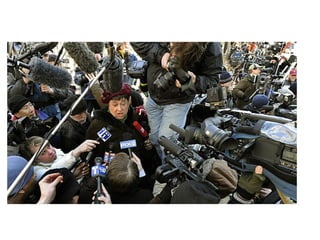

If things go wrong
“A man who has committed a mistake
and doesn't correct it is committing
another mistake”
- Confucius
Confucius
Confucius
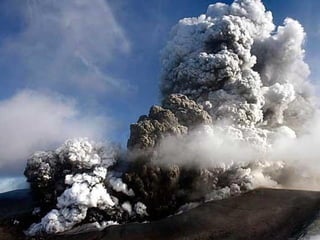
The volcano that grounded many airlines -
the Eyjafjallajokull eruption in April 2010
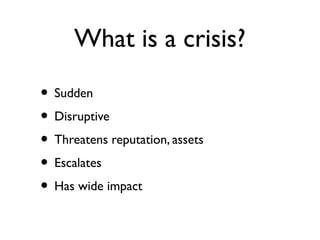
What is a crisis?
• Sudden
• Disruptive
• Threatens reputation, assets
• Escalates
• Has wide impact
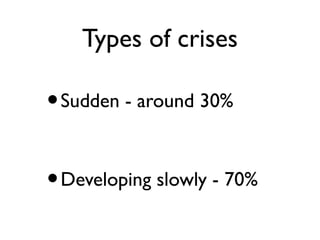
Types of crises
•Sudden - around 30%
•Developing slowly - 70%
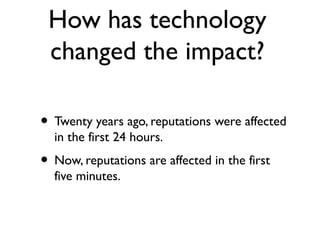
How has technology
changed the impact?
• Twenty years ago, reputations were affected
in the first 24 hours.
• Now, reputations are affected in the first
five minutes.
A story of three CEOs
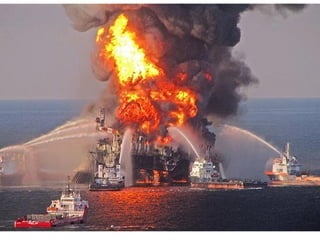
British Petroleum (BP)
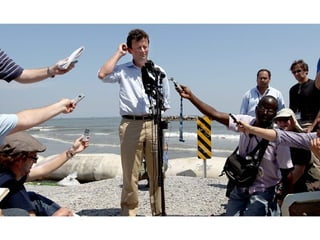
CEO Tony Hayward
Quote:“I want my life back”
BP’s mistakes
• They failed to recognise the crisis early enough
• They acted too slowly
• They did not react to criticism
• They misunderstood how people felt
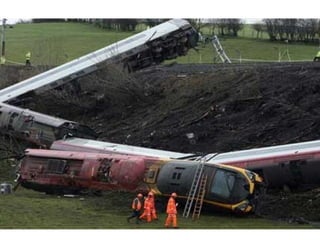
Virgin Trains
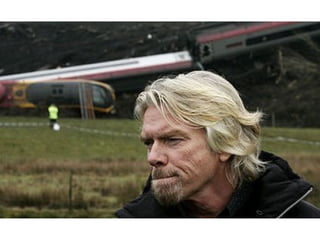
Quote “Our driver was a hero”
CEO Richard Branson
Did the right things
WhatVirgin did right
• Acted quickly
• CEO took charge
• Said the right things
• Followed-up
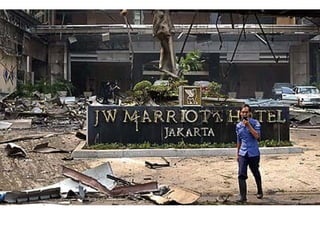
J W Marriott
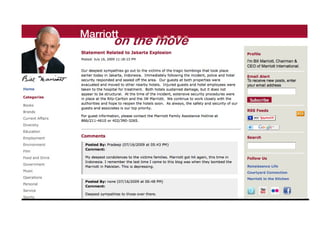
Quote “Our deepest sympathies”
CEO Bill Marriott
Expressed his feelings
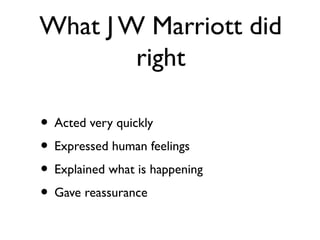
What J W Marriott did
right
• Acted very quickly
• Expressed human feelings
• Explained what is happening
• Gave reassurance
P
A
C
E
E
E
E
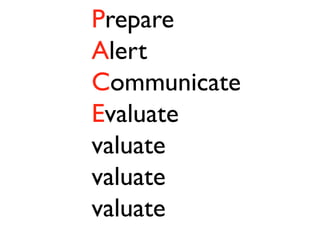
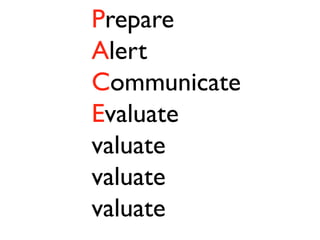
Prepare
Alert
Communicate
Evaluate
valuate
valuate
valuate
PrepareAlert
Communicate
Evaluate
valuate
valuate
valuate
• You can prepare for any potential crisis
• You can set up a communications plan that
will work in any situation
• Crises lead to panic. Preparation allows you
to stay calm
PrepareAlert
Communicate
Evaluate
valuate
valuate
valuate
• Behaving well towards your customers at
all times will help to save your reputation in
a crisis
PrepareAlert
Communicate
Evaluate
valuate
valuate
valuate
• You need three plans:
• A crisis communication plan
• A crisis operation plan
• A business recovery plan
PrepareAlert
Communicate
Evaluate
valuate
valuate
valuate
• Make a plan and set of procedures
• Assign responsibilities
• Train staff
• Prepare dark pages
• Prepare media statements
• Test the plan
Prepare
AlertCommunicate
Evaluate
valuate
valuate
valuate
• You should be the first to know that a crisis
has occurred
• Social media makes everyone an eyewitness
reporter
Prepare
AlertCommunicate
Evaluate
valuate
valuate
valuate
• Monitor the media
• Have emergency communications in place
• Alert spokespeople
• Open crisis centre
Prepare
Alert
CommunicateEvaluate
valuate
valuate
valuate
• Focus on the crisis
• Gather accurate information
• Communicate as quickly as possible
• Never speculate about the cause
• Be completely honest
Prepare
Alert
CommunicateEvaluate
valuate
valuate
valuate
• Implement dark pages
• Make a statement
• If the news is bad, report it yourself
• Respond to media requests
• Become the centre of information
• Monitor the media for mis-information
Evaluate
valuate
valuate
valuate
• Perform an act of goodwill immediately
after the crisis
• Declare the crisis over
Evaluate
valuate
valuate
valuate• Review procedures
• Assess reputation
• Make changes if necessary
• Re-test procedures
Prepare
Alert
Communicate
Evaluate
valuate
valuate
valuate
Alan Stevens
The MediaCoach
alan@mediacoach.co.uk
Thank you for
listening

Dealing with a crisis session 5 ppt