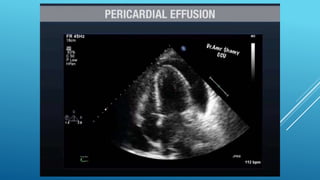
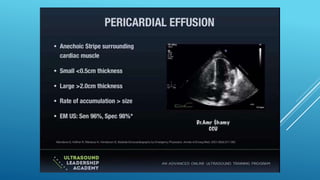
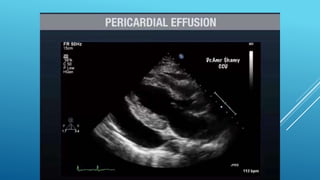
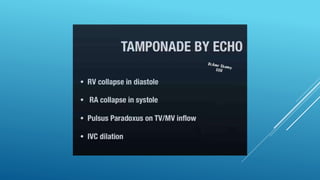
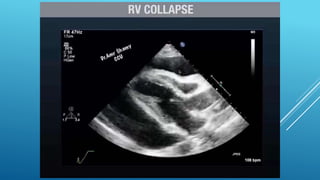
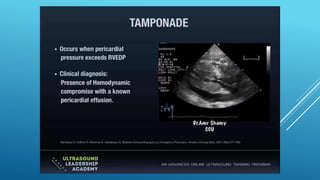
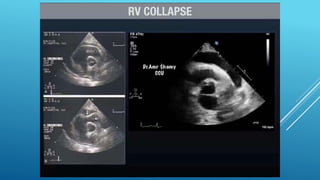
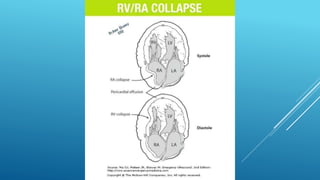
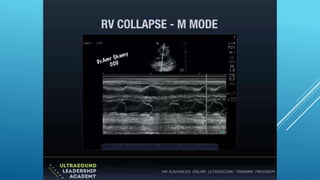
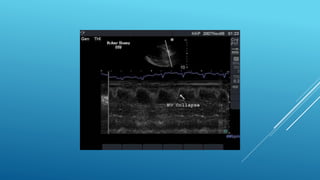
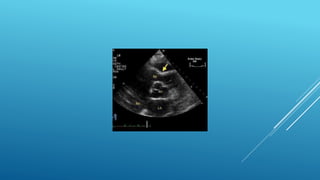
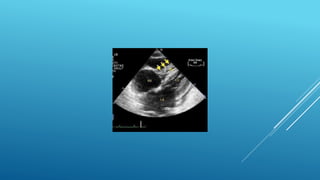
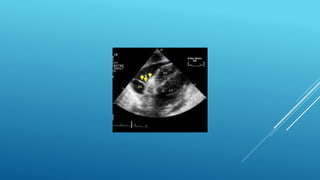
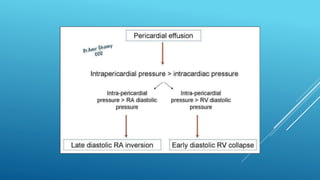
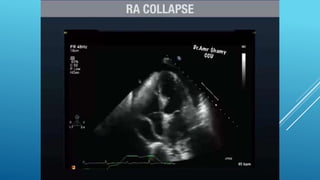
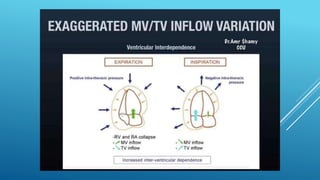
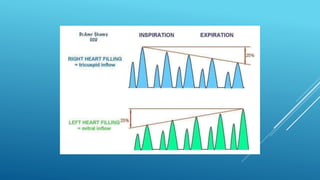
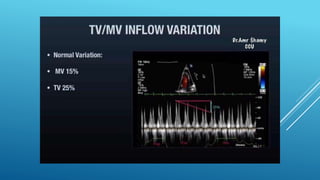
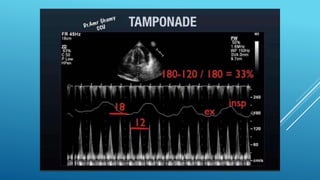
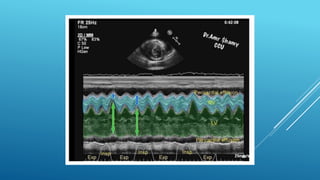
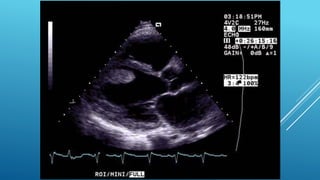
Phases of Hemodynamic changes in Tamponade,
Phase I
With Accumulation of pericardial fluid
Impairs Relaxation and Filling of Ventricles,
Requiring Higher Filling Pressure;
during this phase,
LV & RV Filling Pressures are
Higher than IntraPericardial Pressure
Phase II
With further Fluid Accumulation,
Pericardial Pressure increases
Above Ventricular Filling Pressure,
Resulting in Reduced Cardiac Output
Phase III
With further Decrease in Cardiac Output ,
which is due to Equilibration of :;:
Pericardial and (LV) Filling pressures
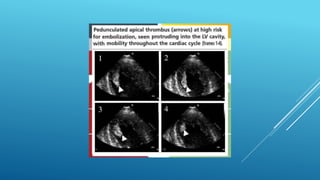
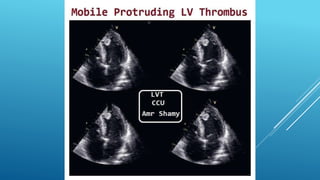
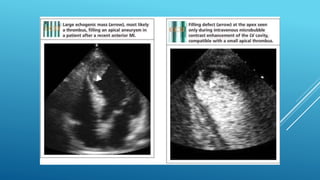
๏‚„ standard transthoracic echo (TTE) is typically
๏‚„ screening modality of choice for LV thrombus
๏‚„ detection and should performed within 24 hours
๏‚„ of admission in those at high risk for apical LV thrombus
๏‚„ (Large or anterior MI or receiving delayed reperfusion).
๏‚„ Contrast TTE or Cardiac MRI should be considered
๏‚„ based on local availability and resources. If ....
๏‚„ (1) LV apex is poorly visualized,
๏‚„ (2) Anterior or Apical wall motion abnormalities are
present
๏‚„ (3) High Apical wall motion scores are calculated
๏‚„ (โ‰ฅ5 on noncontrast TTE)
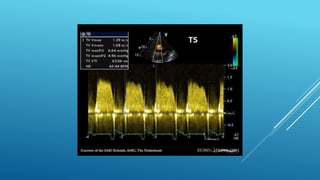
T R I C U S P I D. S T E N O S I S
#CCU_VALVE
=========================
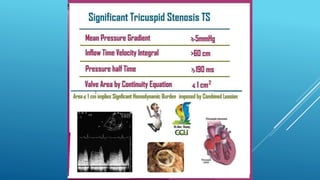
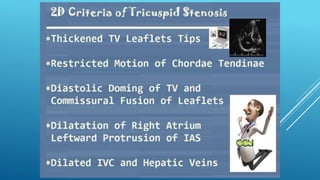
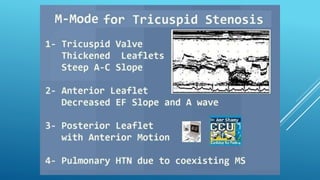
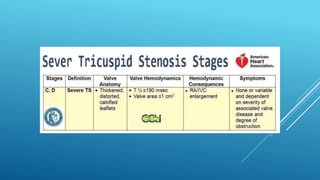
(TS) Narrowing of Tricuspid Orifice that
Obstructs blood flow from RA to RV.
Almost always due to Rheumatic fever
TR and MS are often also present.
ECHO of Sever TS
~~~~~~~~~~~~~~
Mean forward gradient across TV > 5 mm Hg
Thickened leaflets with reduced movement
Right Atrial Enlargement.
Treatment includes
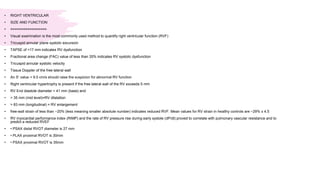
โ€ข RIGHT VENTRICULAR
โ€ข SIZE AND FUNCTION
โ€ข =================
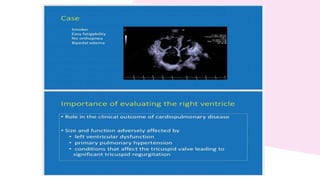
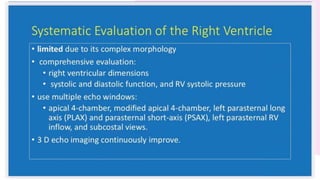
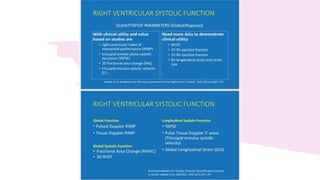
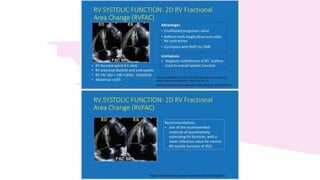
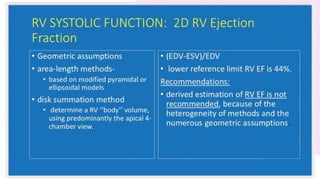
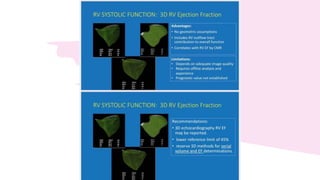
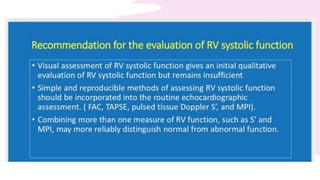
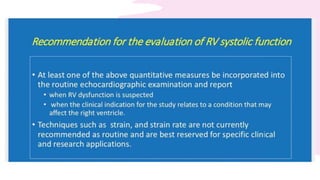
โ€ข Visual examination is the most commonly used method to quantify right ventricular function (RVF)
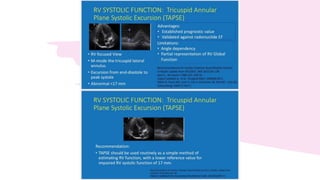
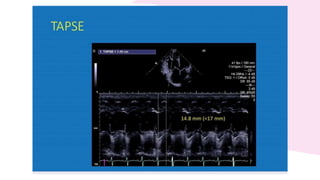
โ€ข Tricuspid annular plane systolic excursion
โ€ข TAPSE of <17 mm indicates RV dysfunction
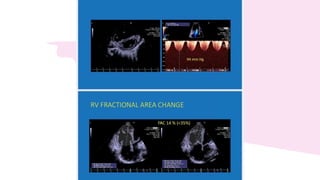
โ€ข Fractional area change (FAC) value of less than 35% indicates RV systolic dysfunction
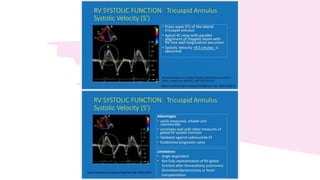
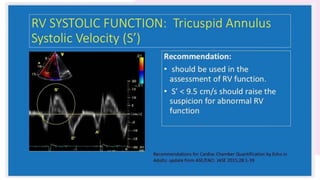
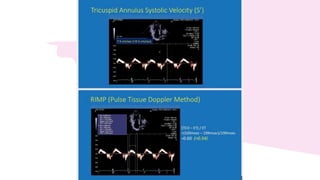
โ€ข Tricuspid annular systolic velocity
โ€ข Tissue Doppler of the free lateral wall
โ€ข An Sโ€™ value < 9.5 cm/s should raise the suspicion for abnormal RV function
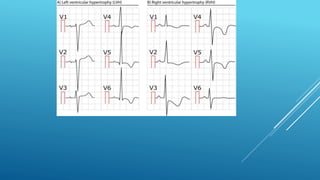
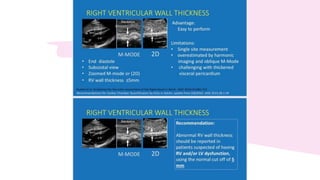
โ€ข Right ventricular hypertrophy is present if the free lateral wall of the RV exceeds 5 mm
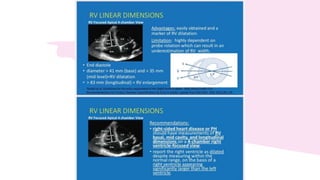
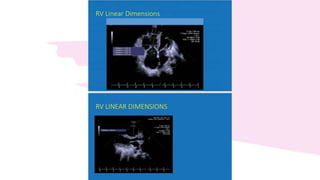
โ€ข RV End diastole diameter > 41 mm (base) and
โ€ข > 35 mm (mid level)=RV dilatation
โ€ข > 83 mm (longitudinal) = RV enlargement
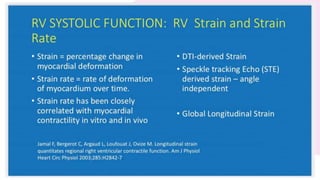
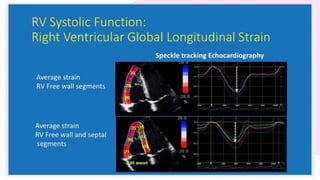
โ€ข free-wall strain of less than โˆ’20% (less meaning smaller absolute number) indicates reduced RVF. Mean values for RV strain in healthy controls are โˆ’29% ยฑ 4.5
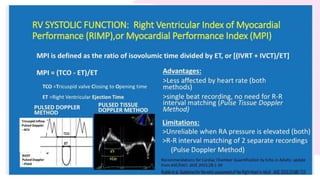
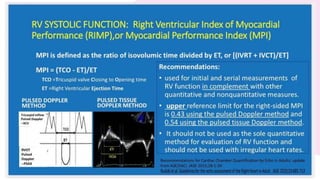
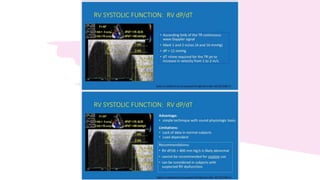
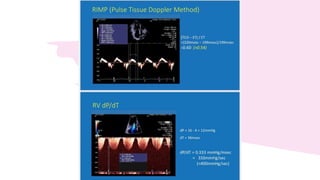
โ€ข RV myocardial performance index (RIMP) and the rate of RV pressure rise during early systole (dP/dt) proved to correlate with pulmonary vascular resistance and to
predict a reduced RVEF
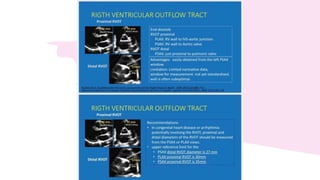
โ€ข โ€ข PSAX distal RVOT diameter is 27 mm
โ€ข โ€ข PLAX proximal RVOT is 30mm
โ€ข โ€ข PSAX proximal RVOT is 35mm
DDG.pptx
DDG.pptx
DDG.pptx
DDG.pptx
DDG.pptx
DDG.pptx
DDG.pptx
DDG.pptx
DDG.pptx
DDG.pptx
DDG.pptx
DDG.pptx
DDG.pptx
DDG.pptx
DDG.pptx
DDG.pptx
DDG.pptx
DDG.pptx
DDG.pptx
DDG.pptx
DDG.pptx
DDG.pptx
DDG.pptx
DDG.pptx
DDG.pptx
DDG.pptx
DDG.pptx
DDG.pptx
DDG.pptx
DDG.pptx

DDG.pptx

  • 43.
    Phases of Hemodynamicchanges in Tamponade, Phase I With Accumulation of pericardial fluid Impairs Relaxation and Filling of Ventricles, Requiring Higher Filling Pressure; during this phase, LV & RV Filling Pressures are Higher than IntraPericardial Pressure Phase II With further Fluid Accumulation, Pericardial Pressure increases Above Ventricular Filling Pressure, Resulting in Reduced Cardiac Output Phase III With further Decrease in Cardiac Output , which is due to Equilibration of :;: Pericardial and (LV) Filling pressures
  • 73.
    ๏‚„ standard transthoracicecho (TTE) is typically ๏‚„ screening modality of choice for LV thrombus ๏‚„ detection and should performed within 24 hours ๏‚„ of admission in those at high risk for apical LV thrombus ๏‚„ (Large or anterior MI or receiving delayed reperfusion). ๏‚„ Contrast TTE or Cardiac MRI should be considered ๏‚„ based on local availability and resources. If .... ๏‚„ (1) LV apex is poorly visualized, ๏‚„ (2) Anterior or Apical wall motion abnormalities are present ๏‚„ (3) High Apical wall motion scores are calculated ๏‚„ (โ‰ฅ5 on noncontrast TTE)
  • 78.
    T R IC U S P I D. S T E N O S I S #CCU_VALVE ========================= (TS) Narrowing of Tricuspid Orifice that Obstructs blood flow from RA to RV. Almost always due to Rheumatic fever TR and MS are often also present.
  • 79.
    ECHO of SeverTS ~~~~~~~~~~~~~~ Mean forward gradient across TV > 5 mm Hg Thickened leaflets with reduced movement Right Atrial Enlargement. Treatment includes
  • 124.
    โ€ข RIGHT VENTRICULAR โ€ขSIZE AND FUNCTION โ€ข ================= โ€ข Visual examination is the most commonly used method to quantify right ventricular function (RVF) โ€ข Tricuspid annular plane systolic excursion โ€ข TAPSE of <17 mm indicates RV dysfunction โ€ข Fractional area change (FAC) value of less than 35% indicates RV systolic dysfunction โ€ข Tricuspid annular systolic velocity โ€ข Tissue Doppler of the free lateral wall โ€ข An Sโ€™ value < 9.5 cm/s should raise the suspicion for abnormal RV function โ€ข Right ventricular hypertrophy is present if the free lateral wall of the RV exceeds 5 mm โ€ข RV End diastole diameter > 41 mm (base) and โ€ข > 35 mm (mid level)=RV dilatation โ€ข > 83 mm (longitudinal) = RV enlargement โ€ข free-wall strain of less than โˆ’20% (less meaning smaller absolute number) indicates reduced RVF. Mean values for RV strain in healthy controls are โˆ’29% ยฑ 4.5 โ€ข RV myocardial performance index (RIMP) and the rate of RV pressure rise during early systole (dP/dt) proved to correlate with pulmonary vascular resistance and to predict a reduced RVEF โ€ข โ€ข PSAX distal RVOT diameter is 27 mm โ€ข โ€ข PLAX proximal RVOT is 30mm โ€ข โ€ข PSAX proximal RVOT is 35mm