Data Classification
Security Categorization of Information and Information Systems
Purpose: To establish protection profiles and assign control element
settings for each category of data for which an Agency is
responsible. Security Organization is the basis for identifying
an initial baseline set of security controls for the information
and information systems.
Security Organization starts with the identification of what
information and information systems support which State lines
of business, as defined by the Federal Enterprise Architecture
(FEA). Subsequent steps focus on the evaluation of the need
for confidentiality, integrity, and availability.
Has anyone in here completed or begun a Security Categorization
study for their area?
If you have can you send me a sample of the completed documentation
so that OIT can develop consistent format for Collection.
Security Categorization of Information and Information Systems
There are two ISD policy statements pertaining to Security Categorization:
• Standard 500S2-00: Security Categorization of State Information and
Information Systems
• Standard 681S1-00: Information Protection
Both these policies will have to be reissued by OIT because they are inconsistent
With the NIST guidelines particularly FIPS 199 and SP800-60 Vol 1. which will be the
Primary reference utilized in data classification.
Security Categorization of Information and Information Systems
Data Classification Methodology Key References
• FIPS Publication 199, Standards for Security Categorization for Federal Information and
Information Systems: http://csrc.nist.gov/publications/fips/fips199/FIPS-PUB-199-final.pdf
• FIPS Publication 200, Minimum Security Requirements for Federal Information and
Information Systems: http//csrc.nist.gov/publications/fips/fips200/FIPS-200-final-march.pdf
• NIST SP 800-53, Recommended Security Controls for Federal Information Systems Rev.3
http://csrc.nist.gov/publications/nistpubs/800-53-Rev3/sp800-53-rev3-final-errata.pdf
• NIST SP 800-60 Volume 1, Guide for Mapping Types of Information and Information
Systems into Security Categories: http://nvlpubs.nist.gov/nistpubs/Legacy/SP/nistspecialpublication
800-60v1r1.pdf
• NIST SP 800-60 Volume 2, Appendices to Guide for Mapping Types of Information and Information
Systems into Security Categories: http://nvlpubs.nist.gov/nistpubs/Legacy/SP/nistspecialpublication
800-60v2r1.pdf
Security Categorization of Information and Information Systems
Two Key Definitions
Information Type: A specific category of information (e.g., privacy, Medical,
proprietary, financial, investigative, contactor sensitive Security
Management) defined by an organization, or in some Instances, by a specific
law, Executive Order, directive, policy or Regulation.
Information System: A discrete set of information resources organized for the
collection processing, maintenance, use, sharing, dissemination, or disposition
of Information.
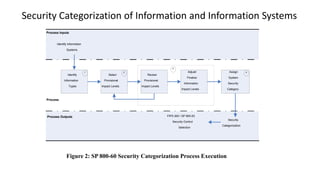
Identify Information
Systems
Identify
Information
Types
Select
Provisional
Impact Levels
Review
Provisional
Impact Levels
Adjust/
Finalize
Information
Impact Levels
Assign
System
Security
Category
Process Inputs
Process
1 2
3
4
Security
Categorization
Process Outputs FIPS 200 / SP 800-53
Security Control
Selection
Figure 2: SP 800-60 Security Categorization Process Execution
Security Categorization of Information and Information Systems
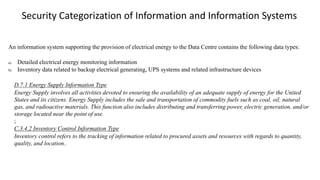
An information system supporting the provision of electrical energy to the Data Centre contains the following data types:
a) Detailed electrical energy monitoring information
b) Inventory data related to backup electrical generating, UPS systems and related infrastructure devices
D.7.1 Energy Supply Information Type
Energy Supply involves all activities devoted to ensuring the availability of an adequate supply of energy for the United
States and its citizens. Energy Supply includes the sale and transportation of commodity fuels such as coal, oil, natural
gas, and radioactive materials. This function also includes distributing and transferring power, electric generation, and/or
storage located near the point of use.
;
C.3.4.2 Inventory Control Information Type
Inventory control refers to the tracking of information related to procured assets and resources with regards to quantity,
quality, and location..
Security Categorization of Information and Information Systems
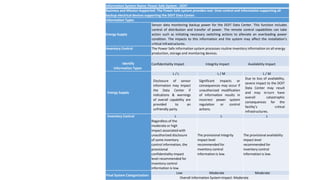
Information System Name: Power Safe System - DOIT
Business and Mission Supported: The Power Safe system provides real- time control and information supporting all
backup electrical devices supporting the DOIT Data Center.
Information Types
Energy Supply
Sensor data monitoring backup power for the DOIT Data Center. This function includes
control of distribution and transfer of power. The remote control capabilities can take
action such as initiating necessary switching actions to alleviate an overloading power
condition. The impacts to this information and the system may affect the installation’s
critical infrastructures.
Inventory Control The Power Safe information system processes routine inventory information on all energy
production, storage and monitoring devices.
Identify
Information Types
Confidentiality Impact Integrity Impact Availability Impact
Energy Supply
L / L L / M L / M
Disclosure of sensor
information may impact
the Data Center if
indications & warnings
of overall capability are
provided to an
unfriendly party.
Significant impacts or
consequences may occur if
unauthorized modification
of information results in
incorrect power system
regulation or control
actions.
Due to loss of availability,
severe impact to the DOIT
Data Center may result
and may in-turn have
overall catastrophic
consequences for the
facility’s critical
infrastructures.
Inventory Control L L L
Regardless of the
moderate or high
impact associated with
unauthorized disclosure
of some inventory
control information, the
provisional
confidentiality impact
level recommended for
inventory control
information is low.
The provisional integrity
impact level
recommended for
inventory control
information is low.
The provisional availability
impact level
recommended for
inventory control
information is low.
Final System Categorization:
Low Moderate Moderate
Overall Information System Impact: Moderate
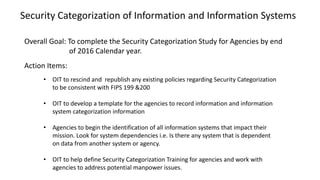
Action Items:
• OIT to rescind and republish any existing policies regarding Security Categorization
to be consistent with FIPS 199 &200
• OIT to develop a template for the agencies to record information and information
system categorization information
• Agencies to begin the identification of all information systems that impact their
mission. Look for system dependencies i.e. Is there any system that is dependent
on data from another system or agency.
• OIT to help define Security Categorization Training for agencies and work with
agencies to address potential manpower issues.
Overall Goal: To complete the Security Categorization Study for Agencies by end
of 2016 Calendar year.
Security Categorization of Information and Information Systems

Data-Classification-Study (1).pptx

  • 1.
    Data Classification Security Categorizationof Information and Information Systems
  • 2.
    Security Categorization ofInformation and Information Systems Purpose: To establish protection profiles and assign control element settings for each category of data for which an Agency is responsible. Security Organization is the basis for identifying an initial baseline set of security controls for the information and information systems. Security Organization starts with the identification of what information and information systems support which State lines of business, as defined by the Federal Enterprise Architecture (FEA). Subsequent steps focus on the evaluation of the need for confidentiality, integrity, and availability.
  • 3.
    Has anyone inhere completed or begun a Security Categorization study for their area? If you have can you send me a sample of the completed documentation so that OIT can develop consistent format for Collection. Security Categorization of Information and Information Systems
  • 4.
    There are twoISD policy statements pertaining to Security Categorization: • Standard 500S2-00: Security Categorization of State Information and Information Systems • Standard 681S1-00: Information Protection Both these policies will have to be reissued by OIT because they are inconsistent With the NIST guidelines particularly FIPS 199 and SP800-60 Vol 1. which will be the Primary reference utilized in data classification. Security Categorization of Information and Information Systems
  • 5.
    Data Classification MethodologyKey References • FIPS Publication 199, Standards for Security Categorization for Federal Information and Information Systems: http://csrc.nist.gov/publications/fips/fips199/FIPS-PUB-199-final.pdf • FIPS Publication 200, Minimum Security Requirements for Federal Information and Information Systems: http//csrc.nist.gov/publications/fips/fips200/FIPS-200-final-march.pdf • NIST SP 800-53, Recommended Security Controls for Federal Information Systems Rev.3 http://csrc.nist.gov/publications/nistpubs/800-53-Rev3/sp800-53-rev3-final-errata.pdf • NIST SP 800-60 Volume 1, Guide for Mapping Types of Information and Information Systems into Security Categories: http://nvlpubs.nist.gov/nistpubs/Legacy/SP/nistspecialpublication 800-60v1r1.pdf • NIST SP 800-60 Volume 2, Appendices to Guide for Mapping Types of Information and Information Systems into Security Categories: http://nvlpubs.nist.gov/nistpubs/Legacy/SP/nistspecialpublication 800-60v2r1.pdf Security Categorization of Information and Information Systems
  • 6.
    Security Categorization ofInformation and Information Systems Two Key Definitions Information Type: A specific category of information (e.g., privacy, Medical, proprietary, financial, investigative, contactor sensitive Security Management) defined by an organization, or in some Instances, by a specific law, Executive Order, directive, policy or Regulation. Information System: A discrete set of information resources organized for the collection processing, maintenance, use, sharing, dissemination, or disposition of Information.
  • 7.
    Identify Information Systems Identify Information Types Select Provisional Impact Levels Review Provisional ImpactLevels Adjust/ Finalize Information Impact Levels Assign System Security Category Process Inputs Process 1 2 3 4 Security Categorization Process Outputs FIPS 200 / SP 800-53 Security Control Selection Figure 2: SP 800-60 Security Categorization Process Execution Security Categorization of Information and Information Systems
  • 8.
    An information systemsupporting the provision of electrical energy to the Data Centre contains the following data types: a) Detailed electrical energy monitoring information b) Inventory data related to backup electrical generating, UPS systems and related infrastructure devices D.7.1 Energy Supply Information Type Energy Supply involves all activities devoted to ensuring the availability of an adequate supply of energy for the United States and its citizens. Energy Supply includes the sale and transportation of commodity fuels such as coal, oil, natural gas, and radioactive materials. This function also includes distributing and transferring power, electric generation, and/or storage located near the point of use. ; C.3.4.2 Inventory Control Information Type Inventory control refers to the tracking of information related to procured assets and resources with regards to quantity, quality, and location.. Security Categorization of Information and Information Systems
  • 9.
    Information System Name:Power Safe System - DOIT Business and Mission Supported: The Power Safe system provides real- time control and information supporting all backup electrical devices supporting the DOIT Data Center. Information Types Energy Supply Sensor data monitoring backup power for the DOIT Data Center. This function includes control of distribution and transfer of power. The remote control capabilities can take action such as initiating necessary switching actions to alleviate an overloading power condition. The impacts to this information and the system may affect the installation’s critical infrastructures. Inventory Control The Power Safe information system processes routine inventory information on all energy production, storage and monitoring devices. Identify Information Types Confidentiality Impact Integrity Impact Availability Impact Energy Supply L / L L / M L / M Disclosure of sensor information may impact the Data Center if indications & warnings of overall capability are provided to an unfriendly party. Significant impacts or consequences may occur if unauthorized modification of information results in incorrect power system regulation or control actions. Due to loss of availability, severe impact to the DOIT Data Center may result and may in-turn have overall catastrophic consequences for the facility’s critical infrastructures. Inventory Control L L L Regardless of the moderate or high impact associated with unauthorized disclosure of some inventory control information, the provisional confidentiality impact level recommended for inventory control information is low. The provisional integrity impact level recommended for inventory control information is low. The provisional availability impact level recommended for inventory control information is low. Final System Categorization: Low Moderate Moderate Overall Information System Impact: Moderate
  • 10.
    Action Items: • OITto rescind and republish any existing policies regarding Security Categorization to be consistent with FIPS 199 &200 • OIT to develop a template for the agencies to record information and information system categorization information • Agencies to begin the identification of all information systems that impact their mission. Look for system dependencies i.e. Is there any system that is dependent on data from another system or agency. • OIT to help define Security Categorization Training for agencies and work with agencies to address potential manpower issues. Overall Goal: To complete the Security Categorization Study for Agencies by end of 2016 Calendar year. Security Categorization of Information and Information Systems