Data Warehouse And Data Mining
TOPIC: Introduction to Data Warehousing
Name: Debarpan Chowdhury
Class Roll No. : 209
University Roll No. : 10900121215
Sec. : C Year: 3rd Year, 6th Sem. Stream: CSE
What is a Data Warehouse?
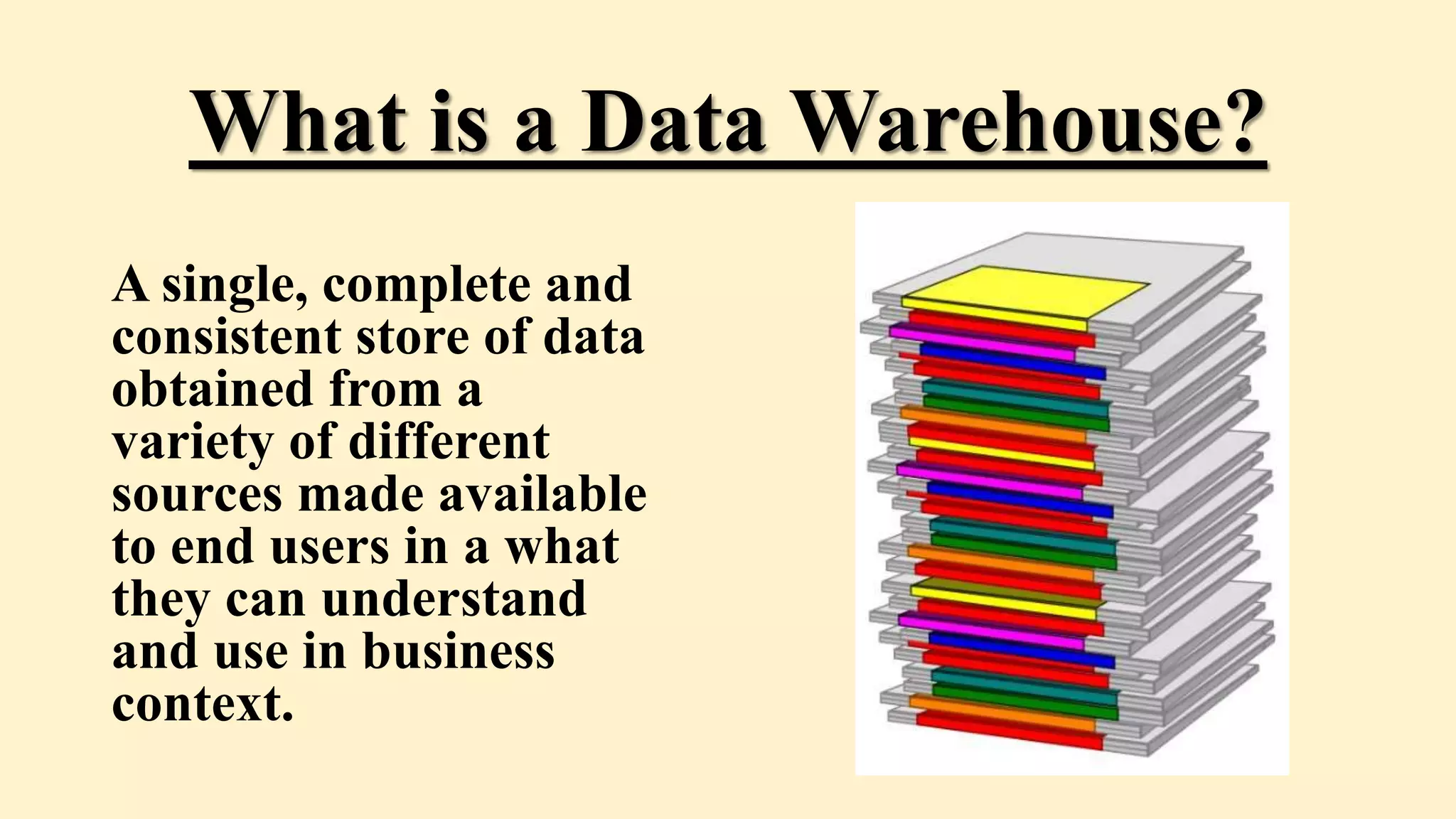
A single, complete and
consistent store of data
obtained from a
variety of different
sources made available
to end users in a what
they can understand
and use in business
context.
What is Data Warehousing?
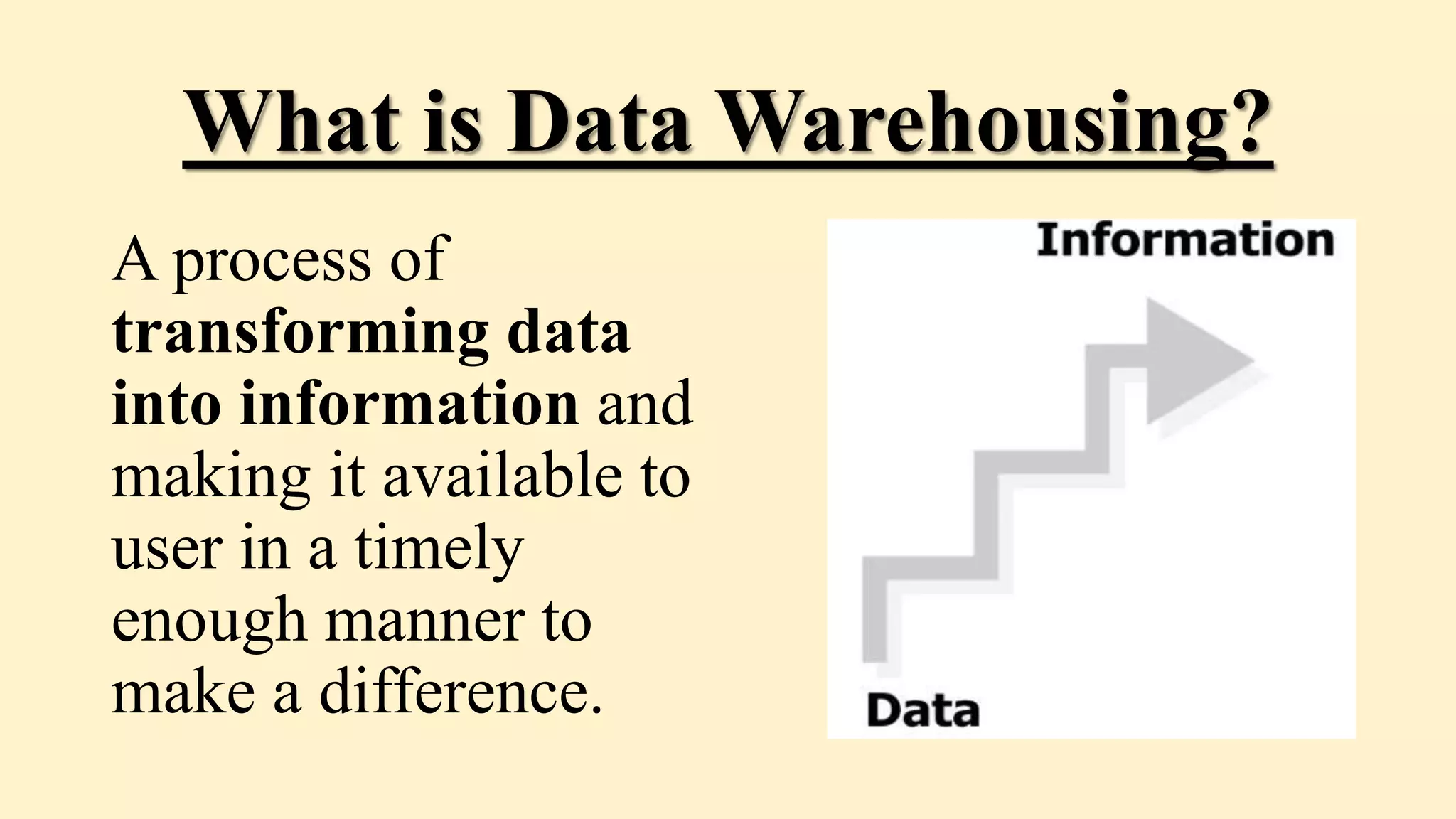
A process of
transforming data
into information and
making it available to
user in a timely
enough manner to
make a difference.
Data Warehousing – a process
• It is a relational or multidimensional database
management system designed to support management
decision to support management decision making.
• A data warehousing is a copy of transaction data
specifically structured for querying and reporting.
• Technique for assembling and managing data from
various sources for the purpose of answering business
questions. Thus making decision that were not
previous possible.
History of data warehousing
• The concept of data warehousing dates back to the late 1980s when IBM
researchers Barry Devlin and Paul Murphy developed the “business data
warehouse”.
• 1960s – General Mills and Dartmouth College, in a joint research project,
develop the terms dimensions and facts.
• 1970s – ACNielsen and IRI provide dimensional data marts for retail
sales.
• 1983 – Tera data introduces a database management system specifically
designed for decision support.
• 1988 – Barry Devlin and Paul Murphy publish the article An architecture
for a business and information systems in IBM Systems Journal where
they introduce the term “business data warehouse”.
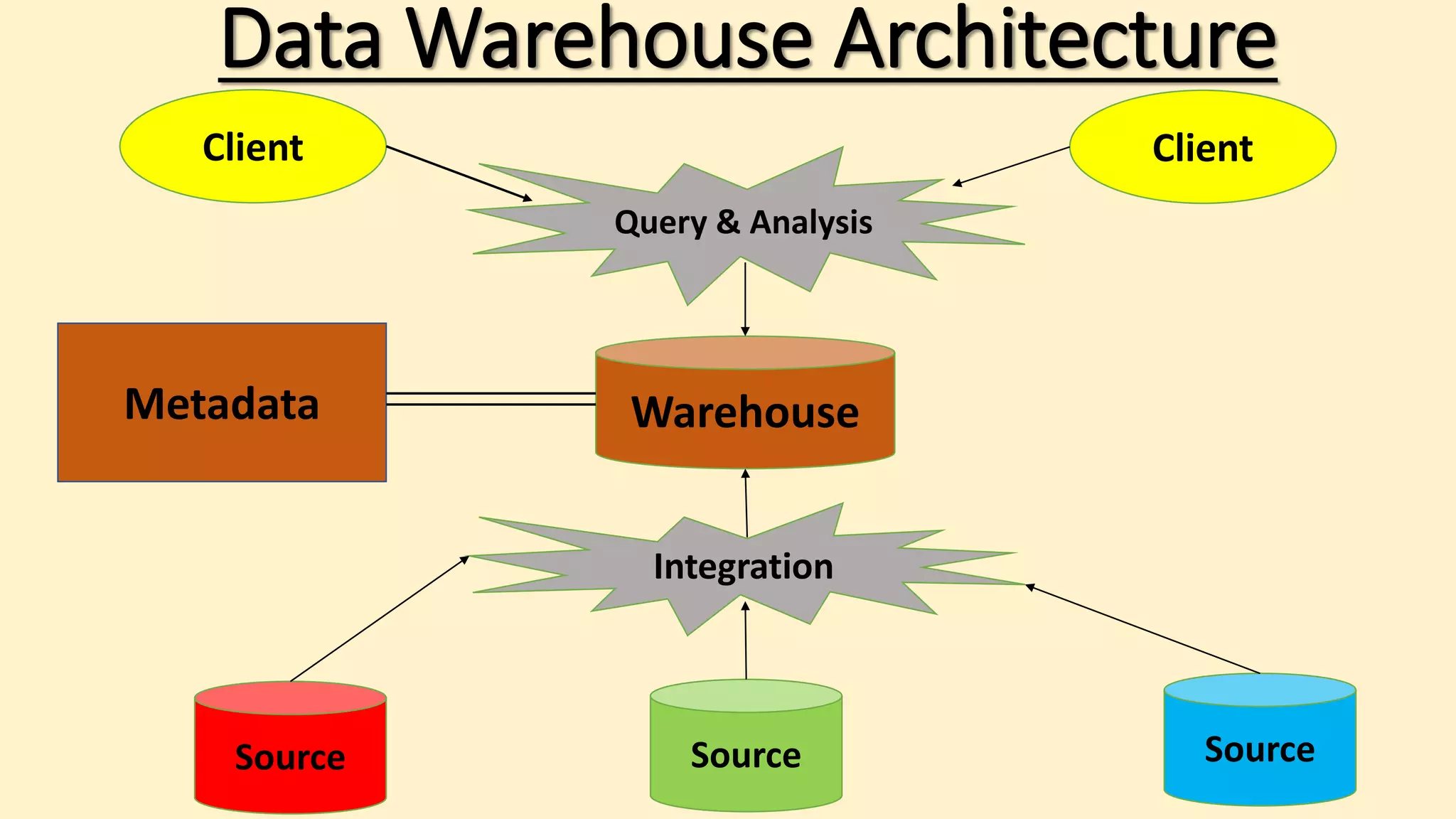
Data Warehouse Architecture
Client Client
Query & Analysis
Integration
Warehouse
Source
Source
Source
Metadata
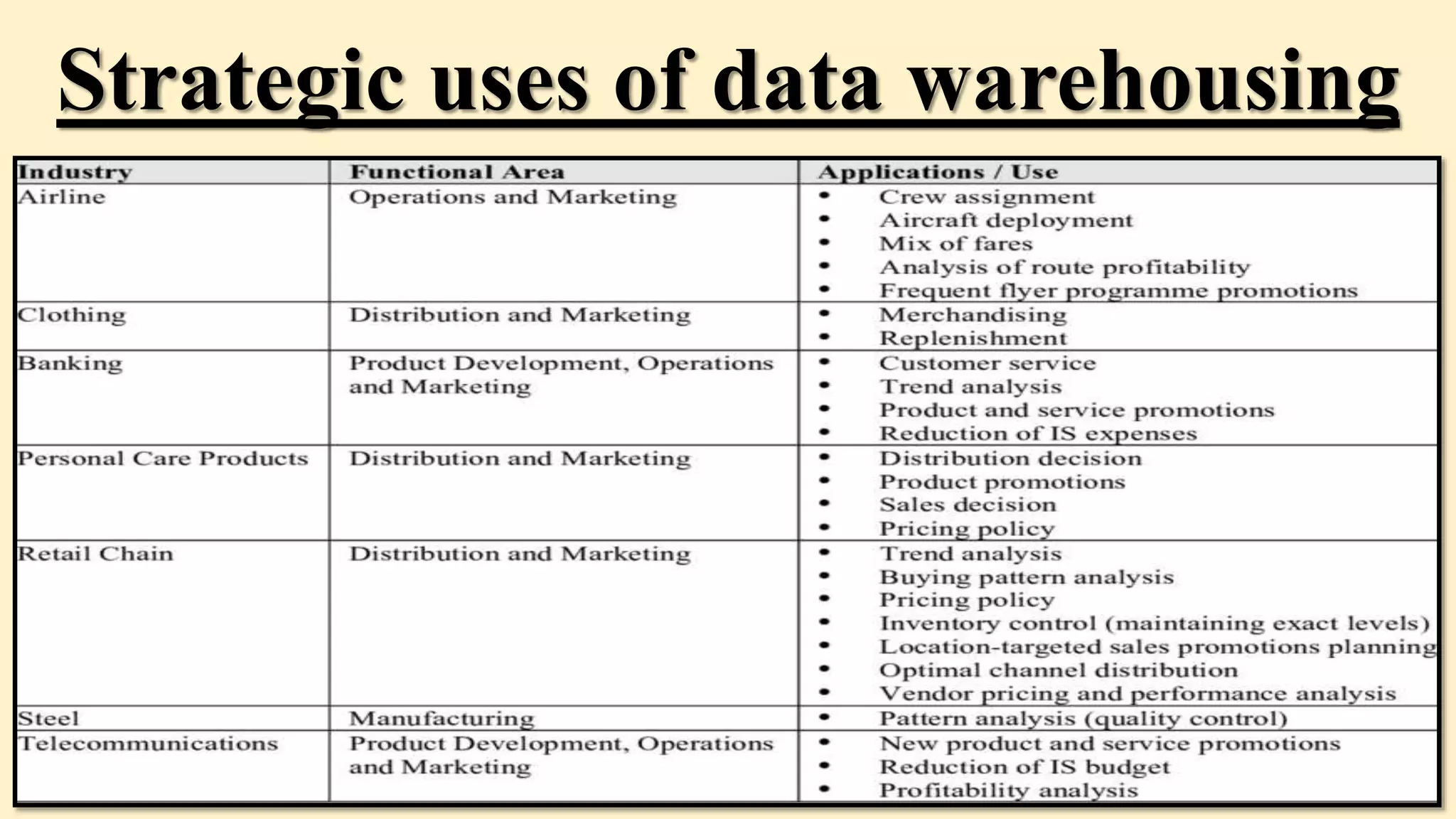
Strategic uses of data warehousing
Disadvantages of data warehouses
• Data warehouses are not the optimal environment for unstructured
data.
• Because data must be extracted, transformed and loaded into the
warehouse, there is an element of latency in data warehouse data.
• Over their life, data warehouses can have high costs. Maintenance
costs are high.
• Data warehouses can get outdated relatively quickly. There is a cost of
delivering suboptimal information to the organization.
• There is often a fine line between data warehouses and operational
systems. Duplicate, expensive functionality may be developed. Or,
functionality may be developed in the operational systems and vice
versa.
Thank You

Data Warehouse And Data Mining

  • 1.
    Data Warehouse AndData Mining TOPIC: Introduction to Data Warehousing Name: Debarpan Chowdhury Class Roll No. : 209 University Roll No. : 10900121215 Sec. : C Year: 3rd Year, 6th Sem. Stream: CSE
  • 2.
    What is aData Warehouse? A single, complete and consistent store of data obtained from a variety of different sources made available to end users in a what they can understand and use in business context.
  • 3.
    What is DataWarehousing? A process of transforming data into information and making it available to user in a timely enough manner to make a difference.
  • 4.
    Data Warehousing –a process • It is a relational or multidimensional database management system designed to support management decision to support management decision making. • A data warehousing is a copy of transaction data specifically structured for querying and reporting. • Technique for assembling and managing data from various sources for the purpose of answering business questions. Thus making decision that were not previous possible.
  • 5.
    History of datawarehousing • The concept of data warehousing dates back to the late 1980s when IBM researchers Barry Devlin and Paul Murphy developed the “business data warehouse”. • 1960s – General Mills and Dartmouth College, in a joint research project, develop the terms dimensions and facts. • 1970s – ACNielsen and IRI provide dimensional data marts for retail sales. • 1983 – Tera data introduces a database management system specifically designed for decision support. • 1988 – Barry Devlin and Paul Murphy publish the article An architecture for a business and information systems in IBM Systems Journal where they introduce the term “business data warehouse”.
  • 6.
    Data Warehouse Architecture ClientClient Query & Analysis Integration Warehouse Source Source Source Metadata
  • 7.
    Strategic uses ofdata warehousing
  • 8.
    Disadvantages of datawarehouses • Data warehouses are not the optimal environment for unstructured data. • Because data must be extracted, transformed and loaded into the warehouse, there is an element of latency in data warehouse data. • Over their life, data warehouses can have high costs. Maintenance costs are high. • Data warehouses can get outdated relatively quickly. There is a cost of delivering suboptimal information to the organization. • There is often a fine line between data warehouses and operational systems. Duplicate, expensive functionality may be developed. Or, functionality may be developed in the operational systems and vice versa.
  • 9.