Data Strategy
Product Management
Projects & Pain
• 2/3 of my projects required a data strategy
• Spoke with Developers and Designers about
their pains
• “Clients want a magic dashboard with correct
answers”
Solution
• Formalize the framework and a deliverable
• Framework = “measure, learn and build”
• Deliverable = strategic/ tactical dashboard
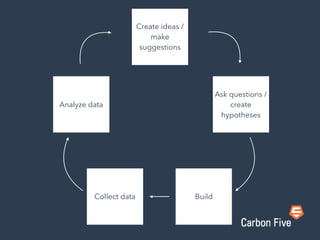
Create ideas /
make
suggestions
Ask questions /
create
hypotheses
BuildCollect data
Analyze data
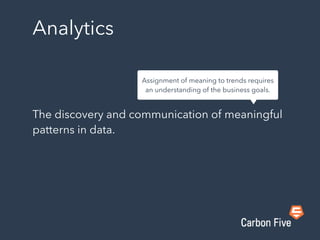
Analytics
The discovery and communication of meaningful
patterns in data.
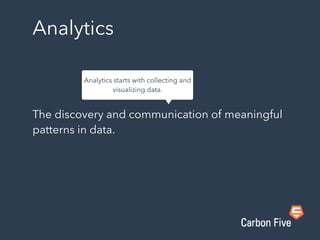
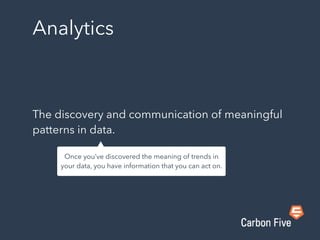
Analytics
The discovery and communication of meaningful
patterns in data.
Analytics starts with collecting and
visualizing data.
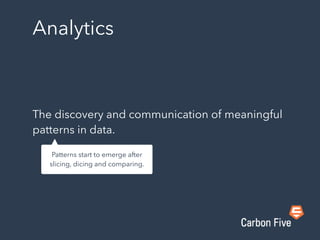
Analytics
The discovery and communication of meaningful
patterns in data.
Patterns start to emerge after
slicing, dicing and comparing.
Analytics
The discovery and communication of meaningful
patterns in data.
Assignment of meaning to trends requires
an understanding of the business goals.
Analytics
The discovery and communication of meaningful
patterns in data.
Once you’ve discovered the meaning of trends in
your data, you have information that you can act on.
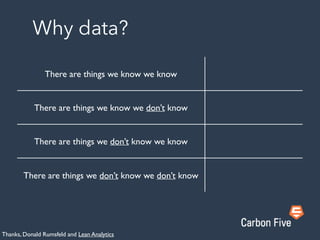
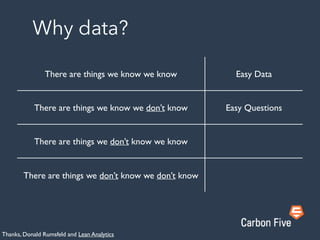
Why data?
There are things we know we know
There are things we know we don’t know
There are things we don’t know we know
There are things we don’t know we don’t know
Thanks, Donald Rumsfeld and Lean Analytics
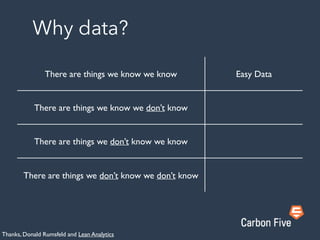
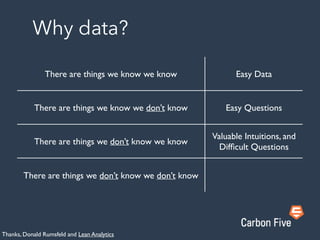
Why data?
There are things we know we know Easy Data
There are things we know we don’t know
There are things we don’t know we know
There are things we don’t know we don’t know
Thanks, Donald Rumsfeld and Lean Analytics
Why data?
There are things we know we know Easy Data
There are things we know we don’t know Easy Questions
There are things we don’t know we know
There are things we don’t know we don’t know
Thanks, Donald Rumsfeld and Lean Analytics
Why data?
There are things we know we know Easy Data
There are things we know we don’t know Easy Questions
There are things we don’t know we know
Valuable Intuitions, and
Difficult Questions
There are things we don’t know we don’t know
Thanks, Donald Rumsfeld and Lean Analytics
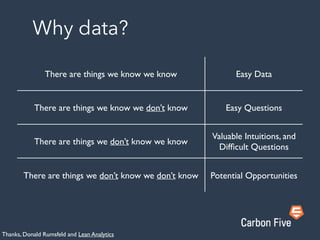
Why data?
There are things we know we know Easy Data
There are things we know we don’t know Easy Questions
There are things we don’t know we know
Valuable Intuitions, and
Difficult Questions
There are things we don’t know we don’t know Potential Opportunities
Thanks, Donald Rumsfeld and Lean Analytics
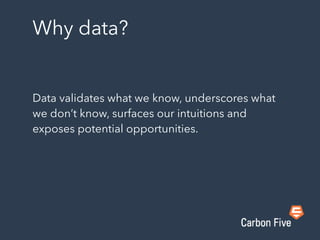
Why data?
Data validates what we know, underscores what
we don’t know, surfaces our intuitions and
exposes potential opportunities.
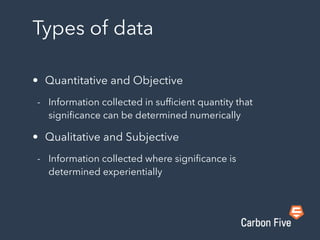
Types of data
• Quantitative and Objective
- Information collected in sufficient quantity that
significance can be determined numerically
• Qualitative and Subjective
- Information collected where significance is
determined experientially
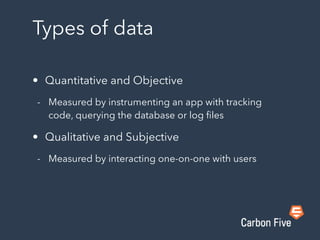
Types of data
• Quantitative and Objective
- Measured by instrumenting an app with tracking
code, querying the database or log files
• Qualitative and Subjective
- Measured by interacting one-on-one with users
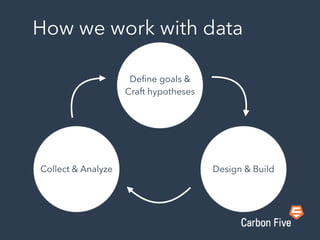
How we work with data
Design & BuildCollect & Analyze
Define goals &
Craft hypotheses
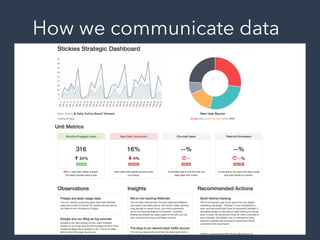
How we communicate data
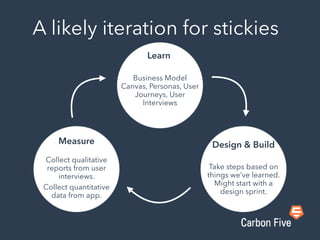
Business Model
Canvas, Personas, User
Journeys, User
Interviews
Learn
Design & Build
Take steps based on
things we’ve learned.
Might start with a
design sprint.
Measure
Collect qualitative
reports from user
interviews.
Collect quantitative
data from app.
A likely iteration for stickies
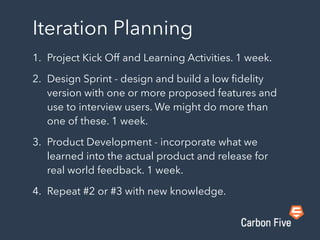
Iteration Planning
1. Project Kick Off and Learning Activities. 1 week.
2. Design Sprint - design and build a low fidelity
version with one or more proposed features and
use to interview users. We might do more than
one of these. 1 week.
3. Product Development - incorporate what we
learned into the actual product and release for
real world feedback. 1 week.
4. Repeat #2 or #3 with new knowledge.
Questions?

Data strategy

  • 1.
  • 2.
    Projects & Pain •2/3 of my projects required a data strategy • Spoke with Developers and Designers about their pains • “Clients want a magic dashboard with correct answers”
  • 3.
    Solution • Formalize theframework and a deliverable • Framework = “measure, learn and build” • Deliverable = strategic/ tactical dashboard
  • 4.
    Create ideas / make suggestions Askquestions / create hypotheses BuildCollect data Analyze data
  • 5.
    Analytics The discovery andcommunication of meaningful patterns in data.
  • 6.
    Analytics The discovery andcommunication of meaningful patterns in data. Analytics starts with collecting and visualizing data.
  • 7.
    Analytics The discovery andcommunication of meaningful patterns in data. Patterns start to emerge after slicing, dicing and comparing.
  • 8.
    Analytics The discovery andcommunication of meaningful patterns in data. Assignment of meaning to trends requires an understanding of the business goals.
  • 9.
    Analytics The discovery andcommunication of meaningful patterns in data. Once you’ve discovered the meaning of trends in your data, you have information that you can act on.
  • 10.
    Why data? There arethings we know we know There are things we know we don’t know There are things we don’t know we know There are things we don’t know we don’t know Thanks, Donald Rumsfeld and Lean Analytics
  • 11.
    Why data? There arethings we know we know Easy Data There are things we know we don’t know There are things we don’t know we know There are things we don’t know we don’t know Thanks, Donald Rumsfeld and Lean Analytics
  • 12.
    Why data? There arethings we know we know Easy Data There are things we know we don’t know Easy Questions There are things we don’t know we know There are things we don’t know we don’t know Thanks, Donald Rumsfeld and Lean Analytics
  • 13.
    Why data? There arethings we know we know Easy Data There are things we know we don’t know Easy Questions There are things we don’t know we know Valuable Intuitions, and Difficult Questions There are things we don’t know we don’t know Thanks, Donald Rumsfeld and Lean Analytics
  • 14.
    Why data? There arethings we know we know Easy Data There are things we know we don’t know Easy Questions There are things we don’t know we know Valuable Intuitions, and Difficult Questions There are things we don’t know we don’t know Potential Opportunities Thanks, Donald Rumsfeld and Lean Analytics
  • 15.
    Why data? Data validateswhat we know, underscores what we don’t know, surfaces our intuitions and exposes potential opportunities.
  • 16.
    Types of data •Quantitative and Objective - Information collected in sufficient quantity that significance can be determined numerically • Qualitative and Subjective - Information collected where significance is determined experientially
  • 17.
    Types of data •Quantitative and Objective - Measured by instrumenting an app with tracking code, querying the database or log files • Qualitative and Subjective - Measured by interacting one-on-one with users
  • 18.
    How we workwith data Design & BuildCollect & Analyze Define goals & Craft hypotheses
  • 19.
  • 20.
    Business Model Canvas, Personas,User Journeys, User Interviews Learn Design & Build Take steps based on things we’ve learned. Might start with a design sprint. Measure Collect qualitative reports from user interviews. Collect quantitative data from app. A likely iteration for stickies
  • 21.
    Iteration Planning 1. ProjectKick Off and Learning Activities. 1 week. 2. Design Sprint - design and build a low fidelity version with one or more proposed features and use to interview users. We might do more than one of these. 1 week. 3. Product Development - incorporate what we learned into the actual product and release for real world feedback. 1 week. 4. Repeat #2 or #3 with new knowledge.
  • 22.