What is data analysis
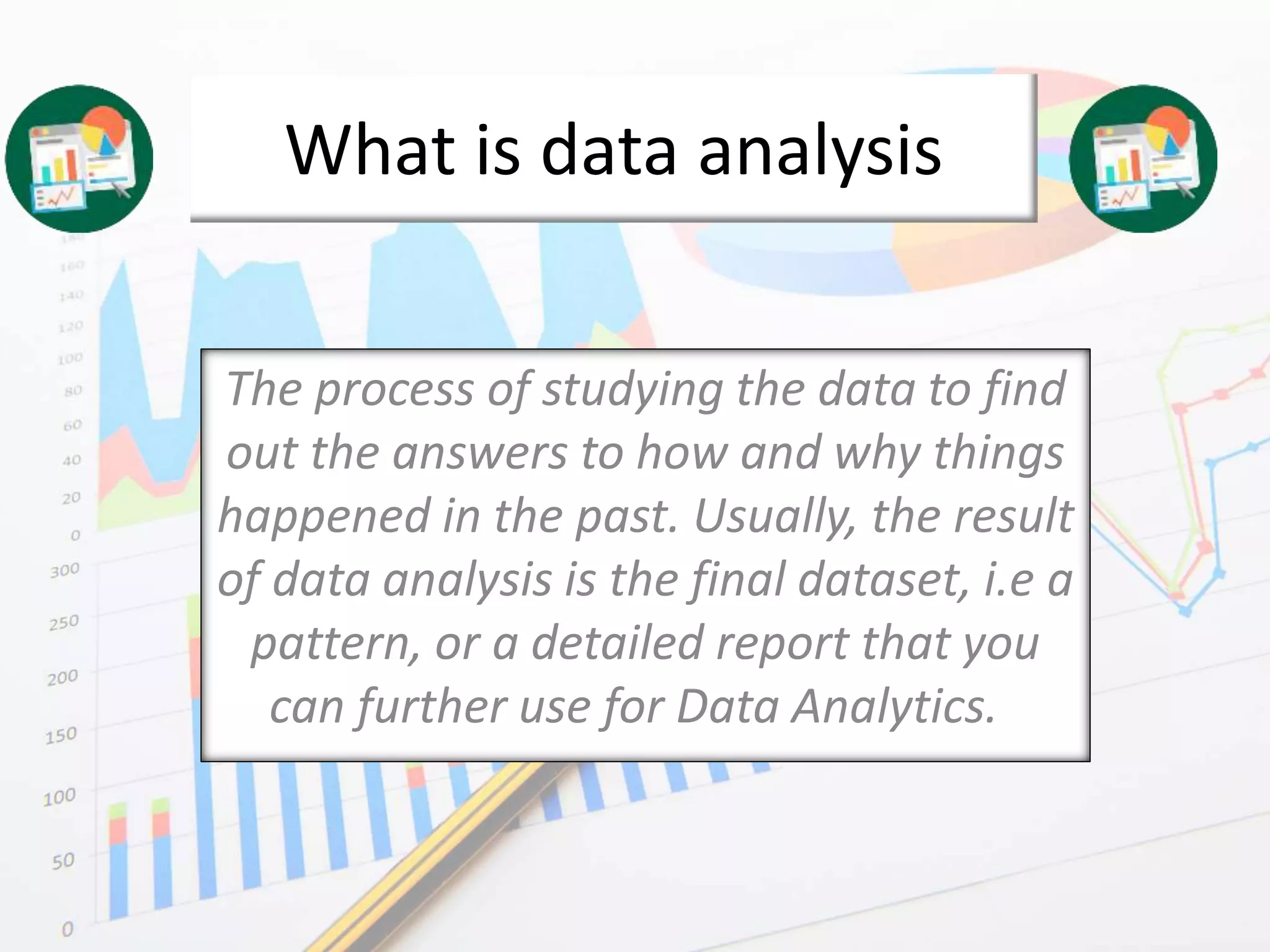
The process of studying the data to find
out the answers to how and why things
happened in the past. Usually, the result
of data analysis is the final dataset, i.e a
pattern, or a detailed report that you
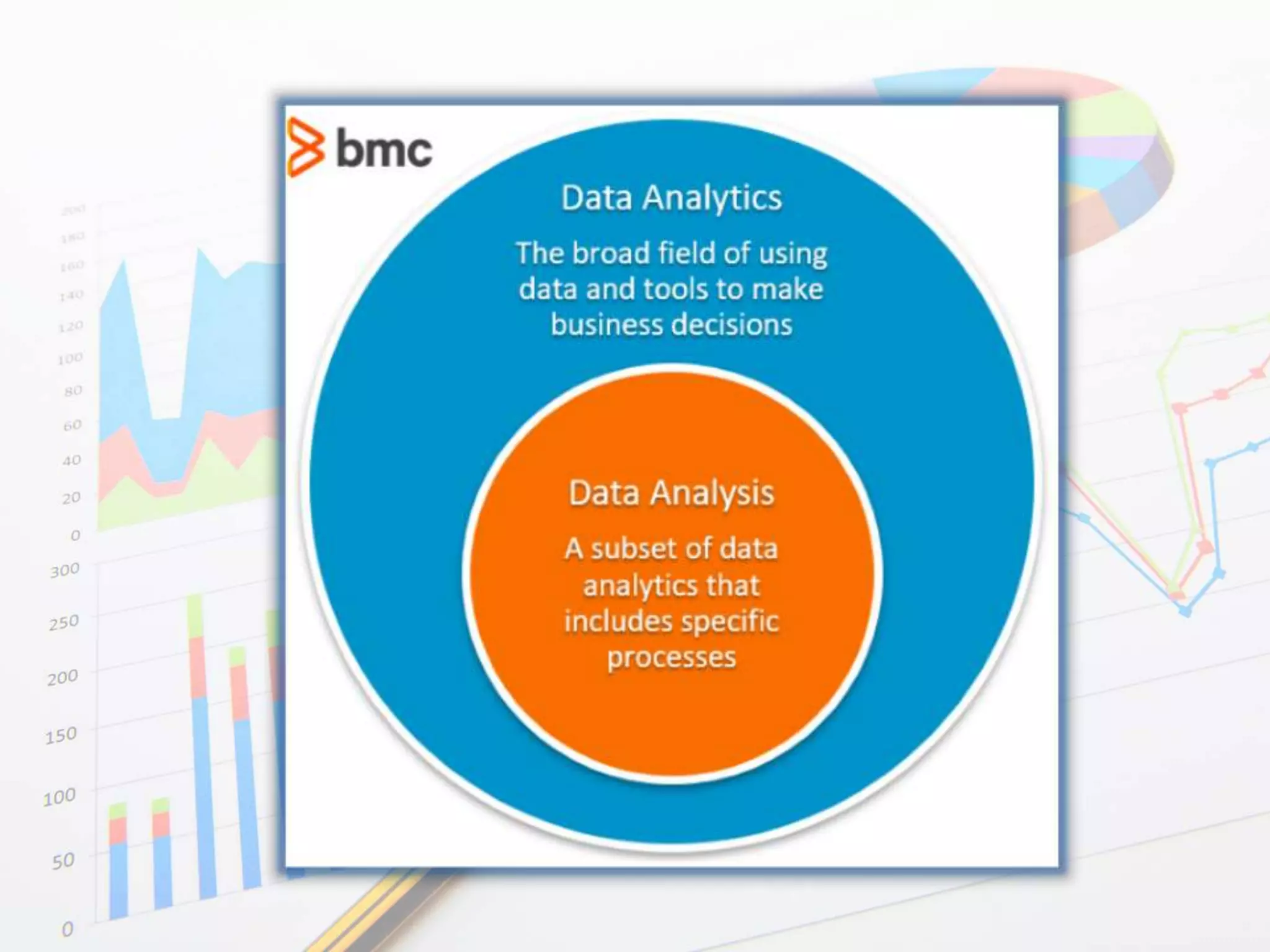
can further use for Data Analytics.
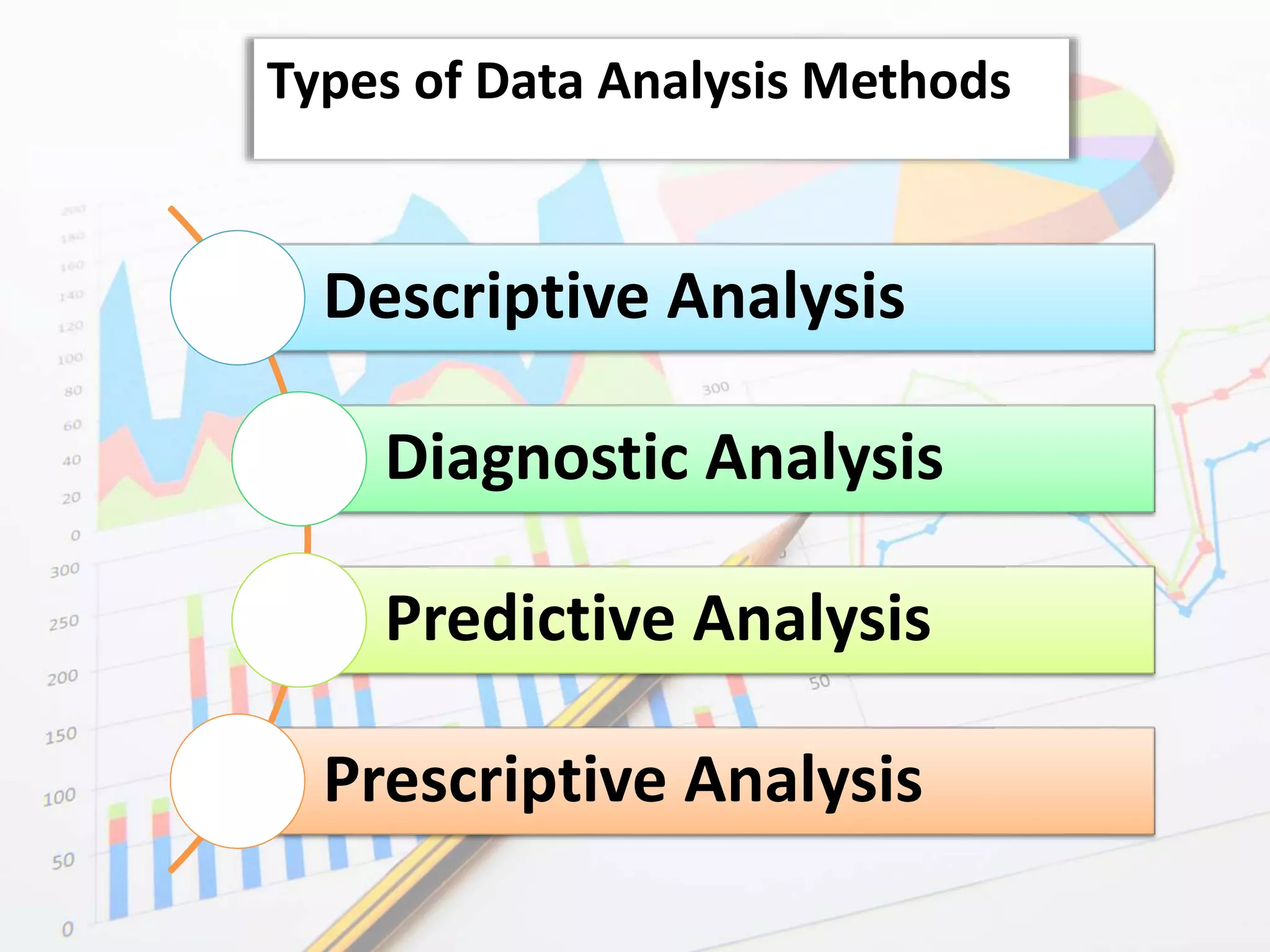
Descriptive Analysis
Diagnostic Analysis
Predictive Analysis
Prescriptive Analysis
Types of Data Analysis Methods
Descriptive analysis
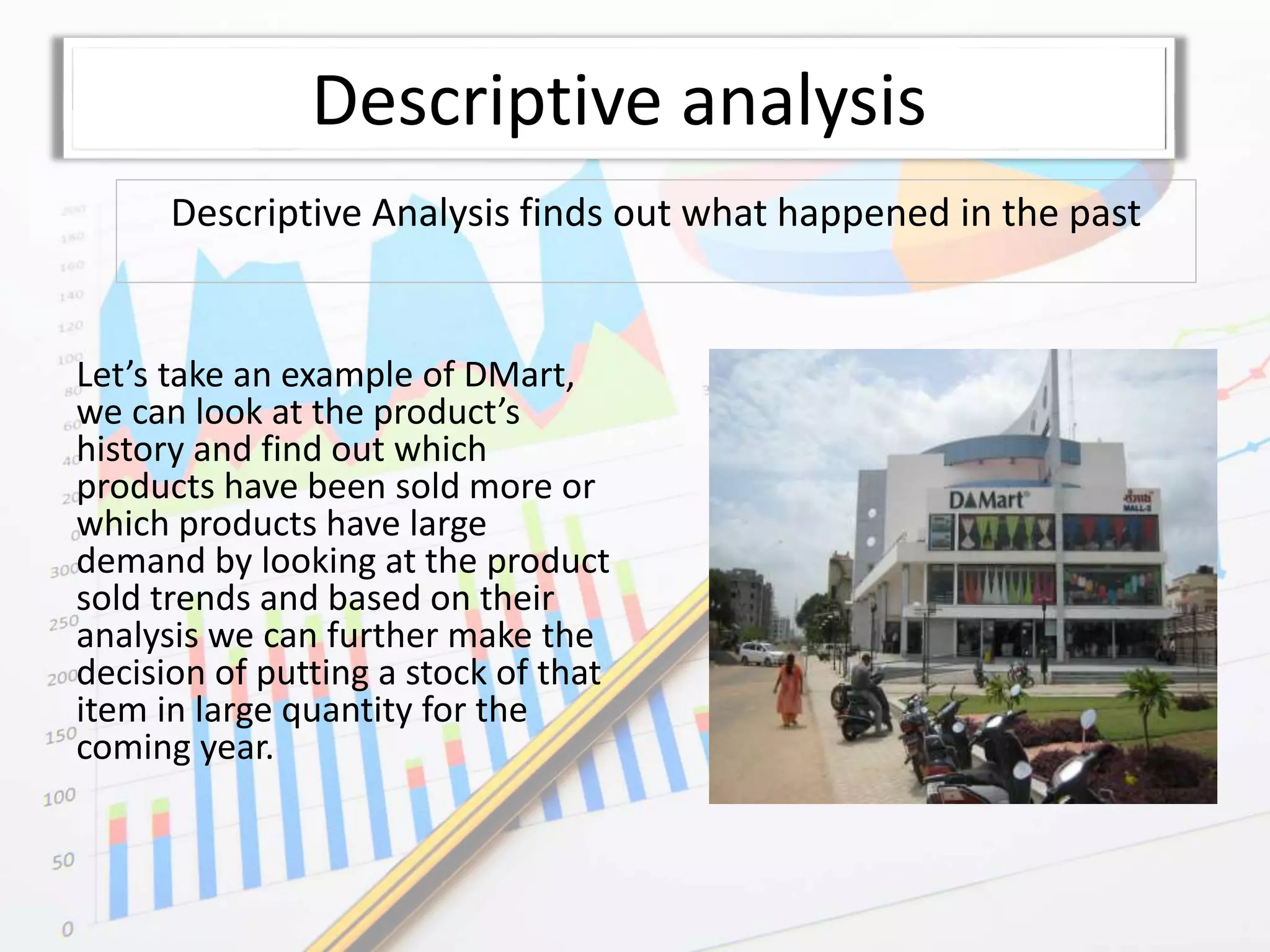
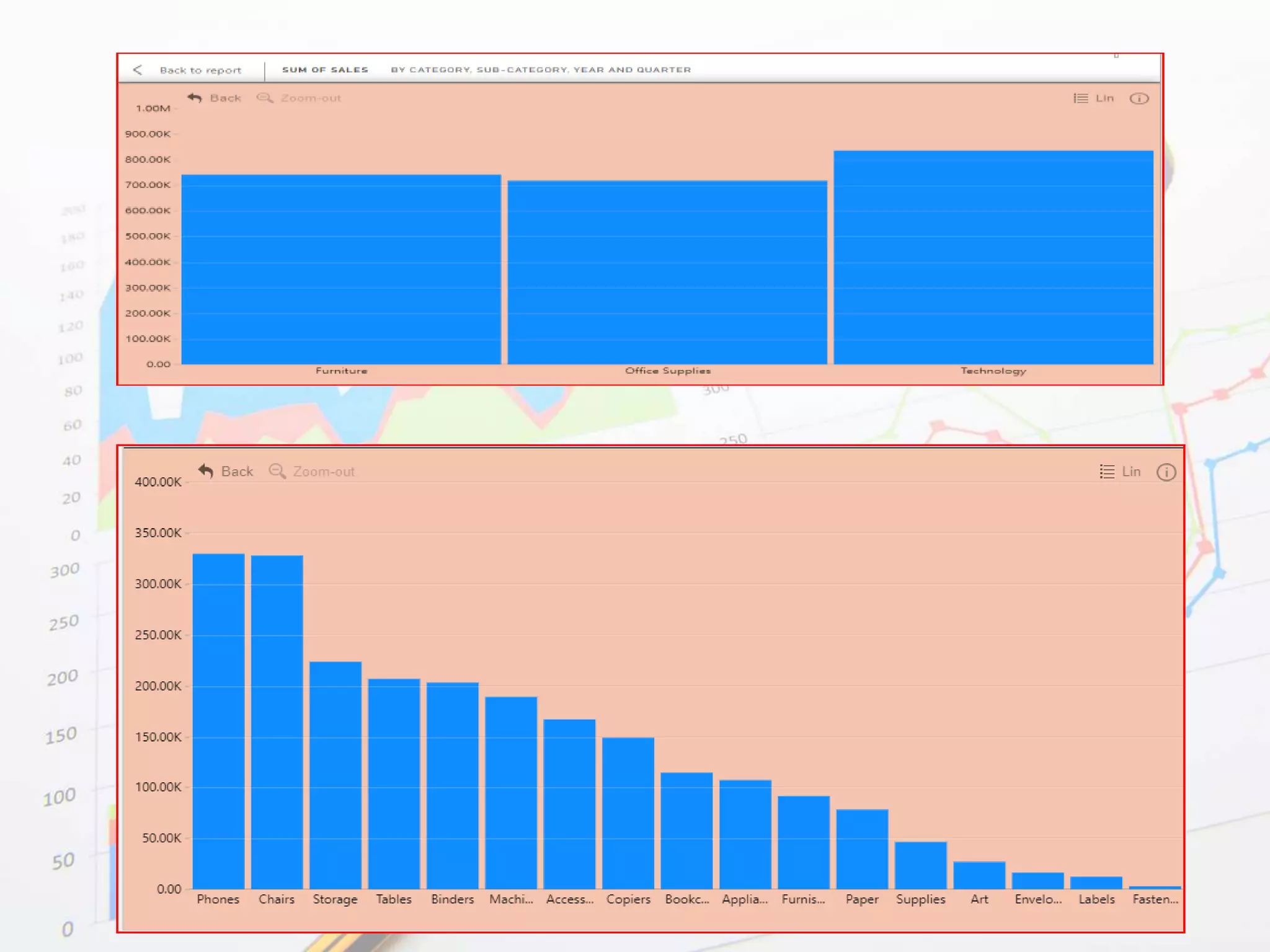
Let’s take an example of DMart,
we can look at the product’s
history and find out which
products have been sold more or
which products have large
demand by looking at the product
sold trends and based on their
analysis we can further make the
decision of putting a stock of that
item in large quantity for the
coming year.
Descriptive Analysis finds out what happened in the past
Diagnostic Analysis
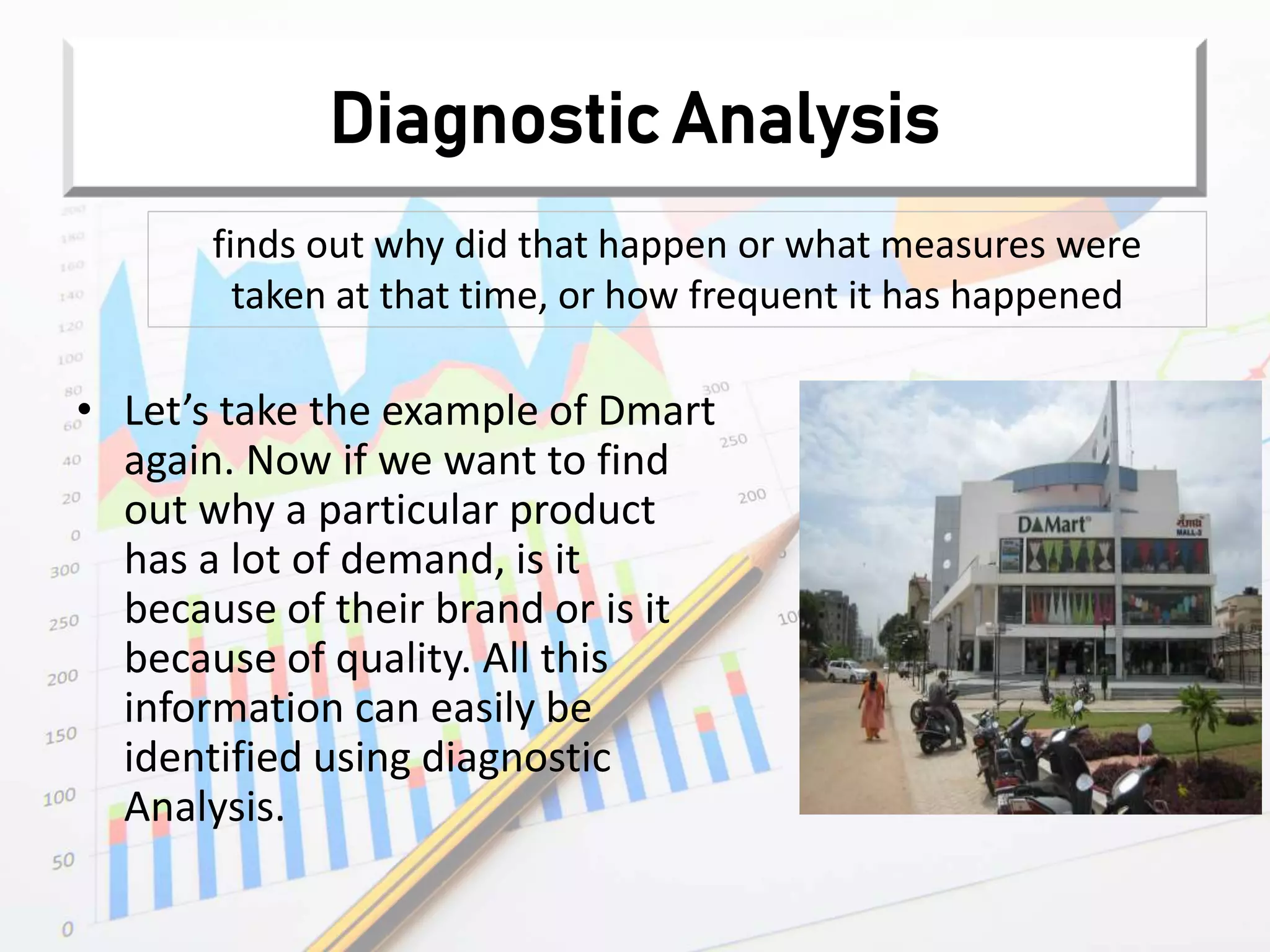
• Let’s take the example of Dmart
again. Now if we want to find
out why a particular product
has a lot of demand, is it
because of their brand or is it
because of quality. All this
information can easily be
identified using diagnostic
Analysis.
finds out why did that happen or what measures were
taken at that time, or how frequent it has happened
Predictive Analysis
• Predictive analysis can be conducted manually or using
machine-learning algorithms. Either way, historical
data is used to make assumptions about the future.
• One predictive analytics tool is regression analysis,
which can determine the relationship between two
variables (single linear regression) or three or more
variables (multiple regression). The relationships
between variables are written as a mathematical
equation that can help predict the outcome should one
variable change.
which answers the question, “What might happen in
the future?”
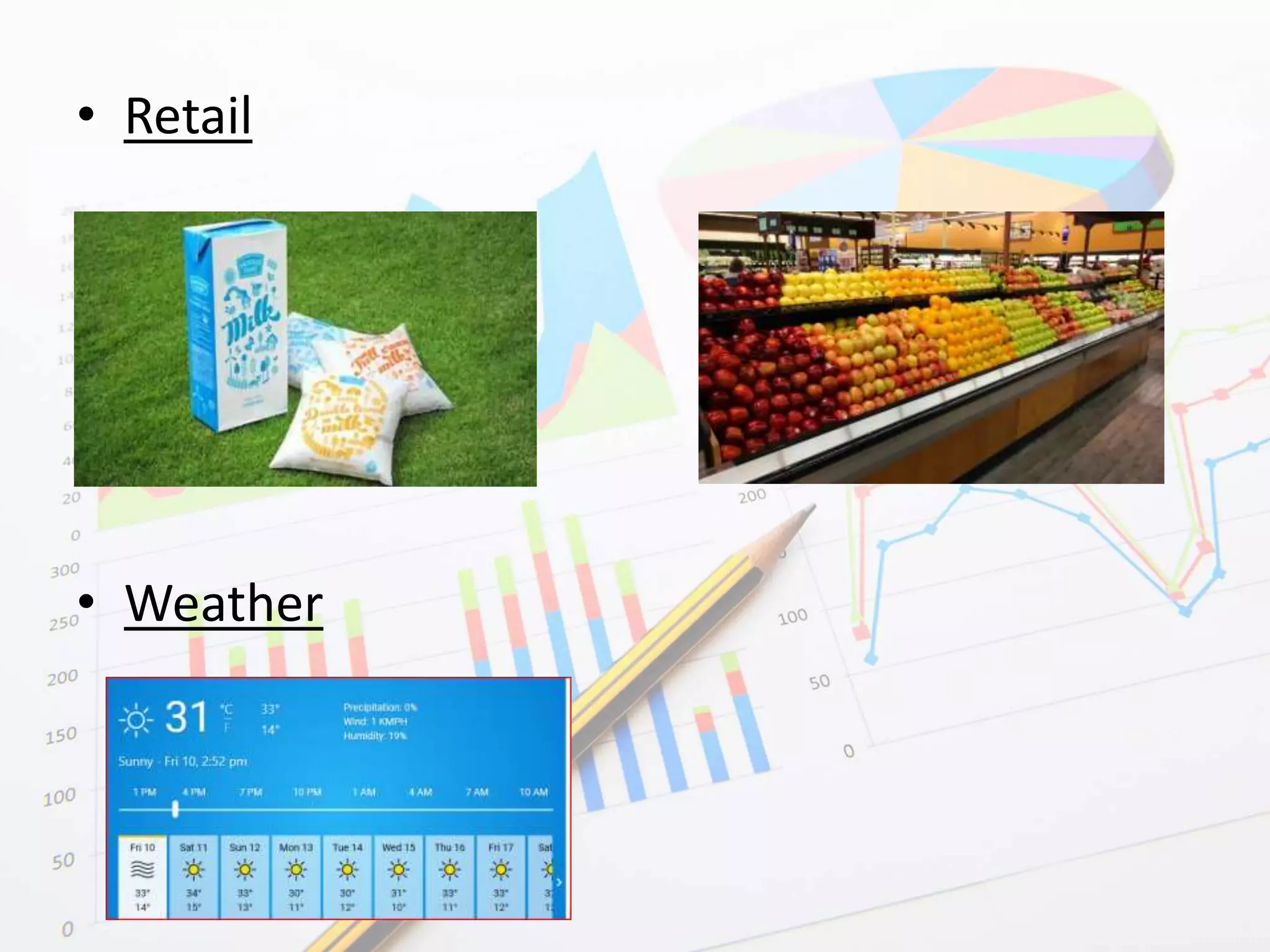
• Retail
• Weather
• Prescriptive Analysis is the highest level of Analysis that
is used for choosing the best optimal solution by looking
at descriptive, diagnostic, and predictive data.
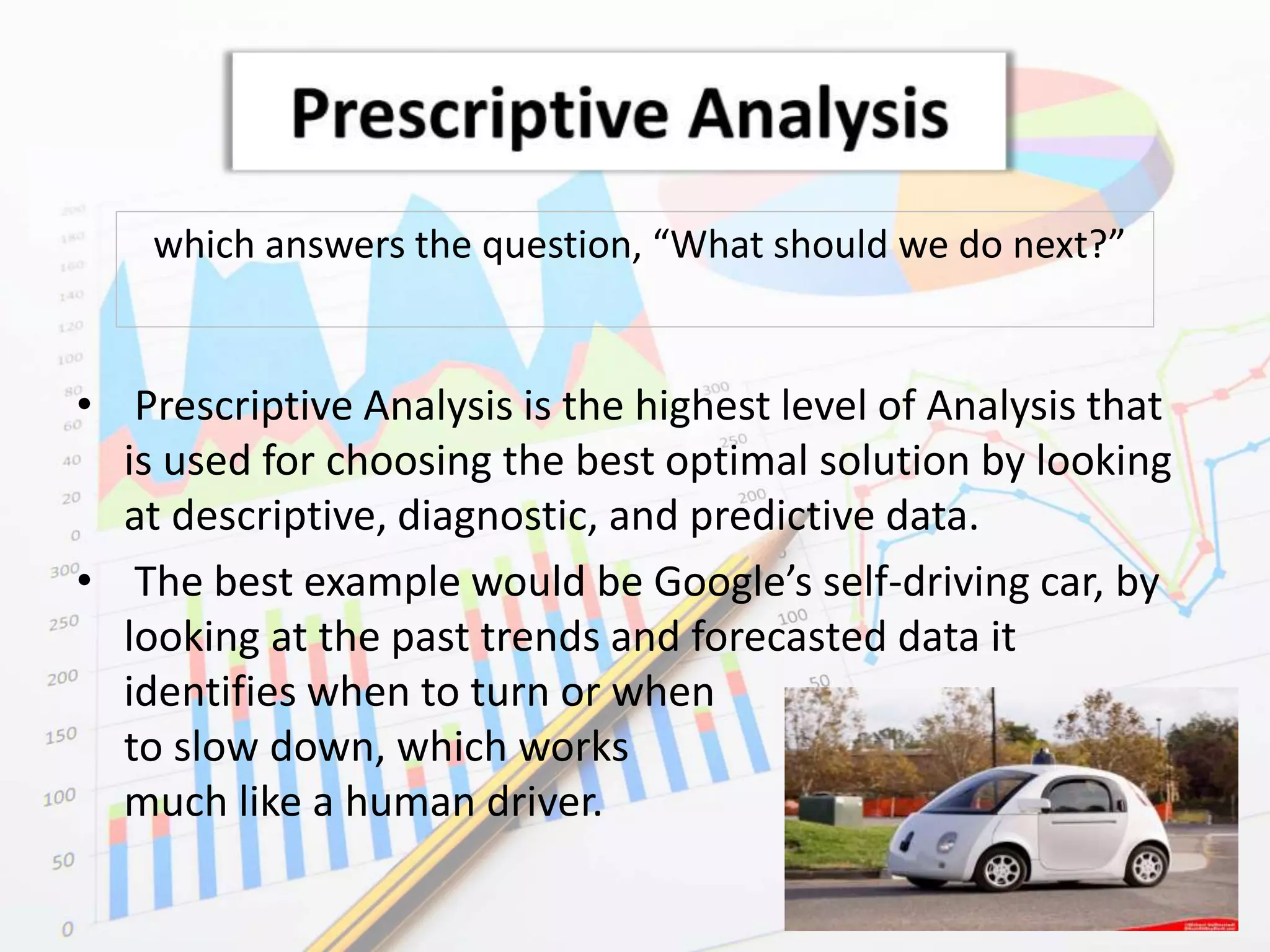
• The best example would be Google’s self-driving car, by
looking at the past trends and forecasted data it
identifies when to turn or when
to slow down, which works
much like a human driver.
which answers the question, “What should we do next?”
Tools required for data analysis

Data analysis.pptx

  • 3.
    What is dataanalysis The process of studying the data to find out the answers to how and why things happened in the past. Usually, the result of data analysis is the final dataset, i.e a pattern, or a detailed report that you can further use for Data Analytics.
  • 4.
    Descriptive Analysis Diagnostic Analysis PredictiveAnalysis Prescriptive Analysis Types of Data Analysis Methods
  • 5.
    Descriptive analysis Let’s takean example of DMart, we can look at the product’s history and find out which products have been sold more or which products have large demand by looking at the product sold trends and based on their analysis we can further make the decision of putting a stock of that item in large quantity for the coming year. Descriptive Analysis finds out what happened in the past
  • 7.
    Diagnostic Analysis • Let’stake the example of Dmart again. Now if we want to find out why a particular product has a lot of demand, is it because of their brand or is it because of quality. All this information can easily be identified using diagnostic Analysis. finds out why did that happen or what measures were taken at that time, or how frequent it has happened
  • 8.
    Predictive Analysis • Predictiveanalysis can be conducted manually or using machine-learning algorithms. Either way, historical data is used to make assumptions about the future. • One predictive analytics tool is regression analysis, which can determine the relationship between two variables (single linear regression) or three or more variables (multiple regression). The relationships between variables are written as a mathematical equation that can help predict the outcome should one variable change. which answers the question, “What might happen in the future?”
  • 9.
  • 10.
    • Prescriptive Analysisis the highest level of Analysis that is used for choosing the best optimal solution by looking at descriptive, diagnostic, and predictive data. • The best example would be Google’s self-driving car, by looking at the past trends and forecasted data it identifies when to turn or when to slow down, which works much like a human driver. which answers the question, “What should we do next?”
  • 11.
    Tools required fordata analysis