



Data Analysis & Balancing
Coupart Thibault - 10/04/2015
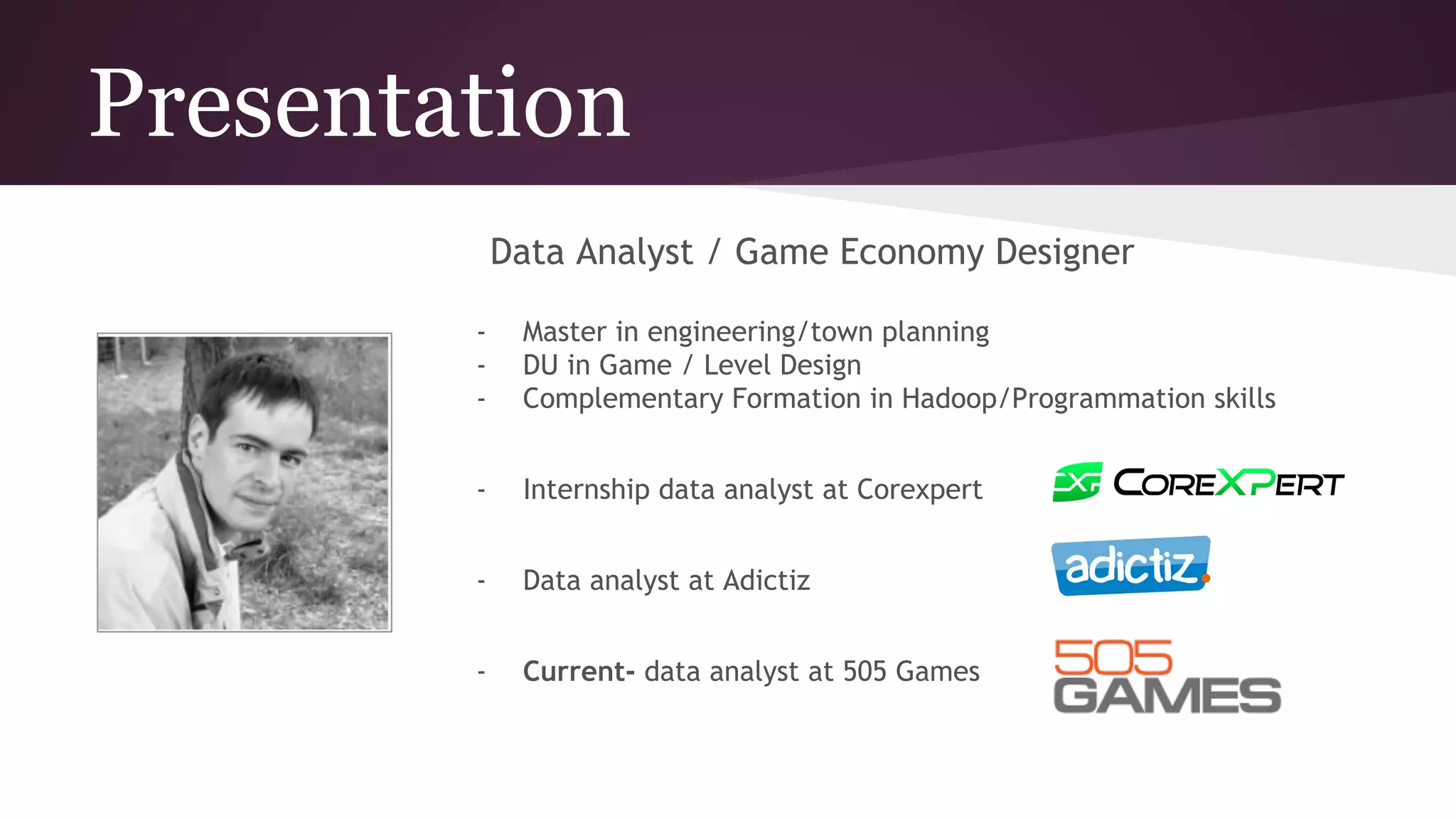
Presentation
Data Analyst / Game Economy Designer
- Master in engineering/town planning
- DU in Game / Level Design
- Complementary Formation in Hadoop/Programmation skills
- Internship data analyst at Corexpert
- Data analyst at Adictiz
- Current- data analyst at 505 Games
Plan
1. Definitions & concepts
2. Case Study 1 - Arcade Game
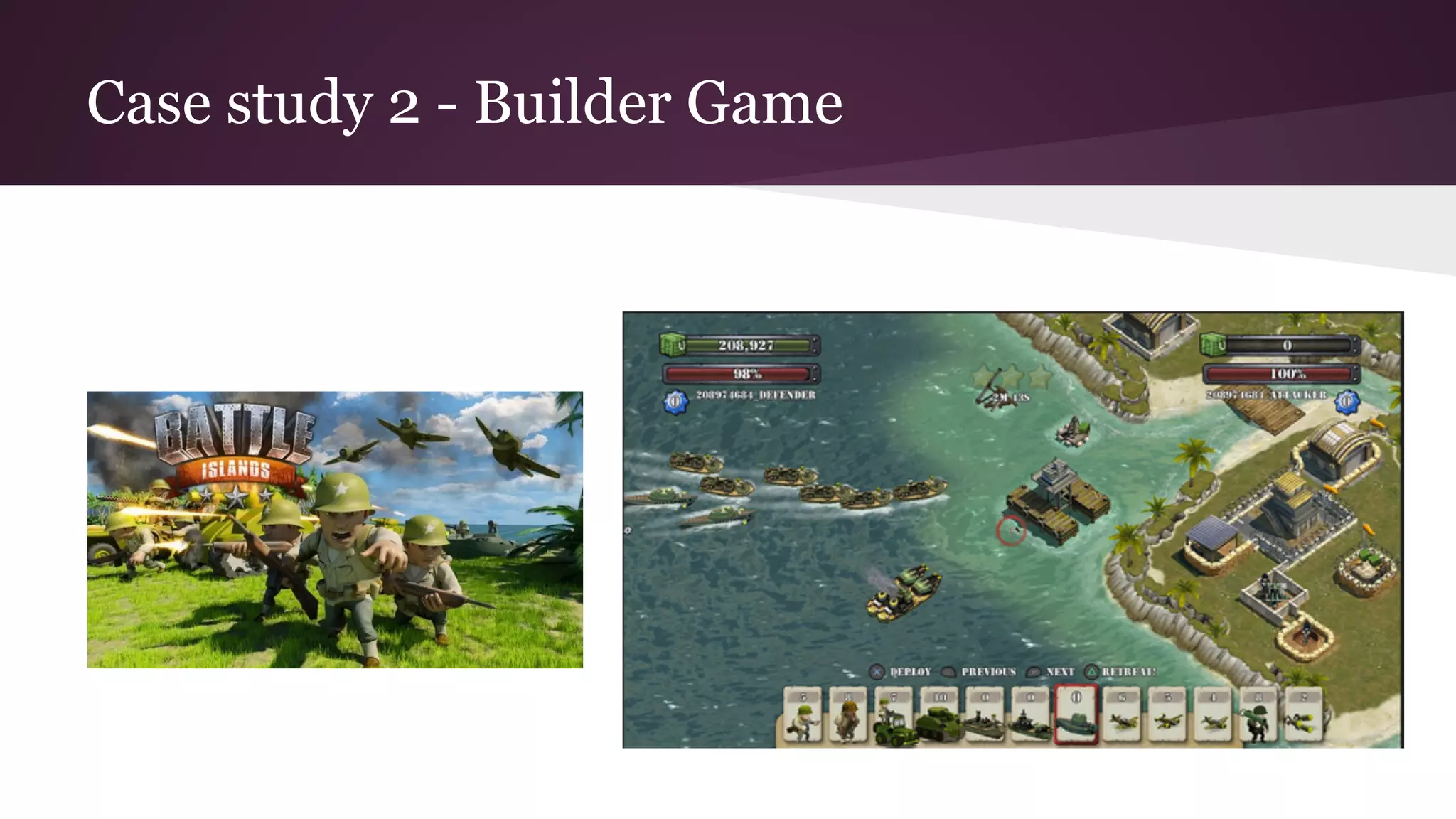
3. Case Study 2 - City Builder Game
4. Conclusion
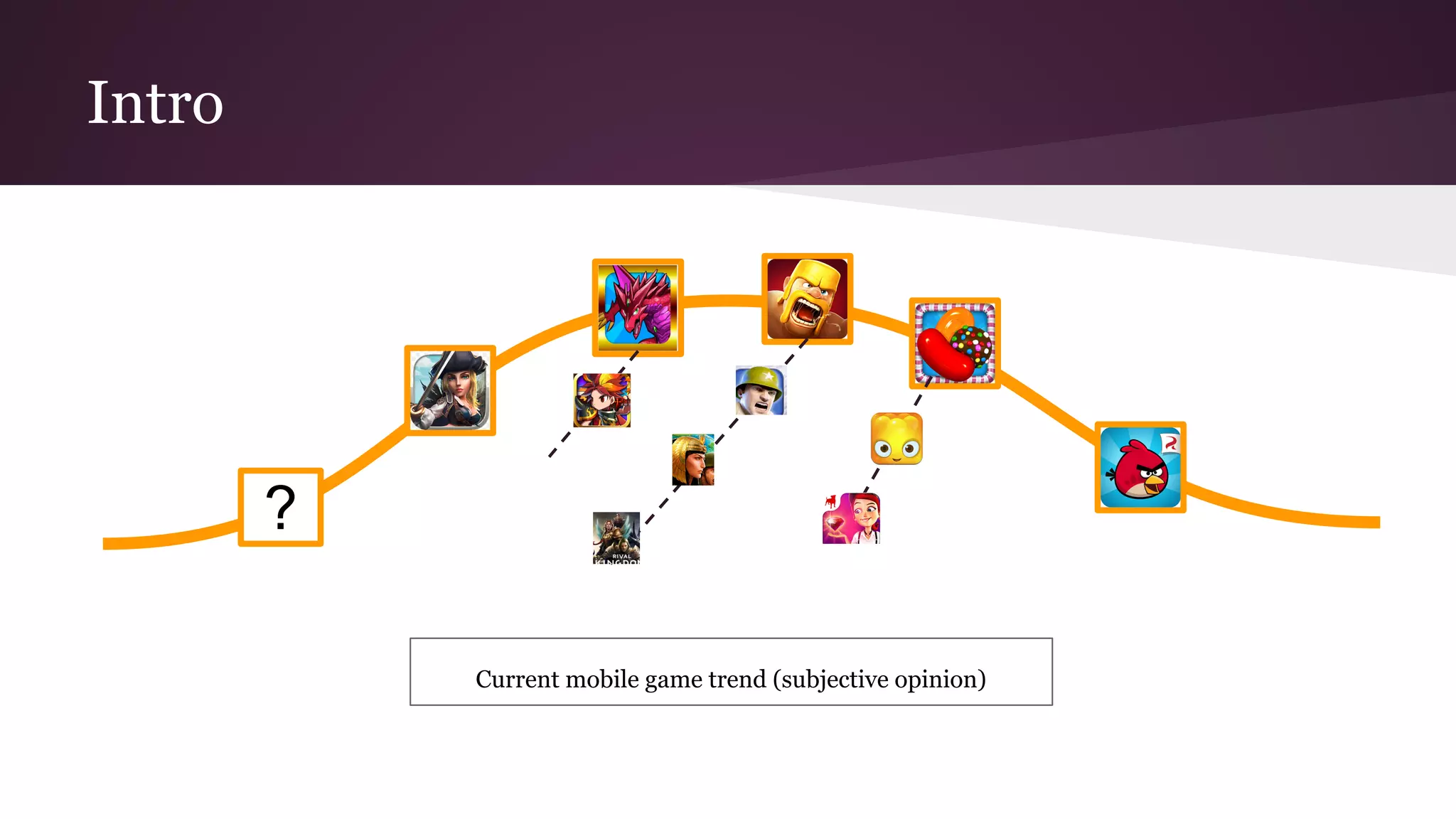
Intro
Current mobile game trend (subjective opinion)
?
Definition & concepts
A few important words :
- The balancing fundamentally is about “tweaking” existing game variables in order to increase the game
experience.
- You always want to have the reward accorded with the difficulty, the investment accorded with the quality, the
cost accorded with the power.
- Data analysis helps a lot to spot areas of the balancing that need improvements, whereas a better balancing
usually increase the commercial success of the game
- This statement is even more true in the world of Free-to-Play, where it is all about convincing the player that the
ing-game purchase worth his real money.
Definition & concepts
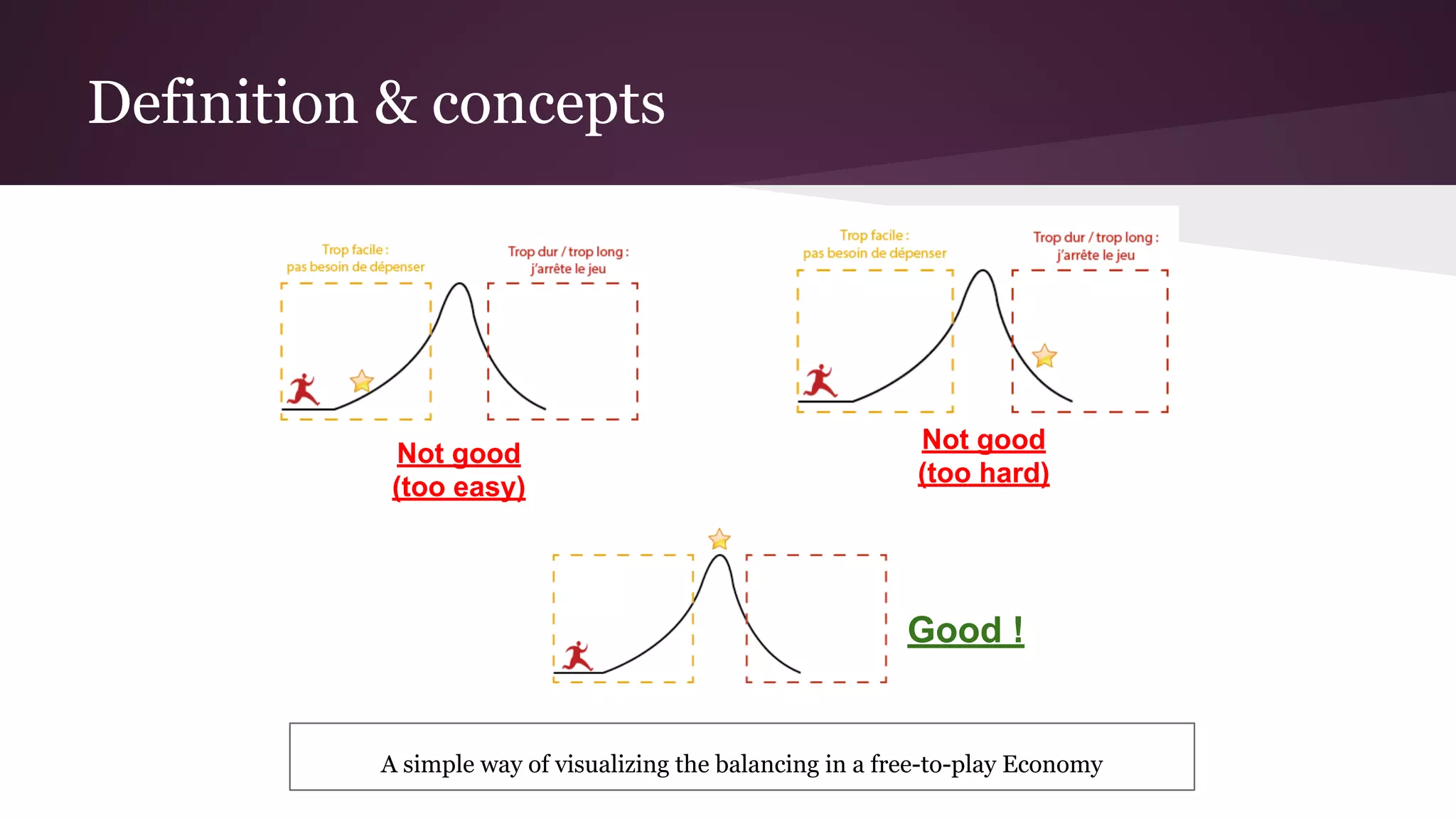
A simple way of visualizing the balancing in a free-to-play Economy
Not good
(too easy)
Not good
(too hard)
Good !
Case Study 1 - Arcade game
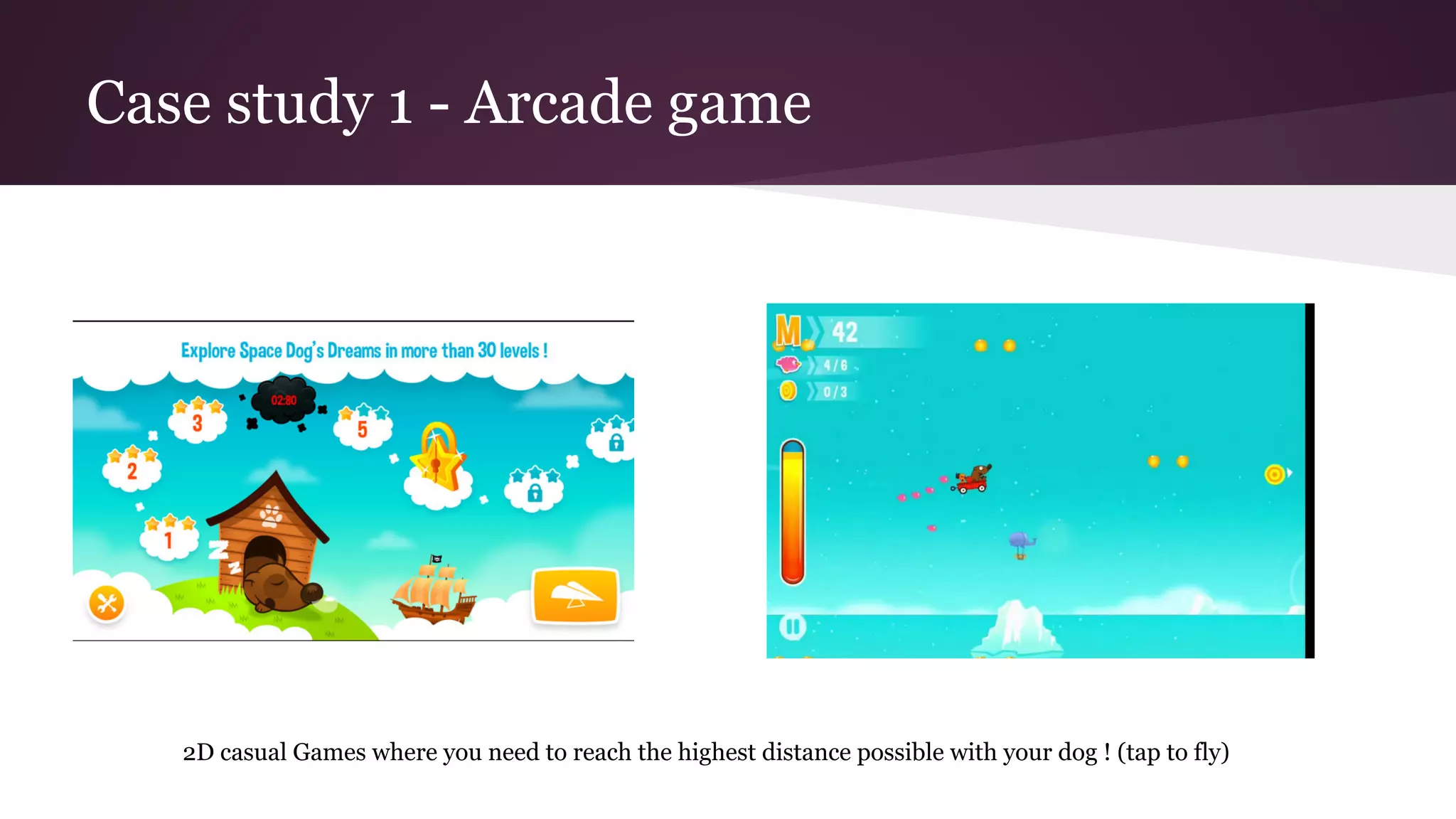
Case study 1 - Arcade game
2D casual Games where you need to reach the highest distance possible with your dog ! (tap to fly)
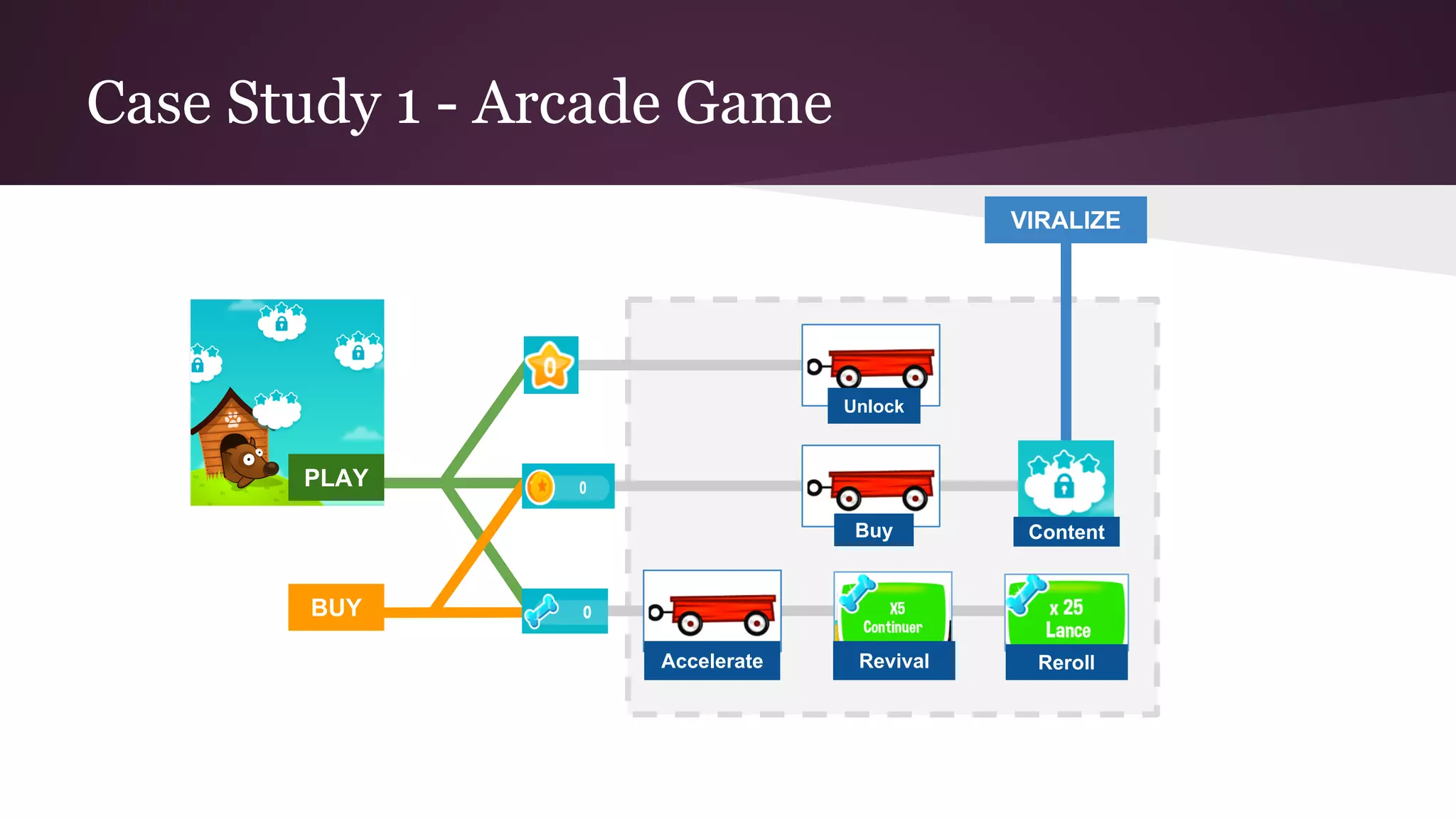
Case Study 1 - Arcade Game
Unlock
Buy
Accelerate Revival Reroll
PLAY
Content
BUY
VIRALIZE
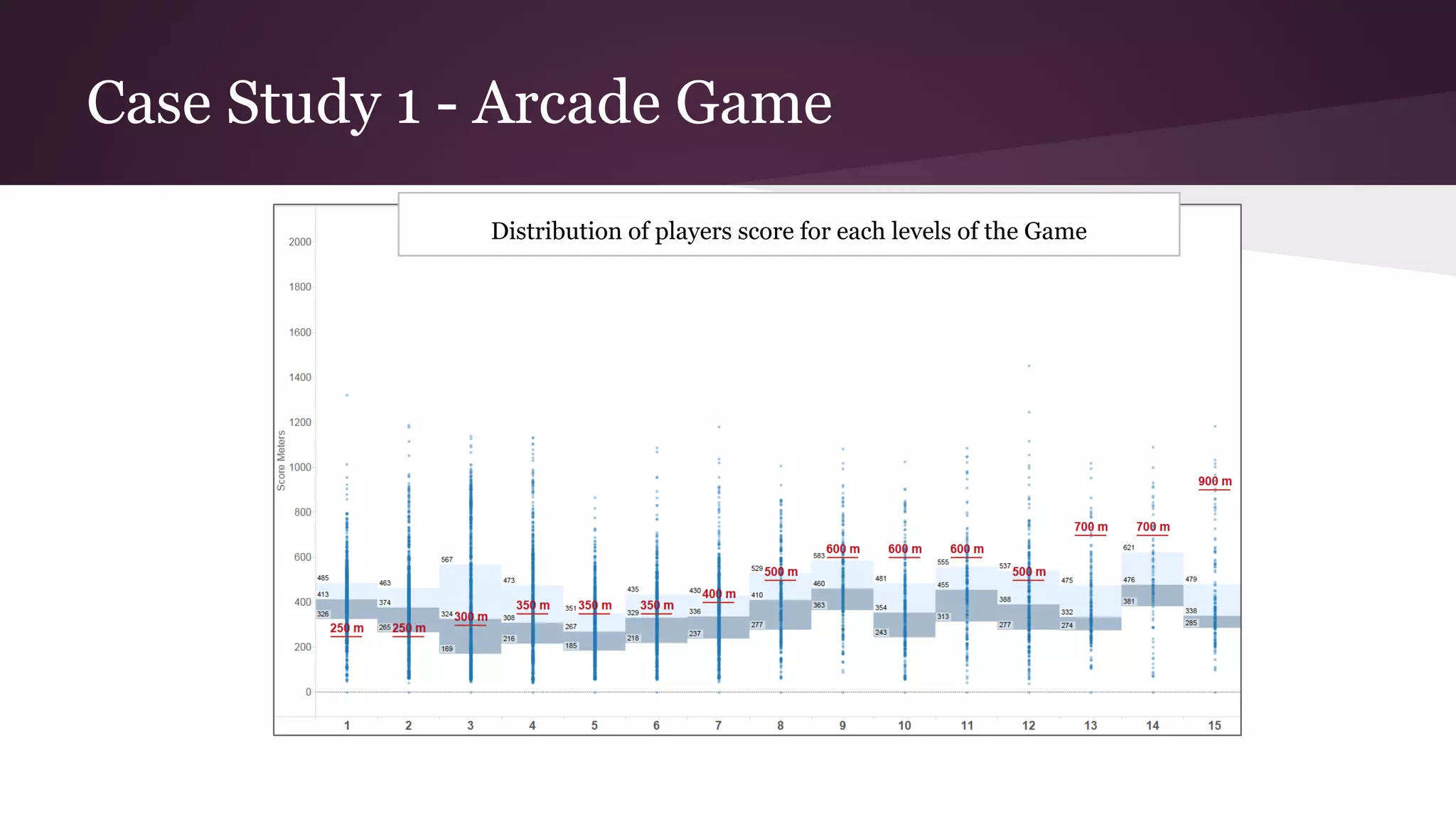
Case Study 1 - Arcade Game
Distribution of players score for each levels of the Game
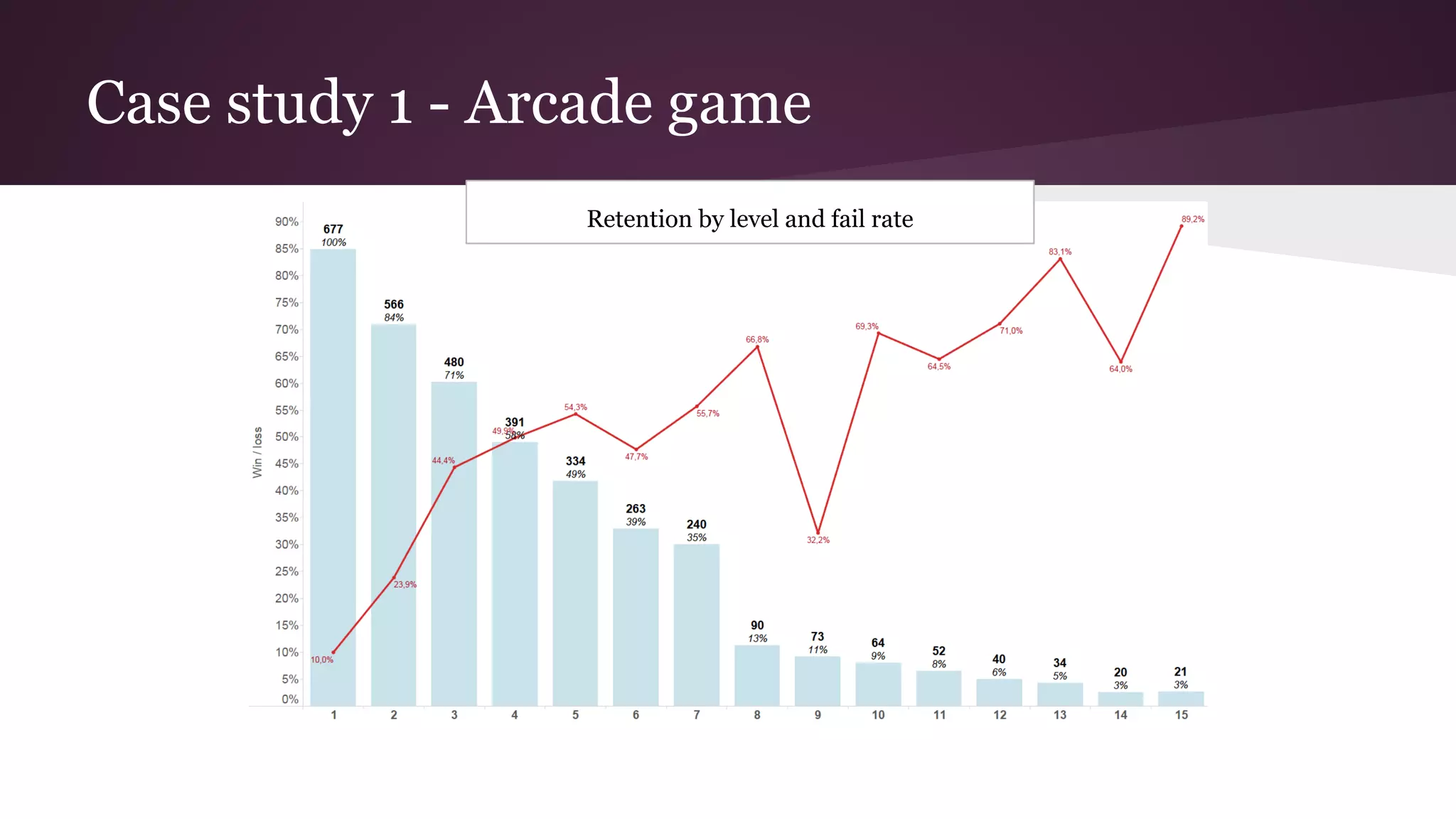
Case study 1 - Arcade game
Retention by level and fail rate
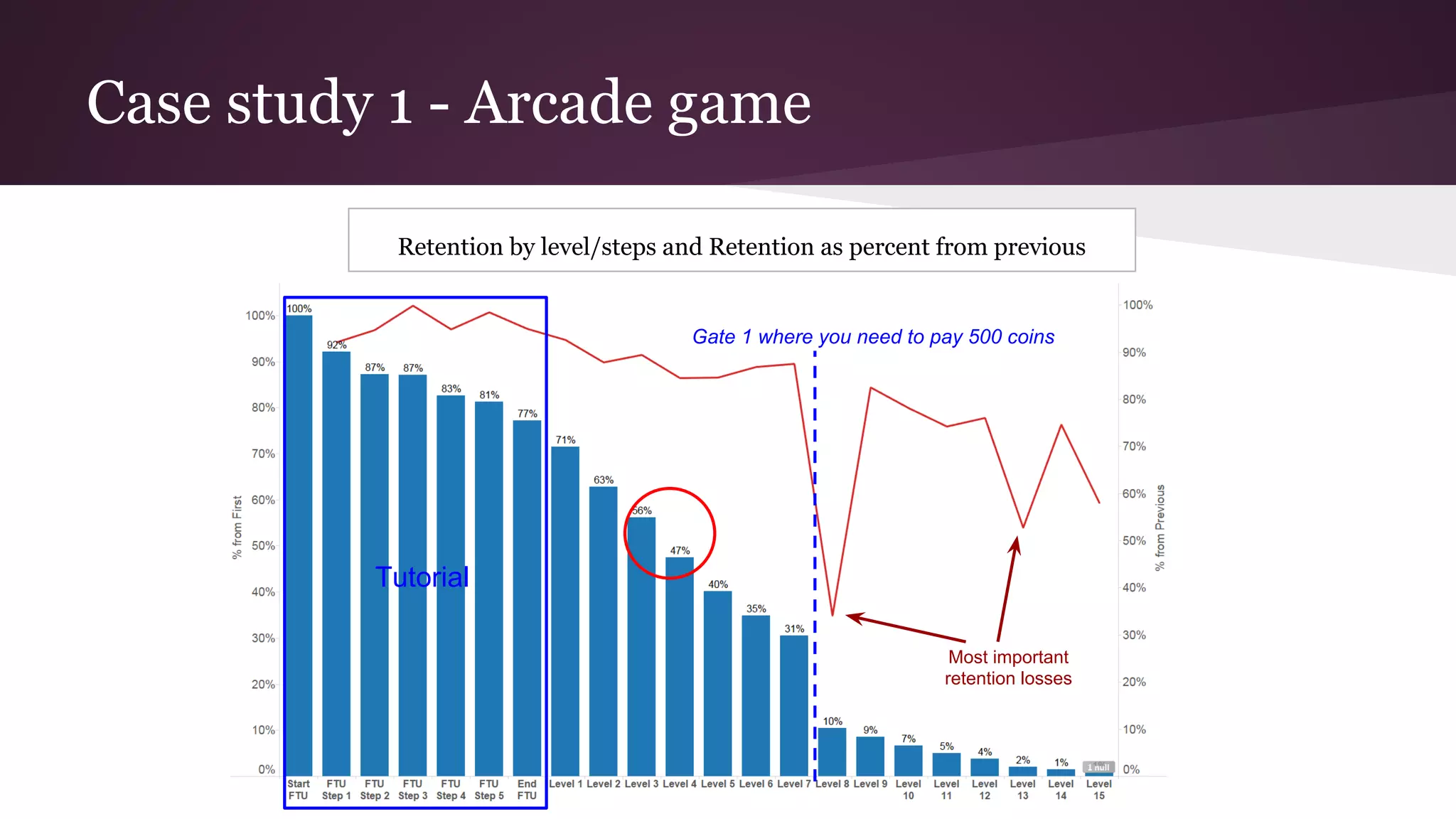
Case study 1 - Arcade game
Gate 1 where you need to pay 500 coins
Tutorial
Most important
retention losses
Retention by level/steps and Retention as percent from previous
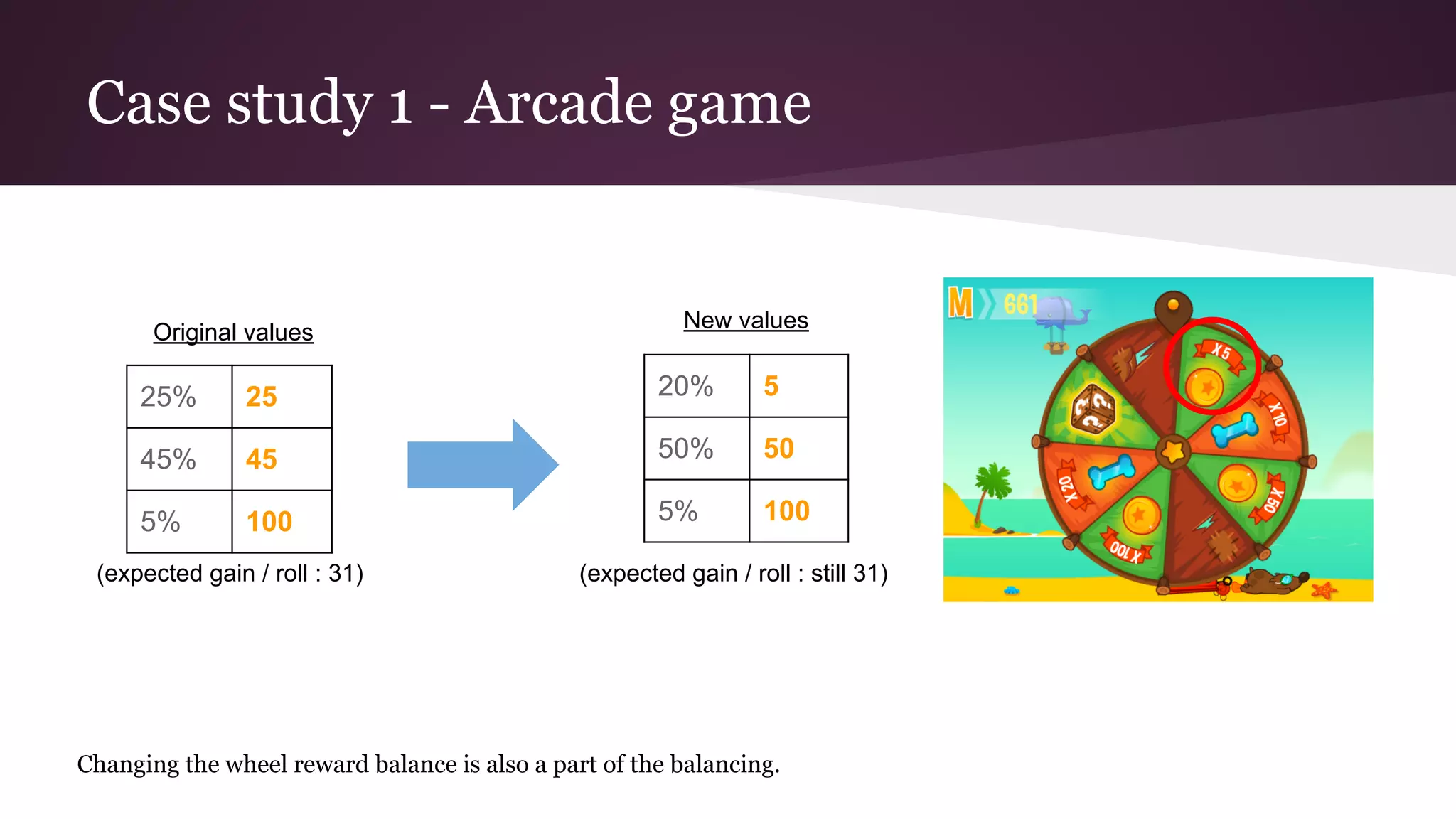
Case study 1 - Arcade game
Changing the wheel reward balance is also a part of the balancing.
25% 25
45% 45
5% 100
20% 5
50% 50
5% 100
Original values
New values
(expected gain / roll : 31) (expected gain / roll : still 31)
Case study 1 - Arcade game
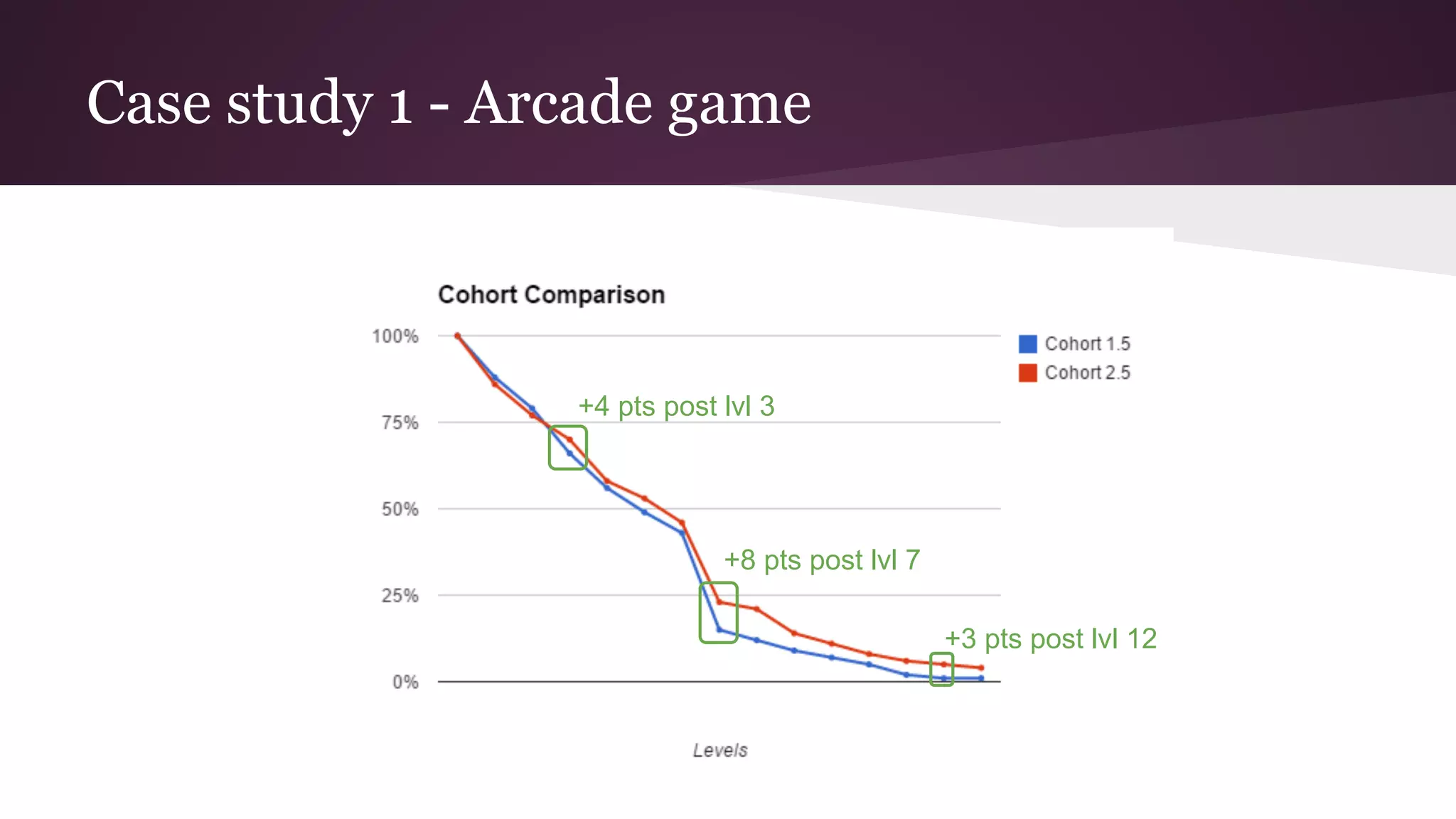
+4 pts post lvl 3
+8 pts post lvl 7
+3 pts post lvl 12
Case study 1 - Arcade game
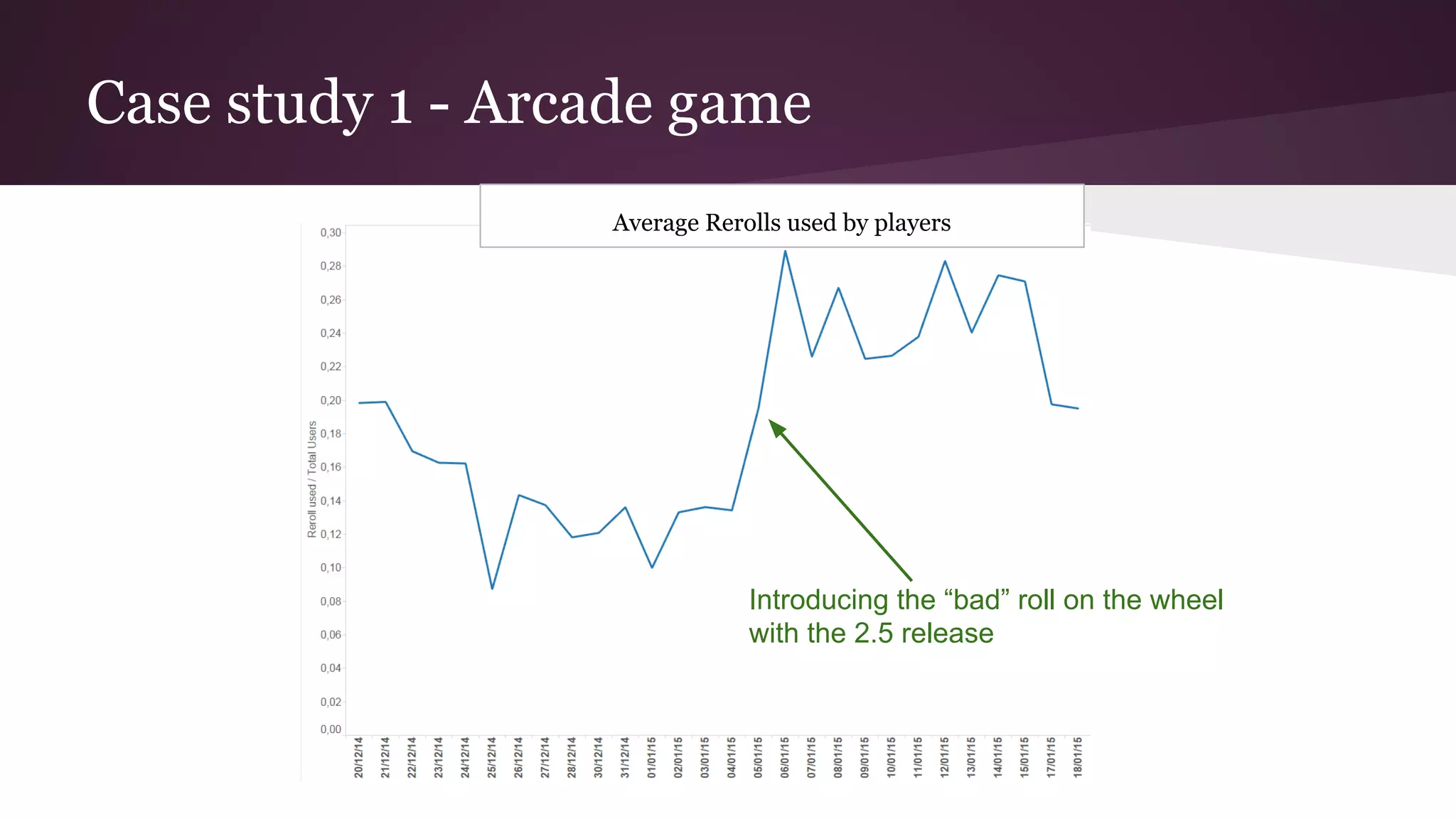
Introducing the “bad” roll on the wheel
with the 2.5 release
Average Rerolls used by players
Case study 1 - Arcade game
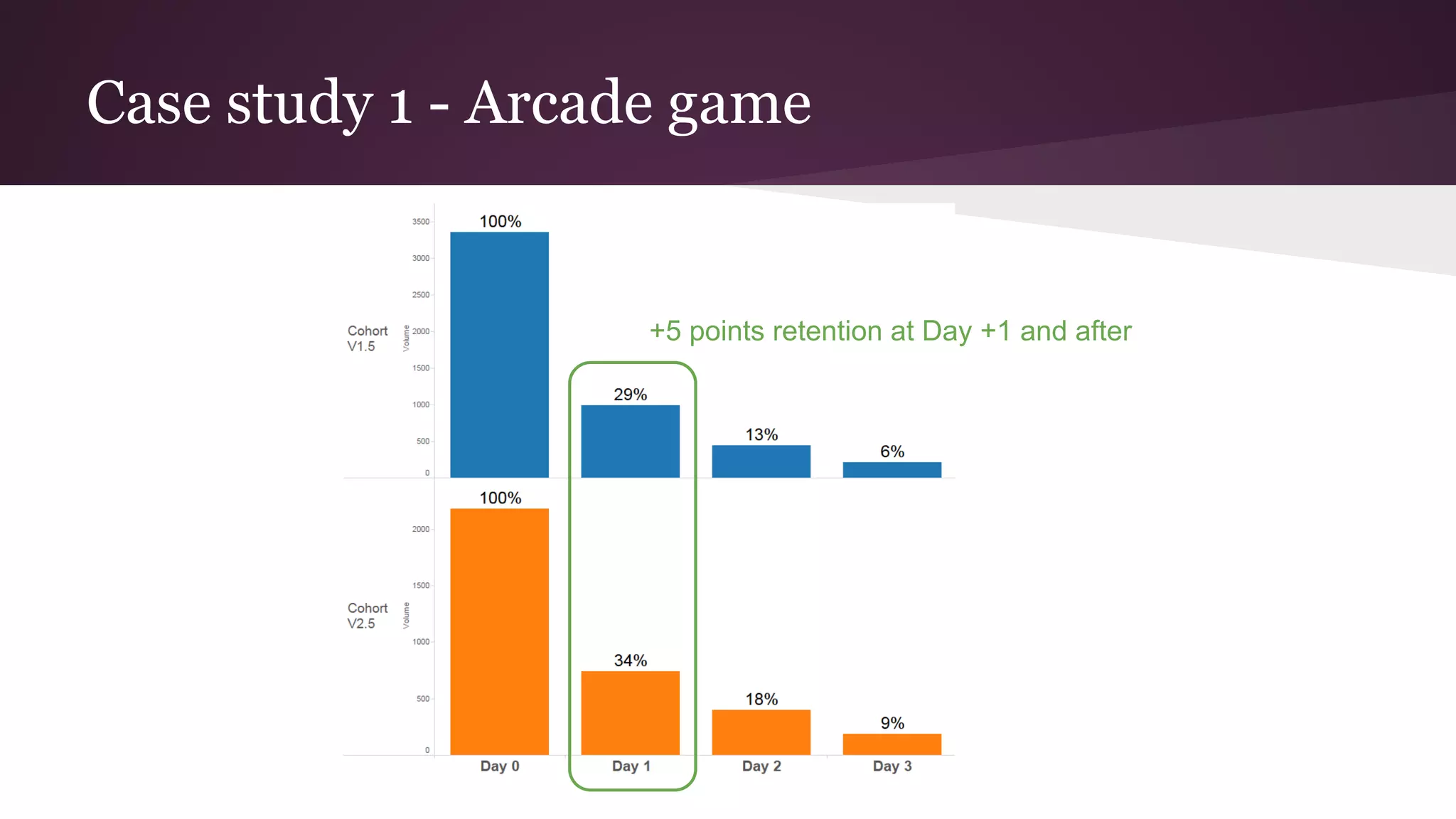
+5 points retention at Day +1 and after
Case Study 2 - Builder game
Case study 2 - Builder Game
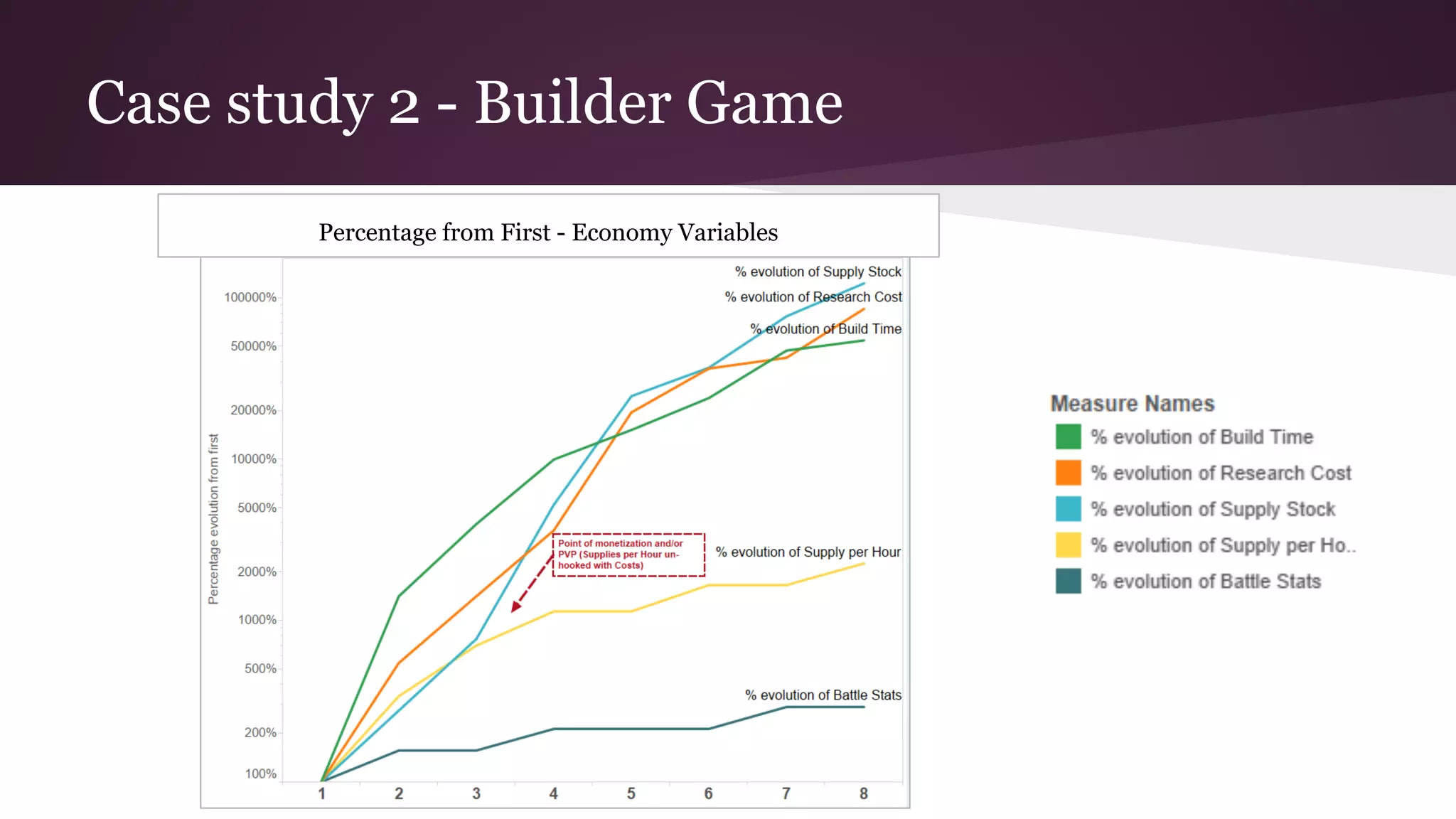
Percentage from First - Economy Variables
Case study 2 - Builder Game
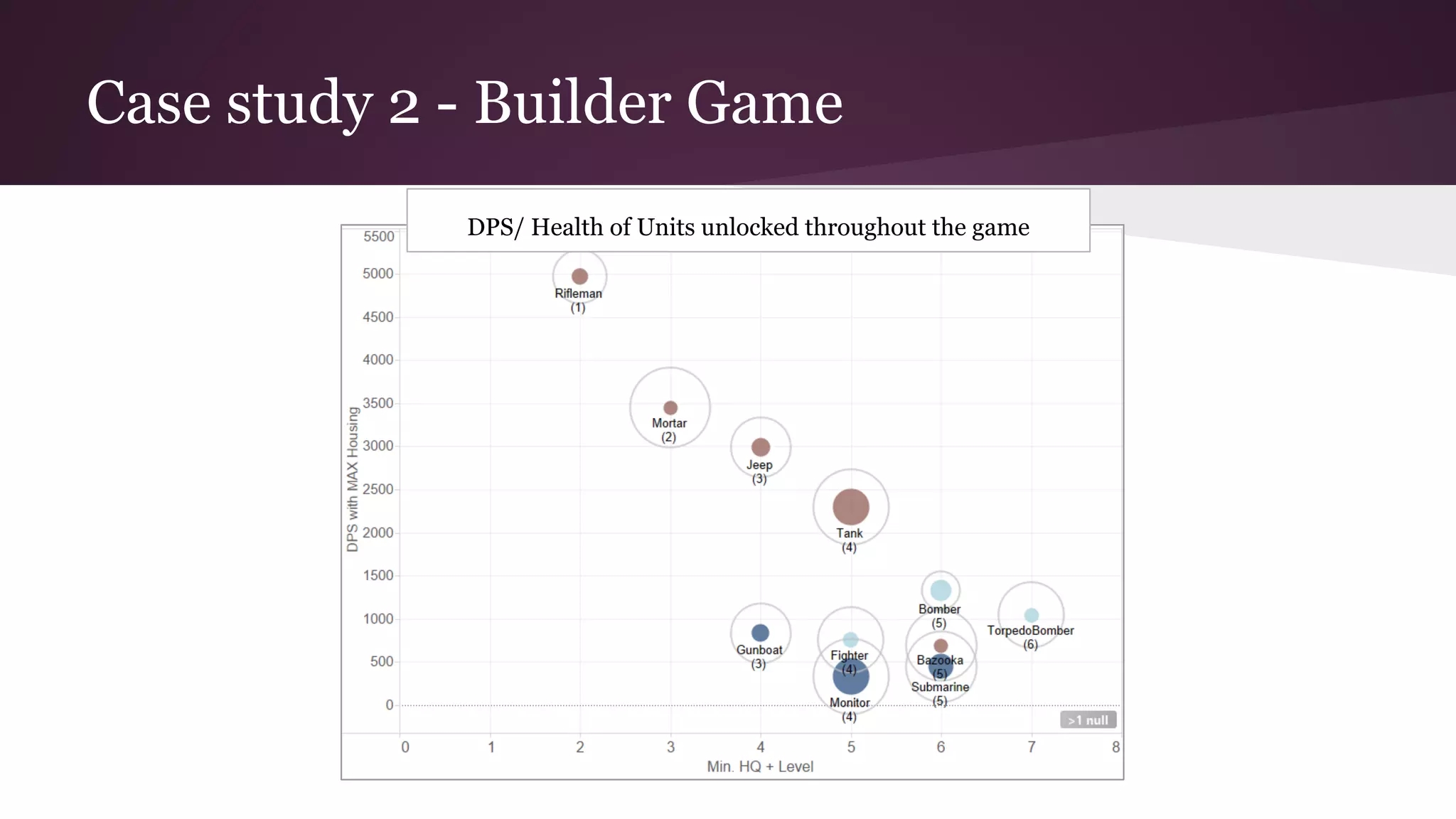
DPS/ Health of Units unlocked throughout the game
Case study 2 - Builder Game
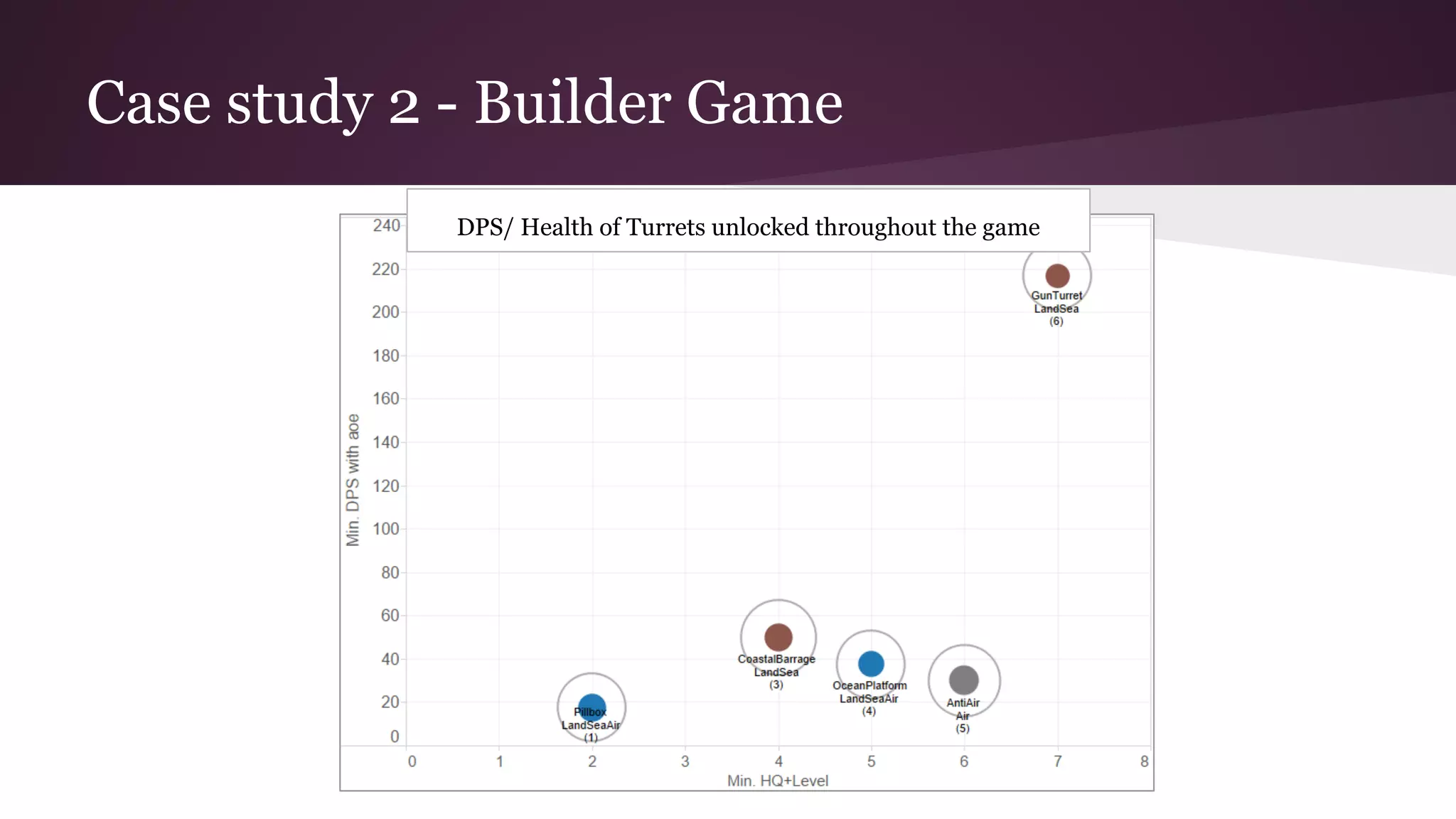
DPS/ Health of Turrets unlocked throughout the game
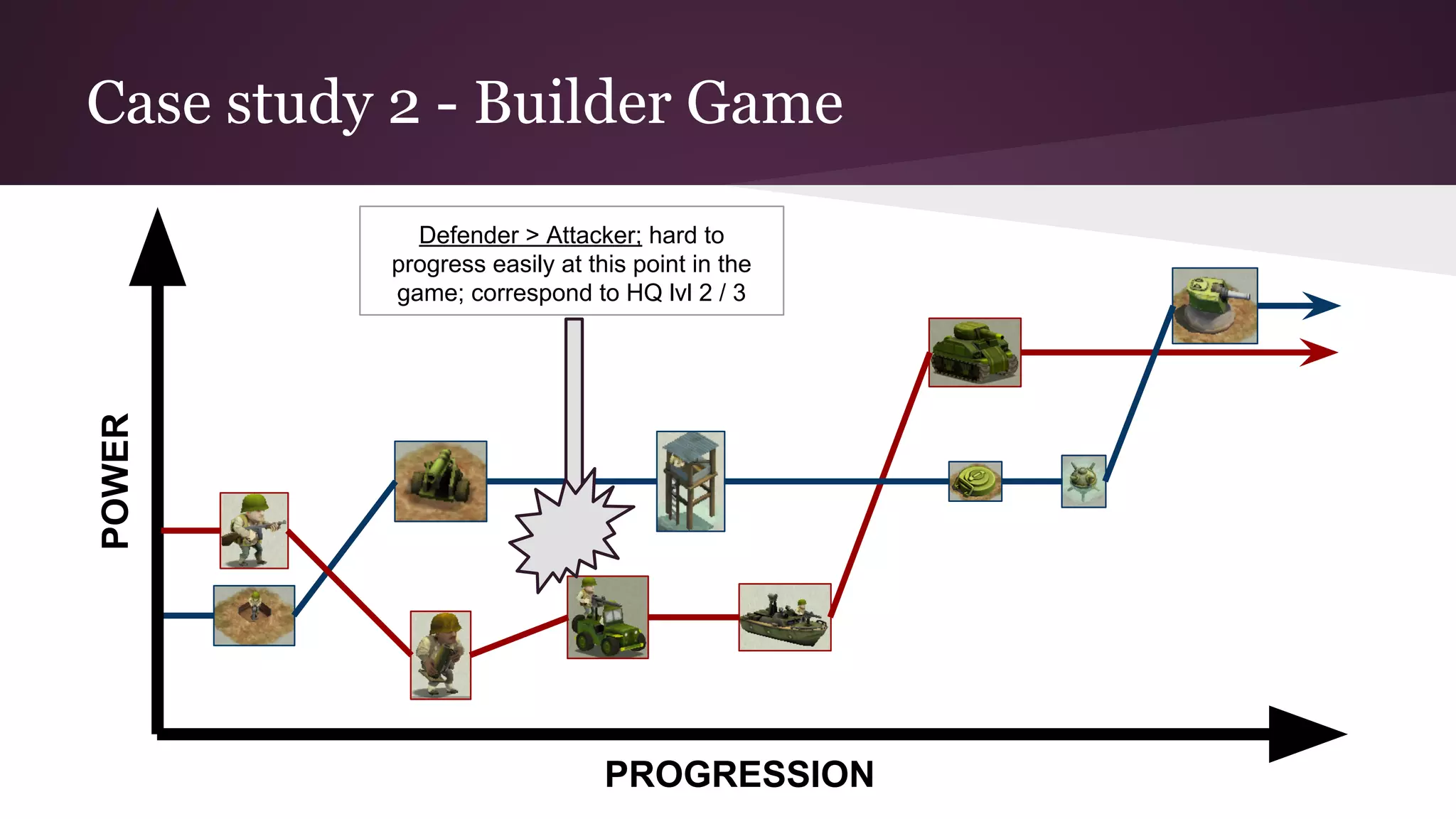
Case study 2 - Builder GamePOWER
PROGRESSION
Defender > Attacker; hard to
progress easily at this point in the
game; correspond to HQ lvl 2 / 3
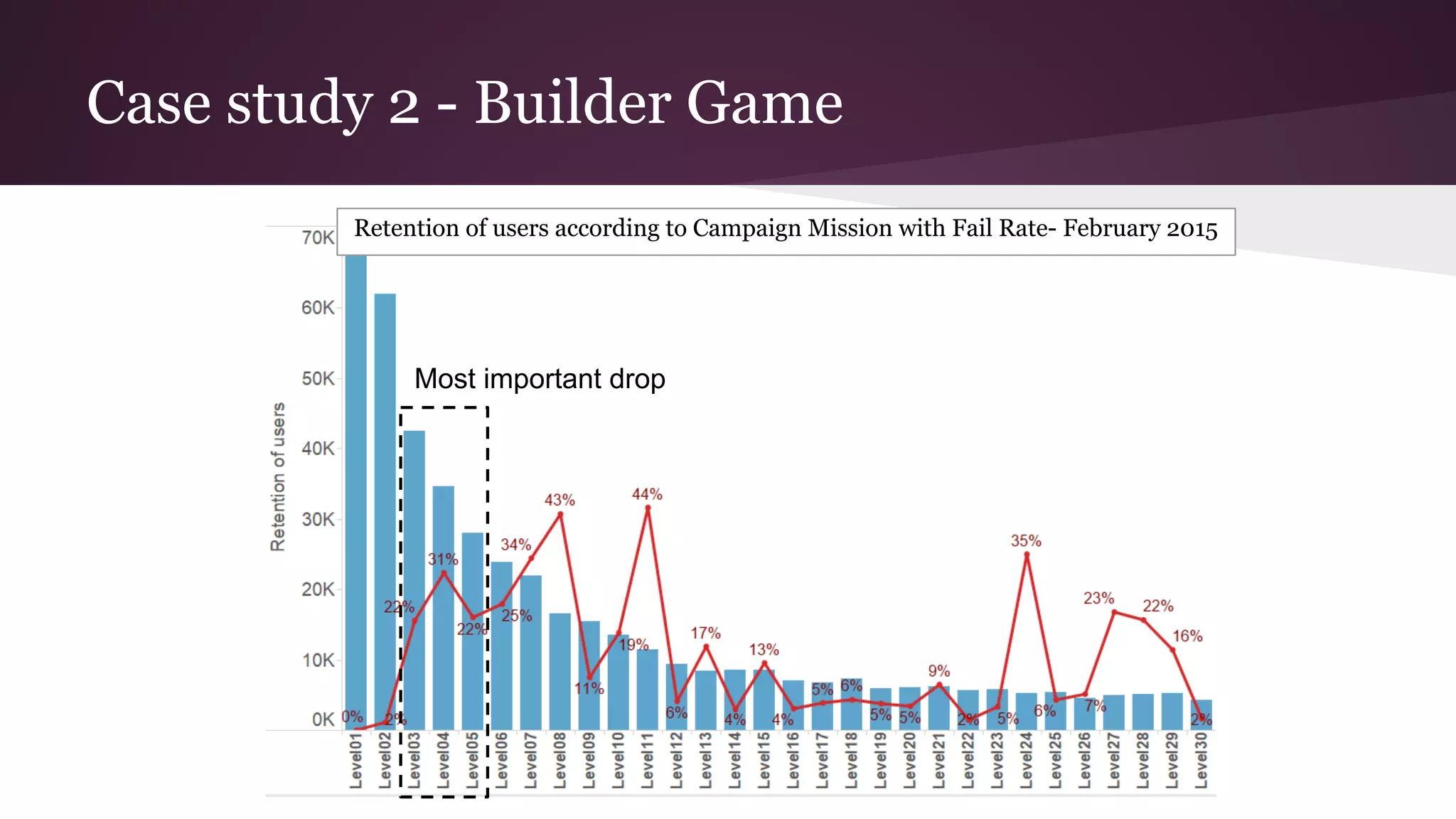
Case study 2 - Builder Game
Retention of users according to Campaign Mission with Fail Rate- February 2015
Most important drop
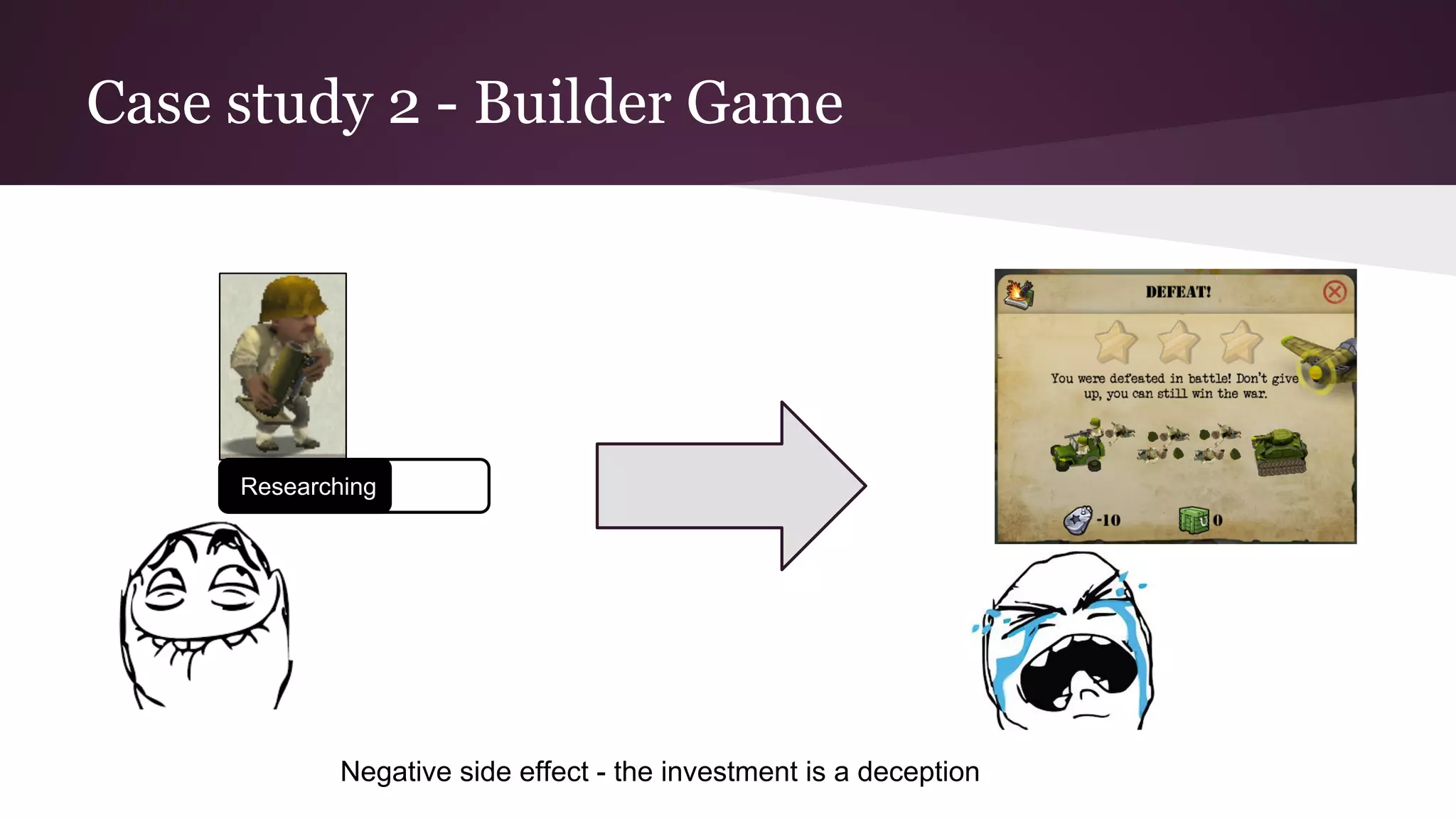
Case study 2 - Builder Game
Researching
Negative side effect - the investment is a deception
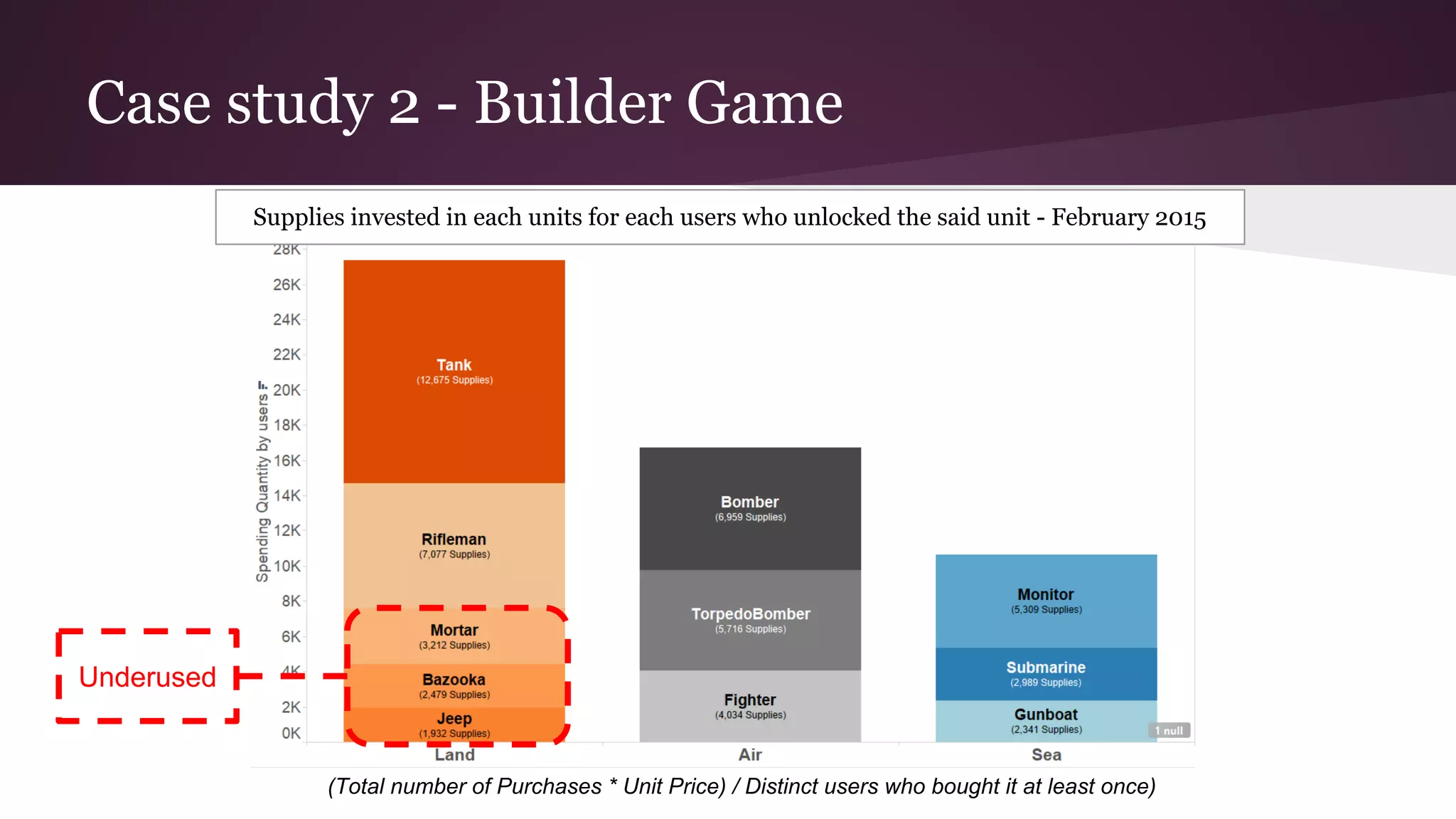
Case study 2 - Builder Game
Supplies invested in each units for each users who unlocked the said unit - February 2015
(Total number of Purchases * Unit Price) / Distinct users who bought it at least once)
Underused
Conclusion
Conclusion
- The balancing has became a big topic in the free-to-play economy, and pretty much every gameplay needs a
decent balancing now to succeed
- A data analyst will have many benefits by matching balancing data with user data, and the opposite is true : a
game designer / balancer will use user data to orient his balancing !
- QUESTIONS
Thanks for your attention!
Contact
Coupart Thibault
Mail : thibault.coupart69@gmail.com
Linkedin : https://www.linkedin.com/hp/?dnr=oiFedA9QkZ4bzJnRoqEvqAHABQ43iJ4WcI2W&trk

Data analysis & balancing meeting thibault coupart avril 2015

  • 1.
    Data Analysis &Balancing Coupart Thibault - 10/04/2015
  • 2.
    Presentation Data Analyst /Game Economy Designer - Master in engineering/town planning - DU in Game / Level Design - Complementary Formation in Hadoop/Programmation skills - Internship data analyst at Corexpert - Data analyst at Adictiz - Current- data analyst at 505 Games
  • 3.
    Plan 1. Definitions &concepts 2. Case Study 1 - Arcade Game 3. Case Study 2 - City Builder Game 4. Conclusion
  • 4.
    Intro Current mobile gametrend (subjective opinion) ?
  • 5.
  • 6.
    Definition & concepts Afew important words : - The balancing fundamentally is about “tweaking” existing game variables in order to increase the game experience. - You always want to have the reward accorded with the difficulty, the investment accorded with the quality, the cost accorded with the power. - Data analysis helps a lot to spot areas of the balancing that need improvements, whereas a better balancing usually increase the commercial success of the game - This statement is even more true in the world of Free-to-Play, where it is all about convincing the player that the ing-game purchase worth his real money.
  • 7.
    Definition & concepts Asimple way of visualizing the balancing in a free-to-play Economy Not good (too easy) Not good (too hard) Good !
  • 8.
    Case Study 1- Arcade game
  • 9.
    Case study 1- Arcade game 2D casual Games where you need to reach the highest distance possible with your dog ! (tap to fly)
  • 10.
    Case Study 1- Arcade Game Unlock Buy Accelerate Revival Reroll PLAY Content BUY VIRALIZE
  • 11.
    Case Study 1- Arcade Game Distribution of players score for each levels of the Game
  • 12.
    Case study 1- Arcade game Retention by level and fail rate
  • 13.
    Case study 1- Arcade game Gate 1 where you need to pay 500 coins Tutorial Most important retention losses Retention by level/steps and Retention as percent from previous
  • 14.
    Case study 1- Arcade game Changing the wheel reward balance is also a part of the balancing. 25% 25 45% 45 5% 100 20% 5 50% 50 5% 100 Original values New values (expected gain / roll : 31) (expected gain / roll : still 31)
  • 15.
    Case study 1- Arcade game +4 pts post lvl 3 +8 pts post lvl 7 +3 pts post lvl 12
  • 16.
    Case study 1- Arcade game Introducing the “bad” roll on the wheel with the 2.5 release Average Rerolls used by players
  • 17.
    Case study 1- Arcade game +5 points retention at Day +1 and after
  • 18.
    Case Study 2- Builder game
  • 19.
    Case study 2- Builder Game
  • 20.
    Case study 2- Builder Game Percentage from First - Economy Variables
  • 21.
    Case study 2- Builder Game DPS/ Health of Units unlocked throughout the game
  • 22.
    Case study 2- Builder Game DPS/ Health of Turrets unlocked throughout the game
  • 23.
    Case study 2- Builder GamePOWER PROGRESSION Defender > Attacker; hard to progress easily at this point in the game; correspond to HQ lvl 2 / 3
  • 24.
    Case study 2- Builder Game Retention of users according to Campaign Mission with Fail Rate- February 2015 Most important drop
  • 25.
    Case study 2- Builder Game Researching Negative side effect - the investment is a deception
  • 26.
    Case study 2- Builder Game Supplies invested in each units for each users who unlocked the said unit - February 2015 (Total number of Purchases * Unit Price) / Distinct users who bought it at least once) Underused
  • 27.
  • 28.
    Conclusion - The balancinghas became a big topic in the free-to-play economy, and pretty much every gameplay needs a decent balancing now to succeed - A data analyst will have many benefits by matching balancing data with user data, and the opposite is true : a game designer / balancer will use user data to orient his balancing ! - QUESTIONS
  • 29.
    Thanks for yourattention! Contact Coupart Thibault Mail : thibault.coupart69@gmail.com Linkedin : https://www.linkedin.com/hp/?dnr=oiFedA9QkZ4bzJnRoqEvqAHABQ43iJ4WcI2W&trk