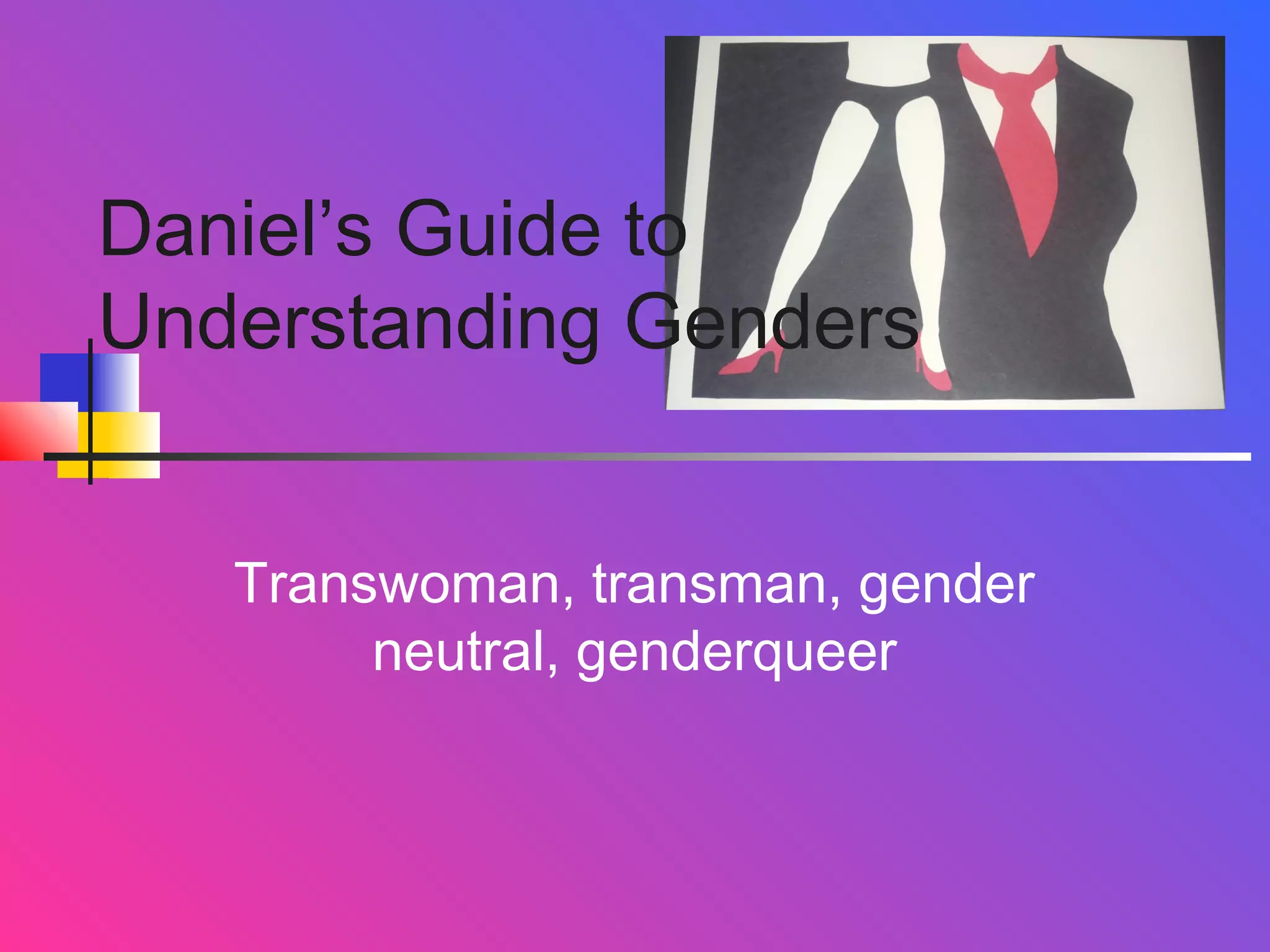
Daniel’s Guide to
Understanding Genders
Transwoman, transman, gender
neutral, genderqueer
Contents










What is gender expression
Proper terms
Different genders
Social interactions
Different Orientations
Gender vs orientation
Process
Tips
Conclusion
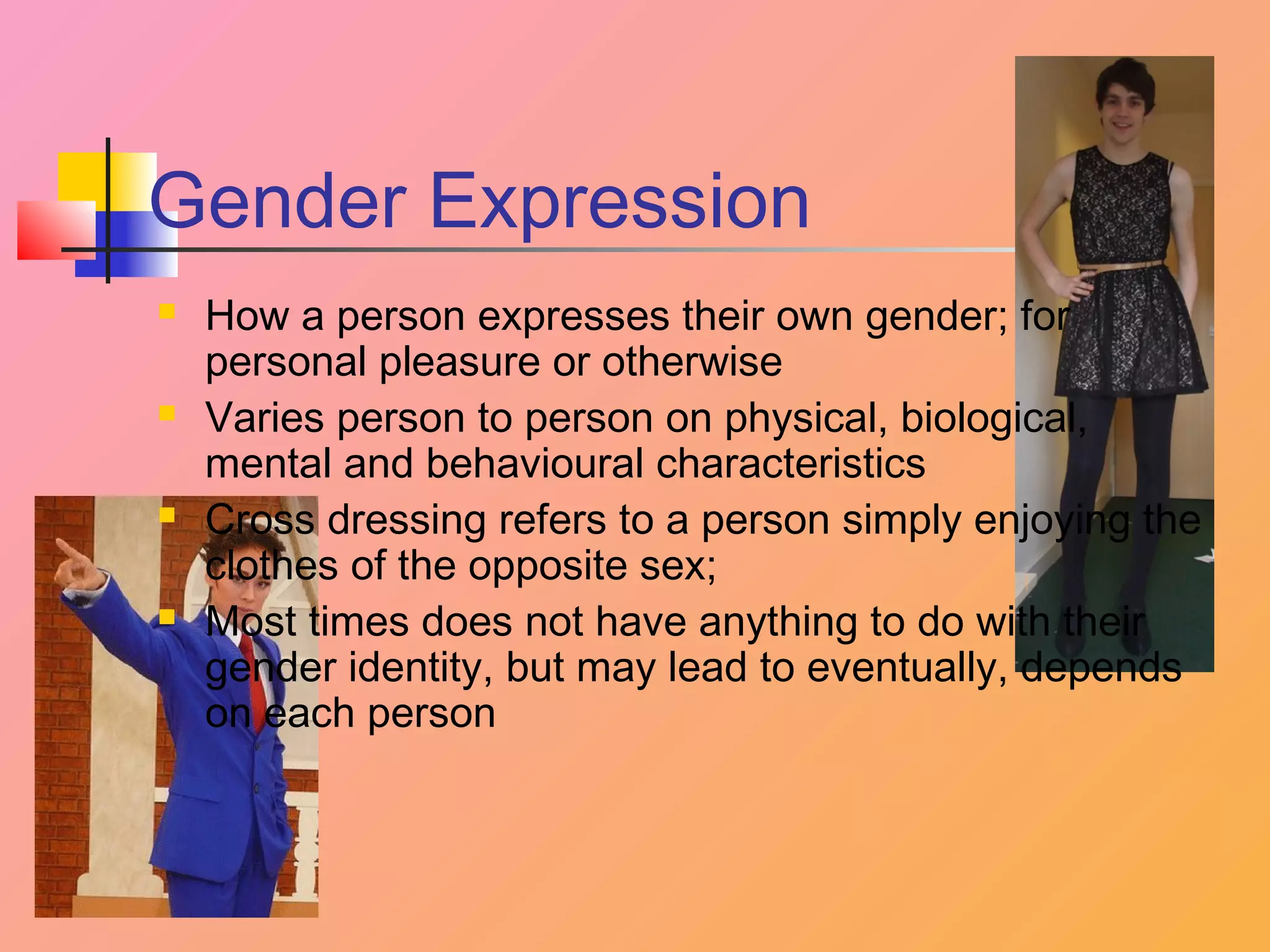
Gender Expression








How a person expresses their own gender; for
personal pleasure or otherwise
Varies person to person on physical, biological,
mental and behavioural characteristics
Cross dressing refers to a person simply enjoying the
clothes of the opposite sex;
Most times does not have anything to do with their
gender identity, but may lead to eventually, depends
on each person
Gender Expression
(Continued)




Some transmen or transwoman might
still enjoy some things of their born
genders
These are preferences, such as a
transman enjoying nail polish or a
transwoman enjoying carpentry; things
that would usually be assigned to their
born genders
Terms







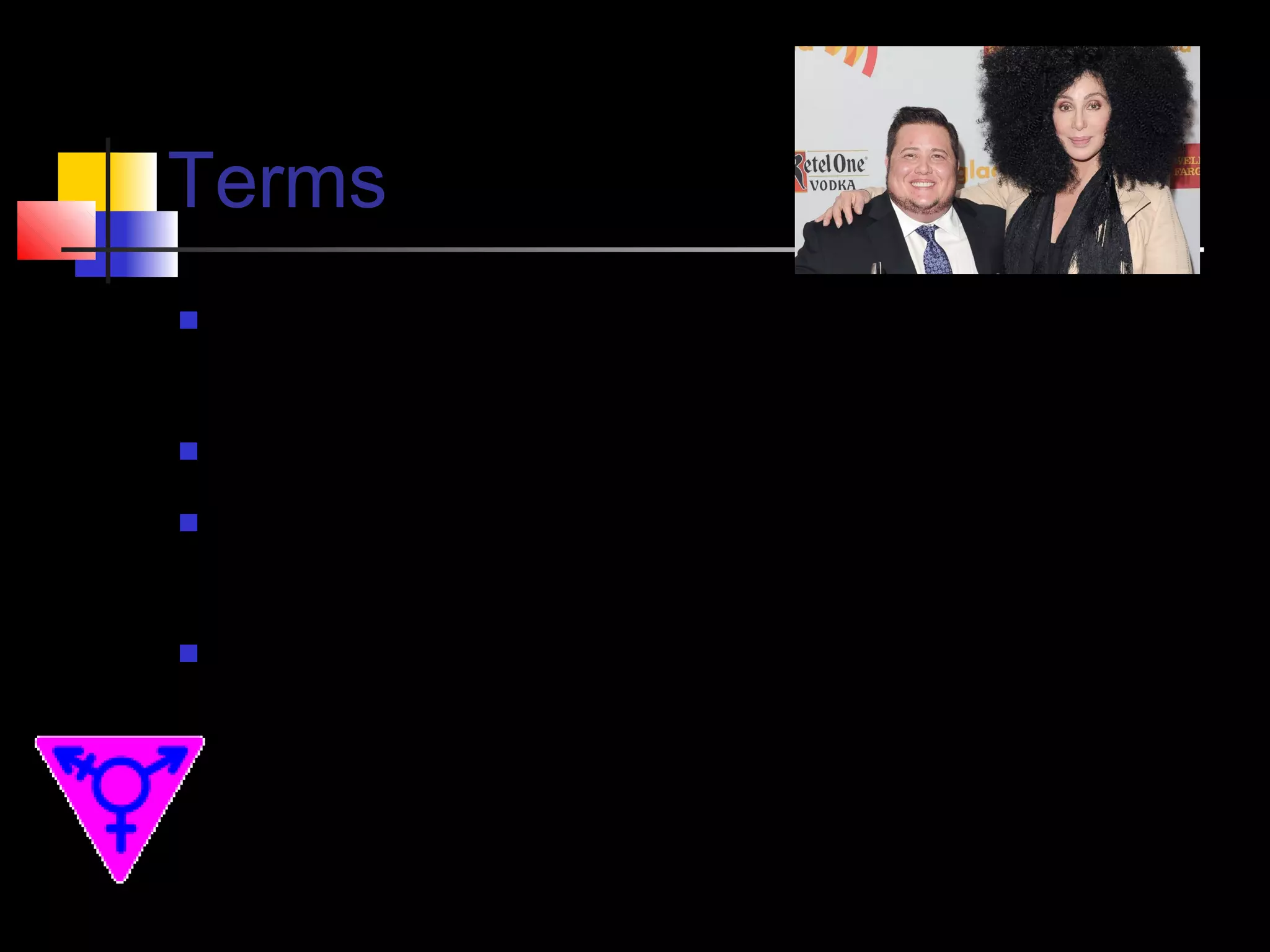
Transman: Female to male transsexual or
transgender.
Transwoman: Male to female
Transsexual: A person who wants to
physically and socially change their gender
Transgender: A person who wants to appear
the opposite gender, but might not pursue
surgeries
Terms (Continued)






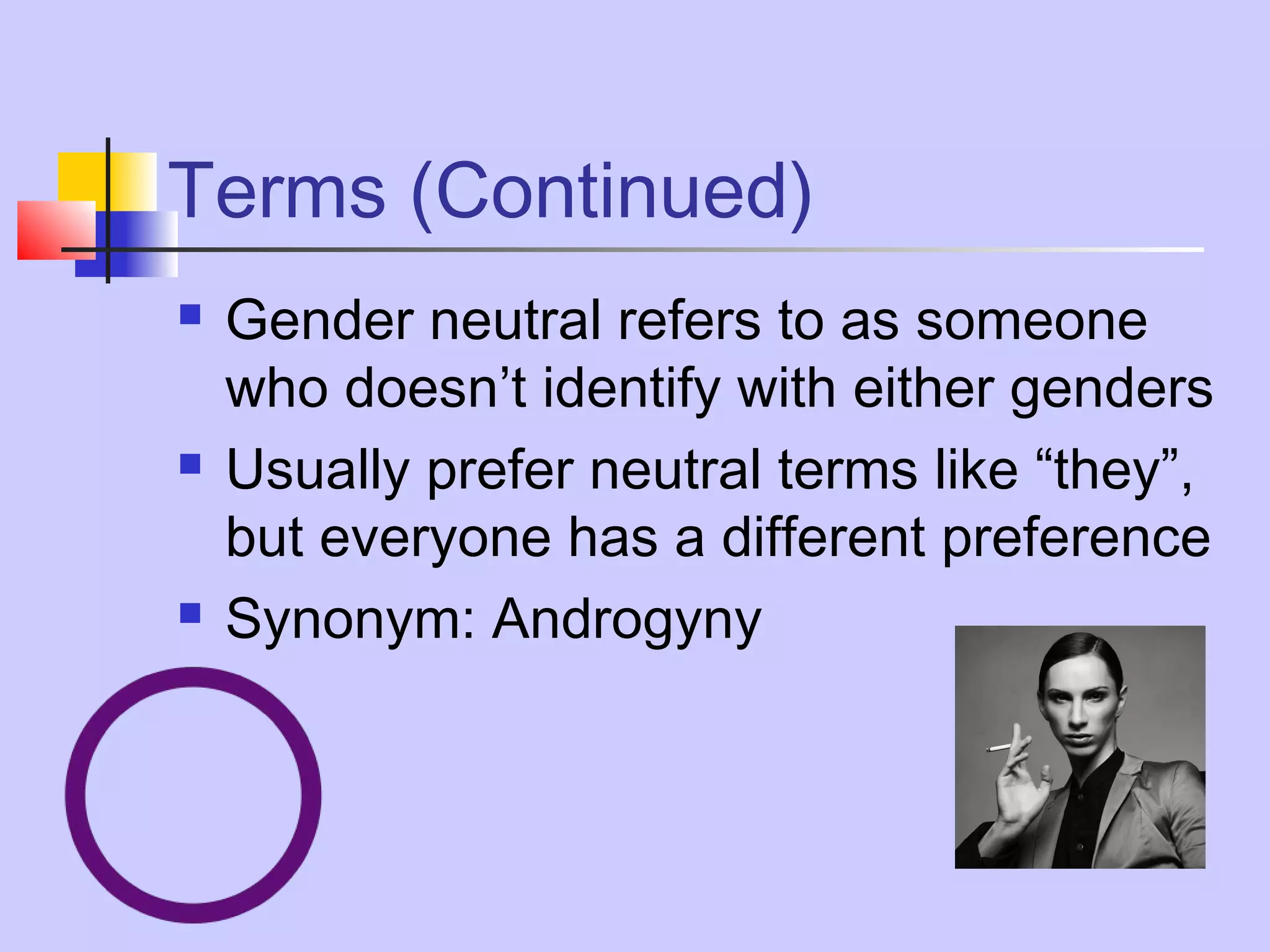
Gender neutral refers to as someone
who doesn’t identify with either genders
Usually prefer neutral terms like “they”,
but everyone has a different preference
Synonym: Androgyny
Genderqueer










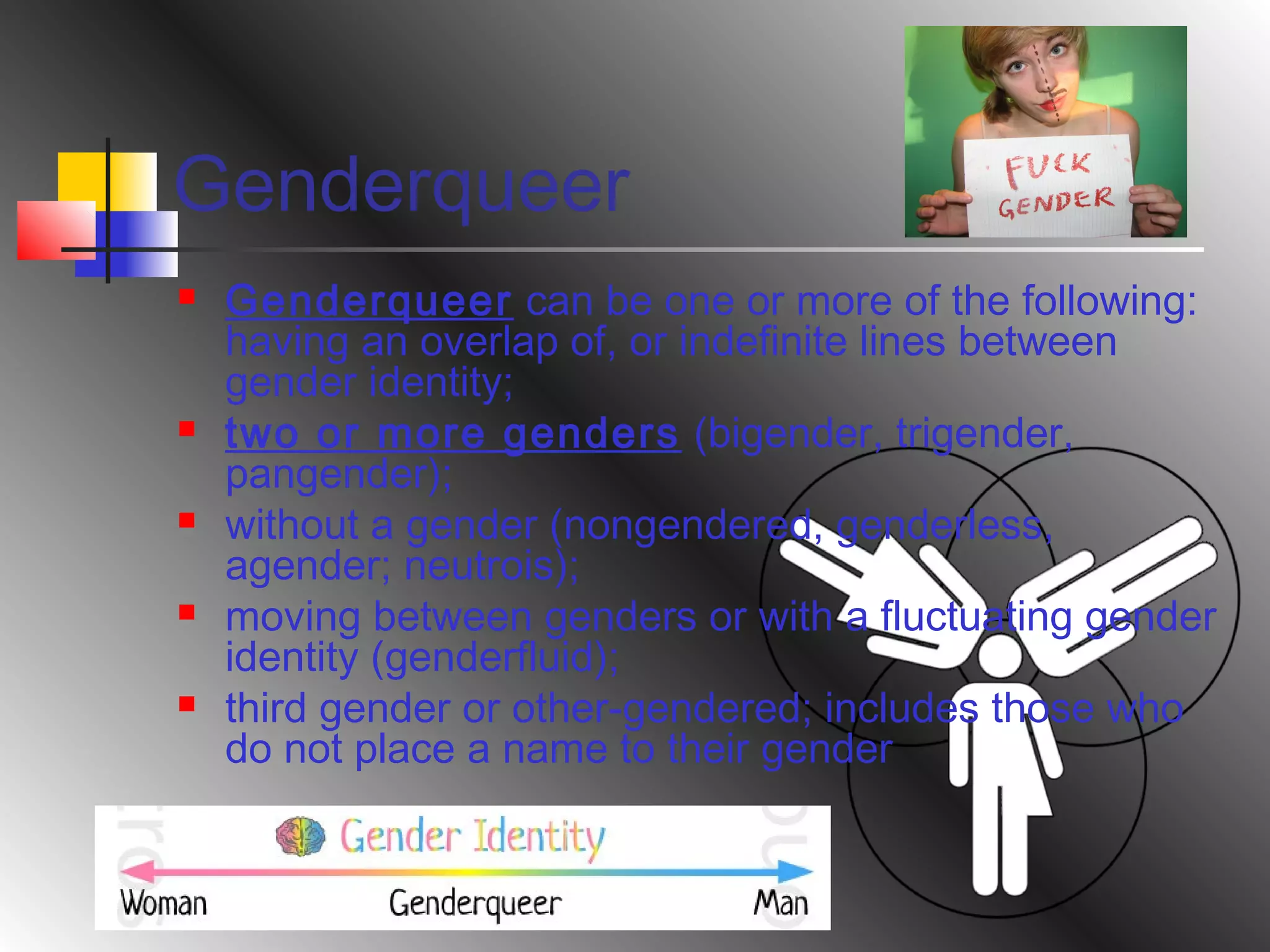
Genderqueer can be one or more of the following:
having an overlap of, or indefinite lines between
gender identity;
two or more genders (bigender, trigender,
pangender);
without a gender (nongendered, genderless,
agender; neutrois);
moving between genders or with a fluctuating gender
identity (genderfluid);
third gender or other-gendered; includes those who
do not place a name to their gender
How to Interact


Important to remember: We are people, just like you and me.
We eat, sleep, have hobbies, date.

Proper responses to someone coming out as
trans include:




“Good for you! How far along are you in the
process?”
“Which gender would you prefer I refer to you as?”

Examples of bad responses:



“So.. What do you have down there?”
“Are you sure you’re not just gay?”
Orientations







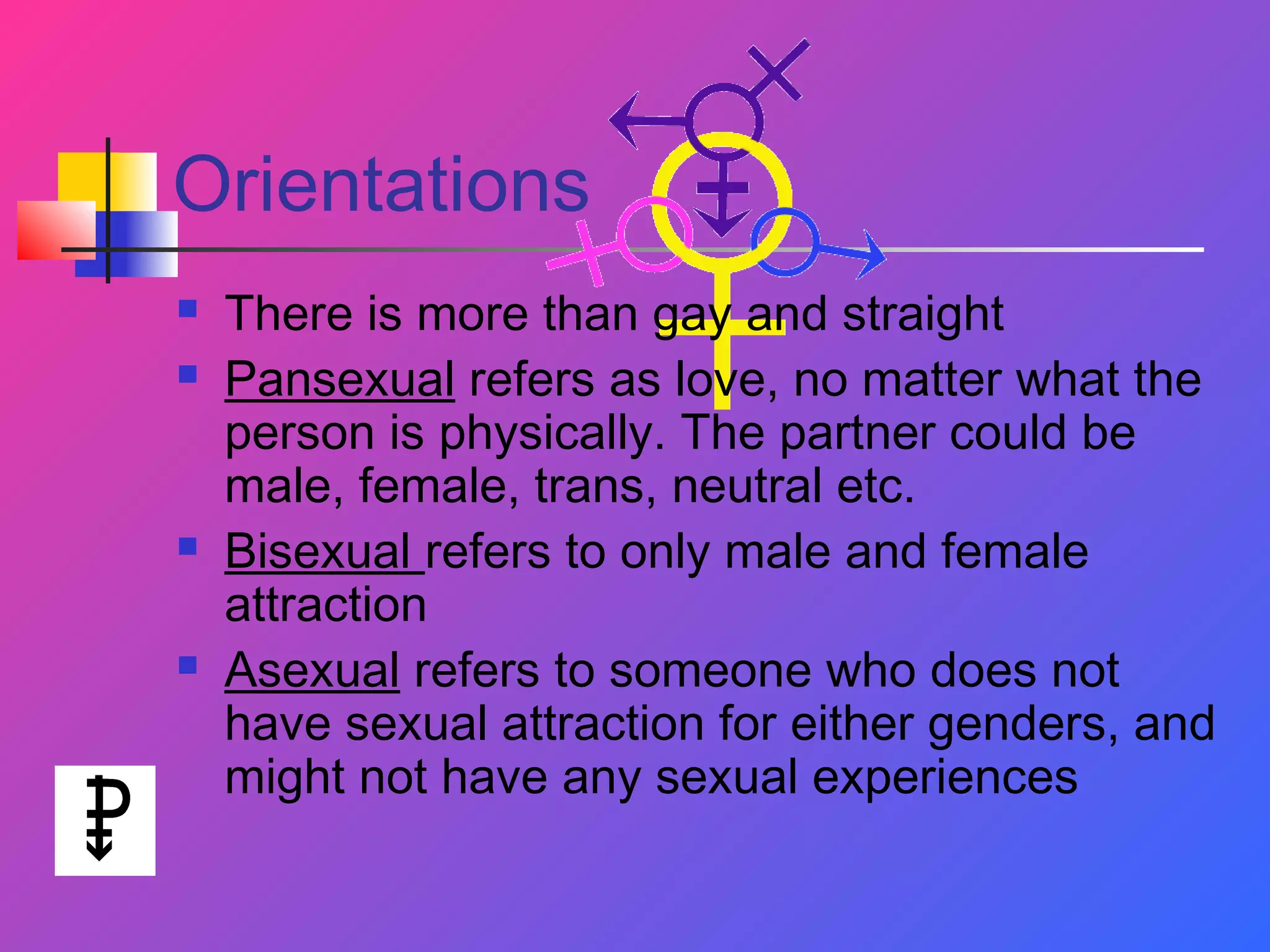
There is more than gay and straight
Pansexual refers as love, no matter what the
person is physically. The partner could be
male, female, trans, neutral etc.
Bisexual refers to only male and female
attraction
Asexual refers to someone who does not
have sexual attraction for either genders, and
might not have any sexual experiences
Gender VS Orientation






Contrary to popular belief, these two
words are unrelated
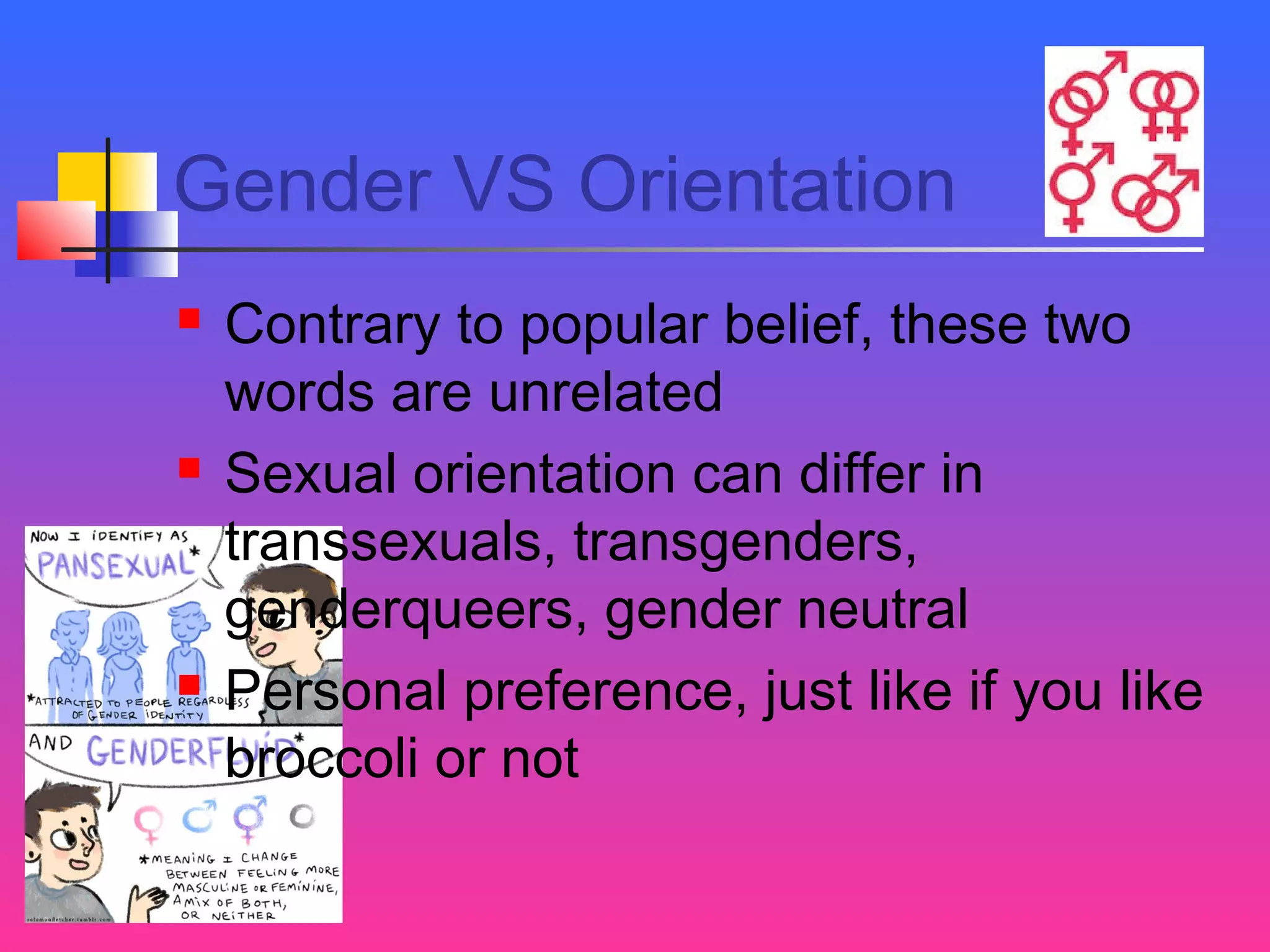
Sexual orientation can differ in
transsexuals, transgenders,
genderqueers, gender neutral
Personal preference, just like if you like
broccoli or not
Process
Basic transsexuals have these steps:
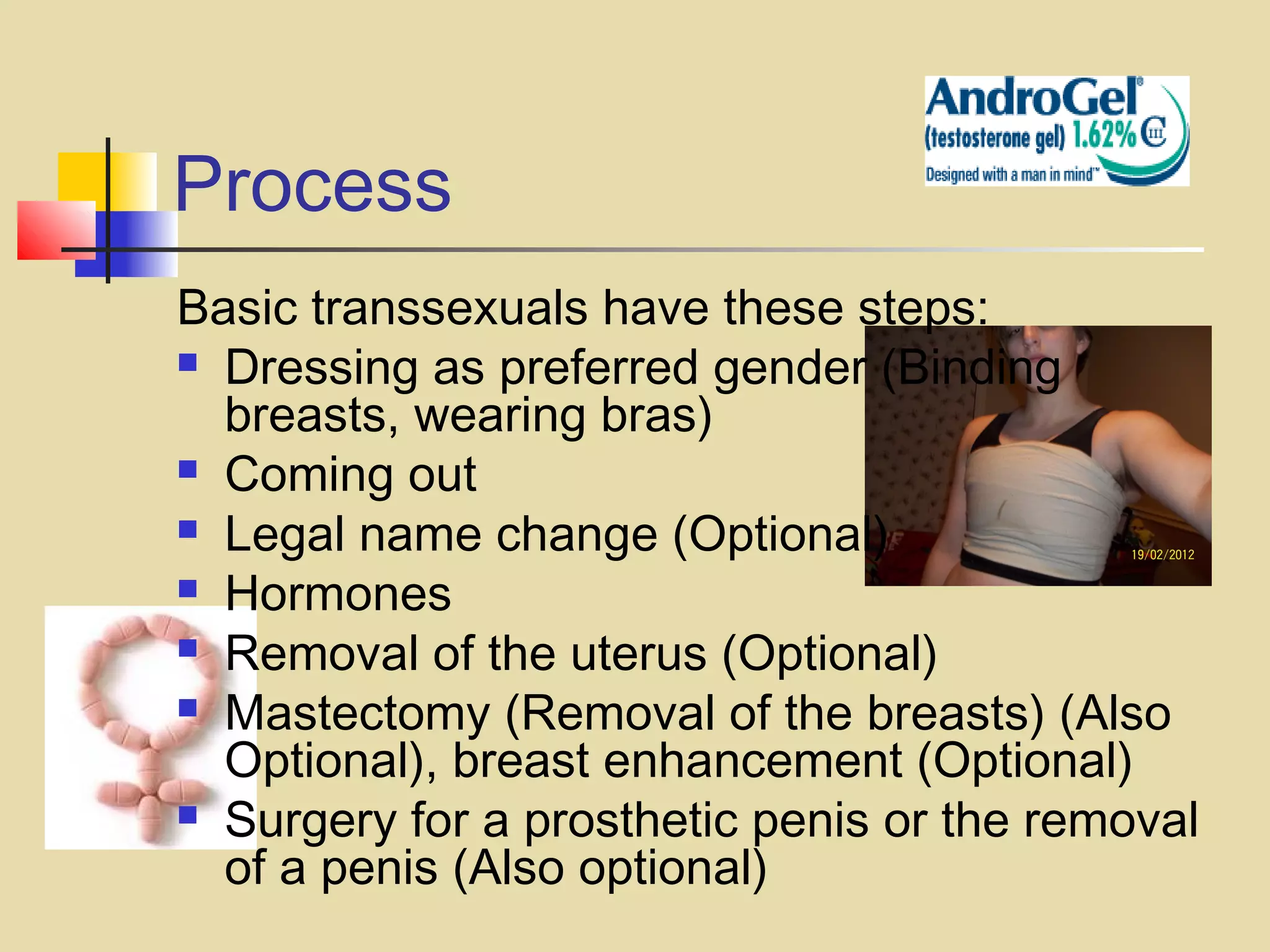
 Dressing as preferred gender (Binding
breasts, wearing bras)
 Coming out
 Legal name change (Optional)
 Hormones
 Removal of the uterus (Optional)
 Mastectomy (Removal of the breasts) (Also
Optional), breast enhancement (Optional)
 Surgery for a prosthetic penis or the removal
of a penis (Also optional)
Process (Continued)









The steps may not be in the same order
Some steps might not get fully finished
Some additional steps might be inserted
Transgenders, gender neutrals, genderqueer
might never start hormones or get surgeries
Some trans might extract eggs or freeze
sperm in order to have genetic children
There is adoption, surrogacy or even carry
children themselves (Only applicable to
transmen, although the case is unlikely)
Tips




Coming from a transsexual, small things
like “sir” or “ma’am” can make a big
difference, as long as you know the
gender they prefer
Other small items include compliments
based on gender; such as beautiful, or
handsome, again to the person’s
preferred gender
Tips (Continued)




The biggest rule of all when meeting
trans or someone with an alternate
gender: DO NOT ASSUME ANYTHING.
Every person is different, it is
impossible to know unless you ask
(respectfully)
Conclusion








In the end, transsexuals just want to be seen
as the gender they feel right as. There’s no
need to label them more than said gender.
For obvious reasons, avoid terms such as
“tranny”, anything that might be insulting
Always show your support to your loved one;
it takes great courage to come out
Getting a sex change is a lengthy process;
most times taking minimum of two years to
the maximum of a lifetime

Daniel’s guide to understanding genders

  • 1.
    Daniel’s Guide to UnderstandingGenders Transwoman, transman, gender neutral, genderqueer
  • 2.
    Contents          What is genderexpression Proper terms Different genders Social interactions Different Orientations Gender vs orientation Process Tips Conclusion
  • 3.
    Gender Expression     How aperson expresses their own gender; for personal pleasure or otherwise Varies person to person on physical, biological, mental and behavioural characteristics Cross dressing refers to a person simply enjoying the clothes of the opposite sex; Most times does not have anything to do with their gender identity, but may lead to eventually, depends on each person
  • 4.
    Gender Expression (Continued)   Some transmenor transwoman might still enjoy some things of their born genders These are preferences, such as a transman enjoying nail polish or a transwoman enjoying carpentry; things that would usually be assigned to their born genders
  • 5.
    Terms     Transman: Female tomale transsexual or transgender. Transwoman: Male to female Transsexual: A person who wants to physically and socially change their gender Transgender: A person who wants to appear the opposite gender, but might not pursue surgeries
  • 6.
    Terms (Continued)    Gender neutralrefers to as someone who doesn’t identify with either genders Usually prefer neutral terms like “they”, but everyone has a different preference Synonym: Androgyny
  • 7.
    Genderqueer      Genderqueer can beone or more of the following: having an overlap of, or indefinite lines between gender identity; two or more genders (bigender, trigender, pangender); without a gender (nongendered, genderless, agender; neutrois); moving between genders or with a fluctuating gender identity (genderfluid); third gender or other-gendered; includes those who do not place a name to their gender
  • 8.
    How to Interact  Importantto remember: We are people, just like you and me. We eat, sleep, have hobbies, date. Proper responses to someone coming out as trans include:   “Good for you! How far along are you in the process?” “Which gender would you prefer I refer to you as?” Examples of bad responses:   “So.. What do you have down there?” “Are you sure you’re not just gay?”
  • 9.
    Orientations     There is morethan gay and straight Pansexual refers as love, no matter what the person is physically. The partner could be male, female, trans, neutral etc. Bisexual refers to only male and female attraction Asexual refers to someone who does not have sexual attraction for either genders, and might not have any sexual experiences
  • 10.
    Gender VS Orientation    Contraryto popular belief, these two words are unrelated Sexual orientation can differ in transsexuals, transgenders, genderqueers, gender neutral Personal preference, just like if you like broccoli or not
  • 11.
    Process Basic transsexuals havethese steps:  Dressing as preferred gender (Binding breasts, wearing bras)  Coming out  Legal name change (Optional)  Hormones  Removal of the uterus (Optional)  Mastectomy (Removal of the breasts) (Also Optional), breast enhancement (Optional)  Surgery for a prosthetic penis or the removal of a penis (Also optional)
  • 12.
    Process (Continued)       The stepsmay not be in the same order Some steps might not get fully finished Some additional steps might be inserted Transgenders, gender neutrals, genderqueer might never start hormones or get surgeries Some trans might extract eggs or freeze sperm in order to have genetic children There is adoption, surrogacy or even carry children themselves (Only applicable to transmen, although the case is unlikely)
  • 13.
    Tips   Coming from atranssexual, small things like “sir” or “ma’am” can make a big difference, as long as you know the gender they prefer Other small items include compliments based on gender; such as beautiful, or handsome, again to the person’s preferred gender
  • 14.
    Tips (Continued)   The biggestrule of all when meeting trans or someone with an alternate gender: DO NOT ASSUME ANYTHING. Every person is different, it is impossible to know unless you ask (respectfully)
  • 15.
    Conclusion     In the end,transsexuals just want to be seen as the gender they feel right as. There’s no need to label them more than said gender. For obvious reasons, avoid terms such as “tranny”, anything that might be insulting Always show your support to your loved one; it takes great courage to come out Getting a sex change is a lengthy process; most times taking minimum of two years to the maximum of a lifetime