Prepared by
Rashna Maharjan
Riju Maharjan
Nishu Bhagat
Date
18th may2018

 Introduction
 Problem statement
 Objectives on proposed system
 Literature Review
 Requirement Analysis
 Feasibility Analysis
 Work Schedule
 System Design
 System Implementation
 Expected Outcome
 Market Scope
 Conclusion
6/28/2019 2
Content

 A refined system to efficiently manage his/her expenses with ease;
 Tracking expenses daily can really help to us save lot of money;
 Stay in control and achieve your goal;
 Able to generate your expense and saving report as time duration you
selected;
 Get reminder if pre-defined expenses exceeded;
6/28/2019 3
Introduction

 At the end of the month we start to have money crisis;
 Lack of proper planning of our income
 Person has to keep a log in a diary or in a computer;
 All the calculations needs to be done by the user;
 Overload to rely on the daily entry of the expenditure.
6/28/2019 4
Problem statement

 To know where the money is going
 To spend only on priorities
 To save money for pre-defined expenses
 To plan on your future investments
6/28/2019 5
Objectives

6/28/2019 6
Literature review
 Quicken and Microsoft Money - desktop programs – 2000, 2008
 QuickBooks – wrap up whole business – 2008
 YNAB – import expenses automatically - 2013

6/28/2019 7
Requirement analysis
Functional Requirements
 Dashboard panel
 Add bill
 Expense tracker
 Expense planner
 Download pdf
Non functional Requirements
 Usability
 Reliability
 Supportability
 Performance
 Availability

6/28/2019 8
Feasibility Analysis
 Technical Feasibility
focuses on the technical resources available.
feasible with android version 4.0
 Operational Feasibility
user can track expenses and manage unnecessary expenses
 Economical Feasibility
involves the printing binding costs and effort and time of a team.

6/28/2019 9
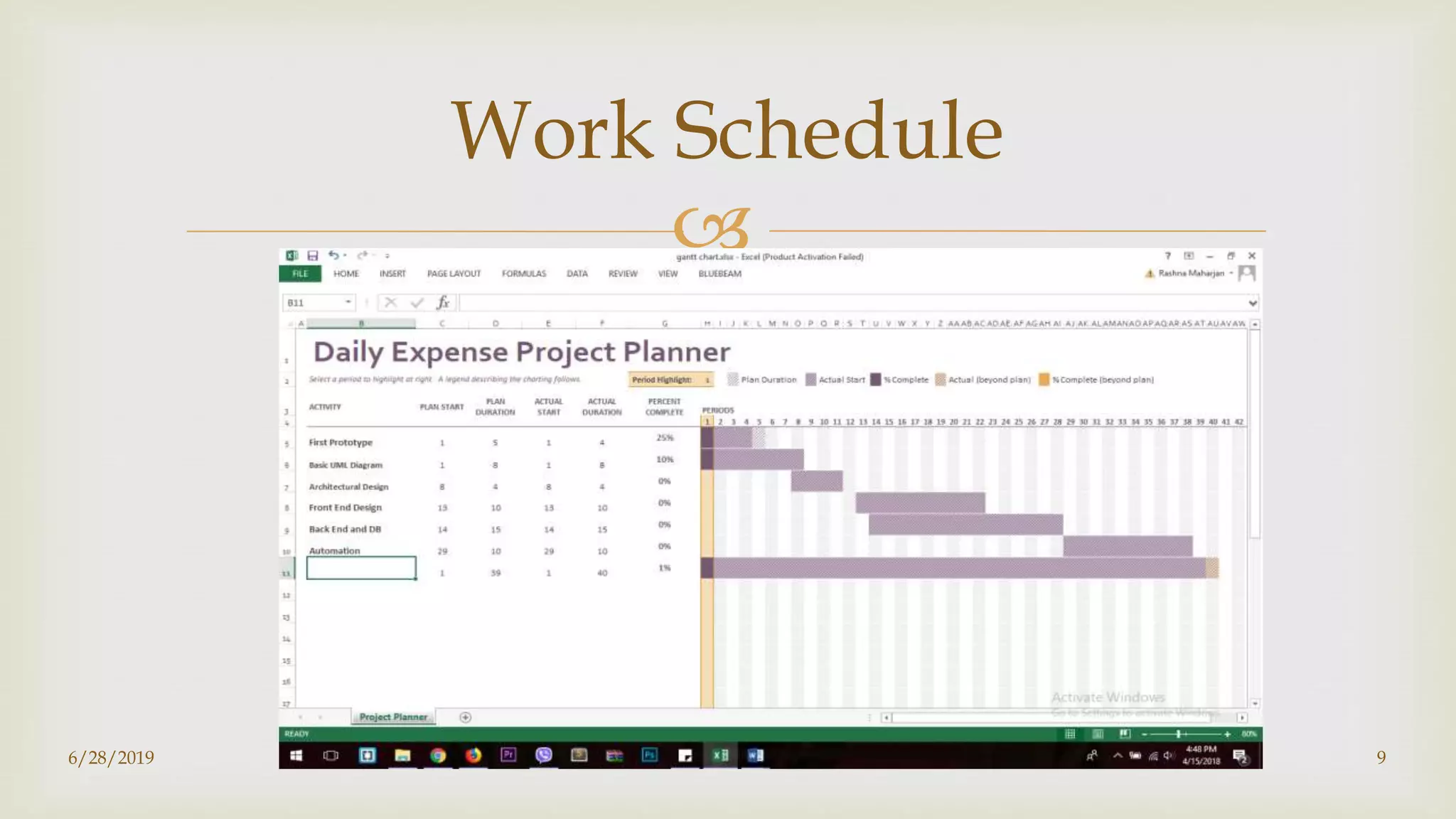
Work Schedule

6/28/2019 10
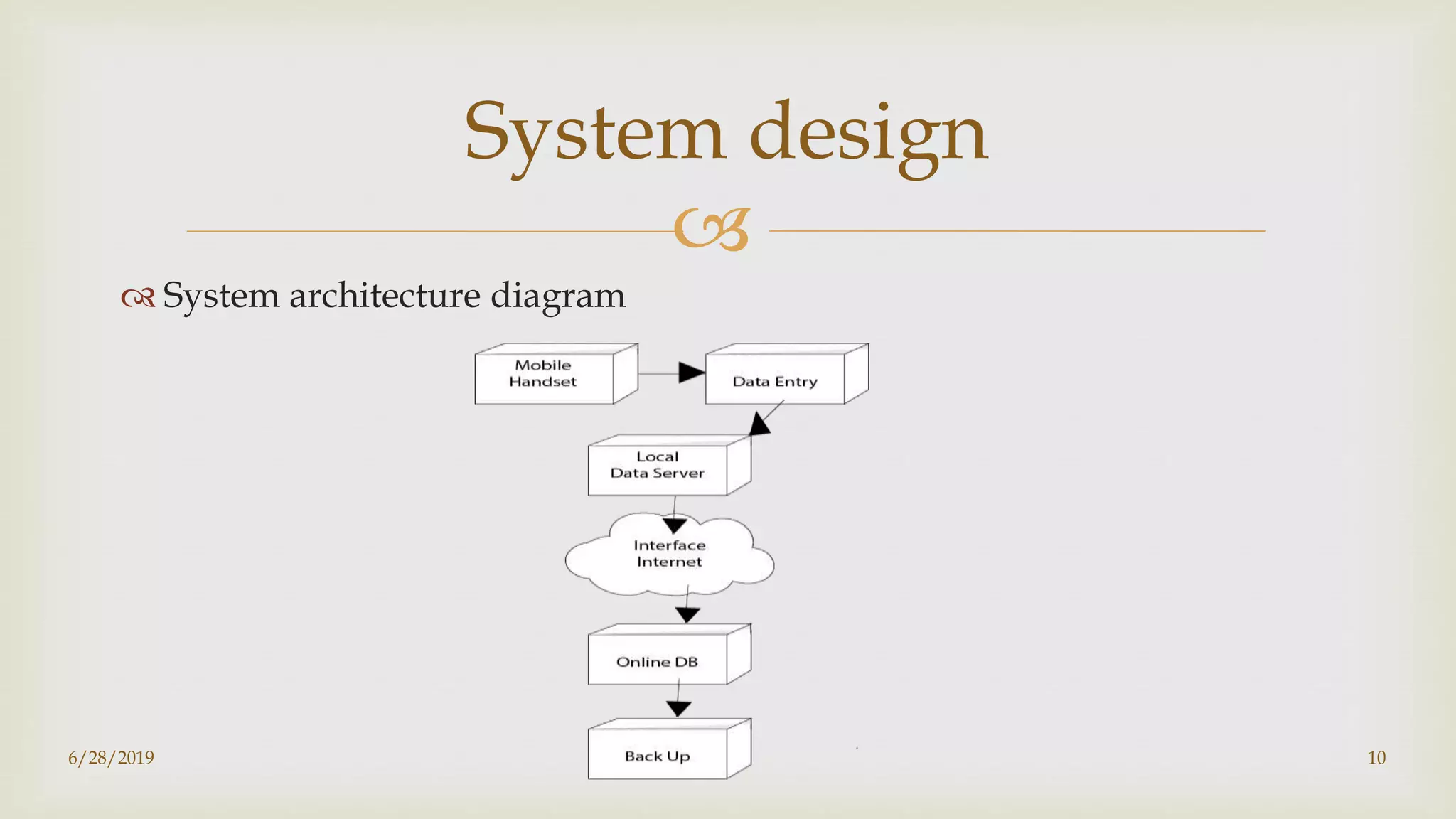
System design
 System architecture diagram

 Use case diagram
6/28/2019 11

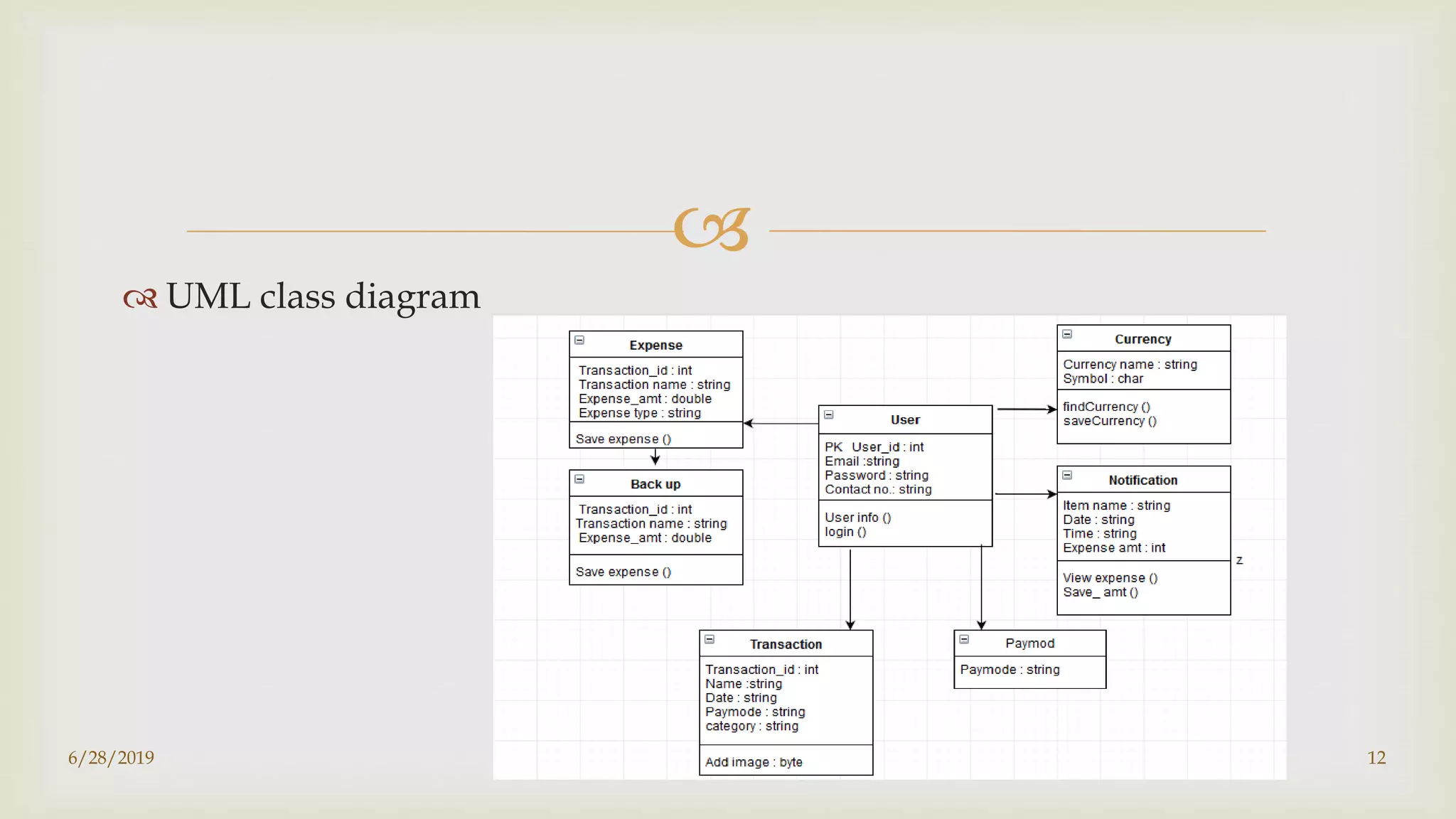
 UML class diagram
6/28/2019 12

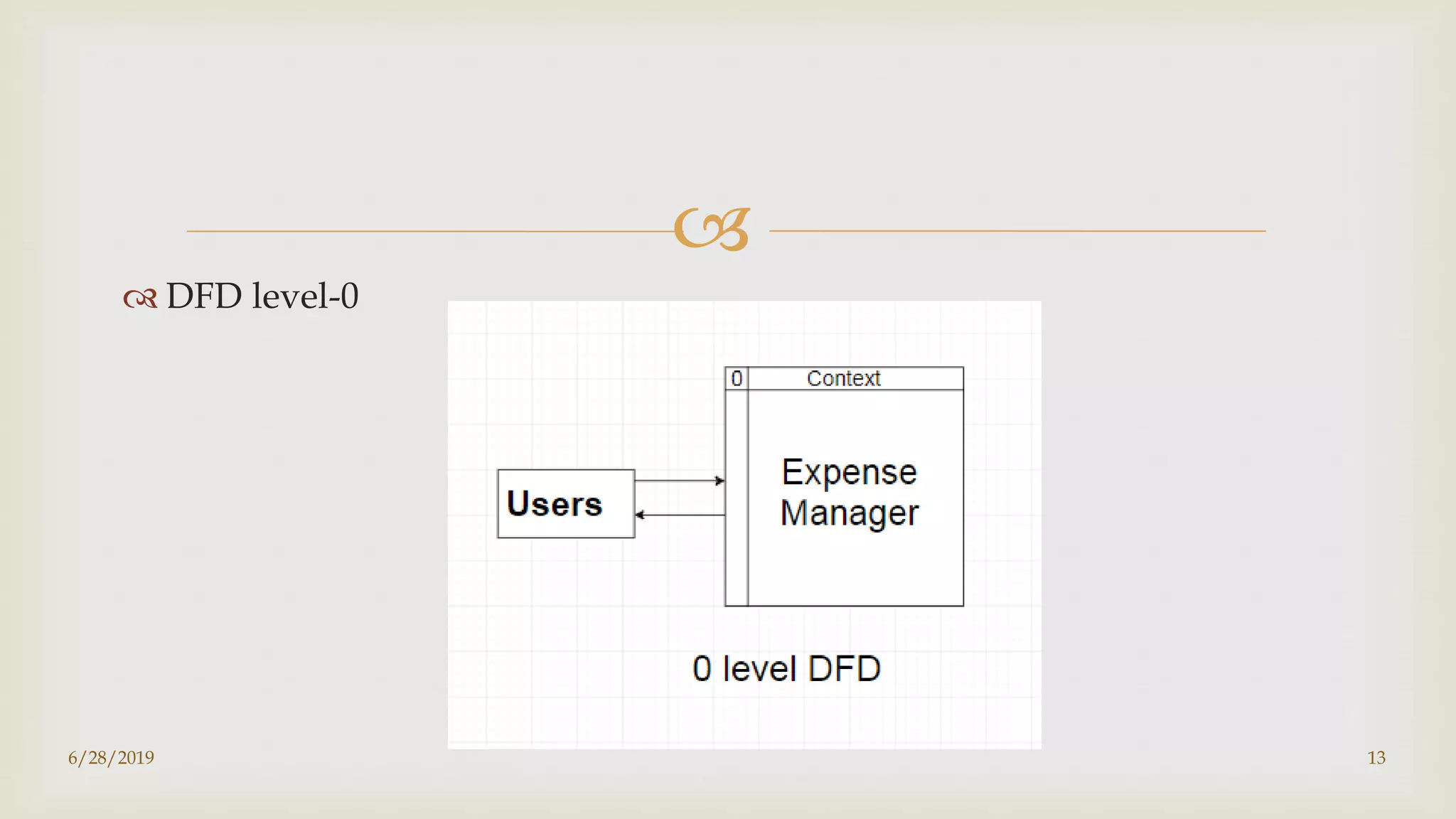
 DFD level-0
6/28/2019 13

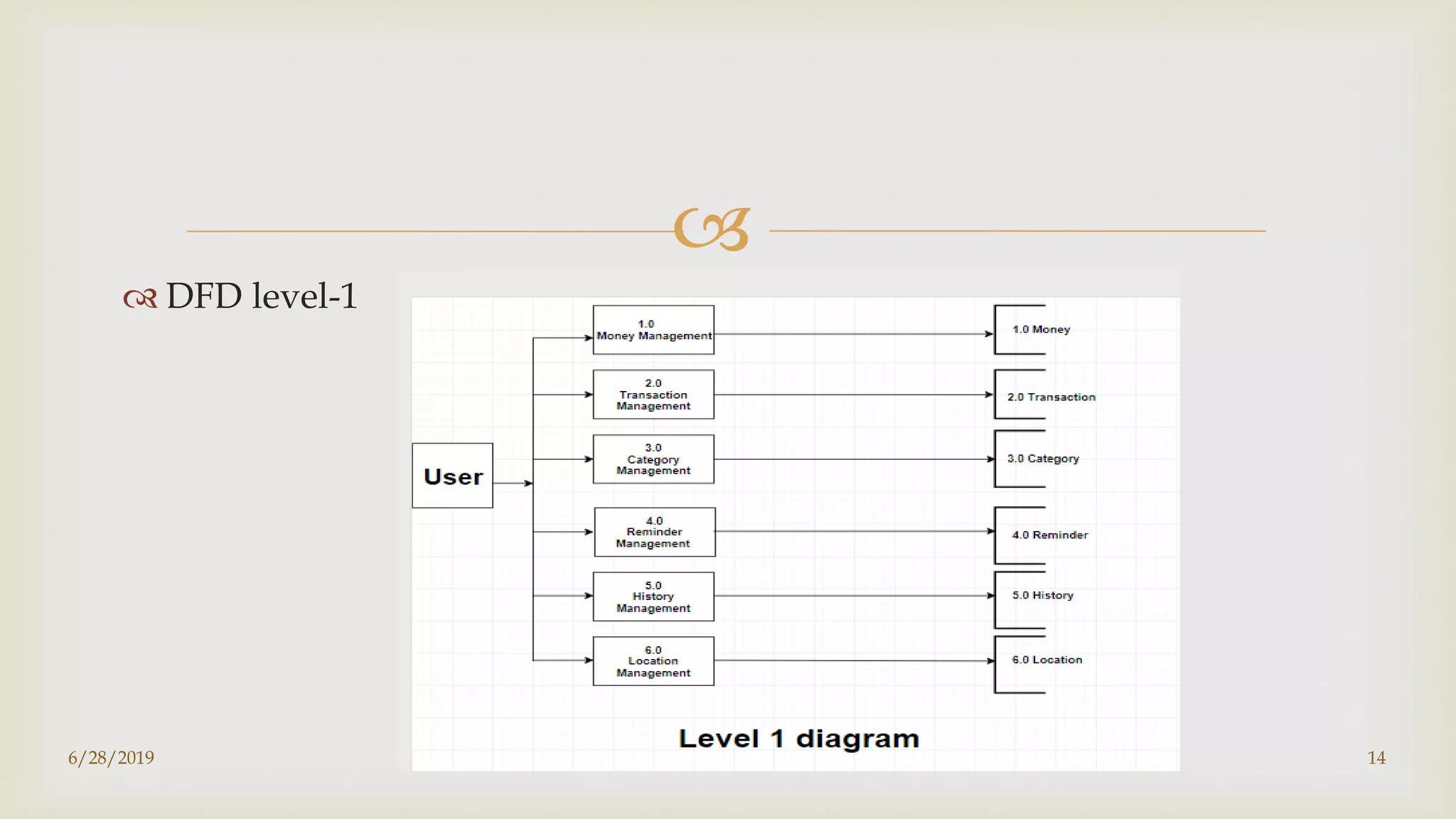
 DFD level-1
6/28/2019 14

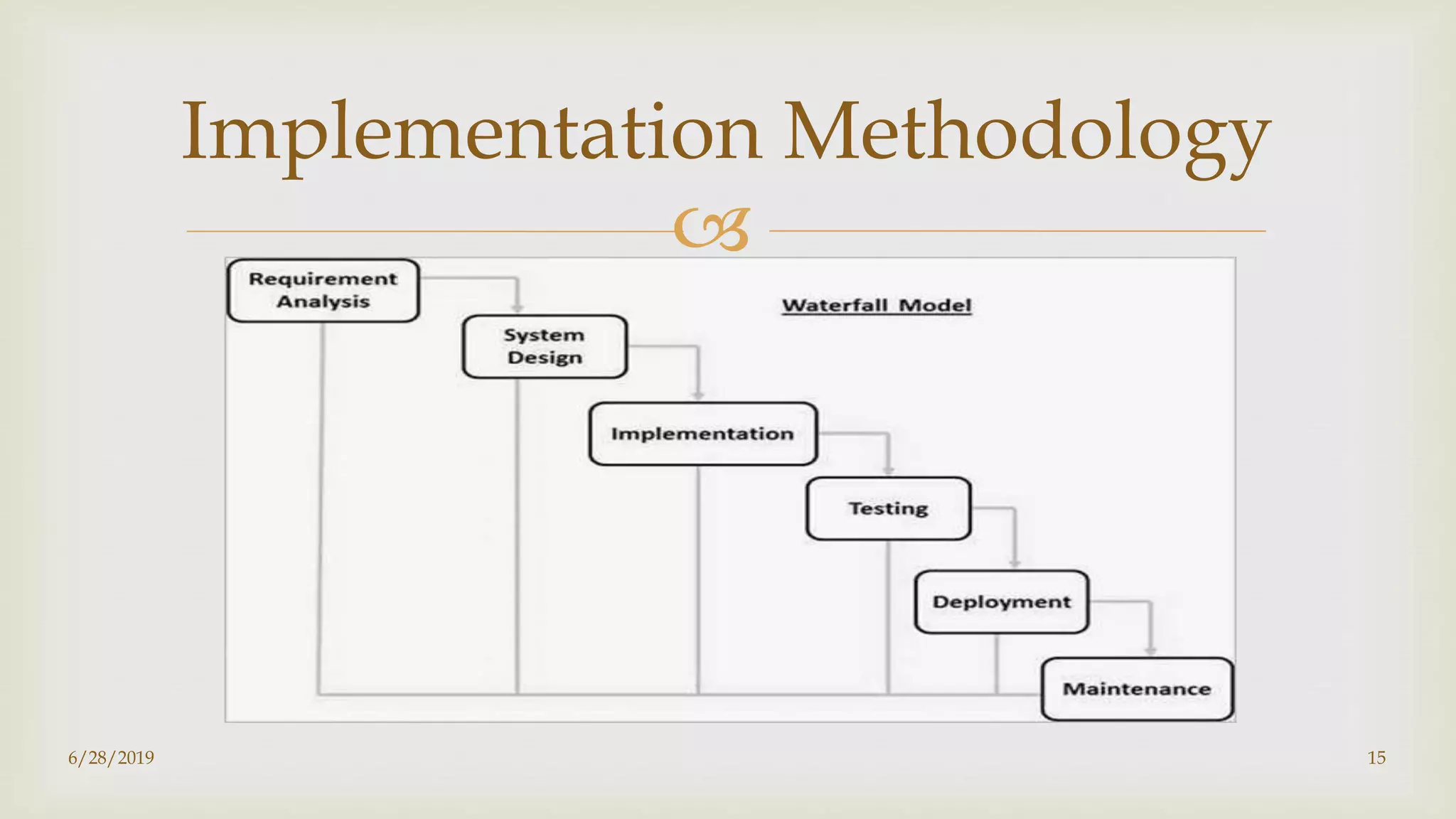
Implementation Methodology
6/28/2019 15

 The data in our application will be fed by the user as per their daily
expense.
 The expense paid by the credits cards and debit cards will be
automatically stored in the database of expenses.
6/28/2019 16
Data Collection Method

 Front end
xhtml: part of the family of xml markup languages
extended from the XML, HTML
 Back end
Java: programming language that is concurrent, class-based, object-
oriented
SQLite: relational database management system
embedded into the end of program
6/28/2019 17
Tools

 Users have control over their money
 Users will be aware about what is happening with their money
 Save funds for emergencies
 Aware about the financial condition
 No more stress about the finances
6/28/2019 18
Expected Outcome

 usable by anyone who are willing to manage their expenses
 and aiming to save for the future investments and many more.
 not any range criteria or any kind of profession or gender are focused it
will used hugely.
6/28/2019 19
Scope In Market

 We assure that this will help users to manage the cost of their daily
expense
 Helpful for the people who are frustrated with the daily budget
management
 Wish to manage money
 Preserve the record of their daily cost
 Overcome wastage of money
6/28/2019 20
Conclusion

 https://www.google.com.np/search?q=waterfall+model&rlz=1C1CHK
Z_enNP619NP619&source=lnms&tbm=isch&sa=X&ved=0ahUKEwiO0
uG69IzbAhUBP48KHVdtAQcQ_AUICigB&biw=1366&bih=662#imgrc=
Ms_i3RN3tl10OM:
6/28/2019 21
References
Daily Expense Tracker

Daily Expense Tracker

  • 1.
    Prepared by Rashna Maharjan RijuMaharjan Nishu Bhagat Date 18th may2018
  • 2.
      Introduction  Problemstatement  Objectives on proposed system  Literature Review  Requirement Analysis  Feasibility Analysis  Work Schedule  System Design  System Implementation  Expected Outcome  Market Scope  Conclusion 6/28/2019 2 Content
  • 3.
      A refinedsystem to efficiently manage his/her expenses with ease;  Tracking expenses daily can really help to us save lot of money;  Stay in control and achieve your goal;  Able to generate your expense and saving report as time duration you selected;  Get reminder if pre-defined expenses exceeded; 6/28/2019 3 Introduction
  • 4.
      At theend of the month we start to have money crisis;  Lack of proper planning of our income  Person has to keep a log in a diary or in a computer;  All the calculations needs to be done by the user;  Overload to rely on the daily entry of the expenditure. 6/28/2019 4 Problem statement
  • 5.
      To knowwhere the money is going  To spend only on priorities  To save money for pre-defined expenses  To plan on your future investments 6/28/2019 5 Objectives
  • 6.
     6/28/2019 6 Literature review Quicken and Microsoft Money - desktop programs – 2000, 2008  QuickBooks – wrap up whole business – 2008  YNAB – import expenses automatically - 2013
  • 7.
     6/28/2019 7 Requirement analysis FunctionalRequirements  Dashboard panel  Add bill  Expense tracker  Expense planner  Download pdf Non functional Requirements  Usability  Reliability  Supportability  Performance  Availability
  • 8.
     6/28/2019 8 Feasibility Analysis Technical Feasibility focuses on the technical resources available. feasible with android version 4.0  Operational Feasibility user can track expenses and manage unnecessary expenses  Economical Feasibility involves the printing binding costs and effort and time of a team.
  • 9.
  • 10.
     6/28/2019 10 System design System architecture diagram
  • 11.
      Use casediagram 6/28/2019 11
  • 12.
      UML classdiagram 6/28/2019 12
  • 13.
  • 14.
  • 15.
  • 16.
      The datain our application will be fed by the user as per their daily expense.  The expense paid by the credits cards and debit cards will be automatically stored in the database of expenses. 6/28/2019 16 Data Collection Method
  • 17.
      Front end xhtml:part of the family of xml markup languages extended from the XML, HTML  Back end Java: programming language that is concurrent, class-based, object- oriented SQLite: relational database management system embedded into the end of program 6/28/2019 17 Tools
  • 18.
      Users havecontrol over their money  Users will be aware about what is happening with their money  Save funds for emergencies  Aware about the financial condition  No more stress about the finances 6/28/2019 18 Expected Outcome
  • 19.
      usable byanyone who are willing to manage their expenses  and aiming to save for the future investments and many more.  not any range criteria or any kind of profession or gender are focused it will used hugely. 6/28/2019 19 Scope In Market
  • 20.
      We assurethat this will help users to manage the cost of their daily expense  Helpful for the people who are frustrated with the daily budget management  Wish to manage money  Preserve the record of their daily cost  Overcome wastage of money 6/28/2019 20 Conclusion
  • 21.