Sustainable Food Systems and
Global Education:
Priorities for Cyprus teachers in
addressing global food issues at school &
pilot application of Global Learning Units
Milano, 17 October 2015
Presentation by:
Dimitra Chatzistavrou-Chrysostomou
INTERNATIONAL EXCHANGE WORKSHOP
FOR TEACHERS
INTERNATIONAL EXCHANGE WORKSHOP
FOR TEACHERS
CONTRIBUTIONS
2
 Andreou Giorgoula
Makedonitissa 2nd
Elementary School
 Chatzistavrou-Chrysostomou Dimitra
Agios Athanasios 2nd
Elementary School
 Constantinou-Shiambi Praxoula
Makedonitissa 1st
Elementary School
 Economidou Olga
Linopetra Elementary School
 Papaevripides Nicolaos
Agios Ioannis of Nicosia Elementary School
Overview
3
 Educational priorities on global food issues at
school
 Actions & Certain activities (a selection)
 Main Challenges
 Pilot Application of a Learning Unit
EDUCATIONAL PRIORITIES
4
 Creation of school gardens:
from planting to consuming vegetables
1. Take care of myself, the others, the environment: realise the
close relation between humans and nature
Makedonitissa 2nd
Elementary School (Class: 3B)
EDUCATIONAL PRIORITIES
5
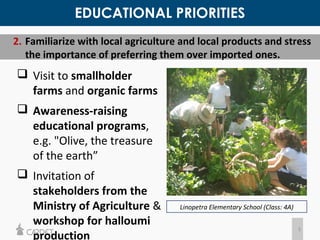
 Visit to smallholder
farms and organic farms
 Awareness-raising
educational programs,
e.g. "Olive, the treasure
of the earth”
 Invitation of
stakeholders from the
Ministry of Agriculture &
workshop for halloumi
production
2. Familiarize with local agriculture and local products and stress
the importance of preferring them over imported ones.
Linopetra Elementary School (Class: 4A)
EDUCATIONAL PRIORITIES
6
 Fruit time: Daily fruit
consumption by
students and teachers
 Healthy Breakfast Day:
consumption of healthy
local products from the
school garden
3. Rational consumption and healthy eating habits
Makedonitissa 1st
Elementary School (Class: 6B)
EDUCATIONAL PRIORITIES
7
 Targeted lessons in curricula,
e.g. Life Education
 Green Day or Action Day:
events, interactive
presentations and activities, in
some cases with the active
involvement of the parents’
associations
 Local initiatives in cooperation
with the municipalities
4. Foster knowledge in sustainable development, agriculture,
alternative food systems and global development.
EDUCATIONAL PRIORITIES
8
 Initiative against food waste:
Weight of food in rubbish bins
& measures to reduce it
 Waste management programs,
e.g. paper, cooking oil, printer
inks, batteries
 Organic composting bins: the
fertilizer to be used for the
school garden (extension of
initiative at community level)
4. Cultivate attitudes to reduce food waste
Agios Athanasios 2nd
Elementary School
EDUCATIONAL PRIORITIES
9
 Bring students in
contact with people
exercising
agriculture-related
professions
4. Reverse the negative perception of children regarding the
agriculture and farming professions
Agios Ioannis of Nicosia Elementary School
MAIN CHALLENGES
10
 Involve students in sustainable
development discussion
 Engage in issues such as food
security, smallholder agriculture,
rational consumption and change attitudes
 Realize the interconnections and relevance to the
well-being of societies at local and global level.
 Limited time and learning units as part of curricula
EXAMPLE OF A LEARNING UNIT
11
 Subject:
Introduction to food
 School:
Agios Athanasios 2nd
Elementary School
 Class: 6th
grade
(11-12 years old)
EXAMPLE OF A LEARNING UNIT
12
 Objectives of Learning Unit:
 Define what is food and provide examples
 Indicate the key elements needed for the animals and
plants to survive and grow
 Explain the role of smallholder farming in food production
as a key factor to sustainable development
 Identify the importance of various substances used aimed
at increasing the production in agriculture and livestock
farming and assess the effects on human health and the
environment.
EXAMPLE OF A LEARNING UNIT
13
 Learning Unit with
teaching material &
student worksheets
 PowerPoint
Presentation
 Video
EXAMPLE OF A LEARNING UNIT
14
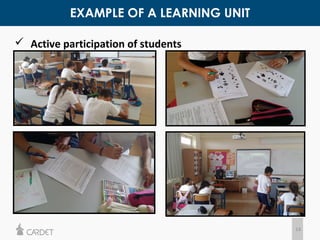
 Active participation of students
15
Thank you for your attention!

Cypriot teachers presentation

  • 1.
    Sustainable Food Systemsand Global Education: Priorities for Cyprus teachers in addressing global food issues at school & pilot application of Global Learning Units Milano, 17 October 2015 Presentation by: Dimitra Chatzistavrou-Chrysostomou INTERNATIONAL EXCHANGE WORKSHOP FOR TEACHERS INTERNATIONAL EXCHANGE WORKSHOP FOR TEACHERS
  • 2.
    CONTRIBUTIONS 2  Andreou Giorgoula Makedonitissa2nd Elementary School  Chatzistavrou-Chrysostomou Dimitra Agios Athanasios 2nd Elementary School  Constantinou-Shiambi Praxoula Makedonitissa 1st Elementary School  Economidou Olga Linopetra Elementary School  Papaevripides Nicolaos Agios Ioannis of Nicosia Elementary School
  • 3.
    Overview 3  Educational prioritieson global food issues at school  Actions & Certain activities (a selection)  Main Challenges  Pilot Application of a Learning Unit
  • 4.
    EDUCATIONAL PRIORITIES 4  Creationof school gardens: from planting to consuming vegetables 1. Take care of myself, the others, the environment: realise the close relation between humans and nature Makedonitissa 2nd Elementary School (Class: 3B)
  • 5.
    EDUCATIONAL PRIORITIES 5  Visitto smallholder farms and organic farms  Awareness-raising educational programs, e.g. "Olive, the treasure of the earth”  Invitation of stakeholders from the Ministry of Agriculture & workshop for halloumi production 2. Familiarize with local agriculture and local products and stress the importance of preferring them over imported ones. Linopetra Elementary School (Class: 4A)
  • 6.
    EDUCATIONAL PRIORITIES 6  Fruittime: Daily fruit consumption by students and teachers  Healthy Breakfast Day: consumption of healthy local products from the school garden 3. Rational consumption and healthy eating habits Makedonitissa 1st Elementary School (Class: 6B)
  • 7.
    EDUCATIONAL PRIORITIES 7  Targetedlessons in curricula, e.g. Life Education  Green Day or Action Day: events, interactive presentations and activities, in some cases with the active involvement of the parents’ associations  Local initiatives in cooperation with the municipalities 4. Foster knowledge in sustainable development, agriculture, alternative food systems and global development.
  • 8.
    EDUCATIONAL PRIORITIES 8  Initiativeagainst food waste: Weight of food in rubbish bins & measures to reduce it  Waste management programs, e.g. paper, cooking oil, printer inks, batteries  Organic composting bins: the fertilizer to be used for the school garden (extension of initiative at community level) 4. Cultivate attitudes to reduce food waste Agios Athanasios 2nd Elementary School
  • 9.
    EDUCATIONAL PRIORITIES 9  Bringstudents in contact with people exercising agriculture-related professions 4. Reverse the negative perception of children regarding the agriculture and farming professions Agios Ioannis of Nicosia Elementary School
  • 10.
    MAIN CHALLENGES 10  Involvestudents in sustainable development discussion  Engage in issues such as food security, smallholder agriculture, rational consumption and change attitudes  Realize the interconnections and relevance to the well-being of societies at local and global level.  Limited time and learning units as part of curricula
  • 11.
    EXAMPLE OF ALEARNING UNIT 11  Subject: Introduction to food  School: Agios Athanasios 2nd Elementary School  Class: 6th grade (11-12 years old)
  • 12.
    EXAMPLE OF ALEARNING UNIT 12  Objectives of Learning Unit:  Define what is food and provide examples  Indicate the key elements needed for the animals and plants to survive and grow  Explain the role of smallholder farming in food production as a key factor to sustainable development  Identify the importance of various substances used aimed at increasing the production in agriculture and livestock farming and assess the effects on human health and the environment.
  • 13.
    EXAMPLE OF ALEARNING UNIT 13  Learning Unit with teaching material & student worksheets  PowerPoint Presentation  Video
  • 14.
    EXAMPLE OF ALEARNING UNIT 14  Active participation of students
  • 15.
    15 Thank you foryour attention!