Cynda Tate and Ella Wilkie
Lester Spring Research Project
• There is an increasing amount of parental deployments in
  the United States.
• The absence of the father increases anxiety and
  depression in children.
• Children with deployed parents are often compared to
  those without, which is how most of the studies have
  been conducted.
• Parental deployments lead to a complete change in daily
  life, often times being a more troubling routine.
• It is often argued whether having deployed parents is a
  catastrophic event, but it is proven that children in the
  situation face unique challenges that others do not have
  to endure.
• Often times, families hear false information about injuries,
  leading to more stress and worry.
• These illnesses alter children’s daily lives, in many cases
  causing families schedules to be disrupted in many ways.
• Illnesses cause children to spend many hours at the
  hospital or even be in the care of another adult.
• Children have to be mentally strong to see their parent in
  such bad conditions.
• Depending on the age and maturity of the child, it is hard
  for them to understand the severity of the injury and the
  reason why it happened.
• The different types of sicknesses cause a lack of
  communication between parents and children, many times
  weakening their relationship.
• Clinicians have discovered that lack of appropriate information
  about the injury leads to unnecessary worry on the part of the
  children.
• Depression in the healthy parent could lead to a lack in
  parenting skills.
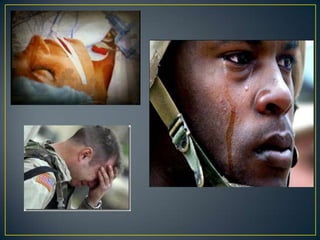
• Sometimes the injured parent’s sense of grief and loss
  interferes with the relationship between her and her children.
• The impact of PTSD on children is significant because of the
  difference in the parent’s actions and the way they treat their
  children.
• Children who are constantly worried about their parents
  dying are at a higher risk of developing psychiatric
  disorders or other behavioral or emotional problems.
• Advertisement of the media causes stress about the
  potential death of a child’s parents.
• In many cases, if death occurs, the surviving parent is too
  depressed to take care of the child.
• If a parent passes, many families who were living near
  the soldiers base may move back home away from a
  supportive military family. Often times the move back
  home leads to more depression in both the child and the
  surviving adult.
Cynda and Ella PowerPoint Presentation

Cynda and Ella PowerPoint Presentation

  • 1.
    Cynda Tate andElla Wilkie Lester Spring Research Project
  • 2.
    • There isan increasing amount of parental deployments in the United States. • The absence of the father increases anxiety and depression in children. • Children with deployed parents are often compared to those without, which is how most of the studies have been conducted. • Parental deployments lead to a complete change in daily life, often times being a more troubling routine. • It is often argued whether having deployed parents is a catastrophic event, but it is proven that children in the situation face unique challenges that others do not have to endure.
  • 4.
    • Often times,families hear false information about injuries, leading to more stress and worry. • These illnesses alter children’s daily lives, in many cases causing families schedules to be disrupted in many ways. • Illnesses cause children to spend many hours at the hospital or even be in the care of another adult. • Children have to be mentally strong to see their parent in such bad conditions. • Depending on the age and maturity of the child, it is hard for them to understand the severity of the injury and the reason why it happened.
  • 5.
    • The differenttypes of sicknesses cause a lack of communication between parents and children, many times weakening their relationship. • Clinicians have discovered that lack of appropriate information about the injury leads to unnecessary worry on the part of the children. • Depression in the healthy parent could lead to a lack in parenting skills. • Sometimes the injured parent’s sense of grief and loss interferes with the relationship between her and her children. • The impact of PTSD on children is significant because of the difference in the parent’s actions and the way they treat their children.
  • 7.
    • Children whoare constantly worried about their parents dying are at a higher risk of developing psychiatric disorders or other behavioral or emotional problems. • Advertisement of the media causes stress about the potential death of a child’s parents. • In many cases, if death occurs, the surviving parent is too depressed to take care of the child. • If a parent passes, many families who were living near the soldiers base may move back home away from a supportive military family. Often times the move back home leads to more depression in both the child and the surviving adult.