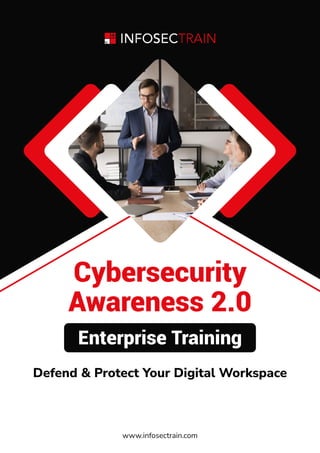
Cybersecurity
Awareness 2.0
Enterprise Training
Defend & Protect Your Digital Workspace
www.infosectrain.com
Program Highlights
In our hyper-connected digital world, cyber threats have become a daily reality.
InfosecTrain’s Cybersecurity Awareness Training 2.0 is designed to equip you
with the knowledge and skills to navigate the online landscape securely.
Whether you’re a professional, a student, or simply someone who wants to
safeguard your digital life, this program is your gateway to a safer online
experience.
www.infosectrain.com
Course Highlights
Scenario-Based
Learning
Extended Post
Training Support
16-Hour
of Instructor-led Training
Career Guidance and
Mentorship
Learn from Industry
Experts
In-depth
Case Studies
Highly Interactive and
Dynamic Sessions
Access to
Recorded Sessions
Comprehensive
Cybersecurity Curriculum
www.infosectrain.com
Target Audience
It is designed for everyone, from cybersecurity enthusiasts to
employees of all backgrounds, because everyone should be
cyber-aware, whether in IT or not.
Course Objectives
Pre-Requisites
No experience is required.
Grasp the importance of confidentiality, integrity, and availability.
Learn key terms such as threats, vulnerabilities, risks, and impacts.
Identify different types of cyber attacks: phishing, social engineering,
malware, and insider threats.
Adopt safe browsing habits and recognize suspicious websites.
Understand physical security measures like device locking and
application whitelisting.
Monitor credit reports and use security measures like credit freezing
Perform immediate steps to minimize damage from security breaches
Engage in hands-on simulations to contain data breaches and malware
infections.
Recognize AI-driven threats and deepfake technology risks
www.infosectrain.com
Course Curriculum
Understanding Cyber Attacks
Introduction to Information Security
What is Information Security?
Definition and Importance
Key Concepts: Confidentiality, Integrity, Availability
Definition of key terms: Threats, Vulnerability, Risk, and Impact
Cost of cybercrime examples
Types of Cyber Attacks
Phishing
Social Engineering
Insider Threats
Malware
Motivations behind cyberattacks
Service disruption
Data exfiltration
Case Study
www.infosectrain.com
Basic Security Best Practices
Biometric Authentication
Password Authentication
Employee Training and Awareness
Safe Browsing Habits
Identifying suspicious websites
Using reputable web browsers with built-in security
Multi-Factor Authentication
How to set up 2FA on common platforms
Importance of strong passwords
How to create and manage strong passwords
Securing Devices and Endpoints
Endpoint Security Measures
Install Antivirus/Antimalware Software
Awareness of Endpoints
Conducting a Security Checkup on Personal Devices
Patch Management
Regular Updates
Automated Patching
www.infosectrain.com
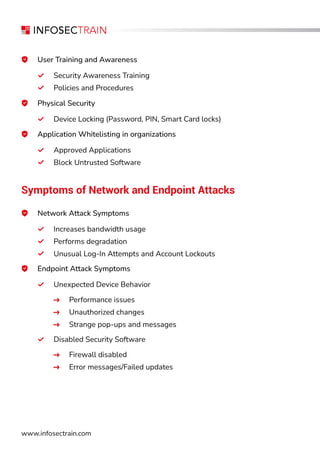
User Training and Awareness
Security Awareness Training
Policies and Procedures
Application Whitelisting in organizations
Approved Applications
Block Untrusted Software
Physical Security
Device Locking (Password, PIN, Smart Card locks)
Symptoms of Network and Endpoint Attacks
Network Attack Symptoms
Increases bandwidth usage
Performs degradation
Unusual Log-In Attempts and Account Lockouts
Endpoint Attack Symptoms
Unexpected Device Behavior
Performance issues
Unauthorized changes
Strange pop-ups and messages
Disabled Security Software
Firewall disabled
Error messages/Failed updates
www.infosectrain.com
Immediate Steps
Changing passwords on compromised accounts
Placing a fraud alert on your credit report
Protecting Yourself from Identity Theft
Monitoring your credit report for suspicious activity
Freezing your credit if necessary
Enabling two-factor authentication (MFA) on all accounts
Taking Action to Minimize Damage
Securing Home and Office Networks
VPN and its benefits
Navigating the Digital World Safely
Email Security Essentials
Mobile Security Measures
Responding to Image Misuse
Identifying Image Misuse
Taking Action Against Misuse
Advanced Security Concepts
www.infosectrain.com
Phishing Attacks
Types of Phishing attacks
Social Engineering and Phishing Attacks
Types of Social Engineering Attacks
UPI Scams
Fake KYC (Know Your Customer) Updates
WhatsApp Scams
LinkedIn Awareness ( Fake job posting )
Securing Your Gmail Account
Social Engineering
Identifying Phishing Emails and Messages
Phishing Simulation Exercise
Recognizing and Avoiding Phishing Attacks
Malware Infection Symptoms
Ransomware Attack Symptoms
Symptoms of Malware and Ransomware Infections
Privacy settings on social media platforms
Avoid oversharing personal information online
Social Media Security
www.infosectrain.com
Understanding Cloud Storage Services
Benefits and risks of cloud storage
Popular cloud storage providers
Securing Your Cloud Accounts
Securing file-sharing permissions
Strong password creation and using MFA
Data encryption options in cloud storage
Cloud Security
AI and Deep Fake Awareness
Understanding AI in Cybersecurity
AI-Driven Threats
Highly Personalized Phishing Attempts
Automated Attack Patterns
Deepfake Technology
What are Deepfakes?
Risks Associated with Deepfakes (Identity Theft, Misinformation)
Unrealistic Audio/Video Quality
Inconsistencies in Background or Timing
www.infosectrain.com
Understanding Incident Response
What is an Incident Response Plan?
Key Steps in Incident Response
Creating an Incident Response Plan
Developing a Basic Incident Response Plan
Responding to Common Attacks
Responding to Malware Infections
Steps to Take if Infected by Malware
Using Malware Removal Tools
Responding to Phishing Attacks
Identifying and Reporting Phishing Attempts
Reporting Phishing Emails
Incident Response and Recovery
Immediate Steps to Take During a Data Breach
Identifying and Containing the Breach
Notifying Internal Teams and Stakeholders
Data Breach Containment Exercise
Hands-On Simulation: Containing a Data Breach
Legal and Regulatory Requirements
Reporting Obligations
Communicating with Affected Parties
Data Breach Response
www.infosectrain.com | sales@infosectrain.com

Cybersecurity Awareness Enterprise Training

  • 1.
    Cybersecurity Awareness 2.0 Enterprise Training Defend& Protect Your Digital Workspace www.infosectrain.com
  • 2.
    Program Highlights In ourhyper-connected digital world, cyber threats have become a daily reality. InfosecTrain’s Cybersecurity Awareness Training 2.0 is designed to equip you with the knowledge and skills to navigate the online landscape securely. Whether you’re a professional, a student, or simply someone who wants to safeguard your digital life, this program is your gateway to a safer online experience. www.infosectrain.com
  • 3.
    www.infosectrain.com Course Highlights Scenario-Based Learning Extended Post TrainingSupport 16-Hour of Instructor-led Training Career Guidance and Mentorship Learn from Industry Experts In-depth Case Studies Highly Interactive and Dynamic Sessions Access to Recorded Sessions Comprehensive Cybersecurity Curriculum
  • 4.
    www.infosectrain.com Target Audience It isdesigned for everyone, from cybersecurity enthusiasts to employees of all backgrounds, because everyone should be cyber-aware, whether in IT or not. Course Objectives Pre-Requisites No experience is required. Grasp the importance of confidentiality, integrity, and availability. Learn key terms such as threats, vulnerabilities, risks, and impacts. Identify different types of cyber attacks: phishing, social engineering, malware, and insider threats. Adopt safe browsing habits and recognize suspicious websites. Understand physical security measures like device locking and application whitelisting. Monitor credit reports and use security measures like credit freezing Perform immediate steps to minimize damage from security breaches Engage in hands-on simulations to contain data breaches and malware infections. Recognize AI-driven threats and deepfake technology risks
  • 5.
    www.infosectrain.com Course Curriculum Understanding CyberAttacks Introduction to Information Security What is Information Security? Definition and Importance Key Concepts: Confidentiality, Integrity, Availability Definition of key terms: Threats, Vulnerability, Risk, and Impact Cost of cybercrime examples Types of Cyber Attacks Phishing Social Engineering Insider Threats Malware Motivations behind cyberattacks Service disruption Data exfiltration Case Study
  • 6.
    www.infosectrain.com Basic Security BestPractices Biometric Authentication Password Authentication Employee Training and Awareness Safe Browsing Habits Identifying suspicious websites Using reputable web browsers with built-in security Multi-Factor Authentication How to set up 2FA on common platforms Importance of strong passwords How to create and manage strong passwords Securing Devices and Endpoints Endpoint Security Measures Install Antivirus/Antimalware Software Awareness of Endpoints Conducting a Security Checkup on Personal Devices Patch Management Regular Updates Automated Patching
  • 7.
    www.infosectrain.com User Training andAwareness Security Awareness Training Policies and Procedures Application Whitelisting in organizations Approved Applications Block Untrusted Software Physical Security Device Locking (Password, PIN, Smart Card locks) Symptoms of Network and Endpoint Attacks Network Attack Symptoms Increases bandwidth usage Performs degradation Unusual Log-In Attempts and Account Lockouts Endpoint Attack Symptoms Unexpected Device Behavior Performance issues Unauthorized changes Strange pop-ups and messages Disabled Security Software Firewall disabled Error messages/Failed updates
  • 8.
    www.infosectrain.com Immediate Steps Changing passwordson compromised accounts Placing a fraud alert on your credit report Protecting Yourself from Identity Theft Monitoring your credit report for suspicious activity Freezing your credit if necessary Enabling two-factor authentication (MFA) on all accounts Taking Action to Minimize Damage Securing Home and Office Networks Securing Home and Office Networks VPN and its benefits Navigating the Digital World Safely Email Security Essentials Mobile Security Measures Responding to Image Misuse Identifying Image Misuse Taking Action Against Misuse Advanced Security Concepts
  • 9.
    www.infosectrain.com Phishing Attacks Types ofPhishing attacks Social Engineering and Phishing Attacks Types of Social Engineering Attacks UPI Scams Fake KYC (Know Your Customer) Updates WhatsApp Scams LinkedIn Awareness ( Fake job posting ) Securing Your Gmail Account Social Engineering Identifying Phishing Emails and Messages Phishing Simulation Exercise Recognizing and Avoiding Phishing Attacks Malware Infection Symptoms Ransomware Attack Symptoms Symptoms of Malware and Ransomware Infections Privacy settings on social media platforms Avoid oversharing personal information online Social Media Security
  • 10.
    www.infosectrain.com Understanding Cloud StorageServices Benefits and risks of cloud storage Popular cloud storage providers Securing Your Cloud Accounts Securing file-sharing permissions Strong password creation and using MFA Data encryption options in cloud storage Cloud Security AI and Deep Fake Awareness Understanding AI in Cybersecurity AI-Driven Threats Highly Personalized Phishing Attempts Automated Attack Patterns Deepfake Technology What are Deepfakes? Risks Associated with Deepfakes (Identity Theft, Misinformation) Unrealistic Audio/Video Quality Inconsistencies in Background or Timing
  • 11.
    www.infosectrain.com Understanding Incident Response Whatis an Incident Response Plan? Key Steps in Incident Response Creating an Incident Response Plan Developing a Basic Incident Response Plan Responding to Common Attacks Responding to Malware Infections Steps to Take if Infected by Malware Using Malware Removal Tools Responding to Phishing Attacks Identifying and Reporting Phishing Attempts Reporting Phishing Emails Incident Response and Recovery Immediate Steps to Take During a Data Breach Identifying and Containing the Breach Notifying Internal Teams and Stakeholders Data Breach Containment Exercise Hands-On Simulation: Containing a Data Breach Legal and Regulatory Requirements Reporting Obligations Communicating with Affected Parties Data Breach Response
  • 12.