Cyber Ethics
Moral Values in Cyber
Space
The Good, the Bad, and the
Electronic
2
Advice to Freshmen
 Don’t LOOK at anything in a Physics lab.
 Don’t SMELL anything in a Biology lab.
 Don’t TASTE anything in a Chemistry lab.
 Don’t TOUCH anything in a medical lab.
 Don’t LISTEN to anything in a Philosophy
course.
 Don’t TRUST anything in a computer lab.
3
Two Points of View
 There is nothing new or special about ethical
issues involving computer technology.
 First Law of Philosophy
 There are new, unique ethical issues that
could not have existed without computer
technology.
 Second Law of Philosophy
4
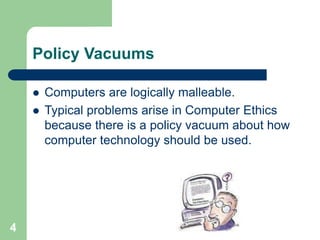
Policy Vacuums
 Computers are logically malleable.
 Typical problems arise in Computer Ethics
because there is a policy vacuum about how
computer technology should be used.
5
What Do We Mean by Cyber Ethics?
 Analysis of the nature and social impact of
computer technology
 Corresponding formulation and justification of
policies for the ethical use of such
technology.
6
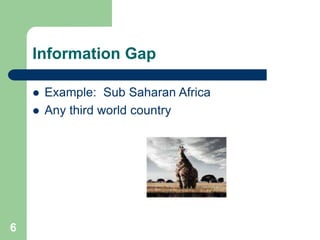
Information Gap
 Example: Sub Saharan Africa
 Any third world country
7
On Line Education
 Cyber Degrees
 Social Acceptance?
 Take the Money, send the diploma, but
provide weak or no educational experience
8
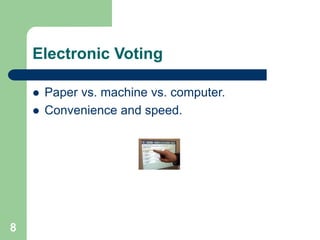
Electronic Voting
 Paper vs. machine vs. computer.
 Convenience and speed.
9
On Line Pharmacies
 Convenience and price.
 Prescription needed?
 Doctor’s role?
10
Athletic Recruiting
 Numbers of phone calls vs. emails
 Personal promotions both amateur and
professional
 Two_way investigations
11
RFID
 Radio Frequency Identification RFID
 May contain everything about a person
 Saves Lives
 Invades Privacy
12
Employee Monitoring
 Email
 Websites
 Monitoring software
13
Virtual Life
 Gaming
 Create your own
identity
 Purchase virtual
merchandise
 Hone your skills
14
Who Are You? Who Am I?
 Anonymity in the virtual world
 How many hours do people spend online?
 Confusion?
15
Natural World and Cyberspace
 Physical World: DNA, RNA: A, T, G, C
 Computer World: 0, 1
 Natural Ethics
 Cyber Ethics
 Creation?
– Natural World
– Virtual World
16
Controlling Cyberspace
 Relativism need not apply.
 Cyberspace is beyond geographic and
political boundaries.
 Do we want to enforce ethical standards on
cyberspace?
 Can we?
 We must depend on human integrity.

CyberEthics.ppt

  • 1.
    Cyber Ethics Moral Valuesin Cyber Space The Good, the Bad, and the Electronic
  • 2.
    2 Advice to Freshmen Don’t LOOK at anything in a Physics lab.  Don’t SMELL anything in a Biology lab.  Don’t TASTE anything in a Chemistry lab.  Don’t TOUCH anything in a medical lab.  Don’t LISTEN to anything in a Philosophy course.  Don’t TRUST anything in a computer lab.
  • 3.
    3 Two Points ofView  There is nothing new or special about ethical issues involving computer technology.  First Law of Philosophy  There are new, unique ethical issues that could not have existed without computer technology.  Second Law of Philosophy
  • 4.
    4 Policy Vacuums  Computersare logically malleable.  Typical problems arise in Computer Ethics because there is a policy vacuum about how computer technology should be used.
  • 5.
    5 What Do WeMean by Cyber Ethics?  Analysis of the nature and social impact of computer technology  Corresponding formulation and justification of policies for the ethical use of such technology.
  • 6.
    6 Information Gap  Example:Sub Saharan Africa  Any third world country
  • 7.
    7 On Line Education Cyber Degrees  Social Acceptance?  Take the Money, send the diploma, but provide weak or no educational experience
  • 8.
    8 Electronic Voting  Papervs. machine vs. computer.  Convenience and speed.
  • 9.
    9 On Line Pharmacies Convenience and price.  Prescription needed?  Doctor’s role?
  • 10.
    10 Athletic Recruiting  Numbersof phone calls vs. emails  Personal promotions both amateur and professional  Two_way investigations
  • 11.
    11 RFID  Radio FrequencyIdentification RFID  May contain everything about a person  Saves Lives  Invades Privacy
  • 12.
    12 Employee Monitoring  Email Websites  Monitoring software
  • 13.
    13 Virtual Life  Gaming Create your own identity  Purchase virtual merchandise  Hone your skills
  • 14.
    14 Who Are You?Who Am I?  Anonymity in the virtual world  How many hours do people spend online?  Confusion?
  • 15.
    15 Natural World andCyberspace  Physical World: DNA, RNA: A, T, G, C  Computer World: 0, 1  Natural Ethics  Cyber Ethics  Creation? – Natural World – Virtual World
  • 16.
    16 Controlling Cyberspace  Relativismneed not apply.  Cyberspace is beyond geographic and political boundaries.  Do we want to enforce ethical standards on cyberspace?  Can we?  We must depend on human integrity.