Michael Priestley, IBM / @ditaguy
September 26, 2018
Customer-centric content and Info 4.0
Michael Priestley @ditaguy
Michael Priestley is a product owner and
content technology strategist, currently leading
the IBM Marketing Taxonomy Guild to revise
and align taxonomy initiatives across the
marketing ecosystem. He has experience
working with and across documentation,
support, training, and marketing content as an
enterprise content technology strategist. He
was one of the original architects and editors of
the DITA standard, was named an OASIS
Distinguished Contributor in 2017, and is
currently co-chairing the Lightweight DITA
subcommittee.
Customer-centric
3
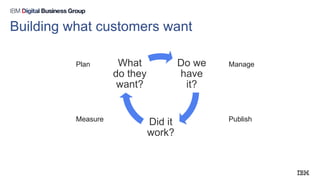
Building what customers want
Do we
have
it?
Did it
work?
What
do they
want?
Plan
Measure
Manage
Publish
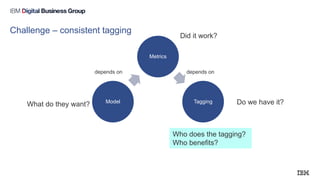
Challenge – consistent tagging
Metrics
Tagging
Need
automated
service for
consistent
tagging
Model
depends on depends on
What do they want? Do we have it?
Did it work?
Who does the tagging?
Who benefits?
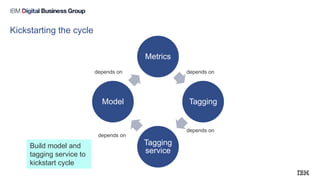
Kickstarting the cycle
Metrics
Tagging
Tagging
service
Model
depends on depends on
depends on
depends on
Build model and
tagging service to
kickstart cycle
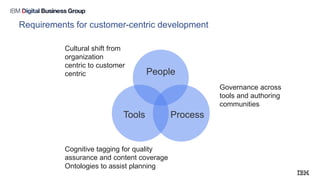
Requirements for customer-centric development
People
ProcessTools
Cultural shift from
organization
centric to customer
centric
Governance across
tools and authoring
communities
Cognitive tagging for quality
assurance and content coverage
Ontologies to assist planning
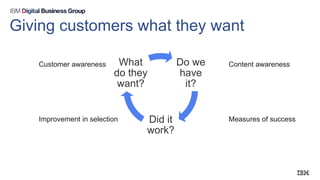
Giving customers what they want
Do we
have
it?
Did it
work?
What
do they
want?
Customer awareness
Improvement in selection
Content awareness
Measures of success
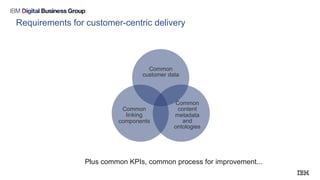
Requirements for customer-centric delivery
Common
customer data
Common
content
metadata
and
ontologies
Common
linking
components
Plus common KPIs, common process for improvement...
Info 4.0
10
Content 4.0
11
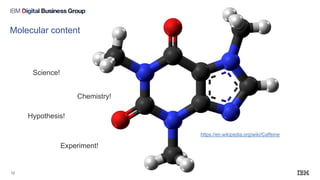
Molecular content
12
Science!
Chemistry!
Hypothesis!
Experiment!
https://en.wikipedia.org/wiki/Caffeine
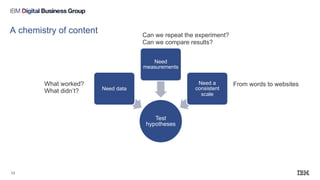
A chemistry of content
Test
hypotheses
Need data
Need
measurements
Need a
consistent
scale
13
What worked?
What didn’t?
Can we repeat the experiment?
Can we compare results?
From words to websites
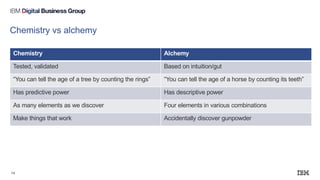
Chemistry vs alchemy
Chemistry Alchemy
Tested, validated Based on intuition/gut
“You can tell the age of a tree by counting the rings” “You can tell the age of a horse by counting its teeth”
Has predictive power Has descriptive power
As many elements as we discover Four elements in various combinations
Make things that work Accidentally discover gunpowder
14
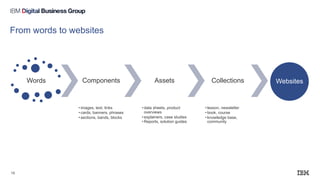
From words to websites
Words Components
•images, text, links
•cards, banners, phrases
•sections, bands, blocks
Assets
•data sheets, product
overviews
•explainers, case studies
•Reports, solution guides
Collections
•lesson, newsletter
•book, course
•knowledge base,
community
Websites
15
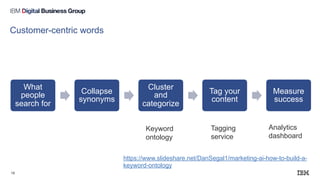
Customer-centric words
What
people
search for
Collapse
synonyms
Cluster
and
categorize
Tag your
content
Measure
success
16
Keyword
ontology
Tagging
service
Analytics
dashboard
https://www.slideshare.net/DanSegal1/marketing-ai-how-to-build-a-
keyword-ontology
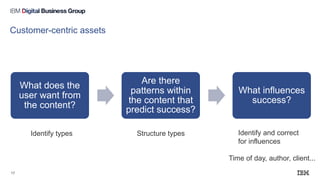
Customer-centric assets
What does the
user want from
the content?
Are there
patterns within
the content that
predict success?
What influences
success?
17
Identify types Structure types Identify and correct
for influences
Time of day, author, client...
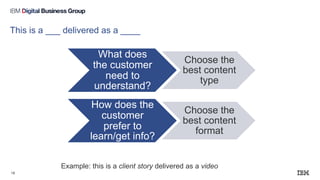
This is a ___ delivered as a ____
What does
the customer
need to
understand?
Choose the
best content
type
How does the
customer
prefer to
learn/get info?
Choose the
best content
format
18
Example: this is a client story delivered as a video
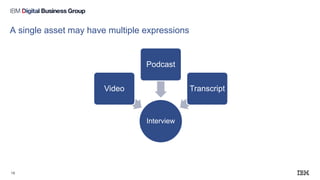
A single asset may have multiple expressions
Interview
Video
Podcast
Transcript
19
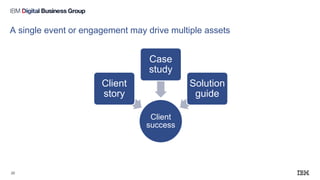
A single event or engagement may drive multiple assets
Client
success
Client
story
Case
study
Solution
guide
20
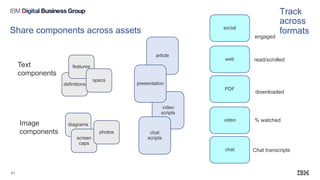
Share components across assets
21
definitions
features
specs
video
scripts
Text
components
chat
scripts
diagrams
screen
caps
photos
Image
components
article
web
PDF
video
chat
presentation
social
Track
across
formats
Chat transcripts
% watched
downloaded
read/scrolled
engaged
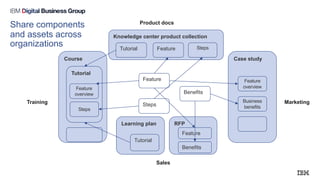
Learning plan
Share components
and assets across
organizations
Training
Product docs
Marketing
Sales
Course
Tutorial
Feature
overview
Steps
Tutorial
RFP
Feature
Benefits
Case study
Feature
overview
Business
benefits
Knowledge center product collection
Tutorial Feature Steps
Feature
Steps
Benefits
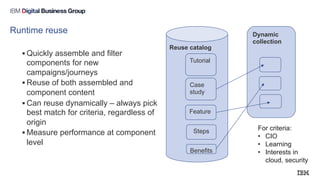
Reuse catalog
§ Quickly assemble and filter
components for new
campaigns/journeys
§ Reuse of both assembled and
component content
§ Can reuse dynamically – always pick
best match for criteria, regardless of
origin
§ Measure performance at component
level
Runtime reuse
Benefits
Tutorial
Feature
Steps
Case
study
Dynamic
collection
For criteria:
• CIO
• Learning
• Interests in
cloud, security
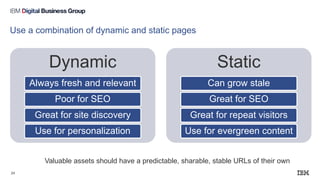
Use a combination of dynamic and static pages
Dynamic
Always fresh and relevant
Poor for SEO
Great for site discovery
Use for personalization
Static
Can grow stale
Great for SEO
Great for repeat visitors
Use for evergreen content
24
Valuable assets should have a predictable, sharable, stable URLs of their own
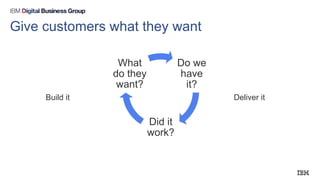
Give customers what they want
Do we
have
it?
Did it
work?
What
do they
want?
Build it Deliver it

Customer-centric content and Info 4.0

  • 1.
    Michael Priestley, IBM/ @ditaguy September 26, 2018 Customer-centric content and Info 4.0
  • 2.
    Michael Priestley @ditaguy MichaelPriestley is a product owner and content technology strategist, currently leading the IBM Marketing Taxonomy Guild to revise and align taxonomy initiatives across the marketing ecosystem. He has experience working with and across documentation, support, training, and marketing content as an enterprise content technology strategist. He was one of the original architects and editors of the DITA standard, was named an OASIS Distinguished Contributor in 2017, and is currently co-chairing the Lightweight DITA subcommittee.
  • 3.
  • 4.
    Building what customerswant Do we have it? Did it work? What do they want? Plan Measure Manage Publish
  • 5.
    Challenge – consistenttagging Metrics Tagging Need automated service for consistent tagging Model depends on depends on What do they want? Do we have it? Did it work? Who does the tagging? Who benefits?
  • 6.
    Kickstarting the cycle Metrics Tagging Tagging service Model dependson depends on depends on depends on Build model and tagging service to kickstart cycle
  • 7.
    Requirements for customer-centricdevelopment People ProcessTools Cultural shift from organization centric to customer centric Governance across tools and authoring communities Cognitive tagging for quality assurance and content coverage Ontologies to assist planning
  • 8.
    Giving customers whatthey want Do we have it? Did it work? What do they want? Customer awareness Improvement in selection Content awareness Measures of success
  • 9.
    Requirements for customer-centricdelivery Common customer data Common content metadata and ontologies Common linking components Plus common KPIs, common process for improvement...
  • 10.
  • 11.
  • 12.
  • 13.
    A chemistry ofcontent Test hypotheses Need data Need measurements Need a consistent scale 13 What worked? What didn’t? Can we repeat the experiment? Can we compare results? From words to websites
  • 14.
    Chemistry vs alchemy ChemistryAlchemy Tested, validated Based on intuition/gut “You can tell the age of a tree by counting the rings” “You can tell the age of a horse by counting its teeth” Has predictive power Has descriptive power As many elements as we discover Four elements in various combinations Make things that work Accidentally discover gunpowder 14
  • 15.
    From words towebsites Words Components •images, text, links •cards, banners, phrases •sections, bands, blocks Assets •data sheets, product overviews •explainers, case studies •Reports, solution guides Collections •lesson, newsletter •book, course •knowledge base, community Websites 15
  • 16.
    Customer-centric words What people search for Collapse synonyms Cluster and categorize Tagyour content Measure success 16 Keyword ontology Tagging service Analytics dashboard https://www.slideshare.net/DanSegal1/marketing-ai-how-to-build-a- keyword-ontology
  • 17.
    Customer-centric assets What doesthe user want from the content? Are there patterns within the content that predict success? What influences success? 17 Identify types Structure types Identify and correct for influences Time of day, author, client...
  • 18.
    This is a___ delivered as a ____ What does the customer need to understand? Choose the best content type How does the customer prefer to learn/get info? Choose the best content format 18 Example: this is a client story delivered as a video
  • 19.
    A single assetmay have multiple expressions Interview Video Podcast Transcript 19
  • 20.
    A single eventor engagement may drive multiple assets Client success Client story Case study Solution guide 20
  • 21.
    Share components acrossassets 21 definitions features specs video scripts Text components chat scripts diagrams screen caps photos Image components article web PDF video chat presentation social Track across formats Chat transcripts % watched downloaded read/scrolled engaged
  • 22.
    Learning plan Share components andassets across organizations Training Product docs Marketing Sales Course Tutorial Feature overview Steps Tutorial RFP Feature Benefits Case study Feature overview Business benefits Knowledge center product collection Tutorial Feature Steps Feature Steps Benefits
  • 23.
    Reuse catalog § Quicklyassemble and filter components for new campaigns/journeys § Reuse of both assembled and component content § Can reuse dynamically – always pick best match for criteria, regardless of origin § Measure performance at component level Runtime reuse Benefits Tutorial Feature Steps Case study Dynamic collection For criteria: • CIO • Learning • Interests in cloud, security
  • 24.
    Use a combinationof dynamic and static pages Dynamic Always fresh and relevant Poor for SEO Great for site discovery Use for personalization Static Can grow stale Great for SEO Great for repeat visitors Use for evergreen content 24 Valuable assets should have a predictable, sharable, stable URLs of their own
  • 25.
    Give customers whatthey want Do we have it? Did it work? What do they want? Build it Deliver it