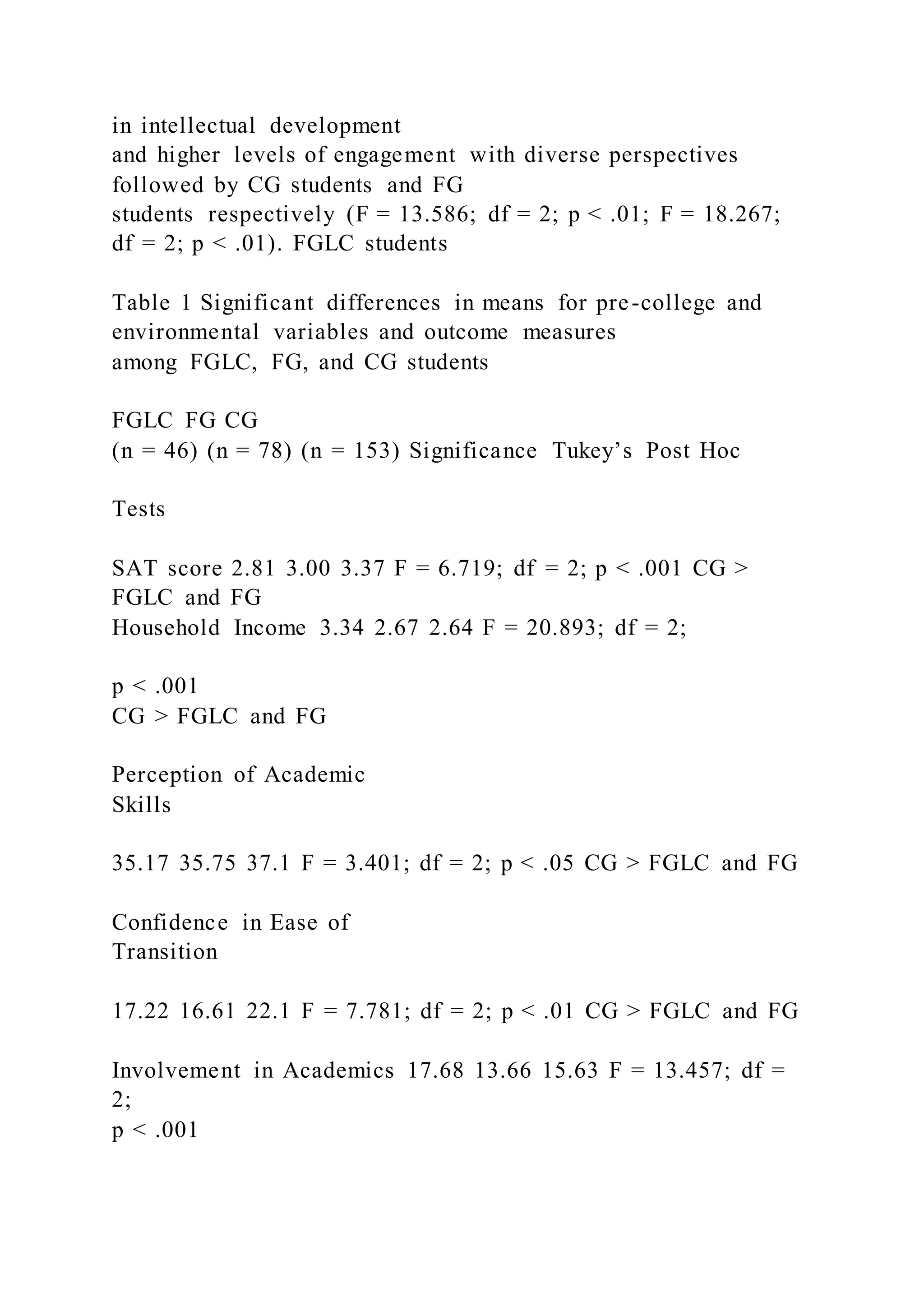
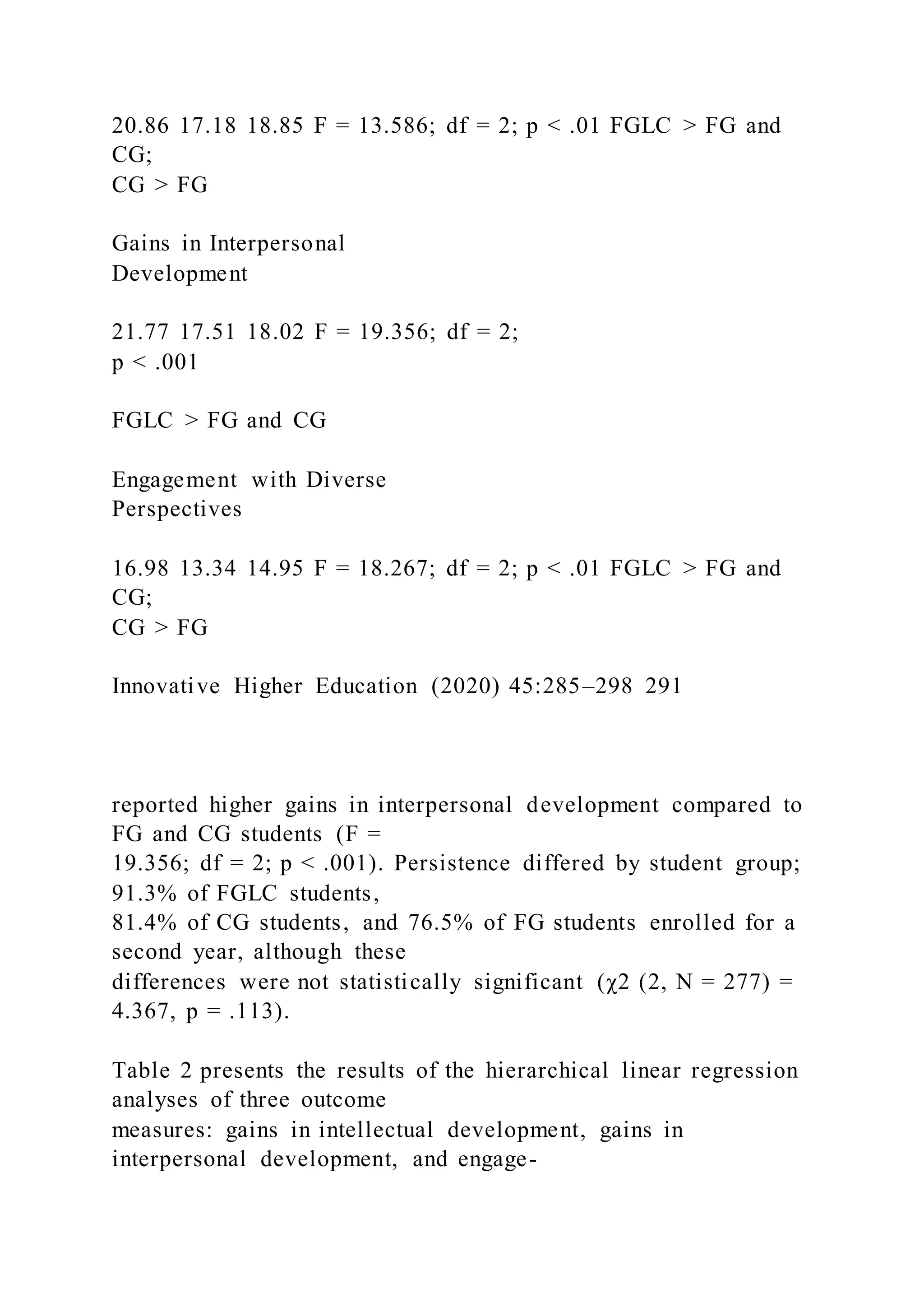
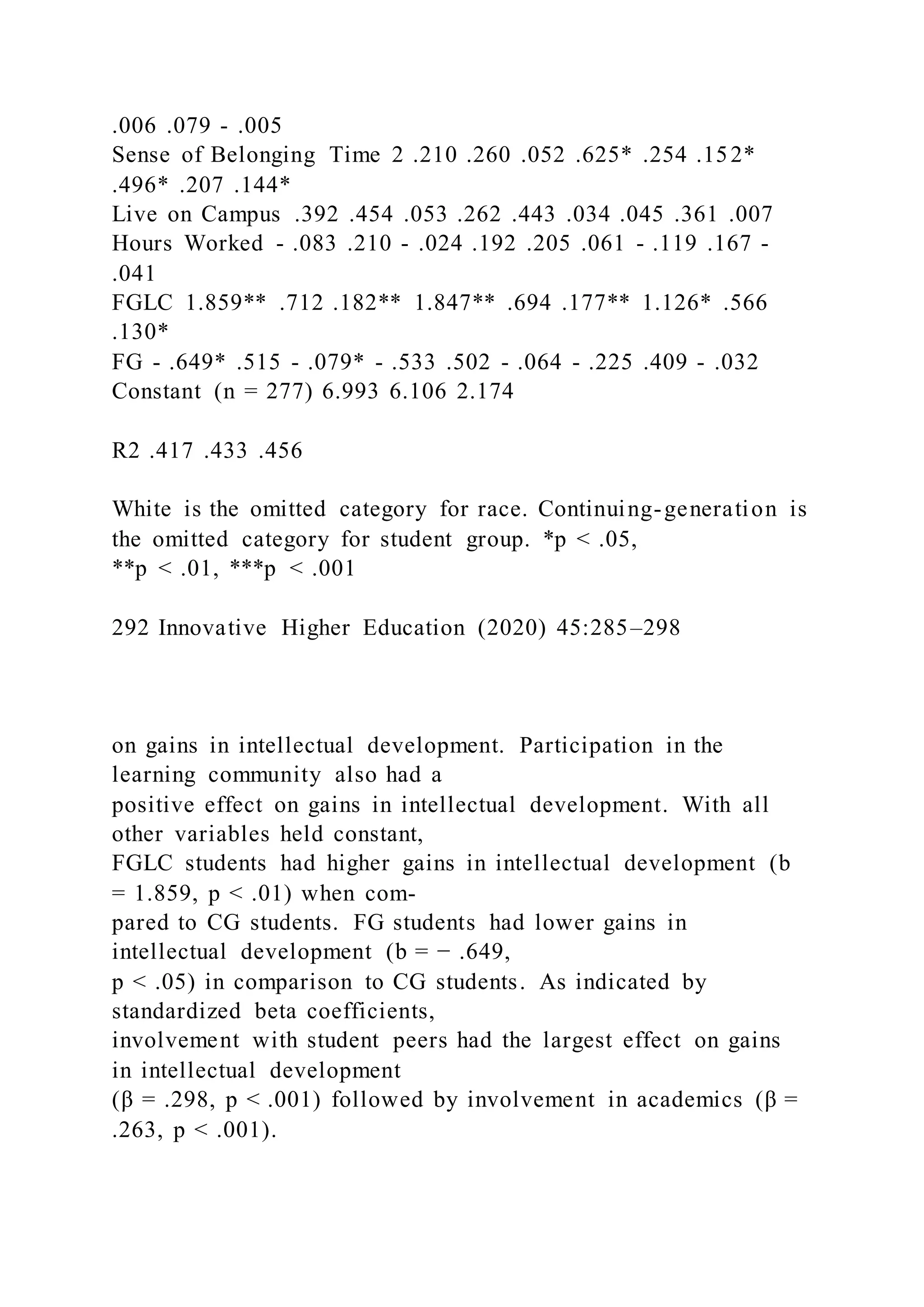
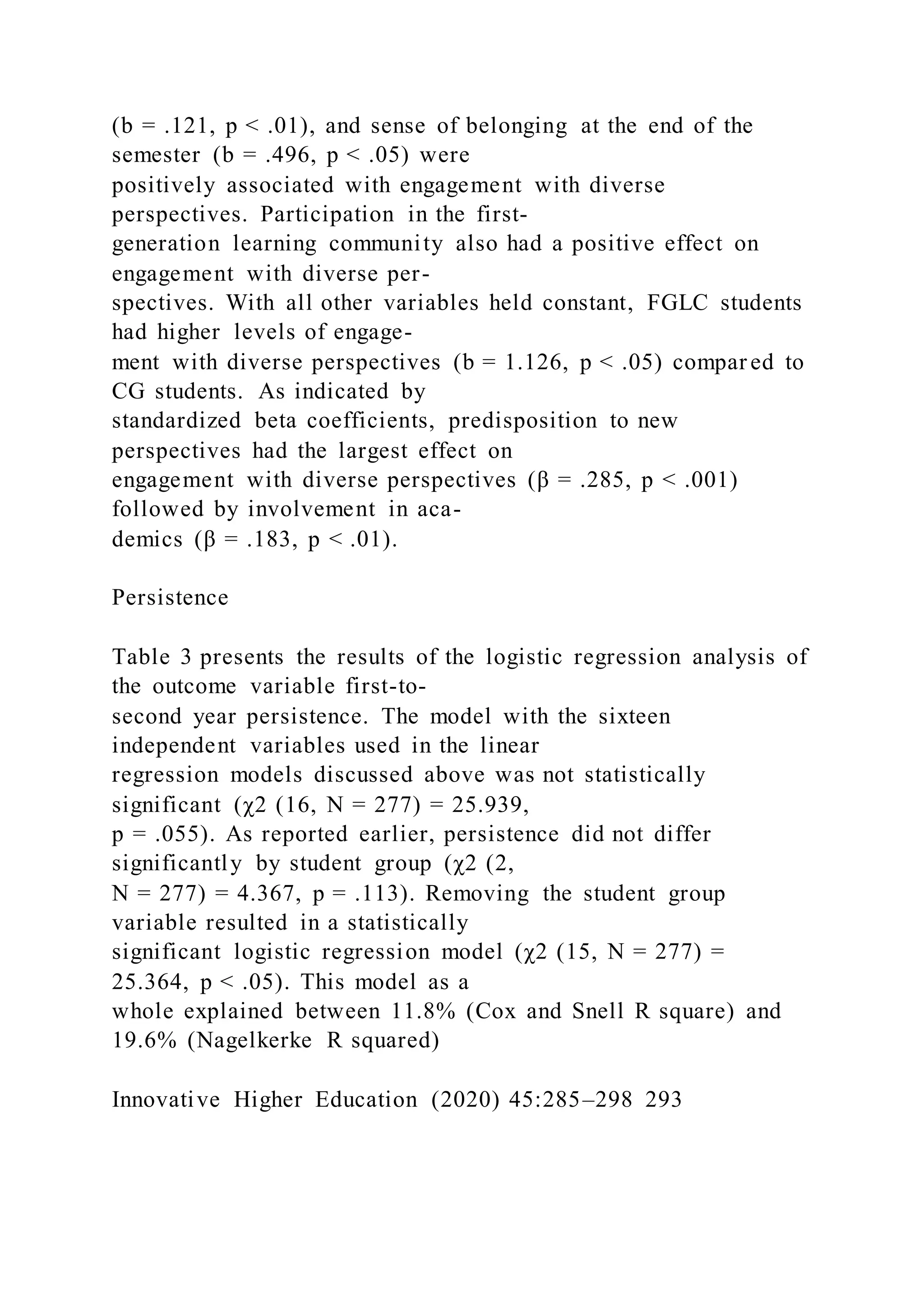
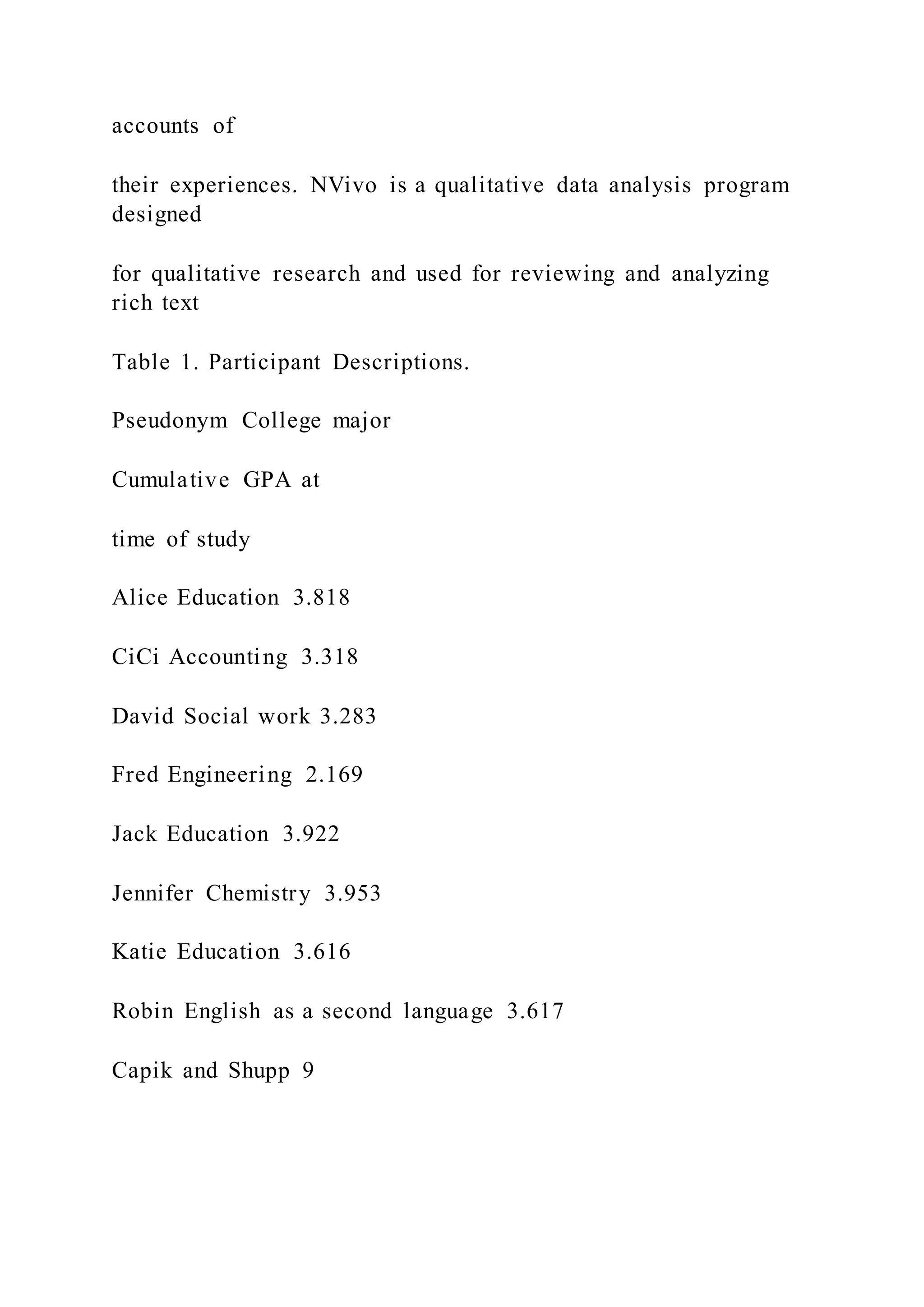
Curriculum Project: Sample Planning Charts
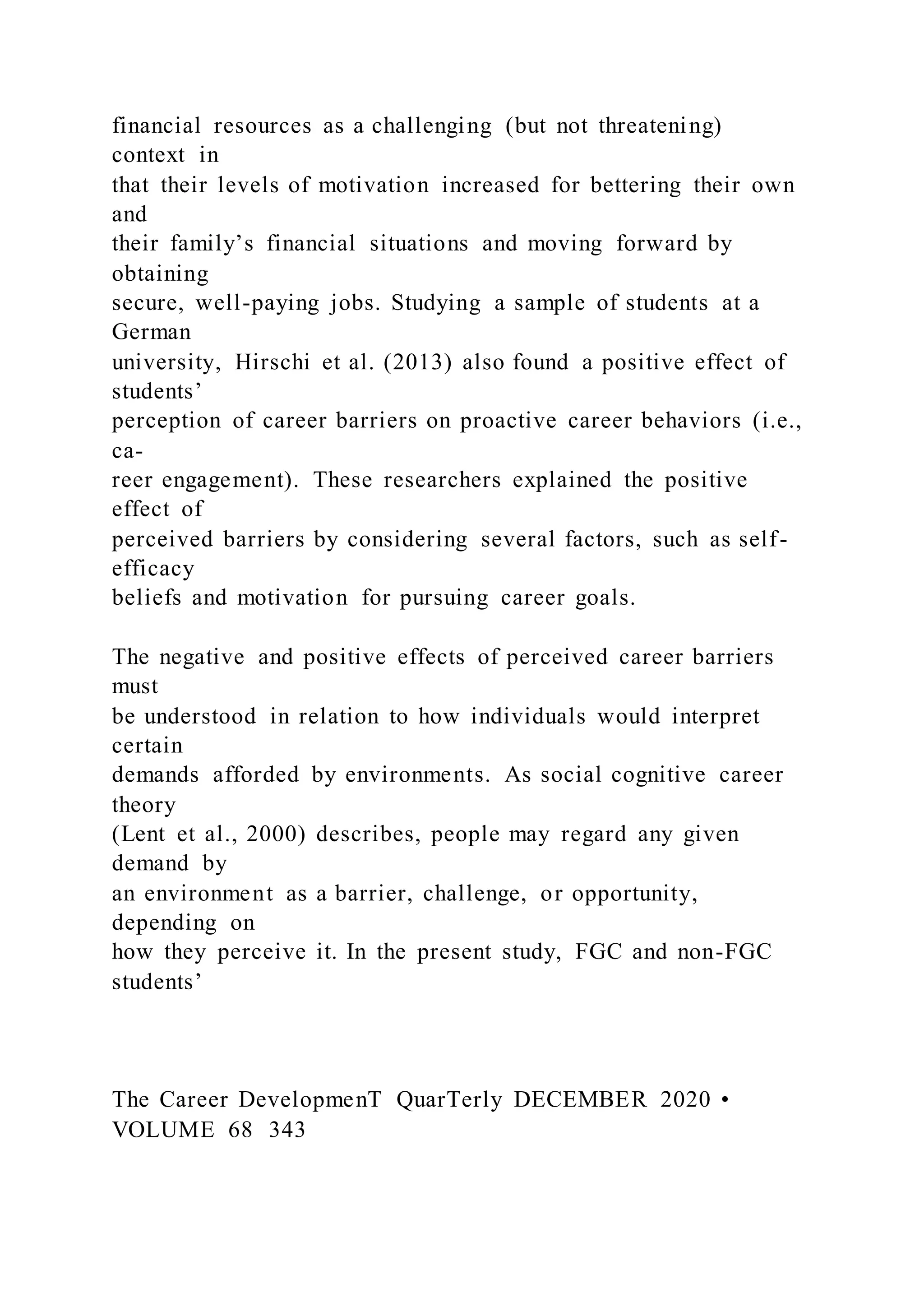
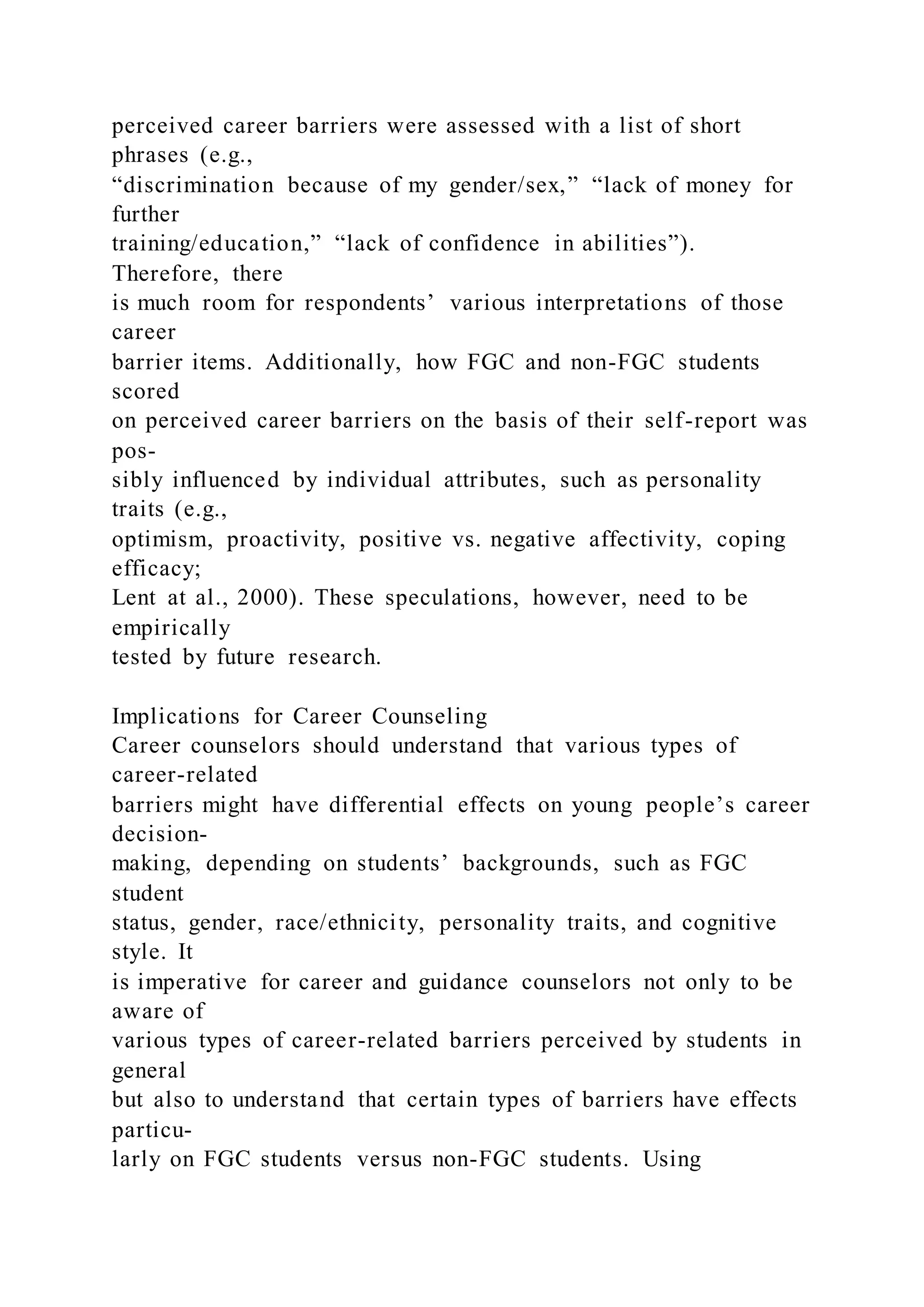
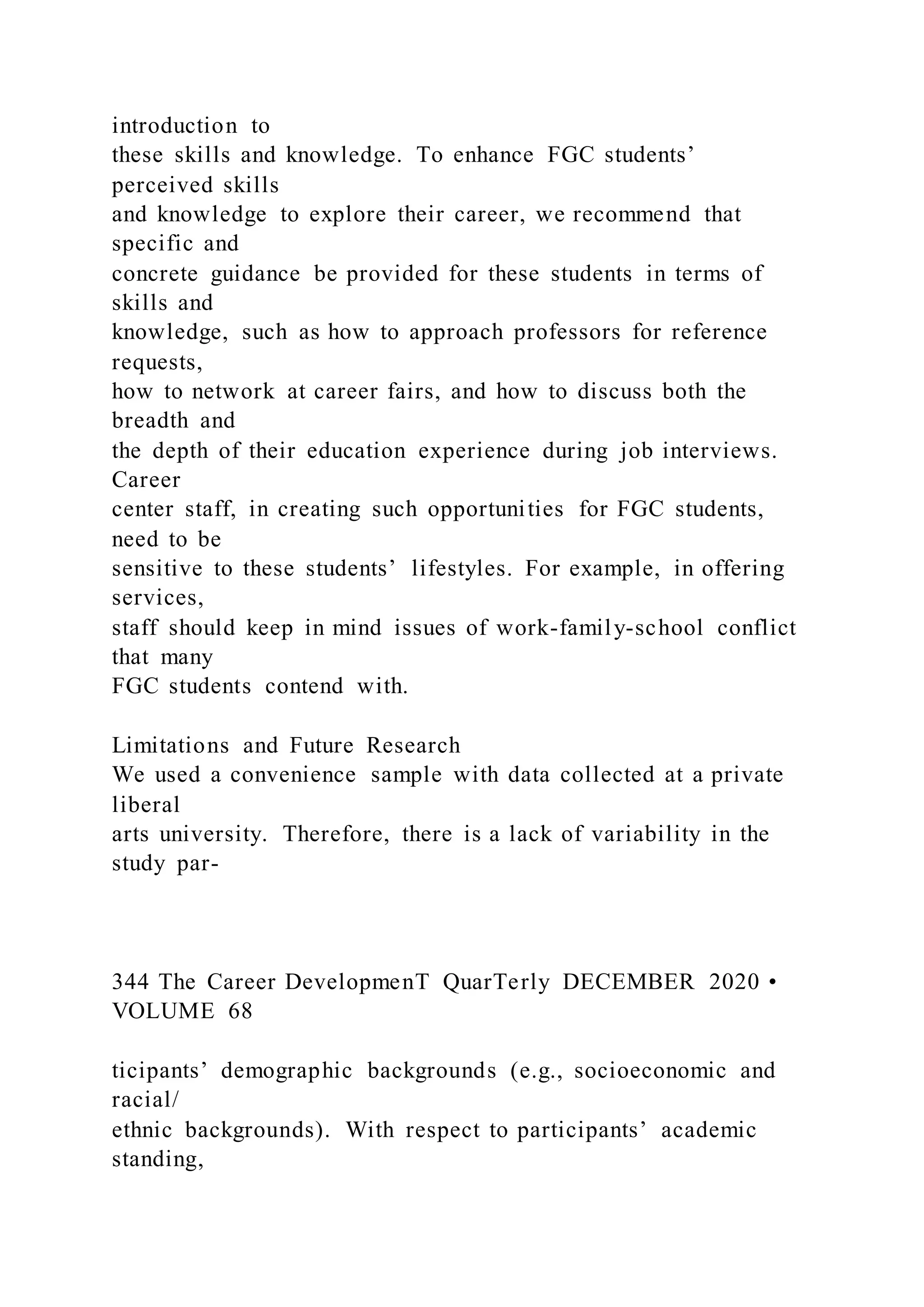
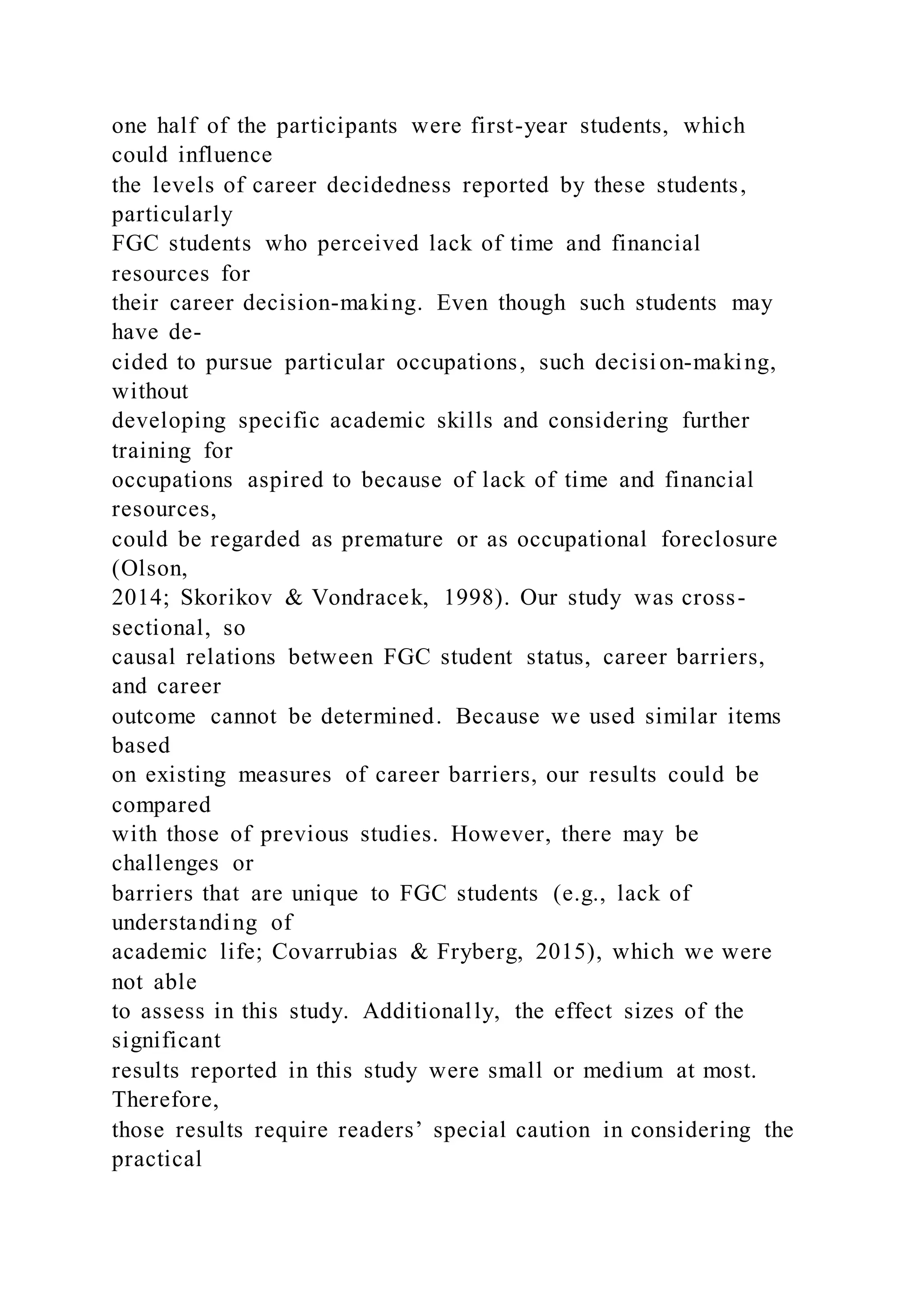
School of Education, Liberty University
Author Note
I have no known conflict of interest to disclose.
Correspondence concerning this article should be addressed to
Email:
LegendA ArtCI Community involvement
activity (collaboration)CIV CivicsCC
Collaboration with colleagues CE Character
educationCL Cultural literacy and diversityCM
CommunicationCT Critical thinkingD
Dramatic ArtsDA
Differentiation/diversity/accommodation E
EnglishEC EconomicsEVAL Evaluation
(assessment)GA Group activityGEO GeographyL
LiteracyLI ListeningLS Life
skillsHE HealthHI HistoryHS Home/school
connection (collaboration)HW HomeworkM
MathMA Manipulative activityMU
MusicOL Oral language/presentations (public
speaking)PE Physical education/movementPS
Problem solving R ReadingS ScienceT
TechnologyW Writing
SAMPLE PLANNING CHARTS 1
SAMPLE PLANNING CHARTS 2
Day 16
Character Trait: Commitment
VA SOL Writing 3.8, 3.9; Reading 3.4 f, g
Cursive handwriting; write with purpose; expand vocabulary
VA SOL MATH 3.2
Fractions, mixed numbers
VA SOL SCIENCE 3.4
Animal adaptations:
Physical
VA SOL HISTORY 3.1
Ancient Greece
Introduction and Vocabulary
Fine Arts, Health, and
PE / Movement Connections
ENG/HI: Class will compile a list of unknown content
vocabulary/topics about Ancient Greece. (SEE HISTORY)
ENG/T/R/GA/W/CM: The teacher will explain to students that
nonfiction writing is used provide information about a topic to
readers. Students will divide into groups and the teacher will
assign an equal number of content words/topics to each group.
Students will use their iPads and classroom library to look up
information and to create definitions/short answers with the
most important facts about the word/topic in their own words
(not a word for word definition, but a created definition or short
answer). The group will work together to create a working short
answer about each word. Then the students will divide the
words evenly amongst themselves. Each student will write the
definition/short answer the group came up with in their best
cursive handwriting, with correct spelling.
EVAL: Teacher will collect and review definitions for topic
understanding and correct spelling.
M/CT: The teacher will introduce improper fractions. She will
write several proper and improper fractions on the board. She
will ask the students if they can tell what is different about each
of these fractions (desired answer examples: the top is bigger
than the bottom, the numerator is bigger, the denominator is
smaller, the numbers are the same on top and bottom). When it
is obvious all the students see what makes the improper
fractions different from proper fractions the teacher will then
use the smartboard to show the students how to convert the
improper fractions into mixed numbers using models.
MA/M/GA: Students will separate into pairs. They will use
fraction manipulatives to physically create improper fractions
then convert them into mixed numbers. Students should commit
to using their time wisely. The students will choose one
improper fraction/mixed number equation they created to
present to the class on the magnetic board.
EVAL: Teacher will monitor fraction presentations for
understanding.
S: The teacher will talk about what the word adaptation means
by breaking out the root word, adapt. She will explain to the
students that animals adapt for many reasons, such as to avoid
predators, to find food, and to keep warm.
S/T: The class will watch a video about black bear adaptations.
https://www.youtube.com/watch?v=Dw7z8Fo5ijk
S/A: Students will use the maker’s space bin to design one form
of black bear adaptation. The creations must be unique,
wearable, and realistic (meaning they must represent actual
black bear adaptations).
OL: Students will wear their creations and stand up at their
seats to show them to the class. They will describe how their
adaptation creation will help the black bear (e.g., find food,
avoid predators, keep warm).
EVAL: Teacher will add to and help students fully articulate
what role each adaptation plays as they present their
adaptations.
HI: The teacher will review geography lessons about Ancient
Greece, making sure to include the term “city-state.” Then she
will ask the students what they “know” about Ancient Greece
and what they would “like to know” about Ancient Greece
making sure to prompt students to include architecture,
government, and sports. She will record the answers on the
board.
HI/MU/T/LI: Students will watch short video about Ancient
Greece with the song, “Party at the Parthenon.” The students
will sing along and do the movements Hercules does. The
teacher will play the video again, this time asking the students
to call out any names of people or places they hear as the video
plays. The teacher will add the words the students call out to
the “want to know” list.
https://www.flocabulary.com/unit/ancient-greece/
DA: For the students who have trouble processing auditory
information, a printout of the song’s lyrics will be provided for
them to read along with while the song is playing.
FINE ARTS
· Visual Art – Wearable animal adaptation
· Music – “Party at the Parthenon”
HEALTH
· The teacher will discuss with students the proper clothing
humans need to keep themselves warm because we cannot adapt
to the environment as well as some other animals.
MOVEMENT / PE
· Movement – Students will move along to the Ancient Greece
video and mimic the movements of Hercules in the video.
· Movement - Students will stand up at their desks to describe
their animal adaptations using arm and body movements.
Day 17
Character Trait: Commitment
VA SOL Writing 3.8, 3.9; Reading 3.4 f, g
Cursive handwriting; write with purpose; expand vocabulary
VA SOL MATH 3.2
Fractions, mixed numbers
VA SOL SCIENCE 3.4
Animal adaptations
Camouflage
VA SOL HISTORY 3.1
Ancient Greece
Architecture
Fine Arts, Health, and
PE / Movement Connections
E/W: The content vocabulary and nonfiction writing unit
continues. The teacher will remind the students that nonfiction
writing is meant to inform readers about a topic. She will tell
the students that when they are writing nonfiction, they must be
careful not to put in opinions or personal comments. Students
should commit to writing only the facts when writing
nonfiction.
E/W/GA/H: While in their history groups, students will write
two paragraphs describing the Ancient Greek architecture
features of the modern day building they were assigned. Details
about the building’s location, designer, purpose, date of
construction, and obvious safety features should be included in
the nonfiction writing. Everyone should have a chance to
contribute writing to the paragraphs using their best cursive
writing.
DA: Students who struggle with writing may dictate their
contributions to the group’s paragraphs to another student in the
group who may act as scribe.
M: Converting improper fractions to mixed numbers continues.
M/PE/GA/CT/PS/CM/CC: All third-grade classes will get
together to complete this activity. On a hard, flat surface
outside, the teachers will draw or mark the symbols used for
converting improper fractions to mixed numbers (i.e., fraction
bar, equals sign, space for a whole number with another fraction
bar). The marks should be large enough to use real world
basketballs, volleyballs, soccer balls, or other PE balls to create
fraction models. The students will be divided into groups with
students from other classes. Students will use the materials to
create improper fraction models. Then students will use
sidewalk chalk to write the mixed number that equals the
improper fraction they created. Each group will work together
to solve the problem itself and to solve the other problems
created by using real world manipulatives (e.g., how to keep the
balls from rolling away, how to make the sidewalk chalk
numbers big enough to fit the model). S: The teacher will
briefly review with the class the various ways animals adapt to
their environment and why they adapt. She will then discuss in
more detail what camouflage is and why animals use it. S/T:
Students will watch a video on animal camouflage to see if they
can locate the animals when they are camouflaged in their
natural environment.
https://www.youtube.com/watch?v=jsTW6xwjLyYS/A: Students
will create a representation of an animal using camouflage.
They may draw, paint, sculpt, or use paper strips to create a
realistic representation of a camouflaged animal. DA: Because
the video requires students to look closely to find the
camouflaged animal, students with visual impairments may
watch the video on an iPad so they can see each picture more
closely. The video should be synced to the class video so if the
teacher pauses it for the class, the video will pause for the
students using the iPads.
HI: The teacher will tell the students that Ancient Greece has
contributed many things to society that we still see and use
today. The first one to discuss is architecture. The teacher will
present many real-world pictures and artists renderings of the
architecture in Ancient Greece and the buildings in our society
that were influenced by the Greeks. She will discuss the specific
features of Greek architecture as each picture is shown.
HI/T/GA/CM: Students will divide into groups. Each group will
be given the name of a modern-day building that was influenced
by Greek architecture. They will use iPads to look up, read
about, and study pictures of this building. Working together
they will create a chalk drawing on black construction paper of
the building. They will also write two paragraphs about the
building as described in today’s English lesson.
FINE ARTS
· Visual art - Greek architecture chalk drawing
· Visual art – Animal camouflage creation.
HEALTH
· The teacher will include a discussion of the various safety
features inherent to Greek architecture both in Ancient Greece
and in today’s designs.
MOVEMENT / PE
· Movement – Creating large scale models of improper fractions
and mixed numbers.
Day 18
Character Trait: Commitment
VA SOL Writing 3.8, 3.9; Reading 3.4 f, g
Cursive handwriting; write with purpose; expand vocabulary
VA SOL MATH 3.2
Fractions, mixed numbers
VA SOL SCIENCE 3.4
Animal adaptations:
Physical and behavioral
VA SOL HISTORY 3.1
Ancient Greece
Democracy
Fine Arts, Health, and
PE / Movement Connections
E/HI/GA/CC/D: Students will continue to expand their
understanding of content vocabulary and explore nonfiction
writing by drafting a play with a group of students from the
various third grade classes. Students will write the script for a
play that showcases a display of direct and indirect democracy
as studied in today’s History lesson.
E/CE: Creating a play is a large undertaking that requires
commitment on the part of everyone involved to make it
successful. Students will watch a portion of Admiral William
McRaven’s speech at the 2014 University of Texas
commencement. The teacher will make sure to discuss with
students how important it is to work through challenges and
obstacles to overcome adversity and to be successful.
https://www.youtube.com/watch?v=Z7QL6hjeNDA (Begin video
at the 8:18 minute mark and end at the 9:43 minute mark.)
DA: Students in the group may act as scribe for students who
struggle with writing.
M/A: To cement the terminology: mixed numbers and improper
fraction, students will be given construction paper with block
numbers showing mixed numbers and improper fractions.
Students will color and decorate the numbers with squiggly
lines, polka dots or in any way they chose and will then cut out
the numbers. On a display board in the classroom, the teacher
will have the words “Improper Fractions” and “Mixed
Numbers.” Students will place their numbers under the proper
headings.
M: Next, the teacher will review the models that were created
by the students in previous days. She will demonstrate how to
write equations from these models and explain how the numbers
represent the same equation that the models represented.
M/GA/CT/PS: The teacher will use the smart board to present
models of improper fractions. In pairs, students will work
together to write down the equation the model represents.
S/T: The teacher will review the lessons learned so far about
camouflage. She will discuss with the class the other ways
animals avoid predators in the environment. She will introduce
behavioral adaptation to the study of physical adaptations.
Students will watch a video discussing these adaptations.
https://www.youtube.com/watch?v=B2JdRPKYyTc
S/T/HW: For homework, students will research and print two
images each of animals displaying either behavioral or physical
adaptations. They will write sentences under each picture
describing what physical adaptation the animal in the picture is
using or what behavioral adaptation the animal is exhibiting
making sure to clearly label whether the adaptation is
behavioral or physical.
EVAL: The teacher will collect papers to assess understanding
of animal adaptations.
DA: If students do not have access to computers or printers at
home, they may be given time in the computer lap to complete
this activity.
HI/T: Continuing the Ancient Greece unit, the teacher will
discuss representative and direct democracy. She will tell the
students how Greek democracy functioned in comparison to how
American’s current form of democracy functions. Students will
watch a video on Ancient Greece’s democratic system.
https://ed.ted.com/lessons/what-did-democracy-really-mean-in-
athens-melissa-schwartzberg
HI/D/CC/A/GA: Together with the other third grade classes,
students will work together to create performances of Ancient
Greek democracy (direct) and American democracy
(representative). Students will divide into groups of at least 10
students. They will work together to create a play that acts out a
Greek democratic system and an American democratic system.
Each play should be narrated and may include dress up,
designed props using materials from the classroom. It should be
unique, but it must clearly explain and perform a representati on
of a direct democracy and a representative democracy. (Multiple
day project)
FINE ARTS
· Dramatic art – Democracy play
· Visual art – Democracy play props
· Visual art – Improper fractions and mixed numbers display.
HEALTH
· The teacher will discuss with the children how predators can
be dangerous to humans and ways students can be aware and
avoid the dangers they present to them.
MOVEMENT / PE
· Acting in the play provides a chance for all students to be
active and to move around.
SAMPLE PLANNING CHARTS
4
ReferencesBlack, I. (2013). Animal adaptations. [Video file].
Retrieved from
https://www.youtube.com/watch?v=Dw7z8Fo5ijkFlocabulary.
(2018). Ancient Greece. [Video file]. Retrieved from
https://www.flocabulary.com/unit/ancient-greece/
Motivational Archive. (2018 Mar. 9). Watch this everyday-
motivational speech by navy seal admiral
William H. McRaven. [Video file]. Retrieved from
https://www.youtube.com/watch?v=Z7QL6hjeNDA
Rayor, L. (2012). Avoiding predators: How to avoid being
eaten. [Video file]. Retrieved
from
https://www.youtube.com/watch?v=B2JdRPKYyTcSchwartzberg
, M. (n.d). What did democracy mean in Athens? [Video file].
Retrieved from https://ed.ted.com/lessons/what-did-democracy-
really-mean-in-athens-melissa-schwartzberg Scientist Cindy.
(2016). Coolest camouflage – animal adaptations. [Video file].
Retrieved from
https://www.youtube.com/watch?v=jsTW6xwjLyY
Virginia Department of Education. (2008). History and social
science standards of learning
for Virginia public schools: Grade 3 introduction to history and
social science.
Retrieved from
http://www.doe.virginia.gov/esting/sol/standards_docs/
history_socialscience/next_version/stdshistory3.pdf
Virginia Department of Education. (2010). English standards of
learning curriculum
framework. Retrieved from
http://www.doe.virginia.gov/testing/sol/frameworks/
english_framewks/2010/framework_english_k-5.pdf
Virginia Department of Education. (2010). Grade three science
standard of learning for Virginia public schools-
2010. Retrieved from
http://www.doe.virginia.gov/testing/sol/standards_docs/science/
2010/k-
6/stds_science3.pdf
Virginia Department of Education. (2013). Music standards of
learning for Virginia public schools.
Retrieved from
http://www.doe.virginia.gov/tes ting/sol/standards_docs/fine_art
s
/2013/music/std_finearts_music.pdf
Virginia Department of Education. (2013). Visual arts standards
of learning for Virginia public schools.
Retrieved from
http://www.doe.virginia.gov/testing/sol/standards_docs/fine_art
s/2013
/visual_arts/std_finearts_visualarts.pdf
Virginia Department of Education. (2015). Physical education
standards for Virginia public schools. Retrieved
from
http://www.doe.virginia.gov/testing/sol/standards_docs/physical
_education/index.shtml
Virginia Department of Education. (2016). Mathematics
standards of learning for Virginia
public schools: Grade 3. Retrieved from
http://www.doe.virginia.gov/testing/sol/
standardsdocs/mathematics/2016/stds/stds-grade3.pdf
332 The Career DevelopmenT QuarTerly DECEMBER 2020 •
VOLUME 68
© 2020 by the National Career Development Association. All
rights reserved.
Received 07/15/19
Revised 10/26/19
Accepted 10/30/19
DOI: 10.1002/cdq.12240
Perceived Career Barriers and
Career Decidedness of First-Generation
College Students
Teru Toyokawa and Chelsie DeWald
We examined the effects of perceived career barriers on career
decidedness among
first-generation college (FGC) students (n = 149) and non-FGC
students (n =
182) at a 4-year university (mean age = 19.3 years). Participants
responded online
to measures of perceived career barriers and career decidedness.
Results indicated
that FGC students scored higher on lack of support and lack of
time and financial
resources than non-FGC students. For both groups, higher levels
of perceived lack
of skills were related to lower levels of career decidedness,
whereas greater levels of
family-related responsibilities predicted higher levels of career
decidedness. FGC
student status moderated the association between perceived lack
of time/financial
resources and career decidedness. Further research is needed to
investigate the
differential effects of various domains of career barriers. Career
counselors are
advised to consider FGC students’ perceived career barriers in
guiding students’
career exploration and decision-making.
Keywords: first-generation college students, career barriers,
decision-making, transi-
tion, career exploration
Despite the recent decrease in the number of first-generation
college
(FGC) students due to the increasing number of adults age 25 or
over
with bachelor’s degrees, there remain a large number of FGC
students
studying in higher education (Cataldi et al., 2018; Skomsvold,
2014). On
the basis of the Educational Longitudinal Study of 2002 data
regarding
high school sophomores (Lauff & Ingels, 2013), 24% of those
students
who enrolled in postsecondary institutions were considered FGC
students,
whereas 42% were considered non-FGC students with at least
one parent
with a bachelor’s or higher degree. The remaining 34% were
considered
non-FGC students with at least one parent with some
postsecondary
education, but not a degree (Redford & Hoyer, 2017). Various
reports
commonly describe the lower rates of academic success of FGC
students,
compared with their non-FGC student counterparts, at
universities and
colleges. One report based on the analysis of attrition behavior
with over
4,000 undergraduate students who attended 4-year colleges and
univer-
sities in 1991–1994 revealed that, after being admitted to
universities
and colleges, 51% of FGC students cannot complete their
postsecondary
education within 4 years compared with 26% of undergraduate
students
with at least one parent with a bachelor’s degree (Ishitani,
2006).
Teru Toyokawa, Department of Human Development, California
State University
San Marcos; Chelsie DeWald, Department of Psychology,
Pacific Lutheran Univer-
sity. Correspondence concerning this article should be
addressed to Teru Toyokawa,
Department of Human Development, California State University
San Marcos,
333 South Twin Oaks Valley Road, San Marcos, CA 92096
(email: [email protected]
csusm.edu).
The Career DevelopmenT QuarTerly DECEMBER 2020 •
VOLUME 68 333
Even if they can complete their education, FGC students
experience
disadvantages in transitioning from school to work because of
challenges
and barriers to their career exploration and planning (Olson,
2014).
Although FGC students’ academic challenges during education
have
been previously studied (Gibbons & Woodside, 2014; Pascarella
et al.,
2004), their challenges during the school-to-work transition
have not
been studied extensively. Therefore, it is crucial to understand
factors
associated with FGC students’ challenges in their exploration of
future
careers so that effective interventions and support resources can
be
provided to them to enhance their career development. In the
present
study, we aimed to investigate how FGC students perceive
challenges
and barriers in their career exploration processes.
Career Barriers
Challenges and disadvantages that people perceive and
encounter in
pursuing and developing their careers have been conceptualized
as career
barriers (Lent et al., 2000; McWhirter, 1997; Swanson et al.,
1996;
Swanson & Woitke, 1997). Career barriers denote “events or
conditions,
either within the person or in his or her environment, that make
career
progress difficult” (Swanson & Woitke, 1997, p. 446).
Researchers have
conceptualized career barriers as a multidomain construct. For
example,
Crites (1969) characterized career barriers as internal and
external. Years
later, Swanson and colleagues (Swanson et al., 1996; Swanson
& Woitke,
1997) characterized career barriers as involving social,
interpersonal,
and attitudinal domains. Using open-ended questions, Luzzo
(1993)
categorized college students’ responses about past and future
career
barriers as related to family, study skills, ethnic identity, and
finances.
Empirical studies have examined effects of perceived barriers
on
career outcomes using multiple barrier domains. For example,
Luzzo
(1996) reported that the number of barriers to future career
develop-
ment perceived by college students was significantly and
negatively
correlated with their career decision-making self-efficacy,
whereas the
number of family-related barriers was positively associated with
career
decision-making self-efficacy. Urbanaviciute et al. (2016) found
that
internal career barriers (e.g., lack of abilities) but not external
barriers
(e.g., lack of employment opportunities) perceived by
undergraduate
students in universities in Lithuania predicted students’
vocational identity
commitment through the mediating variable of academic major
satisfac-
tion. They argued that internal barriers had a greater negative
effect on
vocational outcomes because students considered internal
career-related
barriers as personal hindrances that could be more permanent,
whereas
external career barriers were regarded as contextual or
environmental
hindrances. This finding suggests the importance of treating
perceived
career barriers as a multidomain construct and examining the
differen-
tial effects of various domains of career barriers on people’s
particular
career outcomes. Studying Korean college students, Lee et al.
(2008)
examined distinct profiles based on students’ perceptions of
career bar-
riers in various domains (e.g., financial and physical health
problems,
lack of vocational information) to identify four profiles (i.e.,
salient in
internal career barriers, salient in external barriers, low in both
domains
of barriers, and high in both domains of barriers). These
researchers also
334 The Career DevelopmenT QuarTerly DECEMBER 2020 •
VOLUME 68
found that students with different profiles also differed in
personality
traits and other attributes (e.g., hardiness, optimism, locus of
control).
As the aforementioned studies illustrate, assessing career
barriers as a
multidomain construct is considered useful in understanding
career devel-
opment processes. However, most existing studies of career
barriers and
their effects on career outcomes have used the aggregated
scores of various
domains of the construct (e.g., Gnilka & Novakovic, 2017;
Gushue et al.,
2006; Luzzo & McWhiter, 2001; Mejia-Smith & Gushue, 2017;
Raque-
Bogdan & Lucas, 2016). In the present study, we addressed this
limitation
by using multiple domains of FGC students’ perceptions of
career barriers to
examine their unique effects on levels of the career decision-
making process.
Perceived Career Barriers and Career Outcomes
Previous studies have indicated that FGC students report more
perceived
career barriers than do non-FGC students (Gibbons & Borders,
2010;
Raque-Bogdan & Lucas, 2016). Compared with non-FGC
students, FGC
students perceive less family support for attending college
(Gibbons &
Borders, 2010; York-Anderson & Bowman, 1991), lack of
support from
faculty or mentors and an unwelcoming environment on campus
(Owens
et al., 2010), lower levels of social and financial support (Mehta
et al.,
2011; Mitchall & Jaeger, 2018), lack of knowledge and skills
with respect
to opportunities for career exploration and networking that
schools provide
(Parks-Yancy, 2012), lack of a professional/career network
(Tate et al.,
2015), and role strains (Storlie et al., 2016). Although research
evidence
has accumulated regarding FGC students’ perceptions of career -
related
barriers and their effects on career outcomes, very few
empirical studies
have directly compared FGC students and non-FGC students on
career-
related barriers. Additionally, very few studies have examined
how FGC
students’ perceived career barriers influence their career
decision-making
processes. Social cognitive career theory (Lent et al., 1994,
2000) is
particularly relevant to the investigation of such influence.
Social cognitive career theory focuses on three major cognitive-
person constructs (i.e., self-efficacy, outcome expectations, and
goals)
to explain processes through which people may develop career
interests,
make career choices, and pursue a certain career. This theory
considers
contextual influences as barriers, which are related closely to
person fac-
tors, such as gender, race/ethnicity, and predispositions, in
one’s career
choice process. Some career-related barriers FGC students may
face are
considered external, such as harsh economic conditions,
relatively high
rates of youth unemployment, changes in the nature of jobs, and
less
availability of jobs because of globalization or outsourcing.
Other barri-
ers may be considered internal, such as lack of skills required
for certain
occupations and low levels of motivation for job training.
Although
these different types of barriers are assumed to have different
influences
on people’s career behaviors (Swanson et al., 1996), very few
empirical
studies have examined FGC students’ career-related barriers
from this
perspective. Therefore, it is imperative for researchers to
understand how
the different domains of career barriers may variously influence
career
outcomes of FGC students.
The Career DevelopmenT QuarTerly DECEMBER 2020 •
VOLUME 68 335
Purpose of the Study
To fill the aforementioned gaps in the literature, we examined
whether
there would be mean differences in the multiple domains of
career bar-
riers between FGC and non-FGC students. We also investigated
how
the different domains would predict FGC students’ career
decidedness,
using scores on multiple domains of career-related barriers
rather than
assessing total barrier scores. Finally, we examined whether
FGC student
status would moderate the association between varying domains
in career
barriers and decision-making.
We chose career decidedness as the major outcome variable. For
FGC students, many of whom are considered emerging adults
(Arnett,
2000), career exploration and decision-making are important
develop-
mental tasks during the transition from school to work.
Regarding FGC
students’ career-related barriers, previous studies have reported
that FGC
students’ perceived barriers in decision-making in math/science
careers
were negatively correlated with those students’ intention and
goals in
pursuing math/science-related careers (Garriott et al., 2013).
Previous
studies have examined various antecedents of career
decidedness among
emerging adults, including vocational identity (Vondracek et
al., 1995),
leisure and work engagement (Konstam & Lehmann, 2011),
career self-
efficacy (Luzzo, 1996; Xu & Tracey, 2015), and career
adaptability and
future orientation (Ginevera et al., 2016). Although there is
much evidence
for the linkage between career-related barriers and career
decision self-
efficacy (e.g., Gnilka & Novakovic, 2017; Mejia-Smith &
Gushue, 2017;
Wright et al., 2014), only a few studies have examined the
effect of college
students’ perceptions of career-related barriers on their
decision-making
in future occupations (Creed et al., 2004; Holland et al., 1980).
These
studies suggest that career-related barriers have negative effects
on FGC
students’ career decision-making. The barriers and
disadvantages FGC
students tend to experience are assumed to influence their
occupational
exploration and career decision-making. Therefore, in order to
support
and help FGC students to make career-related decisions,
research is needed
to better understand the effects of FGC students’ perceived
career bar-
riers on their career decision-making. Toward this end, we
tested three
hypotheses based on our foregoing literature review:
Hypothesis 1: FGC students will report higher levels of
perceived career-
related barriers than will non-FGC students.
Hypothesis 2: Perceived career barriers will be negatively
associated with
career decidedness.
Hypothesis 3: FGC student status will moderate the relation
between
perceived career barriers and career decidedness, with career -
related
barriers associated more strongly with career decidedness for
FGC
students than for non-FGC students.
Method
Participants
We collected data from 353 undergraduate students at a liberal
arts uni-
versity in the Pacific Northwest. For the present study, 14
students who
336 The Career DevelopmenT QuarTerly DECEMBER 2020 •
VOLUME 68
were over age 25 were excluded. After an additional eight
participants
who had missing data were excluded, the final sample consisted
of 331
students (229 women, 102 men). The mean age of the
participants was
19.3 years (SD = 1.36, range = 17–25). Out of the 331 students,
149
(45%) were FGC students. Regarding the students’ academic
standing,
175 (52.9%) reported being in their first year, 67 (20.2%)
reported be-
ing in their sophomore year, 56 (16.9%) reported being in their
junior
year, 31 (9.4%) reported being in their senior year, and two
(0.6%) were
unidentified. In terms of the participants’ racial/ethnic
backgrounds, 224
(67.7%) identified as European American/White, 41 (12.4%) as
biracial
or multiracial, 28 (8.5%) as Asian American/Asian, 20 (6.0%)
as Hispanic
American/Latinx, nine (2.7%) as African American/Black, eight
(2.4%)
as Native Hawaiian/Pacific Islander, and one (0.3%) as
American Indian.
Procedure
We recruited participants through the psychology department’s
research
participant pool during the years 2015–2017. Most participants
were
in the introductory psychology course. After students signed up
for the
present study, they were invited to a computer lab by
undergraduate
research assistants and were asked to respond to online surveys
with
Google Forms administered through one of the computers in the
room.
Students who completed the survey earned credits for their
courses.
Measures
Career decidedness. We used the six-item Career Decidedness
Scale
(Lounsbury, Hutchens, & Loveland, 2005; Lounsbury,
Saudargas, et
al., 2005) to assess participants’ levels of decidedness about
their careers.
The Career Decidedness Scale measures the relatively narrow
trait of
career decidedness. Compared with other career decision
scales—for
example, Osipow et al.’s (1976) Career Decision Scale—this
measure is
short and easy to administer. It has good psychometric
properties with
high reliability (e.g., a = .91) and validity (e.g., a significant
and nega-
tive correlation with Osipow et al.’s, 1976, scale; positive
correlations
with Big Five personality traits, general life satisfaction, and
sense of
identity). Participants rated each item using a 5-point Likert-
type scale
(1 = least likely, 5 = most likely). Sample items include “I have
made a
definite decision about a career for myself,” “I am sure about
what I
eventually want to do for a living,” and “I go back and forth on
what
career to go into” (reverse scored). In present study, the
Cronbach’s
alpha for the Career Decidedness Scale was .91.
Perceived career barriers. A 22-item measure of perceived
career barri-
ers was developed for this study by modifying items from
McWhirter’s
(1997) and Swanson et al.’s (1996) perceived career barriers
measures.
To construct a relatively short scale with a wide range of career
barriers
domains, we combined some of the items from the existing
measures
and changed their wording. For example, instead of adopting
such items
as “being treated differently because of my ethnic/racial
background”
and “experiencing racial discrimination in promotions in
job/career,”
we used the item “discrimination because of my race and
ethnicity.”
Of the 27 items initially pooled for this study, 23 items
reflected 27
items in the scales of career and educational barriers by
McWhirter
The Career DevelopmenT QuarTerly DECEMBER 2020 •
VOLUME 68 337
(1997) and 63 items in Swanson et al.’s (1996) measure. Four
items
(e.g., “discrimination because of my sexual orientation,” “not
willing
to relocate far from my family”) were added by the first author
of the
present study. The following instructions preceded the items:
“Below
are challenges that you may and/or have experienced in
pursuing your
future occupation. Please rate how likely you think each
challenge will
interfere with your future occupational pursuits.” Participants
rated
each item in terms of how likely it was that it would interfere
with their
future occupational pursuits using a 5-point Likert-type scale (1
= least
likely, 5 = most likely). Sample items include “lack of skills
needed for
the occupation I want to pursue,” “no support for my plans from
my
professor(s),” “having a child (currently or in future),” and
“time it will
take to finish additional training/education.”
We performed an exploratory factor analysis of the 27 items
using
principal factors extraction with promax rotation. After deleting
five
items because of their low factor loadings (less than .35), we
reanalyzed
the data with 22 items. Using the scree plot, we explored four -
factor,
five-factor, and six-factor solutions. The final analysis
suggested a five-
factor solution as shown in Table 1. The five factors were
interpreted
as Lack of Skills and Knowledge (seven items; a = .87),
Discrimination
(five items; a = .66), Lack of Social Support (four items; a =
.70),
Linked Lives (i.e., responsibilities for marriage/family life;
three items;
a = .73), and Lack of Time and Financial Resources (three
items; a =
.70). Mean scores on each domain were used in the subsequent
analysis.
Higher scores indicated greater likelihood that participants
perceived
certain career-related barriers.
Results
Descriptive and subsequent analyses were performed using IBM
SPSS
Statistics for Windows (Version 24). Table 2 presents the
means, stan-
dard deviations, and zero-order correlation coefficients for the
major
study variables. For both FGC and non-FGC students, perceived
career
barriers for the domains lack of skills and knowledge and lack
of social
support were significantly and negatively related to career
decidedness.
For non-FGC students only, the domain of lack of time and
financial
resources was also negatively related to career decidedness. For
demo-
graphic variables, racial/ethnic minority status was related to
greater
levels of perceived discrimination for both FGC and non-FGC
students.
Additionally, racial/ethnic minority status was related to greater
levels of
perceived lack of social support and lack of time and financial
resources
for FGC students, whereas racial/ethnic minority status was
associated
with stronger perception of family responsibilities for non-FGC
students.
To test Hypothesis 1, we conducted a multivariate analysis of
covariance
with five domains of perceived career barriers as the dependent
variables,
FGC student status as the independent variable, and
demographic vari-
ables (i.e., age, gender, and race/ethnicity) as covariates. We
used Type
III sums of squares because of unique cell sizes (Lewis &
Keren, 1977).
With the use of Wilks’s criterion, the analysis revealed an
overall effect
of FGC student status, F(5, 320) = 3.03, p = .011, partial h2 =
.05, Λ =
.96. Univariate analysis results revealed that with gender and
racial/ethnic
minority status controlled, FGC students scored significantly
higher on
338 The Career DevelopmenT QuarTerly DECEMBER 2020 •
VOLUME 68
Item
TABLE 1
Factor Analysis of the Perceived Career Barriers Measure
27. Lack of clear
direction in life
24. Lack of motiva-
tion in pursuing
occupation
26. Lack of
confidence in
abilities
4. Lack of skills
needed for the
occupation
8. Lack of talent
17. Lack of
knowledge of
work key steps
18. Unable to get into
training program
7. Racial/ethnic
discrimination
19. Sexual orientation
discrimination
13. Religious
discrimination
20. Health condition
2. Gender/sex
discrimination
16. Others’ disbelief
in my obtaining
occupation
3. No support for
my plans from
friends
22. No support for
my plans from
parent(s)
10. No support of
plans from my
professor(s)
14. Getting married
(currently or in
future)
21. Having a child
(currently or in
future)
5. Family
responsibilities
1. Money problems
9. Lack of money for
additional training
12. Time it will take to
finish additional
training
Note. Factor loadings over .39 appear in bold. Eigenvalues for
Factors 1–5 are 6.46, 2.12, 1.51,
1.35, and 1.14, respectively. Percentages of variance for Factors
1–5 are 29.39, 9.64, 6.88, 6.12,
and 5.16, respectively. Factor 1 = Lack of Skills and
Knowledge; Factor 2 = Discrimination; Factor 3
= Lack of Social Support; Factor 4 = Linked Lives; Factor 5 =
Lack of Time and Financial Resources;
P = pattern coefficient; S = structure coefficient.
.84
.81
.79
.72
.64
.63
.56
–.05
.07
–.15
.19
.00
.01
.11
.03
.18
.00
.13
–.25
–.08
.04
.24
h2
Factor 5
SP
Factor 4
SP
Factor 3
SP
Factor 2
SP
Factor 1
SP
.82
.80
.83
.76
.70
.72
.61
.24
.25
.12
.40
.26
.35
.41
.32
.40
.13
.20
.10
.30
.42
.40
–.04
.06
.03
–.11
.12
–.01
.01
.73
.71
.69
.66
.47
.04
.00
–.09
.04
–.06
–.04
.10
–.06
.01
.04
.25
.33
.34
.24
.37
.30
.25
.72
.64
.68
.70
.55
.33
.33
.21
.30
.24
.25
.40
.22
.31
.30
.00
.02
–.03
.19
.14
.18
–.20
.03
–.05
.12
–.07
–.09
.73
.69
.66
.56
–.04
–.08
.27
.07
.10
–.18
.33
.36
.34
.46
.44
.45
.12
.30
.21
.33
.27
.18
.75
.75
.65
.63
.15
.14
.40
.20
.28
.09
–.06
.01
.02
.09
–.04
–.01
.02
–.06
–.13
.14
–.02
.07
–.06
.06
–.03
.01
.91
.87
.60
–.03
–.13
.30
.10
.17
.21
.22
.15
.17
.17
.22
.11
.35
.25
.29
.15
.25
.14
.18
.87
.83
.70
.18
.13
.42
–.01
–.11
.08
–.05
–.07
.04
.30
.06
–.06
–.15
–.01
.25
.07
.00
.11
–.09
–.04
–.14
.18
.90
.86
.39
.32
.26
.42
.28
.26
.33
.50
.27
.16
.08
.27
.41
.23
.21
.23
.13
.17
.11
.33
.85
.87
.54
.67
.64
.70
.61
.53
.54
.48
.52
.44
.53
.51
.37
.57
.58
.44
.43
.76
.71
.61
.74
.79
.43
The Career DevelopmenT QuarTerly DECEMBER 2020 •
VOLUME 68 339
the domains of lack of social support, F(1, 327) = 4.01, p =
.046, partial
h2 = .01, and lack of time and financial resources, F(1, 327) =
10.28, p
= .001, partial h2 = .03. According to Cohen (1988), the effect
sizes for
these group differences were small (less than .01) to moderate
(less than
.06). The result indicates that the data partially supported
Hypothesis 1.
To test Hypotheses 2 and 3, we ran a series of hierarchical
multiple
regression analyses. Prior to regression analyses, multivariate
assumptions
were checked on the basis of tests for normality of residuals,
pairwise
linearity, and leverage. On the basis of the means of Cook’s D
(.003)
and leverage (.027), no violation of assumptions of normality
was
found, and no cases that significantly influenced estimated
parameters
were found. In addition, we conducted a multicollinearity test
based
on variance inflation factor and tolerance to examine
multicollinearity
among the predictor variables. Results showed that the
predictors used
for the subsequent analyses, including two interaction terms,
had no
indication of multicollinearity (variance inflation factor less
than 2.0 and
tolerance greater than .52).
To test Hypothesis 2, we entered participant demographics (i.e.,
age, gender, and race/ethnicity) into the regression equation at
Step
1, followed by participants’ FGC student status at Step 2. Then,
the
five domains of perceived career barriers were entered
simultaneously
at Step 3. Table 3 presents the results of the regression
analyses. When
demographic variables were entered into the equation at Step 1,
none
of the demographic variables except for students’ age
significantly
predicted students’ career decidedness. Age significantly and
positively
predicted career decidedness, B = .09, SE = .04, β = .11, p =
.040, with
older students having clearer decisions about their future career.
When
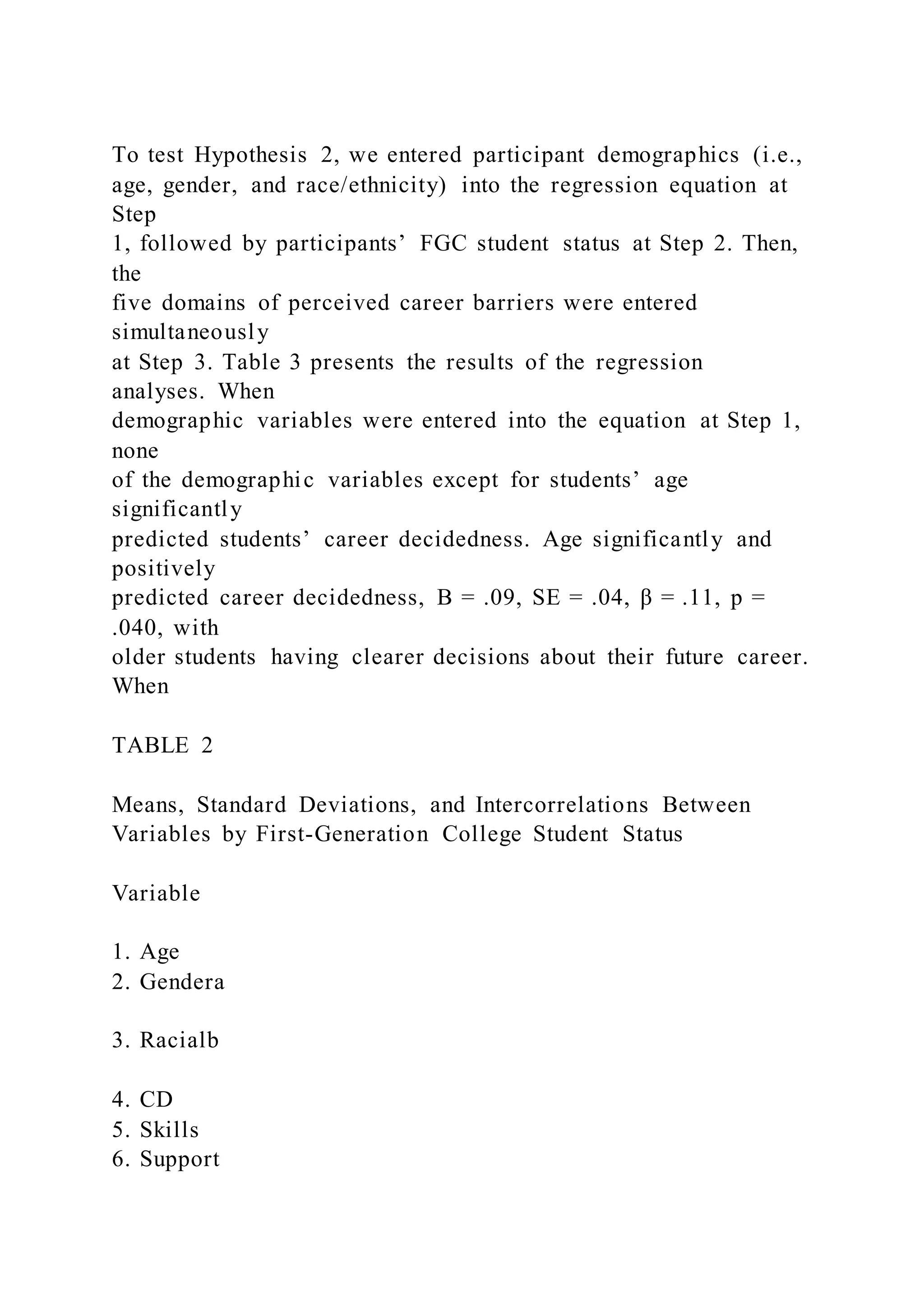
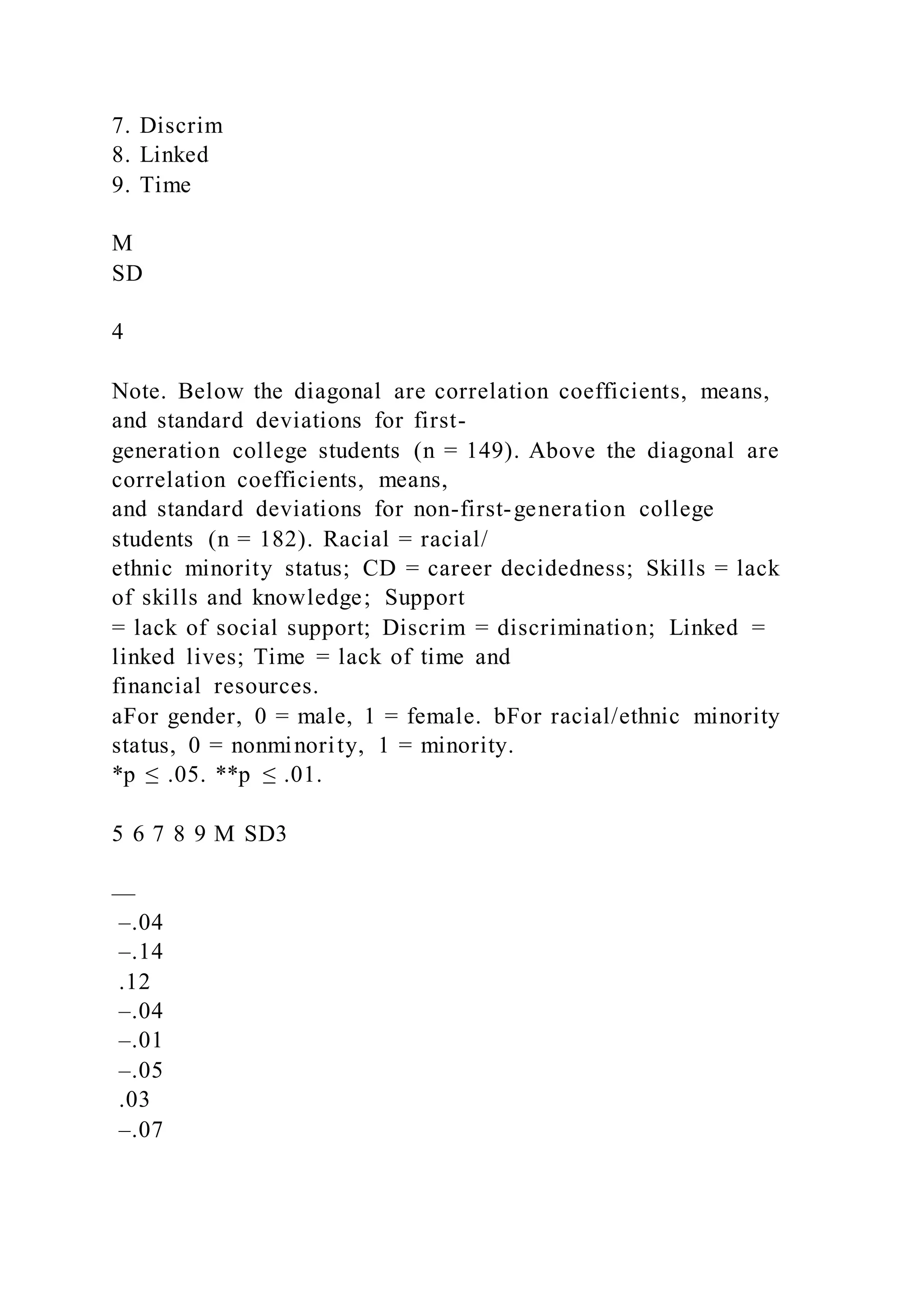
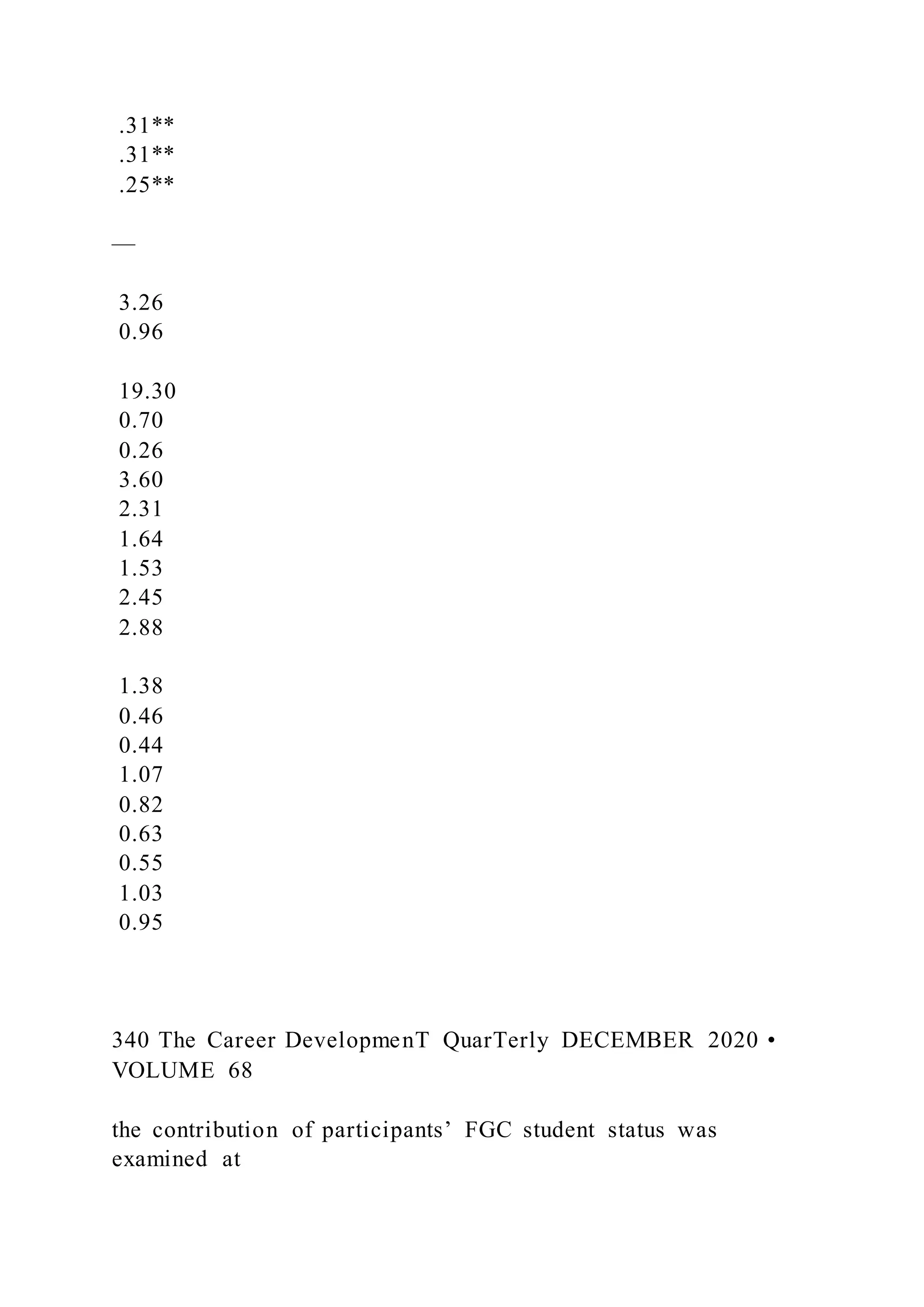
TABLE 2
Means, Standard Deviations, and Intercorrelations Between
Variables by First-Generation College Student Status
Variable
1. Age
2. Gendera
3. Racialb
4. CD
5. Skills
6. Support
7. Discrim
8. Linked
9. Time
M
SD
4
Note. Below the diagonal are correlation coefficients, means,
and standard deviations for first-
generation college students (n = 149). Above the diagonal are
correlation coefficients, means,
and standard deviations for non-first-generation college
students (n = 182). Racial = racial/
ethnic minority status; CD = career decidedness; Skills = lack
of skills and knowledge; Support
= lack of social support; Discrim = discrimination; Linked =
linked lives; Time = lack of time and
financial resources.
aFor gender, 0 = male, 1 = female. bFor racial/ethnic minority
status, 0 = nonminority, 1 = minority.
*p ≤ .05. **p ≤ .01.
5 6 7 8 9 M SD3
—
–.04
–.14
.12
–.04
–.01
–.05
.03
–.07
19.24
1.34
21
–.06
—
–.03
.23**
.05
–.09
.07
.16
.19*
0.68
0.47
.00
.03
—
–.03
.14
.19*
.16*
–.01
.18*
0.40
0.49
.10
–.04
.01
—
–.28**
–.16*
–.12
.13
.10
3.59
1.07
.02
.15*
.11
–.41**
—
.63**
.54**
.21**
.52**
2.39
0.89
–.04
.06
.07
–.21**
.45**
—
.45**
.21**
.29**
1.82
0.72
–.01
.20**
.30**
–.09
.24**
.35**
—
.38**
.43**
1.67
0.63
.00
.10
.20**
.08
.16*
.26**
.29**
—
.30**
2.58
1.00
.06
.13
.13
–.21**
.46**
.31**
.31**
.25**
—
3.26
0.96
19.30
0.70
0.26
3.60
2.31
1.64
1.53
2.45
2.88
1.38
0.46
0.44
1.07
0.82
0.63
0.55
1.03
0.95
340 The Career DevelopmenT QuarTerly DECEMBER 2020 •
VOLUME 68
the contribution of participants’ FGC student status was
examined at
Step 2, it did not predict the outcome variable significantly, B =
.01,
SE = .12, β = .00, p = .968. At Step 3, when perceived career -
related
barriers were added, results showed that participants who
perceived
greater likelihood of experiencing lack of skills and knowl edge
showed
lower levels of career decidedness, B = –.52, SE = .08, β = –.41,
p <
.001. Participants’ perceptions of greater likelihood of
experiencing
linked lives also showed higher levels of career decidedness, B
= .16,
SE = .06, β = .15, p = .005. The result indicates that the data
partially
supported Hypothesis 2.
Finally, to further test Hypothesis 3, we added the interaction
terms
of FGC student status and each of the five domains of perceived
career
barriers at Step 4. The interaction terms were created by
multiplying
FGC student status as a categorical variable and each of the
centered
variables of the five domains of career barriers. Prior to
regression
analyses, all the continuous variables (i.e., perceived career
barriers and
age) were mean centered. Analysis with interaction terms
revealed that
TABLE 3
College Students’ Career-Related Barriers Predicting Career
Decidedness
Variable
Step 1
Age
Gendera
Racialb
Step 2
FGCc
Step 3
Skills
Support
Discrim
Linked
Time
Step 4
FGC × Skills
FGC ×
Support
FGC ×
Discrim
FGC × Linked
FGC × Time
Constant
F
f 2
Note. Adj. = adjusted; Racial = racial/ethnic minority status;
FGC = first-generation college student;
Skills = lack of skills and knowledge; Support = lack of social
support; Discrim = discrimination; Linked
= linked lives; Time = lack of time and financial resources.
aFor gender, 0 = male, 1 = female. bFor racial/ethnic minority
status, 0 = nonminority, 1 = minority. cFor
FGC, 0 = no, 1 = yes.
*p ≤ .05. **p ≤ .01. ***p ≤ .001.
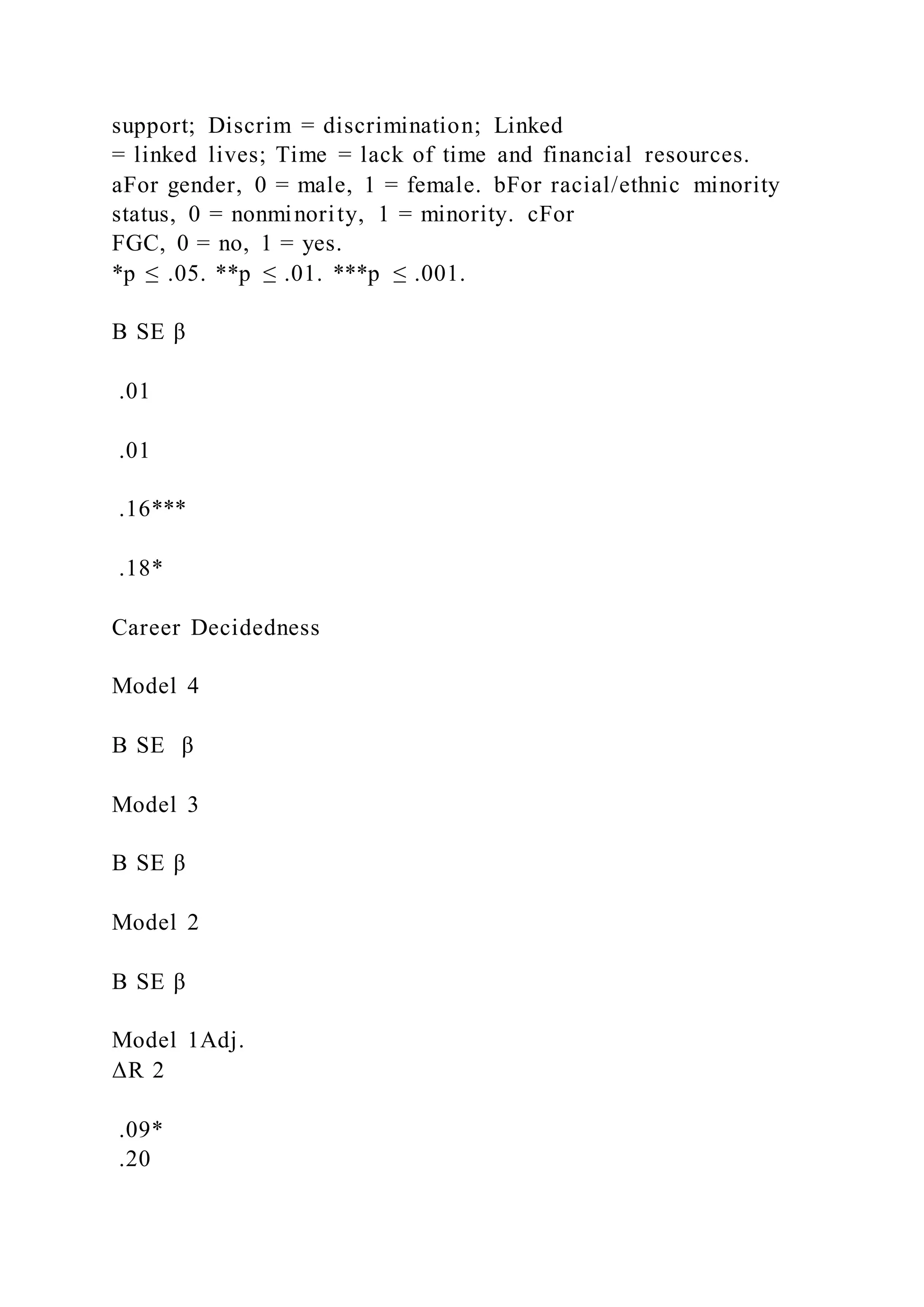
B SE β
.01
.01
.16***
.18*
Career Decidedness
Model 4
B SE β
Model 3
B SE β
Model 2
B SE β
Model 1Adj.
ΔR 2
.09*
.20
.00
.04
.13
.13
.11
.20
.00
.09*
.20
.00
.01
.04
.13
.13
.12
.11
.09
.00
.00
.09*
.24*
.07
–.01
–.52***
–.02
–.07
.16**
.10
.04
.12
.12
.11
.08
.10
.11
.06
.07
.11
.10
.03
–.01
–.41
–.01
–.04
.15
.09
.09*
.23
.05
–.03
–.52***
–.09
–.05
.17**
–.08
–.05
.16
–.10
–.02
.42**
.04
.12
.12
.11
.11
.14
.15
.08
.09
.17
.20
.22
.12
.14
.12
.10
.02
–.01
–.41
–.05
–.03
.16
–.07
–.03
.07
–.04
–.01
.26
3.45*** .11
2.17
3.45*** .12
1.61
3.41*** .12
7.75***
3.39*** .12
6.08***
0.22
The Career DevelopmenT QuarTerly DECEMBER 2020 •
VOLUME 68 341
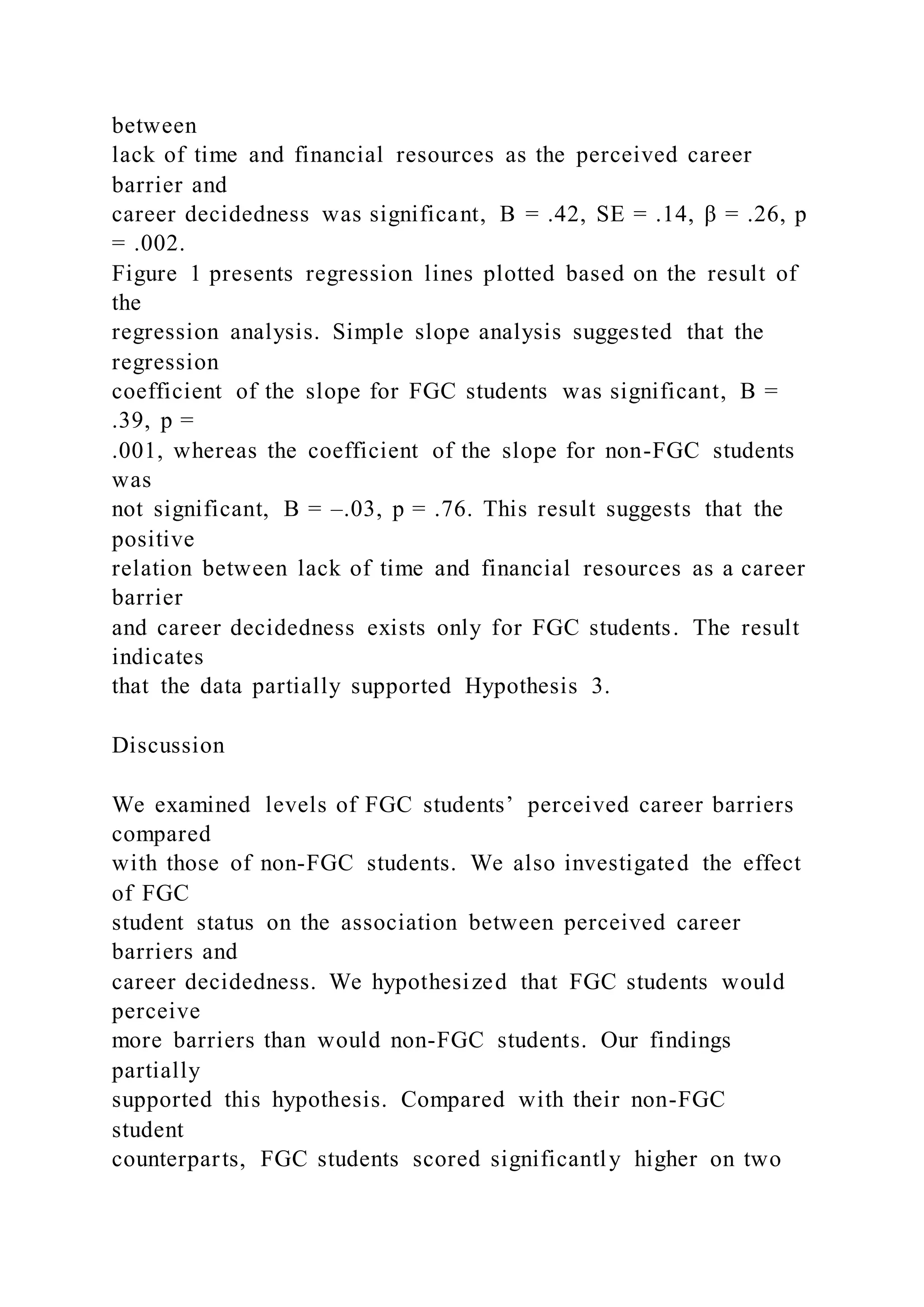
the moderating effect of FGC student status on the association
between
lack of time and financial resources as the perceived career
barrier and
career decidedness was significant, B = .42, SE = .14, β = .26, p
= .002.
Figure 1 presents regression lines plotted based on the result of
the
regression analysis. Simple slope analysis suggested that the
regression
coefficient of the slope for FGC students was significant, B =
.39, p =
.001, whereas the coefficient of the slope for non-FGC students
was
not significant, B = –.03, p = .76. This result suggests that the
positive
relation between lack of time and financial resources as a career
barrier
and career decidedness exists only for FGC students. The result
indicates
that the data partially supported Hypothesis 3.
Discussion
We examined levels of FGC students’ perceived career barriers
compared
with those of non-FGC students. We also investigated the effect
of FGC
student status on the association between perceived career
barriers and
career decidedness. We hypothesized that FGC students would
perceive
more barriers than would non-FGC students. Our findings
partially
supported this hypothesis. Compared with their non-FGC
student
counterparts, FGC students scored significantly higher on two
domains
of perceived career barriers among the five domains that were
examined:
lack of social support and lack of time and financial resources
for ad-
vanced training in the process of exploring future careers. Our
finding
of greater levels of perceived career-related barriers for FGC
students
compared with non-FGC students is consistent with prior
studies that
reported differences in aggregated scores on perceived career -
related
barriers between the two groups of students. However, because
most
previous studies with FGC students did not use multiple
domains of
career-related barriers, this finding is valuable in better
understanding
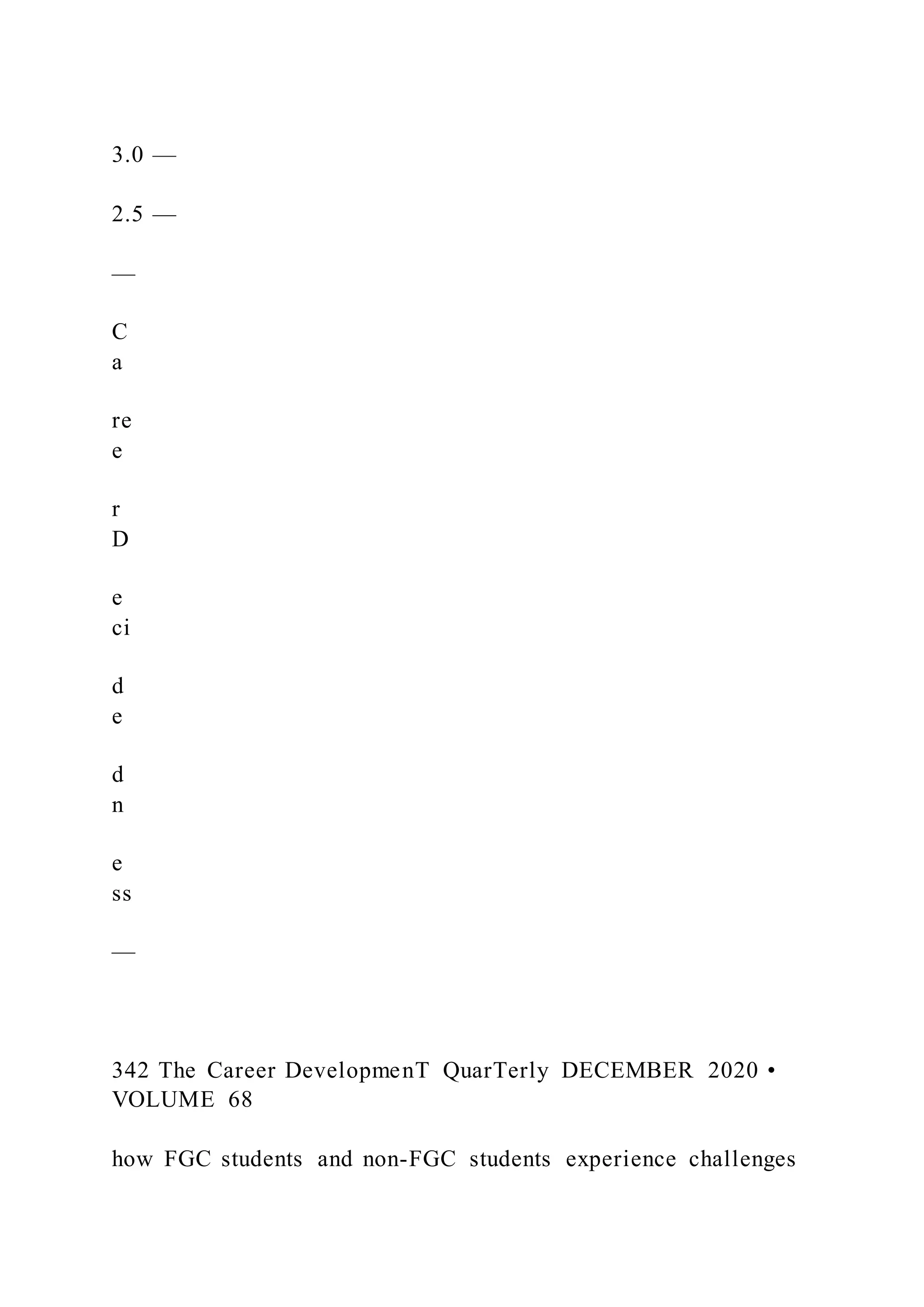
FIGURE 1
Moderating Effect of First-Generation College Student
Status on the Association Between Lack of Time and
Financial Resources and Career Decidedness
= Non-first-generation college students
= First-generation college students
–1 SD (–0.97) +1 SD (0.97)
Lack of Time and Financial Resources
4.0 —
3.5 —
3.0 —
2.5 —
—
C
a
re
e
r
D
e
ci
d
e
d
n
e
ss
—
342 The Career DevelopmenT QuarTerly DECEMBER 2020 •
VOLUME 68
how FGC students and non-FGC students experience challenges
in their
career exploration and planning differently when multiple
domains of
career barriers are assessed.
As hypothesized, students who perceived greater levels of lack
of skills
and knowledge showed lower levels of career decidedness for
their future
occupations. Previous studies with college students have
reported that
perceived career-related barriers were negatively associated
with career
decision-making self-efficacy (Luzzo, 1996; Mejia-Smith &
Gushue,
2017). It could be possible that, compared with FGC students’
percep-
tion of contextual hindrances, their perception of internal
hindrances
such as lack of skills and knowledge may influence their
efficacy more
in dealing with tasks relating to career decision-making
negatively. This
may, in turn, lead to their lower levels of career deci sion-
making.
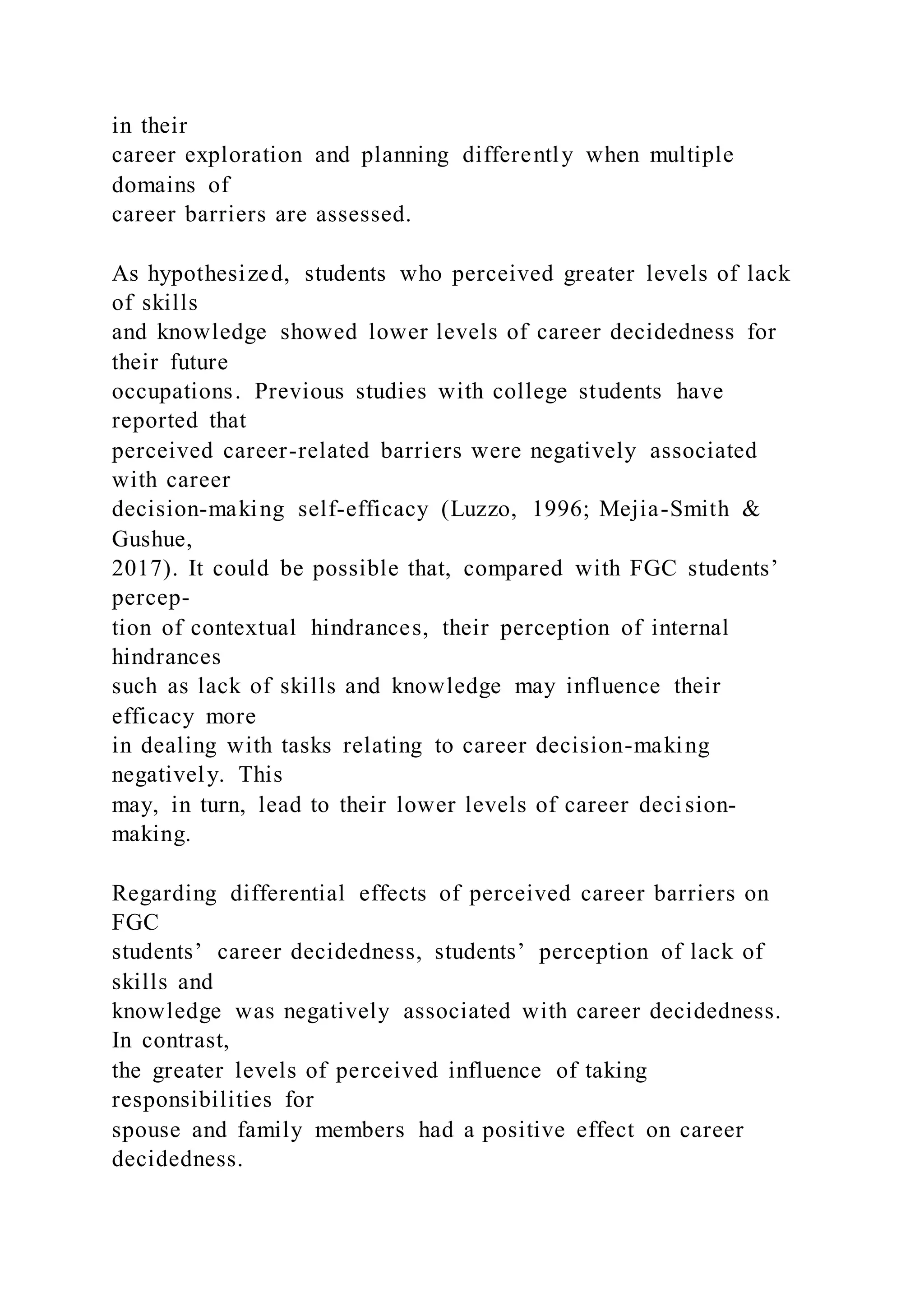
Regarding differential effects of perceived career barriers on
FGC
students’ career decidedness, students’ perception of lack of
skills and
knowledge was negatively associated with career decidedness.
In contrast,
the greater levels of perceived influence of taking
responsibilities for
spouse and family members had a positive effect on career
decidedness.
Although such opposite effects of different domains of career -
related
barriers were unexpected, these findings suggest that the effects
of
perceived career barriers should not be understood simply as
negative
on students’ career outcomes. Rather, various domains of career
barriers
could have differential effects so that people’s perceptions of
career
barriers could function as adaptive or motivating factors under
certain
circumstances (Swanson et al., 1996).
The positive effect was also found for lack of time and financial
re-
sources as a barrier. When the moderating effect of FGC student
status
on the association between students’ perception of lack of time
and
financial resources as a barrier and career decidedness was
examined, this
barrier predicted career decidedness positively for FGC
students, but
not for non-FGC students. A majority of FGC students have
multiple
obligations outside of school, including family and work
responsibili-
ties (Engle & Tinto, 2008). Therefore, exploring career options
with
limited time and financial resources may be a common
challenge, yet
something that FGC students may be expected to overcome. In
the
present study, FGC students may have interpreted lack of time
and
financial resources as a challenging (but not threatening)
context in
that their levels of motivation increased for bettering their own
and
their family’s financial situations and moving forward by
obtaining
secure, well-paying jobs. Studying a sample of students at a
German
university, Hirschi et al. (2013) also found a positive effect of
students’
perception of career barriers on proactive career behaviors (i.e.,
ca-
reer engagement). These researchers explained the positive
effect of
perceived barriers by considering several factors, such as self-
efficacy
beliefs and motivation for pursuing career goals.
The negative and positive effects of perceived career barriers
must
be understood in relation to how individuals would interpret
certain
demands afforded by environments. As social cognitive career
theory
(Lent et al., 2000) describes, people may regard any given
demand by
an environment as a barrier, challenge, or opportunity,
depending on
how they perceive it. In the present study, FGC and non-FGC
students’
The Career DevelopmenT QuarTerly DECEMBER 2020 •
VOLUME 68 343
perceived career barriers were assessed with a list of short
phrases (e.g.,
“discrimination because of my gender/sex,” “lack of money for
further
training/education,” “lack of confidence in abilities”).
Therefore, there
is much room for respondents’ various interpretations of those
career
barrier items. Additionally, how FGC and non-FGC students
scored
on perceived career barriers on the basis of their self-report was
pos-
sibly influenced by individual attributes, such as personality
traits (e.g.,
optimism, proactivity, positive vs. negative affectivity, coping
efficacy;
Lent at al., 2000). These speculations, however, need to be
empirically
tested by future research.
Implications for Career Counseling
Career counselors should understand that various types of
career-related
barriers might have differential effects on young people’s career
decision-
making, depending on students’ backgrounds, such as FGC
student
status, gender, race/ethnicity, personality traits, and cognitive
style. It
is imperative for career and guidance counselors not only to be
aware of
various types of career-related barriers perceived by students in
general
but also to understand that certain types of barriers have effects
particu-
larly on FGC students versus non-FGC students. Using
opportunities to
discuss perceived barriers with FGC students, career counselors
could
help FGC students gain knowledge and develop skills and
abilities that
would be effective in coping with the career-related barriers
that these
students perceive in exploring and obtaining occupations in the
future.
A high school counselor could provide a similar socialization
context
for students through initiating a conversation about challenges
and
barriers that high school students may encounter in their
vocational
future and possible options and coping strategies to help them
deal
with these barriers. For FGC students, and first-generation high
school
students who make the transition from high school to college,
such a
conversation could help compensate for the knowledge and
skills that
these students may lack compared with non-first-generation
students.
Similarly, FGC students could benefit through meeting with a
career
counselor or using various on-campus programs and workshops
offered
by the career center to develop skills and gain knowledge in
exploring
and preparing for their future occupations, which non-FGC
students
may be able to prepare for by means of their parents’
introduction to
these skills and knowledge. To enhance FGC students’
perceived skills
and knowledge to explore their career, we recommend that
specific and
concrete guidance be provided for these students in terms of
skills and
knowledge, such as how to approach professors for reference
requests,
how to network at career fairs, and how to discuss both the
breadth and
the depth of their education experience during job interviews.
Career
center staff, in creating such opportunities for FGC students,
need to be
sensitive to these students’ lifestyles. For example, in offering
services,
staff should keep in mind issues of work-family-school conflict
that many
FGC students contend with.
Limitations and Future Research
We used a convenience sample with data collected at a private
liberal
arts university. Therefore, there is a lack of variability in the
study par-
344 The Career DevelopmenT QuarTerly DECEMBER 2020 •
VOLUME 68
ticipants’ demographic backgrounds (e.g., socioeconomic and
racial/
ethnic backgrounds). With respect to participants’ academic
standing,
one half of the participants were first-year students, which
could influence
the levels of career decidedness reported by these students,
particularly
FGC students who perceived lack of time and financial
resources for
their career decision-making. Even though such students may
have de-
cided to pursue particular occupations, such decision-making,
without
developing specific academic skills and considering further
training for
occupations aspired to because of lack of time and financial
resources,
could be regarded as premature or as occupational foreclosure
(Olson,
2014; Skorikov & Vondracek, 1998). Our study was cross-
sectional, so
causal relations between FGC student status, career barriers,
and career
outcome cannot be determined. Because we used similar items
based
on existing measures of career barriers, our results could be
compared
with those of previous studies. However, there may be
challenges or
barriers that are unique to FGC students (e.g., lack of
understanding of
academic life; Covarrubias & Fryberg, 2015), which we were
not able
to assess in this study. Additionally, the effect sizes of the
significant
results reported in this study were small or medium at most.
Therefore,
those results require readers’ special caution in considering the
practical
implications of the study findings.
Future research is needed to examine FGC students from
various types
of schools at different geographic locations to ensure study
participants’
diverse backgrounds. In addition, studies are needed to explore
career-
related barriers that may be unique to FGC students, and
researchers
should consider investigating the differential effect of various
types
of career barriers on career outcomes. Finally, future research
should
examine how various barriers perceived by FGC students would
influ-
ence one another (e.g., lack of familial support leading to less
use of
campus resources).
Our study adds evidence to the current literature for the
differential
effect of perceived career barriers as contextual factors on the
process of
career decision-making for FGC and non-FGC students. Our
findings also
provide evidence suggesting the significance of understanding
differential
effects of various domains of perceived career barriers on FGC
students’
career decision-making and other career outcomes. Further
investigation
of both overall and domain-specific effects of young people’s
perceptions
of career-related barriers could help career service providers to
better
support FGC students’ career development.
References
Arnett, J. J. (2000). Emerging adulthood: A theory of
development from the late
teens through the twenties. American Psychologist, 55(5), 469–
480. https://doi.
org/10.1037/0003-066X.55.5.469
Cataldi, E. F., Bennett, C. T., & Chen, X. (2018). First-
generation students: College access,
persistence, and postbachelor’s outcomes (NCES 2018-421).
National Center for Educa-
tion Statistics. https://nces.ed.gov/pubs2018/2018421.pdf
Cohen, J. (1988). Statistical power analysis for the behavioral
sciences (2nd ed.). Erlbaum.
Covarr ubias, R., & Fr yberg, S. A. (2015). Movin’ on up (to
college): First-
generation college students’ experiences with family
achievement guilt. Cul-
tural Diversity and Ethnic Minority Psychology, 21(3), 420–
429. https://doi.
org/10.1037/a0037844
The Career DevelopmenT QuarTerly DECEMBER 2020 •
VOLUME 68 345
Creed, P. A., Patton, W., & Bartrum, D. (2004). Internal and
external barriers, cognitive
style, and the career development variables of focus and
indecision. Journal of Career
Development, 30(4), 277–294.
https://doi.org/10.1023/B:JOCD.0000025116.17855.ea
Crites, J. O. (1969). Vocational psychology. McGraw -Hill.
Engle, J., & Tinto, V. (2008). Moving beyond access: College
for low income, first-generation
students. Pell Institute.
http://files.eric.ed.gov/fulltext/ED504448.pdf
Garriott, P. O., Flores, L. Y., & Martens, M. P. (2013).
Predicting the math/science career
goals of low-income prospective first-generation college
students. Journal of Counseling
Psychology, 60(2), 200–209. https://doi.org/10.1037/a0032074
Gibbons, M. M., & Borders, L. D. (2010). Prospective first-
generation college students:
A social-cognitive perspective. The Career Development
Quarterly, 58(3), 194–208.
https://doi.org/10.1002/j.2161-0045.2010.tb00186.x
Gibbons, M. M., & Woodside, M. (2014). Addressing the needs
of first-generation college
students: Lessons learned from adults from low-education
families. Journal of College
Counseling, 17(1), 21–36. https://doi.org/10.1002/j.2161-
1882.2014.00045.x
Ginevera, M. C., Pallini, S., Vecchio, G. M., Nota, L., & Soresi,
S. (2016). Future orien-
tation and attitudes mediate career adaptability and decidedness.
Journal of Vocational
Behavior, 95, 102–110.
https://doi.org/10.1016/j.jvb.2016.08.003
Gnilka, P. B., & Novakovic, A. (2017). Gender differences in
STEM students’ perfection-
ism, career search self-efficacy, and perception of career
barriers. Journal of Counseling
& Development, 95(1), 56–66.
https://doi.org/10.1002/jcad.12117
Gushue, G. V., Clarke, C. P., Pantzer, K. M., & Scanlan, K. R.
L. (2006). Self-efficacy,
perceptions of barriers, vocational identity, and the career
exploration behavior of
Latino/a high school students. The Career Development
Quarterly, 54(4), 307–317.
https://doi.org/10.1002/j.2161-0045.2006.tb00196.x
Hirschi, A., Lee, B., Porfeli, E. J., & Vondracek, F. W. (2013).
Proactive motivation
and engagement in career behaviors: Investigating direct,
mediated, and moderated
effects. Journal of Vocational Behavior, 83(1), 31–40.
https://doi.org/10.1016/j.
jvb.2013.02.003
Holland, J. J., Gottfredson, D. C., & Power, P. G. (1980). Some
diagnostic scales for re-
search in decision making and personality: Identity,
information, and barriers. Journal of
Personality and Social Psychology, 39(6), 1191–1200.
https://doi.org/10.1037/h0077731
Ishitani, T. T. (2006). Studying attrition and degree completion
behavior among first-
generation college students in the United States. The Journal of
Higher Education,
77(5), 861–885. https://doi.org/10.1353/jhe.2006.0042
Konstam, V., & Lehmann, I. S. (2011). Emerging adults at work
and at play: Leisure,
work engagement, and career indecision. Journal of Career
Assessment, 19(2), 151–164.
https://doi.org/10.1177/1069072710385546
Lauff, E., & Ingels, S. J. (2013). Education Longitudinal Study
of 2002 (ELS:2002): A first
look at 2002 high school sophomores 10 years later (NCES
2014-363). National Center
for Education Statistics.
https://nces.ed.gov/pubs2014/2014363.pdf
Lee, S. H., Yu, K., & Lee, S. M. (2008). A typology of career
barriers. Asia Pacific Educa-
tion Review, 9(2), 157–167.
https://doi.org/10.1007/BF03026496
Lent, R. W., Brown, S. D., & Hackett, G. (1994). Toward a
unifying social cognitive
theory of career and academic interest, choice, and performance
[Monograph]. Journal
of Vocational Behavior, 45(1), 79–122.
https://doi.org/10.1006/jvbe.1994.1027
Lent, R. W., Brown, S. D., & Hackett, G. (2000). Contextual
supports and barriers to
career choice: A social cognitive analysis. Journal of
Counseling Psychology, 47(1), 36–49.
https://doi.org/10.1037/0022-0167.47.1.36
Lewis, C., & Keren, G. (1977). You can’t have your cake and
eat it too: Some consid-
erations of the error term. Psychological Bulletin, 84(6), 1150–
1154. https://doi.
org/10.1037/0033-2909.84.6.1150
Lounsbury, J. W., Hutchens, T., & Loveland, J. M. (2005). An
investigation of Big Five
personality traits and career decidedness among early and
middle adolescents. Journal
of Career Assessment, 13(1), 25–39.
https://doi.org/10.1177/1069072704270272
Lounsbury, J. W., Saudargas, R. A., Gibson, L. W., & Leong, F.
T. (2005). An investiga-
tion of broad and narrow personality traits in relation to general
and domain-specific
life satisfaction of college students. Research in Higher
Education, 46(6), 707–729.
https://doi.org/10.1007/s11162-004-4140-6
346 The Career DevelopmenT QuarTerly DECEMBER 2020 •
VOLUME 68
Luzzo, D. A. (1993). Ethnic differences in college students’
perceptions of barriers to
career development. Journal of Multicultural Counseling and
Development, 21(4),
227–236. https://doi.org/10.1002/j.2161-1912.1993.tb00233.x
Luzzo, D. A. (1996). Exploring the relationships between the
perception of occupational
barriers and career development. Journal of Career
Development, 22(4), 239–248.
https://doi.org/10.1177/089484539602200402
Luzzo, D. A., & McWhirter, E. H. (2001). Sex and ethnic
differences in the perception of
educational and career-related barriers and levels of coping
efficacy. Journal of Counseling
& Development, 79(1), 61–67. https://doi.org/10.1002/j.1556-
6676.2001.tb01944.x
McWhirter, E. H. (1997). Perceived barriers to education and
career: Ethnic and gender differences.
Journal of Vocational Behavior, 50(1), 124–140.
https://doi.org/10.1006/jvbe.1995.1536
Mehta, S. S., Newbold, J. J., & O’Rourke, M. A. (2011). Why
do first-generation students
fail? College Student Journal, 45(1), 20–35.
Mejia-Smith, B., & Gushue, G. V. (2017). Latina/o college
students’ perceptions of
career barriers: Influence of ethnic identity, acculturation, and
self-efficacy. Journal of
Counseling & Development, 95(2), 145–155.
https://doi.org/10.1002/jcad.12127
Mitchall, A. M., & Jaeger, A. J. (2018). Parental influences on
low-income, first-generation
students’ motivation on the path to college. The Journal of
Higher Education, 89(4),
582–609. https://doi.org/10.1080/00221546.2018.1437664
Olson, J. (2014). Opportunities, obstacles, and options: First
generation college gradu-
ates and social cognitive career theory. Journal of Career
Development, 41(3), 199–217.
https://doi.org/10.1177/0894845313486352
Osipow, S. H., Carney, C. G., & Barak, A. (1976). A scale of
educational-vocational
undecidedness: A typological approach. Journal of Vocational
Behavior, 9(2), 233–243.
https://doi.org/10.1016/0001-8791(76)90081-6
Owens, D., Lacey, K., Rawls, G., & Holbert-Quince, J. (2010).
First-generation African
American male college students: Implications for career
counselors. The Career Develop-
ment Quarterly, 58(4), 291–300. https://doi.org/10.1002/j.2161-
0045.2010.tb00179.x
Parks-Yancy, R. (2012). Interactions into opportunities: Career
management for low-
income, first-generation African American college students.
Journal of College Student
Development, 53(4), 510–523.
https://doi.org/10.1353/csd.2012.0052
Pascarella, E. T., Pierson, C. T., Wolniak, G. C., & Terenzini,
P. T. (2004). First-generation
college students: Additional evidence on college experiences
and outcomes. The Jour-
nal of Higher Education, 75(3), 249–284.
https://doi.org/10.1353/jhe.2004.0016
Raque-Bogdan, T. L., & Lucas, M. S. (2016). Career aspirations
and the first generation
student: Unraveling the layers with social cognitive career
theory. Journal of College
Student Development, 57(3), 248–262.
https://doi.org/10.1353/csd.2016.00 26
Redford, J., & Hoyer, K. M. (2017). First-generation and
continuing-generation college
students: A comparison of high school and postsecondary
experiences (NCES 2018-009).
National Center for Education Statistics.
https://nces.ed.gov/pubs2018/2018009.pdf
Skomsvold, P. (2014). Web tables—Profile of undergraduate
students: 2011–12 (NCES
2015-167). National Center for Education Statistics.
https://nces.ed.gov/
pubs2015/2015167.pdf
Skorikov, V., & Vondracek, F. W. (1998). Vocational identity
development: Its relation-
ship to other identity domains and to overall identity
development. Journal of Career
Assessment, 6(1), 13–35.
https://doi.org/10.1177/106907279800600102
Storlie, C. A., Mostade, S. J., & Duenyas, D. (2016). Cultural
trailblazers: Exploring the
career development of Latina first-generation college students.
The Career Development
Quarterly, 64(4), 304–317. https://doi.org/10.1002/cdq.12067
Swanson, J. L., Daniels, K. K., & Tokar, D. M. (1996).
Assessing perceptions of career-
related barriers: The Career Barriers Inventory. Journal of
Career Assessment, 4(2),
219–244. https://doi.org/10.1177/106907279600400207
Swanson, J. L., & Woitke, M. B. (1997). Theory into practice in
career assessment for
women: Assessment and interventions regarding perceived
career barriers. Journal of
Career Assessment, 5(4), 443–462.
https://doi.org/10.1177/106907279700500405
Tate, K. A., Caperton, W., Kaiser, D., Pruitt, N. T., White, H.,
& Hall, E. (2015).
An exploration of first-generation college students’ career
development beliefs
and experiences. Journal of Career Development, 42(4), 294–
310. https://doi.
org/10.1177/0894845314565025
The Career DevelopmenT QuarTerly DECEMBER 2020 •
VOLUME 68 347
Urbanaviciute, I., Pociute, B., Kairys, A., & Liniauskaite, A.
(2016). Perceived career
barriers and vocational outcomes among university
undergraduates: Exploring media-
tion and moderation effects. Journal of Vocational Behavior, 92,
12–21. https://doi.
org/10.1016/j.jvb.2015.11.001
Vondracek, F. W., Schulenberg, J., Skorikov, V., Gillespie, L.
K., & Wahlheim, C. (1995).
The relationship of identity status to career indecision during
adolescence. Journal of
Adolescence, 18(1), 17–29.
https://doi.org/10.1006/jado.1995.1003
Wright, S. L., Perrone-McGovern, K. M., Boo, J. N., & White,
A. V. (2014). Influential
factors in academic and career self-efficacy: Attachment,
supports, and career barriers.
Journal of Counseling & Development, 92(1), 36–46.
https://doi.org/10.1002/j.1556-
6676.2014.00128.x
Xu, H., & Tracey, T. J. G. (2015). Ambiguity tolerance with
career indecision: An ex-
amination of the mediation effect of career decision-making
self-efficacy. Journal of
Career Assessment, 23(4), 519–532.
https://doi.org/10.1177/1069072714553073
York-Anderson, D. G., & Bowman, S. L. (1991). Assessing the
college knowledge of
first-generation and second-generation college students. Journal
of College Student
Development, 32(2), 116–122.
Reproduced with permission of copyright owner. Further
reproduction prohibited without permission.
https://doi.org/10.1177/1538192719849756
Journal of Hispanic Higher Education
2021, Vol. 20(2) 213 –231
© The Author(s) 2019
Article reuse guidelines:
sagepub.com/journals-permissions
DOI: 10.1177/1538192719849756
journals.sagepub.com/home/jhh
Article
The Guilt of Success:
Looking at Latino
First-Generation College
Students’ Experience of
Leaving Home
Rosean Moreno1
Abstract
This study looked at the experiences of six participants and
their feelings of guilt. The
findings revealed that guilt was caused when the participants
put their needs before
the needs of their family and attended college. Institutions of
higher education may
not know or understand the importance family plays for these
students and may not
foster parent participation, therefore potentially increasing
these feelings of guilt.
Resumen
Este estudio examinó las experiencias de seis participantes y sus
sentimientos de
culpa. Los hallazgos revelaron que la culpa se causó cuando los
participantes pusieron
sus necesidades antes de las necesidades de su familia al
concurrir a la universidad.
Instituciones de educación superior podrán no saber o entender
la importancia que
la familia juega en estos estudiantes y podrán no promover la
participación de los
padres, por lo tanto, potencialmente incrementando esos
sentimiento de culpa.
Keywords
achievement, Latino/a, qualitative, resilience, retention, guilt,
first generation, college
The Guilt of Success
When students go to college, they grow and become mature
individuals, expand their
knowledge academically and socially, and gain a better
understanding of different careers,
1El Camino College, Torrance, CA, USA
Corresponding Author:
Rosean Moreno, El Camino College, 18232 Index St., Porter
Ranch, CA 91326, USA.
Email: [email protected]
849756 JHHXXX10.1177/1538192719849756Journal of
Hispanic Higher EducationMoreno
research-article2019
https://us.sagepub.com/en-us/journals-permissions
https://journals.sagepub.com/home/jhh
mailto:[email protected]
http://crossmark.crossref.org/dialog/?doi=10.1177%2F15381927
19849756&domain=pdf&date_stamp=2019-05-18
214 Journal of Hispanic Higher Education 20(2)
including which one is right for them (Pascarella & Terenzini,
2005). Students choose to
go to college because a college degree increases their income by
almost 50% compared
with someone who only has a high school diploma (Swail, Redd,
& Perna, 2003).
First-generation college students in particular are a growing
population in U.S. col-
leges. Between 1980 and 2011, first-generation college students
increased 73%, mak-
ing this group an important population to watch and support
(Tucker, 2014). Students
who are first-generation college students are individuals who
are attending or have
attended college while their parents did not go further than a
high school education
(Pascarella, Pierson, Wolniak, & Terenzini, 2004). Ensuring the
success of first-gener-
ation college students is crucial because the demographics of
this country are changing
and colleges are starting to reflect those changes. Therefore, it
is important that col-
leges begin to better understand the background and needs of
first-generation college
students because more of them continue to enter college.
Introduction
According to the U.S. Census Bureau (2013), 81.8% of the
population with a bache-
lor’s degree are White and 7.5% are Latino/as. Fewer Latino/as
pursue an advanced
degree compared with their White counterparts. For example,
one out of 13 White
students with a bachelor’s degree earns a doctorate, compared
with one out of 23
Latino/as (U.S. Census Bureau, 2013). Even with increased
efforts made to retain
these underrepresented populations, such as an increase in
financial aid, extra tutoring,
peer advising, and remedial courses, Latino/a students still
obtain lower grade point
averages (GPAs), have higher dropout rates, and are less likely
to graduate than their
White or Asian peers (Massey, 2003). This knowledge is useful
in identifying the gap
in educational opportunities and makes the case that more needs
to be known on how
to properly serve Latino/a students.
The challenge lies in understanding the reasons behind the
lower rates of college
enrollment and graduation for first-generation college students.
For many first-gener-
ation college students, the idea of leaving home to pursue an
education, taking a high-
paying job, and ultimately becoming more “successful” than the
rest of their family
and community can bring a sense of guilt for leaving home to
live a “better” life while
not being able to bring their loved ones with them. For most
first-generation college
students, it is a struggle to balance the demands of being a
student with being an active
member of their family and community. As a result, there is
reason to believe that first-
generation college students often have the feeling of needing to
be two different peo-
ple. Many first-generation college students state that they keep
their academic life
completely separate from their family life, therefore creating
two different personas
(Bryan & Simmons, 2009). As stated by Richard Rodriguez
(1974) who was one of the
first authors to write about his experience as a Latino first-
generation college student,
often a student’s academic pursuits are not welcomed by family
members, which puts
pressure on the student to keep this new world away from home
life. This notion of
having to keep their academic and family world separate was
also discussed by Laura
Rendon (1992) as she used Richard Rodriguez’s initial article to
state the challenges
Moreno 215
she had as a Latina first-generation college student and how her
mother regretted send-
ing her to college due to not feeling like they could relate
anymore. By attending col-
lege, first-generation college students get to experience an
opportunity their parents
did not have. Many times they struggle with the lack of
academic support from their
family because their family does not know how to support them.
Often first-generation
college students worry that going to college will create a gap
between them and their
family or that they will no longer belong (Banks-Santilli, 2015).
Those who are suc-
cessful may begin to realize that they are gaining life-changing
opportunities unavail-
able to their communities and not understood by family. This
study will look into
whether this realization brings a sense of guilt for experiencing
a better life.
It is intuitive to believe that this need to bridge two unique
worlds and personas
influences first-generation students’ college enrollment and
retention, as well as their
educational attainment. However, how it might do so must be
further explored if edu-
cators and policy makers are to find ways to support this
growing population. Typically,
the scholarship on this population does little to ameliorate the
situation, framing their
experiences through a deficit framework and emphasizing
failures in the face of chal-
lenges. Studies that explore the source of guilt and the pursuit
of success are rare. The
goal of this study is to make explicit the strength, support, and
success through per-
sonal narratives of first-generation college students who
experienced guilt.
Purpose
The purpose of this qualitative study is to understand the
experiences of Latino/a first-
generation graduate students who may experience feelings of
guilt in pursuit of the
achievement of an undergraduate education. This study will
answer the following
questions: What role does guilt play in the higher education
journey of Latino/a first-
generation college students? What tools and strategies do they
use to manage the role
it plays? In what ways does guilt negatively influence their
higher education journey
and how do they achieve academic success?
Conceptual Framework/Literature Review
The conceptual framework for this study draws from Geraldine
Piorkowski’s (1983)
linkage of survivor guilt in relation to first-generation college
students. The idea that
first-generation college students struggle with feeling like they
are the only ones who
have succeeded while others from their community did not
helped to frame this study
as it was clear that more research on this concept was needed.
However, to understand
Piorkoski’s concept, it is best to get an understanding of what is
survivor guilt.
Survivor Guilt
Niederland (1961) first used the term survivor guilt to describe
the experiences of
Holocaust survivors. A psychoanalyst who studied individuals
who survived the Holocaust
and immigrated to the United States, William Niederland
advocated for focusing on the
216 Journal of Hispanic Higher Education 20(2)
stories of survivors, as no one at the time understood that
surviving a traumatic event like
the Holocaust brought forth mental instability that could
possibly hinder one’s daily life.
The individuals Niederland studied shared stories of hardship
and loss; because of their
experiences, they felt alone, depressed, denial, misunderstood,
unable to relate to others,
and different than the person they were before the disaster.
Niederland (1961) described survivor guilt as the guilt felt after
surviving a disaster
when others did not. As a result of the guilt, survivors try to
punish themselves either
consciously or subconsciously for having survived. This guilt is
described as a great
burden and a heavy load that is carried by the survivor. When
the individual is wrapped
up in the chaos of the events and has no time to settle, they do
not have time to reflect
on the disaster. These feelings of guilt tend to emerge when the
chaos and traumatic
event are over and the survivor is in a state of calmness and
ease. According to
Niederland, the guilt emerges in one of two ways, either
through the depression or inner
pain felt by the survivor or when the survivor begins to feel as
if they are hated or being
attacked by others. Examples of this can be seen in Niederland’s
article where survivors
of the Holocaust were finally settling in their homes in the
United States and began to
reflect on their experiences, which, in turn, gave rise to
depression and remorse.
The concept of survivor guilt was first applied to higher
education by Geraldine
Piorkowski who used the term to refer to first-generation
college students. At the time,
Piorkowski was the director of counseling and testing services
at a university in
Chicago. She used her knowledge and experience working with
students to develop
and use the concept of survivor guilt in relation to first-
generation college students.
This notion of survivor guilt is linked to the idea that first-
generation college students
struggle with the concept of going to college and being
successful while not being able
to bring their family with them to this new life they are
experiencing. First-generation
college students described experiencing criticism from their
family, as they were con-
stantly asked, “So you think you are better?” These questions
caused difficulty for
first-generation college students when trying to speak to family
about their academic
life (Piorkowski, 1983).
Piorkowski (1983) argued that survivor guilt was most prevalent
in low-income,
urban first-generation college students. According to
Piorkowski, these students feel
the guilt when they begin to reflect on being in college even as
others from their com-
munity who are equally or more deserving of a college
education are not. These first-
generation college students begin to believe that their success is
a direct result of
others’ failure. The college students ask themselves why they
should succeed when
others do not or what else they could have done to help others,
causing grief. The guilt
felt by these students can be linked to depression, difficulties
concentrating, and study
skills problems, which, in turn, affect academic success.
Individuals also begin to feel frustration, isolation, and
criticism coming from fam-
ily members directly related to their success. Those students
who decide to change
their diction to reflect “proper” English are often ridiculed by
family members who
believe the individual is trying to be better than them.
According to Piorkowski (1983),
these students restrict themselves from talking about academics
or positives in their
life with others in their family. The students find it difficult to
pursue academic work,
Moreno 217
which they experience as breaking away from family and the
family norms, without
facing internal struggles. Students may feel as if college
changes who they are and
they cannot go back to the person they used to be before
entering college. First-
generation college students experience anxiety over leaving
their family. They also
risk ridicule and feeling like they do not belong or they may
experience a sense of
being attacked, constantly criticized, and hated.
Survivor guilt may rise from years of oppression of certain
communities, such as
communities that are low-income or of color, and making those
who break away from
that oppression feel guilty for moving away from the norm.
Understanding this notion
of survivor guilt and how it relates to first-generation college
students will help col-
lege faculty/staff, parents, and the actual students embrace the
challenges these indi-
viduals face at school and at home. These students may be
struggling with these issues
of guilt, and it is important that we as professionals understand
the guilt to help these
students succeed.
Method
A narrative design is appropriate for this study because it
allows the author to tell per-
sonal stories of successful students from historically
marginalized groups that have not
had a voice. According to Cortazzi and Jin (2006), narrative
designs are intended to
focus research not only on the participants’ experiences but also
on the meanings they
give to those experiences. This design allows the researcher to
give voice to the par-
ticipants and tell their stories in ways that are often not told or
not possible in other
forms of both quantitative and qualitative designs. This method
is also indicated when
the researcher is looking to find results useful in a college
setting (Plano Clark &
Creswell, 2010) such as using the findings to help college staff
and faculty understand
the lived experiences of first-generation college students.
Narrative inquiry is also a
way for researcher and participant to collaborate to tell a story
of lived experience
(Clandinin & Connelly, 2000).
For this study, participants were asked to share stories of guilt
and how they man-
aged to overcome that challenge. Through multiple interviews
with each participant,
information was gathered to help tell their story. According to
Seidman (2006), inter-
views allow for a better understanding of the lived experiences
of individuals as well
as how those individuals understand those experiences.
This study used the narrative notion of counterstories to best
tell each individu-
al’s story. Counterstories are a way of challenging the dominant
culture and open-
ing new experiences and perspectives, and develop a richer
body of knowledge
(Delgado, 1989).
Sample
The population of this study was Latino/a first-generation
college graduates who had
expressed feelings of guilt related to being the first or only
member of their family to
attend an institution of higher education. Many first-generation
college students are of
218 Journal of Hispanic Higher Education 20(2)
color and from low-income communities (Saenz, Hurtado,
Barrera, Wolf, & Yeung,
2007). According to the Higher Education Research Institute at
University of California,
Los Angeles (UCLA; Saenz et al., 2007), Latino/as are currently
and historically the
largest population of first-generation college students. As
Latino/as make up a large pro-
portion of first-generation college students, this study will
focus on recruiting from this
population.
Participants must have attended and graduated from a U.S. high
school. As there is
little information about how the rest of the world prepares first-
generation college
students for higher education, this study will solely focus on
those individuals who
have attended U.S. high schools. Graduate students or those
who have completed
graduate school were chosen to participate as a way of showing
persistence and telling
the stories of success of these participants. The individuals were
recruited from all
over the United States. They all self-identified as Latino/a.
There were a total of six participants in this study. According to
Creswell (2007), nar-
rative studies can have as few as one participant. Narrative
designs require multiple inter-
views, and the data collected are extensive and richly detailed
(Creswell, 2007); therefore,
this study was limited to no more than six participants. As guilt
can affect any first-gener-
ation student, no particular school, city, or discipline was
chosen to be the focus of the
study. With very little information available on the effects of
guilt on first-generation
students, there is no empirical evidence to suggest a specific
population to choose from.
Participants
There were a total of six participants: three females and three
males between the age
of 27 and 42 years. A brief biography of each is given below:
Ariana is a 27-year-old female from Rhode Island. She is of
Afro-Colombian and
Italian descent who speaks both English and Spanish. She is
majoring in anthropol-
ogy and is currently pursuing her doctorate degree. Ariana
attended a college in
Vermont for undergrad, and for graduate school, she attended
colleges in
Massachusetts and Illinois.
Christina is a 32-year-old female from Texas. She is of Mexican
descent and speaks
both English and Spanish. She is majoring in counseling and is
pursuing her doctor-
ate degree. Christina attended a college in Texas for undergrad,
and for graduate
school, she attended colleges in Colorado and Idaho.
Jacinto is a 42-year-old male from Southern California. He is of
Mexican descent
and speaks both English and Spanish. He is majoring in
education and is pursuing
his doctorate degree. Jacinto attended a community college in
Southern California
and Cal State in Southern California for undergrad, and for
graduate school, he
attended colleges in Southern California. Jacinto stayed
home/local throughout his
educational journey.
Pedro is a 34-year-old male from Southern California. He is of
Salvadorian descent
and speaks both English and Spanish. He is majoring in
education and is pursuing
his doctorate degree. Pedro attended a community college in
Southern California
Moreno 219
and UC in Southern California for undergrad, and for graduate
school, he attended
colleges in Southern California.
Veronica is a 27-year-old female from Southern California. She
is of Mexican
descent and speaks both English and Spanish. She is majoring in
social sciences
and is pursuing her doctorate degree. Veronica attended a Cal
State for undergrad,
and for graduate school, she attended a college in New England.
She has two
younger brothers and two younger sisters.
Xavier is a 32-year-old male from Southern California. He is of
Mexican and
Persian descent and speaks both English and Spanish. He is
majoring in education
and is pursuing his doctorate degree. Xavier attended a
community college in
Southern California and a Cal State in Southern California for
undergrad, and for
graduate school, he attended colleges in Southern California.
Data Collection Methods
Two instruments were used to collect data: a questionnaire and
multiple interview
protocols. These instruments, as well as the specific procedures
to gather the data, will
be described in this section.
Questionnaire. The questionnaire had 12 questions and was
designed to gather general
demographic information that was crucial to understanding the
participant, such as
gender, age, and where they attended college. As these
categories were standardized
across each participant, a questionnaire was the most efficient
way to gather data.
Interview protocols. Interviews were the second form of data
collection. The protocol
questions were developed using the research questions,
conceptual framework, and
literature on first-generation students and guilt.
Two interviews were conducted to gather the participants’
stories about guilt they
faced throughout their educational journey. The first interview
(Appendix A) asked
questions about the participant’s background and education, as
well as experiences
with guilt. The second interview (Appendix B) allowed an
opportunity to reflect on
data gathered from the first interview and feelings or thoughts
that may have come up
after the last interview. This interview revisited the same topics
as the first interview
for clarification and elaboration on their initial responses. As
narrative inquiry looks
deeply into the participants’ stories, it is common for two to
three interviews to take
place per participant.
The literature played a large role in the development of
questions. Based on what is
known about first-generation college students, the questions
were formulated.
Research Questions
The primary question that drove this study was, “What role does
guilt play in the
higher education journey of Latino/a first-generation college
students?” Additional
questions included the following:
220 Journal of Hispanic Higher Education 20(2)
Research Question 1: What tools and strategies do they use to
manage the role it
plays?
Research Question 2: In what ways does guilt negatively
influence their higher
education journey?
Research Question 3: How do they achieve academic success?
Procedures
Interviews were conducted in person for the four participants in
Southern California,
and for two who were located in Illinois and Idaho, interviews
were conducted using
Skype. The in-person interviews were conducted in homes,
places of work, and an
empty backroom of a restaurant. Each participant was
interviewed twice. Each inter-
view took roughly 1 to 1.5 hr and was conducted 2 weeks apart
from each other.
The data collected from these interviews were transcribed by a
professional tran-
scription service. Guided by the conceptual framework in the
first cycle of coding
(Saldana, 2009), each transcript was then coded using the
theoretical codes: academ-
ics, college, community, elite, family, guilt, key phrases,
motivation, pride, and racism.
In the second cycle of coding, each of the theoretical codes was
scrutinized to identify
categories reflecting nuances within the theoretical codes.
Data Analysis
As stated by Clandinin and Connelly (2000), there is no one
way to analyze narrative
data and there are no one particular steps to be taken because it
is a continuous process
of reviewing and revising. However, what is recommended is to
spend hours reading
and rereading all data to create a summary of the participant’s
story, and then begin to
narratively code by identifying important people, places, events,
traditions, or feelings
(Clandinin & Connelly, 2000).
In this study, the hours of reading were guided by a variation of
Life Position Analysis
(Martin, 2013), a procedure used in the analysis of life
narratives which examines where
a person is in their life, how that affects them, and how they
move forward. This analysis
has five steps, which were followed for this study. The first step
is to look for important
people, traditions, or events that are key in the study. The
second is to look at the position
and perspectives held by the participants at the time of different
events or important
times in their lives. The third is to put together themes or
commonalities that are begging
to become apparent. The fourth is looking at how a person
perceived or handled a spe-
cific situation. The fifth step is to summarize that individual’s
story. Knowing that there
is no one particular method or step to analyzing narrative study,
the author constantly
revisited the original data and tested and revised themes
accordingly.
Major Findings
The findings of this study indicate that guilt does significantly
influence the lives of
these first-generation college student participants. Each began
to feel guilt as early as
Moreno 221
the transition from high school to college, and most stated that
the guilt continued and
has never gone away. They continue to experience guilt in their
lives, years after com-
pleting their undergraduate degrees. For both genders, the guilt
of leaving home or
financial guilt was also most active when they were physically
further from home.
Guilt is also most apparent when knowing others, especially
loved one, are suffering
(Baumeister, Stillwell, & Heatherton, 1994).
The strongest guilt can be felt when individuals break away
from their loved ones.
This was all very relevant in this study. As Veronica remarked,
Well with my siblings, the whole idea of leaving because that
was every time I left or
most of the time and I just felt that I was missing out on them
kind of growing up a little
bit and being part of their lives on a sort of everyday basis. I
mean they were guilt tripping
me really hard, you know, they would write me notes while I
was in college. Or you
know, I love you so much, why are you going to college, like
really cute things but they
made me feel pretty sad. So I felt guilty in that sense.
The findings depicted that most guilt was felt between the
participants and their
families and was most challenging when their families were
going through difficult
times at home. This may also have come with the sense of
helplessness and feeling that
more could be done to help the family if they were closer.
Tools and Strategies to Manage Guilt
The tools and strategies that these students used to overcome
their guilt or make it
easier were finding ways to stay connected to their family.
Although their family was
a large part of why they felt guilty, their families helped them
to work through their
guilt. Therefore, being able to remain connected to family by
phone, Skype, or visits
made the feelings of guilt easier to manage.
Although unaware of what was occurring in their academic life,
the participants’
families were their biggest supporters. Pedro explains this in his
experience:
I have always had that and I think especially with my mom. Just
to be able to tell her I
have this exam coming up. I have this coming up. My dad has a
third-grade education and
my mom sixth grade education and I think while they couldn’t
relate or give me advice
on how to be able to study for something, they were always
supportive. Always
understanding. I would tell my mom like I have to be at the
library until this time working
on this stuff and “echale ganas [give it your all]” that was all I
needed from them.
When the participants went home, it was often a time to tune
out school and take all
the time to spend with their loved ones. The literature described
how parents often
tried to support their children, however did not understand what
they were doing
(Stephens, Hamedani, & Destin, 2014), and the fact that first-
generation college stu-
dents are highly motivated by their families (Irlbeck, Adams,
Akers Ci Burris, &
Jones, 2014), which were concepts also seen in this study. Each
of the participants
stated their parents supported them as much as they could;
however, they did not
222 Journal of Hispanic Higher Education 20(2)
support them academically or financially because they did not
know how or could not
provide the funds. Saenz et al. (2007) described how finances
played a significant role
in the lives and experiences of first-generation college students,
and for this study,
financial difficulty often arose and made college much more
difficult. One individual
talked about being accepted to her dream school for college;
however, that excitement
was short-lived when her parents told her they could not afford
that school. This was
a significant challenge for this participant, who began to cry in
the interview as she
recalled this memory.
However, through the challenges faced by these students, all
participants stated
that a big part of why they continue to do what they do is for
their family. Their family
was a significant reason why these individuals stayed
motivated, and therefore, find-
ing ways to stay connected to family was a way these
individuals achieved academic
success.
The Negative Influence of Guilt
On how guilt negatively affects first-generation college
students, with these six par-
ticipants, it encouraged the question of whether they should
remain in school when
they knew their family needed them at home. This idea of
leaving school was espe-
cially hard when they missed their family, felt a need to support
their family, or felt
their family physically needed them home to care for the ill or
younger siblings. Most
of the students stated they considered leaving their institution to
go back home or to
transfer to an institution closer to home. Ariana actually
transferred to another univer-
sity to be closer to her family. According to Orbe (2004), being
a first-generation col-
lege student was a big part of the individual’s identity and it
was true in terms of these
participants. The fact that they were the first in their family to
go to college was some-
thing that became a big part of who they were and how they
experienced college.
Christina described how hard it was when she realized that her
college experience was
going to be more challenging than her peers as she had to work
and she was constantly
going home on the weekends to see her family.
The concern on how to support family is also a challenge. The
participants often
stated they felt helpless at times because they were physically
away from home and
could not provide their family the attention and support they
could if they were home.
These students had family members who were incarcerated,
another whose father suf-
fered a heart attack and could no longer work, another whose
father who was close to
being paralyzed due to a work injury, another who left a mother
to care for her four
younger siblings, and another whose parents were about to lose
their home to foreclo-
sure. This all brought upon guilt for going to school while their
families struggled at
home. Along with this guilt came feelings of selfishness. The
five participants who
physically left home for school stated at some point they felt as
if they were selfish for
going to school while their families were dealing with problems
at home. Pedro
remembered overhearing a side comment his aunt made in
Spanish, which he trans-
lated as, “look at him, his father suffers a heart attack and he
goes off and leaves.”
Xavier felt responsible for their parents’ debt and almost losing
their home. After her
father’s work accident, Ariana stated she constantly debated
whether to turn down her
Moreno 223
graduate school acceptance for the best program in the country
for Anthropology
because it was so far away from home. She said she had to make
the selfish decision
to accept and attend that program knowing she was leaving her
father.
Another negative aspect for the participants was being seen as
different from their
family or no longer belonging in their community. When
looking at the notion achieve-
ment guilt which is described as guilt for having more education
than their parents or
the rest of their family (Covarrubias & Fryberg, 2015), this was
also something that
was present among the participants. Jacinto stated he felt guilty
for needing to “dumb
down” his conversation with his parents. He also felt guilty for
living in two different
worlds, unable to merge the two worlds together (London,
1989). Xavier also said his
cousin teased him and his sister for claiming that they thought
they were better because
they went to college. Christina stated,
I talked to my parents pretty regularly and I went home a lot so
I felt pretty connected to
them. There was a lot about my life that they didn’t understand
but that is how it always
was. That wasn’t different. I think that was always because they
didn’t understand my
education from the beginning, but the fact that they didn’t
understand college. Now, what
was new, was that wasn’t the case for everyone else, that was
new and shocking to me.
But my relationship with my family. I don’t think it has
changed much.
First-generation college students who go off to college and
break away from the
norm of not going to college feel guilt for leaving or that they
are abandoning their
culture (Banks-Santilli, 2015). This was present and caused
anxiety in the participants
as many stated they did not want to feel different than their
community. Pedro and
Jacinto did not want their friends to know they were in a
doctorate program due to the
feeling of not being able to relate anymore.
The participant felt they should not be successful because of
their family back-
grounds and the neighborhoods they came from. They also
stated to have anxiety for
being different and a fear of no longer belonging to their
community. The participants
also stated they felt attacked and ridiculed for going to college
and thinking they were
better. Although no one stated they felt depressed, the
participants stated they were
sad, concerned, and often cried for the situation they were in,
for feeling guilty.
Academic Success
Participants achieved academic success by staying motivated. A
significant motiva-
tion for each of them to stay in school was to give back to their
community. Each had
their own way of giving back to their community; they valued
their community and
knew the need was great for them to educate others. Similarly,
Easley, Bianco, and
Leech (2012) found that first-generation students feel that the
best way to bring honor
and show how much they care is by supporting their families
and giving back to their
communities. Family was another motivation and wanting to
make their parents
proud. Jacinto stated his mom loved graduations and he felt she
was living through
her children when she attended their graduations. Therefore, he
wants to get his doc-
torate for his mom.
224 Journal of Hispanic Higher Education 20(2)
Another key characteristic of academic success was the notion
of being selfish.
In the Latino/a community, the idea of family and being
together is taught and val-
ued. Being independent and doing what was best for them can
be seen as selfish;
this is often unheard of in the Latino/a community. As Christina
stated, “I battle that
guilt of feeling selfish,” which is putting her needs over the
needs of her family.
Although more research needs to be done on this topic,
Stephens et al. (2014) found
that the colleges value students who are independent, so maybe
there is something
about students who are more independent than others tend to do
better and are more
successful.
Conclusion
The educational journey of the first-generation Latino/a college
students in this study
was profoundly influenced by guilt. Guilt came in different
forms for different rea-
sons, including physically leaving home, financial shortfalls,
educational opportunity,
and feeling different from others in their communities. The
tools and strategies that
were used to overcome, lessen, or control the guilt were finding
ways to connect to
family, whether it was by phone, Skype, or planning visits. The
negative aspects of
guilt are that it can create self-doubt about whether the
individual deserves to be there
or should be there when their family and community are not
with them. The feelings
of guilt can make the college-going process much more difficult
because individuals
may not be able to fully concentrate on their academics due to
the concerns of family
or feelings of needing to be home. However, academic success
for these six individu-
als came from staying motivated by aspiring to support their
family and community
and to make them proud.
Discussion
We as Latino/as are taught that no matter what, the family
always comes first and we
can never put our needs first. This study looked at Latino/a
students who pursued their
dreams of going to college and felt guilty for meeting their
needs over those of their
family. These feelings of guilt for what some described as
“selfish” are something we
as researchers need to explore more as it may be a reason why
Latino/a students are
not pursing higher education. There needs to be more
knowledge to inform the Latino/a
community about the importance of a college education and that
it is OK to be “self-
ish” and go to college.
Implications
An implication is that families are not very involved in the
academic aspect of their
college student’s life. This can be due to family/parents being
unfamiliar with college
and therefore choosing to not participate in the academic aspect.
Colleges themselves
may not be familiar with this notion of guilt among first-
generation college students,
which, in turn, leads to a lack of adequate support for these
individuals. Colleges and
universities may not be aware of the importance of families for
these students, and
Moreno 225
therefore, they do not encourage parent participation, which
then increases guilt
among students.
Recommendations for the Future
Through this study, it is evident that more needs to be done to
better support Latino/a
first-generation college students, as well as find ways to better
educate and involve
their families in their educational journey. The section below
provides recommenda-
tions for both practice and research to improve ways of
supporting these individuals.
Practice. For institutions of higher education, there needs to be
more in place that
requires colleges to allow more opportunities for parents to get
involved, as well as
educating and diversifying their employees. For parents of first-
generation college
students, it is important that they have the opportunity to
participate in their child’s
college life and see what their child is doing outside the home.
There should be days
where parents are invited to spend a day with their child to
attend classes and eat at a
dining hall, to truly get a feel for what their child experiences
as a college student.
Faculty can invite their students’ parents to class and allow
them to personally experi-
ence what their child goes through as they go to college.
Faculty can also do a better
job of using narrative to better support their students’ learning,
especially if that fac-
ulty is also a first-generation college student or struggled
through college. To get a
better understanding of who their students are, they can ask
them to share their narra-
tive and what their world is like both in and out of school. The
faculty can also share
their story in hopes of better supporting their students.
Institutions of higher education need to be more welcoming to
first-generation col-
lege students and their parents, and it is important that they do
so by implementing the
employee trainings on how to work with all students of all
backgrounds, as well as
diversifying its workforce. First-generation college students
feel more comfortable
with people who have similar backgrounds, and therefore, there
needs to be more staff
and faculty who can identify with the students (Orbe, 2004).
Recommendation for research. What is known is that first-
generation college students
are not entering and graduating at the same rate as traditional
college students. There
is also evidence to show that first-generation college students
face challenges unlike
the traditional college student, and the idea of guilt is often felt
by many first-genera-
tion college students. However, there needs to be more research
on guilt in first-gen-
eration college students, as well as focusing on other college
populations, such as
low-income students, other students of color, and White
students. There are a few
articles that talk about the guilt of going to college; however,
there are very few arti-
cles that actually discuss the impact of guilt in depth. It is
important to understand how
guilt plays a role in the lives of all students, to help educators
and scholars better
understand what the students are going through and to address it
in research, policy,
and practice. Also, as mentioned before, more needs to be
looked at in terms of Latino/a
first-generation college students and the idea of being selfish
and independent and
whether that can determine the success of students.
226 Journal of Hispanic Higher Education 20(2)
Appendix A
Interview Protocol 1
My research questions (for a reference)
•• What role does guilt play in the higher education journey of
first-generation
college students?
|| What tools and strategies do they use to manage the role it
plays?
|| In what ways does survivor guilt negatively influence their
higher education
journey?
|| How do they achieve academic success?
Meeting 1
1. Please tell me about your family
a. What was it like growing in your family?
•• Were there any specific traditions or customs that stand out?
b. Were there typical roles for each member?
c. Was money ever a concern in your family? If so, how?
d. What were the expectations regarding education?
(performance, going to
college)
2. Let’s turn to your community now.
a. Describe the demographics of your neighborhood (Were they
a certain
ethnic background?)
b. What did young people do for fun/work in your
neighborhood?
c. What did your peers plan to do after high school/beyond
school age?
d. How frequently did people go to college in your
neighborhood? Why/why
not?
e. Did you know of people who went to college? Who were
they?
3. Please tell me about your K-12 experience
a. Your earliest memories
b. What was that experience like?
c. How involved were your parents in your K-12 experience?
d. When did you decide you wanted to go to college?
e. Where did you get your information about college?
f. Can you identify any early motivations that led you to go to
college? What
were they?
g. Where did you find the most support?
h. How did your family feel about your desire to go to college?
•• Who supported this idea? Who did not? Why?
Now looking specifically at high school
Moreno 227
i. Did you notice others in your grade not interested in college?
Who were
they and why do you think that is?
j. Did you feel that you were taking different classes or more
honors or
advanced placement (AP) classes than the rest of your class?
k. When you saw that those who were not taking AP classes and
honors did
not go to college, did it make you feel anything?
l. Do you feel your high school prepared you for college?
4. Looking back, do you feel your family’s socioeconomic
status played a role in
your K-12 education or preparing for college?
a. In your opinion, do you feel you experienced any racism in
your K-12
experience. If so, please explain?
5. How would you describe your overall journey through
college?
a. How did you choose your college?
a. Tell me what you expected college to be like?
b. And—how did the reality match up to your expectations?
c. Were you involved on campus. If so, how?
d. Did you work while in college? What did you do?
e. How often did your family visit you or accompany you to a
college event?
•• When they did visit you, how did it make you feel?
f. How did your college experience affect your interactions and
relationships
with your family?
6. Was going “home” any different for you after entering
college?
a. Did family members look or talk to you any different after
you entered
college?
i. Did they see you as “better?”
b. Did your perspective or feelings of “home” change after
entering college?
c. Did you talk to your family about your education?
7. When do you remember first experiencing guilt over pursuing
your educa-
tional goals?
a. How did it make you feel?
b. Did you ever talk to anyone about it?
c. At any point, do you feel it may have hindered you or maybe
considered
leaving school due to those feelings?
d. How did you overcome those feelings?
e. Did the feelings ever affect your academics?
f. How were you able to overcome the guilt in terms of affecting
your
academics?
g. Did those feelings emerge again when considering graduate
school?
h. Are those feelings still present?
i. What tools or strategies do you use to manage those feelings?
228 Journal of Hispanic Higher Education 20(2)
8. What made you pursue more education after college?
a. Tell me what you expected graduate school to be like?
b. And—how did the reality match up to your expectations?
c. Were you involved on campus. If so, how?
d. Did you work while in graduate school? What did you do?
e. How often does/did your family visit you or accompany you
to a graduate
school event?
f. How did/does your graduate experience affect your
interactions and rela-
tionships with your family?
8. What do you think has been your biggest motivation as you
went through and
completed college and graduate school?
9. What has been your proudest moment in your educational
journey?
Appendix B
Interview Protocol 2
1. We discussed a lot about your educational journey in our last
session, did any
new ideas or thoughts come up after our last meeting?
2. How has your educational journey affected your
relationships with your fam-
ily? Friends? Community?
3. Going back to the notion of guilt, how often was it felt and
why do you feel you
felt guilty?
a. Was there a time that you felt the most guilt (your decision to
go to col-
lege, leaving for the first time, coming back home)?
b. Was the feelings of guilt always present or would come and
go?
c. Did you ever talk to anyone about the guilt?
d. Did it ever make you feel alone, depressed, or prevent you
from doing
work?
e. How did you handle your guilt and what would you
recommended for oth-
ers who may also be feeling guilty?
4. Going back to education, what is your opinion on why there
are low amounts
of individuals of color going to college?
5. Looking back at it now, how do you feel your ethnicity
might have played a
role in your educational experience?
a. Not given certain classes
b. Little time with the counselors
c. Not taken serious by college recruiters
Moreno 229
6. In your opinion, do you feel you experienced any racism in
college. If so,
please explain?
a. By other students?
b. Staff and faculty?
c. The institution?
7. Looking at your experiences as a student, do you feel things
would have been
different if you were a White student pursing higher education?
a. What do you feel would have been different?
8. Do you feel certain groups experience racism in education?
a. If so, do you feel that racism is out in the open or more
hidden?
b. How does it affect students of color in terms of education?
c. How do you feel it affected others who did not go to college?
9. Do you feel more or less connected to your ethnic culture
after attending col-
lege? Why?
10. Has your time in college changed your perspective on the
cultural norms of
your upbringing? (nutrition, education, family dynamic)
Wrap-Up
1. Do you recommend college to others in your community?
2. Are there any additional comments you would like to share
about your college
experience in relation to your family and culture?
Declaration of Conflicting Interests
The author(s) declared no potential conflicts of interest with
respect to the research, authorship,
and/or publication of this article.
Funding
The author(s) received no financial support for the research,
authorship, and/or publication of
this article.
ORCID iD
Rosean Moreno https://orcid.org/0000-0002-5632-4245
References
Banks-Santilli, L. (2015, June). Guilt is one of the biggest
struggles for first-generation col-
lege students face. The Washington Post. Retrieved from
https://www.washingtonpost
.com/posteverything/wp/2015/06/03/guilt-is-one-of-the-biggest-
struggles-first-generation
-college-students-face/
https://orcid.org/0000-0002-5632-4245
https://www.washingtonpost.com/posteverything/wp/2015/06/03
/guilt-is-one-of-the-biggest-struggles-first-generation-college-
students-face/
https://www.washingtonpost.com/posteverything/wp/2015/06/03
/guilt-is-one-of-the-biggest-struggles-first-generation-college-
students-face/
https://www.washingtonpost.com/posteverything/wp/2015/06/03
/guilt-is-one-of-the-biggest-struggles-first-generation-college-
students-face/
230 Journal of Hispanic Higher Education 20(2)
Baumeister, R. F., Stillwell, A. M., & Heatherton, T. F. (1994).
Guilt: An interpersonal approach.
Psychological Bulletin, 115, 243-267.
Bryan, E., & Simmons, L. A. (2009). Family involvement:
Impacts on post-secondary educa-
tional success for first-generation Appalachian college students.
Journal of College Student
Development, 50, 391-406. doi:10.1353/csd.0.0081
Clandinin, D. J., & Connelly, F. M. (2000). Narrative inquiry:
Experience and story in qualita-
tive research. San Francisco, CA: Jossey-Bass. Retrieved from
https://books.google.com
/books/about/Narrative_Inquiry.html?id=r50gHwAACAAJ&pgis
=1
Covarrubias, R., & Fryberg, S. A. (2015). Movin’ on up (to
college): First-generation college
students’ experiences with family achievement guilt. Cultural
Diversity & Ethnic Minority
Psychology, 21, 420-429.
Cortazzi, M. & Jin, L. (2006). Asking questions, sharing stories
and identity construction:
Sociocultural issues in narrative research. In Sheila Trahar
(Ed.), Narrative research on
learning: Comparative and international perspectives (pp. 27-
46). Oxford: Symposium.
Creswell, J. (2007). Qualitative inquiry and research design:
Choosing among five approaches.
Thousand Oaks, CA: SAGE. Retrieved from
http://www.amazon.com/Qualitative-Inquiry
-Research-Design-Approaches/dp/1412916062
Delgado, R. (1989). Storytelling for oppositionists and others:
A plea for narrative. Michigan
Law Review, 87, 2411-2441. Retrieved from
http://papers.ssrn.com/abstract=1577362
Easley, N., Bianco, M., & Leech, N. (2012). Ganas: A
qualitative study examining Mexican
heritage students’ motivation to succeed in higher education.
Journal of Hispanic Higher
Education, 11, 164-178. doi:10.1177/1538192712440175
Irlbeck, E., Adams, S., Akers, C., Burris, S., & Jones, S. (2014).
First-generation college stu-
dents: Motivations and support systems. Journal of Agricultural
Education, 55, 154-166.
London, H. (1989). Breaking away: A study of first-generation
college students and their fami-
lies. American Journal of Education, 97, 144-170.
Martin, J. (2013). Life positioning analysis: An analytic
framework for the study of lives and
life narratives. Journal of Theoretical and Philosophical
Psychology, 33, 1-17.
Massey, D. (2003). The puzzle of minority underachievement.
In D. S. Massey, C. Z. Charles,
G. F. Lundy, & M. J. Fischer (Eds.), The source of the river:
The social origins of fresh-
men at America’s selective colleges and universities (pp. 1-19).
Princeton, NJ: Princeton
University Press.
Niederland, W. (1961). The problem of the survivor, Part I:
Some remarks on the psychiatric
evaluation of emotional disorders in survivors of Nazi
persecution. Journal of the Hillside
Hospital, 10, 233-247.
Orbe, M. (2004). Negotiating multiple identities within multiple
frames: An analysis of first-
generation college students. Communication Education, 53,
131-149. doi:10.1080/036345
20410001682401
Pascarella, E. T., Pierson, C. T., Wolniak, G. C., & Terenzini,
P. T. (2004). First-generation
college students. The Journal of Higher Education, 75, 249-284.
Pascarella, E. T., & Terenzini, P. T. (2005). How college affects
students: A third decade of
research. San Francisco, CA: Jossey-Bass.
Piorkowski, G. K. (1983). Survivor guilt in the university
setting. The Personnel and Guidance
Journal, 61, 620-622.
Plano Clark, V., & Creswell, J. (2010). Understanding research:
A consumer’s guide. Upper
Saddle River, NJ: Pearson.
Rendon, L. (1992). From the barrio to the academy: Revelations
of a Mexican American “schol-
arship girl.” New Directions for Community Colleges, 80, 55-
64.
https://books.google.com/books/about/Narrative_Inquiry.html?i
d=r50gHwAACAAJ&pgis=1
https://books.google.com/books/about/Narrative_Inquiry.html?i
d=r50gHwAACAAJ&pgis=1
http://www.amazon.com/Qualitative-Inquiry-Research-Design-
Approaches/dp/1412916062
http://www.amazon.com/Qualitative-Inquiry-Research-Design-
Approaches/dp/1412916062
http://papers.ssrn.com/abstract=1577362
Moreno 231
Rodriguez, R. (1974). Going home again: The new American
scholarship boy. The American
Scholar, 44, 15-28.
Saenz, V., Hurtado, S., Barrera, D., Wolf, D., & Yeung, F.
(2007). First in my family: A profile
of first-generation college students at four-year institutions
since 1971. Retrieved from
https://heri.ucla.edu/PDFs/resSummary051807-FirstGen.pdf
Saldana, J. (2009). The coding manual for qualitative
researchers. Thousand Oaks, CA: SAGE.
Seidman, I. (2006). Interviewing as Qualitative Research: A
Guide for Researchers in
Education and the Social Sciences (p. 162). Teachers College
Press. Retrieved from https://
books.google.com/books/about/Interviewing_as_Qualitative_Re
search.html?id=pk1Rmq-
Y15QC&pgis=1
Stephens, N. M., Hamedani, M. G., & Destin, M. (2014).
Closing the social-class achievement
gap: A difference-education intervention improves first-
generation students’ academic
performance and all students’ college transition. Psychological
Science, 25, 943-953.
doi:10.1177/0956797613518349
Swail, W. S., Redd, K. E., & Perna, L. W. (2003). Retaining
minority students in higher educa-
tion: A framework for success. San Francisco, CA: Jossey-Bass.
Tucker, G. C. (2014, March 7). First-generation. Diverse: Issues
in Higher Education, pp. 24-28.
U.S. Census Bureau. (2013). Educational attainment in the
United States: 2013. Retrieved
from
https://www.census.gov/data/tables/2013/demo/educational-
attainment/cps-detailed
-tables.html
Author Biography
Rosean Moreno is also a first generation college student who
felt it was important to reaserch
this population. Rosean graduated from the University of
California, San Diego with a BA in
Human Development and from California State University,
Fullerton with a MS in Educational
Administration and California State University, Long Beach
with a Docotrate in Education. She
is currently teaching Human Development at a community
college.
https://heri.ucla.edu/PDFs/resSummary051807-FirstGen.pdf
https://books.google.com/books/about/Interviewing_as_Qualitat
ive_Research.html?id=pk1Rmq-Y15QC&pgis=1
https://books.google.com/books/about/Interviewing_as_Qualitat
ive_Research.html?id=pk1Rmq-Y15QC&pgis=1
https://books.google.com/books/about/Interviewing_as_Qualitat
ive_Research.html?id=pk1Rmq-Y15QC&pgis=1
https://www.census.gov/data/tables/2013/demo/educational -
attainment/cps-detailed-tables.html
https://www.census.gov/data/tables/2013/demo/educational-
attainment/cps-detailed-tables.html
Comparing First-Generation Students
to Continuing-Generation Students and the Impact
of a First-Generation Learning Community
Gail Markle1 & Danelle Dyckhoff Stelzriede2
Published online: 27 February 2020
# Springer Nature B.V. 2020
Abstract
This study examined how factors associated with student
development and persistence
differ between first-generation and continuing-generation
students and how participation
in a learning community influences development and
persistence. The findings show that
first-generation students were less involved in academics and
had lower gains in intel-
lectual development and engagement with diverse perspectives
than did continuing-
generation students. There was no significant difference
between the two groups on
first-to-second year persistence rates. First-generation students
who participated in the
learning community outperformed continuing-generation
students in gains in intellectual
development, interpersonal development, and engagement with
diverse perspectives.
There was no significant difference in persistence between first-
generation students
who were in the learning community and those who were not.
Keywords First-generation students . Student development .
Student involvement . Learning
communities . Persistence
Innovative Higher Education (2020) 45:285–298
https://doi.org/10.1007/s10755-020-09502-0
Gail Markle is Associate Professor of Sociology at Kennesaw
State University. She has a B.S. in Business
Administration from East Carolina University, an M.S. in
Interdisciplinary Studies from the University of North
Texas, and a Ph.D. in Sociology from Georgia State University.
Her research interests include nontraditional
students, student loan debt, and persistence. Email:
[email protected]
Danelle Dyckhoff Stelzriede is the Interim Director of First-
Year Writing and Visiting Faculty in English at
California State University, Los Angeles. She earned her B.A.
in English from California State University,
Sacramento; her M.A. in English from Loyola Marymount
University; and her Ph.D. in English with an
emphasis on twentieth Century American Literature and U.S.
Empire Studies at Claremont Graduate University.
Her current research interests include translingual approaches to
teaching first-year writing and high-impact
academic practices for first-year, first-generation college
students. Email: [email protected]
* Gail Markle
[email protected]
Danelle Dyckhoff Stelzriede
[email protected]
Extended author information available on the last page of the
article
http://crossmark.crossref.org/dialog/?doi=10.1007/s10755-020-
09502-0&domain=pdf
mailto:[email protected]
First-generation college students, as a demographic, are
garnering increasing attention in the
general media, academic journals, and institutional reports and
initiatives. According to the
2017 National Center for Education Statistics (NCES) report,
about 30% of U.S. college
students identify as first-generation, which means that neither
parent has attained a college
degree. An extensive body of research has documented common
challenges facing first-
generation students, including lower SAT scores (Atherton,
2014; Penrose, 2002), difficulty
with transition (Choy, 2001; Engle, Bermeo, & O’Brien, 2006),
lower degree completion rates
(Cataldi, Bennett, & Chen, 2018; Engle & Tinto, 2008), higher
student loan debt (NCES,
2017), and lack of support for first-generation students of color
(Phinney & Haas, 2003). As a
result, institutions around the country have begun developing
targeted initiatives for promoting
effective transition, retention, and progress to graduation for
this student population (Ward,
Siegel, & Davenport, 2012).
The sheer number of first-generation college students enrolled
in U.S. universities coupled
with the diversity of the demographic make it imperative to
better understand the factors that
influence their success and to determine effective ways of
providing institutional support. The
purpose of the study we report here was to examine how factors
associated with student
development and persistence differ between first-generation and
continuing-generation college
students. This study also examined how participation in a first-
year, first-generation student
learning community affected student development and
persistence.
Theoretical Framework and Literature Review
Astin (1999) developed the Theory of Student Involvement to
explain how educational
programs influence college student learning and personal
development. The theory focuses
on student attributes (motivation and behavior) instead of on
program attributes (content and
technique). Astin’s I-E-O model has three components. Inputs,
which is the term that Astin
used, are the personal qualities of the student at the beginning
of the educational program (such
as gender, race/ethnicity, high school grades, and standardized
test scores). Environment refers
to aspects of the student’s college environment and includes
student involvement in academics
and with student peers and faculty members and also
participation in specific educational
practices. Outcomes refer to improvement that has occurred,
such as increases in intellectual
development or persistence. According to Astin: “input and
outcome refer simply to the state
of the person at two different time points, and environment
refers to the intervening experi-
ences” (1993, p. 22). Increasing our knowledge about the
influence of these intervening
experiences on the development and persistence of first-
generation college students will enable
educators to develop programs to increase the success of these
students.
Astin’s research indicates that “nearly all” (1999, p. 524) types
of student involvement
positively influence developmental outcomes and that academic
involvement, involvement
with faculty members, and involvement with student peers are
the most productive kinds of
involvement (Astin, 1993, 1999). Academic involvement,
involvement with faculty, and
involvement with student peers influence GPA (Webber,
Krylow, & Zhang, 2013). Involve-
ment with student peers predicts intent to re-enroll (Milem &
Berger, 1997) and influences
academic gains (Whitt, Edison, Pascarella, Nora, & Terenzini,
1999). Research indicates that
first-generation students have lower levels of academic and
student peer involvement
(Pascarella, Pierson, Wolniak, & Terenzini, 2004; Pike & Kuh,
2005; Soria & Stebleton,
2012), yet they derive greater educational benefits from both
types of involvement when
286 Innovative Higher Education (2020) 45:285–298
compared to continuing-generation students (Lohfink &
Paulsen, 2005; Pascarella et al.,
2004). Our study examined four outcomes: intellectual
development, interpersonal develop-
ment, engagement with diverse perspectives, and first-to-
second-year persistence.
Colleges and universities are increasingly offering programs to
promote the success and
retention of students, such as pre-enrollment enrichment courses
and learning communities.
Learning communities consist of small cohorts of students who
co-enroll in paired or clustered
courses in which learning is integrated in a common theme.
These courses generally focus on
the development of community, diversity, and integration, and
utilize the methods of active
learning and reflection/assessment (Smith, MacGregor,
Matthews, & Gabelnick, 2004). Par-
ticipation in residential and nonresidential learning
communities positively influences academ-
ic development, grades and retention, student engagement, and
personal and social
development (Rocconi, 2011; Sperry, 2015; Zhao & Kuh, 2004)
and eases the transition to
college (Inkelas & Weisman, 2003). Inclusive learning
communities targeted toward typically
underserved student populations include programming designed
to ease the transition to
college by providing academic support, fostering a sense of
belonging and community, and
facilitating involvement with peers and faculty (Fink &
Hummel, 2015). These learning
communities positively affect GPA and retention among at-risk
students (Hill & Woodward,
2013; Huerta & Bray, 2013). First-generation students who
participated in a residential
learning community reported more successful transitions to
college when compared to first-
generation students living in a regular residence hall (Inkelas,
Daver, Vogt, & Leonard, 2007).
Low-income first-generation students who participated in a
multicultural learning community
reported an increased sense of belonging to their institution
(Jehangir, 2009).
The study we conducted compared involvement and outcomes
across three groups of
college students: continuing-generation students, first-
generation students, and first-
generation students who participated in a first-year learning
community designed to promote
academic citizenship and belonging. Much of the research on
first-generation college students
focuses on challenges to academic performance and persistence.
Research indicates first-
generation students earn lower grades, complete fewer credit
hours (Pascarella et al., 2004),
and report lower gains in intellectual development (Pike & Kuh,
2005) when compared to
continuing-generation students. The research also shows that
first-generation students have
lower retention and persistence rates in comparison to
continuing-generation students
(DeAngelo, Franke, Hurtado, Pryor, & Tran, 2011; Ishitani,
2003; Penrose, 2002; Soria &
Stebleton, 2012), and they are especially vulnerable to attrition
before and during the second
year (Choy, 2001; Engle & Tinto, 2008).
The Study
Purpose
The purpose of this study was to increase our knowledge of
first-generation college experi-
ences by answering the following research questions:
& How do precollege characteristics differ among first-
generation students, continuing-
generation students, and first-generation students who
participated in a first-year learning
community?
& How does academic and social involvement differ among the
three student groups?
Innovative Higher Education (2020) 45:285–298 287
& How do student outcomes differ among the three groups?
& What factors influence these outcomes?
& How does participation in a learning community influence
these outcomes?
Context and Course
We conducted this study at a public university in the
southeastern United States with an
undergraduate enrollment greater than 35,000. Admission is
considered “selective”; based on
first-year test scores the university ranks within the middle two-
fifths of baccalaureate insti-
tutions. About one-third (32.2%) of undergraduates are first-
generation college students.
All first-time, first-year students entering the university with
fewer than 15 credit hours are
required to complete a first-year seminar course which includes
instruction in life skills,
strategies for academic success, campus and community
connections, and foundations for
global learning. In fall 2017 the university offered two sections
of the first-year seminar course
as a learning community limited to first-generation students.
The first-year seminar learning
community included readings, assignments, and community-
based learning projects that
specifically addressed first-generation college student
experiences, identities, and challenges.
It also included several social and co-curricular events. By
initiating intentional and regular
connections between students, faculty, and staff, the learning
community faculty members
sought to increase students’ sense of belonging and community,
while helping students build a
network of support and access to institutional resources. The
first-generation learning com-
munity was open to students for whom neither parent had earned
a college degree, while the
non-learning community first-year seminar courses were open to
all students. We visited the
classrooms of the two first-generation learning community
sections and invited students to
participate in the research. The remaining members of the
sample population (349) were
students enrolled in a randomly drawn sample of non-learning
community first-year seminar
sections. The study was approved by the Institutional Review
Board, and signed consent forms
were collected from all study participants.
Instruments
We developed two survey instruments to collect data from
students in the learning community
course and those in the regular course. We administered the first
survey during the second
week of the semester and the second one during the last week of
the semester. Response rates
were 84.6% (n = 334) for the first survey and 70.3% (n = 280)
for the second survey. Only
those students who had completed both surveys were included
in the analysis (n = 277).
Pascarella (2001) argued that, for educational impact studies to
be internally valid, they must
collect data on participants’ pre-college academic differences,
receptivity to the educational
experience, and self-selection into the particular intervention
(i.e., a learning community) at the
beginning of college and collect data on outcomes at a later
date. Accordingly, the first survey
consisted of 42 multiple choice questions assessing participants’
pre-college perceptions of
their academic literacy, confidence in ease of transition,
predispositions to learning new
perspectives, and various demographic and academic
background characteristics. Student
expectations have been shown to predict student outcomes
(Astin, 1993). The second survey
consisted of 43 multiple choice questions about participants’
academic and social experiences,
sense of belonging, and self-reported gains in academic and
personal development. Student
288 Innovative Higher Education (2020) 45:285–298
self-reports of academic development are considered suitable
proxies for indicators of general
achievement in educational impact studies, especially when pre-
college predispositions are
statistically controlled (Pascarella, 2001; Pike & Kuh, 2005).
The Office of Institutional
Effectiveness provided enrollment data for participants.
Sample
The sample consisted of 277 students (out of 395) who
completed both surveys: 46 first-
generation learning community (FGLC) students, 78 first-
generation (FG) students, and 153
continuing-generation (CG) students. Effect sizes for this study,
calculated using eta squared,
were large (.14–.17) indicating that the sample sizes for each
group were sufficient (Cohen,
1988). Women were slightly underrepresented in the sample
(45.4%), compared to the
university population (49.0%). The racial/ethnic composition of
the sample was similar to
that of the university population: white, 59.1%; black, 21.6%;
Hispanic, 8.9%; and Asian
4.5%. The sample was diverse in household income: $25,000 or
less, 10.2%; $25,001 –
$40,000, 17.4%; $40,001 – 75,000, 30.6%; and $75,001 or
more, 41.5%. Almost half of
participants (43.9%) lived on campus. The highest level of
education attained for either parent
of participants was: high school, 13.1%; some college, 27.8%;
and bachelor’s degree or higher,
59.1%. In this sample participants’ parents had somewhat higher
levels of educational
attainment compared to those enrolled in public four-year
institutions in general: high school,
21.0%; some college, 24.3%; and bachelor’s degree or higher,
52.5% (National Center for
Education Statistics, 2017). For this study we defined first-
generation students as those for
whom neither parent had obtained a bachelor’s degree and
continuing-generation students as
those for whom at least one parent had obtained a bachelor’s
degree.
Variables and Analysis
Input (pre-college) Variables Perception of academic skills,
confidence in ease of transition,
and predisposition to new perspectives served as pretest
variables. We measured perception of
academic skills using ten Likert-style questions adapted from
Penrose (2002). Students
reported their level of ability (from 1 to 5, with 1 being very
low and 5 being very high) for
such academic skills as communicating ideas in writing and
critically analyzing events,
information, and ideas. Chronbach’s alpha for this measure was
.73. Confidence in ease of
transition represents students’ anticipated level of difficulty in
transitioning to the role of
college student. It is a composite measure consisting of
students’ initial sense of belonging to
the campus community and their anticipation of participating in
college student behaviors. We
measured this variable using five Likert-style questions adapted
from Inkelas and Weisman
(2003). Students reported their level of agreement (from 1 to 5,
with 1 being strongly disagree
and 5 being strongly agree) with statements such as “I feel that
I belong at [name of
university]” and “I am confident about my academic success at
[name of university].”
Chronbach’s alpha for this measure was .72. We measured
predisposition to new perspectives
using five Likert-style questions also adapted from Inkelas and
Weisman (2003). Students
reported their level of interest (from 1 to 5, with 1 being not at
all interested and 5 being very
interested) in matters such as learning about cultures differ ent
from [your] own and discussing
intellectual topics with friends and other students. Chronbach’s
alpha for this measure was .81.
Other input variables included gender, race/ethnicity, household
income, self-reported SAT
scores, and high school GPA.
Innovative Higher Education (2020) 45:285–298 289
Environmental Variables Environmental variables measured
student involvement in aca-
demics and with faculty, student peers, and campus social
organizations. Students indicated
how frequently in the current semester (from 1 to 5, with 1
being never and 5 being very often)
they had engaged in various activities. We adapted these
measures from Inkelas and Weisman
(2003), Inkelas et al. (2007), Lohfink and Paulsen (2005), Pike
& Kuh (2005), and Soria and
Stebleton (2012). Involvement in academics included five
activities such as brought up ideas
from different courses during class discussion and used critical
thinking skills in class
assignments. Chronbach’s alpha for this measure was .77.
Involvement with faculty included
five activities such as met with a faculty member in his or her
office and visited informally
with a faculty member during a social occasion. Chronbach’s
alpha for this measure was .86.
Involvement with student peers included five activities such as
went places with a friend from
school and asked a friend from school for advice about a
personal problem. Chronbach’s alpha
for this measure was .83. Involvement with campus social
organizations asked students how
much involvement (from 1 to 5, with 1 being none and 5 being
very much) they had had with
fraternities or sororities, university sponsored clubs or
organizations, and university sponsored
community service activities. Chronbach’s alpha for this
measure was .71. Other environmen-
tal variables included whether students lived on campus, the
average number of hours worked
per week during the semester, and sense of belonging at the end
of the semester. We
constructed a set of three dummy variables based on student
group: first-generation learning
community (FGLC), first-generation (FG), and continuing-
generation (CG) as the reference
category.
Outcome Variables We examined four outcome variables. Gains
in intellectual develop-
ment and gains in interpersonal development were each
measured using five Likert-style
questions adapted from Pike and Kuh (2005). Students reported
how much their skills in
various areas had improved over the semester (from 1 to 5, with
1 being none and 5 being
very much). Gains in intellectual development included areas
such as writing clearly and
effectively and thinking analytically and logically. Chronbach’s
alpha for this measure was
.86. Gains in interpersonal development included areas such as
getting along with people
different from yourself and functioning as a member of a team.
Chronbach’s alpha for this
measure was .76. Engagement with diverse perspectives
represents students’ engagement
with course material and students whose perspectives are
different from their own. We
measured this variable using four Likert-style questions adapted
from Pascarella, Edison,
Nora, Hagedorn, and Terenzini (1996) and the College Student
Experiences Questionnaire
(CSEQ) as reported in Hu and Kuh (2003). Students reported
their level of agreement (from
1 to 5, with 1 being strongly disagree and 5 being strongly
agree) with statements such as “I
enjoy taking courses that challenge my beliefs and values” and
“I have had serious
discussions with students whose philosophy of life is different
than mine.” Chronbach’s
alpha for this measure was .78. The University’s Office of
Institutional Effectiveness
provided data on First-to second year persistence; students who
re-enrolled for their second
year were coded 1, and those who did not were coded 0.
Analysis We used analysis of variance (ANOVA) and Tukey
post hoc tests to discern
differences among the three groups on pre-college
characteristics, environmental vari-
ables, and outcome measures. We used hierarchical multiple
regression analysis to
examine the effects of pre-college characteristics and
environmental variables on the
outcome variables.
290 Innovative Higher Education (2020) 45:285–298
Results
Table 1 presents the statistically significant findings from the
ANOVA analyses comparing the
three student groups. On pre-college characteristics CG students
had higher household incomes
(F = 20.893; df = 2; p < .001), higher SAT scores (F = 6.719; df
= 2; p < .001), higher scores on
the Perception of Academic Skills scale (F = 3.401; df = 2; p <
.05), and higher levels of
confidence in ease of transition (F = 7.781; df = 2; p < .01)
compared to FG students and FGLC
students. Regarding environmental variables FGLC students
reported higher levels of involve-
ment in academics followed by CG students and, finally, FG
students (F = 13.457; df = 2;
p < .001). FGLC students reported higher levels of involvement
compared to FG and CG students
with faculty members (F = 25.873; df = 2; p < .001), student
peers (F = 6.630; df = 2; p < .01), and
campus organizations (F = 11.318; df = 2; p < .001). FGLC
students reported an increase in sense
of belonging over the semester, while FG and CG students
reported a decrease (F = 8.154; df = 2;
p < .001). FGLC students reported higher levels of belonging at
the end of the semester compared
to FG and CG students (F = 25.702; df = 2; p < .001). FGLC
students were most likely to live on
campus followed by CG students and, finally, FG students (F =
6.017; df = 2; p < .01). Students in
the three groups did not differ significantly in hours worked.
On the outcome measures FGLC students reported higher gains
in intellectual development
and higher levels of engagement with diverse perspectives
followed by CG students and FG
students respectively (F = 13.586; df = 2; p < .01; F = 18.267;
df = 2; p < .01). FGLC students
Table 1 Significant differences in means for pre-college and
environmental variables and outcome measures
among FGLC, FG, and CG students
FGLC FG CG
(n = 46) (n = 78) (n = 153) Significance Tukey’s Post Hoc
Tests
SAT score 2.81 3.00 3.37 F = 6.719; df = 2; p < .001 CG >
FGLC and FG
Household Income 3.34 2.67 2.64 F = 20.893; df = 2;
p < .001
CG > FGLC and FG
Perception of Academic
Skills
35.17 35.75 37.1 F = 3.401; df = 2; p < .05 CG > FGLC and FG
Confidence in Ease of
Transition
17.22 16.61 22.1 F = 7.781; df = 2; p < .01 CG > FGLC and FG
Involvement in Academics 17.68 13.66 15.63 F = 13.457; df =
2;
p < .001
FGLC > FG and CG;
CG > FG
Involvement with Faculty 13.73 8.46 9.69 F = 25.873; df = 2;
p < .001
FGLC > FG and CG
Involvement with Student
Peers
19.11 15.89 16.72 F = 6.630; df = 2; p < .01 FGLC > FG and
CG
Involvement in Campus
Organizations
7.14 4.88 5.67 F = 11.318; df = 2;
p < .001
FGLC > FG and CG
Sense of Belonging Time 2 4.61 3.53 3.67 F = 25.702; df = 2;
p < .001
FGLC > FG and CG
Change in Sense of
Belonging
0.52 −0.30 −0.05 F = 8.154; df = 2; p < .001 FGLC > FG and
CG
Gains in Intellectual
Development
20.86 17.18 18.85 F = 13.586; df = 2; p < .01 FGLC > FG and
CG;
CG > FG
Gains in Interpersonal
Development
21.77 17.51 18.02 F = 19.356; df = 2;
p < .001
FGLC > FG and CG
Engagement with Diverse
Perspectives
16.98 13.34 14.95 F = 18.267; df = 2; p < .01 FGLC > FG and
CG;
CG > FG
Innovative Higher Education (2020) 45:285–298 291
reported higher gains in interpersonal development compared to
FG and CG students (F =
19.356; df = 2; p < .001). Persistence differed by student group;
91.3% of FGLC students,
81.4% of CG students, and 76.5% of FG students enrolled for a
second year, although these
differences were not statistically significant (χ2 (2, N = 277) =
4.367, p = .113).
Table 2 presents the results of the hierarchical linear regression
analyses of three outcome
measures: gains in intellectual development, gains in
interpersonal development, and engage-
ment with diverse perspectives. Each of these three overall
regression analyses was statistically
significant at p < .001.
Gains in Intellectual Development
The pre-college variables alone explained 8.5% of the variance
in gains in intellectual
development. After entering the environmental variables, the
model as a whole explained
41.7% of the total variance, (F (16, 230) = 7.757, p < .001).
Involvement in academics
(b = .253, p < .001) and involvement with student peers (b =
.243, p < .001) had positive effects
Table 2 Regression of pre-college and environmental variables
on outcome measures
Intellectual
Development
Interpersonal
Development
Diverse Perspectives
B SE
B
β B SE
B
β B SE
B
β
Pre-college variables:
Women .383 .454 .052 .340 .442 .045 .334 .361 .053
Black −.525 .644 −.058 .208 .527 024 −.906 .446 −.120
Hispanic −.901 .955 −.075 .500 .726 .041 −.310 .614 −.029
Other −.572 .895 −.085 −.980 .750 −.076 −.476 .634 −.043
Household Income .089 .230 .024 - .131 .224 - .035 - .274 .183
- .087
HS GPA .395 .263 .088 - .098 .256 - .021 .006 .209 .002
SAT Score .050 .218 .006 - .074 .213 - .020 .514** .174 .169**
Perceptions of Academic
Skills
.056 .044 .081 .025 .043 .036 .007 .035 .013
Confidence in Ease of
Transition
.032 .087 .024 .023 .084 .017 - .126 .069 - .110
Predisposition to New
Perspectives
.038 .089 .026 .044 .087 .029 .363*** .071 .285***
Environmental variables:
Involvement in Academics .253*** .066 .263*** .260*** .064
.264*** .150** .053 .183**
Involvement with Faculty .063 .063 .070 .026 .062 .029 .134**
.050 .175**
Involvement with Student
Peers
.243*** .053 .298*** .230*** .052 .276*** .121** .042 .175**
Involvement in Campus Orgs - .039 .100 - .025 .051 .097 .032 -
.006 .079 - .005
Sense of Belonging Time 2 .210 .260 .052 .625* .254 .152*
.496* .207 .144*
Live on Campus .392 .454 .053 .262 .443 .034 .045 .361 .007
Hours Worked - .083 .210 - .024 .192 .205 .061 - .119 .167 -
.041
FGLC 1.859** .712 .182** 1.847** .694 .177** 1.126* .566
.130*
FG - .649* .515 - .079* - .533 .502 - .064 - .225 .409 - .032
Constant (n = 277) 6.993 6.106 2.174
R2 .417 .433 .456
White is the omitted category for race. Continuing-generation is
the omitted category for student group. *p < .05,
**p < .01, ***p < .001
292 Innovative Higher Education (2020) 45:285–298
on gains in intellectual development. Participation in the
learning community also had a
positive effect on gains in intellectual development. With all
other variables held constant,
FGLC students had higher gains in intellectual development (b
= 1.859, p < .01) when com-
pared to CG students. FG students had lower gains in
intellectual development (b = − .649,
p < .05) in comparison to CG students. As indicated by
standardized beta coefficients,
involvement with student peers had the largest effect on gains
in intellectual development
(β = .298, p < .001) followed by involvement in academics (β =
.263, p < .001).
Gains in Interpersonal Development
The pre-college variables alone explained 11.7% of the variance
in gains in interpersonal
development. After entering the environmental variables, the
model as a whole explained
43.3% of the total variance, (F (16, 230) = 9.841, p < .001).
Involvement in academics
(b = .260, p < .001), involvement with student peers (b = .230, p
< .001), and sense of belong-
ing at the end of the semester (b = .625, p < .05) had positive
effects on gains in interpersonal
development. Participation in the first-generation learning
community also had a positive
effect on gains in interpersonal development. With all other
variables held constant, FGLC
students had higher gains in interpersonal development (b =
1.847, p < .01) compared to CG
students. As indicated by standardized beta coefficients,
involvement with student peers had
the largest effect on gains in interpersonal development (β =
.276, p < .001) followed by
involvement in academics (β = .264, p < .001).
Engagement with Diverse Perspectives
The pre-college variables alone explained 20.7% of the variance
in engagement with diverse
perspectives. After entering the environmental variables the
model as a whole explained 45.6%
of the total variance, (F (16, 230) = 10.787, p < .001). SAT
score (b = .514, p < .01), predispo-
sition to new perspectives (b = .363, p < .001), involvement in
academics (b = .150, p < .01),
involvement with faculty members (b = .134, p < .01),
involvement with student peers
(b = .121, p < .01), and sense of belonging at the end of the
semester (b = .496, p < .05) were
positively associated with engagement with diverse
perspectives. Participation in the first-
generation learning community also had a positive effect on
engagement with diverse per-
spectives. With all other variables held constant, FGLC students
had higher levels of engage-
ment with diverse perspectives (b = 1.126, p < .05) compar ed to
CG students. As indicated by
standardized beta coefficients, predisposition to new
perspectives had the largest effect on
engagement with diverse perspectives (β = .285, p < .001)
followed by involvement in aca-
demics (β = .183, p < .01).
Persistence
Table 3 presents the results of the logistic regression analysis of
the outcome variable first-to-
second year persistence. The model with the sixteen
independent variables used in the linear
regression models discussed above was not statistically
significant (χ2 (16, N = 277) = 25.939,
p = .055). As reported earlier, persistence did not differ
significantly by student group (χ2 (2,
N = 277) = 4.367, p = .113). Removing the student group
variable resulted in a statistically
significant logistic regression model (χ2 (15, N = 277) =
25.364, p < .05). This model as a
whole explained between 11.8% (Cox and Snell R square) and
19.6% (Nagelkerke R squared)
Innovative Higher Education (2020) 45:285–298 293
of the variance in persistence and correctly classi fied 84.6% of
the cases. Three of the
independent variables made a statistically significant
contribution to the model: involvement
in academics (B = .111, p < .05), involvement with student
peers (B = .106, p < .05), and hours
worked (B = − .518, p < .05). The odds ratio of involvement in
academics (1.118) indicates that
each unit increase in the variable (on a scale of 1–5) was
associated with an 11.8% increase in
persistence.
The odds ratio of involvement with student peers (1.112)
indicates that each unit increase in
the variable (on a scale of 1–5) was associated with an 11.2%
increase in persistence. The odds
ratio of hours worked (.596) indicates that each ten hour
increase in hours worked per week
during the semester was associated with a 40.4% decrease in
persistence.
Discussion
The first-generation students in this study had lower household
incomes, lower SAT scores,
lower levels of confidence in ease of transition, and perceived
themselves to be less
academically prepared compared to their continuing-generation
peers. These findings are
consistent with the literature (Atherton, 2014; Choy, 2001;
Inkelas & Weisman, 2003;
Penrose, 2002). Role theory (Blumer, 1969) provides some
useful concepts for thinking
about the transition to college. Awareness of the behavioral
expectations of the college
student role differs according to one’s familiarity with
individuals who have previously
inhabited that role, with first-generation college students having
less role knowledge than
students whose parents have attended college (Shields, 2002).
Students have precollege
perceptions of their ability to meet these anticipated role
expectations, or to transition to
Table 3 Regression of pre-college and environmental variables
on persistence
B SE B Odds Ratio
Pre-college variables:
Women .179 .451 1.195
Black - .303 .579 .739
Hispanic - .441 .848 .644
Other .401 .754 1.493
Household Income .410 .249 1.664
HS GPA .153 .260 1.165
SAT Score .103 .205 1.109
Perception of Academic Skills .038 .037 1.963
Confidence in Transition .018 .089 1.018
Predisposition to New Perspectives .125 .094 1.134
Environmental variables:
Involvement in Academics .111* .069 1.118
Involvement with Faculty .109 .206 1.115
Involvement with Student Peers .106* .053 1.112
Involvement in Campus Orgs .054 .101 1.056
Sense of Belonging Time 2 .152 .222 1.164
Live on Campus .108 .450 1.114
Hours Worked - .518* .213 .596
Constant 1.670
n = 277
Nagelkerke R2 = .196
White is the omitted category for race. *p < .05
294 Innovative Higher Education (2020) 45:285–298
college successfully. Students with higher levels of confidence
in ease of transition are
more likely to experience smoother transitions and academic
success (Byrd & MacDonald,
2005; Inkelas & Weisman, 2003). According to Pike and Kuh
(2005), differences in
precollege characteristics are among the most significant factors
in first-generation stu-
dents’ lower persistence and graduation rates.
First-generation students reported lower levels of academic
involvement compared to
continuing-generation students, which is consistent with the
literature (Pike & Kuh, 2005;
Soria & Stebleton, 2012). Level of involvement with faculty,
student peers, and campus
organizations did not differ significantly between first-
generation and continuing-generation
students although first-generation students who participated in
the learning community report-
ed higher levels of involvement than did both first- and
continuing-generation students in all
four areas. Researchers suggest lower levels of social
involvement among first-generation
students may be due to competing family obligations, financial
need, and a lack of awareness
of the importance of such involvement (Filkins & Doyle, 2002;
Lohfink & Paulsen, 2005).
Both first- and continuing-generation students reported a
decrease in sense of belonging over
the course of the semester (Hausmann, Schofield, & Woods,
2007), with no significant
difference between the groups in sense of belonging at the end
of the semester. Learning
community students, however, reported an increase in sense of
belonging; and their levels of
belonging at the end of the semester were higher than both first-
and continuing-generation
students.
First-generation students reported lower gains in intellectual
development (Pike & Kuh,
2005) and engagement with diverse perspectives compared to
continuing-generation students.
The two groups did not differ significantly on gains in
interpersonal development, in contrast
to Pike and Kuh (2005). First-generation students had lower
persistence rates compared to
continuing-generation students (DeAngelo et al., 2011; Engle &
Tinto, 2008; Ishitani, 2003;
Penrose, 2002; Soria & Stebleton, 2012) although these
differences were not significant.
Learning community students outperformed both first- and
continuing generation students
on all four outcomes although the differences in persistence
rates was not statistically
significant.
Involvement in academics and involvement with student peers
positively influenced all four
outcomes. Involvement with student peers had the strongest
influence on both intellectual and
interpersonal development (Colbeck, Campbell, & Bjorklund,
2000; Demetriou, Meece,
Eaker-Rich, & Powell, 2017; Whitt et al., 1999). These findings
are consistent with others
who found that peer involvement predicted persistence and
openness to diversity and different
perspectives (Engberg & Hurtado, 2011; Hu & Kuh, 2003;
Jayakumar, 2008; Milem & Berger,
1997). These results underscore Astin’s (1993) assertion that
involvement with student peers
has the strongest impact upon college students’ development.
Researchers have documented the positive impact of first-year
seminars, learning commu-
nities, and bridge programs upon first-generation students’ ease
of transition (Inkelas &
Weisman, 2003; Inkelas et al., 2007), second semester
persistence (Vaughan, Parra, &
Lalonde, 2014), and sense of belonging (Becker, Swanbrow,
Romano, & Spinelli, 2017). This
study is the first to demonstrate the positive influence that a
first-year learning community
focused on first-generation students has on student development
outcomes. The results of this
study suggest that learning communities can positively impact
first-generation college students
when they are intentionally designed to address first-generation
experiences and identities,
promote academic citizenship, and cultivate a sense of student
belonging (Stephens,
Hamedani, & Destin, 2014).
Innovative Higher Education (2020) 45:285–298 295
At the institution where the study was conducted the curricula
for the first-generation
learning community included readings that focused on
challenges specific to this population
and on existing forms of cultural and social capital first-
generation college students possess.
An interdisciplinary group of faculty and staff members served
as mentors to the learning
community students. In addition to social and co-curricular
events, students connected with
mentors through informational interviews. Learning community
students facilitated a campus
visit for local high school students on track to be the first in
their families to attend college.
Through a series of interactive workshops, games, and site
visits, learning community students
shared information about their educational experiences and
highlighted campus resources for
supporting first-generation students.
The gains that the first-generation learning community students
made over the course of
their first semester suggest that these kinds of activities and
assignments have a positive impact
on students’ intellectual development, interpersonal
development, and engagement with di-
verse perspectives. Practitioners working with first-generation
college students should explore
strategies for integrating curricular and co-curricular
experiences that promote awareness of
first-generation college experiences and identities and
strengthen alliances within the first-
generation community (see Smith et al., 2004; Ward et al.,
2012).
We note that this study has several limitations. Data were
collected from a single
institution, which limits the generalizability of findings.
Outcomes, other than persistence,
were derived from participant self-reports although this was
accounted for in the study
design. Persistence was measured for first-to-second year;
results may differ somewhat
over a longer time period.
Conclusion
Students participating in the first-generation learning
community not only surpassed first-
generation students who did not participate in the learning
community, but also continuing-
generation students on intellectual development, interpersonal
development, and engage-
ment with diverse perspectives. The success of the learning
community students is due to
the higher levels of involvement in academics, with faculty
members and with student peers
built into the learning community courses. The theoretical
implications of this study
provide strong support for Astin’s Theory of Student
Involvement and highlight the
valuable contribution peer involvement makes to student
development and persistence,
surpassing that of academic involvement for intellectual and
interpersonal development.
The practical implications of this study highlight the critical
impact learning communities
can have on first-year, first-generation college students when
they (a) focus on the devel-
opment of community, diversity, and integration, utilizing the
methods of active learning
and reflection/assessment; (b) are designed to engage students
in critical examination of
their personal relationships with higher education; and (c) foster
connections with campus
and local communities.
We suggest that further research should delve more deeply into
the influence of student
peer involvement on student development and consider the
importance of interactive
relationships. Practitioners should assess the impact of new
initiatives designed to support
transition, retention, and progress to graduation for first-
generation college students and
explore the development of more high-impact educational
practices specific to first-
generation college students.
296 Innovative Higher Education (2020) 45:285–298
References
Astin, A. W. (1993). What matters in college: Four critical
years revisited. San Francisco, CA: Jossey-Bass.
Astin, A. W. (1999). Student involvement: A developmental
theory for higher education. Journal of College
Student Development, 40, 518–529.
Atherton, M. C. (2014). Academic preparedness of first-
generation college students: Different perspectives.
Journal of College Student Development, 55, 824–829.
Becker, M. A., Swanbrow, L. S., Romano, K., & Spinelli, C.
(2017). Promoting first-generation college students’
mental well-being: Student perceptions of an academic
enrichment program. Journal of College Student
Development, 58, 1166–1183.
Blumer, H. (1969). Symbolic interactionism: Perspective and
method. Englewood Cliffs, NJ: Prentice Hall.
Byrd, K., & MacDonald, S. (2005). Defining college readiness
from the inside out: First-generation college
students’ perspectives. Community College Review, 33, 22–37.
Cataldi, E. F., Bennett, C. T., & Chen, X. (2018). First-
generation students: College access, persistence, and
postbachelor’s outcomes. Washington, DC: National Center for
Education Statistics.
Choy, S. (2001). Students whose parents did not go to college:
Postsecondary access, persistence, and
attainment. Washington, DC: National Center for Education
Statistics.
Cohen, J. (1988). Statistical power analysis for the behavioral
sciences. New York, NY: Routledge.
Colbeck, C., Campbell, S. E., & Bjorklund, S. A. (2000).
Grouping in the dark: What college students learn from
group projects. The Journal of Higher Education, 71, 60–83.
DeAngelo, L., Franke, R., Hurtado, S., Pryor, J. H., & Tran, S.
(2011). Completing college: Assessing graduation
rates at four year institutions. Los Angeles, CA: Higher
Education Research Institute.
Demetriou, C., Meece, J., Eaker-Rich, D., & Powell, C. (2017).
The activities, roles, and relationships of
successful first-generation students. Journal of College Student
Development, 58(1), 19–36.
Engberg, M. E., & Hurtado, S. (2011). Developing pluralist
skills and dispositions in college: Examining racial/
ethnic group differences. Journal of Higher Education, 82, 416–
443.
Engle, J., Bermeo, A., & O’Brien, L. (2006). Straight from the
source: What works for first-generation college
students. Washington, DC: Pell Institute.
Engle, J., & Tinto, V. (2008). Moving beyond access.
Washington, DC: Pell Institute.
Filkins, J.W., & Doyle, S.K. (2002, June). First-generation and
low income students: Using NSSE data to study
effective educational practices and student gains. Paper
presented at the Annual forum of the Association for
Institutional Research, Toronto, Ontario, Canada.
Fink, J. E., & Hummel, M. L. (2015). With educational benefits
for all: Campus inclusion through learning
communities designed for underserved student populations. New
Directions for Student Services, 149, 29–
40.
Hausmann, L., Schofield, J. W., & Woods, R. L. (2007). Sense
of belonging as a predictor of intentions to persist
among African American and White first-year college students.
Research in Higher Education, 24, 803–839.
Hill, W., & Woodward, L. S. (2013). Examining the impact
learning communities have on college of education
students on an urban campus. Journal of College Student
Development, 54, 643–648.
Hu, S., & Kuh, G. D. (2003). Diversity experiences and college
student learning and personal development.
Journal of College Student Development, 44, 320–334.
Huerta, J. C., & Bray, J. J. (2013). How do learning
communities affect first-year Latino students? Learning
Communities: Research & Practice, 1, 1–18.
Inkelas, K. K., Daver, Z. E., Vogt, K. E., & Leonard, J. B.
(2007). Living-learning programs and first-generation
college students’ academic and social transition to college.
Research in Higher Education, 48, 403–434.
Inkelas, K. K., & Weisman, J. L. (2003). Different by design:
An examination of student outcomes among
participants in three types of living-learning programs. Journal
of College Student Development, 44, 335–
368.
Ishitani, T. T. (2003). A longitudinal approach to assessing
attrition behavior among first- generation students:
Time-varying effects of pre-college characteristics. Research in
Higher Education, 44, 433–449.
Jayakumar, U. M. (2008). Can higher education meet the needs
of an increasingly diverse and global society?
Campus diversity and cross-cultural workforce competencies.
Harvard Educational Review, 78, 615–706.
Jehangir, R. (2009). Stories as knowledge: Bringing the lived
experience of first-generation college students into
the academy. Urban Education, 45, 533–553.
Lohfink, M. M., & Paulsen, M. B. (2005). Comparing the
determinants of persistence for first- generation and
continuing-generation students. Journal of College Student
Development, 46, 409–428.
Milem, J. F., & Berger, J. B. (1997). A modified model of
college student persistence: Exploring the relationship
between Astin’s theory of involvement and Tinto’s theory of
student departure. Journal of College Student
Development, 38, 387–400.
Innovative Higher Education (2020) 45:285–298 297
National Center for Education Statistics (2017). First-generation
and continuing-generation college students: A
comparison of high school and postsecondary experiences.
Retrieved from https://nces.ed.gov/pubs2018
/2018009.pdf
Pascarella, E. (2001). Using student self-reported gains to
estimate college impact: A cautionary tale. Journal of
College Student Development, 42, 488–492.
Pascarella, E., Edison, M., Nora, A., Hagedorn, L. S., &
Terenzini, P. T. (1996). Influences on students’ openness
to diversity and challenge in the first year of college. The
Journal of Higher Education, 67, 174–195.
Pascarella, E. T., Pierson, C. T., Wolniak, G. C., & Terenzini,
P. T. (2004). First-generation college students:
Additional evidence on college experiences and outcomes. The
Journal of Higher Education, 75, 249–284.
Penrose, A. M. (2002). Academic literacy perceptions and
performance: Comparing first- generation and
continuing-generation college students. Research in the
Teaching of English, 36, 437–461.
Phinney, J. S., & Haas, K. (2003). The process of coping among
ethnic minority first-generation college
freshmen: A narrative approach. The Journal of Social
Psychology, 143, 707–726.
Pike, G. R., & Kuh, G. D. (2005). First- and second-generation
college students: A comparison of their
engagement and intellectual development. The Journal of
Higher Education, 76, 276–300.
Rocconi, L. M. (2011). The impact of learning communities on
first year students’ growth and development in
college. Research in Higher Education, 52, 178–193.
Shields, N. (2002). Anticipatory socialization, adjustment to
university life, and perceived stress. Social
Psychology of Education, 5, 365–392.
Smith, B. L., MacGregor, J., Matthews, K., & Gabelnick, F.
(2004). Learning communities: Reforming
undergraduate education. San Francisco, CA: Jossey Bass.
Soria, K. M., & Stebleton, M. J. (2012). First-generation
students’ academic engagement and retention. Teaching
in Higher Education, 17, 673–685.
Sperry, R. (2015). Predicting first-year student success in
learning communities: The power of pre-college
variables. Learning Communities Research and Practice, 3, 1–
24.
Stephens, N. M., Hamedani, M., & Destin, M. (2014). Closing
the social-class achievement gap: A difference-
education intervention improves first-generation students’
academic performance and all students’ college
transition. Psychological Science, 25, 1–11.
Vaughan, A., Parra, P., & Lalonde, T. (2014). First-generation
college student achievement and the first-year
seminar: A quasi-experimental design. Journal of the First-year
Experience & Students in Transition, 26,
51–67.
Ward, L., Siegel, M., & Davenport, Z. (2012). First-generation
college students: Understanding and improving
the experience from recruitment to graduation. San Francisco,
CA: John Wiley & Sons.
Webber, K., Krylow, R., & Zhang, Q. (2013). Does involvement
really matter? Indicators of college student
success and satisfaction. Journal of College Student
Development, 54, 591–611.
Whitt, E. J., Edison, M., Pascarella, E. T., Nora, A., &
Terenzini, P. T. (1999). Interactions with peers and
objective and self-reported cognitive outcomes across 3 years of
college. Journal of College Student
Development, 40, 61–78.
Zhao, C., & Kuh, G. (2004). Adding value: Learning
communities and student engagement. Research in Higher
Education, 45(2), 115–138.
Publisher’s Note Springer Nature remains neutral with regard to
jurisdictional claims in published maps and
institutional affiliations.
Affiliations
Gail Markle1 & Danelle Dyckhoff Stelzriede2
1 Department of Sociology and Criminal Justice, 402 Bartow
Ave, Kennesaw, GA 30144, USA
2 Department of English, 5151 State University Drive, Los
Angeles, CA 90032, USA
298 Innovative Higher Education (2020) 45:285–298
https://nces.ed.gov/pubs2018/2018009.pdf
Reproduced with permission of copyright owner.
Further reproduction prohibited without permission.
Comparing First-Generation Students to Continuing-Generation
Students and the Impact of a First-Generation Learning
CommunityAbstractTheoretical Framework and Literature
ReviewThe StudyPurposeContext and
CourseInstrumentsSampleVariables and AnalysisResultsGains
in Intellectual DevelopmentGains in Interpersonal
DevelopmentEngagement with Diverse
PerspectivesPersistenceDiscussionConclusionReferences
Article
Addressing the
Sophomore Slump:
First-Generation
College Students’
Completion of Year
Two of Study in a Rural
Bachelor’s Degree
Granting College
Davina Capik
1
and Matthew Shupp
1
Abstract
There is limited research on the experiences of first-generation
students who have
completed their second year and enrolled for a third year in
order to continue their
studies even though this population of students are the most
likely to drop out of
college in their second year. The purpose of this qualitative
study was to understand
how current first-generation college students, who are enrolled
or completed the
second semester of their sophomore year, experience college as
a first-generation
student and made the decision to persist toward completing their
bachelor’s degree.
Through first-hand accounts of participants’ experiences of
their time at the univer-
sity, this study highlights what factors students contributed to
their persistence
toward graduation. The findings have the potential to facilitate
a deeper understand-
ing of what stakeholders working with first-generation college
students can do to
assist in retention efforts of this population.
1
Department of Counseling and College Student Personnel,
Shippensburg University of Pennsylvania,
Shippensburg, United States
Corresponding Author:
Davina Capik, Department of Counseling and College Student
Personnel, Shippensburg University of
Pennsylvania, 1871 Old Main Drive, Shippensburg, PA 17257,
United States.
Email: [email protected]
Journal of College Student Retention:
Research, Theory & Practice
0(0) 1–25
! The Author(s) 2021
Article reuse guidelines:
sagepub.com/journals-permissions
DOI: 10.1177/15210251211014868
journals.sagepub.com/home/csr
https://orcid.org/0000-0003-0253-6813
mailto:[email protected]
http://us.sagepub.com/en-us/journals-permissions
http://dx.doi.org/10.1177/15210251211014868
journals.sagepub.com/home/csr
http://crossmark.crossref.org/dialog/?doi=10.1177%2F15210251
211014868&domain=pdf&date_stamp=2021-05-10
Keywords
first-generation, persistence, sophomore slump, retention
Introduction
Retention of first-generation college students, those whose
parents do not
have a college education, has been a recent focus for higher
education insti-
tutions nationwide due to the many challenges this population
faces (Banning,
2014; Bui & Rush, 2016; D’Amico & Dika, 2013; Frogg�e &
Woods, 2018;
Hicks, 2003; Ishitani, 2016). Although this group of students
make up a large
portion of the college student population, more than one third,
they often
experience many difficulties that differ from their continuing-
generation peers
during their time in college (Banning, 2014; Frogg�e & Woods,
2018; Hicks,
2003; McCarron & Inkelas, 2006). Due to college retention
efforts being a
primary goal of institutions of higher education, it is important
for college
student personnel to understand why students may not reach
degree comple-
tion, especially those students who are first in their families to
attend college.
Factors such as lower socioeconomic status, ethnicity, family
college attain-
ment, and high school academic opportunities marginalized high
school grad-
uates in accessing quality higher education compared to their
continuing-
generation peers.
First-generation college students enrolled in post-secondary
education has
been declining over the last two decades. Between 1999-2000
and 2011-2012
the number of first-generation students decreased from 37% to
33% of students
enrolling. This troublesome statistic necessitates understanding
the disadvan-
tages that first-generation college students experience in
comparison to their
continuing generation peers and may be the first step in
assisting these students
and providing stakeholders with the tools needed to aid in
retention.
According to Engle and Tinto (2008) in a Pell Institute study,
first-generation
students lack the academic requirements that will aid in success
in completion of
their first semester. For example, only 6% of first-generation
students complete
an advanced-level math course such as calculus compared to
their continuing-
generation peers who complete at 18% according to statistics
from the Center
for First-Generation Student Success (RTI International, 2019).
Moreover, high
school graduates who do graduate from a more rigorous
academic, college-
ready preparation program, are not enrolling in 4-year
bachelor’s programs
but instead opt for community colleges despite their academic
qualifications
(Pham & Keenan, 2011). Pham and Keenan attributed this to the
limited
college-readiness resources available to first-generation high
school graduates
and their families.
2 Journal of College Student Retention: Research, Theory &
Practice 0(0)
Review of Literature
There is limited research on the experiences of first-generation
students who
have completed their second year and enroll for a third year in
order to continue
their studies even though this population of students are most
likely to drop out
of college in their second year. According to Ishitani (2016),
first-generation
college students are approximately 80% more likely to drop out
of college
during their second year of study compared to students of the
same year who
have one or both parents that are college graduates. Less is
known about the
second (sophomore) year of college retention than any other
point of study even
though the National Student Clearinghouse reported that out of
the Fall 2009
cohort only 50.8% of students returned for their junior year of
college across all
higher education institutions (Hall, 2017).
Colleges all across America are seeking ways to increase
retention and com-
pletion rates among their 4-year bachelor’s programs by adding
courses to better
prepare students for college and thereafter (Eichelberger et al.,
2019). However,
outcomes of these programs are often not tracked leaving higher
education
personnel unaware of what may or may not have been attributed
to possible
retention of these students (Whitford, 2018). One notion,
however, points to the
idea of “grit” or the perseverance and passion for achieving
long-term goals
(Almedia et al., 2019). An individual exhibiting grit approaches
accomplishment
as a marathon with the resilience, self-discipline, and
perseverance needed to be
successful (Bashant, 2014; Duckworth et al., 2007). Students
who successfully
complete college require a sense of motivation, personal desire
and social capital
to continue their studies despite perceived setbacks. This is
especially true of
first-generation college students (Almedia et al., 2019).
Many times, first-generation college students believe they are
less prepared to
attend college than their peers whose parent(s) have attended
college, which
contributes to feelings of lower self-confidence, discomfort
around the admis-
sion process, and lack of leadership skills (Banks-Santilli,
2014). Gahagan and
Hunter (2006) branded college sophomores as the middle
children as they receive
the least amount of support and attention from college staff than
any other class
even though they are at the highest risk for leaving college. At
many institutions
it is commonplace to support students in their first-year such as
first-year expe-
rience seminars and orientations, which leaves second year
students feeling left
out and oftentimes unsupported even though this is the most
challenging year
for all college students due to the increased academic demands,
higher stand-
ards, and intensified curriculum (Lee & Leonard, 2009;
Sanchez-Leguelinel,
2008). This lack of support, along with the pressures of the
increased demands,
may lead to the first-generation college student experiencing
what is known as
the “sophomore slump” (Jordan, 2011, p. 1). The sophomore
slump has been
identified as the leading cause of attrition in the second year,
also coined the
forgotten year (Sterling, 2018). Understanding the various
experiences of
Capik and Shupp 3
the retained student population can better assist future first-
generation college
students with successful transitions from high school to
completion of a 4-year
degree in higher education. There are several factors that align
with whether the
first-generation college student either does not register for
courses or does not
go on to degree completion yet there is still a gap in the
research on the second
to third year matriculation. The purpose of this qualitative study
was to under-
stand how current first-generation college students, who are
enrolled or com-
pleted the second semester of their sophomore year, experience
college as a first-
generation student and made the decision to persist toward
completing their
bachelor’s degree.
High School Supports
Students who have more support, directly related to aiding first-
generation col-
lege goers throughout their high school career, results in higher
levels of college
applicants upon graduation (Engle & Tinto, 2008).
Unfortunately, in most high
schools across the United States, school counselor to student
ratios are well
above the American School Counselor Association and the
National
Association for College Admission Counseling recommended
ratios which
makes the time to provide the individual student support
necessary for success
almost impossible to achieve. Through the application of the
social capital
theory approach, the preparation and counseling students
receive in high
school plays a large impact on the students’ desire to attend
college.
Furthermore, a high school counselor’s knowledge and ability to
assist those
who may not understand the college admission process will
reduce the
number of students not feeling as though college is a choice for
them (Pham
& Keenan, 2011).
There is often confusion about the process of college
admissions, however,
understanding how to finance their education and the
terminology associated
with the application process is also deemed a difficult task
(Dockery, 2012).
Challenges first-generation students reported included academic
preparation,
access to college information, college application process,
college selection,
financial issues, and college engagement. According to Dockery
(2012), the fam-
ilies and parents of these students many times are not equipped
to assist their
children with higher education access and preparation. School
counseling strat-
egies for each of the aforementioned issues were included as
part of a review and
presented to counseling students and college personnel.
Academic and Familial Factors
Many continuing-generation college students receive
information about college
from their family members who can communicate about the
college culture and
what it is like being a college student while first-generation
college students often
4 Journal of College Student Retention: Research, Theory &
Practice 0(0)
do not have these connections (Davis, 2012). In addition,
communication of
college culture for continuing-generation students begins early
in the students’
academic career (Davis, 2012). Therefore, students who have
family support,
early in their school careers, are more likely to enroll in college
and persist to
graduation (Bui & Rush, 2016). Unfortunately, many first-
generation students
are likely to report less support from their families for attending
college
(Covarrubias & Fryberg, 2014; Thayer, 2000).
Even as early as eighth grade, students who had parents who
took an active
role in their child’s academic achievement became interested in
going to college
and sought out college information (Choy, 2001). However,
whether or not a
student actively enrolls in postsecondary education is strongly
related to
parents’ education even when other factors such as academic
success, financial
impact and resilience are taken into account.
High school grades as well as other academic measures such as
standardized
tests, have been recognized as one of the most reliable
predictors of academic
achievement and college persistence (Allen et al., 2008;
Hoffman & Lowitzi,
2005; Stewart et al., 2018). However, first-generation students
are likely to
enter college with less academic preparation and have limited
access to infor-
mation about the college experience, either first-hand or from
relatives (Thayer,
2000; Whitley et al., 2018).
Oftentimes, family characteristics and pre-college academic
performance are
attributed to a first-year college student being placed in
remedial courses which
is the fate for many first-generation college students (Stewart et
al., 2018).
Raphael and Kushman (2009) found statistical results that
showed there is a
consistent association between completing higher level courses,
mainly in math
and science, and positive postsecondary outcomes in their
research on first-year
college students. Unfortunately, Tibbetts et al. (2016) found
when neither parent
has attended a 4-year college, the students tend to not perform
as well academ-
ically and feel concerned about whether or not they belong in
college compared
to their peers who have at least one parent who attended
college. First genera-
tion college students may find themselves academically
underprepared when
they attend college as well as accruing higher educational costs
and feelings of
disconnect with the college going culture.
Researchers found familial factors are particularly difficult for
all first-
generation college students as first-generation college students
feel guilty
about educational achievements when their family members did
not seek
higher education (Covarrubias et al., 2015). These students
often experience
an additional barrier to attending college named “family
achievement guilt”
(p. 2031). Family achievement guilt is described as a
discrepancy between the
opportunities available to students and those available to non-
college educated
family members (Cloyd, 2019; Covarrubias & Fryberg, 2014;
Covarrubias et al.,
2015; Thayer, 2000).
Capik and Shupp 5
College life presents various new ideas, beliefs, and values,
many of which
may differ from what the student experienced in their family
life and motives
that students have for attending college, according to Dennis et
al. (2005), are
influenced by cultural values. During their college years first-
generation college
students are transitioning from their interdependent to
independent lives, which
for some may cause distress due to the familial and communal
values (Cloyd,
2019; Covarrubias et al., 2015).
Financial Factors
Rising costs of higher education make the dream of completing
a 4-year degree
nearly impossible for many students in the United States who
come from lower
socioeconomic status (Banks-Santilli, 2014; Pham & Keenan,
2011). First-
generation college students receive less help from their parents
in applying to
college and are more likely not to receive help from their high
schools (Choy,
2001). Barriers such as having to complete the Free Application
for Federal
Student Aid (FAFSA), not being able to understand financial
terminology,
unaware of the financial assistance and financial aid programs
available to
them, as well as financial regulations are some of the factors
contributing to
those whose parents cannot assist with the college planning
process. Ishitani
concluded that students who experience financial struggles,
familial and person-
al, that continue throughout their entire higher education career
is an obstacle in
student retention of first-generation students. Ishitani stated that
family income
is a factor significantly associated with student dropout rates.
First-generation
college students often need financial assistance with funding
college. When a
first-generation student receives loans to fund education, they
have a higher
dropout rate or a longer path to graduation than those who
received aid such
as grants and scholarships. The amount of financial assistance
received also
influences the timing of departure. For instance, the higher
award the more
likely the student will persist to graduation. In addition, first-
generation student
involvement in work study programs also promoted timely
graduation as stu-
dents felt a connection to the school environment (Ishitani,
2006).
Guiding Framework
Student persistence and retention is one of the most researched
areas in higher
education with its origins dating back to the 1600s (Demetriou
& Schmitz-
Sciborski, 2011; Tinto, 2006). More than one-fourth of students
entering a 4-
year college depart by the conclusion of their first year leading
to a growing
interest in the areas of attrition and retention (Tillman, 2002).
This research has
mainly been targeted to first-year college attrition, with lesser
studies on persis-
tence in the second year of study. As a result of the first-year
focus on retention,
transition programs were implemented in colleges and
universities to add
6 Journal of College Student Retention: Research, Theory &
Practice 0(0)
student support systems and courses to address the needs of the
first-year stu-
dent. Recently, there has been a growing interest in retention
efforts beyond the
first year and how to continue these supports in order to meet
the unique needs
of the second-year college student experiencing the sophomore
slump (Sterling,
2018).
Noel-Levitz (2013) reported that many of the challenges
experienced by first-
generation students included the absence of social capital to aid
in transitions.
Research suggested that due to lack of social support during the
high school to
college transition and beyond, students are often left feeling
lost in the process
and not confident in their decisions.
Social capital theory posits that students gain benefits such as
institutional
resources, required information, and support through their
social networks to
achieve success in higher education (Almedia et al., 2019). This
is especially true
for first-generation students who often lack these supports.
Tinto (2012) sup-
ported the belief that the lack of social capital would lead to
dissatisfaction with
college life and decrease in college graduation rates among
first-year students.
Tinto’s (1975, 1990) model for college attrition has been a
long-standing model
of student departure. The model theorizes that students who are
socially inte-
grated into the campus community are more committed to their
programs and
therefore, more likely to graduate. The model of college
attrition has trans-
formed over the past 35 years to include motivational variables
and goal com-
mitment as well as academic self-concept (Demetriou &
Schmitz-Sciborski,
2011). For instance, Pascarella (1982) found that various
measures of Tinto’s
(1975) concepts of both social and academic involvement in
college showed
significant indications of whether or not students would be
persistent in their
programs or drop out. Concluding that students come to college
with a range of
background characteristics and goals that influence their college
decisions and
performance (Stewart et al., 2018). Therefore, applying this
model to the second-
year student by comparing indicators of sophomore slump to
factors of first-
generation college student obstacles can present a clearer
picture of 4-year stu-
dent retention among this population.
A more recent philosophy, Schaller’s theory of sophomore
student develop-
ment, has also become widely used to explore sophomore
students who are
entering a critical period for identity development (Sterling,
2018). Schaller
(2005) concluded that second-year college students move
through four stages
of development in various times of their lives as they try to
define themselves,
their purpose, and relationships. If a student can progress
successfully through
these various stages, the result will be a successful collegiate
experience with a
higher commitment to their studies and the institution. Each
stage of Schaller’s
(2005) theory of student development offers a frame of
reference for understand-
ing the experiences and needs of second-year students in regard
to the interper-
sonal and intrapersonal changes that occur while they are
attending their
sophomore year of college. The stage of random exploration
takes place
Capik and Shupp 7
during the first year and involves a combination of excitement
and lack of
reflection. Students in this stage are less concerned about future
decision
making but more concerned with becoming involved with their
new environ-
ment. Another stage, focused exploration, is where students
become self-
evaluative, self-critical, and responsible. By the end of their
second year of
study, all students should be in the next stage, tentative choice
(Schaller, 2005;
Sterling, 2018). In this stage sophomores should have a
definitive picture of their
future and feel a sense of responsibility for themselves and their
personal academ-
ics. They begin to test the choices they made during the focused
exploration stage.
Lastly, during the commitment stage, sophomores complete
their transition; how-
ever, very few sophomores make it to this stage (Schaller,
2005). If students
struggle with navigating the stages—random exploration,
focused exploration,
tentative choice, and commitment—they are unlikely to fulfill
their responsibilities
and become disconnected with the college (Sterling, 2018). This
disconnect may
lead to students dropping out of their college program.
Methodology
A qualitative research design through the use of narrative
inquiry was utilized as
a means to explore a deeper understanding of the experiences of
first-generation
college students and how students perceive their lived
experiences contributed to
their persistence toward completing their bachelor’s program
thus far Narrative
Inquiry design was chosen because it provided a deep
understanding of the
human experience (Hays & Singh, 2012).
Sample
Student participants (N ¼ 10) were selected based on their
current enrollment
status at a rural bachelor’s degree granting institution in
Pennsylvania.
The number of participants was chosen based on Creswell and
Poth’s (2013)
selection guidelines on effective qualitative data gathering
based on the desire to
maximize data. This allowed the researcher to gain full insight
into student’s
personal perceptions through collection of themes to interpret
the narrative’s
meaning. Researchers such as Creswell (1998, 2005, 2014),
Emmel (2013), and
Morse (1994) have suggested that qualitative studies seek
richness in data to
convey personal experiences in a phenomenological study.
Unlike quantitative
research which requires large samples, qualitative research
involves a smaller
sample of participants. For phenomenological studies the
recommended sample
size is three to 10 with extensive detail being gained from each
participant
(Creswell & Poth, 2013).
Participants enrolled in the second semester of their second year
of study or
greater, within their respective programs, were eligible to
participate in this
study. Students considered bachelor’s enrolled transfer or
international students
8 Journal of College Student Retention: Research, Theory &
Practice 0(0)
were not eligible to participate in this study. All participants
must have enrolled
in or completed at least 48 credits entering into their second
semester of their
sophomore year to be potential participant and had to be
actively attending the
university as a full-time student at the time of interviewing.
Description data of
each participant are included in Table 1.
Research Protocol
A semi-structured narrative guide consisting of 10 open-ended
questions was
utilized. Participants were asked to openly discuss their
perceptions of their
time at their university, as well as past experiences pertaining
to their transi-
tion from high school to college. Using open-ended prompts,
participants were
given the opportunity to offer their perspectives without being
guided in such
a way that could appear to sanction a particular response. This
is a critical
aspect of narrative inquiry to ensure researcher neutrality
(Mehra, 2002).
Moreover, the researcher was given an opportunity to gaze into
the students’
perspective in its entirety. This study took place via web
interviews at a loca-
tion of the participants’ choice. Although it was suggested that
face-to-face
dialog is ideal when conducting interviews, web-based
interviews through the
ZOOM video conferencing platform were conducted due to
extreme cases such
as participants not being able to be on campus due to a campus
wide shut
down, which was an unforeseen barrier to conducting face-to-
face meetings.
As with all decisions about interview methods, thoughtful and
careful consid-
eration around contexts of the interviewer and participant
occurred and the
type of interview was congruent with the research question and
objectives of
the study (Oltmann, 2016). All discussions were recorded using
NVivo com-
puter software (QSR International, 2020) to gain first-person
accounts of
their experiences. NVivo is a qualitative data analysis program
designed
for qualitative research and used for reviewing and analyzing
rich text
Table 1. Participant Descriptions.
Pseudonym College major
Cumulative GPA at
time of study
Alice Education 3.818
CiCi Accounting 3.318
David Social work 3.283
Fred Engineering 2.169
Jack Education 3.922
Jennifer Chemistry 3.953
Katie Education 3.616
Robin English as a second language 3.617
Capik and Shupp 9
through searching for combinations in texts or patterns in
coding information
(Bandara, 2006).
First-person accounts of lived experiences allowed for the
researcher to inter-
pret meaning of participant feedback and derive themes from
the data.
Following data collection and review of questionnaires and
recordings, partic-
ipants were contacted by email for follow-up if any clarification
of responses
were necessary.
Analysis
Transcripts of all narrative inquiry sessions were reviewed and
bracketed. All
questions centered around the student’s time being the first in
their family to
pursue higher education and attend a 4-year university. The
Zoom meeting
platform was used for all 10 narrative inquiries and all
interviews were recorded
via Zoom on the researcher’s personal cellular phone using the
Otter phone
application recorder (Otter.ai, 2020). As a means of ensuring
trustworthiness,
Otter recordings were utilized as an additional step to record
and transcribe if it
were necessary to verify any questionable NVivo transcription.
Due to the pos-
itive outcome of all transcriptions, Otter review was not used,
and narratives
were immediately uploaded onto the researcher’s password
protected home
computer. Once uploaded, all files were permanently deleted
from any and all
recording devices.
All participants were notified that their responses were recorded
and tran-
scribed. The investigator also informed participants that
handwritten note
taking occurred. The researcher reviewed all recordings and
Zoom interviews
and uploaded them into NVivo transcription software. The
NVivo program
allowed for the transcription from voice-to-text which allowed
for easier
review. The researcher reviewed all text transcriptions and
compared them to
voice transcription and field notes. Errors were corrected within
the written
transcriptions. The researcher then assessed all final
transcriptions completely
and thoroughly for accuracy before coding for the selecti on of
emerging themes.
Ensuring goodness in the study was paramount throughout the
process and
this was accomplished in numerous ways. First, the researcher
ensured that the
narrative of personal reactions and opinions regarding literature
and interview
feedback was limited through the use of recording detailed field
notes.
As themes arose bracketing was utilized to identify and isolate
any personal
assumptions or preconceptions that may have interfered with the
research pro-
cess. Bracketing allowed for the isolation of reported
information without the
interference of researcher bias and assumptions (Hays & Singh,
2012).
Member checking is another way to ensure trustworthiness and
what is at the
core of high-quality qualitative research (Birt et al., 2016;
Candela, 2019).
Member-checking also offers the participant a place where they
can offer
more in-depth data through offering a place of openness,
reciprocity, and
10 Journal of College Student Retention: Research, Theory &
Practice 0(0)
equality (Candela, 2019). It may reduce the potential for
researcher bias by
actively involving the research participants in checking and
confirming the
results (Birt et al., 2016). Member checking during the
transcription stage was
applied to ensure themes that emerged were accurate. The
participants were
given the opportunity to address whether or not the transcripts
accurately por-
trayed their experiences or whether they felt it did not represent
them or por-
trayed them in a negative way. Parts of the transcripts that were
deemed
inaccurate or negative were discussed to decide if the
participants wished to
have the negative or non-factual parts deleted or clarified.
All participants completed and signed an informed consent
letter using pro-
tected online documentation signature software, DocHub
(2020). DocHub
securely offered each participant the opportunity to review and
sign the
informed consent safely through providing their digital
signature and obtaining
a copy of consent for their records.
Findings
After thorough analysis of the data, five themes emerged and
are discussed
below.
Students’ Grit and Internal Drive Toward Attaining a Bachelor’s
Degree
A report by the U.S. Department of Education, Office of
Educational
Technology (2013) identified grit, among additional non-
cognitive factors, as
critical for success in the 21st century, even beyond test scores
and intelligence.
According to Duckworth et al. (2007), grit necessitates working
tirelessly toward
challenges, maintaining effort and interest over years despite
failure, adversity,
and plateaus in progress. Duckworth et al.’s (2007) focus on
grit thrusted the
concept into the spotlight for all students, including first-
generation college
students. Therefore, the “gritter” the student, the more
successful in reaching
long-term goals when coupled with supportive individuals.
Participants in this study reported that their persistence and
perseverance to
stay the course toward reaching their goal—graduating—
contributed to their
motivation to succeed. Participant responses to narrative inquiry
displayed the
concept of grit on many occasions throughout the study. For
example, one
participant, Jack, displayed grit when he stated,
A lot of it was just kind of initiated myself. I was very stressed.
Just did what I had
to do to get through the course. I would always try very hard . .
. whenever I had a
big problem, I would try to go to office hours to talk through it.
Keep focused on
the end goal . . . find a way to renew yourself every year. And
sometimes you just
kind of have to take a leap on your own and find a way to make
it work.
Capik and Shupp 11
This display of grit and persistence along with college student
personnel readily
available to the participant facing adversity provided the
intrinsic motivation
necessary to persist.
Importance of Understanding and the Involvement in College
Life
As stated previously, first-generation students struggle to
academically and
socially fit into the college environment (Chen, 2005; Pascarel la
et al., 2004).
Similarly, study participants reported that they felt somewhat
out-of-place and
lacked the social capital to understand what college life entails.
Without depen-
dence on other family members who previously experienced
college culture,
students turned to their innate personal desire for connection to
find ways to
unite with others. Many have contributed this personal desire as
their persis-
tence toward completing their degree.
The importance of connecting with college life was evident in
the responses
toward college graduation persistence. This desire to seek out
social capital has
been a topic of focus for past studies on first-generation college
student reten-
tion. As early as 1975, Tinto sought to gather insight as to
characteristics stu-
dents possess when entering college which either influences
their persistence or
departure through the model of student persistence. Oftentimes,
first-generation
college students arrive in the higher education system with
certain expectations
but quickly find themselves struggling to figure out where and
how to integrate
into college (Tinto, 1975). This uncertainty was evidenced by
Talia’s report
where it was difficult to figure out college life.
It was kind of a struggle at first to figure out, like, everything.
To figure out how
college worked was complicated. Like it’s very different. So, it
was kind of a whole
new world, just figuring out how different professors work
every year. It’s so
different and just everything that comes with college. It was
just interesting to
figure it all out. And I know some of my friends, they didn’t
have the experience,
so they just went completely crazy . . . it was just like
interesting to see everyone
figure out college in a different way because we didn’t know
what college was like.
Talia continued to offer suggestions to future first-generation
college students to
better assist them with figuring out the “newness” of the college
experience.
Talia stated, “I say for those students who don’t know what they
want to do
yet, just to take the time and kind of figure it out by using
university resources.”
This account necessitates the importance of communication of
resources that
are available to incoming students so that a new student does
not feel the same
uneasiness that Talia experienced with navigating the college
culture. Higher edu-
cation professionals should take heed of what students such as
Talia are suggest-
ing. Furthermore, not only communicating these resources to
first-year first-
generation college students, but also continue to identify their
needs and address
12 Journal of College Student Retention: Research, Theory &
Practice 0(0)
what it is that maintains retention rates among this second-year
population.
Successful transitioning of first-generation college students
from year-to-year is
needed to develop a strong sense of understanding and
belonging (Sterling, 2018).
Most of the participants dialogued about their desire to
understand and be an
active member of the campus community. College culture and
finding their place
within the community was reported by many of the
interviewees. Some of what
they reported is as follows. Jack said, “I definitely didn’t feel
like, in touch with
the college culture. I struggled to get involved outside of that.
Like my freshman
year, I joined some, like, clubs and stuff like that.”
Overall, first-hand accounts of feeling welcomed by groups or
individuals
whom they had a similar connection had proved to be a critical
element in
their desire to become immersed in the college culture.
Therefore, it is evident
that this connection to the campus culture supports college
retention efforts.
Importance of Identifying Personal Campus Connections
Consistent with Tinto’s model of college attrition which posits
that social capital
is an important variable in whether a student decides to
complete their college
program. Longwell-Grice and Longwell-Grice (2007) indicated
first-generation
students did not always seek out faculty for support for several
reasons. Some
students felt the need to be able to do the work autonomously,
while others felt
intimidated approaching faculty. Therefore, it was interesting to
find a connec-
tion between the first-generation student and interactions with
faculty, staff, and
other campus connections supplied additional confirmation to
student reten-
tion. Having a mentor at the institution, especially when a
student is identified
as first-generation, provided the students with someone they
could rely on for
answering questions and assimilating into college culture in a
non-threatening
way. When asked about any individuals whom she identifies as
being an influ-
ence on her, like many, CiCi pointed out the professors who she
credits with
helping her persist to her goal of completing an accounting
degree. Cici stated
I very heavily relied on a lot of my professors to answer
questions. I mean, there
were some things that I found out I didn’t find out about my
major until I was
already at [the university] for an accounting major. I relied very
heavily on my
professors to kind of guide me through a lot of things that I had
no experience in.
Meeting with the professors in their department and getting a
feeling, you know,
create relationships with them and get a feeling for what ki nd of
professors they are.
Seeking out and identifying college personnel with whom they
could foster rela-
tionships with was a common sentiment among many students
identified as the first
in their families to pursue college. Many of those interviewed
did not express strong
relationships with staff at their high school when asked about
their high school
supports, most were very forthcoming with the satisfaction they
felt with the con-
nections they maintain with college personnel. This is a crucial
indicator for the need
Capik and Shupp 13
for identification and advisement training for college personnel
as well as for high
schools to look at the gaps in their counseling and advising
programs.
Significance of Financial Understanding and Responsibil ity
Navigating the financial complications regarding the college
admissions process
was reported as a barrier to first-generation college retention in
past studies by
various researchers including Banks-Santilli (2014), Pham and
Keenan (2011),
and Ishitani (2006). In this study, interviewees reiterated the
need for education
and preparation pertaining to financing college. Addressing
adequate financial
preparation for college is beneficial for students seeking a
bachelor’s degree to
alleviate the pitfalls they may find themselves facing. For
example, paying con-
siderably more for education if they do not have the
understanding of FAFSA
completion, how to find and apply for scholarships, and the “ins
and outs’’ to
financial aid including timeframes and language. In addition,
poor planning
academically and financially could be costly for those students
who complete
their bachelor’s degree in 5-6 years compared to a traditional 4-
year plan.
Consistent with many other studies, financing college for the
first-generation
college student indicated the lack of parental knowledge of the
terms and pro-
cesses related to financial aid and its complexities is limiting to
many (Choy,
2001; Thayer, 2000; Whitley et al., 2018). This lack of family
knowledge was
conveyed in the following responses. Talia expressed,
It was kind of a struggle at first to figure out, like, everything
and figure out how to
pay for everything. I mean, it helped that I had like my older
brother as someone to
look up to but like to fill out financial aid and all of that stuff,
but kind of more
complicated and to figure out how college worked was
complicated.
Importance of Family Support Systems
Lack of family support has been cited as a major factor of first-
generation college
students choosing to apply to or discontinue their education
(Covarrubias &
Fryberg, 2014; Thayer, 2000). Factors such as family
achievement guilt or a lack
of parental involvement in the planning process, and the
absence of encouragement
have been attributed to lack of first-generation college student
persistence. Students
often felt that they fractured family relationships when they lost
commonality with
ones they were closest to once they enrolled in college
(Sterling, 2015).
Inconsistent with previous studies, the researcher found that
students reported
being highly satisfied with the level of family support they
received with their
decision to pursue a 4-year degree. This is important
information for high school
and college student personnel with planning their retention
efforts at bachelor’s
degree granting institutions. Studies such as the one conducted
by Mitchall and
14 Journal of College Student Retention: Research, Theory &
Practice 0(0)
Jaeger (2018) found that the higher level of family involvement
led to higher reten-
tion efforts of first-year students. Participants interviewed in
this study were also
first-generation college students pursuing a 4-year degree and
found similar results.
David offered his feelings of surprise when he told of wanting
to pursue a
college degree,
My mom and my stepdad, they’ve been very, very supportive. I
thought initially
my mom might be a little mad, about it, but I think initially she
was, maybe in the
first year or two. But then when she saw how serious I was
about it, I knew that it
wasn’t just a passing whim.
Other participants reported entire support systems encouraging
them to enroll
in their bachelor’s program. This was the experience for Talia,
“My family was
very supportive. My parents, and my house parents at [a
Pennsylvania private
boarding school].” And Fred offered this sentiment regarding
the support he felt
from various members of his family when they learned of the
choice to pursue
higher education, “I live with my mom right now. Big support.
Both my sisters
were very ecstatic when learning I was going back to school.
My mom’s family,
her brothers and sisters, are very supportive.” Family support
proved to be an
indicator of student persistence throughout the study.
Implications and Recommendations
Improving college retention rates among the first-generation
college student
population continues to be a top priority for college student
personnel
(Gallup, 2016; Mitchall & Jaeger, 2018). Amid more first-
generation college
students desire to attain a bachelor’s degree, understanding
factors attributing
to persistence toward their goal and what stakeholders can do to
assist is crucial
for students to remain unwavering toward graduation. Moving
away from def-
icit models previously used (Tierney, 1999; Zervas-Adsitt,
2017), this study cen-
tered on the experiences of achievement through overcoming
those barriers.
Therefore, this study makes several important contributions to
the understand-
ing of why first-generation college students who succeed
beyond the first year of
study persist past the second semester of year two.
It is known that all sophomore college students enter a critical
period for
identity development (Sterling, 2018). The second-year college
students move
through four stages of sophomore development—“random
exploration, focused
exploration, tentative choices, and commitment” (Sterling,
2015, p. 17). They
struggle to define themselves, their purpose, and relationships
(Schaller, 2005).
As gathered from the feedback gained through dialog, first-
generation students
not only experience these phenomena, there are also additional
barriers to suc-
cess that their continuing-generation peers do not realize.
Therefore, what one
learns from these accounts will better inform stakeholders who
work with first-
Capik and Shupp 15
generation sophomore students by providing them with the tools
to support
students through the stages, leading to better outcomes.
There remains a critical need for colleges and universities to
provide the
second-year student with as much attention and access to
programs connecting
to campus culture as a first-year student receives. Student
support groups,
mentoring, academic assistance, and family involvement
opportunities can
lead to higher retention rates among first-generation cohorts.
Integrating programs such as mentoring first-generation
students and their
families in order to navigate college culture including financial
aid, higher edu-
cation vernacular, as well as creation of programs to support
first-generation
college students beyond the first year will create a sense of
belongingness as well
as aid in retention of this student population. Furthermore, these
initiatives will
foster grit and motivation proven to contribute to success in
higher education.
This research study generated findings that have implications
for future
matriculation and retainment of the first-generation college
student population
beyond the first year of study. For some time, higher education
institutions have
functioned as though the transitioning and support received
during the first year
would effectively address their needs in subsequent years
(Sterling, 2018). This is
not the case as there is an emerging interest in efforts on
retention beyond the
first year of college.
Highlighting first-hand accounts of what contributed to
persistence toward
graduation, stakeholders are provided with recommendations for
the implemen-
tation of new methods to assist with retention and improve on
best practices.
These recommendations include the need for mentoring beyond
the first year,
educating staff and faculty on the unique characteristics of the
first-generation
college student, opportunities for family involvement on campus
that includes
both informational and social needs and opportunities for high
school and
higher education partnerships to better prepare first-generation
students and
their families.
Limitations and Future Research
This research was conducted through the lens of Schaller’s
(2005) sophomore
development theory and the sophomore slump. Further research
on these two
phenomena is encouraged as research on progressing through
the second year of
study is still in its infancy. Further research on considering how
various demo-
graphic groups of students may move through the stages of
development in
different ways, and at various timeframes, would be especially
beneficial while
examining the impact of stressors on sophomore student
persistence.
For this research, first-generation participants were identified
based on
parent’s level of education. Participants are currently pursuing a
bachelor’s
degree while neither parent has an earned bachelor’s degree.
This does not
assure that students identified to participate may have an older
sibling or
16 Journal of College Student Retention: Research, Theory &
Practice 0(0)
other family member living in the home who has pursued a
college education. In
this regard, participants could have attained some knowledge
about the college
going culture though this channel resulting in a higher level of
social capital.
Future studies should take into account the impact of family
member exposure
to higher education and how this may influence college
retention among those
students whom neither parent earned a bachelor’s degree.
Although there are several similarities recognized among the
first-generation
student cohort it is important to note that this population is not
homogenous
(Longwell-Grice, 2016). For this study, the researcher did not
collect participant
demographic information pertaining to age, ethnicity, or
reported gender. Since
this research sought to learn what factors that guided first-
generation sophomore
(or beyond) to persist toward graduation, it was assumed that
participants’
unique experiences would be expressed without taking into
account intersection-
ality of the individual and how that may affect their
experiences. Future research-
ers seeking to include a wider range of participants could
include age, sex, gender,
and race, which would offer more robust and inclusive dialog as
well as how
intersectionality among participants attributed to their
experiences.
The number of participants for this particular study was chosen
based on
Creswell and Poth’s (2013) five approaches to a qualitative
study in determina-
tion of the samplesize. This sample size falls within the
recommended guidelines
for phenomenological studies and are consistent with previous
educational stud-
ies seeking to learn about students reported experiences
(Guetterman, 2015),
however, the small sample size of 10 participants may have
contributed to an
even narrower view of experiences. It is suggested that future
studies include a
larger sample size with a greater extent of demographic
information collected.
With an increased need for technology due to Covid-19, the
Zoom meeting
platform is widely used today as a means of face-to-face dialog.
As with any
technology, it is not without flaws. With the increased demand
for technology,
there is also the risk for malfunction. During a few of the
narrative inquiries,
communication was interrupted by faltering technology due to a
loss of signal or
disconnection. This technological interruption would not
present itself in face-to-
face conversation. It is unknown if face-to-face inquiry would
lead to a more
robust narrative among parties. As with the use of any
technology, there was a
risk of malfunction. Although, there were very minimal
occurrences during the 10
interviews, on two occasions, feedback became inaudible at an
isolated timeframe.
The risk of privacy among parties was also a concern. Using an
online plat-
form, the researcher could not control for participant location.
Thus, the risk of
others within the location may have been privy to what was
discussed during the
narratives. Furthermore, this lack of privacy may have
contributed to the par-
ticipant not being fully engaged and feeling vulnerable.
Therefore, recreating
this study in person is recommended.
In addition, the researcher did not control for grade point
average among
participants. The 10 participants who responded to the
recruitment email earned
Capik and Shupp 17
a mean GPA of 3.373 which is an equivalent of a Bþ letter grade
at the uni-
versity. This particular demographic information was not
initially a focus on
recruitment to participate; however, the high GPAs were of
significance once
this information was collected. Two participants fell below the
mean GPA and
regardless of their lower to average scores, outcomes of what
was found to help
students persist was not impacted in this study.
However, it should be noted that the researcher is aware that
this higher
academic group may have shown greater motivation to actively
participate as
well as felt more confident in talking about their experiences. In
a recent study
by Farruggia et al. (2018), it was suggested that higher
academic achievement
may be attributed to student determination to reaching their
college going goal;
therefore, their internal motivation may have far outweighed the
perceived
obstacles. In the context of this study, when participants spoke
of their chal-
lenges, having earned better grades may have contributed to a
positive view of
their experiences at the university. In future studies, a larger
range of grade
point averages may produce a deeper understanding of student
experiences.
Characteristics of the first-generation student barriers to
success have
remained steady over time. Studies, such as the current one,
have taken place
at various institutions that usually focused experiences of the
first year. This
study was conducted at a rural, small state funded university
and interested in
students beyond their first year of study. This location may not
be universal to
what first-generation college students may be experiencing at a
larger or urban
institution. Additionally, transfer students can also be
sophomores if they have
not gotten the opportunity to participate in first-year programs.
There is room
for research to understand the needs of transfer students who
could be classified
as sophomores. Comparative studies from different 4-year
institutions, 2-year
institutions, and not-for-profit institutions are other areas of
opportunity that
could provide more insight into what sophomore’s experience.
Lastly, further studies on grit among first-generation college
student persistence
would allow stakeholders to benefit from what first-generation
college students
attribute to barriers and deficits but instead focus on what
attributes to a “gritty”
sophomore student. Past research places focus on the deficits
which have general-
ized negative assumptions about academic, cultural, and social
capital (Zervas-
Adsitt, 2017). It would be more beneficial to examine the forms
of resilience that
successful students, like the ones in the current study, draw on
to manage the
demands of college. In particular, based on what students in this
study shared, a
more proactive support program could provide future models for
the kinds of all-
inclusive, culturally sensitive, and supportive advisement that
students receive.
Recreating this study in a larger and more diverse student
population, separate
from a rural location, may provide dissimilar results and should
be considered.
Moreover, sampling from various intersecting identities would
allow for a clearer
representation of what situations first-generation college
sophomores face.
18 Journal of College Student Retention: Research, Theory &
Practice 0(0)
Conclusion
This study brings attention to the grit and tenacity displayed by
10 first-
generation college students in their pursuit toward reaching
their goal of earning
a bachelor’s degree. The bachelor’s level participants shared
several factors that
they felt contributed to their persistence including college
personnel relation-
ships, family, and involvement in the college culture.
Traditionally, first-generation college students are faced with a
myriad of
possible obstructions to 4-year degree completion (Banning,
2014; Bui &
Rush, 2016; D’Amico & Dika, 2013; Frogg�e & Woods, 2018;
Hicks, 2003;
Ishitani, 2016). In recent years, first-generation students’
obstacles to success
have been studied using deficit models as a framework to
identify and address
at-risk populations (Tierney, 1999; Zervas-Adsitt, 2017). These
deficit models
focus more on what barriers present themselves rather than what
strengths exist
(Zervas-Adsitt, 2017). Retention efforts among the second year
of study become
even more challenging (Sterling, 2015) as explained by the
sophomore slump
phenomena and Schaller’s (2005) student development theories.
Students in
their second year of study are often labeled as forgotten due to
the discontinu-
ation of supports that were in place when they arrived in higher
education
institutions. However, as reported in the current study’s results,
first-
generation college student narratives encompassed recollections
of grit, self-
motivation, resilience, and the willingness to seek information
as well as stories
of personal determination to overcome the sophomore slump
and persist toward
their goals. The students desire for goal attainment was
supported by developing
the personal skills necessary for success.
Current study outcomes indicate the first two years in college
are critical for
predicting persistence at 4-year institutions (Stewart et al.,
2018). Nevertheless,
more research on the factors to first-generation college student
persistence
toward completion beyond the first year is still at its infancy.
Higher education
institutions typically invest heavily in student programs that
target the first year
of study in order to promote student perseverance (Sterling,
2018) even though
it is the second year that is viewed as the period in which
students encounter the
increasing demands of academics and developmental and social
challenges.
Through these first-hand accounts of student experiences
detailing what
drove them to persist, the researcher concluded that
stakeholders must imple-
ment programs that provide continuous support for retaining
this population.
These programs go beyond the first year such as family support
and guidance,
mentorships with college personnel, opportunities to become
immersed into the
campus culture, high school and college partnerships, and
training for staff
addressing the needs of first-generation college student. Finally,
to overcome
the sophomore slump, addressing the stages of the second-year
student will
prove beneficial to decision-making in addition to building and
maintaining
campus connections.
Capik and Shupp 19
Overall, it is critical that higher education best practices and
programs are
often re-evaluated for consistency and are delivered with
fidelity to follow the
first-generation student through goal attainment—graduation.
Thus, adminis-
tration, faculty, and staff should continue to have meaningful
dialogue about
creating an inclusive campus for all students, including first-
generation college
students.
Declaration of Conflicting Interests
The authors declared no potential conflicts of interest with
respect to the research,
authorship, and/or publication of this article.
Funding
The authors received no financial support for the research,
authorship, and/or publica-
tion of this article.
ORCID iD
Davina Capik https://orcid.org/0000-0003-0253-6813
References
Allen, J., Robbins, S. B., Casillas, A., & Oh, I-S. (2008). Third-
year retention and trans-
fer: Effects academic performance, motivation, and social
connectedness. Research in
Higher Education, 49, 647–644. https://doi.org/10.1007/s11162-
008-9098-3
Almedia, D. J., Byrne, A. M., Smith, R. M., & Ruiz, S. (2019).
How relevant is grit? The
importance of social capital in first-generation college students’
academic success.
Journal of College Student Retention: Research, Theory and
Practice. Advance
online publication. https://doi.org/10.1177/15210 25119854688
Bandara, W. (2006). Using NVIVO as a research management
tool: A case narrative.
Quality and Impact of Qualitative Research. Institute for
Integrated and Intelligent
Systems 3rd Annual QualIT conference.
https://eprints.qut.edu.au/67148/1/Bandara_
2006._Using_NVivo_as_a_Research_Management_Tool._A_Cas
e_Narrative.pdf
Banks-Santilli, L. (2014). First generation college students and
their pursuit of the
American dream. Journal of Case Studies in Education, 5, 1–32.
https://files.eric.ed.
gov/fulltext/EJ1060615.pdf
Banning, J. H. (2014). First generation college student
dissertation abstracts: Research
strategies, topical analysis, and lessons learned. Journal of
Education and Learning,
3(2), 14–32. https://doi.org/10.5539/jel.v3n2p14
Bashant, J. (2014). Developing grit in our students: Why grit is
such a desirable trait, and
practical strategies for teaching and schools. Journal for
Leadership and Instruction.
Fall, 14–16.
Birt, L., Scott, S., Cavers, D., Campbell, C., & Walter, F.
(2016). Member checking:
A tool to enhance trustworthiness or merely a nod to validation?
Qualitative Health
Research, 26(13), 1802–1811.
https://doi.org/10.1177/1049732316654870
Bui, K., & Rush, R. A. (2016). Parental involvement in middle
school predicting college
attendance for first-generation students. Education, 136(4),
473–489.
20 Journal of College Student Retention: Research, Theory &
Practice 0(0)
https://orcid.org/0000-0003-0253-6813
https://doi.org/10.1007/s11162-008-9098-3
https://doi.org/10.1177/1521025119854688
https://eprints.qut.edu.au/67148/1/Bandara_2006._Using_NVivo
_as_a_Research_Management_Tool._A_Case_Narrative.pdf
https://eprints.qut.edu.au/67148/1/Bandara_2006._Using_NVivo
_as_a_Research_Management_Tool._A_Case_Narrative.pdf
https://doi.org/10.5539/jel.v3n2p14
https://doi.org/10.1177/1049732316654870
Candela, A. G. (2019). Exploring the function of member
checking. The Qualitative
Report, 24(3), 619–628.
https://nsuworks.nova.edu/cgi/viewcontent.cgi?article=
3726&context=tqr
Chen, X. (2005). First generation students in postsecondary
education: A look at their
college transcripts. Postsecondary education descriptive
analysis report (NCES 2005-
171). U.S. Department of Education, National Center for
Educational Statistics.
https://nces.ed.gov/pubs2005/2005171.pdf
Choy, S. (2001). Students whose parents did not go to college:
Postsecondary access,
persistence, and attainment (NCES 2001-126). National Center
for Education
Statistics, Institute of Education Sciences, U.S. Department of
Education. https://
nces.ed.gov/pubs2001/2001126.pdf
Cloyd, M. C. (2019). Family achievement guilt as experienced
by first-generation college
students: A phenomenology [Doctoral dissertation].
https://pdfs.semanticscholar.org/
849d/c271ef4a037c1ccbd975a10a50351854c97c.pdf
Covarrubias, R., & Fryberg, S. (2014). Movin’ on up (to
college): First-generation college
students’ experiences with family achievement guilt. Cultural
Diversity and Ethnic
Minority Psychology, 21(3), 420–429.
https://doi.org/10.1037/a0037844
Covarrubias, R., Romero, A., & Trivelli, M. (2015). Family
achievement guilt and mental
well-being of college students. Journal of Child and Family
Studies, 24, 2031–2037.
https://doi.org/10.1007/s10826-014-0003-8
Creswell, J. W. (1998). Qualitative inquiry and research design:
Choosing among five
traditions. Sage.
Creswell, J. W. (2005). Educational research: Planning,
conducting, and evaluating quan-
titative and qualitative research (2nd ed.). Pearson.
Creswell, J. W. (2014). Research design: Qualitative,
quantitative, and mixed methods
approaches. Sage.
Creswell, J. W., & Poth, C. N. (2013). Qualitative inquiry and
research design: Choosing
among five approaches (4th ed.). Sage.
D’Amico, M. M., & Dika, S. L. (2013). Using data known at the
time of admissions to
predict first-generation college student success. Journal of
College Student Retention:
Research, Theory & Practice, 15(2), 173–192.
https://doi.org/10.2190/cs.15.2.c
Davis, J. (2012). The first-generation student experience: Who
they are, their character-
istics, and strategies for improving their persistence and
success. Stylus.
Demetriou, C., & Schmitz-Sciborski, A. (2011). Integration,
motivation, strengths
and optimism: Retention theories past, present and future. In R.
Hayes (Ed.),
Proceedings of the 7th national symposium on student retention
(pp. 300–312). The
University of Oklahoma.
https://studentsuccess.unc.edu/files/2012/11/Demetriou-
and-Schmitz-Sciborski.pdf
Dennis, J. M., Phinney, J. S., & Chuateco, L. I. (2005). The role
of motivation, parental
support, and peer support in the academic success of ethnic
minority first-generation
college students. Journal of College Student Development,
46(3), 223–236. https://doi.
org/10.1353/csd.2005.0023gallup
DocHub. (2020). Edit, send & sign PDF documents online for
free. https://dochub.com/
Dockery, D. J. (2012). School counselors’ support for first-
generation college students.
https://www.counseling.org/resources/library/vistas/vistas12/20
12_vol_1_45-66/
Article_61.pdf
Capik and Shupp 21
https://nsuworks.nova.edu/cgi/viewcontent.cgi?article=3726&co
ntext=tqr
https://nsuworks.nova.edu/cgi/viewcontent.cgi?article=3726&co
ntext=tqr
https://nsuworks.nova.edu/cgi/viewcontent.cgi?article=3 726&co
ntext=tqr
https://nces.ed.gov/pubs2005/2005171.pdf
https://nces.ed.gov/pubs2001/2001126.pdf
https://pdfs.semanticscholar.org/849d/c271ef4a037c1ccbd975a1
0a50351854c97c.pdf
https://pdfs.semanticscholar.org/849d/c271ef4a037c1ccbd975a1
0a50351854c97c.pdf
https://doi.org/10.1037/a0037844
https://doi.org/10.1007/s10826-014-0003-8
https://doi.org/10.2190/cs.15.2.c
https://studentsuccess.unc.edu/files/2012/11/Demetriou-and-
Schmitz-Sciborski.pdf
https://studentsuccess.unc.edu/files/2012/11/Demetriou-and-
Schmitz-Sciborski.pdf
https://doi.org/10.1353/csd.2005.0023gallup
https://dochub.com/
https://www.counseling.org/resources/library/vistas/vistas12/20
12_vol_1_45-66/Article_61.pdf
https://www.counseling.org/resources/library/vistas/vistas12/20
12_vol_1_45-66/Article_61.pdf
Duckworth, A. L., Peterson, C., Matthews, M. D., & Kelly, D.
R. (2007). Grit:
Perseverance and passion for long-term goals. Journal of
Personality and Social
Psychology, 92(6), 1087–1101. https://doi.org/10.1037/0022-
3514.92.6.1087
Eichelberger, B., Gerbing, D., & Gillpatrick, T. (2019).
Financial education, college
retention, and graduation rates. College Student Journal, 53(4),
479–489.
Emmel, N. (2013). Sampling and choosing cases in qualitative
research: A realist approach.
Sage.
Engle, J., & Tinto, V. (2008). Moving beyond access: College
success for low-income,
first-generation students. The Pell Institute for the Study of
Opportunity in Higher
Education. https://files.eric.ed.gov/fulltext/ED504448.pdf
Farruggia, S. P., Han, C., Watson, L., Moss, T. P., & Bottoms,
B. (2018). Noncognitive
factors and college student success. Journal of College Student
Retention: Research,
Theory & Practice, 20(3), 308–327.
https://journals.sagepub.com/toc/csra/20/3
Frogg�e, G. M., & Woods, K. H. (2018). Characteristics and
tendencies of first and
second-generation university students. College Quarterly, 21(2).
https://files.eric.ed.
gov/fulltext/EJ1180306.pdf
Gahagan, J., & Hunter, M. S. (2006). The second-year
experience: Turning attention to
the academy’s middle children. About Campus, 11(3), 17–22.
https://doi.org/10.1002/
abc.168
Gallup, Inc. (2016). Gallup college and university president’s
study. https://news.gallup.
com/reports/194783/gallup-college-university-presidents-study-
2016.aspx
Guetterman, T. C. (2015). Descriptions of sampling practices
within five approaches to
qualitative research in education and the health sciences.
Educational Psychology
Papers and Publications, 263.
https://digitalcommons.unl.edu/cgi/viewcontent.cgi?
article=1275&context=edpsychpapers
Hall, D.L. (2017). Overcoming barriers to college graduation:
The sophomore student
experience with academic integration, retention and persistence
(Publication No.
10690131) [Doctoral dissertation]. Hampton University.
Available from ProQuest
Dissertations and Theses.
Hays, D. G., & Singh, A. A. (2012). A qualitative inquiry in
clinical and educational
settings. Guilford Press.
Hicks, T. (2003). First-generation and non-first-generation pre-
college students’ expect-
ations and perceptions about attending college. The Journal of
College Orientation and
Transition, 11(1), 1–17.
https://digitalcommons.uncfsu.edu/cgi/viewcontent.cgi?arti
cle=1009&context=soe_faculty_wp
Hoffman, J. L., & Lowitzi, K. E. (2005). Predicting college
success with high school
grades and test scores: Limitation for minority students. Review
of Higher
Education, 28(4), 455–474.
https://doi.org/10.1353/rhe.2005.0042
Ishitani, T. (2006). Studying attrition and degree completion
behavior among first-
generation college students in the United States. The Journal of
Higher Education,
77(5), 861–885. https://doi.org/10.1353/jhe.2006.0042
Ishitani, T. (2016). First-generation students persist at four-year
institutions. College &
University, 91(3), 22–34.
Jordan, T. K. (2011). Sophomore programs: Theory, research,
and efficacy [Doctoral
dissertation]. Ohio State University.
https://etd.ohiolink.edu/apexprod/rws_olink/r/
1501/10?p10_etd_subid=74219&clear=10
22 Journal of College Student Retention: Research, Theory &
Practice 0(0)
https://doi.org/10.1037/0022-3514.92.6.1087
https://files.eric.ed.gov/fulltext/ED504448.pdf
https://journals.sagepub.com/toc/csra/20/3
https://files.eric.ed.gov/fulltext/EJ1180306.pdf
https://doi.org/10.1002/abc.168
https://news.gallup.com/reports/194783/gallup-college-
university-presidents-study-2016.aspx
https://news.gallup.com/reports/194783/gallup-college-
university-presidents-study-2016.aspx
https://digitalcommons.uncfsu.edu/cgi/viewcontent.cgi?article=
1009&context=soe_faculty_wp
https://digitalcommons.uncfsu.edu/cgi/viewcontent.cgi?article=
1009&context=soe_faculty_wp
https://digitalcommons.uncfsu.edu/cgi/viewcontent.cgi?article=
1009&context=soe_faculty_wp
https://doi.org/10.1353/rhe.2005.0042
https://doi.org/10.1353/jhe.2006.0042
https://etd.ohiolink.edu/apexprod/rws_olink/r/1501/10?p10_etd_
subid=74219&clear=10
https://etd.ohiolink.edu/apexprod/rws_olink/r/1501/10?p10_etd_
subid=74219&clear=10
https://etd.ohiolink.edu/apexprod/rws_olink/r/1501/10?p10_etd_
subid=74219&clear=10
Lee, K., & Leonard, R. (2009). Destination unknown.
Addressing the sophomore slump.
NACE Journal, 70(2), 27–31.
Longwell-Grice, H., & Longwell-Grice, R. (2007). Testing
Tinto: How do retention the-
ories work for first-generation, working-class students. Journal
of College Student
Retention, 9(4), 407–420. https://doi.org/10.2190/cs.9.4.a
Longwell-Grice, R., Zervas-Adsitt, N., Mullins, K., & Serrata,
W. (2016). The first ones:
Three studies on first-generation college students. NACADA
Journal, 36(2), 34–45.
https://doi.org/10.12930/nacada-13-028
McCarron, G. P., & Inkelas, K. K. (2006). The gap between
educational aspirations and
attainment for first-generation college students and the role of
parental Involvement.
Journal of College Student Development, 47(5), 534–549.
https://doi.org/10.1353/csd.
2006.0059
Mehra, B. (2002). Bias in qualitative research: Voices from an
online classroom. The
Qualitative Report, 7(1), 1–19.
https://nsuworks.nova.edu/tqr/vol7/iss1/2
Mitchall, A. M., & Jaeger, A. J. (2018). Parental influences on
low-income, first-gener-
ation students’ motivation on the path to college. The Journal of
Higher Education,
89(4), 582–609.
https://doi.org/10.1080/00221546.2018.1437664
Morse, J. M. (1994). Designing funded qualitative research. In
N. K. Denzin ?0026; &
Y. S. Lincoln (Eds.), Handbook of qualitative research (pp.
220–235). Sage.
Noel-Levitz. (2013). The attitudes of second-year college
students. www.noellevitz.com/
SecondYearAttitudes
Oltmann, S. M. (2016). Qualitative interviews: A
methodological discussion of the inter-
viewer and respondent contexts. Forum Qualitative Social
Research, 17(2), 1–16.
https://uknowledge.uky.edu/slis_facpub/32/
Otter.ai. (2020). Otter is where conversations live.
https://otter.ai/login
Pascarella, E. T. (1982). Validation of a theoretical model of
college dropouts. National
Institute of Education.
https://files.eric.ed.gov/fulltext/ED221130.pdf
Pascarella, E. T., Pierson, C. T., Wolniak, G. C., & Terenzini,
P. T. (2004). First-gener-
ation college students: Additional evidence on college
experiences and outcomes. The
Journal of Higher Education, 75(3), 249–284.
https://doi.org/10.1353/jhe.2004.0016
Pham, C., & Keenan, T. (2011). Counseling and college
matriculation: Does the avail-
ability of counseling affect college-going decisions among
highly qualified first-
generation college-bound high school graduates? Journal of
Applied Economics and
Business Research, 1, 12–24.
https://www.researchgate.net/profile/Chung_Pham3/pub
lication/278728755_Counseling_and_college_matriculation_Do
es_the_availability_
of_counseling_affect_college-
going_decisions_among_highly_qualified_first-genera
tion_college-
bound_high_school_graduates/links/5584a2b108aeb0cdaddbcb4
2/
Counseling-and-college-matriculation-Does-the-availability-of-
counseling-affect-col
lege-going-decisions-among-highly-qualified-first-generation-
college-bound-high-sch
ool-graduates.pdf
QSR International. (2020). NVivo: Unlock insights in your data
with powerful analysis.
https://www.qsrinternational.com/nvivo-qualitative-data-
analysis-software/home
Raphael, J., & Kushman, J. (2009). Predicting postsecondary
success. Principal’s Research
Review, 4(3), 1–7. https://cdn-files.nsba.org/s3fs-
public/Predicting_Postsecondary_Success.
pdf
RTI International. (2019). First year experience, persistence,
and attainment of first-
generation college students. Center for First-Generation Student
Success, NASPA.
https://firstgen.naspa.org/files/dmfile/FactSheet-02.pdf
Capik and Shupp 23
https://doi.org/10.2190/cs.9.4.a
https://doi.org/10.12930/nacada-13-028
https://doi.org/10.1353/csd.2006.0059
https://nsuworks.nova.edu/tqr/vol7/iss1/2
https://doi.org/10.1080/00221546.2018.1437664
http://www.noellevitz.com/SecondYearAttitudes
https://uknowledge.uky.edu/slis_facpub/32/
https://otter.ai/login
https://files.eric.ed.gov/fulltext/ED221130.pdf
https://doi.org/10.1353/jhe.2004.0016
https://www.researchgate.net/profile/Chung_Pham3/publication/
278728755_Counseling_and_college_matriculation_Does_the_a
vailability_of_counseling_affect_college-
going_decisions_among_highly_qualified_first-
generation_college-
bound_high_school_graduates/links/5584a2b108aeb0cdaddbcb4
2/Counseling-and-college-matriculation-Does-the-availability-
of-counseling-affect-college-going-decisions-among-highly-
qualified-first-generation-college-bound-high-school-
graduates.pdf
https://www.researchgate.net/profile/Chung_Pham3/publication/
278728755_Counseling_and_college_matriculation_Does_the_a
vailability_of_counseling_affect_college-
going_decisions_among_highly_qualified_first-
generation_college-
bound_high_school_graduates/links/5584a2b108aeb0cdaddbcb4
2/Counseling-and-college-matriculation-Does-the-availability-
of-counseling-affect-college-going-decisions-among-highly-
qualified-first-generation-college-bound-high-school-
graduates.pdf
https://www.researchgate.net/profile/Chung_Pham3/publication/
278728755_Counseling_and_college_matriculation_Does_the_a
vailability_of_counseling_affect_college-
going_decisions_among_highly_qualified_first-
generation_college-
bound_high_school_graduates/links/5584a2b108aeb0cdaddbcb4
2/Counseling-and-college-matriculation-Does-the-availability-
of-counseling-affect-college-going-decisions-among-highly-
qualified-first-generation-college-bound-high-school-
graduates.pdf
https://www.researchgate.net/profile/Chung_Pham3/publication/
278728755_Counseling_and_college_matriculation_Does_the_a
vailability_of_counseling_affect_college-
going_decisions_among_highly_qualified_first-
generation_college-
bound_high_school_graduates/links/5584a2b108aeb0cdaddbcb4
2/Counseling-and-college-matriculation-Does-the-availability-
of-counseling-affect-college-going-decisions-among-highly-
qualified-first-generation-college-bound-high-school-
graduates.pdf
https://www.researchgate.net/profile/Chung_Pham3/publication/
278728755_Counseling_and_college_matriculation_Does_the_a
vailability_of_counseling_affect_college-
going_decisions_among_highly_qualified_first-
generation_college-
bound_high_school_graduates/links/5584a2b108aeb0cdaddbcb4
2/Counseling-and-college-matriculation-Does-the-availability-
of-counseling-affect-college-going-decisions-among-highly-
qualified-first-generation-college-bound-high-school-
graduates.pdf
https://www.researchgate.net/profile/Chung_Pham3/publication/
278728755_Counseling_and_college_matriculation_Does_the_a
vailability_of_counseling_affect_college-
going_decisions_among_highly_qualified_first-
generation_college-
bound_high_school_graduates/links/5584a2b108aeb0cdaddbcb4
2/Counseling-and-college-matriculation-Does-the-availability-
of-counseling-affect-college-going-decisions-among-highly-
qualified-first-generation-college-bound-high-school-
graduates.pdf
https://www.researchgate.net/profile/Chung_Pham3/publication/
278728755_Counseling_and_college_matriculation_Does_the_a
vailability_of_counseling_affect_college-
going_decisions_among_highly_qualified_first-
generation_college-
bound_high_school_graduates/links/5584a2b108aeb0cdaddbcb4
2/Counseling-and-college-matriculation-Does-the-availability-
of-counseling-affect-college-going-decisions-among-highly-
qualified-first-generation-college-bound-high-school-
graduates.pdf
https://www.qsrinternational.com/nvivo-qualitative-data-
analysis-software/home
https://cdn-files.nsba.org/s3fs-
public/Predicting_Postsecondary_Success.pdf
https://cdn-files.nsba.org/s3fs-
public/Predicting_Postsecondary_Success.pdf
https://firstgen.naspa.org/files/dmfile/FactSheet-02.pdf
Sanchez-Leguelinel, C. (2008). Supporting ‘slumping’
sophomores: Programmatic peer
initiatives designed to enhance retention in the crucial second
year of college. College
Student Journal, 42(4), 637–646.
Schaller, M. A. (2005). Wandering and wondering: Traversing
the uneven terrain of the
second college year. About Campus, 10(3), 17–24.
Sterling, A. J. (2015). Persistence in the sophomore year
following transition from success-
ful first-year program (Publication No. 3730498) [Doctoral
dissertation]. Northeastern
University. Available from ProQuest Dissertations and Theses.
Sterling, A. J. (2018). Student experiences in the second year:
Advancing strategies for
success beyond the first year of college. Strategic Enrollment
Management Quarterly,
5, 136–149. https://doi.org/10.1002/sem3.20113
Stewart, S., Hun Lim, D., & Kim, J. (2018). Factors influencing
college persistence for
first-time students. Journal of Developmental Education, 38(3),
12–20. https://files.eric.
ed.gov/fulltext/EJ1092649.pdf
Thayer, P. B. (2000). Retention of students from first generation
and low-income back-
grounds. Opportunity Outlook. Advance online publication.
https://files.eric.ed.gov/
fulltext/ED446633.pdf
Tibbetts, Y., Harachkiewicz, J. M., Canning, E. A., Boston, J.
S., Priniski, S. J., & Hyde,
J. S. (2016). Affirming independence: Exploring mechanisms
underlying a values affir-
mation: Interventions for first-generation students. Journal of
Personality and Social
Psychology, 110(5), 635–659.
https://doi.org/10.1037/pspa0000049
Tierney, W. G. (1999). Models of minority college-going and
retention: Cultural integrity
versus cultural suicide. The Journal of Negro Education, 68(1),
80–91. https://doi.org/
10.2307/2668211
Tillman, C. A. (2002). Barriers to student persistence in higher
education: A literature
review.
https://www.whdl.org/sites/default/files/v2n1_Tillman.pdf
Tinto, V. (1975). Dropout from higher education: A theoretical
synthesis of recent
research. Review of Educational Research, 45(1), 89–125.
https://doi.org/10.3102/
00346543045001089
Tinto, V. (1990). Principles of effective retention. Journal of
Freshman Year Experience,
2(1), 35–48.
Tinto, V. (2006). Research and practice of student retention:
What next? College Student
Retention, 8(1), 1–19. https://doi.org/10.2190/4ynu-4tmb-22dj-
an4w
Tinto, V. (2012). Completing college: Rethinking institutional
action. The University of
Chicago Press.
U.S. Department of Education, Office of Educational
Technology. (2013). Expanding
evidence approaches for learning in a digital world.
https://tech.ed.gov/wp-content/
uploads/2014/11/Expanding-Evidence.pdf
Whitford, E. (2018). Maximizing success for first-gen students.
Inside Higher Ed. https://
www.insidehighered.com/news/2018/10/04/institutional-change-
required-better-serve-
first-generation-students-report-finds
Whitley, S. E., Benson, G., & Wesaw, A. (2018). First-
generation student success: A
landscape analysis of programs and services at four-year
institutions. Center for
First-Generation Student Success.
https://firstgen.naspa.org/files/NASPA-First-gener
ation-Student-Success-Exec-Summary.pdf
24 Journal of College Student Retention: Research, Theory &
Practice 0(0)
https://doi.org/10.1002/sem3.20113
https://files.eric.ed.gov/fulltext/EJ1092649.pdf
https://files.eric.ed.gov/fulltext/ED446633.pdf
https://doi.org/10.1037/pspa0000049
https://doi.org/10.2307/2668211
https://www.whdl.org/sites/default/files/v2n1_Tillman.pdf
https://doi.org/10.3102/00346543045001089
https://doi.org/10.2190/4ynu-4tmb-22dj-an4w
https://tech.ed.gov/wp-content/uploads/2014/11/Expanding-
Evidence.pdf
https://tech.ed.gov/wp-content/uploads/2014/11/Expanding-
Evidence.pdf
https://www.insidehighered.com/news/2018/10/04/institutional -
change-required-better-serve-first-generation-students-report-
finds
https://www.insidehighered.com/news/2018/10/04/institutional -
change-required-better-serve-first-generation-students-report-
finds
https://www.insidehighered.com/news/2018/10/04/institutional -
change-required-better-serve-first-generation-students-report-
finds
https://firstgen.naspa.org/files/NASPA-First-generation-
Student-Success-Exec-Summary.pdf
https://firstgen.naspa.org/files/NASPA-First-generation-
Student-Success-Exec-Summary.pdf
Zervas-Adsitt, N. (2017). Stretching the circle: First-generation
college students navigate
their educational journey (Publication No. 10617890) [Doctoral
Dissertation]. Syracuse
University. Available from ProQuest Dissertations and Theses.
Author Biographies
Davina Capik is a practicing school counselor in Pennsylva nia.
She is a licensed
professional counselor (LPC) in the state of Pennsylvania, a
national certified
counselor (NCC) and national certified school counselor
(NCSC). She received
her Ed.D. in Counselor Education and Supervision from
Shippensburg
University, Masters (M.S.) of Counseling from the University of
Scranton,
Masters (M.Ed.) in Educational Psychology from Edinboro
University and
Bachelors (B.S.) in Applied Psychology from Albright College.
Matthew Shupp is an associate professor in the Department of
Counseling and
College Student Personnel at Shippensburg University. He is a
licensed profes-
sional counselor (LPC) in the state of Pennsylvania, a national
certified coun-
selor (NCC), board certified as a tele-mental health provider
(BC-TMH), and an
approved clinical supervisor (ACS). He received his Ed.D. in
Higher Education
Leadership from Widener University and his masters
(Counseling: College
Student Personnel) and bachelors (Psychology) degrees from
Shippensburg
University.
Capik and Shupp 25
Remove or Replace: Header Is Not Doc Title
Literature Review Research Matrix
Please note that the first row of data is meant as an example.
Please read the example article (Garriott, Hudyma, Keene, &
Santiago, 2015) as a guide for how to dissect each article
assigned.
Reference
Main Themes/Constructs
Research Questions
Theoretical Framework or Model
Population & Sample description & “N=”
Methodology and Design
Summary of Findings
Garriott, P. O., Hudyma, A., Keene, C., & Santiago, D. (2015).
Social cognitive predictors of first and non-first-generation
college students’ academic and life satisfaction. Journal of
Counseling Psychology, 62(2), 253–263. doi:
https://doi.org/10.1037/cou0000066
Academic Progress, academic satisfaction, college outcome
expectations, college life efficacy, environmental supports, life
satisfaction, positive affect.
What are the predictors of students’ academic and life
satisfaction?
Lent’s model of normative well-being.
N=414
Students from two 4-year universities.
Quantitative, Quasi-Experimental, Multiple Measures.
Results suggested the hypothesized model provided an adequate
fit to the data while hypothesized relationships in the model
were partially supported. Environmental supports predicted
college self-efficacy, college outcome expectations, and
academic satisfaction. Furthermore, college self-efficacy
predicted academic progress while college outcome expectations
predicted academic satisfaction. Academic satisfaction, but not
academic progress predicted life satisfaction.
Capik, & Shupp, M. (2021). Addressing the Sophomore Slump:
First-Generation College Students’ Completion of Year Two of
Study in a Rural Bachelor’s Degree Granting College. Journal
of College Student Retention : Research, Theory &
Practice. https://doi.org/10.1177/15210251211014868
Markle, G., & Stelzriede, D. D. (2020). Comparing first-
generation students to continuing-generation students and the
impact of a first-generation learning community. Innovative
Higher Education, 45(4), 285-298.
doi:http://dx.doi.org.library.capella.edu/10.1007/s10755-020-
09502-0
Moreno. (2021). The Guilt of Success: Looking at Latino First-
Generation College Students’ Experience of Leaving
Home. Journal of Hispanic Higher Education., 20(2), 213–231.
https://doi.org/10.1177/1538192719849756
Toyokawa, T., & DEWALD, C. (2020). Perceived career
barriers and career decidedness of first-generation college
students. The Career Development Quarterly, 68(4), 332-347.
doi:http://dx.doi.org.library.capella.edu/10.1002/cd q.12240
1
1
EDUC 571
Curriculum Project: Sample Curriculum Planning Charts Project
– Elementary or SPED Assignment Instructions
MAT in Elementary or SPED
Consult the Horizontal Mapping Project you have already
completed and create daily planning charts to correspond to 3
days of mapping. Submit a legend and 3 days of Curriculum
Planning Charts. Each day of curriculum should fit on one page
(your submission will be a total of six pages—title page,
legend, three charts, and a reference page). Utilize grading
feedback from this sample submission to complete the final
Curriculum Project. No retroactive credit for the Sample
Curriculum Planning Charts Project can be given from
submission of the final Curriculum Project.
For this project, you should consider yourself to be a curriculum
planner that is providing an overview of what would be
involved in a lesson. As the curriculum planner you are
creating the block plan and the classroom teacher would then
use your overview to create a very detailed daily lesson plan.
Your curriculum planning charts (block plans) should have:
· The standard number and standard topic clearly identified (e.g.
VA Math 3.1 Place Value)
· What the teacher and students will do for each lesson
· The legend symbols to show integration (see description
below)
Your curriculum planning charts (block plans) should exhibit:
· Effective use of allotted time for instruction as well as
learning activities
· Creative, engaging, hands-on, and age-appropriate learning
activities and assignments
· Thorough explanation of learning concepts, activities, and
experiences
Your curriculum planning charts (block plans) will include:
A. Integration of content areas. Show how content areas relate
to each other by using a legend. The legend is a “symbol list”
of the many parts that should make up the curriculum. A legend
helps you easily view where you are making holistic learning
experiences for your students. For example:
· If you are teaching grids and how to plot points in math, you
could teach map skills (using longitude and latitude) in Social
Science.[M, SS,] The M stands for Math and the SS stands for
Social Science and you are integrating the two together.
· If you are teaching poetry in English / Language Arts class,
you could introduce your history lesson with a poem such as “O
Captain, My Captain” by Walt Whitman (an homage to Abraham
Lincoln after his assassination following the Civil War.) [LA,
SS,] The LA stands for Language Arts and the SS stands for
Social Science and you are integrati ng the two together.
· If you are teaching the water cycle in Science and a “Rain
Dance” from the Native American culture in SS, you are
integrating 3 subjects. [S, SS, D] The S stands for Science, and
the SS stands for Social Science, and the D stands for Dance.
· If you are teaching how to read and create Historical timelines
in Social Science class, you could have your students create a
timeline using Power Point. [SS, T] The SS stands for Social
Science, and the T stands for Technology.
B. Integration of content and curriculum components. Make sure
to integrate the following content and components:
· Daily integrate reading and writing instruction for English
Language Arts (ELA). Use classic and award-winning
literature. Note what skill you are teaching by using the
literature.
· Daily integrate Fine Arts (Visual Art, Music, Theatre, or
Dance); Health (e.g. You could teach about cell growth in math
class, etc.); and PE (eg. You could teach a dance popular in the
Civil War era.)
· Highlight in yellow (as seen in the example) how you are
frequently providing diverse instruction and accommodations
for exceptional learners.
· Promote critical thinking and use problem solving activities.
· Provide active learning experiences. Plan multiple hands-on
learning experiences and projects. Paper and pencil worksheets
should be used very sparingly.
· Leverage technology. Teachers and students should use
various apps to design and complete projects and reinforce
learning.
· Use a variety of informal and formal assessments (paper
/pencil, projects, reports, portfolios, etc.)
· Collaborate with colleagues, families, and communities
(consider team-teaching and using other faculty members to
help form smaller groups in the classroom, using families to
help with classroom experiences or field trips, using community
guest speakers and area resources and field trip opportunities).
· Use diverse resources (books, apps, websites, and journal
articles). If you use an app or website, paste the web address
within the block plan. However, you will formally cite the
resource as a reference in current APA format at the end of the
project in the reference section.
Page 2 of 2

Curriculum Project Sample Planning ChartsSchool

  • 1.
    Curriculum Project: SamplePlanning Charts School of Education, Liberty University Author Note I have no known conflict of interest to disclose. Correspondence concerning this article should be addressed to Email: LegendA ArtCI Community involvement activity (collaboration)CIV CivicsCC Collaboration with colleagues CE Character educationCL Cultural literacy and diversityCM CommunicationCT Critical thinkingD Dramatic ArtsDA Differentiation/diversity/accommodation E EnglishEC EconomicsEVAL Evaluation (assessment)GA Group activityGEO GeographyL LiteracyLI ListeningLS Life skillsHE HealthHI HistoryHS Home/school connection (collaboration)HW HomeworkM
  • 2.
    MathMA Manipulative activityMU MusicOLOral language/presentations (public speaking)PE Physical education/movementPS Problem solving R ReadingS ScienceT TechnologyW Writing SAMPLE PLANNING CHARTS 1 SAMPLE PLANNING CHARTS 2 Day 16 Character Trait: Commitment VA SOL Writing 3.8, 3.9; Reading 3.4 f, g Cursive handwriting; write with purpose; expand vocabulary VA SOL MATH 3.2 Fractions, mixed numbers VA SOL SCIENCE 3.4 Animal adaptations: Physical VA SOL HISTORY 3.1 Ancient Greece Introduction and Vocabulary Fine Arts, Health, and PE / Movement Connections ENG/HI: Class will compile a list of unknown content vocabulary/topics about Ancient Greece. (SEE HISTORY) ENG/T/R/GA/W/CM: The teacher will explain to students that nonfiction writing is used provide information about a topic to readers. Students will divide into groups and the teacher will assign an equal number of content words/topics to each group. Students will use their iPads and classroom library to look up
  • 3.
    information and tocreate definitions/short answers with the most important facts about the word/topic in their own words (not a word for word definition, but a created definition or short answer). The group will work together to create a working short answer about each word. Then the students will divide the words evenly amongst themselves. Each student will write the definition/short answer the group came up with in their best cursive handwriting, with correct spelling. EVAL: Teacher will collect and review definitions for topic understanding and correct spelling. M/CT: The teacher will introduce improper fractions. She will write several proper and improper fractions on the board. She will ask the students if they can tell what is different about each of these fractions (desired answer examples: the top is bigger than the bottom, the numerator is bigger, the denominator is smaller, the numbers are the same on top and bottom). When it is obvious all the students see what makes the improper fractions different from proper fractions the teacher will then use the smartboard to show the students how to convert the improper fractions into mixed numbers using models. MA/M/GA: Students will separate into pairs. They will use fraction manipulatives to physically create improper fractions then convert them into mixed numbers. Students should commit to using their time wisely. The students will choose one improper fraction/mixed number equation they created to present to the class on the magnetic board. EVAL: Teacher will monitor fraction presentations for understanding. S: The teacher will talk about what the word adaptation means by breaking out the root word, adapt. She will explain to the students that animals adapt for many reasons, such as to avoid predators, to find food, and to keep warm.
  • 4.
    S/T: The classwill watch a video about black bear adaptations. https://www.youtube.com/watch?v=Dw7z8Fo5ijk S/A: Students will use the maker’s space bin to design one form of black bear adaptation. The creations must be unique, wearable, and realistic (meaning they must represent actual black bear adaptations). OL: Students will wear their creations and stand up at their seats to show them to the class. They will describe how their adaptation creation will help the black bear (e.g., find food, avoid predators, keep warm). EVAL: Teacher will add to and help students fully articulate what role each adaptation plays as they present their adaptations. HI: The teacher will review geography lessons about Ancient Greece, making sure to include the term “city-state.” Then she will ask the students what they “know” about Ancient Greece and what they would “like to know” about Ancient Greece making sure to prompt students to include architecture, government, and sports. She will record the answers on the board. HI/MU/T/LI: Students will watch short video about Ancient Greece with the song, “Party at the Parthenon.” The students will sing along and do the movements Hercules does. The teacher will play the video again, this time asking the students to call out any names of people or places they hear as the video plays. The teacher will add the words the students call out to the “want to know” list. https://www.flocabulary.com/unit/ancient-greece/ DA: For the students who have trouble processing auditory
  • 5.
    information, a printoutof the song’s lyrics will be provided for them to read along with while the song is playing. FINE ARTS · Visual Art – Wearable animal adaptation · Music – “Party at the Parthenon” HEALTH · The teacher will discuss with students the proper clothing humans need to keep themselves warm because we cannot adapt to the environment as well as some other animals. MOVEMENT / PE · Movement – Students will move along to the Ancient Greece video and mimic the movements of Hercules in the video. · Movement - Students will stand up at their desks to describe their animal adaptations using arm and body movements. Day 17 Character Trait: Commitment VA SOL Writing 3.8, 3.9; Reading 3.4 f, g Cursive handwriting; write with purpose; expand vocabulary VA SOL MATH 3.2 Fractions, mixed numbers VA SOL SCIENCE 3.4 Animal adaptations Camouflage
  • 6.
    VA SOL HISTORY3.1 Ancient Greece Architecture Fine Arts, Health, and PE / Movement Connections E/W: The content vocabulary and nonfiction writing unit continues. The teacher will remind the students that nonfiction writing is meant to inform readers about a topic. She will tell the students that when they are writing nonfiction, they must be careful not to put in opinions or personal comments. Students should commit to writing only the facts when writing nonfiction. E/W/GA/H: While in their history groups, students will write two paragraphs describing the Ancient Greek architecture features of the modern day building they were assigned. Details about the building’s location, designer, purpose, date of construction, and obvious safety features should be included in the nonfiction writing. Everyone should have a chance to contribute writing to the paragraphs using their best cursive writing. DA: Students who struggle with writing may dictate their contributions to the group’s paragraphs to another student in the group who may act as scribe. M: Converting improper fractions to mixed numbers continues. M/PE/GA/CT/PS/CM/CC: All third-grade classes will get together to complete this activity. On a hard, flat surface outside, the teachers will draw or mark the symbols used for converting improper fractions to mixed numbers (i.e., fraction bar, equals sign, space for a whole number with another fraction bar). The marks should be large enough to use real world basketballs, volleyballs, soccer balls, or other PE balls to create fraction models. The students will be divided into groups with
  • 7.
    students from otherclasses. Students will use the materials to create improper fraction models. Then students will use sidewalk chalk to write the mixed number that equals the improper fraction they created. Each group will work together to solve the problem itself and to solve the other problems created by using real world manipulatives (e.g., how to keep the balls from rolling away, how to make the sidewalk chalk numbers big enough to fit the model). S: The teacher will briefly review with the class the various ways animals adapt to their environment and why they adapt. She will then discuss in more detail what camouflage is and why animals use it. S/T: Students will watch a video on animal camouflage to see if they can locate the animals when they are camouflaged in their natural environment. https://www.youtube.com/watch?v=jsTW6xwjLyYS/A: Students will create a representation of an animal using camouflage. They may draw, paint, sculpt, or use paper strips to create a realistic representation of a camouflaged animal. DA: Because the video requires students to look closely to find the camouflaged animal, students with visual impairments may watch the video on an iPad so they can see each picture more closely. The video should be synced to the class video so if the teacher pauses it for the class, the video will pause for the students using the iPads. HI: The teacher will tell the students that Ancient Greece has contributed many things to society that we still see and use today. The first one to discuss is architecture. The teacher will present many real-world pictures and artists renderings of the architecture in Ancient Greece and the buildings in our society that were influenced by the Greeks. She will discuss the specific features of Greek architecture as each picture is shown. HI/T/GA/CM: Students will divide into groups. Each group will be given the name of a modern-day building that was influenced by Greek architecture. They will use iPads to look up, read about, and study pictures of this building. Working together
  • 8.
    they will createa chalk drawing on black construction paper of the building. They will also write two paragraphs about the building as described in today’s English lesson. FINE ARTS · Visual art - Greek architecture chalk drawing · Visual art – Animal camouflage creation. HEALTH · The teacher will include a discussion of the various safety features inherent to Greek architecture both in Ancient Greece and in today’s designs. MOVEMENT / PE · Movement – Creating large scale models of improper fractions and mixed numbers. Day 18 Character Trait: Commitment VA SOL Writing 3.8, 3.9; Reading 3.4 f, g Cursive handwriting; write with purpose; expand vocabulary VA SOL MATH 3.2 Fractions, mixed numbers VA SOL SCIENCE 3.4 Animal adaptations: Physical and behavioral VA SOL HISTORY 3.1 Ancient Greece Democracy Fine Arts, Health, and PE / Movement Connections E/HI/GA/CC/D: Students will continue to expand their understanding of content vocabulary and explore nonfiction writing by drafting a play with a group of students from the
  • 9.
    various third gradeclasses. Students will write the script for a play that showcases a display of direct and indirect democracy as studied in today’s History lesson. E/CE: Creating a play is a large undertaking that requires commitment on the part of everyone involved to make it successful. Students will watch a portion of Admiral William McRaven’s speech at the 2014 University of Texas commencement. The teacher will make sure to discuss with students how important it is to work through challenges and obstacles to overcome adversity and to be successful. https://www.youtube.com/watch?v=Z7QL6hjeNDA (Begin video at the 8:18 minute mark and end at the 9:43 minute mark.) DA: Students in the group may act as scribe for students who struggle with writing. M/A: To cement the terminology: mixed numbers and improper fraction, students will be given construction paper with block numbers showing mixed numbers and improper fractions. Students will color and decorate the numbers with squiggly lines, polka dots or in any way they chose and will then cut out the numbers. On a display board in the classroom, the teacher will have the words “Improper Fractions” and “Mixed Numbers.” Students will place their numbers under the proper headings. M: Next, the teacher will review the models that were created by the students in previous days. She will demonstrate how to write equations from these models and explain how the numbers represent the same equation that the models represented. M/GA/CT/PS: The teacher will use the smart board to present models of improper fractions. In pairs, students will work together to write down the equation the model represents. S/T: The teacher will review the lessons learned so far about
  • 10.
    camouflage. She willdiscuss with the class the other ways animals avoid predators in the environment. She will introduce behavioral adaptation to the study of physical adaptations. Students will watch a video discussing these adaptations. https://www.youtube.com/watch?v=B2JdRPKYyTc S/T/HW: For homework, students will research and print two images each of animals displaying either behavioral or physical adaptations. They will write sentences under each picture describing what physical adaptation the animal in the picture is using or what behavioral adaptation the animal is exhibiting making sure to clearly label whether the adaptation is behavioral or physical. EVAL: The teacher will collect papers to assess understanding of animal adaptations. DA: If students do not have access to computers or printers at home, they may be given time in the computer lap to complete this activity. HI/T: Continuing the Ancient Greece unit, the teacher will discuss representative and direct democracy. She will tell the students how Greek democracy functioned in comparison to how American’s current form of democracy functions. Students will watch a video on Ancient Greece’s democratic system. https://ed.ted.com/lessons/what-did-democracy-really-mean-in- athens-melissa-schwartzberg HI/D/CC/A/GA: Together with the other third grade classes, students will work together to create performances of Ancient Greek democracy (direct) and American democracy (representative). Students will divide into groups of at least 10 students. They will work together to create a play that acts out a Greek democratic system and an American democratic system. Each play should be narrated and may include dress up, designed props using materials from the classroom. It should be
  • 11.
    unique, but itmust clearly explain and perform a representati on of a direct democracy and a representative democracy. (Multiple day project) FINE ARTS · Dramatic art – Democracy play · Visual art – Democracy play props · Visual art – Improper fractions and mixed numbers display. HEALTH · The teacher will discuss with the children how predators can be dangerous to humans and ways students can be aware and avoid the dangers they present to them. MOVEMENT / PE · Acting in the play provides a chance for all students to be active and to move around. SAMPLE PLANNING CHARTS 4 ReferencesBlack, I. (2013). Animal adaptations. [Video file]. Retrieved from https://www.youtube.com/watch?v=Dw7z8Fo5ijkFlocabulary. (2018). Ancient Greece. [Video file]. Retrieved from https://www.flocabulary.com/unit/ancient-greece/ Motivational Archive. (2018 Mar. 9). Watch this everyday- motivational speech by navy seal admiral William H. McRaven. [Video file]. Retrieved from https://www.youtube.com/watch?v=Z7QL6hjeNDA Rayor, L. (2012). Avoiding predators: How to avoid being eaten. [Video file]. Retrieved from https://www.youtube.com/watch?v=B2JdRPKYyTcSchwartzberg , M. (n.d). What did democracy mean in Athens? [Video file]. Retrieved from https://ed.ted.com/lessons/what-did-democracy- really-mean-in-athens-melissa-schwartzberg Scientist Cindy.
  • 12.
    (2016). Coolest camouflage– animal adaptations. [Video file]. Retrieved from https://www.youtube.com/watch?v=jsTW6xwjLyY Virginia Department of Education. (2008). History and social science standards of learning for Virginia public schools: Grade 3 introduction to history and social science. Retrieved from http://www.doe.virginia.gov/esting/sol/standards_docs/ history_socialscience/next_version/stdshistory3.pdf Virginia Department of Education. (2010). English standards of learning curriculum framework. Retrieved from http://www.doe.virginia.gov/testing/sol/frameworks/ english_framewks/2010/framework_english_k-5.pdf Virginia Department of Education. (2010). Grade three science standard of learning for Virginia public schools- 2010. Retrieved from http://www.doe.virginia.gov/testing/sol/standards_docs/science/ 2010/k- 6/stds_science3.pdf Virginia Department of Education. (2013). Music standards of learning for Virginia public schools.
  • 13.
    Retrieved from http://www.doe.virginia.gov/tes ting/sol/standards_docs/fine_art s /2013/music/std_finearts_music.pdf VirginiaDepartment of Education. (2013). Visual arts standards of learning for Virginia public schools. Retrieved from http://www.doe.virginia.gov/testing/sol/standards_docs/fine_art s/2013 /visual_arts/std_finearts_visualarts.pdf Virginia Department of Education. (2015). Physical education standards for Virginia public schools. Retrieved from http://www.doe.virginia.gov/testing/sol/standards_docs/physical _education/index.shtml Virginia Department of Education. (2016). Mathematics standards of learning for Virginia public schools: Grade 3. Retrieved from http://www.doe.virginia.gov/testing/sol/ standardsdocs/mathematics/2016/stds/stds-grade3.pdf 332 The Career DevelopmenT QuarTerly DECEMBER 2020 • VOLUME 68 © 2020 by the National Career Development Association. All
  • 14.
    rights reserved. Received 07/15/19 Revised10/26/19 Accepted 10/30/19 DOI: 10.1002/cdq.12240 Perceived Career Barriers and Career Decidedness of First-Generation College Students Teru Toyokawa and Chelsie DeWald We examined the effects of perceived career barriers on career decidedness among first-generation college (FGC) students (n = 149) and non-FGC students (n = 182) at a 4-year university (mean age = 19.3 years). Participants responded online to measures of perceived career barriers and career decidedness. Results indicated that FGC students scored higher on lack of support and lack of time and financial resources than non-FGC students. For both groups, higher levels of perceived lack of skills were related to lower levels of career decidedness, whereas greater levels of family-related responsibilities predicted higher levels of career decidedness. FGC student status moderated the association between perceived lack of time/financial resources and career decidedness. Further research is needed to investigate the differential effects of various domains of career barriers. Career counselors are
  • 15.
    advised to considerFGC students’ perceived career barriers in guiding students’ career exploration and decision-making. Keywords: first-generation college students, career barriers, decision-making, transi- tion, career exploration Despite the recent decrease in the number of first-generation college (FGC) students due to the increasing number of adults age 25 or over with bachelor’s degrees, there remain a large number of FGC students studying in higher education (Cataldi et al., 2018; Skomsvold, 2014). On the basis of the Educational Longitudinal Study of 2002 data regarding high school sophomores (Lauff & Ingels, 2013), 24% of those students who enrolled in postsecondary institutions were considered FGC students, whereas 42% were considered non-FGC students with at least one parent with a bachelor’s or higher degree. The remaining 34% were considered non-FGC students with at least one parent with some postsecondary education, but not a degree (Redford & Hoyer, 2017). Various reports commonly describe the lower rates of academic success of FGC students, compared with their non-FGC student counterparts, at universities and colleges. One report based on the analysis of attrition behavior with over
  • 16.
    4,000 undergraduate studentswho attended 4-year colleges and univer- sities in 1991–1994 revealed that, after being admitted to universities and colleges, 51% of FGC students cannot complete their postsecondary education within 4 years compared with 26% of undergraduate students with at least one parent with a bachelor’s degree (Ishitani, 2006). Teru Toyokawa, Department of Human Development, California State University San Marcos; Chelsie DeWald, Department of Psychology, Pacific Lutheran Univer- sity. Correspondence concerning this article should be addressed to Teru Toyokawa, Department of Human Development, California State University San Marcos, 333 South Twin Oaks Valley Road, San Marcos, CA 92096 (email: [email protected] csusm.edu). The Career DevelopmenT QuarTerly DECEMBER 2020 • VOLUME 68 333 Even if they can complete their education, FGC students experience disadvantages in transitioning from school to work because of challenges and barriers to their career exploration and planning (Olson, 2014). Although FGC students’ academic challenges during education have
  • 17.
    been previously studied(Gibbons & Woodside, 2014; Pascarella et al., 2004), their challenges during the school-to-work transition have not been studied extensively. Therefore, it is crucial to understand factors associated with FGC students’ challenges in their exploration of future careers so that effective interventions and support resources can be provided to them to enhance their career development. In the present study, we aimed to investigate how FGC students perceive challenges and barriers in their career exploration processes. Career Barriers Challenges and disadvantages that people perceive and encounter in pursuing and developing their careers have been conceptualized as career barriers (Lent et al., 2000; McWhirter, 1997; Swanson et al., 1996; Swanson & Woitke, 1997). Career barriers denote “events or conditions, either within the person or in his or her environment, that make career progress difficult” (Swanson & Woitke, 1997, p. 446). Researchers have conceptualized career barriers as a multidomain construct. For example, Crites (1969) characterized career barriers as internal and external. Years later, Swanson and colleagues (Swanson et al., 1996; Swanson & Woitke,
  • 18.
    1997) characterized careerbarriers as involving social, interpersonal, and attitudinal domains. Using open-ended questions, Luzzo (1993) categorized college students’ responses about past and future career barriers as related to family, study skills, ethnic identity, and finances. Empirical studies have examined effects of perceived barriers on career outcomes using multiple barrier domains. For example, Luzzo (1996) reported that the number of barriers to future career develop- ment perceived by college students was significantly and negatively correlated with their career decision-making self-efficacy, whereas the number of family-related barriers was positively associated with career decision-making self-efficacy. Urbanaviciute et al. (2016) found that internal career barriers (e.g., lack of abilities) but not external barriers (e.g., lack of employment opportunities) perceived by undergraduate students in universities in Lithuania predicted students’ vocational identity commitment through the mediating variable of academic major satisfac- tion. They argued that internal barriers had a greater negative effect on vocational outcomes because students considered internal career-related barriers as personal hindrances that could be more permanent,
  • 19.
    whereas external career barrierswere regarded as contextual or environmental hindrances. This finding suggests the importance of treating perceived career barriers as a multidomain construct and examining the differen- tial effects of various domains of career barriers on people’s particular career outcomes. Studying Korean college students, Lee et al. (2008) examined distinct profiles based on students’ perceptions of career bar- riers in various domains (e.g., financial and physical health problems, lack of vocational information) to identify four profiles (i.e., salient in internal career barriers, salient in external barriers, low in both domains of barriers, and high in both domains of barriers). These researchers also 334 The Career DevelopmenT QuarTerly DECEMBER 2020 • VOLUME 68 found that students with different profiles also differed in personality traits and other attributes (e.g., hardiness, optimism, locus of control). As the aforementioned studies illustrate, assessing career barriers as a multidomain construct is considered useful in understanding career devel-
  • 20.
    opment processes. However,most existing studies of career barriers and their effects on career outcomes have used the aggregated scores of various domains of the construct (e.g., Gnilka & Novakovic, 2017; Gushue et al., 2006; Luzzo & McWhiter, 2001; Mejia-Smith & Gushue, 2017; Raque- Bogdan & Lucas, 2016). In the present study, we addressed this limitation by using multiple domains of FGC students’ perceptions of career barriers to examine their unique effects on levels of the career decision- making process. Perceived Career Barriers and Career Outcomes Previous studies have indicated that FGC students report more perceived career barriers than do non-FGC students (Gibbons & Borders, 2010; Raque-Bogdan & Lucas, 2016). Compared with non-FGC students, FGC students perceive less family support for attending college (Gibbons & Borders, 2010; York-Anderson & Bowman, 1991), lack of support from faculty or mentors and an unwelcoming environment on campus (Owens et al., 2010), lower levels of social and financial support (Mehta et al., 2011; Mitchall & Jaeger, 2018), lack of knowledge and skills with respect to opportunities for career exploration and networking that schools provide (Parks-Yancy, 2012), lack of a professional/career network
  • 21.
    (Tate et al., 2015),and role strains (Storlie et al., 2016). Although research evidence has accumulated regarding FGC students’ perceptions of career - related barriers and their effects on career outcomes, very few empirical studies have directly compared FGC students and non-FGC students on career- related barriers. Additionally, very few studies have examined how FGC students’ perceived career barriers influence their career decision-making processes. Social cognitive career theory (Lent et al., 1994, 2000) is particularly relevant to the investigation of such influence. Social cognitive career theory focuses on three major cognitive- person constructs (i.e., self-efficacy, outcome expectations, and goals) to explain processes through which people may develop career interests, make career choices, and pursue a certain career. This theory considers contextual influences as barriers, which are related closely to person fac- tors, such as gender, race/ethnicity, and predispositions, in one’s career choice process. Some career-related barriers FGC students may face are considered external, such as harsh economic conditions, relatively high rates of youth unemployment, changes in the nature of jobs, and less availability of jobs because of globalization or outsourcing. Other barri-
  • 22.
    ers may beconsidered internal, such as lack of skills required for certain occupations and low levels of motivation for job training. Although these different types of barriers are assumed to have different influences on people’s career behaviors (Swanson et al., 1996), very few empirical studies have examined FGC students’ career-related barriers from this perspective. Therefore, it is imperative for researchers to understand how the different domains of career barriers may variously influence career outcomes of FGC students. The Career DevelopmenT QuarTerly DECEMBER 2020 • VOLUME 68 335 Purpose of the Study To fill the aforementioned gaps in the literature, we examined whether there would be mean differences in the multiple domains of career bar- riers between FGC and non-FGC students. We also investigated how the different domains would predict FGC students’ career decidedness, using scores on multiple domains of career-related barriers rather than assessing total barrier scores. Finally, we examined whether FGC student status would moderate the association between varying domains
  • 23.
    in career barriers anddecision-making. We chose career decidedness as the major outcome variable. For FGC students, many of whom are considered emerging adults (Arnett, 2000), career exploration and decision-making are important develop- mental tasks during the transition from school to work. Regarding FGC students’ career-related barriers, previous studies have reported that FGC students’ perceived barriers in decision-making in math/science careers were negatively correlated with those students’ intention and goals in pursuing math/science-related careers (Garriott et al., 2013). Previous studies have examined various antecedents of career decidedness among emerging adults, including vocational identity (Vondracek et al., 1995), leisure and work engagement (Konstam & Lehmann, 2011), career self- efficacy (Luzzo, 1996; Xu & Tracey, 2015), and career adaptability and future orientation (Ginevera et al., 2016). Although there is much evidence for the linkage between career-related barriers and career decision self- efficacy (e.g., Gnilka & Novakovic, 2017; Mejia-Smith & Gushue, 2017; Wright et al., 2014), only a few studies have examined the effect of college students’ perceptions of career-related barriers on their decision-making
  • 24.
    in future occupations(Creed et al., 2004; Holland et al., 1980). These studies suggest that career-related barriers have negative effects on FGC students’ career decision-making. The barriers and disadvantages FGC students tend to experience are assumed to influence their occupational exploration and career decision-making. Therefore, in order to support and help FGC students to make career-related decisions, research is needed to better understand the effects of FGC students’ perceived career bar- riers on their career decision-making. Toward this end, we tested three hypotheses based on our foregoing literature review: Hypothesis 1: FGC students will report higher levels of perceived career- related barriers than will non-FGC students. Hypothesis 2: Perceived career barriers will be negatively associated with career decidedness. Hypothesis 3: FGC student status will moderate the relation between perceived career barriers and career decidedness, with career - related barriers associated more strongly with career decidedness for FGC students than for non-FGC students. Method
  • 25.
    Participants We collected datafrom 353 undergraduate students at a liberal arts uni- versity in the Pacific Northwest. For the present study, 14 students who 336 The Career DevelopmenT QuarTerly DECEMBER 2020 • VOLUME 68 were over age 25 were excluded. After an additional eight participants who had missing data were excluded, the final sample consisted of 331 students (229 women, 102 men). The mean age of the participants was 19.3 years (SD = 1.36, range = 17–25). Out of the 331 students, 149 (45%) were FGC students. Regarding the students’ academic standing, 175 (52.9%) reported being in their first year, 67 (20.2%) reported be- ing in their sophomore year, 56 (16.9%) reported being in their junior year, 31 (9.4%) reported being in their senior year, and two (0.6%) were unidentified. In terms of the participants’ racial/ethnic backgrounds, 224 (67.7%) identified as European American/White, 41 (12.4%) as biracial or multiracial, 28 (8.5%) as Asian American/Asian, 20 (6.0%) as Hispanic American/Latinx, nine (2.7%) as African American/Black, eight (2.4%) as Native Hawaiian/Pacific Islander, and one (0.3%) as
  • 26.
    American Indian. Procedure We recruitedparticipants through the psychology department’s research participant pool during the years 2015–2017. Most participants were in the introductory psychology course. After students signed up for the present study, they were invited to a computer lab by undergraduate research assistants and were asked to respond to online surveys with Google Forms administered through one of the computers in the room. Students who completed the survey earned credits for their courses. Measures Career decidedness. We used the six-item Career Decidedness Scale (Lounsbury, Hutchens, & Loveland, 2005; Lounsbury, Saudargas, et al., 2005) to assess participants’ levels of decidedness about their careers. The Career Decidedness Scale measures the relatively narrow trait of career decidedness. Compared with other career decision scales—for example, Osipow et al.’s (1976) Career Decision Scale—this measure is short and easy to administer. It has good psychometric properties with high reliability (e.g., a = .91) and validity (e.g., a significant and nega-
  • 27.
    tive correlation withOsipow et al.’s, 1976, scale; positive correlations with Big Five personality traits, general life satisfaction, and sense of identity). Participants rated each item using a 5-point Likert- type scale (1 = least likely, 5 = most likely). Sample items include “I have made a definite decision about a career for myself,” “I am sure about what I eventually want to do for a living,” and “I go back and forth on what career to go into” (reverse scored). In present study, the Cronbach’s alpha for the Career Decidedness Scale was .91. Perceived career barriers. A 22-item measure of perceived career barri- ers was developed for this study by modifying items from McWhirter’s (1997) and Swanson et al.’s (1996) perceived career barriers measures. To construct a relatively short scale with a wide range of career barriers domains, we combined some of the items from the existing measures and changed their wording. For example, instead of adopting such items as “being treated differently because of my ethnic/racial background” and “experiencing racial discrimination in promotions in job/career,” we used the item “discrimination because of my race and ethnicity.” Of the 27 items initially pooled for this study, 23 items
  • 28.
    reflected 27 items inthe scales of career and educational barriers by McWhirter The Career DevelopmenT QuarTerly DECEMBER 2020 • VOLUME 68 337 (1997) and 63 items in Swanson et al.’s (1996) measure. Four items (e.g., “discrimination because of my sexual orientation,” “not willing to relocate far from my family”) were added by the first author of the present study. The following instructions preceded the items: “Below are challenges that you may and/or have experienced in pursuing your future occupation. Please rate how likely you think each challenge will interfere with your future occupational pursuits.” Participants rated each item in terms of how likely it was that it would interfere with their future occupational pursuits using a 5-point Likert-type scale (1 = least likely, 5 = most likely). Sample items include “lack of skills needed for the occupation I want to pursue,” “no support for my plans from my professor(s),” “having a child (currently or in future),” and “time it will take to finish additional training/education.” We performed an exploratory factor analysis of the 27 items
  • 29.
    using principal factors extractionwith promax rotation. After deleting five items because of their low factor loadings (less than .35), we reanalyzed the data with 22 items. Using the scree plot, we explored four - factor, five-factor, and six-factor solutions. The final analysis suggested a five- factor solution as shown in Table 1. The five factors were interpreted as Lack of Skills and Knowledge (seven items; a = .87), Discrimination (five items; a = .66), Lack of Social Support (four items; a = .70), Linked Lives (i.e., responsibilities for marriage/family life; three items; a = .73), and Lack of Time and Financial Resources (three items; a = .70). Mean scores on each domain were used in the subsequent analysis. Higher scores indicated greater likelihood that participants perceived certain career-related barriers. Results Descriptive and subsequent analyses were performed using IBM SPSS Statistics for Windows (Version 24). Table 2 presents the means, stan- dard deviations, and zero-order correlation coefficients for the major study variables. For both FGC and non-FGC students, perceived career barriers for the domains lack of skills and knowledge and lack
  • 30.
    of social support weresignificantly and negatively related to career decidedness. For non-FGC students only, the domain of lack of time and financial resources was also negatively related to career decidedness. For demo- graphic variables, racial/ethnic minority status was related to greater levels of perceived discrimination for both FGC and non-FGC students. Additionally, racial/ethnic minority status was related to greater levels of perceived lack of social support and lack of time and financial resources for FGC students, whereas racial/ethnic minority status was associated with stronger perception of family responsibilities for non-FGC students. To test Hypothesis 1, we conducted a multivariate analysis of covariance with five domains of perceived career barriers as the dependent variables, FGC student status as the independent variable, and demographic vari- ables (i.e., age, gender, and race/ethnicity) as covariates. We used Type III sums of squares because of unique cell sizes (Lewis & Keren, 1977). With the use of Wilks’s criterion, the analysis revealed an overall effect of FGC student status, F(5, 320) = 3.03, p = .011, partial h2 = .05, Λ = .96. Univariate analysis results revealed that with gender and racial/ethnic
  • 31.
    minority status controlled,FGC students scored significantly higher on 338 The Career DevelopmenT QuarTerly DECEMBER 2020 • VOLUME 68 Item TABLE 1 Factor Analysis of the Perceived Career Barriers Measure 27. Lack of clear direction in life 24. Lack of motiva- tion in pursuing occupation 26. Lack of confidence in abilities 4. Lack of skills needed for the occupation 8. Lack of talent 17. Lack of knowledge of work key steps 18. Unable to get into
  • 32.
    training program 7. Racial/ethnic discrimination 19.Sexual orientation discrimination 13. Religious discrimination 20. Health condition 2. Gender/sex discrimination 16. Others’ disbelief in my obtaining occupation 3. No support for my plans from friends 22. No support for my plans from parent(s) 10. No support of plans from my professor(s) 14. Getting married (currently or in future)
  • 33.
    21. Having achild (currently or in future) 5. Family responsibilities 1. Money problems 9. Lack of money for additional training 12. Time it will take to finish additional training Note. Factor loadings over .39 appear in bold. Eigenvalues for Factors 1–5 are 6.46, 2.12, 1.51, 1.35, and 1.14, respectively. Percentages of variance for Factors 1–5 are 29.39, 9.64, 6.88, 6.12, and 5.16, respectively. Factor 1 = Lack of Skills and Knowledge; Factor 2 = Discrimination; Factor 3 = Lack of Social Support; Factor 4 = Linked Lives; Factor 5 = Lack of Time and Financial Resources; P = pattern coefficient; S = structure coefficient. .84 .81 .79 .72 .64 .63
  • 34.
  • 35.
    Factor 4 SP Factor 3 SP Factor2 SP Factor 1 SP .82 .80 .83 .76 .70 .72 .61 .24 .25 .12 .40
  • 36.
  • 37.
  • 38.
  • 39.
  • 40.
  • 41.
  • 42.
  • 43.
  • 44.
  • 45.
  • 46.
  • 47.
    VOLUME 68 339 thedomains of lack of social support, F(1, 327) = 4.01, p = .046, partial h2 = .01, and lack of time and financial resources, F(1, 327) = 10.28, p = .001, partial h2 = .03. According to Cohen (1988), the effect sizes for these group differences were small (less than .01) to moderate (less than .06). The result indicates that the data partially supported Hypothesis 1. To test Hypotheses 2 and 3, we ran a series of hierarchical multiple regression analyses. Prior to regression analyses, multivariate assumptions were checked on the basis of tests for normality of residuals, pairwise linearity, and leverage. On the basis of the means of Cook’s D (.003) and leverage (.027), no violation of assumptions of normality was found, and no cases that significantly influenced estimated parameters were found. In addition, we conducted a multicollinearity test based on variance inflation factor and tolerance to examine multicollinearity among the predictor variables. Results showed that the predictors used for the subsequent analyses, including two interaction terms, had no indication of multicollinearity (variance inflation factor less than 2.0 and tolerance greater than .52).
  • 48.
    To test Hypothesis2, we entered participant demographics (i.e., age, gender, and race/ethnicity) into the regression equation at Step 1, followed by participants’ FGC student status at Step 2. Then, the five domains of perceived career barriers were entered simultaneously at Step 3. Table 3 presents the results of the regression analyses. When demographic variables were entered into the equation at Step 1, none of the demographic variables except for students’ age significantly predicted students’ career decidedness. Age significantly and positively predicted career decidedness, B = .09, SE = .04, β = .11, p = .040, with older students having clearer decisions about their future career. When TABLE 2 Means, Standard Deviations, and Intercorrelations Between Variables by First-Generation College Student Status Variable 1. Age 2. Gendera 3. Racialb 4. CD 5. Skills 6. Support
  • 49.
    7. Discrim 8. Linked 9.Time M SD 4 Note. Below the diagonal are correlation coefficients, means, and standard deviations for first- generation college students (n = 149). Above the diagonal are correlation coefficients, means, and standard deviations for non-first-generation college students (n = 182). Racial = racial/ ethnic minority status; CD = career decidedness; Skills = lack of skills and knowledge; Support = lack of social support; Discrim = discrimination; Linked = linked lives; Time = lack of time and financial resources. aFor gender, 0 = male, 1 = female. bFor racial/ethnic minority status, 0 = nonminority, 1 = minority. *p ≤ .05. **p ≤ .01. 5 6 7 8 9 M SD3 — –.04 –.14 .12 –.04 –.01 –.05 .03 –.07
  • 50.
  • 51.
  • 52.
  • 53.
    .31** .31** .25** — 3.26 0.96 19.30 0.70 0.26 3.60 2.31 1.64 1.53 2.45 2.88 1.38 0.46 0.44 1.07 0.82 0.63 0.55 1.03 0.95 340 The CareerDevelopmenT QuarTerly DECEMBER 2020 • VOLUME 68 the contribution of participants’ FGC student status was examined at
  • 54.
    Step 2, itdid not predict the outcome variable significantly, B = .01, SE = .12, β = .00, p = .968. At Step 3, when perceived career - related barriers were added, results showed that participants who perceived greater likelihood of experiencing lack of skills and knowl edge showed lower levels of career decidedness, B = –.52, SE = .08, β = –.41, p < .001. Participants’ perceptions of greater likelihood of experiencing linked lives also showed higher levels of career decidedness, B = .16, SE = .06, β = .15, p = .005. The result indicates that the data partially supported Hypothesis 2. Finally, to further test Hypothesis 3, we added the interaction terms of FGC student status and each of the five domains of perceived career barriers at Step 4. The interaction terms were created by multiplying FGC student status as a categorical variable and each of the centered variables of the five domains of career barriers. Prior to regression analyses, all the continuous variables (i.e., perceived career barriers and age) were mean centered. Analysis with interaction terms revealed that TABLE 3 College Students’ Career-Related Barriers Predicting Career
  • 55.
    Decidedness Variable Step 1 Age Gendera Racialb Step 2 FGCc Step3 Skills Support Discrim Linked Time Step 4 FGC × Skills FGC × Support FGC × Discrim FGC × Linked FGC × Time Constant F f 2 Note. Adj. = adjusted; Racial = racial/ethnic minority status; FGC = first-generation college student; Skills = lack of skills and knowledge; Support = lack of social
  • 56.
    support; Discrim =discrimination; Linked = linked lives; Time = lack of time and financial resources. aFor gender, 0 = male, 1 = female. bFor racial/ethnic minority status, 0 = nonminority, 1 = minority. cFor FGC, 0 = no, 1 = yes. *p ≤ .05. **p ≤ .01. ***p ≤ .001. B SE β .01 .01 .16*** .18* Career Decidedness Model 4 B SE β Model 3 B SE β Model 2 B SE β Model 1Adj. ΔR 2 .09* .20
  • 57.
  • 58.
  • 59.
  • 60.
    –.01 –.41 –.05 –.03 .16 –.07 –.03 .07 –.04 –.01 .26 3.45*** .11 2.17 3.45*** .12 1.61 3.41***.12 7.75*** 3.39*** .12 6.08*** 0.22 The Career DevelopmenT QuarTerly DECEMBER 2020 • VOLUME 68 341 the moderating effect of FGC student status on the association
  • 61.
    between lack of timeand financial resources as the perceived career barrier and career decidedness was significant, B = .42, SE = .14, β = .26, p = .002. Figure 1 presents regression lines plotted based on the result of the regression analysis. Simple slope analysis suggested that the regression coefficient of the slope for FGC students was significant, B = .39, p = .001, whereas the coefficient of the slope for non-FGC students was not significant, B = –.03, p = .76. This result suggests that the positive relation between lack of time and financial resources as a career barrier and career decidedness exists only for FGC students. The result indicates that the data partially supported Hypothesis 3. Discussion We examined levels of FGC students’ perceived career barriers compared with those of non-FGC students. We also investigated the effect of FGC student status on the association between perceived career barriers and career decidedness. We hypothesized that FGC students would perceive more barriers than would non-FGC students. Our findings partially supported this hypothesis. Compared with their non-FGC student counterparts, FGC students scored significantly higher on two
  • 62.
    domains of perceived careerbarriers among the five domains that were examined: lack of social support and lack of time and financial resources for ad- vanced training in the process of exploring future careers. Our finding of greater levels of perceived career-related barriers for FGC students compared with non-FGC students is consistent with prior studies that reported differences in aggregated scores on perceived career - related barriers between the two groups of students. However, because most previous studies with FGC students did not use multiple domains of career-related barriers, this finding is valuable in better understanding FIGURE 1 Moderating Effect of First-Generation College Student Status on the Association Between Lack of Time and Financial Resources and Career Decidedness = Non-first-generation college students = First-generation college students –1 SD (–0.97) +1 SD (0.97) Lack of Time and Financial Resources 4.0 — 3.5 —
  • 63.
    3.0 — 2.5 — — C a re e r D e ci d e d n e ss — 342The Career DevelopmenT QuarTerly DECEMBER 2020 • VOLUME 68 how FGC students and non-FGC students experience challenges
  • 64.
    in their career explorationand planning differently when multiple domains of career barriers are assessed. As hypothesized, students who perceived greater levels of lack of skills and knowledge showed lower levels of career decidedness for their future occupations. Previous studies with college students have reported that perceived career-related barriers were negatively associated with career decision-making self-efficacy (Luzzo, 1996; Mejia-Smith & Gushue, 2017). It could be possible that, compared with FGC students’ percep- tion of contextual hindrances, their perception of internal hindrances such as lack of skills and knowledge may influence their efficacy more in dealing with tasks relating to career decision-making negatively. This may, in turn, lead to their lower levels of career deci sion- making. Regarding differential effects of perceived career barriers on FGC students’ career decidedness, students’ perception of lack of skills and knowledge was negatively associated with career decidedness. In contrast, the greater levels of perceived influence of taking responsibilities for spouse and family members had a positive effect on career decidedness.
  • 65.
    Although such oppositeeffects of different domains of career - related barriers were unexpected, these findings suggest that the effects of perceived career barriers should not be understood simply as negative on students’ career outcomes. Rather, various domains of career barriers could have differential effects so that people’s perceptions of career barriers could function as adaptive or motivating factors under certain circumstances (Swanson et al., 1996). The positive effect was also found for lack of time and financial re- sources as a barrier. When the moderating effect of FGC student status on the association between students’ perception of lack of time and financial resources as a barrier and career decidedness was examined, this barrier predicted career decidedness positively for FGC students, but not for non-FGC students. A majority of FGC students have multiple obligations outside of school, including family and work responsibili- ties (Engle & Tinto, 2008). Therefore, exploring career options with limited time and financial resources may be a common challenge, yet something that FGC students may be expected to overcome. In the present study, FGC students may have interpreted lack of time and
  • 66.
    financial resources asa challenging (but not threatening) context in that their levels of motivation increased for bettering their own and their family’s financial situations and moving forward by obtaining secure, well-paying jobs. Studying a sample of students at a German university, Hirschi et al. (2013) also found a positive effect of students’ perception of career barriers on proactive career behaviors (i.e., ca- reer engagement). These researchers explained the positive effect of perceived barriers by considering several factors, such as self- efficacy beliefs and motivation for pursuing career goals. The negative and positive effects of perceived career barriers must be understood in relation to how individuals would interpret certain demands afforded by environments. As social cognitive career theory (Lent et al., 2000) describes, people may regard any given demand by an environment as a barrier, challenge, or opportunity, depending on how they perceive it. In the present study, FGC and non-FGC students’ The Career DevelopmenT QuarTerly DECEMBER 2020 • VOLUME 68 343
  • 67.
    perceived career barrierswere assessed with a list of short phrases (e.g., “discrimination because of my gender/sex,” “lack of money for further training/education,” “lack of confidence in abilities”). Therefore, there is much room for respondents’ various interpretations of those career barrier items. Additionally, how FGC and non-FGC students scored on perceived career barriers on the basis of their self-report was pos- sibly influenced by individual attributes, such as personality traits (e.g., optimism, proactivity, positive vs. negative affectivity, coping efficacy; Lent at al., 2000). These speculations, however, need to be empirically tested by future research. Implications for Career Counseling Career counselors should understand that various types of career-related barriers might have differential effects on young people’s career decision- making, depending on students’ backgrounds, such as FGC student status, gender, race/ethnicity, personality traits, and cognitive style. It is imperative for career and guidance counselors not only to be aware of various types of career-related barriers perceived by students in general but also to understand that certain types of barriers have effects particu- larly on FGC students versus non-FGC students. Using
  • 68.
    opportunities to discuss perceivedbarriers with FGC students, career counselors could help FGC students gain knowledge and develop skills and abilities that would be effective in coping with the career-related barriers that these students perceive in exploring and obtaining occupations in the future. A high school counselor could provide a similar socialization context for students through initiating a conversation about challenges and barriers that high school students may encounter in their vocational future and possible options and coping strategies to help them deal with these barriers. For FGC students, and first-generation high school students who make the transition from high school to college, such a conversation could help compensate for the knowledge and skills that these students may lack compared with non-first-generation students. Similarly, FGC students could benefit through meeting with a career counselor or using various on-campus programs and workshops offered by the career center to develop skills and gain knowledge in exploring and preparing for their future occupations, which non-FGC students may be able to prepare for by means of their parents’
  • 69.
    introduction to these skillsand knowledge. To enhance FGC students’ perceived skills and knowledge to explore their career, we recommend that specific and concrete guidance be provided for these students in terms of skills and knowledge, such as how to approach professors for reference requests, how to network at career fairs, and how to discuss both the breadth and the depth of their education experience during job interviews. Career center staff, in creating such opportunities for FGC students, need to be sensitive to these students’ lifestyles. For example, in offering services, staff should keep in mind issues of work-family-school conflict that many FGC students contend with. Limitations and Future Research We used a convenience sample with data collected at a private liberal arts university. Therefore, there is a lack of variability in the study par- 344 The Career DevelopmenT QuarTerly DECEMBER 2020 • VOLUME 68 ticipants’ demographic backgrounds (e.g., socioeconomic and racial/ ethnic backgrounds). With respect to participants’ academic standing,
  • 70.
    one half ofthe participants were first-year students, which could influence the levels of career decidedness reported by these students, particularly FGC students who perceived lack of time and financial resources for their career decision-making. Even though such students may have de- cided to pursue particular occupations, such decision-making, without developing specific academic skills and considering further training for occupations aspired to because of lack of time and financial resources, could be regarded as premature or as occupational foreclosure (Olson, 2014; Skorikov & Vondracek, 1998). Our study was cross- sectional, so causal relations between FGC student status, career barriers, and career outcome cannot be determined. Because we used similar items based on existing measures of career barriers, our results could be compared with those of previous studies. However, there may be challenges or barriers that are unique to FGC students (e.g., lack of understanding of academic life; Covarrubias & Fryberg, 2015), which we were not able to assess in this study. Additionally, the effect sizes of the significant results reported in this study were small or medium at most. Therefore, those results require readers’ special caution in considering the practical
  • 71.
    implications of thestudy findings. Future research is needed to examine FGC students from various types of schools at different geographic locations to ensure study participants’ diverse backgrounds. In addition, studies are needed to explore career- related barriers that may be unique to FGC students, and researchers should consider investigating the differential effect of various types of career barriers on career outcomes. Finally, future research should examine how various barriers perceived by FGC students would influ- ence one another (e.g., lack of familial support leading to less use of campus resources). Our study adds evidence to the current literature for the differential effect of perceived career barriers as contextual factors on the process of career decision-making for FGC and non-FGC students. Our findings also provide evidence suggesting the significance of understanding differential effects of various domains of perceived career barriers on FGC students’ career decision-making and other career outcomes. Further investigation of both overall and domain-specific effects of young people’s perceptions of career-related barriers could help career service providers to better
  • 72.
    support FGC students’career development. References Arnett, J. J. (2000). Emerging adulthood: A theory of development from the late teens through the twenties. American Psychologist, 55(5), 469– 480. https://doi. org/10.1037/0003-066X.55.5.469 Cataldi, E. F., Bennett, C. T., & Chen, X. (2018). First- generation students: College access, persistence, and postbachelor’s outcomes (NCES 2018-421). National Center for Educa- tion Statistics. https://nces.ed.gov/pubs2018/2018421.pdf Cohen, J. (1988). Statistical power analysis for the behavioral sciences (2nd ed.). Erlbaum. Covarr ubias, R., & Fr yberg, S. A. (2015). Movin’ on up (to college): First- generation college students’ experiences with family achievement guilt. Cul- tural Diversity and Ethnic Minority Psychology, 21(3), 420– 429. https://doi. org/10.1037/a0037844 The Career DevelopmenT QuarTerly DECEMBER 2020 • VOLUME 68 345 Creed, P. A., Patton, W., & Bartrum, D. (2004). Internal and external barriers, cognitive style, and the career development variables of focus and indecision. Journal of Career
  • 73.
    Development, 30(4), 277–294. https://doi.org/10.1023/B:JOCD.0000025116.17855.ea Crites,J. O. (1969). Vocational psychology. McGraw -Hill. Engle, J., & Tinto, V. (2008). Moving beyond access: College for low income, first-generation students. Pell Institute. http://files.eric.ed.gov/fulltext/ED504448.pdf Garriott, P. O., Flores, L. Y., & Martens, M. P. (2013). Predicting the math/science career goals of low-income prospective first-generation college students. Journal of Counseling Psychology, 60(2), 200–209. https://doi.org/10.1037/a0032074 Gibbons, M. M., & Borders, L. D. (2010). Prospective first- generation college students: A social-cognitive perspective. The Career Development Quarterly, 58(3), 194–208. https://doi.org/10.1002/j.2161-0045.2010.tb00186.x Gibbons, M. M., & Woodside, M. (2014). Addressing the needs of first-generation college students: Lessons learned from adults from low-education families. Journal of College Counseling, 17(1), 21–36. https://doi.org/10.1002/j.2161- 1882.2014.00045.x Ginevera, M. C., Pallini, S., Vecchio, G. M., Nota, L., & Soresi, S. (2016). Future orien- tation and attitudes mediate career adaptability and decidedness. Journal of Vocational Behavior, 95, 102–110. https://doi.org/10.1016/j.jvb.2016.08.003
  • 74.
    Gnilka, P. B.,& Novakovic, A. (2017). Gender differences in STEM students’ perfection- ism, career search self-efficacy, and perception of career barriers. Journal of Counseling & Development, 95(1), 56–66. https://doi.org/10.1002/jcad.12117 Gushue, G. V., Clarke, C. P., Pantzer, K. M., & Scanlan, K. R. L. (2006). Self-efficacy, perceptions of barriers, vocational identity, and the career exploration behavior of Latino/a high school students. The Career Development Quarterly, 54(4), 307–317. https://doi.org/10.1002/j.2161-0045.2006.tb00196.x Hirschi, A., Lee, B., Porfeli, E. J., & Vondracek, F. W. (2013). Proactive motivation and engagement in career behaviors: Investigating direct, mediated, and moderated effects. Journal of Vocational Behavior, 83(1), 31–40. https://doi.org/10.1016/j. jvb.2013.02.003 Holland, J. J., Gottfredson, D. C., & Power, P. G. (1980). Some diagnostic scales for re- search in decision making and personality: Identity, information, and barriers. Journal of Personality and Social Psychology, 39(6), 1191–1200. https://doi.org/10.1037/h0077731 Ishitani, T. T. (2006). Studying attrition and degree completion behavior among first- generation college students in the United States. The Journal of Higher Education, 77(5), 861–885. https://doi.org/10.1353/jhe.2006.0042
  • 75.
    Konstam, V., &Lehmann, I. S. (2011). Emerging adults at work and at play: Leisure, work engagement, and career indecision. Journal of Career Assessment, 19(2), 151–164. https://doi.org/10.1177/1069072710385546 Lauff, E., & Ingels, S. J. (2013). Education Longitudinal Study of 2002 (ELS:2002): A first look at 2002 high school sophomores 10 years later (NCES 2014-363). National Center for Education Statistics. https://nces.ed.gov/pubs2014/2014363.pdf Lee, S. H., Yu, K., & Lee, S. M. (2008). A typology of career barriers. Asia Pacific Educa- tion Review, 9(2), 157–167. https://doi.org/10.1007/BF03026496 Lent, R. W., Brown, S. D., & Hackett, G. (1994). Toward a unifying social cognitive theory of career and academic interest, choice, and performance [Monograph]. Journal of Vocational Behavior, 45(1), 79–122. https://doi.org/10.1006/jvbe.1994.1027 Lent, R. W., Brown, S. D., & Hackett, G. (2000). Contextual supports and barriers to career choice: A social cognitive analysis. Journal of Counseling Psychology, 47(1), 36–49. https://doi.org/10.1037/0022-0167.47.1.36 Lewis, C., & Keren, G. (1977). You can’t have your cake and eat it too: Some consid- erations of the error term. Psychological Bulletin, 84(6), 1150– 1154. https://doi. org/10.1037/0033-2909.84.6.1150
  • 76.
    Lounsbury, J. W.,Hutchens, T., & Loveland, J. M. (2005). An investigation of Big Five personality traits and career decidedness among early and middle adolescents. Journal of Career Assessment, 13(1), 25–39. https://doi.org/10.1177/1069072704270272 Lounsbury, J. W., Saudargas, R. A., Gibson, L. W., & Leong, F. T. (2005). An investiga- tion of broad and narrow personality traits in relation to general and domain-specific life satisfaction of college students. Research in Higher Education, 46(6), 707–729. https://doi.org/10.1007/s11162-004-4140-6 346 The Career DevelopmenT QuarTerly DECEMBER 2020 • VOLUME 68 Luzzo, D. A. (1993). Ethnic differences in college students’ perceptions of barriers to career development. Journal of Multicultural Counseling and Development, 21(4), 227–236. https://doi.org/10.1002/j.2161-1912.1993.tb00233.x Luzzo, D. A. (1996). Exploring the relationships between the perception of occupational barriers and career development. Journal of Career Development, 22(4), 239–248. https://doi.org/10.1177/089484539602200402 Luzzo, D. A., & McWhirter, E. H. (2001). Sex and ethnic differences in the perception of educational and career-related barriers and levels of coping
  • 77.
    efficacy. Journal ofCounseling & Development, 79(1), 61–67. https://doi.org/10.1002/j.1556- 6676.2001.tb01944.x McWhirter, E. H. (1997). Perceived barriers to education and career: Ethnic and gender differences. Journal of Vocational Behavior, 50(1), 124–140. https://doi.org/10.1006/jvbe.1995.1536 Mehta, S. S., Newbold, J. J., & O’Rourke, M. A. (2011). Why do first-generation students fail? College Student Journal, 45(1), 20–35. Mejia-Smith, B., & Gushue, G. V. (2017). Latina/o college students’ perceptions of career barriers: Influence of ethnic identity, acculturation, and self-efficacy. Journal of Counseling & Development, 95(2), 145–155. https://doi.org/10.1002/jcad.12127 Mitchall, A. M., & Jaeger, A. J. (2018). Parental influences on low-income, first-generation students’ motivation on the path to college. The Journal of Higher Education, 89(4), 582–609. https://doi.org/10.1080/00221546.2018.1437664 Olson, J. (2014). Opportunities, obstacles, and options: First generation college gradu- ates and social cognitive career theory. Journal of Career Development, 41(3), 199–217. https://doi.org/10.1177/0894845313486352 Osipow, S. H., Carney, C. G., & Barak, A. (1976). A scale of educational-vocational undecidedness: A typological approach. Journal of Vocational Behavior, 9(2), 233–243.
  • 78.
    https://doi.org/10.1016/0001-8791(76)90081-6 Owens, D., Lacey,K., Rawls, G., & Holbert-Quince, J. (2010). First-generation African American male college students: Implications for career counselors. The Career Develop- ment Quarterly, 58(4), 291–300. https://doi.org/10.1002/j.2161- 0045.2010.tb00179.x Parks-Yancy, R. (2012). Interactions into opportunities: Career management for low- income, first-generation African American college students. Journal of College Student Development, 53(4), 510–523. https://doi.org/10.1353/csd.2012.0052 Pascarella, E. T., Pierson, C. T., Wolniak, G. C., & Terenzini, P. T. (2004). First-generation college students: Additional evidence on college experiences and outcomes. The Jour- nal of Higher Education, 75(3), 249–284. https://doi.org/10.1353/jhe.2004.0016 Raque-Bogdan, T. L., & Lucas, M. S. (2016). Career aspirations and the first generation student: Unraveling the layers with social cognitive career theory. Journal of College Student Development, 57(3), 248–262. https://doi.org/10.1353/csd.2016.00 26 Redford, J., & Hoyer, K. M. (2017). First-generation and continuing-generation college students: A comparison of high school and postsecondary experiences (NCES 2018-009). National Center for Education Statistics. https://nces.ed.gov/pubs2018/2018009.pdf
  • 79.
    Skomsvold, P. (2014).Web tables—Profile of undergraduate students: 2011–12 (NCES 2015-167). National Center for Education Statistics. https://nces.ed.gov/ pubs2015/2015167.pdf Skorikov, V., & Vondracek, F. W. (1998). Vocational identity development: Its relation- ship to other identity domains and to overall identity development. Journal of Career Assessment, 6(1), 13–35. https://doi.org/10.1177/106907279800600102 Storlie, C. A., Mostade, S. J., & Duenyas, D. (2016). Cultural trailblazers: Exploring the career development of Latina first-generation college students. The Career Development Quarterly, 64(4), 304–317. https://doi.org/10.1002/cdq.12067 Swanson, J. L., Daniels, K. K., & Tokar, D. M. (1996). Assessing perceptions of career- related barriers: The Career Barriers Inventory. Journal of Career Assessment, 4(2), 219–244. https://doi.org/10.1177/106907279600400207 Swanson, J. L., & Woitke, M. B. (1997). Theory into practice in career assessment for women: Assessment and interventions regarding perceived career barriers. Journal of Career Assessment, 5(4), 443–462. https://doi.org/10.1177/106907279700500405 Tate, K. A., Caperton, W., Kaiser, D., Pruitt, N. T., White, H., & Hall, E. (2015). An exploration of first-generation college students’ career
  • 80.
    development beliefs and experiences.Journal of Career Development, 42(4), 294– 310. https://doi. org/10.1177/0894845314565025 The Career DevelopmenT QuarTerly DECEMBER 2020 • VOLUME 68 347 Urbanaviciute, I., Pociute, B., Kairys, A., & Liniauskaite, A. (2016). Perceived career barriers and vocational outcomes among university undergraduates: Exploring media- tion and moderation effects. Journal of Vocational Behavior, 92, 12–21. https://doi. org/10.1016/j.jvb.2015.11.001 Vondracek, F. W., Schulenberg, J., Skorikov, V., Gillespie, L. K., & Wahlheim, C. (1995). The relationship of identity status to career indecision during adolescence. Journal of Adolescence, 18(1), 17–29. https://doi.org/10.1006/jado.1995.1003 Wright, S. L., Perrone-McGovern, K. M., Boo, J. N., & White, A. V. (2014). Influential factors in academic and career self-efficacy: Attachment, supports, and career barriers. Journal of Counseling & Development, 92(1), 36–46. https://doi.org/10.1002/j.1556- 6676.2014.00128.x Xu, H., & Tracey, T. J. G. (2015). Ambiguity tolerance with career indecision: An ex- amination of the mediation effect of career decision-making
  • 81.
    self-efficacy. Journal of CareerAssessment, 23(4), 519–532. https://doi.org/10.1177/1069072714553073 York-Anderson, D. G., & Bowman, S. L. (1991). Assessing the college knowledge of first-generation and second-generation college students. Journal of College Student Development, 32(2), 116–122. Reproduced with permission of copyright owner. Further reproduction prohibited without permission. https://doi.org/10.1177/1538192719849756 Journal of Hispanic Higher Education 2021, Vol. 20(2) 213 –231 © The Author(s) 2019 Article reuse guidelines: sagepub.com/journals-permissions DOI: 10.1177/1538192719849756 journals.sagepub.com/home/jhh Article The Guilt of Success: Looking at Latino First-Generation College
  • 82.
    Students’ Experience of LeavingHome Rosean Moreno1 Abstract This study looked at the experiences of six participants and their feelings of guilt. The findings revealed that guilt was caused when the participants put their needs before the needs of their family and attended college. Institutions of higher education may not know or understand the importance family plays for these students and may not foster parent participation, therefore potentially increasing these feelings of guilt. Resumen Este estudio examinó las experiencias de seis participantes y sus sentimientos de culpa. Los hallazgos revelaron que la culpa se causó cuando los participantes pusieron sus necesidades antes de las necesidades de su familia al concurrir a la universidad. Instituciones de educación superior podrán no saber o entender la importancia que la familia juega en estos estudiantes y podrán no promover la participación de los padres, por lo tanto, potencialmente incrementando esos sentimiento de culpa. Keywords achievement, Latino/a, qualitative, resilience, retention, guilt, first generation, college The Guilt of Success
  • 83.
    When students goto college, they grow and become mature individuals, expand their knowledge academically and socially, and gain a better understanding of different careers, 1El Camino College, Torrance, CA, USA Corresponding Author: Rosean Moreno, El Camino College, 18232 Index St., Porter Ranch, CA 91326, USA. Email: [email protected] 849756 JHHXXX10.1177/1538192719849756Journal of Hispanic Higher EducationMoreno research-article2019 https://us.sagepub.com/en-us/journals-permissions https://journals.sagepub.com/home/jhh mailto:[email protected] http://crossmark.crossref.org/dialog/?doi=10.1177%2F15381927 19849756&domain=pdf&date_stamp=2019-05-18 214 Journal of Hispanic Higher Education 20(2) including which one is right for them (Pascarella & Terenzini, 2005). Students choose to go to college because a college degree increases their income by almost 50% compared with someone who only has a high school diploma (Swail, Redd, & Perna, 2003). First-generation college students in particular are a growing population in U.S. col- leges. Between 1980 and 2011, first-generation college students increased 73%, mak-
  • 84.
    ing this groupan important population to watch and support (Tucker, 2014). Students who are first-generation college students are individuals who are attending or have attended college while their parents did not go further than a high school education (Pascarella, Pierson, Wolniak, & Terenzini, 2004). Ensuring the success of first-gener- ation college students is crucial because the demographics of this country are changing and colleges are starting to reflect those changes. Therefore, it is important that col- leges begin to better understand the background and needs of first-generation college students because more of them continue to enter college. Introduction According to the U.S. Census Bureau (2013), 81.8% of the population with a bache- lor’s degree are White and 7.5% are Latino/as. Fewer Latino/as pursue an advanced degree compared with their White counterparts. For example, one out of 13 White students with a bachelor’s degree earns a doctorate, compared with one out of 23 Latino/as (U.S. Census Bureau, 2013). Even with increased efforts made to retain these underrepresented populations, such as an increase in financial aid, extra tutoring, peer advising, and remedial courses, Latino/a students still obtain lower grade point averages (GPAs), have higher dropout rates, and are less likely to graduate than their White or Asian peers (Massey, 2003). This knowledge is useful in identifying the gap
  • 85.
    in educational opportunitiesand makes the case that more needs to be known on how to properly serve Latino/a students. The challenge lies in understanding the reasons behind the lower rates of college enrollment and graduation for first-generation college students. For many first-gener- ation college students, the idea of leaving home to pursue an education, taking a high- paying job, and ultimately becoming more “successful” than the rest of their family and community can bring a sense of guilt for leaving home to live a “better” life while not being able to bring their loved ones with them. For most first-generation college students, it is a struggle to balance the demands of being a student with being an active member of their family and community. As a result, there is reason to believe that first- generation college students often have the feeling of needing to be two different peo- ple. Many first-generation college students state that they keep their academic life completely separate from their family life, therefore creating two different personas (Bryan & Simmons, 2009). As stated by Richard Rodriguez (1974) who was one of the first authors to write about his experience as a Latino first- generation college student, often a student’s academic pursuits are not welcomed by family members, which puts pressure on the student to keep this new world away from home life. This notion of having to keep their academic and family world separate was also discussed by Laura
  • 86.
    Rendon (1992) asshe used Richard Rodriguez’s initial article to state the challenges Moreno 215 she had as a Latina first-generation college student and how her mother regretted send- ing her to college due to not feeling like they could relate anymore. By attending col- lege, first-generation college students get to experience an opportunity their parents did not have. Many times they struggle with the lack of academic support from their family because their family does not know how to support them. Often first-generation college students worry that going to college will create a gap between them and their family or that they will no longer belong (Banks-Santilli, 2015). Those who are suc- cessful may begin to realize that they are gaining life-changing opportunities unavail- able to their communities and not understood by family. This study will look into whether this realization brings a sense of guilt for experiencing a better life. It is intuitive to believe that this need to bridge two unique worlds and personas influences first-generation students’ college enrollment and retention, as well as their educational attainment. However, how it might do so must be further explored if edu- cators and policy makers are to find ways to support this growing population. Typically,
  • 87.
    the scholarship onthis population does little to ameliorate the situation, framing their experiences through a deficit framework and emphasizing failures in the face of chal- lenges. Studies that explore the source of guilt and the pursuit of success are rare. The goal of this study is to make explicit the strength, support, and success through per- sonal narratives of first-generation college students who experienced guilt. Purpose The purpose of this qualitative study is to understand the experiences of Latino/a first- generation graduate students who may experience feelings of guilt in pursuit of the achievement of an undergraduate education. This study will answer the following questions: What role does guilt play in the higher education journey of Latino/a first- generation college students? What tools and strategies do they use to manage the role it plays? In what ways does guilt negatively influence their higher education journey and how do they achieve academic success? Conceptual Framework/Literature Review The conceptual framework for this study draws from Geraldine Piorkowski’s (1983) linkage of survivor guilt in relation to first-generation college students. The idea that first-generation college students struggle with feeling like they are the only ones who have succeeded while others from their community did not
  • 88.
    helped to framethis study as it was clear that more research on this concept was needed. However, to understand Piorkoski’s concept, it is best to get an understanding of what is survivor guilt. Survivor Guilt Niederland (1961) first used the term survivor guilt to describe the experiences of Holocaust survivors. A psychoanalyst who studied individuals who survived the Holocaust and immigrated to the United States, William Niederland advocated for focusing on the 216 Journal of Hispanic Higher Education 20(2) stories of survivors, as no one at the time understood that surviving a traumatic event like the Holocaust brought forth mental instability that could possibly hinder one’s daily life. The individuals Niederland studied shared stories of hardship and loss; because of their experiences, they felt alone, depressed, denial, misunderstood, unable to relate to others, and different than the person they were before the disaster. Niederland (1961) described survivor guilt as the guilt felt after surviving a disaster when others did not. As a result of the guilt, survivors try to punish themselves either consciously or subconsciously for having survived. This guilt is described as a great burden and a heavy load that is carried by the survivor. When
  • 89.
    the individual iswrapped up in the chaos of the events and has no time to settle, they do not have time to reflect on the disaster. These feelings of guilt tend to emerge when the chaos and traumatic event are over and the survivor is in a state of calmness and ease. According to Niederland, the guilt emerges in one of two ways, either through the depression or inner pain felt by the survivor or when the survivor begins to feel as if they are hated or being attacked by others. Examples of this can be seen in Niederland’s article where survivors of the Holocaust were finally settling in their homes in the United States and began to reflect on their experiences, which, in turn, gave rise to depression and remorse. The concept of survivor guilt was first applied to higher education by Geraldine Piorkowski who used the term to refer to first-generation college students. At the time, Piorkowski was the director of counseling and testing services at a university in Chicago. She used her knowledge and experience working with students to develop and use the concept of survivor guilt in relation to first- generation college students. This notion of survivor guilt is linked to the idea that first- generation college students struggle with the concept of going to college and being successful while not being able to bring their family with them to this new life they are experiencing. First-generation college students described experiencing criticism from their family, as they were con-
  • 90.
    stantly asked, “Soyou think you are better?” These questions caused difficulty for first-generation college students when trying to speak to family about their academic life (Piorkowski, 1983). Piorkowski (1983) argued that survivor guilt was most prevalent in low-income, urban first-generation college students. According to Piorkowski, these students feel the guilt when they begin to reflect on being in college even as others from their com- munity who are equally or more deserving of a college education are not. These first- generation college students begin to believe that their success is a direct result of others’ failure. The college students ask themselves why they should succeed when others do not or what else they could have done to help others, causing grief. The guilt felt by these students can be linked to depression, difficulties concentrating, and study skills problems, which, in turn, affect academic success. Individuals also begin to feel frustration, isolation, and criticism coming from fam- ily members directly related to their success. Those students who decide to change their diction to reflect “proper” English are often ridiculed by family members who believe the individual is trying to be better than them. According to Piorkowski (1983), these students restrict themselves from talking about academics or positives in their life with others in their family. The students find it difficult to pursue academic work,
  • 91.
    Moreno 217 which theyexperience as breaking away from family and the family norms, without facing internal struggles. Students may feel as if college changes who they are and they cannot go back to the person they used to be before entering college. First- generation college students experience anxiety over leaving their family. They also risk ridicule and feeling like they do not belong or they may experience a sense of being attacked, constantly criticized, and hated. Survivor guilt may rise from years of oppression of certain communities, such as communities that are low-income or of color, and making those who break away from that oppression feel guilty for moving away from the norm. Understanding this notion of survivor guilt and how it relates to first-generation college students will help col- lege faculty/staff, parents, and the actual students embrace the challenges these indi- viduals face at school and at home. These students may be struggling with these issues of guilt, and it is important that we as professionals understand the guilt to help these students succeed. Method A narrative design is appropriate for this study because it
  • 92.
    allows the authorto tell per- sonal stories of successful students from historically marginalized groups that have not had a voice. According to Cortazzi and Jin (2006), narrative designs are intended to focus research not only on the participants’ experiences but also on the meanings they give to those experiences. This design allows the researcher to give voice to the par- ticipants and tell their stories in ways that are often not told or not possible in other forms of both quantitative and qualitative designs. This method is also indicated when the researcher is looking to find results useful in a college setting (Plano Clark & Creswell, 2010) such as using the findings to help college staff and faculty understand the lived experiences of first-generation college students. Narrative inquiry is also a way for researcher and participant to collaborate to tell a story of lived experience (Clandinin & Connelly, 2000). For this study, participants were asked to share stories of guilt and how they man- aged to overcome that challenge. Through multiple interviews with each participant, information was gathered to help tell their story. According to Seidman (2006), inter- views allow for a better understanding of the lived experiences of individuals as well as how those individuals understand those experiences. This study used the narrative notion of counterstories to best tell each individu- al’s story. Counterstories are a way of challenging the dominant
  • 93.
    culture and open- ingnew experiences and perspectives, and develop a richer body of knowledge (Delgado, 1989). Sample The population of this study was Latino/a first-generation college graduates who had expressed feelings of guilt related to being the first or only member of their family to attend an institution of higher education. Many first-generation college students are of 218 Journal of Hispanic Higher Education 20(2) color and from low-income communities (Saenz, Hurtado, Barrera, Wolf, & Yeung, 2007). According to the Higher Education Research Institute at University of California, Los Angeles (UCLA; Saenz et al., 2007), Latino/as are currently and historically the largest population of first-generation college students. As Latino/as make up a large pro- portion of first-generation college students, this study will focus on recruiting from this population. Participants must have attended and graduated from a U.S. high school. As there is little information about how the rest of the world prepares first- generation college students for higher education, this study will solely focus on those individuals who
  • 94.
    have attended U.S.high schools. Graduate students or those who have completed graduate school were chosen to participate as a way of showing persistence and telling the stories of success of these participants. The individuals were recruited from all over the United States. They all self-identified as Latino/a. There were a total of six participants in this study. According to Creswell (2007), nar- rative studies can have as few as one participant. Narrative designs require multiple inter- views, and the data collected are extensive and richly detailed (Creswell, 2007); therefore, this study was limited to no more than six participants. As guilt can affect any first-gener- ation student, no particular school, city, or discipline was chosen to be the focus of the study. With very little information available on the effects of guilt on first-generation students, there is no empirical evidence to suggest a specific population to choose from. Participants There were a total of six participants: three females and three males between the age of 27 and 42 years. A brief biography of each is given below: Ariana is a 27-year-old female from Rhode Island. She is of Afro-Colombian and Italian descent who speaks both English and Spanish. She is majoring in anthropol- ogy and is currently pursuing her doctorate degree. Ariana attended a college in Vermont for undergrad, and for graduate school, she attended
  • 95.
    colleges in Massachusetts andIllinois. Christina is a 32-year-old female from Texas. She is of Mexican descent and speaks both English and Spanish. She is majoring in counseling and is pursuing her doctor- ate degree. Christina attended a college in Texas for undergrad, and for graduate school, she attended colleges in Colorado and Idaho. Jacinto is a 42-year-old male from Southern California. He is of Mexican descent and speaks both English and Spanish. He is majoring in education and is pursuing his doctorate degree. Jacinto attended a community college in Southern California and Cal State in Southern California for undergrad, and for graduate school, he attended colleges in Southern California. Jacinto stayed home/local throughout his educational journey. Pedro is a 34-year-old male from Southern California. He is of Salvadorian descent and speaks both English and Spanish. He is majoring in education and is pursuing his doctorate degree. Pedro attended a community college in Southern California Moreno 219 and UC in Southern California for undergrad, and for graduate school, he attended colleges in Southern California. Veronica is a 27-year-old female from Southern California. She is of Mexican
  • 96.
    descent and speaksboth English and Spanish. She is majoring in social sciences and is pursuing her doctorate degree. Veronica attended a Cal State for undergrad, and for graduate school, she attended a college in New England. She has two younger brothers and two younger sisters. Xavier is a 32-year-old male from Southern California. He is of Mexican and Persian descent and speaks both English and Spanish. He is majoring in education and is pursuing his doctorate degree. Xavier attended a community college in Southern California and a Cal State in Southern California for undergrad, and for graduate school, he attended colleges in Southern California. Data Collection Methods Two instruments were used to collect data: a questionnaire and multiple interview protocols. These instruments, as well as the specific procedures to gather the data, will be described in this section. Questionnaire. The questionnaire had 12 questions and was designed to gather general demographic information that was crucial to understanding the participant, such as gender, age, and where they attended college. As these categories were standardized across each participant, a questionnaire was the most efficient way to gather data. Interview protocols. Interviews were the second form of data collection. The protocol
  • 97.
    questions were developedusing the research questions, conceptual framework, and literature on first-generation students and guilt. Two interviews were conducted to gather the participants’ stories about guilt they faced throughout their educational journey. The first interview (Appendix A) asked questions about the participant’s background and education, as well as experiences with guilt. The second interview (Appendix B) allowed an opportunity to reflect on data gathered from the first interview and feelings or thoughts that may have come up after the last interview. This interview revisited the same topics as the first interview for clarification and elaboration on their initial responses. As narrative inquiry looks deeply into the participants’ stories, it is common for two to three interviews to take place per participant. The literature played a large role in the development of questions. Based on what is known about first-generation college students, the questions were formulated. Research Questions The primary question that drove this study was, “What role does guilt play in the higher education journey of Latino/a first-generation college students?” Additional questions included the following:
  • 98.
    220 Journal ofHispanic Higher Education 20(2) Research Question 1: What tools and strategies do they use to manage the role it plays? Research Question 2: In what ways does guilt negatively influence their higher education journey? Research Question 3: How do they achieve academic success? Procedures Interviews were conducted in person for the four participants in Southern California, and for two who were located in Illinois and Idaho, interviews were conducted using Skype. The in-person interviews were conducted in homes, places of work, and an empty backroom of a restaurant. Each participant was interviewed twice. Each inter- view took roughly 1 to 1.5 hr and was conducted 2 weeks apart from each other. The data collected from these interviews were transcribed by a professional tran- scription service. Guided by the conceptual framework in the first cycle of coding (Saldana, 2009), each transcript was then coded using the theoretical codes: academ- ics, college, community, elite, family, guilt, key phrases, motivation, pride, and racism. In the second cycle of coding, each of the theoretical codes was scrutinized to identify categories reflecting nuances within the theoretical codes.
  • 99.
    Data Analysis As statedby Clandinin and Connelly (2000), there is no one way to analyze narrative data and there are no one particular steps to be taken because it is a continuous process of reviewing and revising. However, what is recommended is to spend hours reading and rereading all data to create a summary of the participant’s story, and then begin to narratively code by identifying important people, places, events, traditions, or feelings (Clandinin & Connelly, 2000). In this study, the hours of reading were guided by a variation of Life Position Analysis (Martin, 2013), a procedure used in the analysis of life narratives which examines where a person is in their life, how that affects them, and how they move forward. This analysis has five steps, which were followed for this study. The first step is to look for important people, traditions, or events that are key in the study. The second is to look at the position and perspectives held by the participants at the time of different events or important times in their lives. The third is to put together themes or commonalities that are begging to become apparent. The fourth is looking at how a person perceived or handled a spe- cific situation. The fifth step is to summarize that individual’s story. Knowing that there is no one particular method or step to analyzing narrative study, the author constantly revisited the original data and tested and revised themes accordingly.
  • 100.
    Major Findings The findingsof this study indicate that guilt does significantly influence the lives of these first-generation college student participants. Each began to feel guilt as early as Moreno 221 the transition from high school to college, and most stated that the guilt continued and has never gone away. They continue to experience guilt in their lives, years after com- pleting their undergraduate degrees. For both genders, the guilt of leaving home or financial guilt was also most active when they were physically further from home. Guilt is also most apparent when knowing others, especially loved one, are suffering (Baumeister, Stillwell, & Heatherton, 1994). The strongest guilt can be felt when individuals break away from their loved ones. This was all very relevant in this study. As Veronica remarked, Well with my siblings, the whole idea of leaving because that was every time I left or most of the time and I just felt that I was missing out on them kind of growing up a little bit and being part of their lives on a sort of everyday basis. I mean they were guilt tripping me really hard, you know, they would write me notes while I was in college. Or you
  • 101.
    know, I loveyou so much, why are you going to college, like really cute things but they made me feel pretty sad. So I felt guilty in that sense. The findings depicted that most guilt was felt between the participants and their families and was most challenging when their families were going through difficult times at home. This may also have come with the sense of helplessness and feeling that more could be done to help the family if they were closer. Tools and Strategies to Manage Guilt The tools and strategies that these students used to overcome their guilt or make it easier were finding ways to stay connected to their family. Although their family was a large part of why they felt guilty, their families helped them to work through their guilt. Therefore, being able to remain connected to family by phone, Skype, or visits made the feelings of guilt easier to manage. Although unaware of what was occurring in their academic life, the participants’ families were their biggest supporters. Pedro explains this in his experience: I have always had that and I think especially with my mom. Just to be able to tell her I have this exam coming up. I have this coming up. My dad has a third-grade education and my mom sixth grade education and I think while they couldn’t relate or give me advice on how to be able to study for something, they were always
  • 102.
    supportive. Always understanding. Iwould tell my mom like I have to be at the library until this time working on this stuff and “echale ganas [give it your all]” that was all I needed from them. When the participants went home, it was often a time to tune out school and take all the time to spend with their loved ones. The literature described how parents often tried to support their children, however did not understand what they were doing (Stephens, Hamedani, & Destin, 2014), and the fact that first- generation college stu- dents are highly motivated by their families (Irlbeck, Adams, Akers Ci Burris, & Jones, 2014), which were concepts also seen in this study. Each of the participants stated their parents supported them as much as they could; however, they did not 222 Journal of Hispanic Higher Education 20(2) support them academically or financially because they did not know how or could not provide the funds. Saenz et al. (2007) described how finances played a significant role in the lives and experiences of first-generation college students, and for this study, financial difficulty often arose and made college much more difficult. One individual talked about being accepted to her dream school for college; however, that excitement was short-lived when her parents told her they could not afford
  • 103.
    that school. Thiswas a significant challenge for this participant, who began to cry in the interview as she recalled this memory. However, through the challenges faced by these students, all participants stated that a big part of why they continue to do what they do is for their family. Their family was a significant reason why these individuals stayed motivated, and therefore, find- ing ways to stay connected to family was a way these individuals achieved academic success. The Negative Influence of Guilt On how guilt negatively affects first-generation college students, with these six par- ticipants, it encouraged the question of whether they should remain in school when they knew their family needed them at home. This idea of leaving school was espe- cially hard when they missed their family, felt a need to support their family, or felt their family physically needed them home to care for the ill or younger siblings. Most of the students stated they considered leaving their institution to go back home or to transfer to an institution closer to home. Ariana actually transferred to another univer- sity to be closer to her family. According to Orbe (2004), being a first-generation col- lege student was a big part of the individual’s identity and it was true in terms of these participants. The fact that they were the first in their family to
  • 104.
    go to collegewas some- thing that became a big part of who they were and how they experienced college. Christina described how hard it was when she realized that her college experience was going to be more challenging than her peers as she had to work and she was constantly going home on the weekends to see her family. The concern on how to support family is also a challenge. The participants often stated they felt helpless at times because they were physically away from home and could not provide their family the attention and support they could if they were home. These students had family members who were incarcerated, another whose father suf- fered a heart attack and could no longer work, another whose father who was close to being paralyzed due to a work injury, another who left a mother to care for her four younger siblings, and another whose parents were about to lose their home to foreclo- sure. This all brought upon guilt for going to school while their families struggled at home. Along with this guilt came feelings of selfishness. The five participants who physically left home for school stated at some point they felt as if they were selfish for going to school while their families were dealing with problems at home. Pedro remembered overhearing a side comment his aunt made in Spanish, which he trans- lated as, “look at him, his father suffers a heart attack and he goes off and leaves.” Xavier felt responsible for their parents’ debt and almost losing
  • 105.
    their home. Afterher father’s work accident, Ariana stated she constantly debated whether to turn down her Moreno 223 graduate school acceptance for the best program in the country for Anthropology because it was so far away from home. She said she had to make the selfish decision to accept and attend that program knowing she was leaving her father. Another negative aspect for the participants was being seen as different from their family or no longer belonging in their community. When looking at the notion achieve- ment guilt which is described as guilt for having more education than their parents or the rest of their family (Covarrubias & Fryberg, 2015), this was also something that was present among the participants. Jacinto stated he felt guilty for needing to “dumb down” his conversation with his parents. He also felt guilty for living in two different worlds, unable to merge the two worlds together (London, 1989). Xavier also said his cousin teased him and his sister for claiming that they thought they were better because they went to college. Christina stated, I talked to my parents pretty regularly and I went home a lot so I felt pretty connected to them. There was a lot about my life that they didn’t understand
  • 106.
    but that ishow it always was. That wasn’t different. I think that was always because they didn’t understand my education from the beginning, but the fact that they didn’t understand college. Now, what was new, was that wasn’t the case for everyone else, that was new and shocking to me. But my relationship with my family. I don’t think it has changed much. First-generation college students who go off to college and break away from the norm of not going to college feel guilt for leaving or that they are abandoning their culture (Banks-Santilli, 2015). This was present and caused anxiety in the participants as many stated they did not want to feel different than their community. Pedro and Jacinto did not want their friends to know they were in a doctorate program due to the feeling of not being able to relate anymore. The participant felt they should not be successful because of their family back- grounds and the neighborhoods they came from. They also stated to have anxiety for being different and a fear of no longer belonging to their community. The participants also stated they felt attacked and ridiculed for going to college and thinking they were better. Although no one stated they felt depressed, the participants stated they were sad, concerned, and often cried for the situation they were in, for feeling guilty. Academic Success
  • 107.
    Participants achieved academicsuccess by staying motivated. A significant motiva- tion for each of them to stay in school was to give back to their community. Each had their own way of giving back to their community; they valued their community and knew the need was great for them to educate others. Similarly, Easley, Bianco, and Leech (2012) found that first-generation students feel that the best way to bring honor and show how much they care is by supporting their families and giving back to their communities. Family was another motivation and wanting to make their parents proud. Jacinto stated his mom loved graduations and he felt she was living through her children when she attended their graduations. Therefore, he wants to get his doc- torate for his mom. 224 Journal of Hispanic Higher Education 20(2) Another key characteristic of academic success was the notion of being selfish. In the Latino/a community, the idea of family and being together is taught and val- ued. Being independent and doing what was best for them can be seen as selfish; this is often unheard of in the Latino/a community. As Christina stated, “I battle that guilt of feeling selfish,” which is putting her needs over the needs of her family. Although more research needs to be done on this topic,
  • 108.
    Stephens et al.(2014) found that the colleges value students who are independent, so maybe there is something about students who are more independent than others tend to do better and are more successful. Conclusion The educational journey of the first-generation Latino/a college students in this study was profoundly influenced by guilt. Guilt came in different forms for different rea- sons, including physically leaving home, financial shortfalls, educational opportunity, and feeling different from others in their communities. The tools and strategies that were used to overcome, lessen, or control the guilt were finding ways to connect to family, whether it was by phone, Skype, or planning visits. The negative aspects of guilt are that it can create self-doubt about whether the individual deserves to be there or should be there when their family and community are not with them. The feelings of guilt can make the college-going process much more difficult because individuals may not be able to fully concentrate on their academics due to the concerns of family or feelings of needing to be home. However, academic success for these six individu- als came from staying motivated by aspiring to support their family and community and to make them proud. Discussion
  • 109.
    We as Latino/asare taught that no matter what, the family always comes first and we can never put our needs first. This study looked at Latino/a students who pursued their dreams of going to college and felt guilty for meeting their needs over those of their family. These feelings of guilt for what some described as “selfish” are something we as researchers need to explore more as it may be a reason why Latino/a students are not pursing higher education. There needs to be more knowledge to inform the Latino/a community about the importance of a college education and that it is OK to be “self- ish” and go to college. Implications An implication is that families are not very involved in the academic aspect of their college student’s life. This can be due to family/parents being unfamiliar with college and therefore choosing to not participate in the academic aspect. Colleges themselves may not be familiar with this notion of guilt among first- generation college students, which, in turn, leads to a lack of adequate support for these individuals. Colleges and universities may not be aware of the importance of families for these students, and Moreno 225
  • 110.
    therefore, they donot encourage parent participation, which then increases guilt among students. Recommendations for the Future Through this study, it is evident that more needs to be done to better support Latino/a first-generation college students, as well as find ways to better educate and involve their families in their educational journey. The section below provides recommenda- tions for both practice and research to improve ways of supporting these individuals. Practice. For institutions of higher education, there needs to be more in place that requires colleges to allow more opportunities for parents to get involved, as well as educating and diversifying their employees. For parents of first- generation college students, it is important that they have the opportunity to participate in their child’s college life and see what their child is doing outside the home. There should be days where parents are invited to spend a day with their child to attend classes and eat at a dining hall, to truly get a feel for what their child experiences as a college student. Faculty can invite their students’ parents to class and allow them to personally experi- ence what their child goes through as they go to college. Faculty can also do a better job of using narrative to better support their students’ learning, especially if that fac- ulty is also a first-generation college student or struggled
  • 111.
    through college. Toget a better understanding of who their students are, they can ask them to share their narra- tive and what their world is like both in and out of school. The faculty can also share their story in hopes of better supporting their students. Institutions of higher education need to be more welcoming to first-generation col- lege students and their parents, and it is important that they do so by implementing the employee trainings on how to work with all students of all backgrounds, as well as diversifying its workforce. First-generation college students feel more comfortable with people who have similar backgrounds, and therefore, there needs to be more staff and faculty who can identify with the students (Orbe, 2004). Recommendation for research. What is known is that first- generation college students are not entering and graduating at the same rate as traditional college students. There is also evidence to show that first-generation college students face challenges unlike the traditional college student, and the idea of guilt is often felt by many first-genera- tion college students. However, there needs to be more research on guilt in first-gen- eration college students, as well as focusing on other college populations, such as low-income students, other students of color, and White students. There are a few articles that talk about the guilt of going to college; however, there are very few arti- cles that actually discuss the impact of guilt in depth. It is
  • 112.
    important to understandhow guilt plays a role in the lives of all students, to help educators and scholars better understand what the students are going through and to address it in research, policy, and practice. Also, as mentioned before, more needs to be looked at in terms of Latino/a first-generation college students and the idea of being selfish and independent and whether that can determine the success of students. 226 Journal of Hispanic Higher Education 20(2) Appendix A Interview Protocol 1 My research questions (for a reference) •• What role does guilt play in the higher education journey of first-generation college students? || What tools and strategies do they use to manage the role it plays? || In what ways does survivor guilt negatively influence their higher education journey? || How do they achieve academic success? Meeting 1 1. Please tell me about your family a. What was it like growing in your family?
  • 113.
    •• Were thereany specific traditions or customs that stand out? b. Were there typical roles for each member? c. Was money ever a concern in your family? If so, how? d. What were the expectations regarding education? (performance, going to college) 2. Let’s turn to your community now. a. Describe the demographics of your neighborhood (Were they a certain ethnic background?) b. What did young people do for fun/work in your neighborhood? c. What did your peers plan to do after high school/beyond school age? d. How frequently did people go to college in your neighborhood? Why/why not? e. Did you know of people who went to college? Who were they? 3. Please tell me about your K-12 experience a. Your earliest memories b. What was that experience like? c. How involved were your parents in your K-12 experience? d. When did you decide you wanted to go to college? e. Where did you get your information about college? f. Can you identify any early motivations that led you to go to college? What were they? g. Where did you find the most support?
  • 114.
    h. How didyour family feel about your desire to go to college? •• Who supported this idea? Who did not? Why? Now looking specifically at high school Moreno 227 i. Did you notice others in your grade not interested in college? Who were they and why do you think that is? j. Did you feel that you were taking different classes or more honors or advanced placement (AP) classes than the rest of your class? k. When you saw that those who were not taking AP classes and honors did not go to college, did it make you feel anything? l. Do you feel your high school prepared you for college? 4. Looking back, do you feel your family’s socioeconomic status played a role in your K-12 education or preparing for college? a. In your opinion, do you feel you experienced any racism in your K-12 experience. If so, please explain? 5. How would you describe your overall journey through college? a. How did you choose your college? a. Tell me what you expected college to be like? b. And—how did the reality match up to your expectations?
  • 115.
    c. Were youinvolved on campus. If so, how? d. Did you work while in college? What did you do? e. How often did your family visit you or accompany you to a college event? •• When they did visit you, how did it make you feel? f. How did your college experience affect your interactions and relationships with your family? 6. Was going “home” any different for you after entering college? a. Did family members look or talk to you any different after you entered college? i. Did they see you as “better?” b. Did your perspective or feelings of “home” change after entering college? c. Did you talk to your family about your education? 7. When do you remember first experiencing guilt over pursuing your educa- tional goals? a. How did it make you feel? b. Did you ever talk to anyone about it? c. At any point, do you feel it may have hindered you or maybe considered leaving school due to those feelings? d. How did you overcome those feelings? e. Did the feelings ever affect your academics? f. How were you able to overcome the guilt in terms of affecting your
  • 116.
    academics? g. Did thosefeelings emerge again when considering graduate school? h. Are those feelings still present? i. What tools or strategies do you use to manage those feelings? 228 Journal of Hispanic Higher Education 20(2) 8. What made you pursue more education after college? a. Tell me what you expected graduate school to be like? b. And—how did the reality match up to your expectations? c. Were you involved on campus. If so, how? d. Did you work while in graduate school? What did you do? e. How often does/did your family visit you or accompany you to a graduate school event? f. How did/does your graduate experience affect your interactions and rela- tionships with your family? 8. What do you think has been your biggest motivation as you went through and completed college and graduate school? 9. What has been your proudest moment in your educational journey? Appendix B Interview Protocol 2 1. We discussed a lot about your educational journey in our last
  • 117.
    session, did any newideas or thoughts come up after our last meeting? 2. How has your educational journey affected your relationships with your fam- ily? Friends? Community? 3. Going back to the notion of guilt, how often was it felt and why do you feel you felt guilty? a. Was there a time that you felt the most guilt (your decision to go to col- lege, leaving for the first time, coming back home)? b. Was the feelings of guilt always present or would come and go? c. Did you ever talk to anyone about the guilt? d. Did it ever make you feel alone, depressed, or prevent you from doing work? e. How did you handle your guilt and what would you recommended for oth- ers who may also be feeling guilty? 4. Going back to education, what is your opinion on why there are low amounts of individuals of color going to college? 5. Looking back at it now, how do you feel your ethnicity might have played a role in your educational experience? a. Not given certain classes b. Little time with the counselors c. Not taken serious by college recruiters
  • 118.
    Moreno 229 6. Inyour opinion, do you feel you experienced any racism in college. If so, please explain? a. By other students? b. Staff and faculty? c. The institution? 7. Looking at your experiences as a student, do you feel things would have been different if you were a White student pursing higher education? a. What do you feel would have been different? 8. Do you feel certain groups experience racism in education? a. If so, do you feel that racism is out in the open or more hidden? b. How does it affect students of color in terms of education? c. How do you feel it affected others who did not go to college? 9. Do you feel more or less connected to your ethnic culture after attending col- lege? Why? 10. Has your time in college changed your perspective on the cultural norms of your upbringing? (nutrition, education, family dynamic) Wrap-Up 1. Do you recommend college to others in your community? 2. Are there any additional comments you would like to share about your college
  • 119.
    experience in relationto your family and culture? Declaration of Conflicting Interests The author(s) declared no potential conflicts of interest with respect to the research, authorship, and/or publication of this article. Funding The author(s) received no financial support for the research, authorship, and/or publication of this article. ORCID iD Rosean Moreno https://orcid.org/0000-0002-5632-4245 References Banks-Santilli, L. (2015, June). Guilt is one of the biggest struggles for first-generation col- lege students face. The Washington Post. Retrieved from https://www.washingtonpost .com/posteverything/wp/2015/06/03/guilt-is-one-of-the-biggest- struggles-first-generation -college-students-face/ https://orcid.org/0000-0002-5632-4245 https://www.washingtonpost.com/posteverything/wp/2015/06/03 /guilt-is-one-of-the-biggest-struggles-first-generation-college- students-face/ https://www.washingtonpost.com/posteverything/wp/2015/06/03 /guilt-is-one-of-the-biggest-struggles-first-generation-college- students-face/
  • 120.
    https://www.washingtonpost.com/posteverything/wp/2015/06/03 /guilt-is-one-of-the-biggest-struggles-first-generation-college- students-face/ 230 Journal ofHispanic Higher Education 20(2) Baumeister, R. F., Stillwell, A. M., & Heatherton, T. F. (1994). Guilt: An interpersonal approach. Psychological Bulletin, 115, 243-267. Bryan, E., & Simmons, L. A. (2009). Family involvement: Impacts on post-secondary educa- tional success for first-generation Appalachian college students. Journal of College Student Development, 50, 391-406. doi:10.1353/csd.0.0081 Clandinin, D. J., & Connelly, F. M. (2000). Narrative inquiry: Experience and story in qualita- tive research. San Francisco, CA: Jossey-Bass. Retrieved from https://books.google.com /books/about/Narrative_Inquiry.html?id=r50gHwAACAAJ&pgis =1 Covarrubias, R., & Fryberg, S. A. (2015). Movin’ on up (to college): First-generation college students’ experiences with family achievement guilt. Cultural Diversity & Ethnic Minority Psychology, 21, 420-429. Cortazzi, M. & Jin, L. (2006). Asking questions, sharing stories and identity construction: Sociocultural issues in narrative research. In Sheila Trahar (Ed.), Narrative research on learning: Comparative and international perspectives (pp. 27- 46). Oxford: Symposium.
  • 121.
    Creswell, J. (2007).Qualitative inquiry and research design: Choosing among five approaches. Thousand Oaks, CA: SAGE. Retrieved from http://www.amazon.com/Qualitative-Inquiry -Research-Design-Approaches/dp/1412916062 Delgado, R. (1989). Storytelling for oppositionists and others: A plea for narrative. Michigan Law Review, 87, 2411-2441. Retrieved from http://papers.ssrn.com/abstract=1577362 Easley, N., Bianco, M., & Leech, N. (2012). Ganas: A qualitative study examining Mexican heritage students’ motivation to succeed in higher education. Journal of Hispanic Higher Education, 11, 164-178. doi:10.1177/1538192712440175 Irlbeck, E., Adams, S., Akers, C., Burris, S., & Jones, S. (2014). First-generation college stu- dents: Motivations and support systems. Journal of Agricultural Education, 55, 154-166. London, H. (1989). Breaking away: A study of first-generation college students and their fami- lies. American Journal of Education, 97, 144-170. Martin, J. (2013). Life positioning analysis: An analytic framework for the study of lives and life narratives. Journal of Theoretical and Philosophical Psychology, 33, 1-17. Massey, D. (2003). The puzzle of minority underachievement. In D. S. Massey, C. Z. Charles, G. F. Lundy, & M. J. Fischer (Eds.), The source of the river: The social origins of fresh-
  • 122.
    men at America’sselective colleges and universities (pp. 1-19). Princeton, NJ: Princeton University Press. Niederland, W. (1961). The problem of the survivor, Part I: Some remarks on the psychiatric evaluation of emotional disorders in survivors of Nazi persecution. Journal of the Hillside Hospital, 10, 233-247. Orbe, M. (2004). Negotiating multiple identities within multiple frames: An analysis of first- generation college students. Communication Education, 53, 131-149. doi:10.1080/036345 20410001682401 Pascarella, E. T., Pierson, C. T., Wolniak, G. C., & Terenzini, P. T. (2004). First-generation college students. The Journal of Higher Education, 75, 249-284. Pascarella, E. T., & Terenzini, P. T. (2005). How college affects students: A third decade of research. San Francisco, CA: Jossey-Bass. Piorkowski, G. K. (1983). Survivor guilt in the university setting. The Personnel and Guidance Journal, 61, 620-622. Plano Clark, V., & Creswell, J. (2010). Understanding research: A consumer’s guide. Upper Saddle River, NJ: Pearson. Rendon, L. (1992). From the barrio to the academy: Revelations of a Mexican American “schol- arship girl.” New Directions for Community Colleges, 80, 55- 64.
  • 123.
    https://books.google.com/books/about/Narrative_Inquiry.html?i d=r50gHwAACAAJ&pgis=1 https://books.google.com/books/about/Narrative_Inquiry.html?i d=r50gHwAACAAJ&pgis=1 http://www.amazon.com/Qualitative-Inquiry-Research-Design- Approaches/dp/1412916062 http://www.amazon.com/Qualitative-Inquiry-Research-Design- Approaches/dp/1412916062 http://papers.ssrn.com/abstract=1577362 Moreno 231 Rodriguez, R.(1974). Going home again: The new American scholarship boy. The American Scholar, 44, 15-28. Saenz, V., Hurtado, S., Barrera, D., Wolf, D., & Yeung, F. (2007). First in my family: A profile of first-generation college students at four-year institutions since 1971. Retrieved from https://heri.ucla.edu/PDFs/resSummary051807-FirstGen.pdf Saldana, J. (2009). The coding manual for qualitative researchers. Thousand Oaks, CA: SAGE. Seidman, I. (2006). Interviewing as Qualitative Research: A Guide for Researchers in Education and the Social Sciences (p. 162). Teachers College Press. Retrieved from https:// books.google.com/books/about/Interviewing_as_Qualitative_Re search.html?id=pk1Rmq- Y15QC&pgis=1 Stephens, N. M., Hamedani, M. G., & Destin, M. (2014).
  • 124.
    Closing the social-classachievement gap: A difference-education intervention improves first- generation students’ academic performance and all students’ college transition. Psychological Science, 25, 943-953. doi:10.1177/0956797613518349 Swail, W. S., Redd, K. E., & Perna, L. W. (2003). Retaining minority students in higher educa- tion: A framework for success. San Francisco, CA: Jossey-Bass. Tucker, G. C. (2014, March 7). First-generation. Diverse: Issues in Higher Education, pp. 24-28. U.S. Census Bureau. (2013). Educational attainment in the United States: 2013. Retrieved from https://www.census.gov/data/tables/2013/demo/educational- attainment/cps-detailed -tables.html Author Biography Rosean Moreno is also a first generation college student who felt it was important to reaserch this population. Rosean graduated from the University of California, San Diego with a BA in Human Development and from California State University, Fullerton with a MS in Educational Administration and California State University, Long Beach with a Docotrate in Education. She is currently teaching Human Development at a community college. https://heri.ucla.edu/PDFs/resSummary051807-FirstGen.pdf https://books.google.com/books/about/Interviewing_as_Qualitat
  • 125.
    ive_Research.html?id=pk1Rmq-Y15QC&pgis=1 https://books.google.com/books/about/Interviewing_as_Qualitat ive_Research.html?id=pk1Rmq-Y15QC&pgis=1 https://books.google.com/books/about/Interviewing_as_Qualitat ive_Research.html?id=pk1Rmq-Y15QC&pgis=1 https://www.census.gov/data/tables/2013/demo/educational - attainment/cps-detailed-tables.html https://www.census.gov/data/tables/2013/demo/educational- attainment/cps-detailed-tables.html Comparing First-GenerationStudents to Continuing-Generation Students and the Impact of a First-Generation Learning Community Gail Markle1 & Danelle Dyckhoff Stelzriede2 Published online: 27 February 2020 # Springer Nature B.V. 2020 Abstract This study examined how factors associated with student development and persistence differ between first-generation and continuing-generation students and how participation in a learning community influences development and persistence. The findings show that first-generation students were less involved in academics and had lower gains in intel- lectual development and engagement with diverse perspectives than did continuing- generation students. There was no significant difference between the two groups on first-to-second year persistence rates. First-generation students who participated in the
  • 126.
    learning community outperformedcontinuing-generation students in gains in intellectual development, interpersonal development, and engagement with diverse perspectives. There was no significant difference in persistence between first- generation students who were in the learning community and those who were not. Keywords First-generation students . Student development . Student involvement . Learning communities . Persistence Innovative Higher Education (2020) 45:285–298 https://doi.org/10.1007/s10755-020-09502-0 Gail Markle is Associate Professor of Sociology at Kennesaw State University. She has a B.S. in Business Administration from East Carolina University, an M.S. in Interdisciplinary Studies from the University of North Texas, and a Ph.D. in Sociology from Georgia State University. Her research interests include nontraditional students, student loan debt, and persistence. Email: [email protected] Danelle Dyckhoff Stelzriede is the Interim Director of First- Year Writing and Visiting Faculty in English at California State University, Los Angeles. She earned her B.A. in English from California State University, Sacramento; her M.A. in English from Loyola Marymount University; and her Ph.D. in English with an emphasis on twentieth Century American Literature and U.S. Empire Studies at Claremont Graduate University. Her current research interests include translingual approaches to teaching first-year writing and high-impact academic practices for first-year, first-generation college students. Email: [email protected] * Gail Markle
  • 127.
    [email protected] Danelle DyckhoffStelzriede [email protected] Extended author information available on the last page of the article http://crossmark.crossref.org/dialog/?doi=10.1007/s10755-020- 09502-0&domain=pdf mailto:[email protected] First-generation college students, as a demographic, are garnering increasing attention in the general media, academic journals, and institutional reports and initiatives. According to the 2017 National Center for Education Statistics (NCES) report, about 30% of U.S. college students identify as first-generation, which means that neither parent has attained a college degree. An extensive body of research has documented common challenges facing first- generation students, including lower SAT scores (Atherton, 2014; Penrose, 2002), difficulty with transition (Choy, 2001; Engle, Bermeo, & O’Brien, 2006), lower degree completion rates (Cataldi, Bennett, & Chen, 2018; Engle & Tinto, 2008), higher student loan debt (NCES, 2017), and lack of support for first-generation students of color (Phinney & Haas, 2003). As a result, institutions around the country have begun developing targeted initiatives for promoting effective transition, retention, and progress to graduation for this student population (Ward, Siegel, & Davenport, 2012). The sheer number of first-generation college students enrolled
  • 128.
    in U.S. universitiescoupled with the diversity of the demographic make it imperative to better understand the factors that influence their success and to determine effective ways of providing institutional support. The purpose of the study we report here was to examine how factors associated with student development and persistence differ between first-generation and continuing-generation college students. This study also examined how participation in a first- year, first-generation student learning community affected student development and persistence. Theoretical Framework and Literature Review Astin (1999) developed the Theory of Student Involvement to explain how educational programs influence college student learning and personal development. The theory focuses on student attributes (motivation and behavior) instead of on program attributes (content and technique). Astin’s I-E-O model has three components. Inputs, which is the term that Astin used, are the personal qualities of the student at the beginning of the educational program (such as gender, race/ethnicity, high school grades, and standardized test scores). Environment refers to aspects of the student’s college environment and includes student involvement in academics and with student peers and faculty members and also participation in specific educational practices. Outcomes refer to improvement that has occurred, such as increases in intellectual development or persistence. According to Astin: “input and outcome refer simply to the state
  • 129.
    of the personat two different time points, and environment refers to the intervening experi- ences” (1993, p. 22). Increasing our knowledge about the influence of these intervening experiences on the development and persistence of first- generation college students will enable educators to develop programs to increase the success of these students. Astin’s research indicates that “nearly all” (1999, p. 524) types of student involvement positively influence developmental outcomes and that academic involvement, involvement with faculty members, and involvement with student peers are the most productive kinds of involvement (Astin, 1993, 1999). Academic involvement, involvement with faculty, and involvement with student peers influence GPA (Webber, Krylow, & Zhang, 2013). Involve- ment with student peers predicts intent to re-enroll (Milem & Berger, 1997) and influences academic gains (Whitt, Edison, Pascarella, Nora, & Terenzini, 1999). Research indicates that first-generation students have lower levels of academic and student peer involvement (Pascarella, Pierson, Wolniak, & Terenzini, 2004; Pike & Kuh, 2005; Soria & Stebleton, 2012), yet they derive greater educational benefits from both types of involvement when 286 Innovative Higher Education (2020) 45:285–298 compared to continuing-generation students (Lohfink & Paulsen, 2005; Pascarella et al.,
  • 130.
    2004). Our studyexamined four outcomes: intellectual development, interpersonal develop- ment, engagement with diverse perspectives, and first-to- second-year persistence. Colleges and universities are increasingly offering programs to promote the success and retention of students, such as pre-enrollment enrichment courses and learning communities. Learning communities consist of small cohorts of students who co-enroll in paired or clustered courses in which learning is integrated in a common theme. These courses generally focus on the development of community, diversity, and integration, and utilize the methods of active learning and reflection/assessment (Smith, MacGregor, Matthews, & Gabelnick, 2004). Par- ticipation in residential and nonresidential learning communities positively influences academ- ic development, grades and retention, student engagement, and personal and social development (Rocconi, 2011; Sperry, 2015; Zhao & Kuh, 2004) and eases the transition to college (Inkelas & Weisman, 2003). Inclusive learning communities targeted toward typically underserved student populations include programming designed to ease the transition to college by providing academic support, fostering a sense of belonging and community, and facilitating involvement with peers and faculty (Fink & Hummel, 2015). These learning communities positively affect GPA and retention among at-risk students (Hill & Woodward, 2013; Huerta & Bray, 2013). First-generation students who participated in a residential learning community reported more successful transitions to
  • 131.
    college when comparedto first- generation students living in a regular residence hall (Inkelas, Daver, Vogt, & Leonard, 2007). Low-income first-generation students who participated in a multicultural learning community reported an increased sense of belonging to their institution (Jehangir, 2009). The study we conducted compared involvement and outcomes across three groups of college students: continuing-generation students, first- generation students, and first- generation students who participated in a first-year learning community designed to promote academic citizenship and belonging. Much of the research on first-generation college students focuses on challenges to academic performance and persistence. Research indicates first- generation students earn lower grades, complete fewer credit hours (Pascarella et al., 2004), and report lower gains in intellectual development (Pike & Kuh, 2005) when compared to continuing-generation students. The research also shows that first-generation students have lower retention and persistence rates in comparison to continuing-generation students (DeAngelo, Franke, Hurtado, Pryor, & Tran, 2011; Ishitani, 2003; Penrose, 2002; Soria & Stebleton, 2012), and they are especially vulnerable to attrition before and during the second year (Choy, 2001; Engle & Tinto, 2008). The Study Purpose
  • 132.
    The purpose ofthis study was to increase our knowledge of first-generation college experi- ences by answering the following research questions: & How do precollege characteristics differ among first- generation students, continuing- generation students, and first-generation students who participated in a first-year learning community? & How does academic and social involvement differ among the three student groups? Innovative Higher Education (2020) 45:285–298 287 & How do student outcomes differ among the three groups? & What factors influence these outcomes? & How does participation in a learning community influence these outcomes? Context and Course We conducted this study at a public university in the southeastern United States with an undergraduate enrollment greater than 35,000. Admission is considered “selective”; based on first-year test scores the university ranks within the middle two- fifths of baccalaureate insti- tutions. About one-third (32.2%) of undergraduates are first- generation college students. All first-time, first-year students entering the university with fewer than 15 credit hours are required to complete a first-year seminar course which includes
  • 133.
    instruction in lifeskills, strategies for academic success, campus and community connections, and foundations for global learning. In fall 2017 the university offered two sections of the first-year seminar course as a learning community limited to first-generation students. The first-year seminar learning community included readings, assignments, and community- based learning projects that specifically addressed first-generation college student experiences, identities, and challenges. It also included several social and co-curricular events. By initiating intentional and regular connections between students, faculty, and staff, the learning community faculty members sought to increase students’ sense of belonging and community, while helping students build a network of support and access to institutional resources. The first-generation learning com- munity was open to students for whom neither parent had earned a college degree, while the non-learning community first-year seminar courses were open to all students. We visited the classrooms of the two first-generation learning community sections and invited students to participate in the research. The remaining members of the sample population (349) were students enrolled in a randomly drawn sample of non-learning community first-year seminar sections. The study was approved by the Institutional Review Board, and signed consent forms were collected from all study participants. Instruments We developed two survey instruments to collect data from
  • 134.
    students in thelearning community course and those in the regular course. We administered the first survey during the second week of the semester and the second one during the last week of the semester. Response rates were 84.6% (n = 334) for the first survey and 70.3% (n = 280) for the second survey. Only those students who had completed both surveys were included in the analysis (n = 277). Pascarella (2001) argued that, for educational impact studies to be internally valid, they must collect data on participants’ pre-college academic differences, receptivity to the educational experience, and self-selection into the particular intervention (i.e., a learning community) at the beginning of college and collect data on outcomes at a later date. Accordingly, the first survey consisted of 42 multiple choice questions assessing participants’ pre-college perceptions of their academic literacy, confidence in ease of transition, predispositions to learning new perspectives, and various demographic and academic background characteristics. Student expectations have been shown to predict student outcomes (Astin, 1993). The second survey consisted of 43 multiple choice questions about participants’ academic and social experiences, sense of belonging, and self-reported gains in academic and personal development. Student 288 Innovative Higher Education (2020) 45:285–298 self-reports of academic development are considered suitable proxies for indicators of general
  • 135.
    achievement in educationalimpact studies, especially when pre- college predispositions are statistically controlled (Pascarella, 2001; Pike & Kuh, 2005). The Office of Institutional Effectiveness provided enrollment data for participants. Sample The sample consisted of 277 students (out of 395) who completed both surveys: 46 first- generation learning community (FGLC) students, 78 first- generation (FG) students, and 153 continuing-generation (CG) students. Effect sizes for this study, calculated using eta squared, were large (.14–.17) indicating that the sample sizes for each group were sufficient (Cohen, 1988). Women were slightly underrepresented in the sample (45.4%), compared to the university population (49.0%). The racial/ethnic composition of the sample was similar to that of the university population: white, 59.1%; black, 21.6%; Hispanic, 8.9%; and Asian 4.5%. The sample was diverse in household income: $25,000 or less, 10.2%; $25,001 – $40,000, 17.4%; $40,001 – 75,000, 30.6%; and $75,001 or more, 41.5%. Almost half of participants (43.9%) lived on campus. The highest level of education attained for either parent of participants was: high school, 13.1%; some college, 27.8%; and bachelor’s degree or higher, 59.1%. In this sample participants’ parents had somewhat higher levels of educational attainment compared to those enrolled in public four-year institutions in general: high school, 21.0%; some college, 24.3%; and bachelor’s degree or higher, 52.5% (National Center for
  • 136.
    Education Statistics, 2017).For this study we defined first- generation students as those for whom neither parent had obtained a bachelor’s degree and continuing-generation students as those for whom at least one parent had obtained a bachelor’s degree. Variables and Analysis Input (pre-college) Variables Perception of academic skills, confidence in ease of transition, and predisposition to new perspectives served as pretest variables. We measured perception of academic skills using ten Likert-style questions adapted from Penrose (2002). Students reported their level of ability (from 1 to 5, with 1 being very low and 5 being very high) for such academic skills as communicating ideas in writing and critically analyzing events, information, and ideas. Chronbach’s alpha for this measure was .73. Confidence in ease of transition represents students’ anticipated level of difficulty in transitioning to the role of college student. It is a composite measure consisting of students’ initial sense of belonging to the campus community and their anticipation of participating in college student behaviors. We measured this variable using five Likert-style questions adapted from Inkelas and Weisman (2003). Students reported their level of agreement (from 1 to 5, with 1 being strongly disagree and 5 being strongly agree) with statements such as “I feel that I belong at [name of university]” and “I am confident about my academic success at [name of university].” Chronbach’s alpha for this measure was .72. We measured
  • 137.
    predisposition to newperspectives using five Likert-style questions also adapted from Inkelas and Weisman (2003). Students reported their level of interest (from 1 to 5, with 1 being not at all interested and 5 being very interested) in matters such as learning about cultures differ ent from [your] own and discussing intellectual topics with friends and other students. Chronbach’s alpha for this measure was .81. Other input variables included gender, race/ethnicity, household income, self-reported SAT scores, and high school GPA. Innovative Higher Education (2020) 45:285–298 289 Environmental Variables Environmental variables measured student involvement in aca- demics and with faculty, student peers, and campus social organizations. Students indicated how frequently in the current semester (from 1 to 5, with 1 being never and 5 being very often) they had engaged in various activities. We adapted these measures from Inkelas and Weisman (2003), Inkelas et al. (2007), Lohfink and Paulsen (2005), Pike & Kuh (2005), and Soria and Stebleton (2012). Involvement in academics included five activities such as brought up ideas from different courses during class discussion and used critical thinking skills in class assignments. Chronbach’s alpha for this measure was .77. Involvement with faculty included five activities such as met with a faculty member in his or her office and visited informally with a faculty member during a social occasion. Chronbach’s
  • 138.
    alpha for thismeasure was .86. Involvement with student peers included five activities such as went places with a friend from school and asked a friend from school for advice about a personal problem. Chronbach’s alpha for this measure was .83. Involvement with campus social organizations asked students how much involvement (from 1 to 5, with 1 being none and 5 being very much) they had had with fraternities or sororities, university sponsored clubs or organizations, and university sponsored community service activities. Chronbach’s alpha for this measure was .71. Other environmen- tal variables included whether students lived on campus, the average number of hours worked per week during the semester, and sense of belonging at the end of the semester. We constructed a set of three dummy variables based on student group: first-generation learning community (FGLC), first-generation (FG), and continuing- generation (CG) as the reference category. Outcome Variables We examined four outcome variables. Gains in intellectual develop- ment and gains in interpersonal development were each measured using five Likert-style questions adapted from Pike and Kuh (2005). Students reported how much their skills in various areas had improved over the semester (from 1 to 5, with 1 being none and 5 being very much). Gains in intellectual development included areas such as writing clearly and effectively and thinking analytically and logically. Chronbach’s alpha for this measure was .86. Gains in interpersonal development included areas such as
  • 139.
    getting along withpeople different from yourself and functioning as a member of a team. Chronbach’s alpha for this measure was .76. Engagement with diverse perspectives represents students’ engagement with course material and students whose perspectives are different from their own. We measured this variable using four Likert-style questions adapted from Pascarella, Edison, Nora, Hagedorn, and Terenzini (1996) and the College Student Experiences Questionnaire (CSEQ) as reported in Hu and Kuh (2003). Students reported their level of agreement (from 1 to 5, with 1 being strongly disagree and 5 being strongly agree) with statements such as “I enjoy taking courses that challenge my beliefs and values” and “I have had serious discussions with students whose philosophy of life is different than mine.” Chronbach’s alpha for this measure was .78. The University’s Office of Institutional Effectiveness provided data on First-to second year persistence; students who re-enrolled for their second year were coded 1, and those who did not were coded 0. Analysis We used analysis of variance (ANOVA) and Tukey post hoc tests to discern differences among the three groups on pre-college characteristics, environmental vari- ables, and outcome measures. We used hierarchical multiple regression analysis to examine the effects of pre-college characteristics and environmental variables on the outcome variables. 290 Innovative Higher Education (2020) 45:285–298
  • 140.
    Results Table 1 presentsthe statistically significant findings from the ANOVA analyses comparing the three student groups. On pre-college characteristics CG students had higher household incomes (F = 20.893; df = 2; p < .001), higher SAT scores (F = 6.719; df = 2; p < .001), higher scores on the Perception of Academic Skills scale (F = 3.401; df = 2; p < .05), and higher levels of confidence in ease of transition (F = 7.781; df = 2; p < .01) compared to FG students and FGLC students. Regarding environmental variables FGLC students reported higher levels of involve- ment in academics followed by CG students and, finally, FG students (F = 13.457; df = 2; p < .001). FGLC students reported higher levels of involvement compared to FG and CG students with faculty members (F = 25.873; df = 2; p < .001), student peers (F = 6.630; df = 2; p < .01), and campus organizations (F = 11.318; df = 2; p < .001). FGLC students reported an increase in sense of belonging over the semester, while FG and CG students reported a decrease (F = 8.154; df = 2; p < .001). FGLC students reported higher levels of belonging at the end of the semester compared to FG and CG students (F = 25.702; df = 2; p < .001). FGLC students were most likely to live on campus followed by CG students and, finally, FG students (F = 6.017; df = 2; p < .01). Students in the three groups did not differ significantly in hours worked. On the outcome measures FGLC students reported higher gains
  • 141.
    in intellectual development andhigher levels of engagement with diverse perspectives followed by CG students and FG students respectively (F = 13.586; df = 2; p < .01; F = 18.267; df = 2; p < .01). FGLC students Table 1 Significant differences in means for pre-college and environmental variables and outcome measures among FGLC, FG, and CG students FGLC FG CG (n = 46) (n = 78) (n = 153) Significance Tukey’s Post Hoc Tests SAT score 2.81 3.00 3.37 F = 6.719; df = 2; p < .001 CG > FGLC and FG Household Income 3.34 2.67 2.64 F = 20.893; df = 2; p < .001 CG > FGLC and FG Perception of Academic Skills 35.17 35.75 37.1 F = 3.401; df = 2; p < .05 CG > FGLC and FG Confidence in Ease of Transition 17.22 16.61 22.1 F = 7.781; df = 2; p < .01 CG > FGLC and FG Involvement in Academics 17.68 13.66 15.63 F = 13.457; df = 2; p < .001
  • 142.
    FGLC > FGand CG; CG > FG Involvement with Faculty 13.73 8.46 9.69 F = 25.873; df = 2; p < .001 FGLC > FG and CG Involvement with Student Peers 19.11 15.89 16.72 F = 6.630; df = 2; p < .01 FGLC > FG and CG Involvement in Campus Organizations 7.14 4.88 5.67 F = 11.318; df = 2; p < .001 FGLC > FG and CG Sense of Belonging Time 2 4.61 3.53 3.67 F = 25.702; df = 2; p < .001 FGLC > FG and CG Change in Sense of Belonging 0.52 −0.30 −0.05 F = 8.154; df = 2; p < .001 FGLC > FG and CG Gains in Intellectual Development
  • 143.
    20.86 17.18 18.85F = 13.586; df = 2; p < .01 FGLC > FG and CG; CG > FG Gains in Interpersonal Development 21.77 17.51 18.02 F = 19.356; df = 2; p < .001 FGLC > FG and CG Engagement with Diverse Perspectives 16.98 13.34 14.95 F = 18.267; df = 2; p < .01 FGLC > FG and CG; CG > FG Innovative Higher Education (2020) 45:285–298 291 reported higher gains in interpersonal development compared to FG and CG students (F = 19.356; df = 2; p < .001). Persistence differed by student group; 91.3% of FGLC students, 81.4% of CG students, and 76.5% of FG students enrolled for a second year, although these differences were not statistically significant (χ2 (2, N = 277) = 4.367, p = .113). Table 2 presents the results of the hierarchical linear regression analyses of three outcome measures: gains in intellectual development, gains in interpersonal development, and engage-
  • 144.
    ment with diverseperspectives. Each of these three overall regression analyses was statistically significant at p < .001. Gains in Intellectual Development The pre-college variables alone explained 8.5% of the variance in gains in intellectual development. After entering the environmental variables, the model as a whole explained 41.7% of the total variance, (F (16, 230) = 7.757, p < .001). Involvement in academics (b = .253, p < .001) and involvement with student peers (b = .243, p < .001) had positive effects Table 2 Regression of pre-college and environmental variables on outcome measures Intellectual Development Interpersonal Development Diverse Perspectives B SE B β B SE B β B SE B β
  • 145.
    Pre-college variables: Women .383.454 .052 .340 .442 .045 .334 .361 .053 Black −.525 .644 −.058 .208 .527 024 −.906 .446 −.120 Hispanic −.901 .955 −.075 .500 .726 .041 −.310 .614 −.029 Other −.572 .895 −.085 −.980 .750 −.076 −.476 .634 −.043 Household Income .089 .230 .024 - .131 .224 - .035 - .274 .183 - .087 HS GPA .395 .263 .088 - .098 .256 - .021 .006 .209 .002 SAT Score .050 .218 .006 - .074 .213 - .020 .514** .174 .169** Perceptions of Academic Skills .056 .044 .081 .025 .043 .036 .007 .035 .013 Confidence in Ease of Transition .032 .087 .024 .023 .084 .017 - .126 .069 - .110 Predisposition to New Perspectives .038 .089 .026 .044 .087 .029 .363*** .071 .285*** Environmental variables: Involvement in Academics .253*** .066 .263*** .260*** .064 .264*** .150** .053 .183** Involvement with Faculty .063 .063 .070 .026 .062 .029 .134** .050 .175** Involvement with Student Peers .243*** .053 .298*** .230*** .052 .276*** .121** .042 .175** Involvement in Campus Orgs - .039 .100 - .025 .051 .097 .032 -
  • 146.
    .006 .079 -.005 Sense of Belonging Time 2 .210 .260 .052 .625* .254 .152* .496* .207 .144* Live on Campus .392 .454 .053 .262 .443 .034 .045 .361 .007 Hours Worked - .083 .210 - .024 .192 .205 .061 - .119 .167 - .041 FGLC 1.859** .712 .182** 1.847** .694 .177** 1.126* .566 .130* FG - .649* .515 - .079* - .533 .502 - .064 - .225 .409 - .032 Constant (n = 277) 6.993 6.106 2.174 R2 .417 .433 .456 White is the omitted category for race. Continuing-generation is the omitted category for student group. *p < .05, **p < .01, ***p < .001 292 Innovative Higher Education (2020) 45:285–298 on gains in intellectual development. Participation in the learning community also had a positive effect on gains in intellectual development. With all other variables held constant, FGLC students had higher gains in intellectual development (b = 1.859, p < .01) when com- pared to CG students. FG students had lower gains in intellectual development (b = − .649, p < .05) in comparison to CG students. As indicated by standardized beta coefficients, involvement with student peers had the largest effect on gains in intellectual development (β = .298, p < .001) followed by involvement in academics (β = .263, p < .001).
  • 147.
    Gains in InterpersonalDevelopment The pre-college variables alone explained 11.7% of the variance in gains in interpersonal development. After entering the environmental variables, the model as a whole explained 43.3% of the total variance, (F (16, 230) = 9.841, p < .001). Involvement in academics (b = .260, p < .001), involvement with student peers (b = .230, p < .001), and sense of belong- ing at the end of the semester (b = .625, p < .05) had positive effects on gains in interpersonal development. Participation in the first-generation learning community also had a positive effect on gains in interpersonal development. With all other variables held constant, FGLC students had higher gains in interpersonal development (b = 1.847, p < .01) compared to CG students. As indicated by standardized beta coefficients, involvement with student peers had the largest effect on gains in interpersonal development (β = .276, p < .001) followed by involvement in academics (β = .264, p < .001). Engagement with Diverse Perspectives The pre-college variables alone explained 20.7% of the variance in engagement with diverse perspectives. After entering the environmental variables the model as a whole explained 45.6% of the total variance, (F (16, 230) = 10.787, p < .001). SAT score (b = .514, p < .01), predispo- sition to new perspectives (b = .363, p < .001), involvement in academics (b = .150, p < .01), involvement with faculty members (b = .134, p < .01), involvement with student peers
  • 148.
    (b = .121,p < .01), and sense of belonging at the end of the semester (b = .496, p < .05) were positively associated with engagement with diverse perspectives. Participation in the first- generation learning community also had a positive effect on engagement with diverse per- spectives. With all other variables held constant, FGLC students had higher levels of engage- ment with diverse perspectives (b = 1.126, p < .05) compar ed to CG students. As indicated by standardized beta coefficients, predisposition to new perspectives had the largest effect on engagement with diverse perspectives (β = .285, p < .001) followed by involvement in aca- demics (β = .183, p < .01). Persistence Table 3 presents the results of the logistic regression analysis of the outcome variable first-to- second year persistence. The model with the sixteen independent variables used in the linear regression models discussed above was not statistically significant (χ2 (16, N = 277) = 25.939, p = .055). As reported earlier, persistence did not differ significantly by student group (χ2 (2, N = 277) = 4.367, p = .113). Removing the student group variable resulted in a statistically significant logistic regression model (χ2 (15, N = 277) = 25.364, p < .05). This model as a whole explained between 11.8% (Cox and Snell R square) and 19.6% (Nagelkerke R squared) Innovative Higher Education (2020) 45:285–298 293
  • 149.
    of the variancein persistence and correctly classi fied 84.6% of the cases. Three of the independent variables made a statistically significant contribution to the model: involvement in academics (B = .111, p < .05), involvement with student peers (B = .106, p < .05), and hours worked (B = − .518, p < .05). The odds ratio of involvement in academics (1.118) indicates that each unit increase in the variable (on a scale of 1–5) was associated with an 11.8% increase in persistence. The odds ratio of involvement with student peers (1.112) indicates that each unit increase in the variable (on a scale of 1–5) was associated with an 11.2% increase in persistence. The odds ratio of hours worked (.596) indicates that each ten hour increase in hours worked per week during the semester was associated with a 40.4% decrease in persistence. Discussion The first-generation students in this study had lower household incomes, lower SAT scores, lower levels of confidence in ease of transition, and perceived themselves to be less academically prepared compared to their continuing-generation peers. These findings are consistent with the literature (Atherton, 2014; Choy, 2001; Inkelas & Weisman, 2003; Penrose, 2002). Role theory (Blumer, 1969) provides some useful concepts for thinking about the transition to college. Awareness of the behavioral expectations of the college
  • 150.
    student role differsaccording to one’s familiarity with individuals who have previously inhabited that role, with first-generation college students having less role knowledge than students whose parents have attended college (Shields, 2002). Students have precollege perceptions of their ability to meet these anticipated role expectations, or to transition to Table 3 Regression of pre-college and environmental variables on persistence B SE B Odds Ratio Pre-college variables: Women .179 .451 1.195 Black - .303 .579 .739 Hispanic - .441 .848 .644 Other .401 .754 1.493 Household Income .410 .249 1.664 HS GPA .153 .260 1.165 SAT Score .103 .205 1.109 Perception of Academic Skills .038 .037 1.963 Confidence in Transition .018 .089 1.018 Predisposition to New Perspectives .125 .094 1.134 Environmental variables: Involvement in Academics .111* .069 1.118 Involvement with Faculty .109 .206 1.115 Involvement with Student Peers .106* .053 1.112 Involvement in Campus Orgs .054 .101 1.056 Sense of Belonging Time 2 .152 .222 1.164 Live on Campus .108 .450 1.114 Hours Worked - .518* .213 .596 Constant 1.670
  • 151.
    n = 277 NagelkerkeR2 = .196 White is the omitted category for race. *p < .05 294 Innovative Higher Education (2020) 45:285–298 college successfully. Students with higher levels of confidence in ease of transition are more likely to experience smoother transitions and academic success (Byrd & MacDonald, 2005; Inkelas & Weisman, 2003). According to Pike and Kuh (2005), differences in precollege characteristics are among the most significant factors in first-generation stu- dents’ lower persistence and graduation rates. First-generation students reported lower levels of academic involvement compared to continuing-generation students, which is consistent with the literature (Pike & Kuh, 2005; Soria & Stebleton, 2012). Level of involvement with faculty, student peers, and campus organizations did not differ significantly between first- generation and continuing-generation students although first-generation students who participated in the learning community report- ed higher levels of involvement than did both first- and continuing-generation students in all four areas. Researchers suggest lower levels of social involvement among first-generation students may be due to competing family obligations, financial need, and a lack of awareness of the importance of such involvement (Filkins & Doyle, 2002;
  • 152.
    Lohfink & Paulsen,2005). Both first- and continuing-generation students reported a decrease in sense of belonging over the course of the semester (Hausmann, Schofield, & Woods, 2007), with no significant difference between the groups in sense of belonging at the end of the semester. Learning community students, however, reported an increase in sense of belonging; and their levels of belonging at the end of the semester were higher than both first- and continuing-generation students. First-generation students reported lower gains in intellectual development (Pike & Kuh, 2005) and engagement with diverse perspectives compared to continuing-generation students. The two groups did not differ significantly on gains in interpersonal development, in contrast to Pike and Kuh (2005). First-generation students had lower persistence rates compared to continuing-generation students (DeAngelo et al., 2011; Engle & Tinto, 2008; Ishitani, 2003; Penrose, 2002; Soria & Stebleton, 2012) although these differences were not significant. Learning community students outperformed both first- and continuing generation students on all four outcomes although the differences in persistence rates was not statistically significant. Involvement in academics and involvement with student peers positively influenced all four outcomes. Involvement with student peers had the strongest influence on both intellectual and interpersonal development (Colbeck, Campbell, & Bjorklund,
  • 153.
    2000; Demetriou, Meece, Eaker-Rich,& Powell, 2017; Whitt et al., 1999). These findings are consistent with others who found that peer involvement predicted persistence and openness to diversity and different perspectives (Engberg & Hurtado, 2011; Hu & Kuh, 2003; Jayakumar, 2008; Milem & Berger, 1997). These results underscore Astin’s (1993) assertion that involvement with student peers has the strongest impact upon college students’ development. Researchers have documented the positive impact of first-year seminars, learning commu- nities, and bridge programs upon first-generation students’ ease of transition (Inkelas & Weisman, 2003; Inkelas et al., 2007), second semester persistence (Vaughan, Parra, & Lalonde, 2014), and sense of belonging (Becker, Swanbrow, Romano, & Spinelli, 2017). This study is the first to demonstrate the positive influence that a first-year learning community focused on first-generation students has on student development outcomes. The results of this study suggest that learning communities can positively impact first-generation college students when they are intentionally designed to address first-generation experiences and identities, promote academic citizenship, and cultivate a sense of student belonging (Stephens, Hamedani, & Destin, 2014). Innovative Higher Education (2020) 45:285–298 295 At the institution where the study was conducted the curricula
  • 154.
    for the first-generation learningcommunity included readings that focused on challenges specific to this population and on existing forms of cultural and social capital first- generation college students possess. An interdisciplinary group of faculty and staff members served as mentors to the learning community students. In addition to social and co-curricular events, students connected with mentors through informational interviews. Learning community students facilitated a campus visit for local high school students on track to be the first in their families to attend college. Through a series of interactive workshops, games, and site visits, learning community students shared information about their educational experiences and highlighted campus resources for supporting first-generation students. The gains that the first-generation learning community students made over the course of their first semester suggest that these kinds of activities and assignments have a positive impact on students’ intellectual development, interpersonal development, and engagement with di- verse perspectives. Practitioners working with first-generation college students should explore strategies for integrating curricular and co-curricular experiences that promote awareness of first-generation college experiences and identities and strengthen alliances within the first- generation community (see Smith et al., 2004; Ward et al., 2012). We note that this study has several limitations. Data were collected from a single
  • 155.
    institution, which limitsthe generalizability of findings. Outcomes, other than persistence, were derived from participant self-reports although this was accounted for in the study design. Persistence was measured for first-to-second year; results may differ somewhat over a longer time period. Conclusion Students participating in the first-generation learning community not only surpassed first- generation students who did not participate in the learning community, but also continuing- generation students on intellectual development, interpersonal development, and engage- ment with diverse perspectives. The success of the learning community students is due to the higher levels of involvement in academics, with faculty members and with student peers built into the learning community courses. The theoretical implications of this study provide strong support for Astin’s Theory of Student Involvement and highlight the valuable contribution peer involvement makes to student development and persistence, surpassing that of academic involvement for intellectual and interpersonal development. The practical implications of this study highlight the critical impact learning communities can have on first-year, first-generation college students when they (a) focus on the devel- opment of community, diversity, and integration, utilizing the methods of active learning and reflection/assessment; (b) are designed to engage students in critical examination of
  • 156.
    their personal relationshipswith higher education; and (c) foster connections with campus and local communities. We suggest that further research should delve more deeply into the influence of student peer involvement on student development and consider the importance of interactive relationships. Practitioners should assess the impact of new initiatives designed to support transition, retention, and progress to graduation for first- generation college students and explore the development of more high-impact educational practices specific to first- generation college students. 296 Innovative Higher Education (2020) 45:285–298 References Astin, A. W. (1993). What matters in college: Four critical years revisited. San Francisco, CA: Jossey-Bass. Astin, A. W. (1999). Student involvement: A developmental theory for higher education. Journal of College Student Development, 40, 518–529. Atherton, M. C. (2014). Academic preparedness of first- generation college students: Different perspectives. Journal of College Student Development, 55, 824–829. Becker, M. A., Swanbrow, L. S., Romano, K., & Spinelli, C. (2017). Promoting first-generation college students’ mental well-being: Student perceptions of an academic
  • 157.
    enrichment program. Journalof College Student Development, 58, 1166–1183. Blumer, H. (1969). Symbolic interactionism: Perspective and method. Englewood Cliffs, NJ: Prentice Hall. Byrd, K., & MacDonald, S. (2005). Defining college readiness from the inside out: First-generation college students’ perspectives. Community College Review, 33, 22–37. Cataldi, E. F., Bennett, C. T., & Chen, X. (2018). First- generation students: College access, persistence, and postbachelor’s outcomes. Washington, DC: National Center for Education Statistics. Choy, S. (2001). Students whose parents did not go to college: Postsecondary access, persistence, and attainment. Washington, DC: National Center for Education Statistics. Cohen, J. (1988). Statistical power analysis for the behavioral sciences. New York, NY: Routledge. Colbeck, C., Campbell, S. E., & Bjorklund, S. A. (2000). Grouping in the dark: What college students learn from group projects. The Journal of Higher Education, 71, 60–83. DeAngelo, L., Franke, R., Hurtado, S., Pryor, J. H., & Tran, S. (2011). Completing college: Assessing graduation rates at four year institutions. Los Angeles, CA: Higher Education Research Institute. Demetriou, C., Meece, J., Eaker-Rich, D., & Powell, C. (2017). The activities, roles, and relationships of successful first-generation students. Journal of College Student Development, 58(1), 19–36. Engberg, M. E., & Hurtado, S. (2011). Developing pluralist
  • 158.
    skills and dispositionsin college: Examining racial/ ethnic group differences. Journal of Higher Education, 82, 416– 443. Engle, J., Bermeo, A., & O’Brien, L. (2006). Straight from the source: What works for first-generation college students. Washington, DC: Pell Institute. Engle, J., & Tinto, V. (2008). Moving beyond access. Washington, DC: Pell Institute. Filkins, J.W., & Doyle, S.K. (2002, June). First-generation and low income students: Using NSSE data to study effective educational practices and student gains. Paper presented at the Annual forum of the Association for Institutional Research, Toronto, Ontario, Canada. Fink, J. E., & Hummel, M. L. (2015). With educational benefits for all: Campus inclusion through learning communities designed for underserved student populations. New Directions for Student Services, 149, 29– 40. Hausmann, L., Schofield, J. W., & Woods, R. L. (2007). Sense of belonging as a predictor of intentions to persist among African American and White first-year college students. Research in Higher Education, 24, 803–839. Hill, W., & Woodward, L. S. (2013). Examining the impact learning communities have on college of education students on an urban campus. Journal of College Student Development, 54, 643–648. Hu, S., & Kuh, G. D. (2003). Diversity experiences and college student learning and personal development. Journal of College Student Development, 44, 320–334.
  • 159.
    Huerta, J. C.,& Bray, J. J. (2013). How do learning communities affect first-year Latino students? Learning Communities: Research & Practice, 1, 1–18. Inkelas, K. K., Daver, Z. E., Vogt, K. E., & Leonard, J. B. (2007). Living-learning programs and first-generation college students’ academic and social transition to college. Research in Higher Education, 48, 403–434. Inkelas, K. K., & Weisman, J. L. (2003). Different by design: An examination of student outcomes among participants in three types of living-learning programs. Journal of College Student Development, 44, 335– 368. Ishitani, T. T. (2003). A longitudinal approach to assessing attrition behavior among first- generation students: Time-varying effects of pre-college characteristics. Research in Higher Education, 44, 433–449. Jayakumar, U. M. (2008). Can higher education meet the needs of an increasingly diverse and global society? Campus diversity and cross-cultural workforce competencies. Harvard Educational Review, 78, 615–706. Jehangir, R. (2009). Stories as knowledge: Bringing the lived experience of first-generation college students into the academy. Urban Education, 45, 533–553. Lohfink, M. M., & Paulsen, M. B. (2005). Comparing the determinants of persistence for first- generation and continuing-generation students. Journal of College Student Development, 46, 409–428. Milem, J. F., & Berger, J. B. (1997). A modified model of
  • 160.
    college student persistence:Exploring the relationship between Astin’s theory of involvement and Tinto’s theory of student departure. Journal of College Student Development, 38, 387–400. Innovative Higher Education (2020) 45:285–298 297 National Center for Education Statistics (2017). First-generation and continuing-generation college students: A comparison of high school and postsecondary experiences. Retrieved from https://nces.ed.gov/pubs2018 /2018009.pdf Pascarella, E. (2001). Using student self-reported gains to estimate college impact: A cautionary tale. Journal of College Student Development, 42, 488–492. Pascarella, E., Edison, M., Nora, A., Hagedorn, L. S., & Terenzini, P. T. (1996). Influences on students’ openness to diversity and challenge in the first year of college. The Journal of Higher Education, 67, 174–195. Pascarella, E. T., Pierson, C. T., Wolniak, G. C., & Terenzini, P. T. (2004). First-generation college students: Additional evidence on college experiences and outcomes. The Journal of Higher Education, 75, 249–284. Penrose, A. M. (2002). Academic literacy perceptions and performance: Comparing first- generation and continuing-generation college students. Research in the Teaching of English, 36, 437–461. Phinney, J. S., & Haas, K. (2003). The process of coping among ethnic minority first-generation college
  • 161.
    freshmen: A narrativeapproach. The Journal of Social Psychology, 143, 707–726. Pike, G. R., & Kuh, G. D. (2005). First- and second-generation college students: A comparison of their engagement and intellectual development. The Journal of Higher Education, 76, 276–300. Rocconi, L. M. (2011). The impact of learning communities on first year students’ growth and development in college. Research in Higher Education, 52, 178–193. Shields, N. (2002). Anticipatory socialization, adjustment to university life, and perceived stress. Social Psychology of Education, 5, 365–392. Smith, B. L., MacGregor, J., Matthews, K., & Gabelnick, F. (2004). Learning communities: Reforming undergraduate education. San Francisco, CA: Jossey Bass. Soria, K. M., & Stebleton, M. J. (2012). First-generation students’ academic engagement and retention. Teaching in Higher Education, 17, 673–685. Sperry, R. (2015). Predicting first-year student success in learning communities: The power of pre-college variables. Learning Communities Research and Practice, 3, 1– 24. Stephens, N. M., Hamedani, M., & Destin, M. (2014). Closing the social-class achievement gap: A difference- education intervention improves first-generation students’ academic performance and all students’ college transition. Psychological Science, 25, 1–11. Vaughan, A., Parra, P., & Lalonde, T. (2014). First-generation
  • 162.
    college student achievementand the first-year seminar: A quasi-experimental design. Journal of the First-year Experience & Students in Transition, 26, 51–67. Ward, L., Siegel, M., & Davenport, Z. (2012). First-generation college students: Understanding and improving the experience from recruitment to graduation. San Francisco, CA: John Wiley & Sons. Webber, K., Krylow, R., & Zhang, Q. (2013). Does involvement really matter? Indicators of college student success and satisfaction. Journal of College Student Development, 54, 591–611. Whitt, E. J., Edison, M., Pascarella, E. T., Nora, A., & Terenzini, P. T. (1999). Interactions with peers and objective and self-reported cognitive outcomes across 3 years of college. Journal of College Student Development, 40, 61–78. Zhao, C., & Kuh, G. (2004). Adding value: Learning communities and student engagement. Research in Higher Education, 45(2), 115–138. Publisher’s Note Springer Nature remains neutral with regard to jurisdictional claims in published maps and institutional affiliations. Affiliations Gail Markle1 & Danelle Dyckhoff Stelzriede2 1 Department of Sociology and Criminal Justice, 402 Bartow Ave, Kennesaw, GA 30144, USA 2 Department of English, 5151 State University Drive, Los
  • 163.
    Angeles, CA 90032,USA 298 Innovative Higher Education (2020) 45:285–298 https://nces.ed.gov/pubs2018/2018009.pdf https://nces.ed.gov/pubs2018/2018009.pdf Reproduced with permission of copyright owner. Further reproduction prohibited without permission. Comparing First-Generation Students to Continuing-Generation Students and the Impact of a First-Generation Learning CommunityAbstractTheoretical Framework and Literature ReviewThe StudyPurposeContext and CourseInstrumentsSampleVariables and AnalysisResultsGains in Intellectual DevelopmentGains in Interpersonal DevelopmentEngagement with Diverse PerspectivesPersistenceDiscussionConclusionReferences Article Addressing the Sophomore Slump: First-Generation College Students’ Completion of Year Two of Study in a Rural Bachelor’s Degree Granting College Davina Capik 1 and Matthew Shupp
  • 164.
    1 Abstract There is limitedresearch on the experiences of first-generation students who have completed their second year and enrolled for a third year in order to continue their studies even though this population of students are the most likely to drop out of college in their second year. The purpose of this qualitative study was to understand how current first-generation college students, who are enrolled or completed the second semester of their sophomore year, experience college as a first-generation student and made the decision to persist toward completing their bachelor’s degree. Through first-hand accounts of participants’ experiences of their time at the univer- sity, this study highlights what factors students contributed to their persistence toward graduation. The findings have the potential to facilitate a deeper understand- ing of what stakeholders working with first-generation college students can do to
  • 165.
    assist in retentionefforts of this population. 1 Department of Counseling and College Student Personnel, Shippensburg University of Pennsylvania, Shippensburg, United States Corresponding Author: Davina Capik, Department of Counseling and College Student Personnel, Shippensburg University of Pennsylvania, 1871 Old Main Drive, Shippensburg, PA 17257, United States. Email: [email protected] Journal of College Student Retention: Research, Theory & Practice 0(0) 1–25 ! The Author(s) 2021 Article reuse guidelines: sagepub.com/journals-permissions DOI: 10.1177/15210251211014868 journals.sagepub.com/home/csr https://orcid.org/0000-0003-0253-6813 mailto:[email protected] http://us.sagepub.com/en-us/journals-permissions
  • 166.
    http://dx.doi.org/10.1177/15210251211014868 journals.sagepub.com/home/csr http://crossmark.crossref.org/dialog/?doi=10.1177%2F15210251 211014868&domain=pdf&date_stamp=2021-05-10 Keywords first-generation, persistence, sophomoreslump, retention Introduction Retention of first-generation college students, those whose parents do not have a college education, has been a recent focus for higher education insti- tutions nationwide due to the many challenges this population faces (Banning, 2014; Bui & Rush, 2016; D’Amico & Dika, 2013; Frogg�e & Woods, 2018; Hicks, 2003; Ishitani, 2016). Although this group of students make up a large portion of the college student population, more than one third, they often experience many difficulties that differ from their continuing- generation peers during their time in college (Banning, 2014; Frogg�e & Woods, 2018; Hicks, 2003; McCarron & Inkelas, 2006). Due to college retention efforts being a
  • 167.
    primary goal ofinstitutions of higher education, it is important for college student personnel to understand why students may not reach degree comple- tion, especially those students who are first in their families to attend college. Factors such as lower socioeconomic status, ethnicity, family college attain- ment, and high school academic opportunities marginalized high school grad- uates in accessing quality higher education compared to their continuing- generation peers. First-generation college students enrolled in post-secondary education has been declining over the last two decades. Between 1999-2000 and 2011-2012 the number of first-generation students decreased from 37% to 33% of students enrolling. This troublesome statistic necessitates understanding the disadvan- tages that first-generation college students experience in comparison to their continuing generation peers and may be the first step in
  • 168.
    assisting these students andproviding stakeholders with the tools needed to aid in retention. According to Engle and Tinto (2008) in a Pell Institute study, first-generation students lack the academic requirements that will aid in success in completion of their first semester. For example, only 6% of first-generation students complete an advanced-level math course such as calculus compared to their continuing- generation peers who complete at 18% according to statistics from the Center for First-Generation Student Success (RTI International, 2019). Moreover, high school graduates who do graduate from a more rigorous academic, college- ready preparation program, are not enrolling in 4-year bachelor’s programs but instead opt for community colleges despite their academic qualifications (Pham & Keenan, 2011). Pham and Keenan attributed this to the limited college-readiness resources available to first-generation high school graduates
  • 169.
    and their families. 2Journal of College Student Retention: Research, Theory & Practice 0(0) Review of Literature There is limited research on the experiences of first-generation students who have completed their second year and enroll for a third year in order to continue their studies even though this population of students are most likely to drop out of college in their second year. According to Ishitani (2016), first-generation college students are approximately 80% more likely to drop out of college during their second year of study compared to students of the same year who have one or both parents that are college graduates. Less is known about the second (sophomore) year of college retention than any other point of study even though the National Student Clearinghouse reported that out of the Fall 2009 cohort only 50.8% of students returned for their junior year of college across all higher education institutions (Hall, 2017). Colleges all across America are seeking ways to increase retention and com- pletion rates among their 4-year bachelor’s programs by adding courses to better
  • 170.
    prepare students forcollege and thereafter (Eichelberger et al., 2019). However, outcomes of these programs are often not tracked leaving higher education personnel unaware of what may or may not have been attributed to possible retention of these students (Whitford, 2018). One notion, however, points to the idea of “grit” or the perseverance and passion for achieving long-term goals (Almedia et al., 2019). An individual exhibiting grit approaches accomplishment as a marathon with the resilience, self-discipline, and perseverance needed to be successful (Bashant, 2014; Duckworth et al., 2007). Students who successfully complete college require a sense of motivation, personal desire and social capital to continue their studies despite perceived setbacks. This is especially true of first-generation college students (Almedia et al., 2019). Many times, first-generation college students believe they are less prepared to attend college than their peers whose parent(s) have attended college, which contributes to feelings of lower self-confidence, discomfort around the admis- sion process, and lack of leadership skills (Banks-Santilli, 2014). Gahagan and Hunter (2006) branded college sophomores as the middle children as they receive the least amount of support and attention from college staff than any other class even though they are at the highest risk for leaving college. At many institutions
  • 171.
    it is commonplaceto support students in their first-year such as first-year expe- rience seminars and orientations, which leaves second year students feeling left out and oftentimes unsupported even though this is the most challenging year for all college students due to the increased academic demands, higher stand- ards, and intensified curriculum (Lee & Leonard, 2009; Sanchez-Leguelinel, 2008). This lack of support, along with the pressures of the increased demands, may lead to the first-generation college student experiencing what is known as the “sophomore slump” (Jordan, 2011, p. 1). The sophomore slump has been identified as the leading cause of attrition in the second year, also coined the forgotten year (Sterling, 2018). Understanding the various experiences of Capik and Shupp 3 the retained student population can better assist future first- generation college students with successful transitions from high school to completion of a 4-year degree in higher education. There are several factors that align with whether the first-generation college student either does not register for courses or does not
  • 172.
    go on todegree completion yet there is still a gap in the research on the second to third year matriculation. The purpose of this qualitative study was to under- stand how current first-generation college students, who are enrolled or com- pleted the second semester of their sophomore year, experience college as a first- generation student and made the decision to persist toward completing their bachelor’s degree. High School Supports Students who have more support, directly related to aiding first- generation col- lege goers throughout their high school career, results in higher levels of college applicants upon graduation (Engle & Tinto, 2008). Unfortunately, in most high schools across the United States, school counselor to student ratios are well above the American School Counselor Association and the National Association for College Admission Counseling recommended
  • 173.
    ratios which makes thetime to provide the individual student support necessary for success almost impossible to achieve. Through the application of the social capital theory approach, the preparation and counseling students receive in high school plays a large impact on the students’ desire to attend college. Furthermore, a high school counselor’s knowledge and ability to assist those who may not understand the college admission process will reduce the number of students not feeling as though college is a choice for them (Pham & Keenan, 2011). There is often confusion about the process of college admissions, however, understanding how to finance their education and the terminology associated with the application process is also deemed a difficult task (Dockery, 2012). Challenges first-generation students reported included academic preparation,
  • 174.
    access to collegeinformation, college application process, college selection, financial issues, and college engagement. According to Dockery (2012), the fam- ilies and parents of these students many times are not equipped to assist their children with higher education access and preparation. School counseling strat- egies for each of the aforementioned issues were included as part of a review and presented to counseling students and college personnel. Academic and Familial Factors Many continuing-generation college students receive information about college from their family members who can communicate about the college culture and what it is like being a college student while first-generation college students often 4 Journal of College Student Retention: Research, Theory & Practice 0(0) do not have these connections (Davis, 2012). In addition, communication of
  • 175.
    college culture forcontinuing-generation students begins early in the students’ academic career (Davis, 2012). Therefore, students who have family support, early in their school careers, are more likely to enroll in college and persist to graduation (Bui & Rush, 2016). Unfortunately, many first- generation students are likely to report less support from their families for attending college (Covarrubias & Fryberg, 2014; Thayer, 2000). Even as early as eighth grade, students who had parents who took an active role in their child’s academic achievement became interested in going to college and sought out college information (Choy, 2001). However, whether or not a student actively enrolls in postsecondary education is strongly related to parents’ education even when other factors such as academic success, financial impact and resilience are taken into account. High school grades as well as other academic measures such as standardized tests, have been recognized as one of the most reliable
  • 176.
    predictors of academic achievementand college persistence (Allen et al., 2008; Hoffman & Lowitzi, 2005; Stewart et al., 2018). However, first-generation students are likely to enter college with less academic preparation and have limited access to infor- mation about the college experience, either first-hand or from relatives (Thayer, 2000; Whitley et al., 2018). Oftentimes, family characteristics and pre-college academic performance are attributed to a first-year college student being placed in remedial courses which is the fate for many first-generation college students (Stewart et al., 2018). Raphael and Kushman (2009) found statistical results that showed there is a consistent association between completing higher level courses, mainly in math and science, and positive postsecondary outcomes in their research on first-year college students. Unfortunately, Tibbetts et al. (2016) found when neither parent
  • 177.
    has attended a4-year college, the students tend to not perform as well academ- ically and feel concerned about whether or not they belong in college compared to their peers who have at least one parent who attended college. First genera- tion college students may find themselves academically underprepared when they attend college as well as accruing higher educational costs and feelings of disconnect with the college going culture. Researchers found familial factors are particularly difficult for all first- generation college students as first-generation college students feel guilty about educational achievements when their family members did not seek higher education (Covarrubias et al., 2015). These students often experience an additional barrier to attending college named “family achievement guilt” (p. 2031). Family achievement guilt is described as a discrepancy between the opportunities available to students and those available to non- college educated
  • 178.
    family members (Cloyd,2019; Covarrubias & Fryberg, 2014; Covarrubias et al., 2015; Thayer, 2000). Capik and Shupp 5 College life presents various new ideas, beliefs, and values, many of which may differ from what the student experienced in their family life and motives that students have for attending college, according to Dennis et al. (2005), are influenced by cultural values. During their college years first- generation college students are transitioning from their interdependent to independent lives, which for some may cause distress due to the familial and communal values (Cloyd, 2019; Covarrubias et al., 2015). Financial Factors Rising costs of higher education make the dream of completing a 4-year degree nearly impossible for many students in the United States who come from lower socioeconomic status (Banks-Santilli, 2014; Pham & Keenan, 2011). First- generation college students receive less help from their parents in applying to
  • 179.
    college and aremore likely not to receive help from their high schools (Choy, 2001). Barriers such as having to complete the Free Application for Federal Student Aid (FAFSA), not being able to understand financial terminology, unaware of the financial assistance and financial aid programs available to them, as well as financial regulations are some of the factors contributing to those whose parents cannot assist with the college planning process. Ishitani concluded that students who experience financial struggles, familial and person- al, that continue throughout their entire higher education career is an obstacle in student retention of first-generation students. Ishitani stated that family income is a factor significantly associated with student dropout rates. First-generation college students often need financial assistance with funding college. When a first-generation student receives loans to fund education, they have a higher dropout rate or a longer path to graduation than those who received aid such as grants and scholarships. The amount of financial assistance received also influences the timing of departure. For instance, the higher award the more likely the student will persist to graduation. In addition, first- generation student
  • 180.
    involvement in workstudy programs also promoted timely graduation as stu- dents felt a connection to the school environment (Ishitani, 2006). Guiding Framework Student persistence and retention is one of the most researched areas in higher education with its origins dating back to the 1600s (Demetriou & Schmitz- Sciborski, 2011; Tinto, 2006). More than one-fourth of students entering a 4- year college depart by the conclusion of their first year leading to a growing interest in the areas of attrition and retention (Tillman, 2002). This research has mainly been targeted to first-year college attrition, with lesser studies on persis- tence in the second year of study. As a result of the first-year focus on retention, transition programs were implemented in colleges and universities to add 6 Journal of College Student Retention: Research, Theory & Practice 0(0) student support systems and courses to address the needs of the first-year stu- dent. Recently, there has been a growing interest in retention efforts beyond the first year and how to continue these supports in order to meet
  • 181.
    the unique needs ofthe second-year college student experiencing the sophomore slump (Sterling, 2018). Noel-Levitz (2013) reported that many of the challenges experienced by first- generation students included the absence of social capital to aid in transitions. Research suggested that due to lack of social support during the high school to college transition and beyond, students are often left feeling lost in the process and not confident in their decisions. Social capital theory posits that students gain benefits such as institutional resources, required information, and support through their social networks to achieve success in higher education (Almedia et al., 2019). This is especially true for first-generation students who often lack these supports. Tinto (2012) sup- ported the belief that the lack of social capital would lead to dissatisfaction with college life and decrease in college graduation rates among first-year students. Tinto’s (1975, 1990) model for college attrition has been a long-standing model of student departure. The model theorizes that students who are socially inte- grated into the campus community are more committed to their programs and therefore, more likely to graduate. The model of college attrition has trans- formed over the past 35 years to include motivational variables
  • 182.
    and goal com- mitmentas well as academic self-concept (Demetriou & Schmitz-Sciborski, 2011). For instance, Pascarella (1982) found that various measures of Tinto’s (1975) concepts of both social and academic involvement in college showed significant indications of whether or not students would be persistent in their programs or drop out. Concluding that students come to college with a range of background characteristics and goals that influence their college decisions and performance (Stewart et al., 2018). Therefore, applying this model to the second- year student by comparing indicators of sophomore slump to factors of first- generation college student obstacles can present a clearer picture of 4-year stu- dent retention among this population. A more recent philosophy, Schaller’s theory of sophomore student develop- ment, has also become widely used to explore sophomore students who are entering a critical period for identity development (Sterling, 2018). Schaller (2005) concluded that second-year college students move through four stages of development in various times of their lives as they try to define themselves, their purpose, and relationships. If a student can progress successfully through these various stages, the result will be a successful collegiate experience with a higher commitment to their studies and the institution. Each
  • 183.
    stage of Schaller’s (2005)theory of student development offers a frame of reference for understand- ing the experiences and needs of second-year students in regard to the interper- sonal and intrapersonal changes that occur while they are attending their sophomore year of college. The stage of random exploration takes place Capik and Shupp 7 during the first year and involves a combination of excitement and lack of reflection. Students in this stage are less concerned about future decision making but more concerned with becoming involved with their new environ- ment. Another stage, focused exploration, is where students become self- evaluative, self-critical, and responsible. By the end of their second year of study, all students should be in the next stage, tentative choice (Schaller, 2005; Sterling, 2018). In this stage sophomores should have a definitive picture of their future and feel a sense of responsibility for themselves and their personal academ- ics. They begin to test the choices they made during the focused exploration stage. Lastly, during the commitment stage, sophomores complete
  • 184.
    their transition; how- ever,very few sophomores make it to this stage (Schaller, 2005). If students struggle with navigating the stages—random exploration, focused exploration, tentative choice, and commitment—they are unlikely to fulfill their responsibilities and become disconnected with the college (Sterling, 2018). This disconnect may lead to students dropping out of their college program. Methodology A qualitative research design through the use of narrative inquiry was utilized as a means to explore a deeper understanding of the experiences of first-generation college students and how students perceive their lived experiences contributed to their persistence toward completing their bachelor’s program thus far Narrative Inquiry design was chosen because it provided a deep understanding of the human experience (Hays & Singh, 2012). Sample Student participants (N ¼ 10) were selected based on their current enrollment status at a rural bachelor’s degree granting institution in Pennsylvania. The number of participants was chosen based on Creswell and
  • 185.
    Poth’s (2013) selection guidelineson effective qualitative data gathering based on the desire to maximize data. This allowed the researcher to gain full insight into student’s personal perceptions through collection of themes to interpret the narrative’s meaning. Researchers such as Creswell (1998, 2005, 2014), Emmel (2013), and Morse (1994) have suggested that qualitative studies seek richness in data to convey personal experiences in a phenomenological study. Unlike quantitative research which requires large samples, qualitative research involves a smaller sample of participants. For phenomenological studies the recommended sample size is three to 10 with extensive detail being gained from each participant (Creswell & Poth, 2013). Participants enrolled in the second semester of their second year of study or greater, within their respective programs, were eligible to participate in this study. Students considered bachelor’s enrolled transfer or international students 8 Journal of College Student Retention: Research, Theory & Practice 0(0)
  • 186.
    were not eligibleto participate in this study. All participants must have enrolled in or completed at least 48 credits entering into their second semester of their sophomore year to be potential participant and had to be actively attending the university as a full-time student at the time of interviewing. Description data of each participant are included in Table 1. Research Protocol A semi-structured narrative guide consisting of 10 open-ended questions was utilized. Participants were asked to openly discuss their perceptions of their time at their university, as well as past experiences pertaining to their transi- tion from high school to college. Using open-ended prompts, participants were given the opportunity to offer their perspectives without being guided in such a way that could appear to sanction a particular response. This is a critical aspect of narrative inquiry to ensure researcher neutrality
  • 187.
    (Mehra, 2002). Moreover, theresearcher was given an opportunity to gaze into the students’ perspective in its entirety. This study took place via web interviews at a loca- tion of the participants’ choice. Although it was suggested that face-to-face dialog is ideal when conducting interviews, web-based interviews through the ZOOM video conferencing platform were conducted due to extreme cases such as participants not being able to be on campus due to a campus wide shut down, which was an unforeseen barrier to conducting face-to- face meetings. As with all decisions about interview methods, thoughtful and careful consid- eration around contexts of the interviewer and participant occurred and the type of interview was congruent with the research question and objectives of the study (Oltmann, 2016). All discussions were recorded using NVivo com- puter software (QSR International, 2020) to gain first-person
  • 188.
    accounts of their experiences.NVivo is a qualitative data analysis program designed for qualitative research and used for reviewing and analyzing rich text Table 1. Participant Descriptions. Pseudonym College major Cumulative GPA at time of study Alice Education 3.818 CiCi Accounting 3.318 David Social work 3.283 Fred Engineering 2.169 Jack Education 3.922 Jennifer Chemistry 3.953 Katie Education 3.616 Robin English as a second language 3.617 Capik and Shupp 9
  • 189.
    through searching forcombinations in texts or patterns in coding information (Bandara, 2006). First-person accounts of lived experiences allowed for the researcher to inter- pret meaning of participant feedback and derive themes from the data. Following data collection and review of questionnaires and recordings, partic- ipants were contacted by email for follow-up if any clarification of responses were necessary. Analysis Transcripts of all narrative inquiry sessions were reviewed and bracketed. All questions centered around the student’s time being the first in their family to pursue higher education and attend a 4-year university. The Zoom meeting platform was used for all 10 narrative inquiries and all interviews were recorded via Zoom on the researcher’s personal cellular phone using the Otter phone application recorder (Otter.ai, 2020). As a means of ensuring trustworthiness, Otter recordings were utilized as an additional step to record and transcribe if it were necessary to verify any questionable NVivo transcription. Due to the pos- itive outcome of all transcriptions, Otter review was not used, and narratives were immediately uploaded onto the researcher’s password protected home
  • 190.
    computer. Once uploaded,all files were permanently deleted from any and all recording devices. All participants were notified that their responses were recorded and tran- scribed. The investigator also informed participants that handwritten note taking occurred. The researcher reviewed all recordings and Zoom interviews and uploaded them into NVivo transcription software. The NVivo program allowed for the transcription from voice-to-text which allowed for easier review. The researcher reviewed all text transcriptions and compared them to voice transcription and field notes. Errors were corrected within the written transcriptions. The researcher then assessed all final transcriptions completely and thoroughly for accuracy before coding for the selecti on of emerging themes. Ensuring goodness in the study was paramount throughout the process and this was accomplished in numerous ways. First, the researcher ensured that the narrative of personal reactions and opinions regarding literature and interview feedback was limited through the use of recording detailed field notes. As themes arose bracketing was utilized to identify and isolate any personal assumptions or preconceptions that may have interfered with the research pro- cess. Bracketing allowed for the isolation of reported
  • 191.
    information without the interferenceof researcher bias and assumptions (Hays & Singh, 2012). Member checking is another way to ensure trustworthiness and what is at the core of high-quality qualitative research (Birt et al., 2016; Candela, 2019). Member-checking also offers the participant a place where they can offer more in-depth data through offering a place of openness, reciprocity, and 10 Journal of College Student Retention: Research, Theory & Practice 0(0) equality (Candela, 2019). It may reduce the potential for researcher bias by actively involving the research participants in checking and confirming the results (Birt et al., 2016). Member checking during the transcription stage was applied to ensure themes that emerged were accurate. The participants were given the opportunity to address whether or not the transcripts accurately por- trayed their experiences or whether they felt it did not represent them or por-
  • 192.
    trayed them ina negative way. Parts of the transcripts that were deemed inaccurate or negative were discussed to decide if the participants wished to have the negative or non-factual parts deleted or clarified. All participants completed and signed an informed consent letter using pro- tected online documentation signature software, DocHub (2020). DocHub securely offered each participant the opportunity to review and sign the informed consent safely through providing their digital signature and obtaining a copy of consent for their records. Findings After thorough analysis of the data, five themes emerged and are discussed below. Students’ Grit and Internal Drive Toward Attaining a Bachelor’s Degree A report by the U.S. Department of Education, Office of Educational Technology (2013) identified grit, among additional non- cognitive factors, as
  • 193.
    critical for successin the 21st century, even beyond test scores and intelligence. According to Duckworth et al. (2007), grit necessitates working tirelessly toward challenges, maintaining effort and interest over years despite failure, adversity, and plateaus in progress. Duckworth et al.’s (2007) focus on grit thrusted the concept into the spotlight for all students, including first- generation college students. Therefore, the “gritter” the student, the more successful in reaching long-term goals when coupled with supportive individuals. Participants in this study reported that their persistence and perseverance to stay the course toward reaching their goal—graduating— contributed to their motivation to succeed. Participant responses to narrative inquiry displayed the concept of grit on many occasions throughout the study. For example, one participant, Jack, displayed grit when he stated, A lot of it was just kind of initiated myself. I was very stressed. Just did what I had
  • 194.
    to do toget through the course. I would always try very hard . . . whenever I had a big problem, I would try to go to office hours to talk through it. Keep focused on the end goal . . . find a way to renew yourself every year. And sometimes you just kind of have to take a leap on your own and find a way to make it work. Capik and Shupp 11 This display of grit and persistence along with college student personnel readily available to the participant facing adversity provided the intrinsic motivation necessary to persist. Importance of Understanding and the Involvement in College Life As stated previously, first-generation students struggle to academically and socially fit into the college environment (Chen, 2005; Pascarel la et al., 2004). Similarly, study participants reported that they felt somewhat out-of-place and lacked the social capital to understand what college life entails. Without depen- dence on other family members who previously experienced college culture,
  • 195.
    students turned totheir innate personal desire for connection to find ways to unite with others. Many have contributed this personal desire as their persis- tence toward completing their degree. The importance of connecting with college life was evident in the responses toward college graduation persistence. This desire to seek out social capital has been a topic of focus for past studies on first-generation college student reten- tion. As early as 1975, Tinto sought to gather insight as to characteristics stu- dents possess when entering college which either influences their persistence or departure through the model of student persistence. Oftentimes, first-generation college students arrive in the higher education system with certain expectations but quickly find themselves struggling to figure out where and how to integrate into college (Tinto, 1975). This uncertainty was evidenced by Talia’s report where it was difficult to figure out college life. It was kind of a struggle at first to figure out, like, everything. To figure out how college worked was complicated. Like it’s very different. So, it was kind of a whole new world, just figuring out how different professors work every year. It’s so different and just everything that comes with college. It was
  • 196.
    just interesting to figureit all out. And I know some of my friends, they didn’t have the experience, so they just went completely crazy . . . it was just like interesting to see everyone figure out college in a different way because we didn’t know what college was like. Talia continued to offer suggestions to future first-generation college students to better assist them with figuring out the “newness” of the college experience. Talia stated, “I say for those students who don’t know what they want to do yet, just to take the time and kind of figure it out by using university resources.” This account necessitates the importance of communication of resources that are available to incoming students so that a new student does not feel the same uneasiness that Talia experienced with navigating the college culture. Higher edu- cation professionals should take heed of what students such as Talia are suggest- ing. Furthermore, not only communicating these resources to first-year first- generation college students, but also continue to identify their needs and address 12 Journal of College Student Retention: Research, Theory & Practice 0(0)
  • 197.
    what it isthat maintains retention rates among this second-year population. Successful transitioning of first-generation college students from year-to-year is needed to develop a strong sense of understanding and belonging (Sterling, 2018). Most of the participants dialogued about their desire to understand and be an active member of the campus community. College culture and finding their place within the community was reported by many of the interviewees. Some of what they reported is as follows. Jack said, “I definitely didn’t feel like, in touch with the college culture. I struggled to get involved outside of that. Like my freshman year, I joined some, like, clubs and stuff like that.” Overall, first-hand accounts of feeling welcomed by groups or individuals whom they had a similar connection had proved to be a critical element in their desire to become immersed in the college culture. Therefore, it is evident that this connection to the campus culture supports college
  • 198.
    retention efforts. Importance ofIdentifying Personal Campus Connections Consistent with Tinto’s model of college attrition which posits that social capital is an important variable in whether a student decides to complete their college program. Longwell-Grice and Longwell-Grice (2007) indicated first-generation students did not always seek out faculty for support for several reasons. Some students felt the need to be able to do the work autonomously, while others felt intimidated approaching faculty. Therefore, it was interesting to find a connec- tion between the first-generation student and interactions with faculty, staff, and other campus connections supplied additional confirmation to student reten- tion. Having a mentor at the institution, especially when a student is identified as first-generation, provided the students with someone they could rely on for answering questions and assimilating into college culture in a non-threatening
  • 199.
    way. When askedabout any individuals whom she identifies as being an influ- ence on her, like many, CiCi pointed out the professors who she credits with helping her persist to her goal of completing an accounting degree. Cici stated I very heavily relied on a lot of my professors to answer questions. I mean, there were some things that I found out I didn’t find out about my major until I was already at [the university] for an accounting major. I relied very heavily on my professors to kind of guide me through a lot of things that I had no experience in. Meeting with the professors in their department and getting a feeling, you know, create relationships with them and get a feeling for what ki nd of professors they are. Seeking out and identifying college personnel with whom they could foster rela- tionships with was a common sentiment among many students identified as the first in their families to pursue college. Many of those interviewed did not express strong relationships with staff at their high school when asked about
  • 200.
    their high school supports,most were very forthcoming with the satisfaction they felt with the con- nections they maintain with college personnel. This is a crucial indicator for the need Capik and Shupp 13 for identification and advisement training for college personnel as well as for high schools to look at the gaps in their counseling and advising programs. Significance of Financial Understanding and Responsibil ity Navigating the financial complications regarding the college admissions process was reported as a barrier to first-generation college retention in past studies by various researchers including Banks-Santilli (2014), Pham and Keenan (2011), and Ishitani (2006). In this study, interviewees reiterated the need for education and preparation pertaining to financing college. Addressing adequate financial preparation for college is beneficial for students seeking a
  • 201.
    bachelor’s degree to alleviatethe pitfalls they may find themselves facing. For example, paying con- siderably more for education if they do not have the understanding of FAFSA completion, how to find and apply for scholarships, and the “ins and outs’’ to financial aid including timeframes and language. In addition, poor planning academically and financially could be costly for those students who complete their bachelor’s degree in 5-6 years compared to a traditional 4- year plan. Consistent with many other studies, financing college for the first-generation college student indicated the lack of parental knowledge of the terms and pro- cesses related to financial aid and its complexities is limiting to many (Choy, 2001; Thayer, 2000; Whitley et al., 2018). This lack of family knowledge was conveyed in the following responses. Talia expressed, It was kind of a struggle at first to figure out, like, everything and figure out how to
  • 202.
    pay for everything.I mean, it helped that I had like my older brother as someone to look up to but like to fill out financial aid and all of that stuff, but kind of more complicated and to figure out how college worked was complicated. Importance of Family Support Systems Lack of family support has been cited as a major factor of first- generation college students choosing to apply to or discontinue their education (Covarrubias & Fryberg, 2014; Thayer, 2000). Factors such as family achievement guilt or a lack of parental involvement in the planning process, and the absence of encouragement have been attributed to lack of first-generation college student persistence. Students often felt that they fractured family relationships when they lost commonality with ones they were closest to once they enrolled in college (Sterling, 2015). Inconsistent with previous studies, the researcher found that students reported being highly satisfied with the level of family support they
  • 203.
    received with their decisionto pursue a 4-year degree. This is important information for high school and college student personnel with planning their retention efforts at bachelor’s degree granting institutions. Studies such as the one conducted by Mitchall and 14 Journal of College Student Retention: Research, Theory & Practice 0(0) Jaeger (2018) found that the higher level of family involvement led to higher reten- tion efforts of first-year students. Participants interviewed in this study were also first-generation college students pursuing a 4-year degree and found similar results. David offered his feelings of surprise when he told of wanting to pursue a college degree, My mom and my stepdad, they’ve been very, very supportive. I thought initially my mom might be a little mad, about it, but I think initially she was, maybe in the first year or two. But then when she saw how serious I was about it, I knew that it
  • 204.
    wasn’t just apassing whim. Other participants reported entire support systems encouraging them to enroll in their bachelor’s program. This was the experience for Talia, “My family was very supportive. My parents, and my house parents at [a Pennsylvania private boarding school].” And Fred offered this sentiment regarding the support he felt from various members of his family when they learned of the choice to pursue higher education, “I live with my mom right now. Big support. Both my sisters were very ecstatic when learning I was going back to school. My mom’s family, her brothers and sisters, are very supportive.” Family support proved to be an indicator of student persistence throughout the study. Implications and Recommendations Improving college retention rates among the first-generation college student population continues to be a top priority for college student personnel (Gallup, 2016; Mitchall & Jaeger, 2018). Amid more first- generation college students desire to attain a bachelor’s degree, understanding factors attributing to persistence toward their goal and what stakeholders can do to assist is crucial for students to remain unwavering toward graduation. Moving away from def- icit models previously used (Tierney, 1999; Zervas-Adsitt, 2017), this study cen-
  • 205.
    tered on theexperiences of achievement through overcoming those barriers. Therefore, this study makes several important contributions to the understand- ing of why first-generation college students who succeed beyond the first year of study persist past the second semester of year two. It is known that all sophomore college students enter a critical period for identity development (Sterling, 2018). The second-year college students move through four stages of sophomore development—“random exploration, focused exploration, tentative choices, and commitment” (Sterling, 2015, p. 17). They struggle to define themselves, their purpose, and relationships (Schaller, 2005). As gathered from the feedback gained through dialog, first- generation students not only experience these phenomena, there are also additional barriers to suc- cess that their continuing-generation peers do not realize. Therefore, what one learns from these accounts will better inform stakeholders who work with first- Capik and Shupp 15 generation sophomore students by providing them with the tools to support students through the stages, leading to better outcomes. There remains a critical need for colleges and universities to
  • 206.
    provide the second-year studentwith as much attention and access to programs connecting to campus culture as a first-year student receives. Student support groups, mentoring, academic assistance, and family involvement opportunities can lead to higher retention rates among first-generation cohorts. Integrating programs such as mentoring first-generation students and their families in order to navigate college culture including financial aid, higher edu- cation vernacular, as well as creation of programs to support first-generation college students beyond the first year will create a sense of belongingness as well as aid in retention of this student population. Furthermore, these initiatives will foster grit and motivation proven to contribute to success in higher education. This research study generated findings that have implications for future matriculation and retainment of the first-generation college student population beyond the first year of study. For some time, higher education institutions have functioned as though the transitioning and support received during the first year would effectively address their needs in subsequent years (Sterling, 2018). This is not the case as there is an emerging interest in efforts on retention beyond the first year of college.
  • 207.
    Highlighting first-hand accountsof what contributed to persistence toward graduation, stakeholders are provided with recommendations for the implemen- tation of new methods to assist with retention and improve on best practices. These recommendations include the need for mentoring beyond the first year, educating staff and faculty on the unique characteristics of the first-generation college student, opportunities for family involvement on campus that includes both informational and social needs and opportunities for high school and higher education partnerships to better prepare first-generation students and their families. Limitations and Future Research This research was conducted through the lens of Schaller’s (2005) sophomore development theory and the sophomore slump. Further research on these two phenomena is encouraged as research on progressing through the second year of study is still in its infancy. Further research on considering how various demo- graphic groups of students may move through the stages of development in different ways, and at various timeframes, would be especially beneficial while examining the impact of stressors on sophomore student persistence. For this research, first-generation participants were identified
  • 208.
    based on parent’s levelof education. Participants are currently pursuing a bachelor’s degree while neither parent has an earned bachelor’s degree. This does not assure that students identified to participate may have an older sibling or 16 Journal of College Student Retention: Research, Theory & Practice 0(0) other family member living in the home who has pursued a college education. In this regard, participants could have attained some knowledge about the college going culture though this channel resulting in a higher level of social capital. Future studies should take into account the impact of family member exposure to higher education and how this may influence college retention among those students whom neither parent earned a bachelor’s degree. Although there are several similarities recognized among the first-generation student cohort it is important to note that this population is not homogenous (Longwell-Grice, 2016). For this study, the researcher did not collect participant demographic information pertaining to age, ethnicity, or reported gender. Since this research sought to learn what factors that guided first- generation sophomore (or beyond) to persist toward graduation, it was assumed that
  • 209.
    participants’ unique experiences wouldbe expressed without taking into account intersection- ality of the individual and how that may affect their experiences. Future research- ers seeking to include a wider range of participants could include age, sex, gender, and race, which would offer more robust and inclusive dialog as well as how intersectionality among participants attributed to their experiences. The number of participants for this particular study was chosen based on Creswell and Poth’s (2013) five approaches to a qualitative study in determina- tion of the samplesize. This sample size falls within the recommended guidelines for phenomenological studies and are consistent with previous educational stud- ies seeking to learn about students reported experiences (Guetterman, 2015), however, the small sample size of 10 participants may have contributed to an even narrower view of experiences. It is suggested that future studies include a larger sample size with a greater extent of demographic information collected. With an increased need for technology due to Covid-19, the Zoom meeting platform is widely used today as a means of face-to-face dialog. As with any technology, it is not without flaws. With the increased demand for technology, there is also the risk for malfunction. During a few of the
  • 210.
    narrative inquiries, communication wasinterrupted by faltering technology due to a loss of signal or disconnection. This technological interruption would not present itself in face-to- face conversation. It is unknown if face-to-face inquiry would lead to a more robust narrative among parties. As with the use of any technology, there was a risk of malfunction. Although, there were very minimal occurrences during the 10 interviews, on two occasions, feedback became inaudible at an isolated timeframe. The risk of privacy among parties was also a concern. Using an online plat- form, the researcher could not control for participant location. Thus, the risk of others within the location may have been privy to what was discussed during the narratives. Furthermore, this lack of privacy may have contributed to the par- ticipant not being fully engaged and feeling vulnerable. Therefore, recreating this study in person is recommended. In addition, the researcher did not control for grade point average among participants. The 10 participants who responded to the recruitment email earned Capik and Shupp 17 a mean GPA of 3.373 which is an equivalent of a Bþ letter grade
  • 211.
    at the uni- versity.This particular demographic information was not initially a focus on recruitment to participate; however, the high GPAs were of significance once this information was collected. Two participants fell below the mean GPA and regardless of their lower to average scores, outcomes of what was found to help students persist was not impacted in this study. However, it should be noted that the researcher is aware that this higher academic group may have shown greater motivation to actively participate as well as felt more confident in talking about their experiences. In a recent study by Farruggia et al. (2018), it was suggested that higher academic achievement may be attributed to student determination to reaching their college going goal; therefore, their internal motivation may have far outweighed the perceived obstacles. In the context of this study, when participants spoke of their chal- lenges, having earned better grades may have contributed to a
  • 212.
    positive view of theirexperiences at the university. In future studies, a larger range of grade point averages may produce a deeper understanding of student experiences. Characteristics of the first-generation student barriers to success have remained steady over time. Studies, such as the current one, have taken place at various institutions that usually focused experiences of the first year. This study was conducted at a rural, small state funded university and interested in students beyond their first year of study. This location may not be universal to what first-generation college students may be experiencing at a larger or urban institution. Additionally, transfer students can also be sophomores if they have not gotten the opportunity to participate in first-year programs. There is room for research to understand the needs of transfer students who could be classified as sophomores. Comparative studies from different 4-year institutions, 2-year
  • 213.
    institutions, and not-for-profitinstitutions are other areas of opportunity that could provide more insight into what sophomore’s experience. Lastly, further studies on grit among first-generation college student persistence would allow stakeholders to benefit from what first-generation college students attribute to barriers and deficits but instead focus on what attributes to a “gritty” sophomore student. Past research places focus on the deficits which have general- ized negative assumptions about academic, cultural, and social capital (Zervas- Adsitt, 2017). It would be more beneficial to examine the forms of resilience that successful students, like the ones in the current study, draw on to manage the demands of college. In particular, based on what students in this study shared, a more proactive support program could provide future models for the kinds of all- inclusive, culturally sensitive, and supportive advisement that students receive. Recreating this study in a larger and more diverse student
  • 214.
    population, separate from arural location, may provide dissimilar results and should be considered. Moreover, sampling from various intersecting identities would allow for a clearer representation of what situations first-generation college sophomores face. 18 Journal of College Student Retention: Research, Theory & Practice 0(0) Conclusion This study brings attention to the grit and tenacity displayed by 10 first- generation college students in their pursuit toward reaching their goal of earning a bachelor’s degree. The bachelor’s level participants shared several factors that they felt contributed to their persistence including college personnel relation- ships, family, and involvement in the college culture. Traditionally, first-generation college students are faced with a myriad of possible obstructions to 4-year degree completion (Banning, 2014; Bui & Rush, 2016; D’Amico & Dika, 2013; Frogg�e & Woods, 2018; Hicks, 2003; Ishitani, 2016). In recent years, first-generation students’ obstacles to success
  • 215.
    have been studiedusing deficit models as a framework to identify and address at-risk populations (Tierney, 1999; Zervas-Adsitt, 2017). These deficit models focus more on what barriers present themselves rather than what strengths exist (Zervas-Adsitt, 2017). Retention efforts among the second year of study become even more challenging (Sterling, 2015) as explained by the sophomore slump phenomena and Schaller’s (2005) student development theories. Students in their second year of study are often labeled as forgotten due to the discontinu- ation of supports that were in place when they arrived in higher education institutions. However, as reported in the current study’s results, first- generation college student narratives encompassed recollections of grit, self- motivation, resilience, and the willingness to seek information as well as stories of personal determination to overcome the sophomore slump and persist toward their goals. The students desire for goal attainment was supported by developing the personal skills necessary for success. Current study outcomes indicate the first two years in college are critical for predicting persistence at 4-year institutions (Stewart et al., 2018). Nevertheless, more research on the factors to first-generation college student persistence toward completion beyond the first year is still at its infancy. Higher education
  • 216.
    institutions typically investheavily in student programs that target the first year of study in order to promote student perseverance (Sterling, 2018) even though it is the second year that is viewed as the period in which students encounter the increasing demands of academics and developmental and social challenges. Through these first-hand accounts of student experiences detailing what drove them to persist, the researcher concluded that stakeholders must imple- ment programs that provide continuous support for retaining this population. These programs go beyond the first year such as family support and guidance, mentorships with college personnel, opportunities to become immersed into the campus culture, high school and college partnerships, and training for staff addressing the needs of first-generation college student. Finally, to overcome the sophomore slump, addressing the stages of the second-year student will prove beneficial to decision-making in addition to building and maintaining campus connections. Capik and Shupp 19 Overall, it is critical that higher education best practices and programs are often re-evaluated for consistency and are delivered with
  • 217.
    fidelity to followthe first-generation student through goal attainment—graduation. Thus, adminis- tration, faculty, and staff should continue to have meaningful dialogue about creating an inclusive campus for all students, including first- generation college students. Declaration of Conflicting Interests The authors declared no potential conflicts of interest with respect to the research, authorship, and/or publication of this article. Funding The authors received no financial support for the research, authorship, and/or publica- tion of this article. ORCID iD Davina Capik https://orcid.org/0000-0003-0253-6813 References Allen, J., Robbins, S. B., Casillas, A., & Oh, I-S. (2008). Third- year retention and trans- fer: Effects academic performance, motivation, and social connectedness. Research in Higher Education, 49, 647–644. https://doi.org/10.1007/s11162-
  • 218.
    008-9098-3 Almedia, D. J.,Byrne, A. M., Smith, R. M., & Ruiz, S. (2019). How relevant is grit? The importance of social capital in first-generation college students’ academic success. Journal of College Student Retention: Research, Theory and Practice. Advance online publication. https://doi.org/10.1177/15210 25119854688 Bandara, W. (2006). Using NVIVO as a research management tool: A case narrative. Quality and Impact of Qualitative Research. Institute for Integrated and Intelligent Systems 3rd Annual QualIT conference. https://eprints.qut.edu.au/67148/1/Bandara_ 2006._Using_NVivo_as_a_Research_Management_Tool._A_Cas e_Narrative.pdf Banks-Santilli, L. (2014). First generation college students and their pursuit of the American dream. Journal of Case Studies in Education, 5, 1–32. https://files.eric.ed. gov/fulltext/EJ1060615.pdf Banning, J. H. (2014). First generation college student dissertation abstracts: Research strategies, topical analysis, and lessons learned. Journal of Education and Learning, 3(2), 14–32. https://doi.org/10.5539/jel.v3n2p14
  • 219.
    Bashant, J. (2014).Developing grit in our students: Why grit is such a desirable trait, and practical strategies for teaching and schools. Journal for Leadership and Instruction. Fall, 14–16. Birt, L., Scott, S., Cavers, D., Campbell, C., & Walter, F. (2016). Member checking: A tool to enhance trustworthiness or merely a nod to validation? Qualitative Health Research, 26(13), 1802–1811. https://doi.org/10.1177/1049732316654870 Bui, K., & Rush, R. A. (2016). Parental involvement in middle school predicting college attendance for first-generation students. Education, 136(4), 473–489. 20 Journal of College Student Retention: Research, Theory & Practice 0(0) https://orcid.org/0000-0003-0253-6813 https://orcid.org/0000-0003-0253-6813 https://doi.org/10.1007/s11162-008-9098-3 https://doi.org/10.1177/1521025119854688 https://eprints.qut.edu.au/67148/1/Bandara_2006._Using_NVivo _as_a_Research_Management_Tool._A_Case_Narrative.pdf https://eprints.qut.edu.au/67148/1/Bandara_2006._Using_NVivo _as_a_Research_Management_Tool._A_Case_Narrative.pdf https://doi.org/10.5539/jel.v3n2p14 https://doi.org/10.1177/1049732316654870
  • 220.
    Candela, A. G.(2019). Exploring the function of member checking. The Qualitative Report, 24(3), 619–628. https://nsuworks.nova.edu/cgi/viewcontent.cgi?article= 3726&context=tqr Chen, X. (2005). First generation students in postsecondary education: A look at their college transcripts. Postsecondary education descriptive analysis report (NCES 2005- 171). U.S. Department of Education, National Center for Educational Statistics. https://nces.ed.gov/pubs2005/2005171.pdf Choy, S. (2001). Students whose parents did not go to college: Postsecondary access, persistence, and attainment (NCES 2001-126). National Center for Education Statistics, Institute of Education Sciences, U.S. Department of Education. https:// nces.ed.gov/pubs2001/2001126.pdf Cloyd, M. C. (2019). Family achievement guilt as experienced by first-generation college students: A phenomenology [Doctoral dissertation]. https://pdfs.semanticscholar.org/ 849d/c271ef4a037c1ccbd975a10a50351854c97c.pdf Covarrubias, R., & Fryberg, S. (2014). Movin’ on up (to
  • 221.
    college): First-generation college students’experiences with family achievement guilt. Cultural Diversity and Ethnic Minority Psychology, 21(3), 420–429. https://doi.org/10.1037/a0037844 Covarrubias, R., Romero, A., & Trivelli, M. (2015). Family achievement guilt and mental well-being of college students. Journal of Child and Family Studies, 24, 2031–2037. https://doi.org/10.1007/s10826-014-0003-8 Creswell, J. W. (1998). Qualitative inquiry and research design: Choosing among five traditions. Sage. Creswell, J. W. (2005). Educational research: Planning, conducting, and evaluating quan- titative and qualitative research (2nd ed.). Pearson. Creswell, J. W. (2014). Research design: Qualitative, quantitative, and mixed methods approaches. Sage. Creswell, J. W., & Poth, C. N. (2013). Qualitative inquiry and research design: Choosing among five approaches (4th ed.). Sage. D’Amico, M. M., & Dika, S. L. (2013). Using data known at the time of admissions to predict first-generation college student success. Journal of College Student Retention:
  • 222.
    Research, Theory &Practice, 15(2), 173–192. https://doi.org/10.2190/cs.15.2.c Davis, J. (2012). The first-generation student experience: Who they are, their character- istics, and strategies for improving their persistence and success. Stylus. Demetriou, C., & Schmitz-Sciborski, A. (2011). Integration, motivation, strengths and optimism: Retention theories past, present and future. In R. Hayes (Ed.), Proceedings of the 7th national symposium on student retention (pp. 300–312). The University of Oklahoma. https://studentsuccess.unc.edu/files/2012/11/Demetriou- and-Schmitz-Sciborski.pdf Dennis, J. M., Phinney, J. S., & Chuateco, L. I. (2005). The role of motivation, parental support, and peer support in the academic success of ethnic minority first-generation college students. Journal of College Student Development, 46(3), 223–236. https://doi. org/10.1353/csd.2005.0023gallup DocHub. (2020). Edit, send & sign PDF documents online for free. https://dochub.com/ Dockery, D. J. (2012). School counselors’ support for first- generation college students. https://www.counseling.org/resources/library/vistas/vistas12/20
  • 223.
    12_vol_1_45-66/ Article_61.pdf Capik and Shupp21 https://nsuworks.nova.edu/cgi/viewcontent.cgi?article=3726&co ntext=tqr https://nsuworks.nova.edu/cgi/viewcontent.cgi?article=3726&co ntext=tqr https://nsuworks.nova.edu/cgi/viewcontent.cgi?article=3 726&co ntext=tqr https://nces.ed.gov/pubs2005/2005171.pdf https://nces.ed.gov/pubs2001/2001126.pdf https://nces.ed.gov/pubs2001/2001126.pdf https://pdfs.semanticscholar.org/849d/c271ef4a037c1ccbd975a1 0a50351854c97c.pdf https://pdfs.semanticscholar.org/849d/c271ef4a037c1ccbd975a1 0a50351854c97c.pdf https://doi.org/10.1037/a0037844 https://doi.org/10.1007/s10826-014-0003-8 https://doi.org/10.2190/cs.15.2.c https://studentsuccess.unc.edu/files/2012/11/Demetriou-and- Schmitz-Sciborski.pdf https://studentsuccess.unc.edu/files/2012/11/Demetriou-and- Schmitz-Sciborski.pdf https://doi.org/10.1353/csd.2005.0023gallup https://doi.org/10.1353/csd.2005.0023gallup https://dochub.com/ https://www.counseling.org/resources/library/vistas/vistas12/20 12_vol_1_45-66/Article_61.pdf https://www.counseling.org/resources/library/vistas/vistas12/20 12_vol_1_45-66/Article_61.pdf Duckworth, A. L., Peterson, C., Matthews, M. D., & Kelly, D.
  • 224.
    R. (2007). Grit: Perseveranceand passion for long-term goals. Journal of Personality and Social Psychology, 92(6), 1087–1101. https://doi.org/10.1037/0022- 3514.92.6.1087 Eichelberger, B., Gerbing, D., & Gillpatrick, T. (2019). Financial education, college retention, and graduation rates. College Student Journal, 53(4), 479–489. Emmel, N. (2013). Sampling and choosing cases in qualitative research: A realist approach. Sage. Engle, J., & Tinto, V. (2008). Moving beyond access: College success for low-income, first-generation students. The Pell Institute for the Study of Opportunity in Higher Education. https://files.eric.ed.gov/fulltext/ED504448.pdf Farruggia, S. P., Han, C., Watson, L., Moss, T. P., & Bottoms, B. (2018). Noncognitive factors and college student success. Journal of College Student Retention: Research, Theory & Practice, 20(3), 308–327. https://journals.sagepub.com/toc/csra/20/3 Frogg�e, G. M., & Woods, K. H. (2018). Characteristics and tendencies of first and second-generation university students. College Quarterly, 21(2). https://files.eric.ed.
  • 225.
    gov/fulltext/EJ1180306.pdf Gahagan, J., &Hunter, M. S. (2006). The second-year experience: Turning attention to the academy’s middle children. About Campus, 11(3), 17–22. https://doi.org/10.1002/ abc.168 Gallup, Inc. (2016). Gallup college and university president’s study. https://news.gallup. com/reports/194783/gallup-college-university-presidents-study- 2016.aspx Guetterman, T. C. (2015). Descriptions of sampling practices within five approaches to qualitative research in education and the health sciences. Educational Psychology Papers and Publications, 263. https://digitalcommons.unl.edu/cgi/viewcontent.cgi? article=1275&context=edpsychpapers Hall, D.L. (2017). Overcoming barriers to college graduation: The sophomore student experience with academic integration, retention and persistence (Publication No. 10690131) [Doctoral dissertation]. Hampton University. Available from ProQuest Dissertations and Theses. Hays, D. G., & Singh, A. A. (2012). A qualitative inquiry in clinical and educational
  • 226.
    settings. Guilford Press. Hicks,T. (2003). First-generation and non-first-generation pre- college students’ expect- ations and perceptions about attending college. The Journal of College Orientation and Transition, 11(1), 1–17. https://digitalcommons.uncfsu.edu/cgi/viewcontent.cgi?arti cle=1009&context=soe_faculty_wp Hoffman, J. L., & Lowitzi, K. E. (2005). Predicting college success with high school grades and test scores: Limitation for minority students. Review of Higher Education, 28(4), 455–474. https://doi.org/10.1353/rhe.2005.0042 Ishitani, T. (2006). Studying attrition and degree completion behavior among first- generation college students in the United States. The Journal of Higher Education, 77(5), 861–885. https://doi.org/10.1353/jhe.2006.0042 Ishitani, T. (2016). First-generation students persist at four-year institutions. College & University, 91(3), 22–34. Jordan, T. K. (2011). Sophomore programs: Theory, research, and efficacy [Doctoral dissertation]. Ohio State University. https://etd.ohiolink.edu/apexprod/rws_olink/r/
  • 227.
    1501/10?p10_etd_subid=74219&clear=10 22 Journal ofCollege Student Retention: Research, Theory & Practice 0(0) https://doi.org/10.1037/0022-3514.92.6.1087 https://files.eric.ed.gov/fulltext/ED504448.pdf https://journals.sagepub.com/toc/csra/20/3 https://files.eric.ed.gov/fulltext/EJ1180306.pdf https://files.eric.ed.gov/fulltext/EJ1180306.pdf https://doi.org/10.1002/abc.168 https://doi.org/10.1002/abc.168 https://news.gallup.com/reports/194783/gallup-college- university-presidents-study-2016.aspx https://news.gallup.com/reports/194783/gallup-college- university-presidents-study-2016.aspx https://digitalcommons.uncfsu.edu/cgi/viewcontent.cgi?article= 1009&context=soe_faculty_wp https://digitalcommons.uncfsu.edu/cgi/viewcontent.cgi?article= 1009&context=soe_faculty_wp https://digitalcommons.uncfsu.edu/cgi/viewcontent.cgi?article= 1009&context=soe_faculty_wp https://doi.org/10.1353/rhe.2005.0042 https://doi.org/10.1353/jhe.2006.0042 https://etd.ohiolink.edu/apexprod/rws_olink/r/1501/10?p10_etd_ subid=74219&clear=10 https://etd.ohiolink.edu/apexprod/rws_olink/r/1501/10?p10_etd_ subid=74219&clear=10 https://etd.ohiolink.edu/apexprod/rws_olink/r/1501/10?p10_etd_ subid=74219&clear=10 Lee, K., & Leonard, R. (2009). Destination unknown. Addressing the sophomore slump.
  • 228.
    NACE Journal, 70(2),27–31. Longwell-Grice, H., & Longwell-Grice, R. (2007). Testing Tinto: How do retention the- ories work for first-generation, working-class students. Journal of College Student Retention, 9(4), 407–420. https://doi.org/10.2190/cs.9.4.a Longwell-Grice, R., Zervas-Adsitt, N., Mullins, K., & Serrata, W. (2016). The first ones: Three studies on first-generation college students. NACADA Journal, 36(2), 34–45. https://doi.org/10.12930/nacada-13-028 McCarron, G. P., & Inkelas, K. K. (2006). The gap between educational aspirations and attainment for first-generation college students and the role of parental Involvement. Journal of College Student Development, 47(5), 534–549. https://doi.org/10.1353/csd. 2006.0059 Mehra, B. (2002). Bias in qualitative research: Voices from an online classroom. The Qualitative Report, 7(1), 1–19. https://nsuworks.nova.edu/tqr/vol7/iss1/2 Mitchall, A. M., & Jaeger, A. J. (2018). Parental influences on low-income, first-gener- ation students’ motivation on the path to college. The Journal of Higher Education,
  • 229.
    89(4), 582–609. https://doi.org/10.1080/00221546.2018.1437664 Morse, J.M. (1994). Designing funded qualitative research. In N. K. Denzin ?0026; & Y. S. Lincoln (Eds.), Handbook of qualitative research (pp. 220–235). Sage. Noel-Levitz. (2013). The attitudes of second-year college students. www.noellevitz.com/ SecondYearAttitudes Oltmann, S. M. (2016). Qualitative interviews: A methodological discussion of the inter- viewer and respondent contexts. Forum Qualitative Social Research, 17(2), 1–16. https://uknowledge.uky.edu/slis_facpub/32/ Otter.ai. (2020). Otter is where conversations live. https://otter.ai/login Pascarella, E. T. (1982). Validation of a theoretical model of college dropouts. National Institute of Education. https://files.eric.ed.gov/fulltext/ED221130.pdf Pascarella, E. T., Pierson, C. T., Wolniak, G. C., & Terenzini, P. T. (2004). First-gener- ation college students: Additional evidence on college experiences and outcomes. The Journal of Higher Education, 75(3), 249–284. https://doi.org/10.1353/jhe.2004.0016 Pham, C., & Keenan, T. (2011). Counseling and college matriculation: Does the avail-
  • 230.
    ability of counselingaffect college-going decisions among highly qualified first- generation college-bound high school graduates? Journal of Applied Economics and Business Research, 1, 12–24. https://www.researchgate.net/profile/Chung_Pham3/pub lication/278728755_Counseling_and_college_matriculation_Do es_the_availability_ of_counseling_affect_college- going_decisions_among_highly_qualified_first-genera tion_college- bound_high_school_graduates/links/5584a2b108aeb0cdaddbcb4 2/ Counseling-and-college-matriculation-Does-the-availability-of- counseling-affect-col lege-going-decisions-among-highly-qualified-first-generation- college-bound-high-sch ool-graduates.pdf QSR International. (2020). NVivo: Unlock insights in your data with powerful analysis. https://www.qsrinternational.com/nvivo-qualitative-data- analysis-software/home Raphael, J., & Kushman, J. (2009). Predicting postsecondary success. Principal’s Research Review, 4(3), 1–7. https://cdn-files.nsba.org/s3fs- public/Predicting_Postsecondary_Success.
  • 231.
    pdf RTI International. (2019).First year experience, persistence, and attainment of first- generation college students. Center for First-Generation Student Success, NASPA. https://firstgen.naspa.org/files/dmfile/FactSheet-02.pdf Capik and Shupp 23 https://doi.org/10.2190/cs.9.4.a https://doi.org/10.12930/nacada-13-028 https://doi.org/10.1353/csd.2006.0059 https://doi.org/10.1353/csd.2006.0059 https://nsuworks.nova.edu/tqr/vol7/iss1/2 https://doi.org/10.1080/00221546.2018.1437664 http://www.noellevitz.com/SecondYearAttitudes http://www.noellevitz.com/SecondYearAttitudes https://uknowledge.uky.edu/slis_facpub/32/ https://otter.ai/login https://files.eric.ed.gov/fulltext/ED221130.pdf https://doi.org/10.1353/jhe.2004.0016 https://www.researchgate.net/profile/Chung_Pham3/publication/ 278728755_Counseling_and_college_matriculation_Does_the_a vailability_of_counseling_affect_college- going_decisions_among_highly_qualified_first- generation_college- bound_high_school_graduates/links/5584a2b108aeb0cdaddbcb4 2/Counseling-and-college-matriculation-Does-the-availability- of-counseling-affect-college-going-decisions-among-highly- qualified-first-generation-college-bound-high-school- graduates.pdf https://www.researchgate.net/profile/Chung_Pham3/publication/ 278728755_Counseling_and_college_matriculation_Does_the_a vailability_of_counseling_affect_college-
  • 232.
    going_decisions_among_highly_qualified_first- generation_college- bound_high_school_graduates/links/5584a2b108aeb0cdaddbcb4 2/Counseling-and-college-matriculation-Does-the-availability- of-counseling-affect-college-going-decisions-among-highly- qualified-first-generation-college-bound-high-school- graduates.pdf https://www.researchgate.net/profile/Chung_Pham3/publication/ 278728755_Counseling_and_college_matriculation_Does_the_a vailability_of_counseling_affect_college- going_decisions_among_highly_qualified_first- generation_college- bound_high_school_graduates/links/5584a2b108aeb0cdaddbcb4 2/Counseling-and-college-matriculation-Does-the-availability- of-counseling-affect-college-going-decisions-among-highly- qualified-first-generation-college-bound-high-school- graduates.pdf https://www.researchgate.net/profile/Chung_Pham3/publication/ 278728755_Counseling_and_college_matriculation_Does_the_a vailability_of_counseling_affect_college- going_decisions_among_highly_qualified_first- generation_college- bound_high_school_graduates/links/5584a2b108aeb0cdaddbcb4 2/Counseling-and-college-matriculation-Does-the-availability- of-counseling-affect-college-going-decisions-among-highly- qualified-first-generation-college-bound-high-school- graduates.pdf https://www.researchgate.net/profile/Chung_Pham3/publication/ 278728755_Counseling_and_college_matriculation_Does_the_a vailability_of_counseling_affect_college- going_decisions_among_highly_qualified_first- generation_college- bound_high_school_graduates/links/5584a2b108aeb0cdaddbcb4 2/Counseling-and-college-matriculation-Does-the-availability- of-counseling-affect-college-going-decisions-among-highly- qualified-first-generation-college-bound-high-school-
  • 233.
    graduates.pdf https://www.researchgate.net/profile/Chung_Pham3/publication/ 278728755_Counseling_and_college_matriculation_Does_the_a vailability_of_counseling_affect_college- going_decisions_among_highly_qualified_first- generation_college- bound_high_school_graduates/links/5584a2b108aeb0cdaddbcb4 2/Counseling-and-college-matriculation-Does-the-availability- of-counseling-affect-college-going-decisions-among-highly- qualified-first-generation-college-bound-high-school- graduates.pdf https://www.researchgate.net/profile/Chung_Pham3/publication/ 278728755_Counseling_and_college_matriculation_Does_the_a vailability_of_counseling_affect_college- going_decisions_among_highly_qualified_first- generation_college- bound_high_school_graduates/links/5584a2b108aeb0cdaddbcb4 2/Counseling-and-college-matriculation-Does-the-availability- of-counseling-affect-college-going-decisions-among-highly- qualified-first-generation-college-bound-high-school- graduates.pdf https://www.qsrinternational.com/nvivo-qualitative-data- analysis-software/home https://cdn-files.nsba.org/s3fs- public/Predicting_Postsecondary_Success.pdf https://cdn-files.nsba.org/s3fs- public/Predicting_Postsecondary_Success.pdf https://firstgen.naspa.org/files/dmfile/FactSheet-02.pdf Sanchez-Leguelinel, C. (2008).Supporting ‘slumping’ sophomores: Programmatic peer initiatives designed to enhance retention in the crucial second year of college. College Student Journal, 42(4), 637–646.
  • 234.
    Schaller, M. A.(2005). Wandering and wondering: Traversing the uneven terrain of the second college year. About Campus, 10(3), 17–24. Sterling, A. J. (2015). Persistence in the sophomore year following transition from success- ful first-year program (Publication No. 3730498) [Doctoral dissertation]. Northeastern University. Available from ProQuest Dissertations and Theses. Sterling, A. J. (2018). Student experiences in the second year: Advancing strategies for success beyond the first year of college. Strategic Enrollment Management Quarterly, 5, 136–149. https://doi.org/10.1002/sem3.20113 Stewart, S., Hun Lim, D., & Kim, J. (2018). Factors influencing college persistence for first-time students. Journal of Developmental Education, 38(3), 12–20. https://files.eric. ed.gov/fulltext/EJ1092649.pdf Thayer, P. B. (2000). Retention of students from first generation and low-income back- grounds. Opportunity Outlook. Advance online publication. https://files.eric.ed.gov/ fulltext/ED446633.pdf Tibbetts, Y., Harachkiewicz, J. M., Canning, E. A., Boston, J. S., Priniski, S. J., & Hyde, J. S. (2016). Affirming independence: Exploring mechanisms underlying a values affir- mation: Interventions for first-generation students. Journal of Personality and Social Psychology, 110(5), 635–659.
  • 235.
    https://doi.org/10.1037/pspa0000049 Tierney, W. G.(1999). Models of minority college-going and retention: Cultural integrity versus cultural suicide. The Journal of Negro Education, 68(1), 80–91. https://doi.org/ 10.2307/2668211 Tillman, C. A. (2002). Barriers to student persistence in higher education: A literature review. https://www.whdl.org/sites/default/files/v2n1_Tillman.pdf Tinto, V. (1975). Dropout from higher education: A theoretical synthesis of recent research. Review of Educational Research, 45(1), 89–125. https://doi.org/10.3102/ 00346543045001089 Tinto, V. (1990). Principles of effective retention. Journal of Freshman Year Experience, 2(1), 35–48. Tinto, V. (2006). Research and practice of student retention: What next? College Student Retention, 8(1), 1–19. https://doi.org/10.2190/4ynu-4tmb-22dj- an4w Tinto, V. (2012). Completing college: Rethinking institutional action. The University of Chicago Press. U.S. Department of Education, Office of Educational Technology. (2013). Expanding evidence approaches for learning in a digital world. https://tech.ed.gov/wp-content/
  • 236.
    uploads/2014/11/Expanding-Evidence.pdf Whitford, E. (2018).Maximizing success for first-gen students. Inside Higher Ed. https:// www.insidehighered.com/news/2018/10/04/institutional-change- required-better-serve- first-generation-students-report-finds Whitley, S. E., Benson, G., & Wesaw, A. (2018). First- generation student success: A landscape analysis of programs and services at four-year institutions. Center for First-Generation Student Success. https://firstgen.naspa.org/files/NASPA-First-gener ation-Student-Success-Exec-Summary.pdf 24 Journal of College Student Retention: Research, Theory & Practice 0(0) https://doi.org/10.1002/sem3.20113 https://files.eric.ed.gov/fulltext/EJ1092649.pdf https://files.eric.ed.gov/fulltext/EJ1092649.pdf https://files.eric.ed.gov/fulltext/ED446633.pdf https://files.eric.ed.gov/fulltext/ED446633.pdf https://doi.org/10.1037/pspa0000049 https://doi.org/10.2307/2668211 https://doi.org/10.2307/2668211 https://www.whdl.org/sites/default/files/v2n1_Tillman.pdf https://doi.org/10.3102/00346543045001089 https://doi.org/10.3102/00346543045001089 https://doi.org/10.2190/4ynu-4tmb-22dj-an4w https://tech.ed.gov/wp-content/uploads/2014/11/Expanding- Evidence.pdf https://tech.ed.gov/wp-content/uploads/2014/11/Expanding- Evidence.pdf
  • 237.
    https://www.insidehighered.com/news/2018/10/04/institutional - change-required-better-serve-first-generation-students-report- finds https://www.insidehighered.com/news/2018/10/04/institutional - change-required-better-serve-first-generation-students-report- finds https://www.insidehighered.com/news/2018/10/04/institutional- change-required-better-serve-first-generation-students-report- finds https://firstgen.naspa.org/files/NASPA-First-generation- Student-Success-Exec-Summary.pdf https://firstgen.naspa.org/files/NASPA-First-generation- Student-Success-Exec-Summary.pdf Zervas-Adsitt, N. (2017). Stretching the circle: First-generation college students navigate their educational journey (Publication No. 10617890) [Doctoral Dissertation]. Syracuse University. Available from ProQuest Dissertations and Theses. Author Biographies Davina Capik is a practicing school counselor in Pennsylva nia. She is a licensed professional counselor (LPC) in the state of Pennsylvania, a national certified counselor (NCC) and national certified school counselor (NCSC). She received her Ed.D. in Counselor Education and Supervision from Shippensburg University, Masters (M.S.) of Counseling from the University of Scranton, Masters (M.Ed.) in Educational Psychology from Edinboro University and Bachelors (B.S.) in Applied Psychology from Albright College.
  • 238.
    Matthew Shupp isan associate professor in the Department of Counseling and College Student Personnel at Shippensburg University. He is a licensed profes- sional counselor (LPC) in the state of Pennsylvania, a national certified coun- selor (NCC), board certified as a tele-mental health provider (BC-TMH), and an approved clinical supervisor (ACS). He received his Ed.D. in Higher Education Leadership from Widener University and his masters (Counseling: College Student Personnel) and bachelors (Psychology) degrees from Shippensburg University. Capik and Shupp 25 Remove or Replace: Header Is Not Doc Title Literature Review Research Matrix Please note that the first row of data is meant as an example. Please read the example article (Garriott, Hudyma, Keene, & Santiago, 2015) as a guide for how to dissect each article assigned. Reference Main Themes/Constructs Research Questions Theoretical Framework or Model Population & Sample description & “N=” Methodology and Design Summary of Findings Garriott, P. O., Hudyma, A., Keene, C., & Santiago, D. (2015).
  • 239.
    Social cognitive predictorsof first and non-first-generation college students’ academic and life satisfaction. Journal of Counseling Psychology, 62(2), 253–263. doi: https://doi.org/10.1037/cou0000066 Academic Progress, academic satisfaction, college outcome expectations, college life efficacy, environmental supports, life satisfaction, positive affect. What are the predictors of students’ academic and life satisfaction? Lent’s model of normative well-being. N=414 Students from two 4-year universities. Quantitative, Quasi-Experimental, Multiple Measures. Results suggested the hypothesized model provided an adequate fit to the data while hypothesized relationships in the model were partially supported. Environmental supports predicted college self-efficacy, college outcome expectations, and academic satisfaction. Furthermore, college self-efficacy predicted academic progress while college outcome expectations predicted academic satisfaction. Academic satisfaction, but not academic progress predicted life satisfaction. Capik, & Shupp, M. (2021). Addressing the Sophomore Slump: First-Generation College Students’ Completion of Year Two of Study in a Rural Bachelor’s Degree Granting College. Journal of College Student Retention : Research, Theory & Practice. https://doi.org/10.1177/15210251211014868 Markle, G., & Stelzriede, D. D. (2020). Comparing first- generation students to continuing-generation students and the impact of a first-generation learning community. Innovative Higher Education, 45(4), 285-298.
  • 240.
    doi:http://dx.doi.org.library.capella.edu/10.1007/s10755-020- 09502-0 Moreno. (2021). TheGuilt of Success: Looking at Latino First- Generation College Students’ Experience of Leaving Home. Journal of Hispanic Higher Education., 20(2), 213–231. https://doi.org/10.1177/1538192719849756 Toyokawa, T., & DEWALD, C. (2020). Perceived career barriers and career decidedness of first-generation college students. The Career Development Quarterly, 68(4), 332-347. doi:http://dx.doi.org.library.capella.edu/10.1002/cd q.12240 1 1 EDUC 571 Curriculum Project: Sample Curriculum Planning Charts Project – Elementary or SPED Assignment Instructions
  • 241.
    MAT in Elementaryor SPED Consult the Horizontal Mapping Project you have already completed and create daily planning charts to correspond to 3 days of mapping. Submit a legend and 3 days of Curriculum Planning Charts. Each day of curriculum should fit on one page (your submission will be a total of six pages—title page, legend, three charts, and a reference page). Utilize grading feedback from this sample submission to complete the final Curriculum Project. No retroactive credit for the Sample Curriculum Planning Charts Project can be given from submission of the final Curriculum Project. For this project, you should consider yourself to be a curriculum planner that is providing an overview of what would be involved in a lesson. As the curriculum planner you are creating the block plan and the classroom teacher would then use your overview to create a very detailed daily lesson plan. Your curriculum planning charts (block plans) should have: · The standard number and standard topic clearly identified (e.g. VA Math 3.1 Place Value) · What the teacher and students will do for each lesson · The legend symbols to show integration (see description below) Your curriculum planning charts (block plans) should exhibit: · Effective use of allotted time for instruction as well as learning activities · Creative, engaging, hands-on, and age-appropriate learning activities and assignments · Thorough explanation of learning concepts, activities, and experiences Your curriculum planning charts (block plans) will include: A. Integration of content areas. Show how content areas relate to each other by using a legend. The legend is a “symbol list” of the many parts that should make up the curriculum. A legend helps you easily view where you are making holistic learning experiences for your students. For example: · If you are teaching grids and how to plot points in math, you
  • 242.
    could teach mapskills (using longitude and latitude) in Social Science.[M, SS,] The M stands for Math and the SS stands for Social Science and you are integrating the two together. · If you are teaching poetry in English / Language Arts class, you could introduce your history lesson with a poem such as “O Captain, My Captain” by Walt Whitman (an homage to Abraham Lincoln after his assassination following the Civil War.) [LA, SS,] The LA stands for Language Arts and the SS stands for Social Science and you are integrati ng the two together. · If you are teaching the water cycle in Science and a “Rain Dance” from the Native American culture in SS, you are integrating 3 subjects. [S, SS, D] The S stands for Science, and the SS stands for Social Science, and the D stands for Dance. · If you are teaching how to read and create Historical timelines in Social Science class, you could have your students create a timeline using Power Point. [SS, T] The SS stands for Social Science, and the T stands for Technology. B. Integration of content and curriculum components. Make sure to integrate the following content and components: · Daily integrate reading and writing instruction for English Language Arts (ELA). Use classic and award-winning literature. Note what skill you are teaching by using the literature. · Daily integrate Fine Arts (Visual Art, Music, Theatre, or Dance); Health (e.g. You could teach about cell growth in math class, etc.); and PE (eg. You could teach a dance popular in the Civil War era.) · Highlight in yellow (as seen in the example) how you are frequently providing diverse instruction and accommodations for exceptional learners. · Promote critical thinking and use problem solving activities. · Provide active learning experiences. Plan multiple hands-on learning experiences and projects. Paper and pencil worksheets should be used very sparingly. · Leverage technology. Teachers and students should use various apps to design and complete projects and reinforce
  • 243.
    learning. · Use avariety of informal and formal assessments (paper /pencil, projects, reports, portfolios, etc.) · Collaborate with colleagues, families, and communities (consider team-teaching and using other faculty members to help form smaller groups in the classroom, using families to help with classroom experiences or field trips, using community guest speakers and area resources and field trip opportunities). · Use diverse resources (books, apps, websites, and journal articles). If you use an app or website, paste the web address within the block plan. However, you will formally cite the resource as a reference in current APA format at the end of the project in the reference section. Page 2 of 2