LITERACY STRATEGY # 11 “CUBING ” Jessica L. Sep úlveda Rivera
CUBING: GRADES 3-8 With this strategy students explore a topic from six dimensions or viewpoints. The name comes from the fact that cubes have six sides.  Students can use the cube as a way to review a topic they have been studying. This way is less formal and focuses on using cubing as a tool for learning Cubes can also be used to demonstrate what they have learned during a thematic unit. This way is more formal and students use the writing process to draft, revise and edit their writing for each side of the cube.  Jessica L. Sepúlveda Rivera
SIX DIMENSIONS Describe  the topic, including its colors, shapes and sizes. Compare  the topic to something else. Consider how it is similar to or different from this other thing. Associate   the topic to something else and explain why the topic makes you think of this other thing. Jessica L. Sepúlveda Rivera
SIX DIMENSIONS Analyze  the topic and tell how it is made or what it is composed of. Apply  the topic and tell how it can be used or what can be down with it. Argue  for or against this topic. Take a stand and list reasons to support it.  Jessica L. Sepúlveda Rivera
STEP BY STEP 1. Choose a topic. Students choose a topic related to a  literature focus unit or thematic unit for the  cubing 2. Divide students into groups. Students will work in six small groups; each  group examines from one of the six  dimension. As an alternative, teachers can  divide the students in to six-member groups  and have each group cube the topic (each  member in each group will examine the topic  from one of the six dimensions and the  group will create a cube).  Jessica L. Sepúlveda Rivera
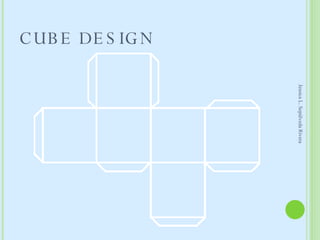
STEP BY STEP 3. Brainstorm.  Students brainstorm ideas about the  dimension and write a quickwrite or make a  drawing using the ideas gathered though  brainstorming.  4. Complete the cube.  Students can share their quickwrites with the  class then attach them to the sides of the  box. Students can also construct a cube by  folding and gluing cardboard or paper into a  six-sided box.  Jessica L. Sepúlveda Rivera
CUBING: GRADES K-2 The cubing exercise is an excellent students of all ages. However for the younger grades I recommend making some simple modifications to the content of the cube. For example the Story Elements Cube.  This cube consisted of: Characters Setting Plot Problem/Solution or the student’s favorite scene Point of View Theme Jessica L. Sepúlveda Rivera
CUBE DESIGN Jessica L. Sepúlveda Rivera
REFERENCE Tompkins, G. E. (2004).  50 Literacy Strategies: Step by Step . New Jersey: Pearson Education, Inc. Jessica L. Sepúlveda Rivera

Cubingingles

  • 1.
    LITERACY STRATEGY #11 “CUBING ” Jessica L. Sep úlveda Rivera
  • 2.
    CUBING: GRADES 3-8With this strategy students explore a topic from six dimensions or viewpoints. The name comes from the fact that cubes have six sides. Students can use the cube as a way to review a topic they have been studying. This way is less formal and focuses on using cubing as a tool for learning Cubes can also be used to demonstrate what they have learned during a thematic unit. This way is more formal and students use the writing process to draft, revise and edit their writing for each side of the cube. Jessica L. Sepúlveda Rivera
  • 3.
    SIX DIMENSIONS Describe the topic, including its colors, shapes and sizes. Compare the topic to something else. Consider how it is similar to or different from this other thing. Associate the topic to something else and explain why the topic makes you think of this other thing. Jessica L. Sepúlveda Rivera
  • 4.
    SIX DIMENSIONS Analyze the topic and tell how it is made or what it is composed of. Apply the topic and tell how it can be used or what can be down with it. Argue for or against this topic. Take a stand and list reasons to support it. Jessica L. Sepúlveda Rivera
  • 5.
    STEP BY STEP1. Choose a topic. Students choose a topic related to a literature focus unit or thematic unit for the cubing 2. Divide students into groups. Students will work in six small groups; each group examines from one of the six dimension. As an alternative, teachers can divide the students in to six-member groups and have each group cube the topic (each member in each group will examine the topic from one of the six dimensions and the group will create a cube). Jessica L. Sepúlveda Rivera
  • 6.
    STEP BY STEP3. Brainstorm. Students brainstorm ideas about the dimension and write a quickwrite or make a drawing using the ideas gathered though brainstorming. 4. Complete the cube. Students can share their quickwrites with the class then attach them to the sides of the box. Students can also construct a cube by folding and gluing cardboard or paper into a six-sided box. Jessica L. Sepúlveda Rivera
  • 7.
    CUBING: GRADES K-2The cubing exercise is an excellent students of all ages. However for the younger grades I recommend making some simple modifications to the content of the cube. For example the Story Elements Cube. This cube consisted of: Characters Setting Plot Problem/Solution or the student’s favorite scene Point of View Theme Jessica L. Sepúlveda Rivera
  • 8.
    CUBE DESIGN JessicaL. Sepúlveda Rivera
  • 9.
    REFERENCE Tompkins, G.E. (2004). 50 Literacy Strategies: Step by Step . New Jersey: Pearson Education, Inc. Jessica L. Sepúlveda Rivera