•Population: 11.2million (2013 census)
•Language: Spanish
(English spoken by Cuban business
people)
•Currency: Cuban Peso 1.00 CUP = 0.0038 USD
•GDP: $78.394 billion
•
DO’S & DONT’S
Common greeting: Shaking hands is common for
both men and women. Men and women who
are friends may kiss on the cheek. Be formal at
first and don’t use first names unless invited to
do so.
Personal space: A bit closer than in the U.S. at 1
to 1 1/2 feet, and touching is common among
friends. However, Cubans aren’t used to being
touched by strangers, including seemingly
friendly pats on the back.
Eye contact: Direct.
Approach to time: It’s not unusual for Cubans to
keep people waiting for an hour or more for a
meeting.
Language: Spanish is the official language,
although English is widely spoken.
Communication: Fairly direct; not much
different from your U.S. interactions, but
they may be a bit louder than Americans
are used to.
Topics for building rapport: Travel and
family.
Negotiations: Cubans tend to try to tire
you out with slow and protracted
bargaining.
Actions to avoid: Discussions about
politics, which can be a minefield.
Tips for businesswomen: Cuba is a very
macho country where women aren’t
commonly seen in positions of power
and authority. Proceed slowly and
present yourself as representing your
company rather than yourself.
If necessary, be prepared to graciously
allow a male employee to step in if you
sense a great deal of uneasiness.
BUSINESS CULTURE
Work hours are generally 8-5, Monday to Friday, though some factories may
begin earlier in the day and include Saturdays in their work week.
Lateness and absenteeism are somewhat more common in Cuba than
average, due less to cultural factors than to shortages of fuel and issues with
public transportation.
There is typically no payment of overtime, except for factories producing
especially important goods.
Cubans tend to dress rather informally for work, often due to the nature of
business, but also due to the influence of hot climates; very few Cuban
workplaces enforce a dress code beyond jeans and t-shirts.
“Business” attire usually consists of a dress shirt called a guayyabera, without
a jacket or tie.
Lunch is the main meeting during which business can be done; dinners in
Cuba tend to be more formal occasions during which it is considered
inappropriate to discuss work matters.
Most business ventures begin with meetings with appropriate government
officials. Appropriate govt. officials can be found through the Cuban Chamber of
Commerce.

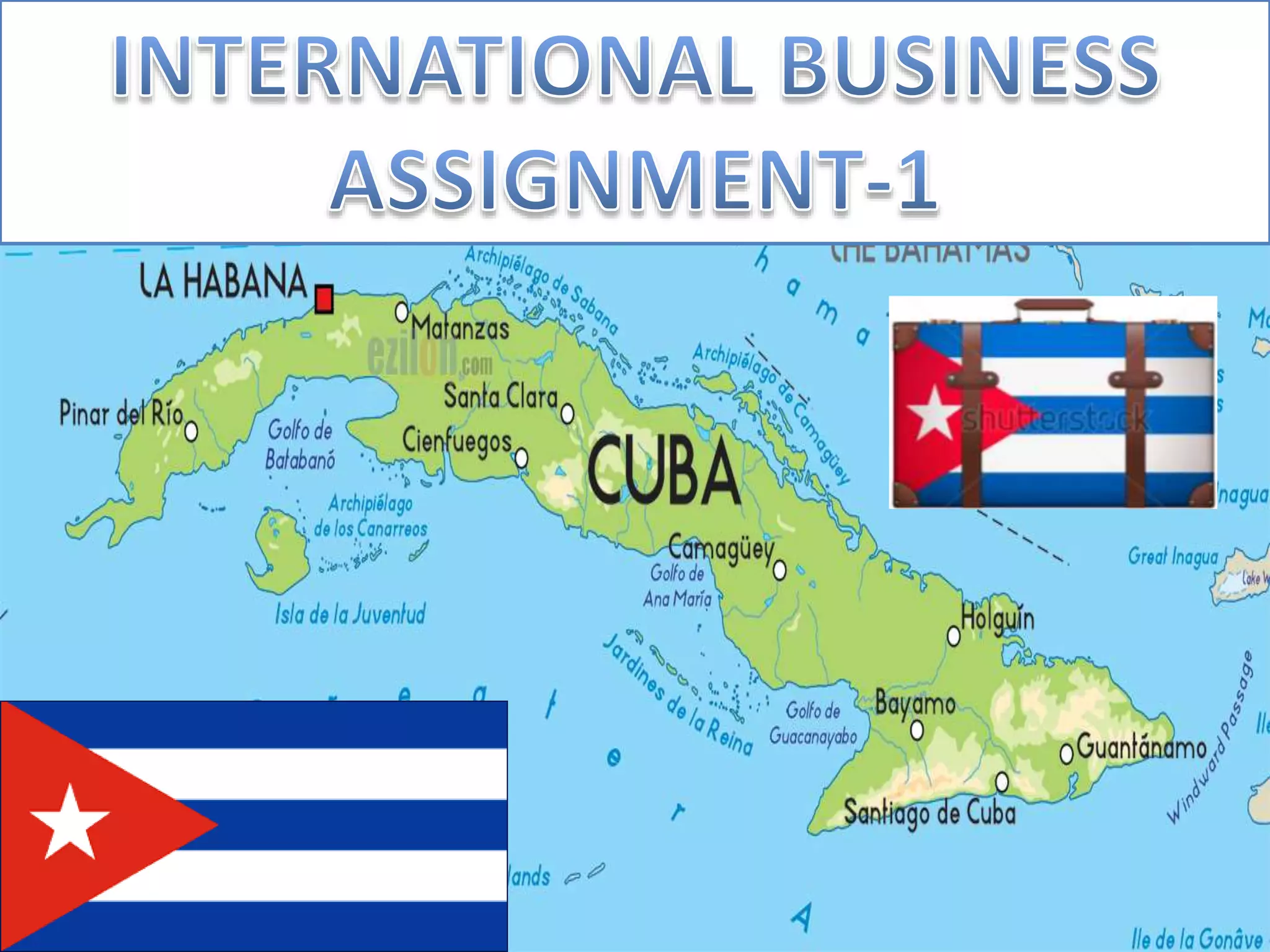
Cuba- International business

  • 2.
    •Population: 11.2million (2013census) •Language: Spanish (English spoken by Cuban business people) •Currency: Cuban Peso 1.00 CUP = 0.0038 USD •GDP: $78.394 billion •
  • 3.
    DO’S & DONT’S Commongreeting: Shaking hands is common for both men and women. Men and women who are friends may kiss on the cheek. Be formal at first and don’t use first names unless invited to do so. Personal space: A bit closer than in the U.S. at 1 to 1 1/2 feet, and touching is common among friends. However, Cubans aren’t used to being touched by strangers, including seemingly friendly pats on the back. Eye contact: Direct. Approach to time: It’s not unusual for Cubans to keep people waiting for an hour or more for a meeting. Language: Spanish is the official language, although English is widely spoken. Communication: Fairly direct; not much different from your U.S. interactions, but they may be a bit louder than Americans are used to. Topics for building rapport: Travel and family. Negotiations: Cubans tend to try to tire you out with slow and protracted bargaining. Actions to avoid: Discussions about politics, which can be a minefield. Tips for businesswomen: Cuba is a very macho country where women aren’t commonly seen in positions of power and authority. Proceed slowly and present yourself as representing your company rather than yourself. If necessary, be prepared to graciously allow a male employee to step in if you sense a great deal of uneasiness.
  • 4.
    BUSINESS CULTURE Work hoursare generally 8-5, Monday to Friday, though some factories may begin earlier in the day and include Saturdays in their work week. Lateness and absenteeism are somewhat more common in Cuba than average, due less to cultural factors than to shortages of fuel and issues with public transportation. There is typically no payment of overtime, except for factories producing especially important goods. Cubans tend to dress rather informally for work, often due to the nature of business, but also due to the influence of hot climates; very few Cuban workplaces enforce a dress code beyond jeans and t-shirts. “Business” attire usually consists of a dress shirt called a guayyabera, without a jacket or tie. Lunch is the main meeting during which business can be done; dinners in Cuba tend to be more formal occasions during which it is considered inappropriate to discuss work matters. Most business ventures begin with meetings with appropriate government officials. Appropriate govt. officials can be found through the Cuban Chamber of Commerce.