1
CONCRETE TECHNOLOGY
21UCVC403
SDM College of Engineering and Technology, Dharwad.
2
CONTENTS
• Unit-I
INGREDIENTS OF CONCRETE
• Unit-II
MANUFACTURE OF CONCRETE
PROPERTIES OF CONCRETE IN FRESH
STATE
3
• Unit-III
PROPERTIES OF CONCRETE IN
HARDENED STATE
NON-DESTRUCTIVE TESTING of
CONCRETE
• Unit-IV
SPECIAL CONCRETE
• Unit-V
CONCRETE MIX DESIGN
4
Unit-I
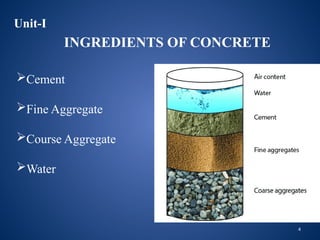
INGREDIENTS OF CONCRETE
Cement
Fine Aggregate
Course Aggregate
Water
5
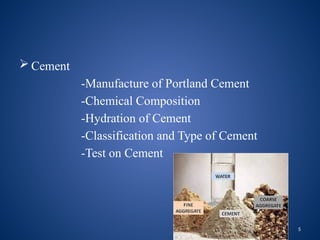
 Cement
-Manufacture of Portland Cement
-Chemical Composition
-Hydration of Cement
-Classification and Type of Cement
-Test on Cement
6
 Aggregate
-Classification of Aggregate
-Mechanical and Physical Properties of
Aggregate
-Deleterious Materials
-Soundness
-Alkali Aggregate Reaction
-Grading of Aggregate
-Test on Aggregate
-Artificial and Recycled Aggregate
7
 Water
-Quality of Water
-Mixing
-Curring
8
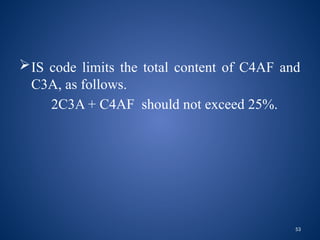
9
CEMENT
• What is Cement ?
• History of Cement
• How Cement is Manufactured ?
• Different types of Cement
• Different Grades of Cement
• Different Brands of Cement
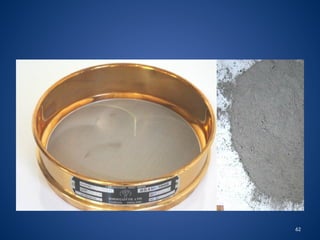
10
What is Cement ?
A cement is a binder, a chemical
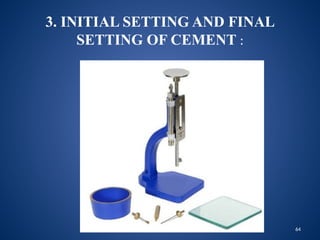
substance used for construction that sets,
hardens, and adheres to other materials, to
bind them together.
11
History of Cement
 The history of cementing material is old as history of
engineering construction.
 It is believed that early Egyptians mostly used
cementing materials, obtained by burning gypsum
 The early Greeks and Romans used cementing
material obtained by burning lime stones.
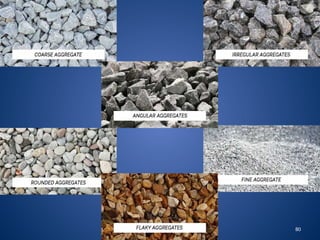
 The Greeks and Romans later became aware of fact
that certain volcanic ash and tuff , when mixed lime
and sand yielded mortar possessing superior strength
and better durability in fresh or salt water
12
• Roman builders used volcanic tuff found near
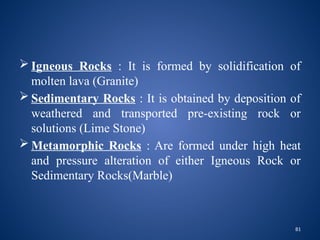
Pozzuoli village near Mount Vesuvius in Italy.
• This volcanic tuff or ash mostly siliceous in nature
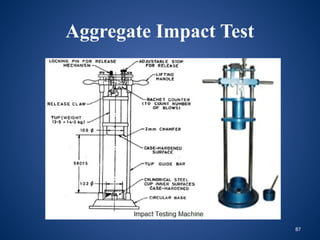
thus acquired the name pozzolana
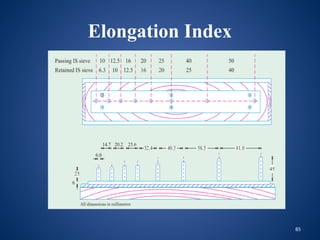
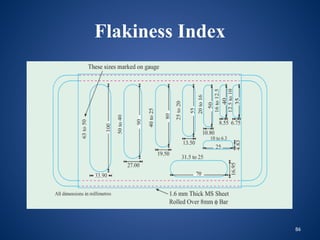
• Portland Cement is attributed to Joseph Aspdin took
the patent of Portland cement on 21st
October 1824
• The fancy name of portland was given owing to the
resemblance of hardened cement to natural stone
occurring at portland in england
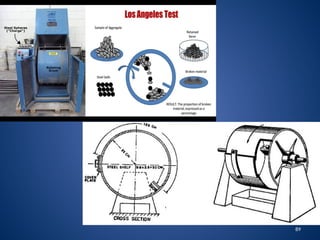
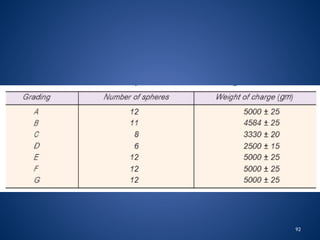
13
 German Standard specification for portland cement
was drawn in 1877
 British Standard specification was first drawn up in
1904.
 The first American Society for Testing Material
(ASTM) specification was issued in 1904
14
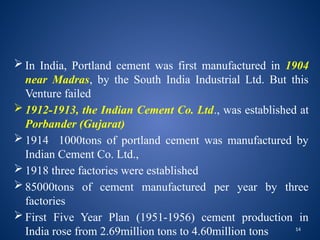
 In India, Portland cement was first manufactured in 1904
near Madras, by the South India Industrial Ltd. But this
Venture failed
 1912-1913, the Indian Cement Co. Ltd., was established at
Porbander (Gujarat)
 1914 1000tons of portland cement was manufactured by
Indian Cement Co. Ltd.,
 1918 three factories were established
 85000tons of cement manufactured per year by three
factories
 First Five Year Plan (1951-1956) cement production in
India rose from 2.69million tons to 4.60million tons
15
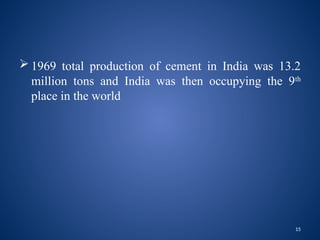
 1969 total production of cement in India was 13.2
million tons and India was then occupying the 9th
place in the world
16
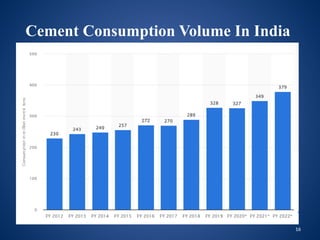
Cement Consumption Volume In India
17
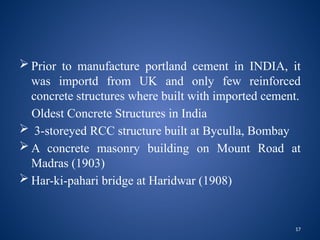
 Prior to manufacture portland cement in INDIA, it
was importd from UK and only few reinforced
concrete structures where built with imported cement.
Oldest Concrete Structures in India
 3-storeyed RCC structure built at Byculla, Bombay
 A concrete masonry building on Mount Road at
Madras (1903)
 Har-ki-pahari bridge at Haridwar (1908)
18
 On February 5, Union Minister of Commerce &
Industry, Suresh Prabhu, released a compendium on
the Indian cement industry titled, “The Cement
Industry – India 2018”.
 The report has been prepared by the National
Council for Cement and Building Materials
(NCCBM), in association with the cement section of
Department for Promotion of Industry and Internal
Trade (DPIIT).
19
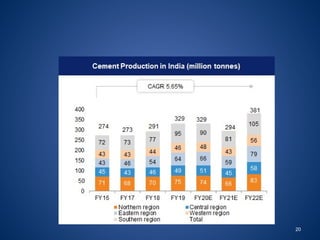
 The Indian cement industry is the second largest in the
world
 Annual installed capacity of around 509 million tonnes
 Total cement production of 298 million tonnes reported
during 2018
 From 143 integrated cement plants, 102 grinding units,
5 clinkeri sation units and 62 mini cement plants across
the country.
 India, the world’s fastest-growing major economy,
offers strong growth metrics for the cement production.
20
21
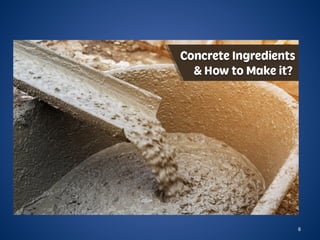
 Cement Paste : Cement + Water
 Mortar: Cement + Fine Aggregate + Water
 Concrete: Cement + Fine Aggregate + Coarse
Aggregate + Water
22
How Cement is Manufactured ?
 Wet Process of Manufacturing of Cement
 Dry Process of Manufacturing of Cement
23
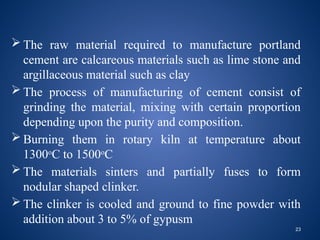
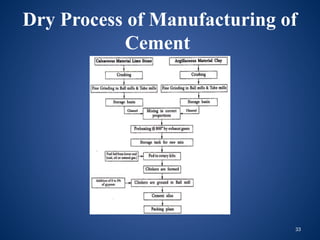
 The raw material required to manufacture portland
cement are calcareous materials such as lime stone and
argillaceous material such as clay
 The process of manufacturing of cement consist of
grinding the material, mixing with certain proportion
depending upon the purity and composition.
 Burning them in rotary kiln at temperature about
1300o
C to 1500o
C
 The materials sinters and partially fuses to form
nodular shaped clinker.
 The clinker is cooled and ground to fine powder with
addition about 3 to 5% of gypusm
24
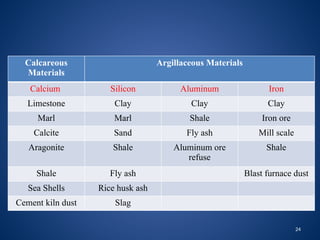
Calcareous
Materials
Argillaceous Materials
Calcium Silicon Aluminum Iron
Limestone Clay Clay Clay
Marl Marl Shale Iron ore
Calcite Sand Fly ash Mill scale
Aragonite Shale Aluminum ore
refuse
Shale
Shale Fly ash Blast furnace dust
Sea Shells Rice husk ash
Cement kiln dust Slag
25
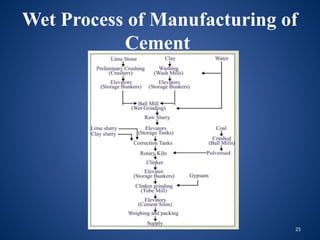
Wet Process of Manufacturing of
Cement
26
 In the wet process, the limestone brought from the quarries is first
crushed to smaller piece.
 Then it is taken to a ball mill where it is mixed with clay and
ground to a fine consistency of slurry with the addition of water.
 The slurry is a liquid of creamy consistency with water content of
about 35 to 50 per cent.
 The particles are crushed to the fineness of Indian Standard Sieve
number 9, are held in suspension.
 The slurry is pumped to slurry tanks or basins where it is kept in
an agitated condition by means of rotating arms with chains
compressed air from the bottom to prevent settling of limestone
and clay particles
27
 The composition of the slurry is tested to give the
required chemical composition and corrected
periodically in the tube mill and also in the slurry
tank by blending slurry from different storage tanks.
 Finally, the corrected slurry is stored in the final
storage tanks and kept in a homogeneous condition
by the agitation of slurry
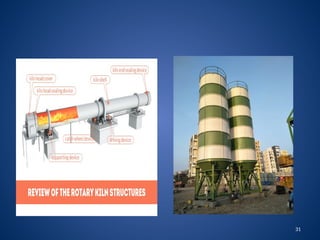
 The rotary kiln is an important component of a
cement factory.
28
 The diameter of rotary kiln may vary from 3m to 8m
 The length of the rotary kiln may vary anything from
30m to 200m
 The slurry on being sprayed against a hot surface of
flexible chain loses moisture and becomes flakes.
 The kiln is fired from the lower end. The fuel is either
powered coal, oil or natural gass.
 By the time the material rolls down to the lower end
of the rotary kiln, the dry material
29
 Undergoes a series of chemical reactions until finally,
in the hottest part of the kiln, where the temperature
is in the order of 1500°C,
 about 20 to 30 per cent of the materials get fused.
 Lime, silica and alumina get recombined.
 The fused mass turns into nodular form of size 3 mm
to 20 mm known as clinker.
 The clinker drops into a rotary cooler where it is
cooled under controlled conditions
 The clinker is stored in silos .
30
 The cooled clinker is then ground in a ball mill with
the addition of 3 to 5 per cent of gypsum in order to
prevent flash-setting of the cement.
 The particles crushed to the required fineness are
separated by currents of air and taken to storage silos
from where the cement is bagged or filled into barrels
for bulk supply to dams or other large work sites.
31
32
33
Dry Process of Manufacturing of
Cement
34
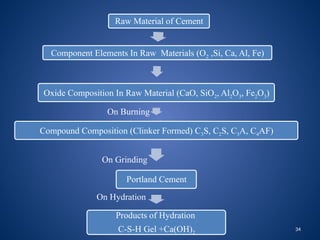
Raw Material of Cement
Component Elements In Raw Materials (O2 ,Si, Ca, Al, Fe)
Oxide Composition In Raw Material (CaO, SiO2, Al2O3, Fe2O3)
Compound Composition (Clinker Formed) C3S, C2S, C3A, C4AF)
Portland Cement
Products of Hydration
C-S-H Gel +Ca(OH)2
On Burning
On Grinding
On Hydration
35
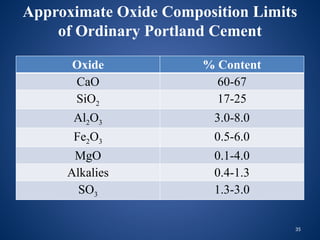
Approximate Oxide Composition Limits
of Ordinary Portland Cement
Oxide % Content
CaO 60-67
SiO2 17-25
Al2O3 3.0-8.0
Fe2O3 0.5-6.0
MgO 0.1-4.0
Alkalies 0.4-1.3
SO3 1.3-3.0
36
Bogue’s Compounds
Name of Compound Oxide Composition Abbreviation
Tri-Calcium Silicate 3CaO SiO2 C3S [CaO – C & SiO2 – S]
Di-Calcium Silicate 2CaO SiO2 C2S
Tri-Calcium Aluminate 3CaO Al2 O3 C3A [Al2O3 – A]
Tetra-Calcium Alumino
ferrite
4CaO Al2 O3Fe2O3 C4AF [Fe2O3 – F]
The above compounds are also known as Bogue’s Compounds
based on the work done by R. H. Bogue and others.
37
Hydration of Cement
 The chemical reactions that take place between
cement and water is referred as hydration of cement.
 Through Solution : The cement compound dissolved
to produce a supersaturated solution from which
different hydrated products get precipitated.
 The water attacks cement compounds in the solid
state converting the compounds into hydrated
products starting from the surface and proceeding to
the interior compounds with time
38
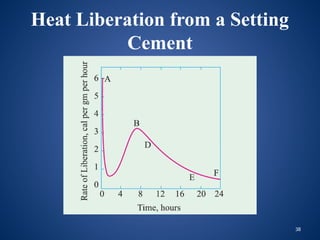
Heat Liberation from a Setting
Cement
39
Heat of Hydration
 The reaction of cement with water is exothermic
 The reaction liberates a considerable quantity of heat
and liberation of heat is called heat of hydration
 The hydration process is not instantaneous one.
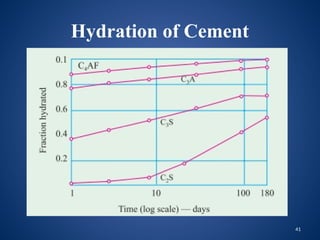
 The reaction is faster in early period and continues at
decreasing rate.
 Complete hydration cannot be obtained under a
period of one year or more unless the cement is finely
ground
40
 C2S present in the surface of cement grain may get
hydrated and more reactive compound like CS lying
in the interior of a cement grain may not get hydrated
41
Hydration of Cement
42
Calcium Aluminate Hydrates
 Hydrated Aluminates do not contribute to the strength
of concrete
 But presence is harmful to the durability of concrete
 Concrete is likely attacked by sulphates
43
Calcium Hydroxide
Since it is alkaline in nature and maintain pH
around 13 which resist the corrosion of
reinforcement
44
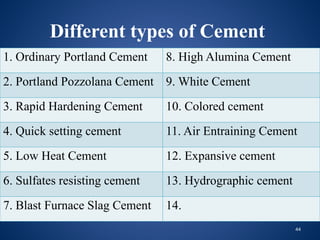
Different types of Cement
1. Ordinary Portland Cement 8. High Alumina Cement
2. Portland Pozzolana Cement 9. White Cement
3. Rapid Hardening Cement 10. Colored cement
4. Quick setting cement 11. Air Entraining Cement
5. Low Heat Cement 12. Expansive cement
6. Sulfates resisting cement 13. Hydrographic cement
7. Blast Furnace Slag Cement 14.
45
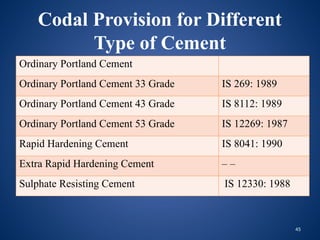
Codal Provision for Different
Type of Cement
Ordinary Portland Cement
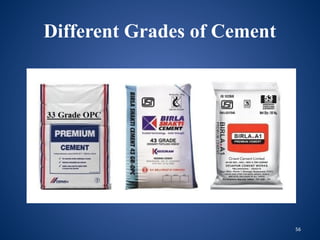
Ordinary Portland Cement 33 Grade IS 269: 1989
Ordinary Portland Cement 43 Grade IS 8112: 1989
Ordinary Portland Cement 53 Grade IS 12269: 1987
Rapid Hardening Cement IS 8041: 1990
Extra Rapid Hardening Cement – –
Sulphate Resisting Cement IS 12330: 1988
46
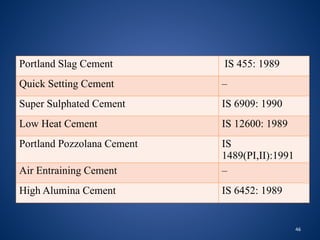
Portland Slag Cement IS 455: 1989
Quick Setting Cement –
Super Sulphated Cement IS 6909: 1990
Low Heat Cement IS 12600: 1989
Portland Pozzolana Cement IS
1489(PI,II):1991
Air Entraining Cement –
High Alumina Cement IS 6452: 1989
47
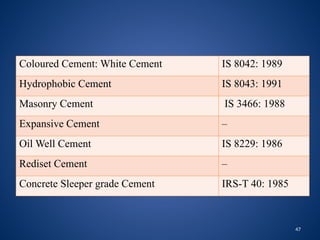
Coloured Cement: White Cement IS 8042: 1989
Hydrophobic Cement IS 8043: 1991
Masonry Cement IS 3466: 1988
Expansive Cement –
Oil Well Cement IS 8229: 1986
Rediset Cement –
Concrete Sleeper grade Cement IRS-T 40: 1985
48
1. Ordinary Portland Cement
It is the most widely used type of cement, which
is suitable for all general concrete construction.
 This cement is suitable for all kinds of concrete
construction
Different grade 33,43 and 53 of cement are
available
OPC is decreasing due to Low energy
consumption, Environmental Pollution, Economic
and other technical reason
49
2. Portland Pozzolana Cement
 Pozzlanic is a silicious or aluminous material
 Fly Ash or Clay
 It produces less heat of hydration
 Clinker is replaced by pozzolanic material –
Economical
 Fly Ash content in PPC 10-25% to 15-35%
50
3. Rapid Hardening Cement
 The rapid rate of development of strength is attributed
to the higher fineness of grinding and higher C3S and
lower C2S content.
 A higher fineness of cement particles expose greater
surface area for action of water and also higher
proportion of C3S results in quicker hydration.
 Consequently, rapid hardening cement gives out
much greater heat of hydration during the early
period.
 Rapid hardening cement should not be used in mass
concrete construction.
51
Use of Rapid Hardening Cement
 In pre-fabricated concrete construction.
 Where formwork is required to be removed early for
re-use elsewhere
 Road repair works
 In cold weather concrete where the rapid rate of
development of strength reduces the vulnerability of
concrete to the frost damage.
52
4. Sulfates Resisting Cement
 Cement with low C3A and comparatively low C4AF
content is known as Sulphate Resisting Cement.
 In other words, this cement has a high silicate
content.
 The specification generally limits the C3A content to
5 per cent.
 Tetracalcium Alumino Ferrite (C3AF) varies in
Normal Portland Cement between to 6 to 12%.
 Since it is often not feasible to reduce the Al2O3
content of the raw material, Fe2O3 may be added to
the mix so that the C4AF content increases at the
expense of C3A.
53
IS code limits the total content of C4AF and
C3A, as follows.
2C3A + C4AF should not exceed 25%.
54
Use of Sulphate Resisting Cement
 Concrete to be used in marine condition
 Concrete to be used in foundation and basement,
where soil is infested with sulphates
 Concrete used for fabrication of pipes which are
likely to be buried in marshy region or sulphate
bearing soils
 Concrete to be used in the construction of sewage
treatment works.
55
5.Masonry Cement
 Masonry cement is a type of cement which is
particularly made with such combination of materials,
which when used for making mortar, incorporates all
the good properties of lime mortar.
 This kind of cement mostly used in masonry
construction
 It contain certain amount of air-entraining agent and
mineral admixtures to improve the plasticity and
water retentivity
56
Different Grades of Cement
57
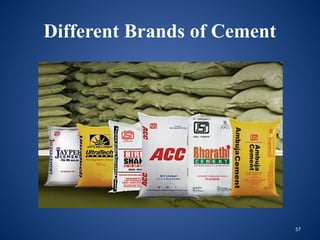
Different Brands of Cement
58
FIELD TESTS FOR CEMENT
 Open the bag and take a good look at the cement.
There should not be any visible lumps. The colour of
the cement should normally be greenish grey.
 Thrust your hand into the cement bag. It must give
you a cool feeling. There should not be any lump
inside.
 Take a pinch of cement and feel-between the fingers.
It should give a smooth and not a gritty feeling.
59
 Take a handful of cement and throw it on a bucket full of
water, the particles should float for some time before they
sink.
 Take about 100 grams of cement and a small quantity of
water and make a stiff paste.
From the stiff paste, pat a cake with sharp edges. Put it on a
glass plate and slowly take it under water in a bucket.
See that the shape of the cake is not disturbed while taking it
down to the bottom of the bucket.
After 24 hours the cake should retain its original shape and at
the same time it should also set and attain some strength
60
LABROTARY TEST ON CEMENT
1. Fineness test of cement
2. Standard Consistency test of cement
3. Initial Setting and Final Setting test of cement
4. Soundness test
5. Compressive Strength test on cement
61
1. FINENESS TEST OF CEMENT
 This test of cement is performed to check the fineness
of cement according to standard specifications.
 The fineness of cement can be measured either by
the grain size of cement or by the surface area of
cement.
 The sieve Test (IS 4031- part-I) – 90 µ size sieve.
 The fineness of cement has a significant effect on the
hydration and in increasing the rate of gain strength.
The strength of cement is directly proportional to its
fineness.
62
63
2. STANDARD CONSISTENCY
TEST OF CEMENT
 It is used to find out the percentage of water required
to produce cement paste of standard consistency.
 It is also sometimes called as Normal Consistency .
 The Standard consistency of a cement paste is defined
as that consistency which will permit a Vicat’s
apparatus plunger having10mm dia. and 50mm length
to penetrate to a depth of 33-35 mm from the top of
the mould.
64
3. INITIAL SETTING AND FINAL
SETTING OF CEMENT :
65
Initial Setting time :
 Initial setting time is the time elapsed between the
moment that the water is added to the cement, to the
time that the paste starts losing its plasticity.
 When the paste will start loosing its plasticity, the
needle will penetrate only to some depth.
 The period elapsing between the time when water is
added to the cement and to the time at which the
needle penetrates the test block to a depth equal to
33-35mm from the top is taken as initial time.
 For OPC it is generally taken as 30min.
66
Final Setting time :The cement is considered
fully set when the centre needle makes an
impression while the annular attachment fails
to do so
The cement is said to be hard if it does not
pierce more than 0.5mm.
It is generally taken as 10 hrs.
67
 The final setting time is the time elapsed between the
moment the water is added to the cement, and the
time when the paste has completely lost its plasticity
and has attained sufficient firmness to resist certain
definite pressure.
68
4. SOUNDNESS TEST
 The Cement is said to be unsound if it has excess of lime.
 Due to high proportions of magnesium content or
Calcium sulphate content.
 Because of inadequate burning of cement.
 Due to insufficiency in fineness of grinding or thorough
mixing of raw materials.
 It cause appreciable change in the volume of cement after
the cement has set causing disruption of the set and
hardened mass.
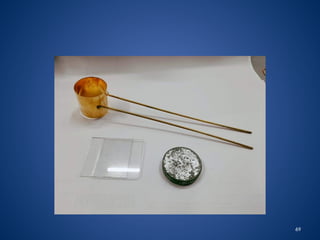
 Le-Chatlier’s Apparatus is used for the test.
 In case the expansion is more than 10mm than the cement
is said to be unsound.
69
70
5. COMPRESSIVE STRENGTH
TEST OF CEMENT
 It is Laboratory method to determine the strength of
cement.
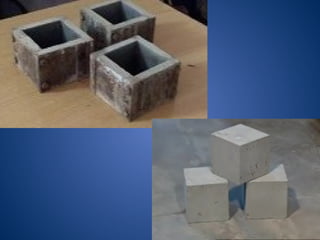
 The size of cube mould is 70.6mm.
 Cement and standard sand mortar is used to make the
cube.
 Three cubes are tested for the strength.
 The average value is taken for the compressive
strength of the three cubes for each period
respectively.
71
72
Aggregate
-Classification of Aggregates
-Mechanical and Physical Properties of
Aggregate
-Deleterious Materials
-Soundness
-Alkali-Aggregate Reaction
-Grading of Aggregate
-Test on Aggregate
-Artificial and Recycled Aggregate
73
Aggregates
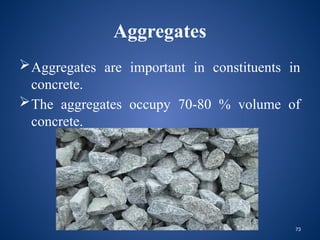
Aggregates are important in constituents in
concrete.
The aggregates occupy 70-80 % volume of
concrete.
74
Classification of Aggregates
Source
- Aggregates from Igneous Rocks
- Aggregates from Sedimentary Rocks
- Aggregates from Metamorphic Rocks
Size
- Coarse Aggregate (>4.75mm)
- Fine Aggregate (<4.75mm)
75
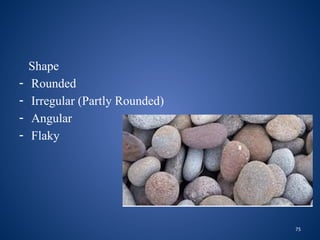
Shape
- Rounded
- Irregular (Partly Rounded)
- Angular
- Flaky
76
 Aggregate is a hard material made with the hard
stratum of rocks by disintegration. Aggregate can be
used in constructing concrete structures, bituminous
pavement structures, etc
 Aggregates are the materials used as filler with
binding material in the production of mortar and
concrete.
77
 Fine aggregate: This is the aggregate for which its size
ranges between 4.75 mm to 0.075 mm. These are also called
sand.
 It consists of the particle of the crushed stone or the sandy
material.
 Coarse aggregate: These aggregates have a size of more
than 4.75 mm.
 These aggregates are used in the construction of concrete
structures.
 Such aggregates include river gravel and stone particles
made from rock stratum
78
 Coarse Aggregate: Aggregate retained on 4.75 mm
sieve are known as Coarse Aggregates. They are
obtained by natural fragmentation or by artificially
crushing the rocks. The maximum size of coarse
aggregate can be 80 mm.
79
 Fine Aggregate: Aggregates that are passed through
4.75 mm sieve are classified as Fine Aggregates.
They are natural sand, crushed stone and crushed
gravel stone. The minimum size of fine aggregates
can be 0.06 mm
80
81
 Igneous Rocks : It is formed by solidification of
molten lava (Granite)
 Sedimentary Rocks : It is obtained by deposition of
weathered and transported pre-existing rock or
solutions (Lime Stone)
 Metamorphic Rocks : Are formed under high heat
and pressure alteration of either Igneous Rock or
Sedimentary Rocks(Marble)
82
 Crushing test: This test is carried out to determine
the aggregate's crushing strength according to IS code
2386 (part IV) 1963.
 The crushing value of an aggregate indicates the
resistance against the crushing of the aggregates.
 If the crushing value of the aggregate is on or above
35, it will be considered a weak aggregate.
 Abrasion test: Los angles abrasion test is carried out
to know the abrasion resistance of the coarse
aggregate. It determines the percentage wear of the
aggregate due to relative rubbing.
 It also indicates the hardness property of the
aggregates.
83
 Impact test: Aggregate may be supposed to impact
load during its life cycle, so it's important to get the
impact strength of the aggregate.
 It measures the strength of the aggregate against the
impact load acting over the aggregate. It indicates the
toughness of the aggregate.
84
 Soundness test: This test indicates the durability of
the aggregate. It also indicates the aggregate's
resistance property against adverse weather
conditions.
 Shape test: This test is carried out to know the shape
of the aggregate. The flakiness index and elongation
index are the main important parameters to define the
shape of the aggregates
85
Elongation Index
86
Flakiness Index
87
Aggregate Impact Test
88
89
90
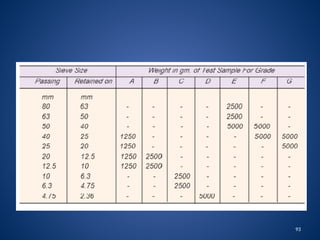
Aggregate Abrasion Value
 IS 2386(Part IV):1963 - Deval Abrasion Testing
Machine, Los Angeles Abrasion Testing Machine
 Abrasive charge which consist of cast iron spheres or
steel spheres approximately 48mm dia. and which is
weighing between 390 to 445gm
 The aggregate should been dried in an oven at 105o
C-
110o
C should confirm one of the grading
 The test sample and abrasive charge are placed in Los
Angeles Abrasion Testing Machine
91
 The machine is rotated at speed of 20-33 rev/min , for
grading A, B, C and D it is rotated for 500revolution
 For grading E, F and G it is rotated for 1000
revolution
 After completion material is discharged from
machine
 Then it is sieved using 1.7mm
 The material coarser than 1.7mm is washed, dried in
oven at 105o
C-110o
C
 The percentage of wear should not be more than 16%
of Coarse Aggregate
92
93
94
Recycled Aggregates
Provide sustainability
Reduce the amount of material that would be
delivered to the landfill
95
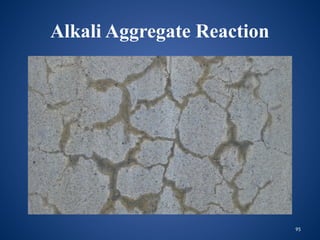
Alkali Aggregate Reaction
96
Aggregate contain reactive silica, which react with
alkalies present in cement
Factors Promoting the Alkali-Aggregate Reaction
i. Reactive type of aggregate
ii. High alkali content in cement
iii. Availability of Moisture
iv. Optimum Temperature Conditions
97
High alkali content in cement
 It is one of most important factors contributing to
alkali aggregate reaction
 Alkali content to be less than 0.6% , cement meeting
this specification is designated as low alkali cement.
98
Reactive Type of Aggregate
 Mortar Bar Expansion Test by Stanton
 Specimen of size 25mm X25mm and 250mm length
 Is cured and stored in specified in IS 2386
 Measure the length of specimen periodically at the
age of 1,2,3,6,9 and 12 months
 The aggregate under test is harmful if it expands
more than 0.05% after 3 months or more than 0.1%
after six months
99
Availability of Moisture
 Alkali aggregate reaction in concrete requires the
presence of water
 Lack of water greatly reduces this kind of
deterioration
 Deterioration will not occur in the interior mass of
concrete
 It will be more on the surface
 Reduction in deterioration due to alkali aggregate
reaction can be achieved by application of water
proofing agents to the surface of concrete.
100
Temperature Condition
The ideal temperature for promotion of alkali
aggregate reaction is in range 10o
C -38o
C
101
Mechanism of Deterioration of Concrete
Through Alkali-Aggregate Reaction
 Mixing water turns to caustic solution due to
solubility of solution due to solubility of alkalis from
the cement
 This caustic liquid attacks reactive silica to from
alkali-silica gel of unlimited swelling type
102
 Artificial aggregates are made up of waste materials,
such as fly ash, husks, or volcanic form and ground
granulated blast-furnace slag
103
1.Broken bricks
 We mainly get artificial aggregates from the
destruction of old buildings. Broken bricks come
under in that classification.
 Broken bricks are mainly used for the construction of
temporary buildings
104
2.Air-cooled slag
 Air-cooled slag is lump ore getting from blast furnace
on cooling.
3.Sintered Fly ash
 Fly ash is one the main mineral admixtures used in
concrete. Sintered fly ash is a lightweight material
which can be used as an equivalent of stone
aggregates in concrete. They can widely reduce the
self-weight of the structure.
 The sintered fly ash is used for bulk fill, land
drainage, filter media, refractory material etc..They
can locally available from thermal power plants.
Sintered fly ash is cheaper than natural stones or
crushed rocks.
105
106
Water
-Quality of Water
-Mixing of Water
-Curing Water
107
 It is important ingredient of concrete as it actively
participate in reaction of cement
 Some water containing a small amount of sugar would be
suitable for drinking but not for mixing concrete and
conversely water suitable for making concrete may not
necessarily be fit for drinking.
 Salts of Manganese, Tin, Zinc, Copper and Lead cause
marked reduction in strength of concrete.
 Sodium iodate, sodium phosphate and sodium borate reduce
the initial strength of concrete
 pH shall not be less than 6
108
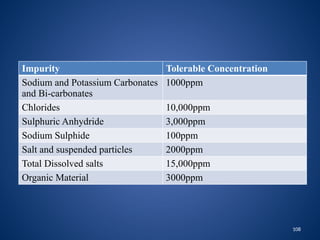
Impurity Tolerable Concentration
Sodium and Potassium Carbonates
and Bi-carbonates
1000ppm
Chlorides 10,000ppm
Sulphuric Anhydride 3,000ppm
Sodium Sulphide 100ppm
Salt and suspended particles 2000ppm
Total Dissolved salts 15,000ppm
Organic Material 3000ppm
109
Reference
• www.statista.com (/statistics/269322/cement-
consumption-in-india-since-2004)

CT-21UCVC403-UNIT-I AM Concrete technology

  • 1.
    1 CONCRETE TECHNOLOGY 21UCVC403 SDM Collegeof Engineering and Technology, Dharwad.
  • 2.
    2 CONTENTS • Unit-I INGREDIENTS OFCONCRETE • Unit-II MANUFACTURE OF CONCRETE PROPERTIES OF CONCRETE IN FRESH STATE
  • 3.
    3 • Unit-III PROPERTIES OFCONCRETE IN HARDENED STATE NON-DESTRUCTIVE TESTING of CONCRETE • Unit-IV SPECIAL CONCRETE • Unit-V CONCRETE MIX DESIGN
  • 4.
    4 Unit-I INGREDIENTS OF CONCRETE Cement FineAggregate Course Aggregate Water
  • 5.
    5  Cement -Manufacture ofPortland Cement -Chemical Composition -Hydration of Cement -Classification and Type of Cement -Test on Cement
  • 6.
    6  Aggregate -Classification ofAggregate -Mechanical and Physical Properties of Aggregate -Deleterious Materials -Soundness -Alkali Aggregate Reaction -Grading of Aggregate -Test on Aggregate -Artificial and Recycled Aggregate
  • 7.
    7  Water -Quality ofWater -Mixing -Curring
  • 8.
  • 9.
    9 CEMENT • What isCement ? • History of Cement • How Cement is Manufactured ? • Different types of Cement • Different Grades of Cement • Different Brands of Cement
  • 10.
    10 What is Cement? A cement is a binder, a chemical substance used for construction that sets, hardens, and adheres to other materials, to bind them together.
  • 11.
    11 History of Cement The history of cementing material is old as history of engineering construction.  It is believed that early Egyptians mostly used cementing materials, obtained by burning gypsum  The early Greeks and Romans used cementing material obtained by burning lime stones.  The Greeks and Romans later became aware of fact that certain volcanic ash and tuff , when mixed lime and sand yielded mortar possessing superior strength and better durability in fresh or salt water
  • 12.
    12 • Roman buildersused volcanic tuff found near Pozzuoli village near Mount Vesuvius in Italy. • This volcanic tuff or ash mostly siliceous in nature thus acquired the name pozzolana • Portland Cement is attributed to Joseph Aspdin took the patent of Portland cement on 21st October 1824 • The fancy name of portland was given owing to the resemblance of hardened cement to natural stone occurring at portland in england
  • 13.
    13  German Standardspecification for portland cement was drawn in 1877  British Standard specification was first drawn up in 1904.  The first American Society for Testing Material (ASTM) specification was issued in 1904
  • 14.
    14  In India,Portland cement was first manufactured in 1904 near Madras, by the South India Industrial Ltd. But this Venture failed  1912-1913, the Indian Cement Co. Ltd., was established at Porbander (Gujarat)  1914 1000tons of portland cement was manufactured by Indian Cement Co. Ltd.,  1918 three factories were established  85000tons of cement manufactured per year by three factories  First Five Year Plan (1951-1956) cement production in India rose from 2.69million tons to 4.60million tons
  • 15.
    15  1969 totalproduction of cement in India was 13.2 million tons and India was then occupying the 9th place in the world
  • 16.
  • 17.
    17  Prior tomanufacture portland cement in INDIA, it was importd from UK and only few reinforced concrete structures where built with imported cement. Oldest Concrete Structures in India  3-storeyed RCC structure built at Byculla, Bombay  A concrete masonry building on Mount Road at Madras (1903)  Har-ki-pahari bridge at Haridwar (1908)
  • 18.
    18  On February5, Union Minister of Commerce & Industry, Suresh Prabhu, released a compendium on the Indian cement industry titled, “The Cement Industry – India 2018”.  The report has been prepared by the National Council for Cement and Building Materials (NCCBM), in association with the cement section of Department for Promotion of Industry and Internal Trade (DPIIT).
  • 19.
    19  The Indiancement industry is the second largest in the world  Annual installed capacity of around 509 million tonnes  Total cement production of 298 million tonnes reported during 2018  From 143 integrated cement plants, 102 grinding units, 5 clinkeri sation units and 62 mini cement plants across the country.  India, the world’s fastest-growing major economy, offers strong growth metrics for the cement production.
  • 20.
  • 21.
    21  Cement Paste: Cement + Water  Mortar: Cement + Fine Aggregate + Water  Concrete: Cement + Fine Aggregate + Coarse Aggregate + Water
  • 22.
    22 How Cement isManufactured ?  Wet Process of Manufacturing of Cement  Dry Process of Manufacturing of Cement
  • 23.
    23  The rawmaterial required to manufacture portland cement are calcareous materials such as lime stone and argillaceous material such as clay  The process of manufacturing of cement consist of grinding the material, mixing with certain proportion depending upon the purity and composition.  Burning them in rotary kiln at temperature about 1300o C to 1500o C  The materials sinters and partially fuses to form nodular shaped clinker.  The clinker is cooled and ground to fine powder with addition about 3 to 5% of gypusm
  • 24.
    24 Calcareous Materials Argillaceous Materials Calcium SiliconAluminum Iron Limestone Clay Clay Clay Marl Marl Shale Iron ore Calcite Sand Fly ash Mill scale Aragonite Shale Aluminum ore refuse Shale Shale Fly ash Blast furnace dust Sea Shells Rice husk ash Cement kiln dust Slag
  • 25.
    25 Wet Process ofManufacturing of Cement
  • 26.
    26  In thewet process, the limestone brought from the quarries is first crushed to smaller piece.  Then it is taken to a ball mill where it is mixed with clay and ground to a fine consistency of slurry with the addition of water.  The slurry is a liquid of creamy consistency with water content of about 35 to 50 per cent.  The particles are crushed to the fineness of Indian Standard Sieve number 9, are held in suspension.  The slurry is pumped to slurry tanks or basins where it is kept in an agitated condition by means of rotating arms with chains compressed air from the bottom to prevent settling of limestone and clay particles
  • 27.
    27  The compositionof the slurry is tested to give the required chemical composition and corrected periodically in the tube mill and also in the slurry tank by blending slurry from different storage tanks.  Finally, the corrected slurry is stored in the final storage tanks and kept in a homogeneous condition by the agitation of slurry  The rotary kiln is an important component of a cement factory.
  • 28.
    28  The diameterof rotary kiln may vary from 3m to 8m  The length of the rotary kiln may vary anything from 30m to 200m  The slurry on being sprayed against a hot surface of flexible chain loses moisture and becomes flakes.  The kiln is fired from the lower end. The fuel is either powered coal, oil or natural gass.  By the time the material rolls down to the lower end of the rotary kiln, the dry material
  • 29.
    29  Undergoes aseries of chemical reactions until finally, in the hottest part of the kiln, where the temperature is in the order of 1500°C,  about 20 to 30 per cent of the materials get fused.  Lime, silica and alumina get recombined.  The fused mass turns into nodular form of size 3 mm to 20 mm known as clinker.  The clinker drops into a rotary cooler where it is cooled under controlled conditions  The clinker is stored in silos .
  • 30.
    30  The cooledclinker is then ground in a ball mill with the addition of 3 to 5 per cent of gypsum in order to prevent flash-setting of the cement.  The particles crushed to the required fineness are separated by currents of air and taken to storage silos from where the cement is bagged or filled into barrels for bulk supply to dams or other large work sites.
  • 31.
  • 32.
  • 33.
    33 Dry Process ofManufacturing of Cement
  • 34.
    34 Raw Material ofCement Component Elements In Raw Materials (O2 ,Si, Ca, Al, Fe) Oxide Composition In Raw Material (CaO, SiO2, Al2O3, Fe2O3) Compound Composition (Clinker Formed) C3S, C2S, C3A, C4AF) Portland Cement Products of Hydration C-S-H Gel +Ca(OH)2 On Burning On Grinding On Hydration
  • 35.
    35 Approximate Oxide CompositionLimits of Ordinary Portland Cement Oxide % Content CaO 60-67 SiO2 17-25 Al2O3 3.0-8.0 Fe2O3 0.5-6.0 MgO 0.1-4.0 Alkalies 0.4-1.3 SO3 1.3-3.0
  • 36.
    36 Bogue’s Compounds Name ofCompound Oxide Composition Abbreviation Tri-Calcium Silicate 3CaO SiO2 C3S [CaO – C & SiO2 – S] Di-Calcium Silicate 2CaO SiO2 C2S Tri-Calcium Aluminate 3CaO Al2 O3 C3A [Al2O3 – A] Tetra-Calcium Alumino ferrite 4CaO Al2 O3Fe2O3 C4AF [Fe2O3 – F] The above compounds are also known as Bogue’s Compounds based on the work done by R. H. Bogue and others.
  • 37.
    37 Hydration of Cement The chemical reactions that take place between cement and water is referred as hydration of cement.  Through Solution : The cement compound dissolved to produce a supersaturated solution from which different hydrated products get precipitated.  The water attacks cement compounds in the solid state converting the compounds into hydrated products starting from the surface and proceeding to the interior compounds with time
  • 38.
    38 Heat Liberation froma Setting Cement
  • 39.
    39 Heat of Hydration The reaction of cement with water is exothermic  The reaction liberates a considerable quantity of heat and liberation of heat is called heat of hydration  The hydration process is not instantaneous one.  The reaction is faster in early period and continues at decreasing rate.  Complete hydration cannot be obtained under a period of one year or more unless the cement is finely ground
  • 40.
    40  C2S presentin the surface of cement grain may get hydrated and more reactive compound like CS lying in the interior of a cement grain may not get hydrated
  • 41.
  • 42.
    42 Calcium Aluminate Hydrates Hydrated Aluminates do not contribute to the strength of concrete  But presence is harmful to the durability of concrete  Concrete is likely attacked by sulphates
  • 43.
    43 Calcium Hydroxide Since itis alkaline in nature and maintain pH around 13 which resist the corrosion of reinforcement
  • 44.
    44 Different types ofCement 1. Ordinary Portland Cement 8. High Alumina Cement 2. Portland Pozzolana Cement 9. White Cement 3. Rapid Hardening Cement 10. Colored cement 4. Quick setting cement 11. Air Entraining Cement 5. Low Heat Cement 12. Expansive cement 6. Sulfates resisting cement 13. Hydrographic cement 7. Blast Furnace Slag Cement 14.
  • 45.
    45 Codal Provision forDifferent Type of Cement Ordinary Portland Cement Ordinary Portland Cement 33 Grade IS 269: 1989 Ordinary Portland Cement 43 Grade IS 8112: 1989 Ordinary Portland Cement 53 Grade IS 12269: 1987 Rapid Hardening Cement IS 8041: 1990 Extra Rapid Hardening Cement – – Sulphate Resisting Cement IS 12330: 1988
  • 46.
    46 Portland Slag CementIS 455: 1989 Quick Setting Cement – Super Sulphated Cement IS 6909: 1990 Low Heat Cement IS 12600: 1989 Portland Pozzolana Cement IS 1489(PI,II):1991 Air Entraining Cement – High Alumina Cement IS 6452: 1989
  • 47.
    47 Coloured Cement: WhiteCement IS 8042: 1989 Hydrophobic Cement IS 8043: 1991 Masonry Cement IS 3466: 1988 Expansive Cement – Oil Well Cement IS 8229: 1986 Rediset Cement – Concrete Sleeper grade Cement IRS-T 40: 1985
  • 48.
    48 1. Ordinary PortlandCement It is the most widely used type of cement, which is suitable for all general concrete construction.  This cement is suitable for all kinds of concrete construction Different grade 33,43 and 53 of cement are available OPC is decreasing due to Low energy consumption, Environmental Pollution, Economic and other technical reason
  • 49.
    49 2. Portland PozzolanaCement  Pozzlanic is a silicious or aluminous material  Fly Ash or Clay  It produces less heat of hydration  Clinker is replaced by pozzolanic material – Economical  Fly Ash content in PPC 10-25% to 15-35%
  • 50.
    50 3. Rapid HardeningCement  The rapid rate of development of strength is attributed to the higher fineness of grinding and higher C3S and lower C2S content.  A higher fineness of cement particles expose greater surface area for action of water and also higher proportion of C3S results in quicker hydration.  Consequently, rapid hardening cement gives out much greater heat of hydration during the early period.  Rapid hardening cement should not be used in mass concrete construction.
  • 51.
    51 Use of RapidHardening Cement  In pre-fabricated concrete construction.  Where formwork is required to be removed early for re-use elsewhere  Road repair works  In cold weather concrete where the rapid rate of development of strength reduces the vulnerability of concrete to the frost damage.
  • 52.
    52 4. Sulfates ResistingCement  Cement with low C3A and comparatively low C4AF content is known as Sulphate Resisting Cement.  In other words, this cement has a high silicate content.  The specification generally limits the C3A content to 5 per cent.  Tetracalcium Alumino Ferrite (C3AF) varies in Normal Portland Cement between to 6 to 12%.  Since it is often not feasible to reduce the Al2O3 content of the raw material, Fe2O3 may be added to the mix so that the C4AF content increases at the expense of C3A.
  • 53.
    53 IS code limitsthe total content of C4AF and C3A, as follows. 2C3A + C4AF should not exceed 25%.
  • 54.
    54 Use of SulphateResisting Cement  Concrete to be used in marine condition  Concrete to be used in foundation and basement, where soil is infested with sulphates  Concrete used for fabrication of pipes which are likely to be buried in marshy region or sulphate bearing soils  Concrete to be used in the construction of sewage treatment works.
  • 55.
    55 5.Masonry Cement  Masonrycement is a type of cement which is particularly made with such combination of materials, which when used for making mortar, incorporates all the good properties of lime mortar.  This kind of cement mostly used in masonry construction  It contain certain amount of air-entraining agent and mineral admixtures to improve the plasticity and water retentivity
  • 56.
  • 57.
  • 58.
    58 FIELD TESTS FORCEMENT  Open the bag and take a good look at the cement. There should not be any visible lumps. The colour of the cement should normally be greenish grey.  Thrust your hand into the cement bag. It must give you a cool feeling. There should not be any lump inside.  Take a pinch of cement and feel-between the fingers. It should give a smooth and not a gritty feeling.
  • 59.
    59  Take ahandful of cement and throw it on a bucket full of water, the particles should float for some time before they sink.  Take about 100 grams of cement and a small quantity of water and make a stiff paste. From the stiff paste, pat a cake with sharp edges. Put it on a glass plate and slowly take it under water in a bucket. See that the shape of the cake is not disturbed while taking it down to the bottom of the bucket. After 24 hours the cake should retain its original shape and at the same time it should also set and attain some strength
  • 60.
    60 LABROTARY TEST ONCEMENT 1. Fineness test of cement 2. Standard Consistency test of cement 3. Initial Setting and Final Setting test of cement 4. Soundness test 5. Compressive Strength test on cement
  • 61.
    61 1. FINENESS TESTOF CEMENT  This test of cement is performed to check the fineness of cement according to standard specifications.  The fineness of cement can be measured either by the grain size of cement or by the surface area of cement.  The sieve Test (IS 4031- part-I) – 90 µ size sieve.  The fineness of cement has a significant effect on the hydration and in increasing the rate of gain strength. The strength of cement is directly proportional to its fineness.
  • 62.
  • 63.
    63 2. STANDARD CONSISTENCY TESTOF CEMENT  It is used to find out the percentage of water required to produce cement paste of standard consistency.  It is also sometimes called as Normal Consistency .  The Standard consistency of a cement paste is defined as that consistency which will permit a Vicat’s apparatus plunger having10mm dia. and 50mm length to penetrate to a depth of 33-35 mm from the top of the mould.
  • 64.
    64 3. INITIAL SETTINGAND FINAL SETTING OF CEMENT :
  • 65.
    65 Initial Setting time:  Initial setting time is the time elapsed between the moment that the water is added to the cement, to the time that the paste starts losing its plasticity.  When the paste will start loosing its plasticity, the needle will penetrate only to some depth.  The period elapsing between the time when water is added to the cement and to the time at which the needle penetrates the test block to a depth equal to 33-35mm from the top is taken as initial time.  For OPC it is generally taken as 30min.
  • 66.
    66 Final Setting time:The cement is considered fully set when the centre needle makes an impression while the annular attachment fails to do so The cement is said to be hard if it does not pierce more than 0.5mm. It is generally taken as 10 hrs.
  • 67.
    67  The finalsetting time is the time elapsed between the moment the water is added to the cement, and the time when the paste has completely lost its plasticity and has attained sufficient firmness to resist certain definite pressure.
  • 68.
    68 4. SOUNDNESS TEST The Cement is said to be unsound if it has excess of lime.  Due to high proportions of magnesium content or Calcium sulphate content.  Because of inadequate burning of cement.  Due to insufficiency in fineness of grinding or thorough mixing of raw materials.  It cause appreciable change in the volume of cement after the cement has set causing disruption of the set and hardened mass.  Le-Chatlier’s Apparatus is used for the test.  In case the expansion is more than 10mm than the cement is said to be unsound.
  • 69.
  • 70.
    70 5. COMPRESSIVE STRENGTH TESTOF CEMENT  It is Laboratory method to determine the strength of cement.  The size of cube mould is 70.6mm.  Cement and standard sand mortar is used to make the cube.  Three cubes are tested for the strength.  The average value is taken for the compressive strength of the three cubes for each period respectively.
  • 71.
  • 72.
    72 Aggregate -Classification of Aggregates -Mechanicaland Physical Properties of Aggregate -Deleterious Materials -Soundness -Alkali-Aggregate Reaction -Grading of Aggregate -Test on Aggregate -Artificial and Recycled Aggregate
  • 73.
    73 Aggregates Aggregates are importantin constituents in concrete. The aggregates occupy 70-80 % volume of concrete.
  • 74.
    74 Classification of Aggregates Source -Aggregates from Igneous Rocks - Aggregates from Sedimentary Rocks - Aggregates from Metamorphic Rocks Size - Coarse Aggregate (>4.75mm) - Fine Aggregate (<4.75mm)
  • 75.
    75 Shape - Rounded - Irregular(Partly Rounded) - Angular - Flaky
  • 76.
    76  Aggregate isa hard material made with the hard stratum of rocks by disintegration. Aggregate can be used in constructing concrete structures, bituminous pavement structures, etc  Aggregates are the materials used as filler with binding material in the production of mortar and concrete.
  • 77.
    77  Fine aggregate:This is the aggregate for which its size ranges between 4.75 mm to 0.075 mm. These are also called sand.  It consists of the particle of the crushed stone or the sandy material.  Coarse aggregate: These aggregates have a size of more than 4.75 mm.  These aggregates are used in the construction of concrete structures.  Such aggregates include river gravel and stone particles made from rock stratum
  • 78.
    78  Coarse Aggregate:Aggregate retained on 4.75 mm sieve are known as Coarse Aggregates. They are obtained by natural fragmentation or by artificially crushing the rocks. The maximum size of coarse aggregate can be 80 mm.
  • 79.
    79  Fine Aggregate:Aggregates that are passed through 4.75 mm sieve are classified as Fine Aggregates. They are natural sand, crushed stone and crushed gravel stone. The minimum size of fine aggregates can be 0.06 mm
  • 80.
  • 81.
    81  Igneous Rocks: It is formed by solidification of molten lava (Granite)  Sedimentary Rocks : It is obtained by deposition of weathered and transported pre-existing rock or solutions (Lime Stone)  Metamorphic Rocks : Are formed under high heat and pressure alteration of either Igneous Rock or Sedimentary Rocks(Marble)
  • 82.
    82  Crushing test:This test is carried out to determine the aggregate's crushing strength according to IS code 2386 (part IV) 1963.  The crushing value of an aggregate indicates the resistance against the crushing of the aggregates.  If the crushing value of the aggregate is on or above 35, it will be considered a weak aggregate.  Abrasion test: Los angles abrasion test is carried out to know the abrasion resistance of the coarse aggregate. It determines the percentage wear of the aggregate due to relative rubbing.  It also indicates the hardness property of the aggregates.
  • 83.
    83  Impact test:Aggregate may be supposed to impact load during its life cycle, so it's important to get the impact strength of the aggregate.  It measures the strength of the aggregate against the impact load acting over the aggregate. It indicates the toughness of the aggregate.
  • 84.
    84  Soundness test:This test indicates the durability of the aggregate. It also indicates the aggregate's resistance property against adverse weather conditions.  Shape test: This test is carried out to know the shape of the aggregate. The flakiness index and elongation index are the main important parameters to define the shape of the aggregates
  • 85.
  • 86.
  • 87.
  • 88.
  • 89.
  • 90.
    90 Aggregate Abrasion Value IS 2386(Part IV):1963 - Deval Abrasion Testing Machine, Los Angeles Abrasion Testing Machine  Abrasive charge which consist of cast iron spheres or steel spheres approximately 48mm dia. and which is weighing between 390 to 445gm  The aggregate should been dried in an oven at 105o C- 110o C should confirm one of the grading  The test sample and abrasive charge are placed in Los Angeles Abrasion Testing Machine
  • 91.
    91  The machineis rotated at speed of 20-33 rev/min , for grading A, B, C and D it is rotated for 500revolution  For grading E, F and G it is rotated for 1000 revolution  After completion material is discharged from machine  Then it is sieved using 1.7mm  The material coarser than 1.7mm is washed, dried in oven at 105o C-110o C  The percentage of wear should not be more than 16% of Coarse Aggregate
  • 92.
  • 93.
  • 94.
    94 Recycled Aggregates Provide sustainability Reducethe amount of material that would be delivered to the landfill
  • 95.
  • 96.
    96 Aggregate contain reactivesilica, which react with alkalies present in cement Factors Promoting the Alkali-Aggregate Reaction i. Reactive type of aggregate ii. High alkali content in cement iii. Availability of Moisture iv. Optimum Temperature Conditions
  • 97.
    97 High alkali contentin cement  It is one of most important factors contributing to alkali aggregate reaction  Alkali content to be less than 0.6% , cement meeting this specification is designated as low alkali cement.
  • 98.
    98 Reactive Type ofAggregate  Mortar Bar Expansion Test by Stanton  Specimen of size 25mm X25mm and 250mm length  Is cured and stored in specified in IS 2386  Measure the length of specimen periodically at the age of 1,2,3,6,9 and 12 months  The aggregate under test is harmful if it expands more than 0.05% after 3 months or more than 0.1% after six months
  • 99.
    99 Availability of Moisture Alkali aggregate reaction in concrete requires the presence of water  Lack of water greatly reduces this kind of deterioration  Deterioration will not occur in the interior mass of concrete  It will be more on the surface  Reduction in deterioration due to alkali aggregate reaction can be achieved by application of water proofing agents to the surface of concrete.
  • 100.
    100 Temperature Condition The idealtemperature for promotion of alkali aggregate reaction is in range 10o C -38o C
  • 101.
    101 Mechanism of Deteriorationof Concrete Through Alkali-Aggregate Reaction  Mixing water turns to caustic solution due to solubility of solution due to solubility of alkalis from the cement  This caustic liquid attacks reactive silica to from alkali-silica gel of unlimited swelling type
  • 102.
    102  Artificial aggregatesare made up of waste materials, such as fly ash, husks, or volcanic form and ground granulated blast-furnace slag
  • 103.
    103 1.Broken bricks  Wemainly get artificial aggregates from the destruction of old buildings. Broken bricks come under in that classification.  Broken bricks are mainly used for the construction of temporary buildings
  • 104.
    104 2.Air-cooled slag  Air-cooledslag is lump ore getting from blast furnace on cooling. 3.Sintered Fly ash  Fly ash is one the main mineral admixtures used in concrete. Sintered fly ash is a lightweight material which can be used as an equivalent of stone aggregates in concrete. They can widely reduce the self-weight of the structure.  The sintered fly ash is used for bulk fill, land drainage, filter media, refractory material etc..They can locally available from thermal power plants. Sintered fly ash is cheaper than natural stones or crushed rocks.
  • 105.
  • 106.
  • 107.
    107  It isimportant ingredient of concrete as it actively participate in reaction of cement  Some water containing a small amount of sugar would be suitable for drinking but not for mixing concrete and conversely water suitable for making concrete may not necessarily be fit for drinking.  Salts of Manganese, Tin, Zinc, Copper and Lead cause marked reduction in strength of concrete.  Sodium iodate, sodium phosphate and sodium borate reduce the initial strength of concrete  pH shall not be less than 6
  • 108.
    108 Impurity Tolerable Concentration Sodiumand Potassium Carbonates and Bi-carbonates 1000ppm Chlorides 10,000ppm Sulphuric Anhydride 3,000ppm Sodium Sulphide 100ppm Salt and suspended particles 2000ppm Total Dissolved salts 15,000ppm Organic Material 3000ppm
  • 109.

Editor's Notes

  • #69 30mm diameter and 30mm in length , 5mm thick, 165mm long
  • #70 185gm of cement : 555gm of Sand (1:3); (P/4+3.5)*weight of mortar%
  • #71 7.06