Construction Safety Talks
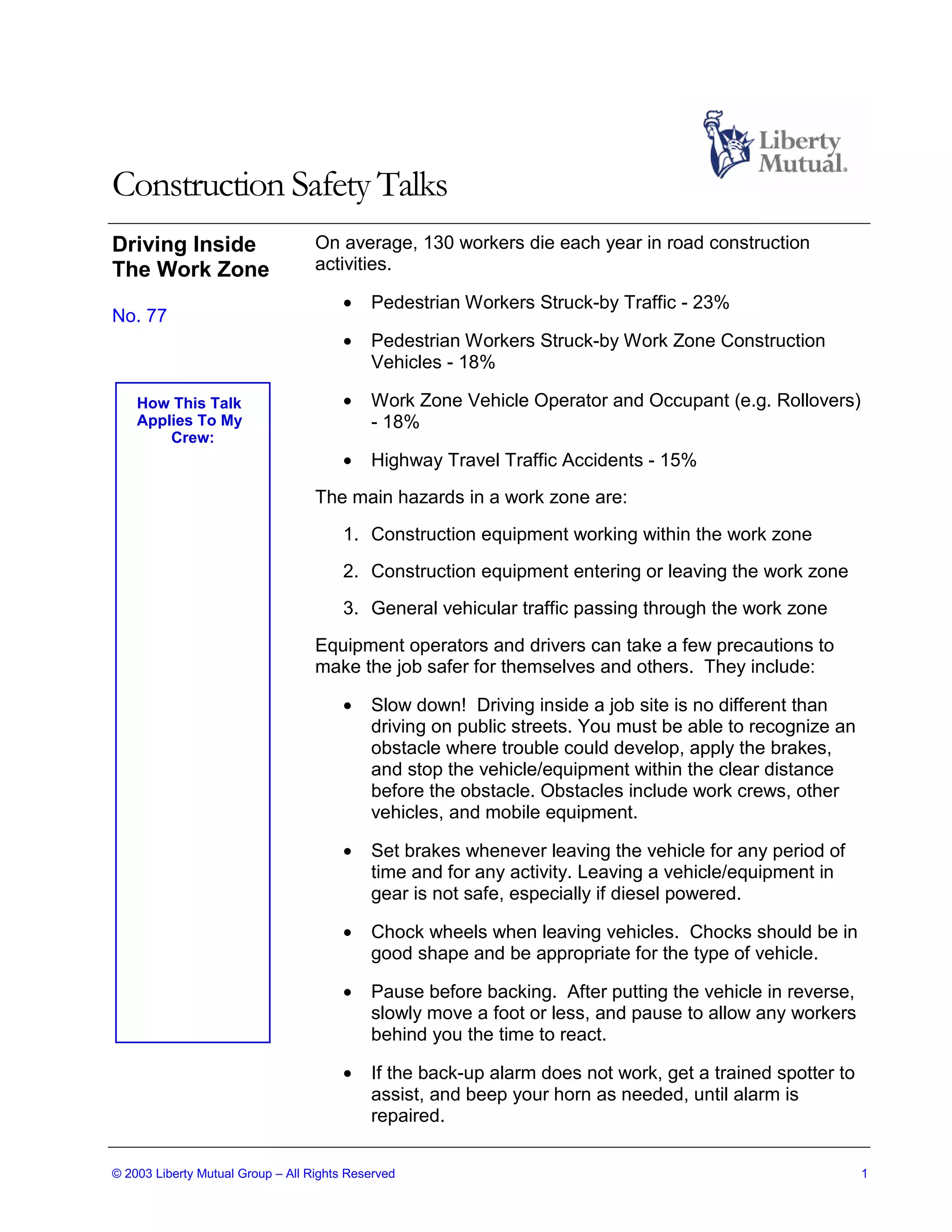
Driving Inside                     On average, 130 workers die each year in road construction
The Work Zone                      activities.

                                       •    Pedestrian Workers Struck-by Traffic - 23%
No. 77
                                       •    Pedestrian Workers Struck-by Work Zone Construction
                                            Vehicles - 18%

    How This Talk                      •    Work Zone Vehicle Operator and Occupant (e.g. Rollovers)
    Applies To My                           - 18%
        Crew:
                                       •    Highway Travel Traffic Accidents - 15%
                                   The main hazards in a work zone are:
                                       1. Construction equipment working within the work zone
                                       2. Construction equipment entering or leaving the work zone
                                       3. General vehicular traffic passing through the work zone
                                   Equipment operators and drivers can take a few precautions to
                                   make the job safer for themselves and others. They include:

                                       •    Slow down! Driving inside a job site is no different than
                                            driving on public streets. You must be able to recognize an
                                            obstacle where trouble could develop, apply the brakes,
                                            and stop the vehicle/equipment within the clear distance
                                            before the obstacle. Obstacles include work crews, other
                                            vehicles, and mobile equipment.

                                       •    Set brakes whenever leaving the vehicle for any period of
                                            time and for any activity. Leaving a vehicle/equipment in
                                            gear is not safe, especially if diesel powered.

                                       •    Chock wheels when leaving vehicles. Chocks should be in
                                            good shape and be appropriate for the type of vehicle.

                                       •    Pause before backing. After putting the vehicle in reverse,
                                            slowly move a foot or less, and pause to allow any workers
                                            behind you the time to react.

                                       •    If the back-up alarm does not work, get a trained spotter to
                                            assist, and beep your horn as needed, until alarm is
                                            repaired.


© 2003 Liberty Mutual Group – All Rights Reserved                                                          1
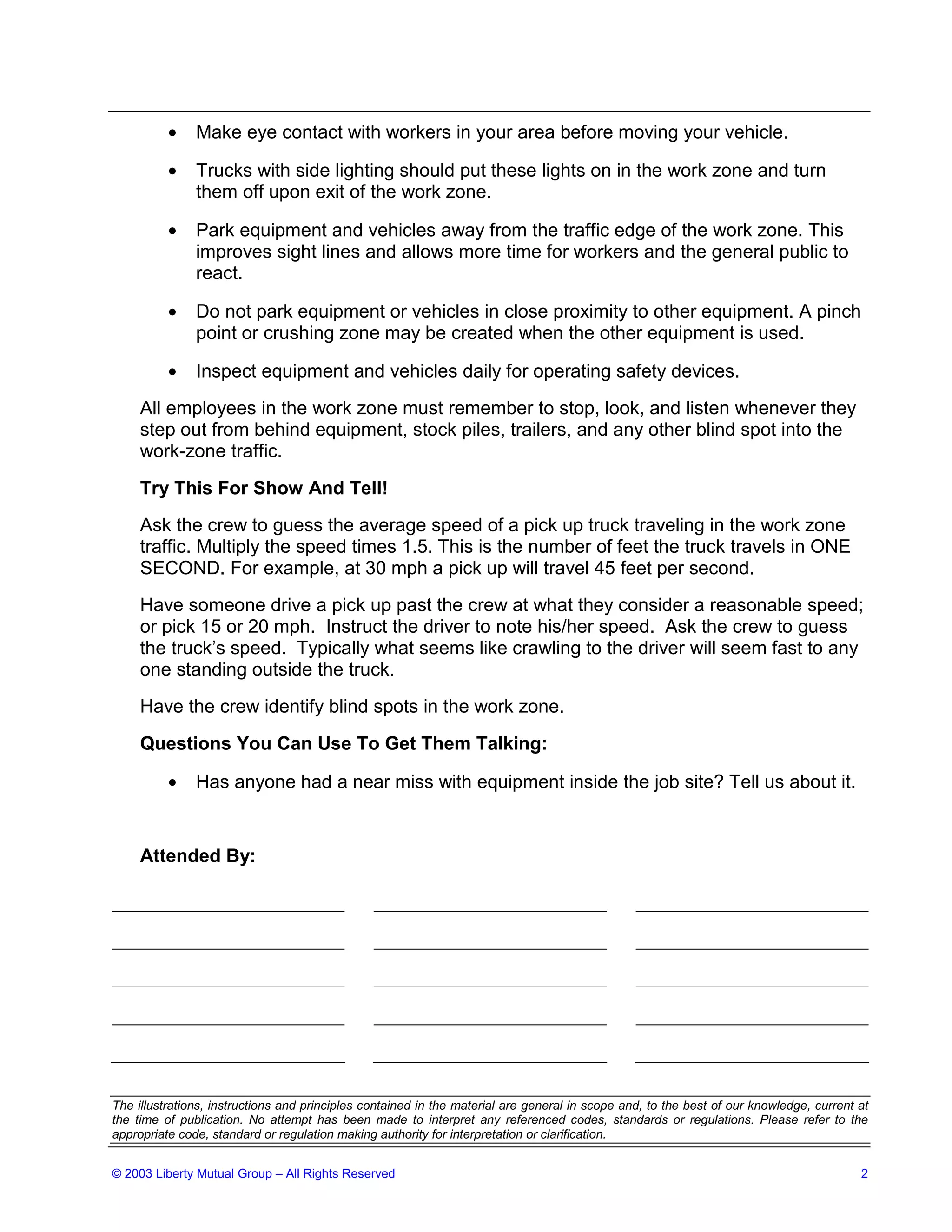
•    Make eye contact with workers in your area before moving your vehicle.

          •    Trucks with side lighting should put these lights on in the work zone and turn
               them off upon exit of the work zone.

          •    Park equipment and vehicles away from the traffic edge of the work zone. This
               improves sight lines and allows more time for workers and the general public to
               react.

          •    Do not park equipment or vehicles in close proximity to other equipment. A pinch
               point or crushing zone may be created when the other equipment is used.

          •    Inspect equipment and vehicles daily for operating safety devices.
     All employees in the work zone must remember to stop, look, and listen whenever they
     step out from behind equipment, stock piles, trailers, and any other blind spot into the
     work-zone traffic.
     Try This For Show And Tell!
     Ask the crew to guess the average speed of a pick up truck traveling in the work zone
     traffic. Multiply the speed times 1.5. This is the number of feet the truck travels in ONE
     SECOND. For example, at 30 mph a pick up will travel 45 feet per second.
     Have someone drive a pick up past the crew at what they consider a reasonable speed;
     or pick 15 or 20 mph. Instruct the driver to note his/her speed. Ask the crew to guess
     the truck’s speed. Typically what seems like crawling to the driver will seem fast to any
     one standing outside the truck.
     Have the crew identify blind spots in the work zone.
     Questions You Can Use To Get Them Talking:

          •    Has anyone had a near miss with equipment inside the job site? Tell us about it.


     Attended By:


The illustrations, instructions and principles contained in the material are general in scope and, to the best of our knowledge, current at
the time of publication. No attempt has been made to interpret any referenced codes, standards or regulations. Please refer to the
appropriate code, standard or regulation making authority for interpretation or clarification.


© 2003 Liberty Mutual Group – All Rights Reserved                                                                                        2

Cst77

  • 1.
    Construction Safety Talks DrivingInside On average, 130 workers die each year in road construction The Work Zone activities. • Pedestrian Workers Struck-by Traffic - 23% No. 77 • Pedestrian Workers Struck-by Work Zone Construction Vehicles - 18% How This Talk • Work Zone Vehicle Operator and Occupant (e.g. Rollovers) Applies To My - 18% Crew: • Highway Travel Traffic Accidents - 15% The main hazards in a work zone are: 1. Construction equipment working within the work zone 2. Construction equipment entering or leaving the work zone 3. General vehicular traffic passing through the work zone Equipment operators and drivers can take a few precautions to make the job safer for themselves and others. They include: • Slow down! Driving inside a job site is no different than driving on public streets. You must be able to recognize an obstacle where trouble could develop, apply the brakes, and stop the vehicle/equipment within the clear distance before the obstacle. Obstacles include work crews, other vehicles, and mobile equipment. • Set brakes whenever leaving the vehicle for any period of time and for any activity. Leaving a vehicle/equipment in gear is not safe, especially if diesel powered. • Chock wheels when leaving vehicles. Chocks should be in good shape and be appropriate for the type of vehicle. • Pause before backing. After putting the vehicle in reverse, slowly move a foot or less, and pause to allow any workers behind you the time to react. • If the back-up alarm does not work, get a trained spotter to assist, and beep your horn as needed, until alarm is repaired. © 2003 Liberty Mutual Group – All Rights Reserved 1
  • 2.
    Make eye contact with workers in your area before moving your vehicle. • Trucks with side lighting should put these lights on in the work zone and turn them off upon exit of the work zone. • Park equipment and vehicles away from the traffic edge of the work zone. This improves sight lines and allows more time for workers and the general public to react. • Do not park equipment or vehicles in close proximity to other equipment. A pinch point or crushing zone may be created when the other equipment is used. • Inspect equipment and vehicles daily for operating safety devices. All employees in the work zone must remember to stop, look, and listen whenever they step out from behind equipment, stock piles, trailers, and any other blind spot into the work-zone traffic. Try This For Show And Tell! Ask the crew to guess the average speed of a pick up truck traveling in the work zone traffic. Multiply the speed times 1.5. This is the number of feet the truck travels in ONE SECOND. For example, at 30 mph a pick up will travel 45 feet per second. Have someone drive a pick up past the crew at what they consider a reasonable speed; or pick 15 or 20 mph. Instruct the driver to note his/her speed. Ask the crew to guess the truck’s speed. Typically what seems like crawling to the driver will seem fast to any one standing outside the truck. Have the crew identify blind spots in the work zone. Questions You Can Use To Get Them Talking: • Has anyone had a near miss with equipment inside the job site? Tell us about it. Attended By: The illustrations, instructions and principles contained in the material are general in scope and, to the best of our knowledge, current at the time of publication. No attempt has been made to interpret any referenced codes, standards or regulations. Please refer to the appropriate code, standard or regulation making authority for interpretation or clarification. © 2003 Liberty Mutual Group – All Rights Reserved 2