Supporting Teachers in
Implementing CSE:
Insights from a Baseline Assessment of Capacities in
Teaching CSE of Philippine Public School Teachers
from Regions 1, 7, and 11
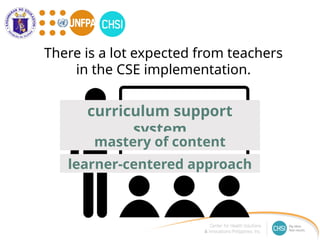
There is a lot expected from teachers
in the CSE implementation.
curriculum support
system
mastery of content
learner-centered approach
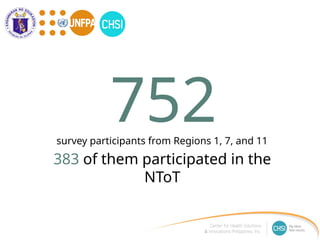
752
survey participants from Regions 1, 7, and 11
383 of them participated in the
NToT
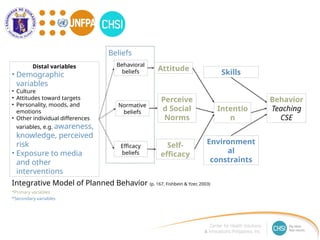
Integrative Model of Planned Behavior (p. 167, Fishbein & Yzer, 2003)
Attitude
Distal variables
• Demographic
variables
• Culture
• Attitudes toward targets
• Personality, moods, and
emotions
• Other individual differences
variables, e.g. awareness,
knowledge, perceived
risk
• Exposure to media
and other
interventions
Perceive
d Social
Norms
Intentio
n
Self-
efficacy
Behavior
Teaching
CSE
Skills
Environment
al
constraints
Behavioral
beliefs
Normative
beliefs
Efficacy
beliefs
Beliefs
*Primary variables
*Secondary variables
Before anything else, increase
awareness
65% said they are aware that CSE is one of
DepEd’s priority age
BUT less than half said they have access
to the official DepEd policy and other CSE-
related resources.
Clarify the scope and limitations of
implementing the CSE curriculum.
features of the CSE vs common misconceptions
scientific
age- and developmentally appropriate
culturally and gender responsive
human rights-based
comprehensive
Before anything else, increase awareness
Identify where and how to access the different
resources.
such as funding, learner’s materials, teacher’s resources, co-curricular
programs, and monitoring
Consider that more teachers became aware of
CSE through the mass media.
vs. primary/official sources such as the Responsible Parenthood and
Reproductive Health Act of 2012, DepEd’s Memo, and PRRD’s EO 12
Before anything else, increase awareness
Increase self-efficacy in teaching CSE
Note: In 2018, a study was conducted by CHSI about the readiness of schools in implementing CSE in Philippine
public schools. The teachers generally reported that they had the skills to teach CSE topics and that they are likely to
comply, especially with the presence of official orders and implementing guidelines from the DepEd. However, many
teachers would need to work on some skills as well as their comfort and confidence.
Only 15% said they have implemented or are
currently implementing CSE integration
Around 66% said they have the intention (currently planning/have
been meaning to do it)
The teachers generally have an average level of
self-efficacy in teaching CSE.
mean rating=6.99
out of a scale of 0 to 10
standard deviation=1.88
Increase self-efficacy in teaching CSE
Around 59% said they can get their students
to participate
BUT almost 49% are undecided whether their
school is ready to implement or not.
Also, around 49% disagreed to the statement
that they have adequate training to implement
CSE effectively.
Increase self-efficacy in teaching CSE
Allow teachers to picture themselves and have more
experience in teaching CSE.
Ensure that CSE is being implemented through
an instituted monitoring and evaluation
system.
Teachers can also create their own simple and
easy-to-implement solutions for monitoring
their progress.
Actual and imaginal experiences
Teachers feel more efficacious in terms of content
than the learner-centered approach.
Self-efficacy in teaching different CSE topics > in performing CSE-related skills > in
teaching CSE given different conditions
Teachers have different technological needs,
professional backgrounds, life experiences.
Those teaching in the lower levels also tend to feel
less efficacious.
Age-appropriateness as a concern
Actual and imaginal experiences
Around 51% are undecided on whether other
schools in their division are already implementing
CSE.
Around 48% said that their colleagues will not resist
the CSE implementation
BUT around 37% are undecided about this.
Similar others’ experiences
Allow teachers to share and exchange their ideas, best
practices, and failures with relatable others.
Only around 11% have talked to or are currently
talking to colleagues about how to effectively
implement CSE in my school or classroom.
Most of them intend to (~65%).
Around 67% have the intention to collaborate with
colleagues in integrate CSE in different learning
areas.
Only a few have acted on it (~9%).
Similar others’ experiences
Teachers may feel efficacious in collaborating with
other teachers on CSE projects (mean rating= 7.20) but
less efficacious in integrating content standards in
their learning area with other learning areas (mean
rating= 6.74).
Only around 42% said they had access to CSE-
related peer education opportunities and around
34% to CSE-related mentoring and supervision.
Similar others’ experiences
Address the uncertainties they have about how
others are doing and encourage all schools to
implement CSE.
CSE conference or congress
Provide opportunities and incentives for peer
education opportunities and mentoring/supervision.
CSE-specific learning action cells
Similar others’ experiences
Allow teachers to share and exchange their ideas, best
practices, and failures with relatable others.
The teachers generally have positive beliefs and
attitudes, but they are uncertain about what others are
doing.
Almost 95% said they would support CSE, but they have apprehensions related to their perceived
norms (e.g. around 42% are undecided about how parents would think about them talking to the
students about sex).
Allow teachers to have external support.
Social encouragement
External support is important to the teachers.
Getting positive responses from students; Getting support from the parents, school
administration, colleagues, and society
Help teachers institute a referral system for your
students.
Only 12% said they have acted on having a referral system and around 65% said they have
the intention to do so.
Teachers have average self-efficacy in being able to refer students with CSE-related
concerns to the school nurse or health worker (mean rating=6.89).
Social encouragement
Allow teachers to have external support.
Hold community-based interventions and events to
orient community members.
Teachers would also need social and material support.
Teachers have average self-efficacy in being able to orient parents/guardians about CSE
(mean rating=6.89) and being able to facilitate school-community partnerships for CSE-
related projects (mean rating=6.64).
Make the work delightful.
Example: Have an incentive/recognition system in place for good
performance. Only around 6% said they have acted on this while
around 65% have the intention.
Cater to different kinds of teachers with
different contexts.
Social encouragement
Allow teachers to have external support.
Have a midline and/or endline
assessment.
The actual experience of teaching CSE may improve the scores in the
different variables.
This could help examine the possible effects of the NToT and other
interventions.
The data can be used to inform decisions about the in-service training
(midline) and/or adjustments for the succeeding school year (endline).
Thank you!
All icons in this presentation have a Creative Commons license and can be accessed through the Noun Project.

CSE PSDS.SH_Session 2 Baseline Assessment_.pptx

  • 1.
    Supporting Teachers in ImplementingCSE: Insights from a Baseline Assessment of Capacities in Teaching CSE of Philippine Public School Teachers from Regions 1, 7, and 11
  • 2.
    There is alot expected from teachers in the CSE implementation. curriculum support system mastery of content learner-centered approach
  • 3.
    752 survey participants fromRegions 1, 7, and 11 383 of them participated in the NToT
  • 4.
    Integrative Model ofPlanned Behavior (p. 167, Fishbein & Yzer, 2003) Attitude Distal variables • Demographic variables • Culture • Attitudes toward targets • Personality, moods, and emotions • Other individual differences variables, e.g. awareness, knowledge, perceived risk • Exposure to media and other interventions Perceive d Social Norms Intentio n Self- efficacy Behavior Teaching CSE Skills Environment al constraints Behavioral beliefs Normative beliefs Efficacy beliefs Beliefs *Primary variables *Secondary variables
  • 5.
    Before anything else,increase awareness 65% said they are aware that CSE is one of DepEd’s priority age BUT less than half said they have access to the official DepEd policy and other CSE- related resources.
  • 6.
    Clarify the scopeand limitations of implementing the CSE curriculum. features of the CSE vs common misconceptions scientific age- and developmentally appropriate culturally and gender responsive human rights-based comprehensive Before anything else, increase awareness
  • 7.
    Identify where andhow to access the different resources. such as funding, learner’s materials, teacher’s resources, co-curricular programs, and monitoring Consider that more teachers became aware of CSE through the mass media. vs. primary/official sources such as the Responsible Parenthood and Reproductive Health Act of 2012, DepEd’s Memo, and PRRD’s EO 12 Before anything else, increase awareness
  • 8.
    Increase self-efficacy inteaching CSE Note: In 2018, a study was conducted by CHSI about the readiness of schools in implementing CSE in Philippine public schools. The teachers generally reported that they had the skills to teach CSE topics and that they are likely to comply, especially with the presence of official orders and implementing guidelines from the DepEd. However, many teachers would need to work on some skills as well as their comfort and confidence. Only 15% said they have implemented or are currently implementing CSE integration Around 66% said they have the intention (currently planning/have been meaning to do it)
  • 9.
    The teachers generallyhave an average level of self-efficacy in teaching CSE. mean rating=6.99 out of a scale of 0 to 10 standard deviation=1.88 Increase self-efficacy in teaching CSE
  • 10.
    Around 59% saidthey can get their students to participate BUT almost 49% are undecided whether their school is ready to implement or not. Also, around 49% disagreed to the statement that they have adequate training to implement CSE effectively. Increase self-efficacy in teaching CSE
  • 11.
    Allow teachers topicture themselves and have more experience in teaching CSE. Ensure that CSE is being implemented through an instituted monitoring and evaluation system. Teachers can also create their own simple and easy-to-implement solutions for monitoring their progress. Actual and imaginal experiences
  • 12.
    Teachers feel moreefficacious in terms of content than the learner-centered approach. Self-efficacy in teaching different CSE topics > in performing CSE-related skills > in teaching CSE given different conditions Teachers have different technological needs, professional backgrounds, life experiences. Those teaching in the lower levels also tend to feel less efficacious. Age-appropriateness as a concern Actual and imaginal experiences
  • 13.
    Around 51% areundecided on whether other schools in their division are already implementing CSE. Around 48% said that their colleagues will not resist the CSE implementation BUT around 37% are undecided about this. Similar others’ experiences Allow teachers to share and exchange their ideas, best practices, and failures with relatable others.
  • 14.
    Only around 11%have talked to or are currently talking to colleagues about how to effectively implement CSE in my school or classroom. Most of them intend to (~65%). Around 67% have the intention to collaborate with colleagues in integrate CSE in different learning areas. Only a few have acted on it (~9%). Similar others’ experiences
  • 15.
    Teachers may feelefficacious in collaborating with other teachers on CSE projects (mean rating= 7.20) but less efficacious in integrating content standards in their learning area with other learning areas (mean rating= 6.74). Only around 42% said they had access to CSE- related peer education opportunities and around 34% to CSE-related mentoring and supervision. Similar others’ experiences
  • 16.
    Address the uncertaintiesthey have about how others are doing and encourage all schools to implement CSE. CSE conference or congress Provide opportunities and incentives for peer education opportunities and mentoring/supervision. CSE-specific learning action cells Similar others’ experiences Allow teachers to share and exchange their ideas, best practices, and failures with relatable others.
  • 17.
    The teachers generallyhave positive beliefs and attitudes, but they are uncertain about what others are doing. Almost 95% said they would support CSE, but they have apprehensions related to their perceived norms (e.g. around 42% are undecided about how parents would think about them talking to the students about sex). Allow teachers to have external support. Social encouragement External support is important to the teachers. Getting positive responses from students; Getting support from the parents, school administration, colleagues, and society
  • 18.
    Help teachers institutea referral system for your students. Only 12% said they have acted on having a referral system and around 65% said they have the intention to do so. Teachers have average self-efficacy in being able to refer students with CSE-related concerns to the school nurse or health worker (mean rating=6.89). Social encouragement Allow teachers to have external support. Hold community-based interventions and events to orient community members. Teachers would also need social and material support. Teachers have average self-efficacy in being able to orient parents/guardians about CSE (mean rating=6.89) and being able to facilitate school-community partnerships for CSE- related projects (mean rating=6.64).
  • 19.
    Make the workdelightful. Example: Have an incentive/recognition system in place for good performance. Only around 6% said they have acted on this while around 65% have the intention. Cater to different kinds of teachers with different contexts. Social encouragement Allow teachers to have external support.
  • 20.
    Have a midlineand/or endline assessment. The actual experience of teaching CSE may improve the scores in the different variables. This could help examine the possible effects of the NToT and other interventions. The data can be used to inform decisions about the in-service training (midline) and/or adjustments for the succeeding school year (endline).
  • 21.
    Thank you! All iconsin this presentation have a Creative Commons license and can be accessed through the Noun Project.