CHRONIC
SUBJECTIVE
DIZZINESS
Kaitlyn Risnes, SPT
August 2015
OBJECTIVES
 Review the history of Chronic Subjective Dizziness.
 Define Chronic Subjective Dizziness.
 Review the current literature on differential diagnosis, treatment,
and prognosis for patients with Chronic Subjective Dizziness.
HISTORY
 Agoraphobia described by Karl Westphal in 1871 as dizziness,
spatial disorientation, and anxiety while in motion-rich environments
such as the marketplace (Staab, 2012)
 Separation of disciplines (otologic, neurologic, psychiatric, etc.)
 Phobic postural vertigo described by Brandt and Dieterich: (Brandt,
Huppert, & Dieterich, 1994)
 Postural dizziness with fluctuating unsteadiness provoked by environmental stimuli
 Patients often demonstrated psychological qualities (depression, obsessive-compulsive)
 Anxiety and sleep disturbances
 Absent findings on physical exam
 Chronic Subjective Dizziness introduced by Staab and Ruckenstein
as they clarified physical symptoms that occur with PPV, defined the
relationship to behavioral factors, and clearly determined a precise
definition.
WHAT IS CHRONIC SUBJECTIVE
DIZZINESS (CSD)?
 Non-vertiginous dizziness (i.e. subjective feeling of rocking or
swaying)
 Often exacerbated by:
 Standing and walking
 Active or passive movement
 Complex visual patterns
 Moving visual stimuli
 Visual activities requiring precision
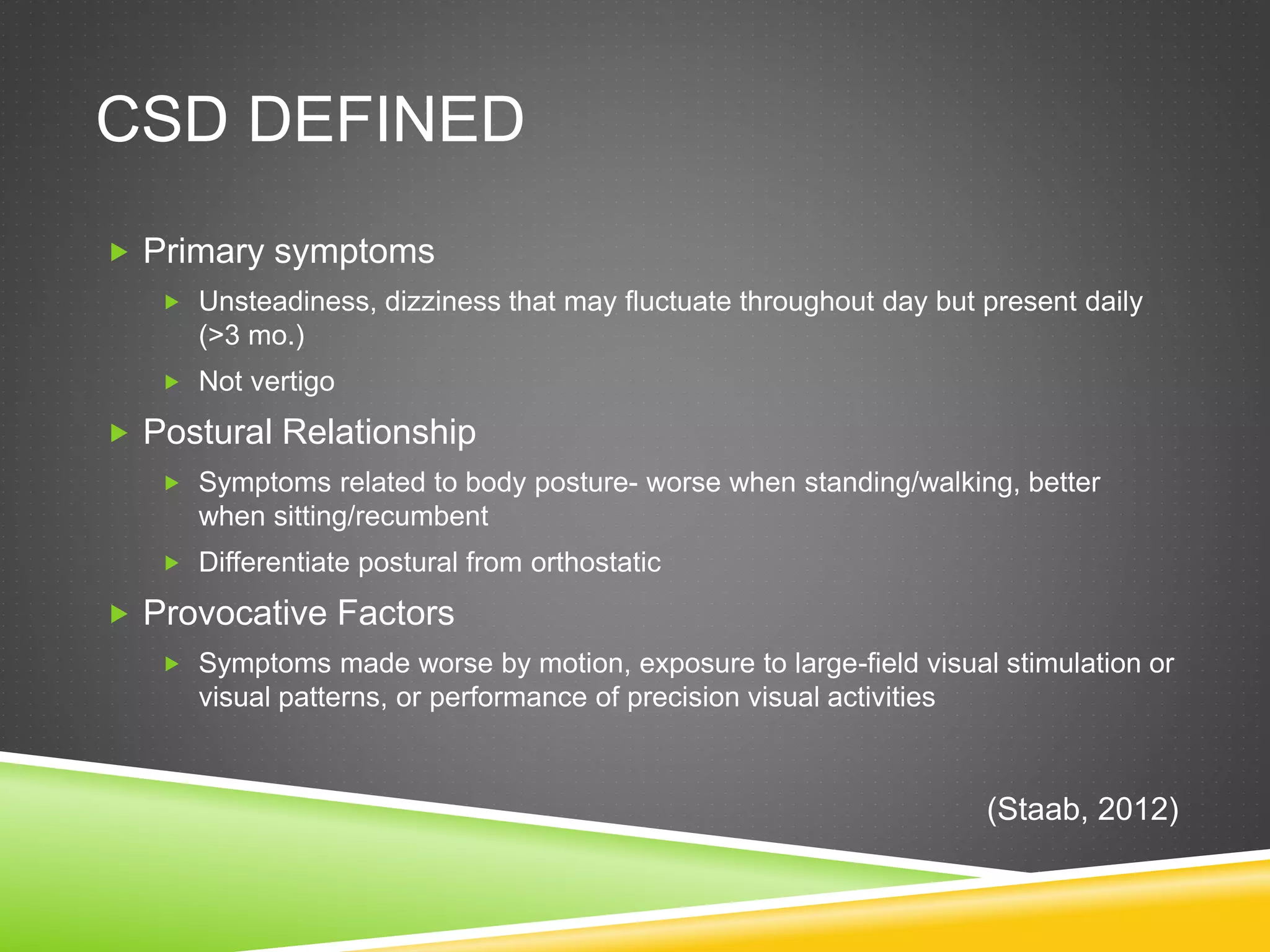
CSD DEFINED
 Primary symptoms
 Unsteadiness, dizziness that may fluctuate throughout day but present daily
(>3 mo.)
 Not vertigo
 Postural Relationship
 Symptoms related to body posture- worse when standing/walking, better
when sitting/recumbent
 Differentiate postural from orthostatic
 Provocative Factors
 Symptoms made worse by motion, exposure to large-field visual stimulation or
visual patterns, or performance of precision visual activities
(Staab, 2012)
 Precipitating Factors
 Previous occurrence of neuro-otologic disease with resultant vestibular
dysfunction
 Medical issue producing unsteadiness or dizziness
 Psychiatric disorder contributing to dizziness symptoms
 Physical Examination and Vestibular Laboratory Testing
 Normal findings
 OR…May reveal evidence of a condition that is active, has been treated, or is
resolved but cannot fully explain the patient’s symptoms
 Behavioral Symptoms
 Anxiety and depression
 Significant psychological distress, psychiatric disorders, or adverse changes in
ADLs may be present
 CSD is NOT a psychiatric illness, but patients with psychiatric disorders may be
predisposed to CSD
(Staab, 2012)
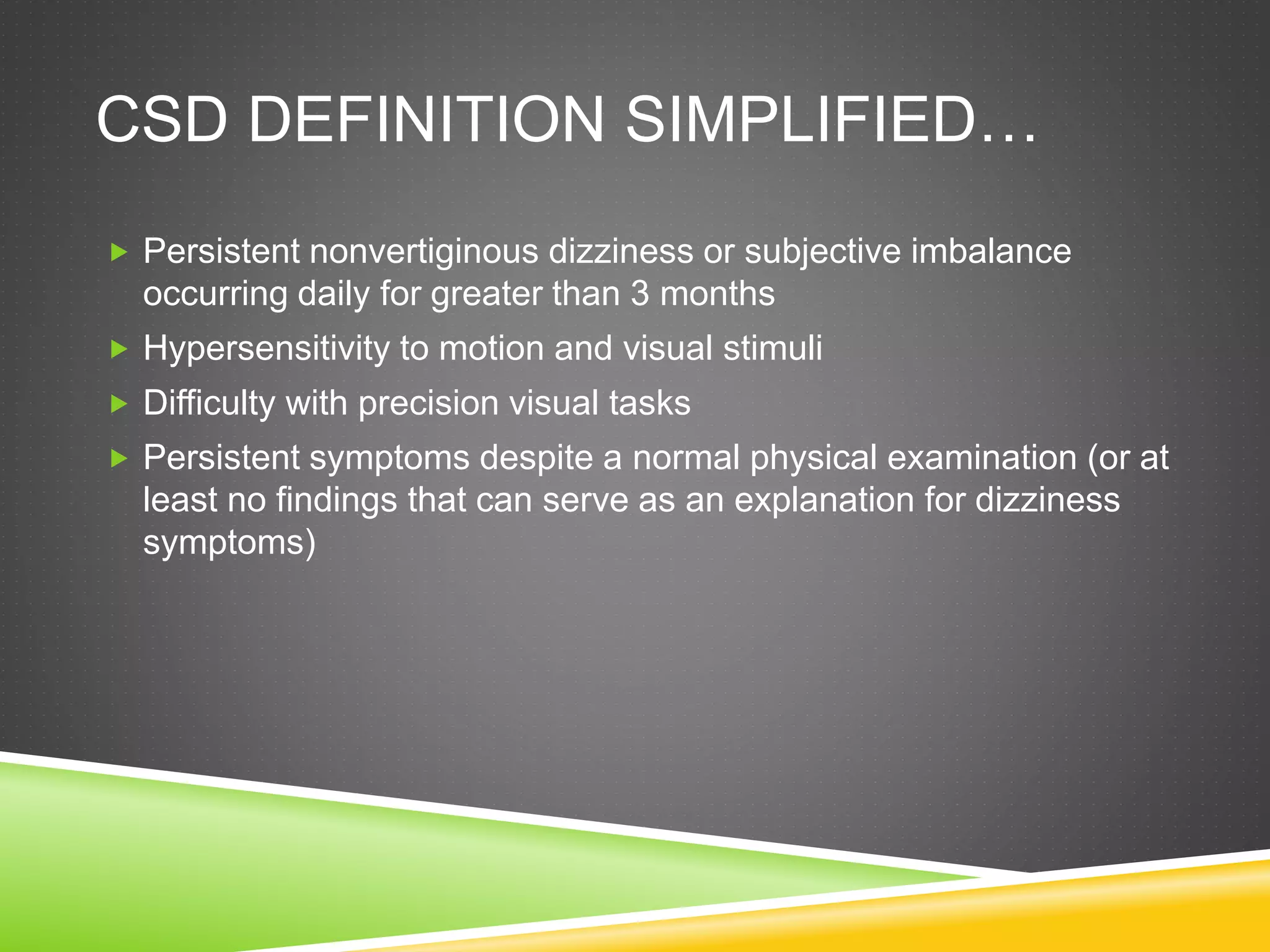
CSD DEFINITION SIMPLIFIED…
 Persistent nonvertiginous dizziness or subjective imbalance
occurring daily for greater than 3 months
 Hypersensitivity to motion and visual stimuli
 Difficulty with precision visual tasks
 Persistent symptoms despite a normal physical examination (or at
least no findings that can serve as an explanation for dizziness
symptoms)
CAUSATION OF CSD?
 Classical and Operant Conditioning
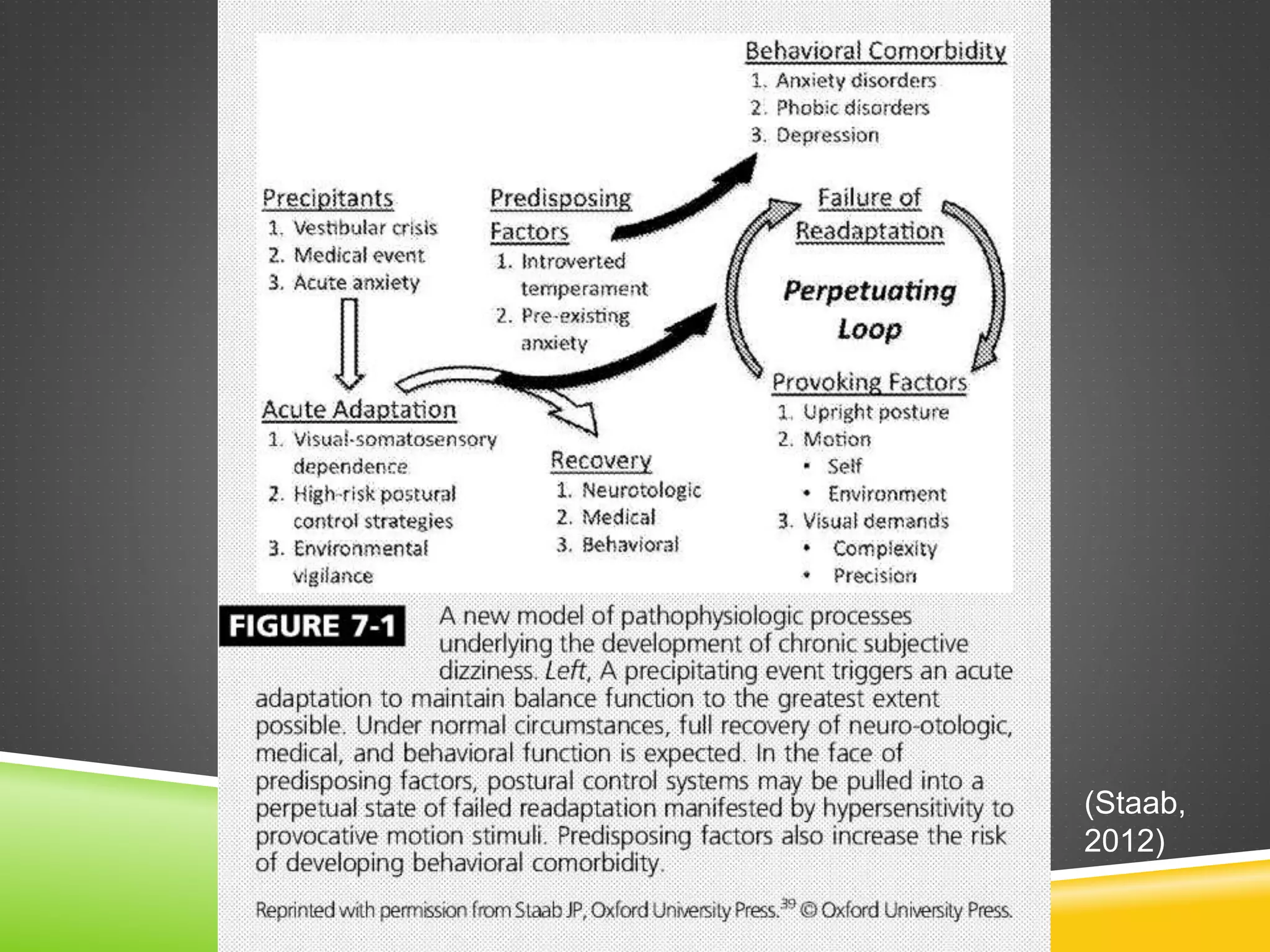
 Failure of Readaptation
CLASSICAL AND OPERANT
CONDITIONING
 A new onset of a vestibular disorder produces a strong
physiologic response– which results in high anxiety– which
augments the conditioning process
 Repeated exposures to the stimuli further sensitizes the system to
motion cues– creating a heightened awareness– reinforcing
hypersensitive responses
 Operant conditioning concurrently reinforces avoidance of
provocative behaviors
FAILURE OF READAPTATION
 CSD starts with an acute incident (e.g. presence of BPPV or
vestibular neuritis)
 Maladjustment occurs during the acute vestibular incident,
followed by continued failure to readapt after the acute injury has
been compensated
(Staab,
2012)
LONGITUDINAL PATTERNS OF CSD
 (1) otogenic: primary neurotologic conditions triggering
secondary anxiety disorders
 (2) psychogenic: anxiety disorders alone causing dizziness
 (3) interactive: neurotologic conditions exacerbating preexisting
anxiety.
(Staab & Ruckenstein,
2005)
(Ruckenstein & Staab,
2009)
PREDICTORS OF CSD
 High levels of anxiety
 Vigilance about vestibular symptoms
 Catastrophic thinking
 Inhibition of more flexible postural control strategies due to
anxiety
 Retrospective study examined 1552 patients with vertigo
 10.6% consistent with CSD
 79.3% had a psychiatric disorder
 Other often presented fear of heights and history of vestibular lesion
 79% demonstrated balance deficits
(Odman & Maire, 2008)
TREATMENT
 Diagnose
 Educate
 Pharmacology
 Psychotherapy
 Vestibular and Balance Rehabilitation Therapy
DIFFERENTIAL DIAGNOSIS
 CSD diagnosis determined by the characteristic history of postural
symptoms and provoking factors consistent with CSD
 Physical examination utilized to determine if a vestibular deficit is
present that can explain patient’s symptoms
 OR can be used to determine the extent a previous vestibular deficit has
recovered
 Need to differentiate from:
 Vestibular migraine, orthostatic tremor, bilateral vestibulopathy, peripheral
neuropathy, perilymph fistula, episodic ataxias, central causes, mild TBI, and
autonomic dysregulation
(Staab & Ruckenstein,
2007)
PHARMACOLOGICAL TREATMENT
 Selective serotonin reuptake inhibitors (SSRIs) and Selective
norepinephrine reuptake inhibitors (SNRIs) have been found to be
effective in treatment of CSD
 50% of patients had complete remission of symptoms
 70% showed a significant positive effect
 20% were not tolerant of the medications (due to sleep disturbances, nausea,
etc.)
 Subjects with and without pre-existing anxiety/depression had similar results
 Patients should be informed that within first few weeks on the
medication, anxiety symptoms may increase. Any concerns
should be discussed with his/her physician
(Staab & Ruckenstein,
2005)(Ruckenstein & Staab, 2009)
PSYCHOTHERAPY
 With the prevalence of underlying psychological comorbidity,
psychotherapy logically plays an important role.
 The literature is still sparse in terms of quality studies effectively
evaluating patient outcomes of those with CSD.
LITERATURE ON PSYCHOTHERAPY &
CSD
 Cognitive Behavior Therapy (CBT) had a medium effect in reducing
dizziness (Schmid, Henningsen, Dieterich, Sattel, & Lahmann,
2011)
 Shortage of long-term studies evaluating effectiveness
 Randomized Control Trial by Edelman, Mahoney, & Cremer (2012)
found positive short-term effects
 The improvements in dizziness immediately after treatment were
not sustained 1 year later (Holmberg, Karlberg, Harlacher, &
Magnusson, 2007)
VESTIBULAR AND BALANCE
REHABILITATIVE THERAPY
 Mechanism
 Behavioral promotion of habituation to vestibular symptoms and motion
sensitivity
 Key is use of clinical expertise to assist the patient in a proper progression
 Treatment components
 Habituation, balance exercises, visual-vestibular exercises
 Graded exposure to regular activities performed at baseline
 Elimination of unnecessary safety aides (e.g. clenching onto shopping cart,
furniture surfing)
 Reduce anxiety and avoidance of certain stimuli
 May require 3-6 months of diligent treatment
(Staab, 2012)
(Staab,
2010)
(Staab,
BI-DIRECTIONAL RELATIONSHIP
The connection between vestibular disorders
and psychiatric disorders
Vestibular disorders may trigger psychiatric
disorders
Psychiatric disorders may causes symptoms of
dizziness
(Staab & Ruckenstein, 2007
REFERENCES
 Brandt, T., Huppert, D., & Dieterich, M. (1994). Phobic postural vertigo: a first follow-up. Journal of neurology, 241(4),
191-195.
 Edelman, S., Mahoney, A. E., & Cremer, P. D. (2012). Cognitive behavior therapy for chronic subjective dizziness: a
randomized, controlled trial. American journal of otolaryngology, 33(4), 395-401.
 Holmberg, J., Karlberg, M., Harlacher, U., & Magnusson, M. (2007). One-year follow-up of cognitive behavioral therapy
for phobic postural vertigo. Journal of neurology, 254(9), 1189-1192.
 Honaker, J. A., Gilbert, J. M., & Staab, J. P. (2010). Chronic subjective dizziness versus conversion disorder: discussion
of clinical findings and rehabilitation. American journal of audiology, 19(1), 3-8.
 Ruckenstein, M. J. & Staab, J. P. (2009). Chronic subjective dizziness. Otolaryngologic Clinics of North America, 42(1),
71-77.
 Schmid, G., Henningsen, P., Dieterich, M., Sattel, H., & Lahmann, C. (2011). Psychotherapy in dizziness: a systematic
review. Journal of Neurology, Neurosurgery & Psychiatry, 82(6), 601-606.
 Staab, J. P. (2010). Behavioral aspects of vestibular rehabilitation. NeuroRehabilitation, 29(2), 179-183.
 Staab, J. P. (2012). Chronic subjective dizziness. CONTINUUM: Lifelong Learning in Neurology, 18(5, Neuro-otology),
1118-1141.
 Staab, J. P., & Ruckenstein, M. J. (2007). Expanding the differential diagnosis of chronic dizziness. Archives of
Otolaryngology–Head & Neck Surgery, 133(2), 170-176.
 Staab, J. P., & Ruckenstein, M. J. (2005). Chronic dizziness and anxiety: effect of course of illness on treatment
outcome. Archives of Otolaryngology–Head & Neck Surgery, 131(8), 675-679.
 Staab, J. P., Ruckenstein, M. J., Solomon, D., & Shepard, N. T. (2002). Serotonin reuptake inhibitors for dizziness with
psychiatric symptoms. Archives of Otolaryngology–Head & Neck Surgery, 128(5), 554-560.

CSD inservice

  • 1.
  • 2.
    OBJECTIVES  Review thehistory of Chronic Subjective Dizziness.  Define Chronic Subjective Dizziness.  Review the current literature on differential diagnosis, treatment, and prognosis for patients with Chronic Subjective Dizziness.
  • 3.
    HISTORY  Agoraphobia describedby Karl Westphal in 1871 as dizziness, spatial disorientation, and anxiety while in motion-rich environments such as the marketplace (Staab, 2012)  Separation of disciplines (otologic, neurologic, psychiatric, etc.)  Phobic postural vertigo described by Brandt and Dieterich: (Brandt, Huppert, & Dieterich, 1994)  Postural dizziness with fluctuating unsteadiness provoked by environmental stimuli  Patients often demonstrated psychological qualities (depression, obsessive-compulsive)  Anxiety and sleep disturbances  Absent findings on physical exam  Chronic Subjective Dizziness introduced by Staab and Ruckenstein as they clarified physical symptoms that occur with PPV, defined the relationship to behavioral factors, and clearly determined a precise definition.
  • 4.
    WHAT IS CHRONICSUBJECTIVE DIZZINESS (CSD)?  Non-vertiginous dizziness (i.e. subjective feeling of rocking or swaying)  Often exacerbated by:  Standing and walking  Active or passive movement  Complex visual patterns  Moving visual stimuli  Visual activities requiring precision
  • 5.
    CSD DEFINED  Primarysymptoms  Unsteadiness, dizziness that may fluctuate throughout day but present daily (>3 mo.)  Not vertigo  Postural Relationship  Symptoms related to body posture- worse when standing/walking, better when sitting/recumbent  Differentiate postural from orthostatic  Provocative Factors  Symptoms made worse by motion, exposure to large-field visual stimulation or visual patterns, or performance of precision visual activities (Staab, 2012)
  • 6.
     Precipitating Factors Previous occurrence of neuro-otologic disease with resultant vestibular dysfunction  Medical issue producing unsteadiness or dizziness  Psychiatric disorder contributing to dizziness symptoms  Physical Examination and Vestibular Laboratory Testing  Normal findings  OR…May reveal evidence of a condition that is active, has been treated, or is resolved but cannot fully explain the patient’s symptoms  Behavioral Symptoms  Anxiety and depression  Significant psychological distress, psychiatric disorders, or adverse changes in ADLs may be present  CSD is NOT a psychiatric illness, but patients with psychiatric disorders may be predisposed to CSD (Staab, 2012)
  • 7.
    CSD DEFINITION SIMPLIFIED… Persistent nonvertiginous dizziness or subjective imbalance occurring daily for greater than 3 months  Hypersensitivity to motion and visual stimuli  Difficulty with precision visual tasks  Persistent symptoms despite a normal physical examination (or at least no findings that can serve as an explanation for dizziness symptoms)
  • 8.
    CAUSATION OF CSD? Classical and Operant Conditioning  Failure of Readaptation
  • 9.
    CLASSICAL AND OPERANT CONDITIONING A new onset of a vestibular disorder produces a strong physiologic response– which results in high anxiety– which augments the conditioning process  Repeated exposures to the stimuli further sensitizes the system to motion cues– creating a heightened awareness– reinforcing hypersensitive responses  Operant conditioning concurrently reinforces avoidance of provocative behaviors
  • 10.
    FAILURE OF READAPTATION CSD starts with an acute incident (e.g. presence of BPPV or vestibular neuritis)  Maladjustment occurs during the acute vestibular incident, followed by continued failure to readapt after the acute injury has been compensated
  • 11.
  • 12.
    LONGITUDINAL PATTERNS OFCSD  (1) otogenic: primary neurotologic conditions triggering secondary anxiety disorders  (2) psychogenic: anxiety disorders alone causing dizziness  (3) interactive: neurotologic conditions exacerbating preexisting anxiety. (Staab & Ruckenstein, 2005) (Ruckenstein & Staab, 2009)
  • 13.
    PREDICTORS OF CSD High levels of anxiety  Vigilance about vestibular symptoms  Catastrophic thinking  Inhibition of more flexible postural control strategies due to anxiety
  • 14.
     Retrospective studyexamined 1552 patients with vertigo  10.6% consistent with CSD  79.3% had a psychiatric disorder  Other often presented fear of heights and history of vestibular lesion  79% demonstrated balance deficits (Odman & Maire, 2008)
  • 15.
    TREATMENT  Diagnose  Educate Pharmacology  Psychotherapy  Vestibular and Balance Rehabilitation Therapy
  • 16.
    DIFFERENTIAL DIAGNOSIS  CSDdiagnosis determined by the characteristic history of postural symptoms and provoking factors consistent with CSD  Physical examination utilized to determine if a vestibular deficit is present that can explain patient’s symptoms  OR can be used to determine the extent a previous vestibular deficit has recovered  Need to differentiate from:  Vestibular migraine, orthostatic tremor, bilateral vestibulopathy, peripheral neuropathy, perilymph fistula, episodic ataxias, central causes, mild TBI, and autonomic dysregulation (Staab & Ruckenstein, 2007)
  • 17.
    PHARMACOLOGICAL TREATMENT  Selectiveserotonin reuptake inhibitors (SSRIs) and Selective norepinephrine reuptake inhibitors (SNRIs) have been found to be effective in treatment of CSD  50% of patients had complete remission of symptoms  70% showed a significant positive effect  20% were not tolerant of the medications (due to sleep disturbances, nausea, etc.)  Subjects with and without pre-existing anxiety/depression had similar results  Patients should be informed that within first few weeks on the medication, anxiety symptoms may increase. Any concerns should be discussed with his/her physician (Staab & Ruckenstein, 2005)(Ruckenstein & Staab, 2009)
  • 18.
    PSYCHOTHERAPY  With theprevalence of underlying psychological comorbidity, psychotherapy logically plays an important role.  The literature is still sparse in terms of quality studies effectively evaluating patient outcomes of those with CSD.
  • 19.
    LITERATURE ON PSYCHOTHERAPY& CSD  Cognitive Behavior Therapy (CBT) had a medium effect in reducing dizziness (Schmid, Henningsen, Dieterich, Sattel, & Lahmann, 2011)  Shortage of long-term studies evaluating effectiveness  Randomized Control Trial by Edelman, Mahoney, & Cremer (2012) found positive short-term effects  The improvements in dizziness immediately after treatment were not sustained 1 year later (Holmberg, Karlberg, Harlacher, & Magnusson, 2007)
  • 20.
    VESTIBULAR AND BALANCE REHABILITATIVETHERAPY  Mechanism  Behavioral promotion of habituation to vestibular symptoms and motion sensitivity  Key is use of clinical expertise to assist the patient in a proper progression  Treatment components  Habituation, balance exercises, visual-vestibular exercises  Graded exposure to regular activities performed at baseline  Elimination of unnecessary safety aides (e.g. clenching onto shopping cart, furniture surfing)  Reduce anxiety and avoidance of certain stimuli  May require 3-6 months of diligent treatment (Staab, 2012) (Staab, 2010)
  • 21.
  • 22.
    BI-DIRECTIONAL RELATIONSHIP The connectionbetween vestibular disorders and psychiatric disorders Vestibular disorders may trigger psychiatric disorders Psychiatric disorders may causes symptoms of dizziness (Staab & Ruckenstein, 2007
  • 23.
    REFERENCES  Brandt, T.,Huppert, D., & Dieterich, M. (1994). Phobic postural vertigo: a first follow-up. Journal of neurology, 241(4), 191-195.  Edelman, S., Mahoney, A. E., & Cremer, P. D. (2012). Cognitive behavior therapy for chronic subjective dizziness: a randomized, controlled trial. American journal of otolaryngology, 33(4), 395-401.  Holmberg, J., Karlberg, M., Harlacher, U., & Magnusson, M. (2007). One-year follow-up of cognitive behavioral therapy for phobic postural vertigo. Journal of neurology, 254(9), 1189-1192.  Honaker, J. A., Gilbert, J. M., & Staab, J. P. (2010). Chronic subjective dizziness versus conversion disorder: discussion of clinical findings and rehabilitation. American journal of audiology, 19(1), 3-8.  Ruckenstein, M. J. & Staab, J. P. (2009). Chronic subjective dizziness. Otolaryngologic Clinics of North America, 42(1), 71-77.  Schmid, G., Henningsen, P., Dieterich, M., Sattel, H., & Lahmann, C. (2011). Psychotherapy in dizziness: a systematic review. Journal of Neurology, Neurosurgery & Psychiatry, 82(6), 601-606.  Staab, J. P. (2010). Behavioral aspects of vestibular rehabilitation. NeuroRehabilitation, 29(2), 179-183.  Staab, J. P. (2012). Chronic subjective dizziness. CONTINUUM: Lifelong Learning in Neurology, 18(5, Neuro-otology), 1118-1141.  Staab, J. P., & Ruckenstein, M. J. (2007). Expanding the differential diagnosis of chronic dizziness. Archives of Otolaryngology–Head & Neck Surgery, 133(2), 170-176.  Staab, J. P., & Ruckenstein, M. J. (2005). Chronic dizziness and anxiety: effect of course of illness on treatment outcome. Archives of Otolaryngology–Head & Neck Surgery, 131(8), 675-679.  Staab, J. P., Ruckenstein, M. J., Solomon, D., & Shepard, N. T. (2002). Serotonin reuptake inhibitors for dizziness with psychiatric symptoms. Archives of Otolaryngology–Head & Neck Surgery, 128(5), 554-560.

Editor's Notes

  • #4 Westphal described how postural control, locomotion, spatial orientation, and threat assessment Traditionally there has been a separation between otologic, neurologic, cardiac, and psychiatric. However, with many vestibular patients this is not effective. Especially in the case of CSD. There is value in knowing the different names associated with the same condition (e.g. CSD, PPV, Agoraphobia, PPPV-- Persistant postural perceptual vertigo)
  • #5 Complex visual patterns: walking on patterned carpet Visual activities requiring precision-- computer
  • #6 6 clinical features that define CSD
  • #7 Most common triggers for CSD: Previous acute vestibular disorders (e.g. BBPV) Episodic vestibular disorders (e.g. Meniere disease) Concussion/ whiplash Anxiety, panic attacks Dysautonomias Dysrhythmias Adverse drug reactions or other medical events
  • #8 Nonvertiginous dizziness/ subjective imbalance accompanied by hypersensitivity to motion stimuli and poor tolerance for complex visual stimuli or precision visual tasks, all occurring in the absence of active vestibular deficits. (Honaker, Dilbert, Staab, 2010)
  • #11 With the acute vestibular disorder– anxiety is produced– leading to an alteration in postural control
  • #12 Precipitating events trigger necessary acute adaption Acute disorder resolves– natural vestibular, medical, and behavioral recovery takes place IF successful, remission of the precipitating event and compensation for any deficits will be accompanied by return to baseline Predisposing factors (anxious introverted temperament) increases chance that an acute postural and behavioral response will be magnified– limiting re-adaptation Driving the system into a perpetual loop in which the high reactivity to motion stimuli and guarded postural control strategies turn previously benign circumstances into provocative situations Staab described this model as being at the interface of neurology and psychiatry
  • #13 Otogenic Chronic Subjective Dizziness These patients had no history of anxiety disorder before developing an acute vestibular insult or other similar pathology (eg, vestibular neuronitis, benign positional vertigo, transient ischemic attack). Their neuro-otologic illness precipitated the onset of anxiety. Psychogenic Chronic Subjective Dizziness These patients had no physical disorders including no history of a vestibular disorder. They developed dizziness during the course of their primary anxiety disorder. Interactive Chronic Subjective Dizziness These patients had a history of an anxiety disorder or diathesis before the onset of any symptoms of dizziness. They developed CSD and a worsening of their anxiety disor- der subsequent to an acute and transient episode of true vertigo or medical condition causing dizziness. CSD and Anxiety: Results: Patients with the otogenic and psychogenic pat- terns of illness had a more complete response to SSRI treat- ment than did patients in the interactive group (P􏰁.01). Rates of SSRI intolerance were similar for all 3 groups. Conclusions: Selective serotonin reuptake inhibitors are effective for patients with CSD and anxiety. How- ever, patients with clinically significant anxiety predat- ing neurotologic illness may require more intensive in- terventions.
  • #14 Article by Staab and Ruckenstein (2007): nearly all patients were diagnosed with psychiatric or neurologic illness (e.g. migraines, mild TBIs, neurally mediated dysautonomias)
  • #15 A retrospective study by Odman and Maire (2007) examined 1552 patients with vertigo, finding that 10.6% were consistent with the definition of CSD. Among these patients with CSD, 79.3% had a psychiatric disorder, others were often associated with fear of heights or a former vestibular lesion that was compensated for. 79% of them had poor balance on dynamic posturography testing
  • #17 Patients with vestibular migraines often have difficulty moving in motion rich environments but often do ok watching it– not the case with CSD Those with peripheral neuropathies, cerebellar degeneration, and movement disorders may have dizziness or postural unsteadiness, but have less trouble with complex visual stimuli Autonomic dysregulation: may have more symptoms with orthostatic symptoms versus postural symptoms as in CSD
  • #18 Vestibular suppressants are not effective in treatment of these patients
  • #20 RCT by Edelman, Mahoney, & Cremer compared results of a group of patients with CSD who participated in 3 sessions of CBT administered by a licensed psychologist to a control group The CBT group showed statistically significant improvements according to the dizziness handicap inventory, but not in underlying psychological outcomes measured on the Depression, Anxiety and Stress scales The only long-term study conducted followed patients 1 year after CBT, finding the improvements in dizziness immediately after treatment were not sustained 1 year later (Holmberg, J., Karlberg, M., Harlacher, U., & Magnusson, 2007) Shortage of long-term studies evaluating effectiveness
  • #21 Beginning around WWII (Cooksey and Cawthorne) – mvt better than inactivity for vest injuries ***Must start out gentler and gradually progress than in patients with acute vestibular conditions OR WILL EXCERBATE SYMPTOMS!