CRYSTALLINE
TECHNOLOGY
Prepared By : Nishant Raj Kapoor
Introduction :
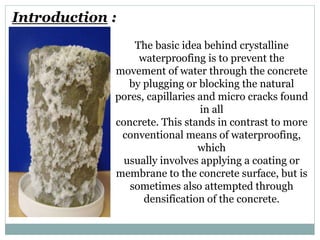
The basic idea behind crystalline
waterproofing is to prevent the
movement of water through the concrete
by plugging or blocking the natural
pores, capillaries and micro cracks found
in all
concrete. This stands in contrast to more
conventional means of waterproofing,
which
usually involves applying a coating or
membrane to the concrete surface, but is
sometimes also attempted through
densification of the concrete.
Crystalline Waterproofing Technology :
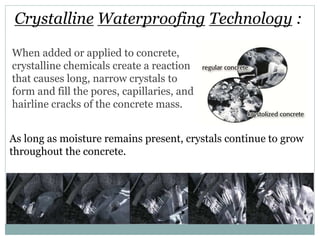
When added or applied to concrete,
crystalline chemicals create a reaction
that causes long, narrow crystals to
form and fill the pores, capillaries, and
hairline cracks of the concrete mass.
As long as moisture remains present, crystals continue to grow
throughout the concrete.
Self Sealing :
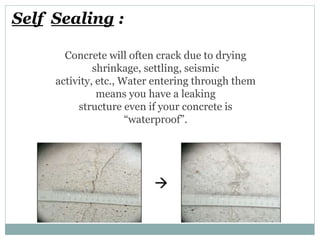
Concrete will often crack due to drying
shrinkage, settling, seismic
activity, etc., Water entering through them
means you have a leaking
structure even if your concrete is
“waterproof”.
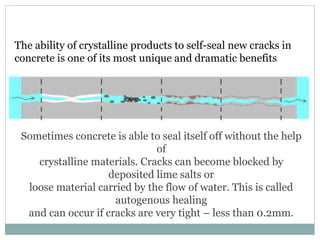
The ability of crystalline products to self-seal new cracks in
concrete is one of its most unique and dramatic benefits
Sometimes concrete is able to seal itself off without the help
of
crystalline materials. Cracks can become blocked by
deposited lime salts or
loose material carried by the flow of water. This is called
autogenous healing
and can occur if cracks are very tight – less than 0.2mm.
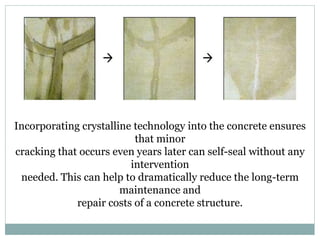
Incorporating crystalline technology into the concrete ensures
that minor
cracking that occurs even years later can self-seal without any
intervention
needed. This can help to dramatically reduce the long-term
maintenance and
repair costs of a concrete structure.
Other Benefits :
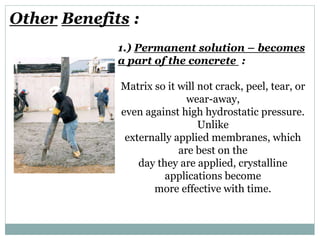
1.) Permanent solution – becomes
a part of the concrete :
Matrix so it will not crack, peel, tear, or
wear-away,
even against high hydrostatic pressure.
Unlike
externally applied membranes, which
are best on the
day they are applied, crystalline
applications become
more effective with time.
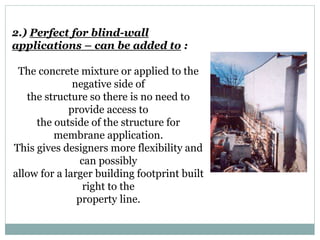
2.) Perfect for blind-wall
applications – can be added to :
The concrete mixture or applied to the
negative side of
the structure so there is no need to
provide access to
the outside of the structure for
membrane application.
This gives designers more flexibility and
can possibly
allow for a larger building footprint built
right to the
property line.
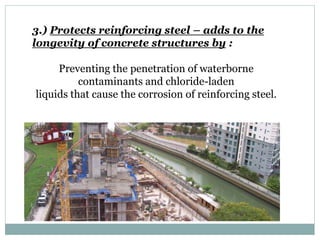
3.) Protects reinforcing steel – adds to the
longevity of concrete structures by :
Preventing the penetration of waterborne
contaminants and chloride-laden
liquids that cause the corrosion of reinforcing steel.
4.) Save time on construction schedules – can be
applied to green concrete or :
Even added to the ready-mix truck. There is no need to wait
for membrane
application. Backfilling can begin right-away.
How is Crystalline Waterproofing
Applied?...
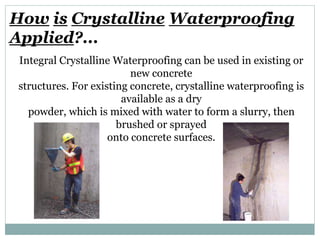
Integral Crystalline Waterproofing can be used in existing or
new concrete
structures. For existing concrete, crystalline waterproofing is
available as a dry
powder, which is mixed with water to form a slurry, then
brushed or sprayed
onto concrete surfaces.
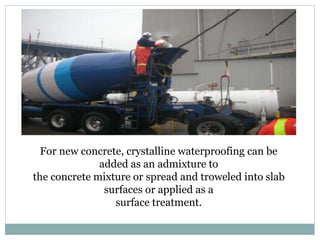
For new concrete, crystalline waterproofing can be
added as an admixture to
the concrete mixture or spread and troweled into slab
surfaces or applied as a
surface treatment.
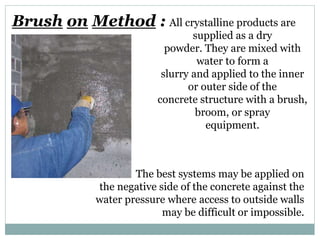
Brush on Method : All crystalline products are
supplied as a dry
powder. They are mixed with
water to form a
slurry and applied to the inner
or outer side of the
concrete structure with a brush,
broom, or spray
equipment.
The best systems may be applied on
the negative side of the concrete against the
water pressure where access to outside walls
may be difficult or impossible.
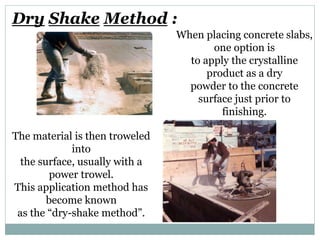
Dry Shake Method :
When placing concrete slabs,
one option is
to apply the crystalline
product as a dry
powder to the concrete
surface just prior to
finishing.
The material is then troweled
into
the surface, usually with a
power trowel.
This application method has
become known
as the “dry-shake method”.
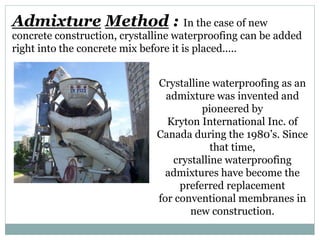
Admixture Method :
Crystalline waterproofing as an
admixture was invented and
pioneered by
Kryton International Inc. of
Canada during the 1980’s. Since
that time,
crystalline waterproofing
admixtures have become the
preferred replacement
for conventional membranes in
new construction.
In the case of new
concrete construction, crystalline waterproofing can be added
right into the concrete mix before it is placed.....
How to Select : (Crystalline Waterproofing Product)
1.) Products that are simply concrete densifiers or pore
blockers
2.) Un-reactive products that claim to grow crystals, but
actually only
“crystallize” as they dry.
3.) Product that contain stearates, silicones and other
hydrophobic
ingredients as these will not reliably resist high hydrostatic
Pressures
4.) Products based on silicates, clays or talc. These offer
temporary
waterproofing at best
... Select a crystalline waterproofing supplier who can
demonstrate a repeated
history of long term success. The manufacturer should offer a
long term
warranty and have the company history to back it. The
manufacturer
should be able to provide accredited third party test results
and have
achieved industry recognized certifications for product quality
and
performance.
Thank you for
your attention …

Crystalline Technology

  • 1.
  • 2.
    Introduction : The basicidea behind crystalline waterproofing is to prevent the movement of water through the concrete by plugging or blocking the natural pores, capillaries and micro cracks found in all concrete. This stands in contrast to more conventional means of waterproofing, which usually involves applying a coating or membrane to the concrete surface, but is sometimes also attempted through densification of the concrete.
  • 3.
    Crystalline Waterproofing Technology: When added or applied to concrete, crystalline chemicals create a reaction that causes long, narrow crystals to form and fill the pores, capillaries, and hairline cracks of the concrete mass. As long as moisture remains present, crystals continue to grow throughout the concrete.
  • 4.
    Self Sealing : Concretewill often crack due to drying shrinkage, settling, seismic activity, etc., Water entering through them means you have a leaking structure even if your concrete is “waterproof”.
  • 5.
    The ability ofcrystalline products to self-seal new cracks in concrete is one of its most unique and dramatic benefits Sometimes concrete is able to seal itself off without the help of crystalline materials. Cracks can become blocked by deposited lime salts or loose material carried by the flow of water. This is called autogenous healing and can occur if cracks are very tight – less than 0.2mm.
  • 6.
    Incorporating crystalline technologyinto the concrete ensures that minor cracking that occurs even years later can self-seal without any intervention needed. This can help to dramatically reduce the long-term maintenance and repair costs of a concrete structure.
  • 7.
    Other Benefits : 1.)Permanent solution – becomes a part of the concrete : Matrix so it will not crack, peel, tear, or wear-away, even against high hydrostatic pressure. Unlike externally applied membranes, which are best on the day they are applied, crystalline applications become more effective with time.
  • 8.
    2.) Perfect forblind-wall applications – can be added to : The concrete mixture or applied to the negative side of the structure so there is no need to provide access to the outside of the structure for membrane application. This gives designers more flexibility and can possibly allow for a larger building footprint built right to the property line.
  • 9.
    3.) Protects reinforcingsteel – adds to the longevity of concrete structures by : Preventing the penetration of waterborne contaminants and chloride-laden liquids that cause the corrosion of reinforcing steel.
  • 10.
    4.) Save timeon construction schedules – can be applied to green concrete or : Even added to the ready-mix truck. There is no need to wait for membrane application. Backfilling can begin right-away.
  • 11.
    How is CrystallineWaterproofing Applied?... Integral Crystalline Waterproofing can be used in existing or new concrete structures. For existing concrete, crystalline waterproofing is available as a dry powder, which is mixed with water to form a slurry, then brushed or sprayed onto concrete surfaces.
  • 12.
    For new concrete,crystalline waterproofing can be added as an admixture to the concrete mixture or spread and troweled into slab surfaces or applied as a surface treatment.
  • 13.
    Brush on Method: All crystalline products are supplied as a dry powder. They are mixed with water to form a slurry and applied to the inner or outer side of the concrete structure with a brush, broom, or spray equipment. The best systems may be applied on the negative side of the concrete against the water pressure where access to outside walls may be difficult or impossible.
  • 14.
    Dry Shake Method: When placing concrete slabs, one option is to apply the crystalline product as a dry powder to the concrete surface just prior to finishing. The material is then troweled into the surface, usually with a power trowel. This application method has become known as the “dry-shake method”.
  • 15.
    Admixture Method : Crystallinewaterproofing as an admixture was invented and pioneered by Kryton International Inc. of Canada during the 1980’s. Since that time, crystalline waterproofing admixtures have become the preferred replacement for conventional membranes in new construction. In the case of new concrete construction, crystalline waterproofing can be added right into the concrete mix before it is placed.....
  • 16.
    How to Select: (Crystalline Waterproofing Product) 1.) Products that are simply concrete densifiers or pore blockers 2.) Un-reactive products that claim to grow crystals, but actually only “crystallize” as they dry. 3.) Product that contain stearates, silicones and other hydrophobic ingredients as these will not reliably resist high hydrostatic Pressures 4.) Products based on silicates, clays or talc. These offer temporary waterproofing at best
  • 17.
    ... Select acrystalline waterproofing supplier who can demonstrate a repeated history of long term success. The manufacturer should offer a long term warranty and have the company history to back it. The manufacturer should be able to provide accredited third party test results and have achieved industry recognized certifications for product quality and performance.
  • 18.
    Thank you for yourattention …