

CRYPTANALYSIS
Cryptanalysis is the study of ciphertext, ciphers and cryptosystems with the aim of understanding
how they work and finding and improving techniques for defeating or weakening them.
INTRODUCTION
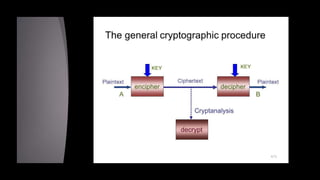
cryptanalysts seek to decrypt ciphertexts without knowledge of the plaintext source,
encryption key or the algorithm used to encrypt it
GOAL
cryptanalysts' research results are used by cryptographers to improve and strengthen or
replace flawed algorithms
CONT………….
cryptanalytic results uncover weaknesses in the design or implementation of the
algorithm, which can reduce the number of keys that need to be tried on the target
ciphertext
cryptanalysis is practiced by a broad range of organizations
Including
▣ governments aiming to decipher other nations' confidential
communications
▣ companies developing security products that employ
cryptanalysts to test their security features etc.
CRYPTANALY
SIS ATTACKS
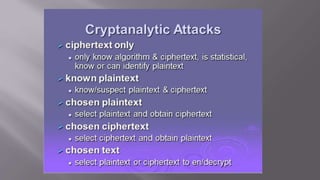
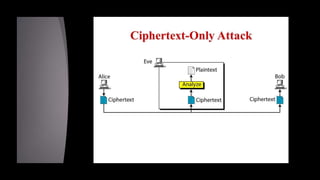
The attacker only has access to one or more encrypted messages but
knows nothing about the plaintext data
▣ the encryption algorithm being used
▣ any data about the cryptographic key being used
This is the type of challenge that intelligence agencies often face
when they have intercepted encrypted communications from an
opponent
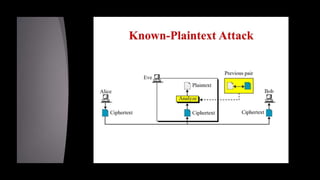
The analyst may have access to some
or all of the plaintext of the ciphertext.
The analyst's goal in this case is to
discover the key used to encrypt the
message and decrypt the message.
Once the key is discovered, an
attacker can decrypt all messages that
had been encrypted using that key.
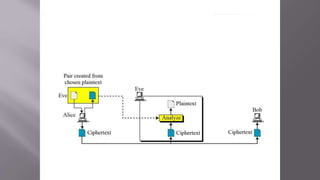
chosen
plaintext attack
The analyst either knows the encryption
algorithm or has access to the device used to
do the encryption. The analyst can encrypt the
chosen plaintext with the targeted algorithm to
derive information about the key
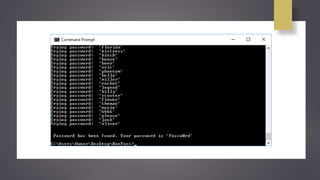
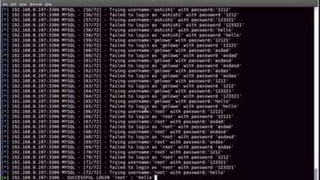
Dictionary attack
▣ a technique typically used against password files and exploits the human tendency
to use passwords based on natural words or easily guessed sequences of letters or
numbers
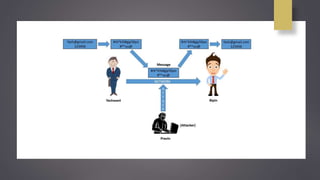
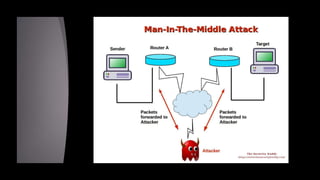
Man-in-the-middle attacks
▣ occur when cryptanalysts find ways to insert themselves into the communication channel between
two parties who wish to exchange their keys for secure communication via asymmetric or public key
infrastructure The attacker then performs a key exchange with each party, with the original parties
believing they are exchanging keys with each other. The two parties then end up using keys that are
known to the attacker.
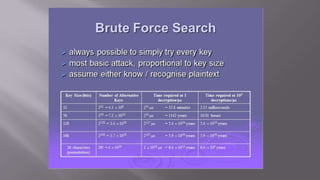
Brute Force Attack
▣ A brute force attack is any type of attack that involves trying every
possible combination of characters or data in order to find the key in
order to decrypt an encrypted message.
▣ A brute force attack is usually used as a last-resort tactic in a
cryptanalysis scenario, as it very much involves extreme amounts of
trial and error and relies on a lot of luck in order to find the key. A
brute force attack is different from a dictionary attack, as it does not
rely on a dictionary and simply tries every possible key that could be
used.
Cryptanalysis 101
Cryptanalysis 101

Cryptanalysis 101

  • 1.
    CRYPTANALYSIS Cryptanalysis is thestudy of ciphertext, ciphers and cryptosystems with the aim of understanding how they work and finding and improving techniques for defeating or weakening them.
  • 2.
    INTRODUCTION cryptanalysts seek todecrypt ciphertexts without knowledge of the plaintext source, encryption key or the algorithm used to encrypt it
  • 3.
    GOAL cryptanalysts' research resultsare used by cryptographers to improve and strengthen or replace flawed algorithms
  • 4.
    CONT…………. cryptanalytic results uncoverweaknesses in the design or implementation of the algorithm, which can reduce the number of keys that need to be tried on the target ciphertext
  • 7.
    cryptanalysis is practicedby a broad range of organizations Including ▣ governments aiming to decipher other nations' confidential communications ▣ companies developing security products that employ cryptanalysts to test their security features etc.
  • 9.
  • 11.
    The attacker onlyhas access to one or more encrypted messages but knows nothing about the plaintext data ▣ the encryption algorithm being used ▣ any data about the cryptographic key being used This is the type of challenge that intelligence agencies often face when they have intercepted encrypted communications from an opponent
  • 13.
    The analyst mayhave access to some or all of the plaintext of the ciphertext. The analyst's goal in this case is to discover the key used to encrypt the message and decrypt the message. Once the key is discovered, an attacker can decrypt all messages that had been encrypted using that key.
  • 15.
    chosen plaintext attack The analysteither knows the encryption algorithm or has access to the device used to do the encryption. The analyst can encrypt the chosen plaintext with the targeted algorithm to derive information about the key
  • 17.
    Dictionary attack ▣ atechnique typically used against password files and exploits the human tendency to use passwords based on natural words or easily guessed sequences of letters or numbers
  • 19.
    Man-in-the-middle attacks ▣ occurwhen cryptanalysts find ways to insert themselves into the communication channel between two parties who wish to exchange their keys for secure communication via asymmetric or public key infrastructure The attacker then performs a key exchange with each party, with the original parties believing they are exchanging keys with each other. The two parties then end up using keys that are known to the attacker.
  • 21.
    Brute Force Attack ▣A brute force attack is any type of attack that involves trying every possible combination of characters or data in order to find the key in order to decrypt an encrypted message. ▣ A brute force attack is usually used as a last-resort tactic in a cryptanalysis scenario, as it very much involves extreme amounts of trial and error and relies on a lot of luck in order to find the key. A brute force attack is different from a dictionary attack, as it does not rely on a dictionary and simply tries every possible key that could be used.