CRM An Introduction Bryan Neville Aviation Safety Inspector Salt Lake City FSDO
CRM The application of personal and team management concepts to enhance the safe operation of aircraft, both on the ground and in the air. CRM includes not only the pilots, but the entire aircrew, ground crew, and all others who work together to operate the aircraft safely.
TCRM Total Company Resource Management Management needs to be sensitive to and participate in human factors training for everyone involved with the operation of aircraft. CRM principles need to become part of the company philosophy.
Basic Concepts of CRM Lasting Behavior Changes Take Time Crewmembers are teams, not a collection of competent individuals Behavior should foster crew effectiveness There must be opportunities to practice CRM is a  normal  behavior CRM is not just an emergency procedure
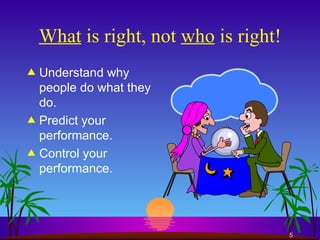
What  is right, not  who  is right! Understand why people do what they do. Predict your performance. Control your performance.
CRM Training Includes: Team Building Self Assessment Information Transfer Problem Solving (Conflict Resolution) Decision Making Maintaining Situational Awareness Use of Automated Systems
Risk Factors The People Pilots Mechanics Management Air Traffic Control The Aircraft The Environment The Situation
High Risk Situations Taking off with a known problem Controlled flight into terrain Unstabilized approach Deviation from Standard Operating Procedure Weather Complacency
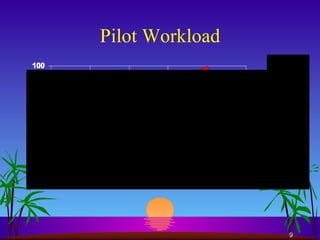
Pilot Workload
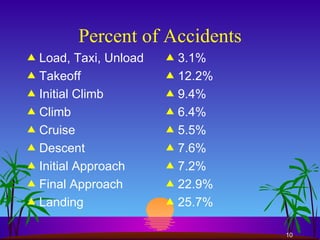
Percent of Accidents Load, Taxi, Unload Takeoff Initial Climb Climb Cruise Descent Initial Approach Final Approach Landing 3.1% 12.2% 9.4% 6.4% 5.5% 7.6% 7.2% 22.9% 25.7%
Managing Risk Supervision - Type, Quality, Quantity Planning - Requires time Crew Selection - Experience and Composition Crew Fitness - Physical & Mental State Environment - Physical Environment; Organizational Culture Complexity - Mission, Job Task, Work Function
The Accident Sequence Underlying Cause = Basic Cause = Immediate Cause = Safety Defenses = Consequences = Management System Individual Countermeasures Accident, Incident, Close Call
Management Planning :  Defines organizational goals,    and strategies for achieving    those goals. Organizing :  Company structure Directing :  Motivating, directing, selecting Controlling :  Ensuring things are going as   they should, including   periodic evaluation Staffing :  Sufficient qualified individuals
Operating System Task arrangement, demands on people, communications, time aspects Material design, equipment, supplies Work environment, sociological environment, weather, material assets Training: Initial, Update, Remedial People selection and motivation
Individual Didn’t follow instructions Blundered ahead without knowing how Bypassed/ignored a rule or procedure Failed to use protective equipment Didn’t think ahead to consequences Used the wrong equipment (continued on next slide)
Individual ( continued ) Used equipment that needed repair  Didn’t look Didn’t listen Didn’t recognize limitations Failed to use safeguards Didn’t pay attention
Overconfidence That funny feeling you get just before you know you’re wrong! Generally verbalized on the cockpit voice recorder with the words “Oh, s---!”)
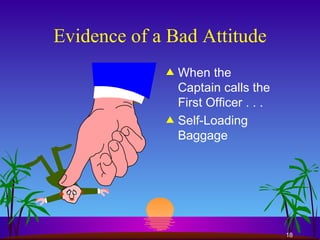
Evidence of a Bad Attitude When the Captain calls the First Officer . . . Self-Loading Baggage
Basic Bad Attitudes Anti-Authority -  No one tells me what to do! Impulsiveness -  Do something quickly, anything Invulnerability -  It won’t happen to me Macho -  I can do it! Resignation -  What’s the use
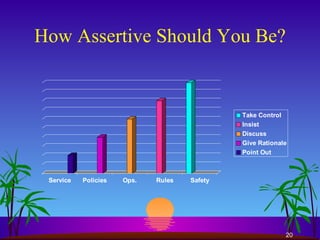
How Assertive Should You Be?
Countermeasures Specifically targeted against the first three dominoes in the accident sequence  (management, systems, individuals) Designed to trap latent errors If these work, the accident never occurs BUT, the latent error may still exist!
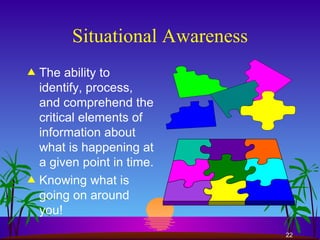
Situational Awareness The ability to identify, process, and comprehend the critical elements of information about what is happening at a given point in time. Knowing what is going on around you!
Factors Leading to Loss of Situational Awareness Repetition Stress Demands from Management Demands from PIC Get There-itis Proximity Rule Peer Pressure Sophisticated Aircraft Syndrome New Situations Critical Areas
Outward Signs of Loss of Situational Awareness Distraction Complacency Unresolved Discrepancies Confusion Poor Communication Improper Procedures Fixation No One Flying the Aircraft
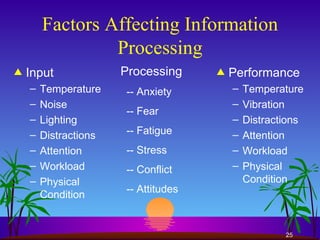
Factors Affecting Information Processing Input Temperature Noise Lighting Distractions Attention Workload Physical Condition Performance Temperature Vibration Distractions Attention Workload Physical Condition Processing -- Anxiety -- Fear -- Fatigue -- Stress -- Conflict -- Attitudes
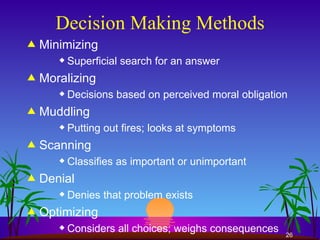
Decision Making Methods Minimizing Superficial search for an answer Moralizing Decisions based on perceived moral obligation Muddling Putting out fires; looks at symptoms Scanning Classifies as important or unimportant Denial Denies that problem exists Optimizing Considers all choices; weighs consequences
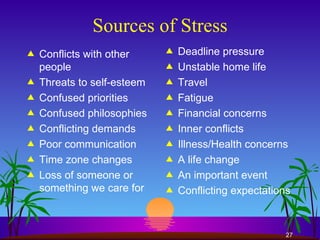
Sources of Stress Conflicts with other people Threats to self-esteem Confused priorities Confused philosophies Conflicting demands Poor communication Time zone changes Loss of someone or something we care for Deadline pressure Unstable home life Travel Fatigue Financial concerns Inner conflicts Illness/Health concerns A life change An important event Conflicting expectations
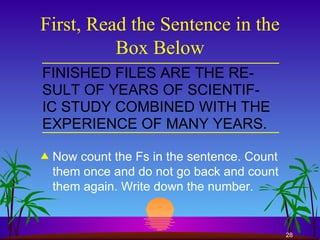
First, Read the Sentence in the Box Below Now count the Fs in the sentence. Count them once and do not go back and count them again. Write down the number.
 
Tips for Managing Stress Discussions Among Crew Review Procedures Follow the Checklist Constant Cross Check Rehearse Plan Review Relax Self-talk Stringent Standards Play What-if Games Physical Condition Get Adequate Rest Nutritional Factors
Elements of a Good Briefing Establishes open communications Is interactive Establishes “Team Concept” Covers pertinent issues Identifies potential problems Provides guidelines for action Sets expectations Establishes guidelines for operation of automated systems Specifies duties and responsibilities
Conclusion Take these basic ideas and incorporate them into your company philosophy. Safety can’t wait!

Crm

  • 1.
    CRM An IntroductionBryan Neville Aviation Safety Inspector Salt Lake City FSDO
  • 2.
    CRM The applicationof personal and team management concepts to enhance the safe operation of aircraft, both on the ground and in the air. CRM includes not only the pilots, but the entire aircrew, ground crew, and all others who work together to operate the aircraft safely.
  • 3.
    TCRM Total CompanyResource Management Management needs to be sensitive to and participate in human factors training for everyone involved with the operation of aircraft. CRM principles need to become part of the company philosophy.
  • 4.
    Basic Concepts ofCRM Lasting Behavior Changes Take Time Crewmembers are teams, not a collection of competent individuals Behavior should foster crew effectiveness There must be opportunities to practice CRM is a normal behavior CRM is not just an emergency procedure
  • 5.
    What isright, not who is right! Understand why people do what they do. Predict your performance. Control your performance.
  • 6.
    CRM Training Includes:Team Building Self Assessment Information Transfer Problem Solving (Conflict Resolution) Decision Making Maintaining Situational Awareness Use of Automated Systems
  • 7.
    Risk Factors ThePeople Pilots Mechanics Management Air Traffic Control The Aircraft The Environment The Situation
  • 8.
    High Risk SituationsTaking off with a known problem Controlled flight into terrain Unstabilized approach Deviation from Standard Operating Procedure Weather Complacency
  • 9.
  • 10.
    Percent of AccidentsLoad, Taxi, Unload Takeoff Initial Climb Climb Cruise Descent Initial Approach Final Approach Landing 3.1% 12.2% 9.4% 6.4% 5.5% 7.6% 7.2% 22.9% 25.7%
  • 11.
    Managing Risk Supervision- Type, Quality, Quantity Planning - Requires time Crew Selection - Experience and Composition Crew Fitness - Physical & Mental State Environment - Physical Environment; Organizational Culture Complexity - Mission, Job Task, Work Function
  • 12.
    The Accident SequenceUnderlying Cause = Basic Cause = Immediate Cause = Safety Defenses = Consequences = Management System Individual Countermeasures Accident, Incident, Close Call
  • 13.
    Management Planning : Defines organizational goals, and strategies for achieving those goals. Organizing : Company structure Directing : Motivating, directing, selecting Controlling : Ensuring things are going as they should, including periodic evaluation Staffing : Sufficient qualified individuals
  • 14.
    Operating System Taskarrangement, demands on people, communications, time aspects Material design, equipment, supplies Work environment, sociological environment, weather, material assets Training: Initial, Update, Remedial People selection and motivation
  • 15.
    Individual Didn’t followinstructions Blundered ahead without knowing how Bypassed/ignored a rule or procedure Failed to use protective equipment Didn’t think ahead to consequences Used the wrong equipment (continued on next slide)
  • 16.
    Individual ( continued) Used equipment that needed repair Didn’t look Didn’t listen Didn’t recognize limitations Failed to use safeguards Didn’t pay attention
  • 17.
    Overconfidence That funnyfeeling you get just before you know you’re wrong! Generally verbalized on the cockpit voice recorder with the words “Oh, s---!”)
  • 18.
    Evidence of aBad Attitude When the Captain calls the First Officer . . . Self-Loading Baggage
  • 19.
    Basic Bad AttitudesAnti-Authority - No one tells me what to do! Impulsiveness - Do something quickly, anything Invulnerability - It won’t happen to me Macho - I can do it! Resignation - What’s the use
  • 20.
  • 21.
    Countermeasures Specifically targetedagainst the first three dominoes in the accident sequence (management, systems, individuals) Designed to trap latent errors If these work, the accident never occurs BUT, the latent error may still exist!
  • 22.
    Situational Awareness Theability to identify, process, and comprehend the critical elements of information about what is happening at a given point in time. Knowing what is going on around you!
  • 23.
    Factors Leading toLoss of Situational Awareness Repetition Stress Demands from Management Demands from PIC Get There-itis Proximity Rule Peer Pressure Sophisticated Aircraft Syndrome New Situations Critical Areas
  • 24.
    Outward Signs ofLoss of Situational Awareness Distraction Complacency Unresolved Discrepancies Confusion Poor Communication Improper Procedures Fixation No One Flying the Aircraft
  • 25.
    Factors Affecting InformationProcessing Input Temperature Noise Lighting Distractions Attention Workload Physical Condition Performance Temperature Vibration Distractions Attention Workload Physical Condition Processing -- Anxiety -- Fear -- Fatigue -- Stress -- Conflict -- Attitudes
  • 26.
    Decision Making MethodsMinimizing Superficial search for an answer Moralizing Decisions based on perceived moral obligation Muddling Putting out fires; looks at symptoms Scanning Classifies as important or unimportant Denial Denies that problem exists Optimizing Considers all choices; weighs consequences
  • 27.
    Sources of StressConflicts with other people Threats to self-esteem Confused priorities Confused philosophies Conflicting demands Poor communication Time zone changes Loss of someone or something we care for Deadline pressure Unstable home life Travel Fatigue Financial concerns Inner conflicts Illness/Health concerns A life change An important event Conflicting expectations
  • 28.
    First, Read theSentence in the Box Below Now count the Fs in the sentence. Count them once and do not go back and count them again. Write down the number.
  • 29.
  • 30.
    Tips for ManagingStress Discussions Among Crew Review Procedures Follow the Checklist Constant Cross Check Rehearse Plan Review Relax Self-talk Stringent Standards Play What-if Games Physical Condition Get Adequate Rest Nutritional Factors
  • 31.
    Elements of aGood Briefing Establishes open communications Is interactive Establishes “Team Concept” Covers pertinent issues Identifies potential problems Provides guidelines for action Sets expectations Establishes guidelines for operation of automated systems Specifies duties and responsibilities
  • 32.
    Conclusion Take thesebasic ideas and incorporate them into your company philosophy. Safety can’t wait!