CRM Issues
AVM 404 Contemporary Aviation Issues
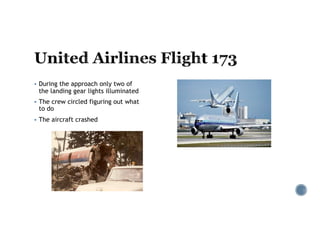
§ During the approach only two of
the landing gear lights illuminated
§ The crew circled figuring out what
to do
§ The aircraft crashed
§ The Light bulb was burnt out
§ The NTSB ruled the following: "The failure of the captain to monitor
properly the aircraft's fuel state and to properly respond to the low
fuel state.... His inattention resulted from preoccupation with a
landing gear malfunction....”
§ During an emergency situation the
autopilot was set
§ The pilot bumped the stick and sent the
jet into an unperceivable dive
§ The cockpit voice recorder captured the
following.
1. Pilot A: "We did something to the
altitude"
2. Pilot B:" What?"
3. Pilot A: "We're still at 2000 [feet],
right?"
4. Pilot B: "Hey what's happening here?"
§ Crew (or Cockpit) Resource Management (CRM) training originated from a NASA
workshop in 1979 that focused on improving air safety.
§ The NASA research presented at this meeting found that the primary cause of the
majority of aviation accidents was human error and that the main problems were
failures of interpersonal communication, leadership, and decision-making in the
cockpit.
§ A variety of CM models have been successfully adapted to different types of
industries and organizations, all based on the same basic concepts and principles
§CRM is an operational philosophy looking for the
effective use of all available resources: human
resources, hardware, and information.
§ Communication
§ Leadership and authority
§ Situational awareness
§ Decision making
§ Stress / Fatigue management
§ Automatism management
§ Assertive
§ Work distribution
§ Power chain
§ Vigilance and crosscheck
§ Standard Operational Procedures
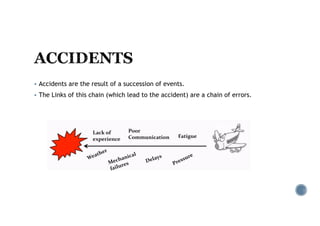
§ Accidents are the result of a succession of events.
§ The Links of this chain (which lead to the accident) are a chain of errors.
§ Situation awareness, or SA, is the perception of environmental elements within a
volume of time and space, the comprehension of their meaning, and the projection
of their status in the near future.
§ Evaluating high - Risk Situations
§ Recognising Changing conditions
§ Recognising your limitations
§ Recognising equipment limitations
KNOW WHAT IS HAPPENING AROUND YOU
§ Ambiguity
§ Confusion
§ Only fly the aeroplane or look outside
§ Not following the SOPs
§ Stress and workload
§ Focus your attention
§ Routine and excess of confidence
§ Failure to meet targets
§ Use of Undocumented Procedures
§ Departure from SOP
§ Violating Minimums
§ No One Flying the Airplane
§ No one looking out the window
§ Communication breakdown
§ Unresolved Discrepancies
§ The "BAD FEELING”
§ Experience
§ Training
§ Spatial Orientation
§ Keeping up Physical Skills
§ Briefings
§ Following the SOP
§ Teamwork
§ Effective communication
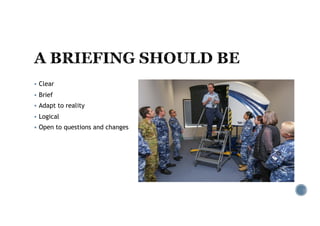
§ Clear
§ Brief
§ Adapt to reality
§ Logical
§ Open to questions and changes
§ Before every flight
§ When there is a change in a crew member
§ When a significant change occurs
§ Controlled flight into terrain (CFIT) describes a collision whereby an
airworthy aircraft, under pilot control, inadvertently flies into
terrain, an obstacle, or water.
§ The term was developed by engineers at Boeing in the late 1970s.
§ The pilots are generally unaware of the danger until it is too late.
§ 61% of aviation fatalities are caused by CFIT.
§ The concept of CRM fosters a climate where freedom to respectfully question authority
is encouraged
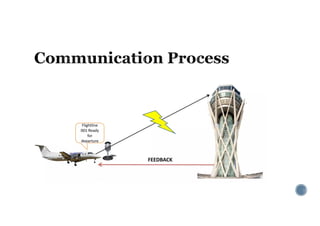
§ The communication process:
1. Opening or Attention getter
"Hey Chief" or "Captain smith"
2. State your concern
"Were Low on Fuel" or "The Patient doesn't look good"
3. State the problem as you see it
“I don't think we have enough fuel to fly around the storm” “I don't think she's breathing
well”
4. State the solution
“Let's divert to another airport”
5. Obtain agreement (or buy-in)
“Does that sound good to you Captain?”
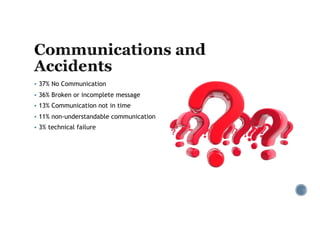
§ 37% No Communication
§ 36% Broken or incomplete message
§ 13% Communication not in time
§ 11% non-understandable communication
§ 3% technical failure
§ Transmit the information clear and loud.
§ Use standard terminology.
§ Express our suggestions and worries in an assertive way.
§ Demand feedback.
§ Ask for confirmation if you are not sure.
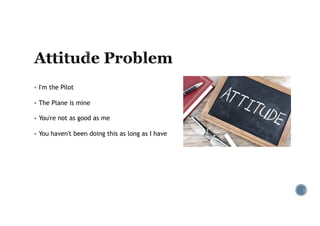
§ I'm the Pilot
§ The Plane is mine
§ You're not as good as me
§ You haven't been doing this as long as I have
§ Impulsive
§ Anti Authority
§ Macho
§ Resignation
§ Invulnerability
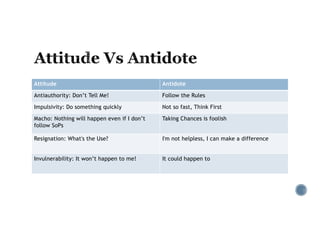
Attitude Antidote
Antiauthority: Don’t Tell Me! Follow the Rules
Impulsivity: Do something quickly Not so fast, Think First
Macho: Nothing will happen even if I don’t
follow SoPs
Taking Chances is foolish
Resignation: What's the Use? I'm not helpless, I can make a difference
Invulnerability: It won’t happen to me! It could happen to
§ D - Detect the need to make a decision
§ E - Evaluate your options, considering the goals of your flight
§ C - Choose the options that best meet your goals
§ I - Implement that choice
§ D - Detect the changes that result from your decision
§ E - Evaluate the result and your need to make further decisions
§ Begins with Good Situational Awareness
§ Evaluate Situation
1. What needs to be corrected?
2. What resources do you have?
3. How can the resources be best used?
§ Consider consequences of possible actions
§ Make decision, inform all involved
§ Evaluate decision, repeat as needed
§ Fatigue
§ Stress
§ Medication and Health
§ Alcohol
§ Personality
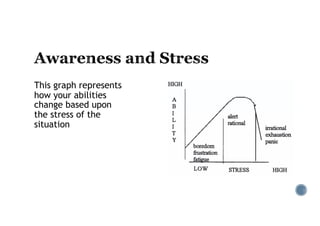
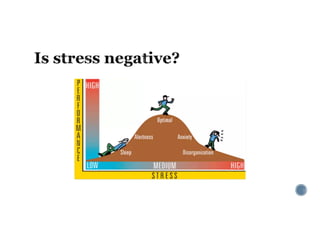
This graph represents
how your abilities
change based upon
the stress of the
situation
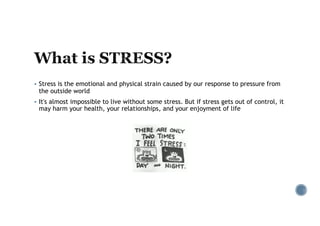
§ Stress is the emotional and physical strain caused by our response to pressure from
the outside world
§ It's almost impossible to live without some stress. But if stress gets out of control, it
may harm your health, your relationships, and your enjoyment of life
§ The seriousness of the problem
§ Personality
§ Training
§ Experience
§ Irritability
§ Hostility
§ Anxiety
§ Low self-esteem
§ Inferiority complex
§ Isolation from friends and
family
§ Inability to enjoy your life
§ Loss of Concentration
§ Abuse of drugs and alcohol
§ Sleep disruption
§ Nicotine poisoning
§ Abuse of alcohol
§ Aggressiveness
§ Emotional bursting
§ Loss of apetite
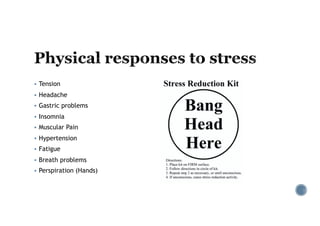
§ Tension
§ Headache
§ Gastric problems
§ Insomnia
§ Muscular Pain
§ Hypertension
§ Fatigue
§ Breath problems
§ Perspiration (Hands)
§ Identify the stress factors
§ Use relax therapies
§ Improve your diet
§ Improve physical exercise
§ Develop your interior balance
In case you cannot control it, go to the doctor
§ Weather conditions
§ Noises
§ Hypoxia
§ Fatigue
§ Poor physical conditions
§ Company pressures
§ Problems with the crew
§ Maintenance
§ Lack of experience
§ Work instability
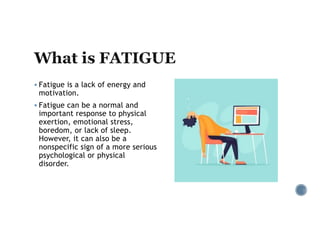
§ Fatigue is a lack of energy and
motivation.
§ Fatigue can be a normal and
important response to physical
exertion, emotional stress,
boredom, or lack of sleep.
However, it can also be a
nonspecific sign of a more serious
psychological or physical
disorder.
§ PHYSICAL (excessive exercise)
§ MENTAL (excess of intellectual work)
§ PERCEPTION (excess of stimulus)
§ INADEOUATE REST
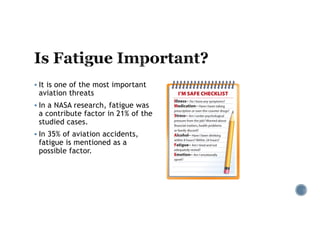
§ It is one of the most important
aviation threats
§ In a NASA research, fatigue was
a contribute factor in 21% of the
studied cases.
§ In 35% of aviation accidents,
fatigue is mentioned as a
possible factor.
§ https://skybrary.aero/articles/crew-resource-management-oghfa-bn
§ https://skybrary.aero/articles/crew-resource-management-crm
§ https://skybrary.aero/articles/single-pilot-resource-management-srm

Crew Resource Management Issues lecture foe Aviation

  • 1.
    CRM Issues AVM 404Contemporary Aviation Issues
  • 2.
    § During theapproach only two of the landing gear lights illuminated § The crew circled figuring out what to do § The aircraft crashed
  • 3.
    § The Lightbulb was burnt out § The NTSB ruled the following: "The failure of the captain to monitor properly the aircraft's fuel state and to properly respond to the low fuel state.... His inattention resulted from preoccupation with a landing gear malfunction....”
  • 4.
    § During anemergency situation the autopilot was set § The pilot bumped the stick and sent the jet into an unperceivable dive § The cockpit voice recorder captured the following. 1. Pilot A: "We did something to the altitude" 2. Pilot B:" What?" 3. Pilot A: "We're still at 2000 [feet], right?" 4. Pilot B: "Hey what's happening here?"
  • 5.
    § Crew (orCockpit) Resource Management (CRM) training originated from a NASA workshop in 1979 that focused on improving air safety. § The NASA research presented at this meeting found that the primary cause of the majority of aviation accidents was human error and that the main problems were failures of interpersonal communication, leadership, and decision-making in the cockpit. § A variety of CM models have been successfully adapted to different types of industries and organizations, all based on the same basic concepts and principles
  • 6.
    §CRM is anoperational philosophy looking for the effective use of all available resources: human resources, hardware, and information.
  • 7.
    § Communication § Leadershipand authority § Situational awareness § Decision making § Stress / Fatigue management § Automatism management § Assertive § Work distribution § Power chain § Vigilance and crosscheck § Standard Operational Procedures
  • 8.
    § Accidents arethe result of a succession of events. § The Links of this chain (which lead to the accident) are a chain of errors.
  • 9.
    § Situation awareness,or SA, is the perception of environmental elements within a volume of time and space, the comprehension of their meaning, and the projection of their status in the near future. § Evaluating high - Risk Situations § Recognising Changing conditions § Recognising your limitations § Recognising equipment limitations KNOW WHAT IS HAPPENING AROUND YOU
  • 10.
    § Ambiguity § Confusion §Only fly the aeroplane or look outside § Not following the SOPs § Stress and workload § Focus your attention § Routine and excess of confidence
  • 11.
    § Failure tomeet targets § Use of Undocumented Procedures § Departure from SOP § Violating Minimums § No One Flying the Airplane § No one looking out the window § Communication breakdown § Unresolved Discrepancies § The "BAD FEELING”
  • 12.
    § Experience § Training §Spatial Orientation § Keeping up Physical Skills § Briefings § Following the SOP § Teamwork § Effective communication
  • 13.
    § Clear § Brief §Adapt to reality § Logical § Open to questions and changes
  • 14.
    § Before everyflight § When there is a change in a crew member § When a significant change occurs
  • 15.
    § Controlled flightinto terrain (CFIT) describes a collision whereby an airworthy aircraft, under pilot control, inadvertently flies into terrain, an obstacle, or water. § The term was developed by engineers at Boeing in the late 1970s. § The pilots are generally unaware of the danger until it is too late. § 61% of aviation fatalities are caused by CFIT.
  • 16.
    § The conceptof CRM fosters a climate where freedom to respectfully question authority is encouraged § The communication process: 1. Opening or Attention getter "Hey Chief" or "Captain smith" 2. State your concern "Were Low on Fuel" or "The Patient doesn't look good" 3. State the problem as you see it “I don't think we have enough fuel to fly around the storm” “I don't think she's breathing well” 4. State the solution “Let's divert to another airport” 5. Obtain agreement (or buy-in) “Does that sound good to you Captain?”
  • 18.
    § 37% NoCommunication § 36% Broken or incomplete message § 13% Communication not in time § 11% non-understandable communication § 3% technical failure
  • 20.
    § Transmit theinformation clear and loud. § Use standard terminology. § Express our suggestions and worries in an assertive way. § Demand feedback. § Ask for confirmation if you are not sure.
  • 21.
    § I'm thePilot § The Plane is mine § You're not as good as me § You haven't been doing this as long as I have
  • 22.
    § Impulsive § AntiAuthority § Macho § Resignation § Invulnerability
  • 23.
    Attitude Antidote Antiauthority: Don’tTell Me! Follow the Rules Impulsivity: Do something quickly Not so fast, Think First Macho: Nothing will happen even if I don’t follow SoPs Taking Chances is foolish Resignation: What's the Use? I'm not helpless, I can make a difference Invulnerability: It won’t happen to me! It could happen to
  • 24.
    § D -Detect the need to make a decision § E - Evaluate your options, considering the goals of your flight § C - Choose the options that best meet your goals § I - Implement that choice § D - Detect the changes that result from your decision § E - Evaluate the result and your need to make further decisions
  • 25.
    § Begins withGood Situational Awareness § Evaluate Situation 1. What needs to be corrected? 2. What resources do you have? 3. How can the resources be best used? § Consider consequences of possible actions § Make decision, inform all involved § Evaluate decision, repeat as needed
  • 26.
    § Fatigue § Stress §Medication and Health § Alcohol § Personality
  • 27.
    This graph represents howyour abilities change based upon the stress of the situation
  • 28.
    § Stress isthe emotional and physical strain caused by our response to pressure from the outside world § It's almost impossible to live without some stress. But if stress gets out of control, it may harm your health, your relationships, and your enjoyment of life
  • 30.
    § The seriousnessof the problem § Personality § Training § Experience
  • 31.
    § Irritability § Hostility §Anxiety § Low self-esteem § Inferiority complex § Isolation from friends and family § Inability to enjoy your life § Loss of Concentration § Abuse of drugs and alcohol
  • 32.
    § Sleep disruption §Nicotine poisoning § Abuse of alcohol § Aggressiveness § Emotional bursting § Loss of apetite
  • 33.
    § Tension § Headache §Gastric problems § Insomnia § Muscular Pain § Hypertension § Fatigue § Breath problems § Perspiration (Hands)
  • 34.
    § Identify thestress factors § Use relax therapies § Improve your diet § Improve physical exercise § Develop your interior balance In case you cannot control it, go to the doctor
  • 35.
    § Weather conditions §Noises § Hypoxia § Fatigue § Poor physical conditions § Company pressures § Problems with the crew § Maintenance § Lack of experience § Work instability
  • 36.
    § Fatigue isa lack of energy and motivation. § Fatigue can be a normal and important response to physical exertion, emotional stress, boredom, or lack of sleep. However, it can also be a nonspecific sign of a more serious psychological or physical disorder.
  • 37.
    § PHYSICAL (excessiveexercise) § MENTAL (excess of intellectual work) § PERCEPTION (excess of stimulus) § INADEOUATE REST
  • 38.
    § It isone of the most important aviation threats § In a NASA research, fatigue was a contribute factor in 21% of the studied cases. § In 35% of aviation accidents, fatigue is mentioned as a possible factor.
  • 40.