

Creating Healthy
    Eaters
 Beverly Pressey, MS,RD,
                    Mom
Learn to Enjoy Eating with your
               Children
   Family meals are important
     Family    meal defined:
          Everyone present

          NO: TV, telephones, books, magazines, radio

          Any meal of the day, any time of the day
Why are Family Meals
              Important
   Studies have shown that children who eat
    3 or more meals with their family:
     Better nutrition from home meals
     Better food choices away from home
     Better grades in school
     Less likely of abuse alcohol and drugs
     Have greater self esteem
Detriments to Family Meals
 Preparation: shopping
 Cooking and clean-up


 Frustration: deciding what to prepare to
  keep everyone happy
 Arguing: trying to get your kids to eat
Selecting What to Prepare
   It’s your job to decide what to offer at
    meals and offer it in an appropriate and
    inviting manner.
     By   offering food-you have done your job.
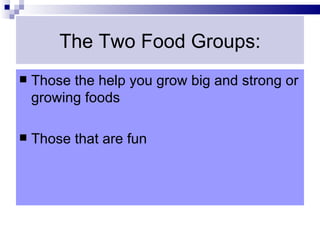
The Two Food Groups:
   Those the help you grow big and strong or
    growing foods

   Those that are fun
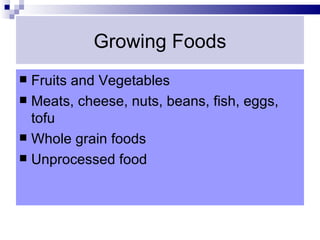
Growing Foods
 Fruits and Vegetables
 Meats, cheese, nuts, beans, fish, eggs,
  tofu
 Whole grain foods
 Unprocessed food
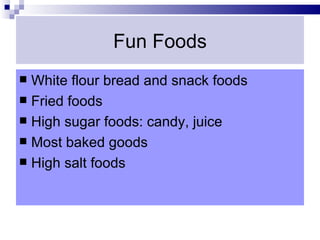
Fun Foods
 White flour bread and snack foods
 Fried foods
 High sugar foods: candy, juice
 Most baked goods
 High salt foods
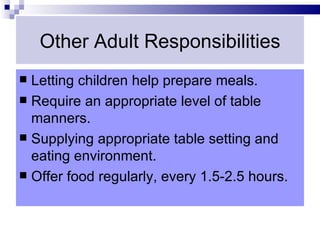
Other Adult Responsibilities
 Letting children help prepare meals.
 Require an appropriate level of table
  manners.
 Supplying appropriate table setting and
  eating environment.
 Offer food regularly, every 1.5-2.5 hours.
Not Your Job:
   How much food a child eats.
   What order food is eaten.
   Whether a child eats or not.
   Bribing, rewarding, cajoling or tricking a child to
    eat.

                   THESE ARE YOUR CHILD’S JOB
                         Don’t be an over achiever!
Give your Child Responsibility
 Serve themselves when they are able.
 Chose to eat or not.
 Realize the consequences of their
  decisions.
Trust your Child, Show them that
            You Trust Them.
   Let them keep their natural ability to know
    when they are hungry and sated (full).
     0-1years:  feed on demand
     1 year-until they move out: Continue to follow
      their lead
Offering Fun Food
 When and how much is up to you.
 Let the child know that this is fun food so
  they will only be allowed a certain amount.
 Always serve a growing food with a fun
  food so a child can eat to satiety at every
  meal or snack.
Children Will Not Over or Under Eat

   IF:
     They  are offered regular meals and snacks of
      a variety of healthy foods.
     They are not constantly and continuously
      encouraged to eat after they have shown they
      are finished eating.
You Control Timing of Meals and
                Snacks

   A hungry child is a motivated eater.
     Motivated   eaters:
        Eat
        Are more likely to try new foods
If Your Child Chooses Not to Eat

 That is their choice.
 Remind them that there will be no more
  food until…
 They will not starve or have any nutritional
  deficiencies.
You Will Not:
 Become a short order cook.
 Give into begging for food directly after
  food was offered.
 Yell, threaten, bribe or punish.
“I’m hungry”
   “I would be hungry too if I didn’t eat
    anything for dinner.

   “I would be hungry too if I only ate a
    cookie for dinner.”
Snacks vs. Meals
   Nutrition at snacks and meals should be
    equal, because your child doesn’t know
    the difference between a meal and a
    snack.

   If meals and snacks before dinner are
    mostly fun foods, you are now determined
    to get your child to eat dinner.
Dessert
   Whether a dessert is a fun food or a good
    and good for you food, it should be offered
    to a child whether they ate or not.
milk
 A child 1 or over only needs 2 cups of milk
  a day.
 You do not need to serve milk with every
  meal.
 Always offer water for thirst after the cup
  of milk is gone.
protein
 Many young children don’t like meat.
 Children don’t need a large portion of a
  protein food at each meal, there is some
  protein in all foods except fruits.
 Children ages 1-3 need 16 grams for
  protein, they receive 14 grams from 2
  cups of milk.
Beverly Pressey,MS, RD, Mom
   Consultations, speaking, 1-1 counseling

   Author: Simple and Savvy Strategies for
    Creating Healthy Meals

                   Contact at:
          PracticalFamilyNutrition.com

Creatinghealthyeaters03

  • 1.
    Creating Healthy Eaters Beverly Pressey, MS,RD, Mom
  • 2.
    Learn to EnjoyEating with your Children  Family meals are important  Family meal defined:  Everyone present  NO: TV, telephones, books, magazines, radio  Any meal of the day, any time of the day
  • 3.
    Why are FamilyMeals Important  Studies have shown that children who eat 3 or more meals with their family:  Better nutrition from home meals  Better food choices away from home  Better grades in school  Less likely of abuse alcohol and drugs  Have greater self esteem
  • 4.
    Detriments to FamilyMeals  Preparation: shopping  Cooking and clean-up  Frustration: deciding what to prepare to keep everyone happy  Arguing: trying to get your kids to eat
  • 5.
    Selecting What toPrepare  It’s your job to decide what to offer at meals and offer it in an appropriate and inviting manner.  By offering food-you have done your job.
  • 6.
    The Two FoodGroups:  Those the help you grow big and strong or growing foods  Those that are fun
  • 7.
    Growing Foods  Fruitsand Vegetables  Meats, cheese, nuts, beans, fish, eggs, tofu  Whole grain foods  Unprocessed food
  • 8.
    Fun Foods  Whiteflour bread and snack foods  Fried foods  High sugar foods: candy, juice  Most baked goods  High salt foods
  • 9.
    Other Adult Responsibilities Letting children help prepare meals.  Require an appropriate level of table manners.  Supplying appropriate table setting and eating environment.  Offer food regularly, every 1.5-2.5 hours.
  • 10.
    Not Your Job:  How much food a child eats.  What order food is eaten.  Whether a child eats or not.  Bribing, rewarding, cajoling or tricking a child to eat. THESE ARE YOUR CHILD’S JOB Don’t be an over achiever!
  • 11.
    Give your ChildResponsibility  Serve themselves when they are able.  Chose to eat or not.  Realize the consequences of their decisions.
  • 12.
    Trust your Child,Show them that You Trust Them.  Let them keep their natural ability to know when they are hungry and sated (full).  0-1years: feed on demand  1 year-until they move out: Continue to follow their lead
  • 13.
    Offering Fun Food When and how much is up to you.  Let the child know that this is fun food so they will only be allowed a certain amount.  Always serve a growing food with a fun food so a child can eat to satiety at every meal or snack.
  • 14.
    Children Will NotOver or Under Eat  IF:  They are offered regular meals and snacks of a variety of healthy foods.  They are not constantly and continuously encouraged to eat after they have shown they are finished eating.
  • 15.
    You Control Timingof Meals and Snacks  A hungry child is a motivated eater.  Motivated eaters:  Eat  Are more likely to try new foods
  • 16.
    If Your ChildChooses Not to Eat  That is their choice.  Remind them that there will be no more food until…  They will not starve or have any nutritional deficiencies.
  • 17.
    You Will Not: Become a short order cook.  Give into begging for food directly after food was offered.  Yell, threaten, bribe or punish.
  • 18.
    “I’m hungry”  “I would be hungry too if I didn’t eat anything for dinner.  “I would be hungry too if I only ate a cookie for dinner.”
  • 19.
    Snacks vs. Meals  Nutrition at snacks and meals should be equal, because your child doesn’t know the difference between a meal and a snack.  If meals and snacks before dinner are mostly fun foods, you are now determined to get your child to eat dinner.
  • 20.
    Dessert  Whether a dessert is a fun food or a good and good for you food, it should be offered to a child whether they ate or not.
  • 21.
    milk  A child1 or over only needs 2 cups of milk a day.  You do not need to serve milk with every meal.  Always offer water for thirst after the cup of milk is gone.
  • 22.
    protein  Many youngchildren don’t like meat.  Children don’t need a large portion of a protein food at each meal, there is some protein in all foods except fruits.  Children ages 1-3 need 16 grams for protein, they receive 14 grams from 2 cups of milk.
  • 23.
    Beverly Pressey,MS, RD,Mom  Consultations, speaking, 1-1 counseling  Author: Simple and Savvy Strategies for Creating Healthy Meals  Contact at:  PracticalFamilyNutrition.com