Chronic pelvic pain
syndrome
1
DR. ANEES PUTHAWALA
SAVEETHA MEDICAL COLLEGE
PROSTATITIS
• The first description of prostatitis dates to 1838
by Verdies.
• Treatment by prostate massage was described
by Posner of Berlin in 1893
• Krieger and Weidner (2003) contend that the
contemporary history of prostatitis began with a
letter to the editor published in the Journal of
Urology in 1978 by George Drach et al. (1978).
This is described as the first scientific
recommendations for a systematic classification of
patients with symptoms of prostatitis
3
Meares and Stamey (1968)
• The diagnosis was based on the microscopic
examination and quantitative cultures of segmented
urogenital tract specimens described by Meares
and Stamey (1968) and four categories
presented:
(1) acute bacterial prostatitis with acute infection,
(2)chronic bacterial prostatitis with
recurrent episodes of bacteriuria by the same
organism,
• (3) chronic bacterial prostatitis in which patients
had symptoms of prostatitis, negative cultures,
and inflammatory cells, and
• (4) prostatodynia, with symptoms of prostatitis
including “prostatic discomfort” but no recognizable
4
Current Classification of Prostatitis
• The current classification of prostatitis was developed at
consensus conferences in 1995 and 1998; the National
Institutes of Health (NIH) classification was published
in 1999
NIH Classification
I. Acute bacterial prostatitis
II. Chronic bacterial prostatitis
IIIA. Chronic prostatitis/pelvic pain syndrome,
inflammatory
IIIB. Chronic prostatitis/pelvic pain syndrome,
noninflammatory
IV. Asymptomatic inflammatory prostatitis
5
• The NIH definition of category III CP/CPPS as
adopted by the Chronic Prostatitis Research
Network is that of symptoms of pain or discomfort
in the pelvis for at least 3 of the previous 6
months .
• Several exclusion criteria are also included,
such as demonstration of uropathogenic bacteria
detected by standard microbiologic methods,
urogenital cancer, prior radiation or che-motherapy,
urethral stricture, or neurologic disease affecting the
bladder (Schaeffer et al., 2002b)
6
Histopathology: Histology
• The term prostatitis can refer to the presence of
inflammation on a histology examination of the
prostate or is also used to describe clinical
syndromes manifest by genitourinary
discomfort or pain described in the NIH
classification.
7
• A classification system proposed by Nickel et al.
recommended reporting inflammation in
prostatitis by its anatomic location in the
prostate, either
• glandular (within a duct/gland epithelium or
lumen),
• periglandular (lies within stroma but centered
around ducts and glands and approaches 50
micro m or less), or
• stromal (in the stroma and >50 micro m from
a gland)
8
Extent of inflammation is defined as
• focal (<10%),
• multifocal (10%–50%), or
• diffuse (> 50%).
Grade
• 1) or mild (individual inflammatory cells separated
by distinct spaces, <100 cells);
• 2) or moderate (confluent sheets of cell with no tissue
destruction or lymphoid follicles, 100–300 cells); and
• 3) or severe (confluent sheets of inflammatory cells
with tissue destruction or nodule formation, 100–500
cells)
9
Associated entities
• corpora amylacea, which form from the
deposition of prostatic secretions around
sloughed epithelial cells; they do not usually
cause inflammation unless they cause
obstruction.
• Prostate calculi may contribute to
inflammation by causing local obstruction or by
providing a nidus for bacterial growth
10
Specific Cases of Prostatic
Inflammation
Granulomatous Prostatitis
• Granulomatous prostatitis is diagnosed by the
histologic finding of epithelioid granulomas with
or without other infla.
• It is commonly found on specimens from
trans- urethral resections and prostate biopsies
.
• The most widely accepted grading
system categorizes granulomatous
prostatitis as
▫ specific,
▫ nonspecific,
▫ after transurethral resection of the
prostate (TURP),
11
• It is commonly seen after intravesical Bacillus
Calmette-Guerin (BCG) therapy for bladder
cancer and can cause transient elevated levels of
prostate-specific antigen (PSA) .
• Tuberculosis can also cause granulomatous
prostatitis .
12
Immunoglobulin G Subclass 4 (IgG4)
• Prostatitis has been described from IgG4-
related disease (IgG4-RD).
• fibroinflammatory disease with multiorgan
involvement characterized by several features:
tendency to form tumorlike lesions at multiple
sites,
▫ dense infiltrate of lymphocytes and
▫ IgG4 +plasma cells,
▫ characteristic pattern of fibrosis, and
▫ often,but not always, elevated levels of serum IgG4
▫ responded to corticosteroids
13
Category I Prostatitis: Acute Bacterial
Prostatitis
• affects men age 20 to 40 years but also has a
second peak in men over the age of 60
• Causes
▫ ascending urethral infection
▫ Direct seeding from a prostate biopsy
▫ intraprostatic reflux of infected urine
▫ Hematogenous dissemination
14
Risk factors
▫ unprotected sexual intercourse, specifically insertive
anal intercourse,
▫ phimosis,
▫ condom catheter use,
▫ indwelling urethral catheters,
▫ and urinary tract instrumentation, including
endoscopic procedures and prostate biopsy .
▫ Dysfunctional voiding and disorders causing
urinary stasis, including distal urethral stricture and
BPH,
▫ after an episode of bacterial cystitis or epididymo-
orchitis
▫ complications of clean intermittent
15
The presentation
▫ acute symptoms of a urinary tract infection
(UTI), characteristically including urinary
frequency and dysuria
▫ Urinary retention
▫ systemic infection, such as malaise, fever,
and myalgias
▫ Sepsis
▫ Acute prostatitis should be considered in any
man who presents with a febrile UTI. Febrile
UTI in men can be from pyelonephritis, acute
cystitis, or prostatitis.
16
Microbiology
• The most common causative organism is
Escherichia coli, implicated in 65% to 80% of
cases .
• Other common gram-negative organisms include
Pseudomonas aeruginosa, Proteus mirabilis,
and Klebsiella and Serratia spp.
• Enterococcus spp ,
• Neisseria gonorrhoeae in sexually active
young men .
• Mycobacterium tuberculosis is a rare cause
of prostatitis and is usually associated with
immunodeficiency
17
• An important concept that has emerged is the
difference in bacterial cause of prostatitis and
antibiotic susceptibility depending on the cause
wheter it is
• community acquired (E. coli ) or
• was nosocomial (P. aeruginosa, enterococci, or
S. aureus and has greater
antimicrobial resistance and clinical
failures ) .
18
• Further distinctions are noted, depending on whether the
acute prostatitis is
• Spontaneous (E. coli ) or
• occurs after lower urinary tract
instrumentation(predomi- nantly E. coli but have a much
higher prevalence of Pseudomonas spp. (20%) and have a
higher risk of prostate abscess ) or
• prostate biopsy (E. coli, but these bacteria are more
resistant to fluoroquinolones, more likely to have ESBL-
producing bacteria, and more likely to have positive blood
cultures )
• Thus the antibiotic selection for acute prostatitis
must take into con-sideration the route of infection.
19
Evaluation
• History :LUTS such as frequency urgency and
dysuria are common
• Associated signs of bacteremia and sepsis can be
present, including fever, chills, and sweats
• assess for possible complicating factors such as
diabetes, HIV, neurologic disease, and recent
antibiotic use .
20
• O/E
• A palpable bladder may indicate urinary retention.
• Acute prostatitis is the one situation in which
one may palpate a truly “boggy” prostate from
edema from inflammation.
• The prostate is tender and swollen in 60% to 90%
of cases.
• Caution should be used to avoid aggressive
palpation that could lead to bacterial
dissemination and sepsis
21
• Laboratory tests
• CBC,
• urinalysis, and
• midstream urine culture. Urine culture is
positive in 60% to 85% of cases .
• If the patient has a urethral discharge, urine can
be sent for nuclear amplification tests for
gonorrhea or chlamydia,
• Renal function tests.
22
• postvoid residual urine should be made to rule
out urinary retention, preferably noninvasively
with an ultrasound
• Imaging studies are generally not indicated
unless a prostate abscess is suspected
( transrectal ultrasound or CT scan )
• no role for prostate biopsy for acute
prostatitis.
23
Treatment.
• Patients with systemic signs of infection need
admission for IV antibiotics, hydration, and
monitoring of laboratory studies .
• treated as an outpatient if they have no signs of
systemic illness, can tolerate oral intake, and do
not have urinary retention .
• Antibiotics are the mainstay of therapy
24
• Recent EAU guidelines on treating UTIs
recommend the parenteral administration of high-
dose bactericidal antibiotics such as a broad-
spectrum penicillin, third-generation
cephalosporin, or a fluoroquinolone.
• In initial therapy, any of these can be
combined with an aminoglycoside .
• Given the rates of resistance to quinolones and the
incidence of ESBL bacteria seen in these cases, a
strong argument can be made to use a
carbapenem antibiotic in men presenting
with fever and prostatitis after a transrectal
prostate biopsy
25
Category II: Chronic Bacterial
Prostatitis
• is characterized by recurrent urinary tract
infections with the same organism .
• The symptoms of dysuria and pain generally
respond to antibiotic treatment, and, unlike men
with category III CP/CPPS, they are then
relatively asymptomatic between episodes .
32
• Bacteria-Causing Category II Prostatitis ,
E. coli, Pseudomo-nas, Proteus, Klebsiella, and
Enterobacter spp
Role of Chlamydia in Prostatitis? still
controversial .
33
Diagnosis and Evaluation.
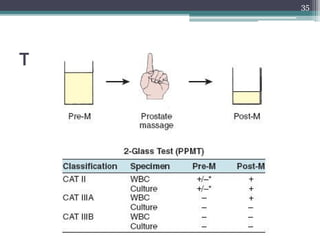
• made by the pre-massage and post-massage test
(or two-glass test).
• The patient provides a midstream pre-massage
urine specimen and a urine specimen (initial 10
mL) after prostatic massage to obtain expressed
prostatic secretions (EPS) (Nickel et al., 2006).
These specimens are then sent for culture .
Shortcomings:
▫ EPS is not examined which is often the
best specimen
34
Two-glass Test
35
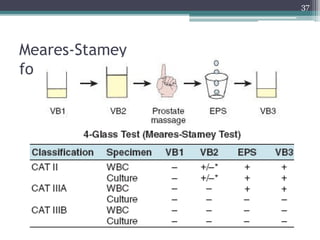
• The previous method was the “four-glass test” as
described by Meares and Stamey which includes
the first voided urine looking for urethral
bacteria (VB1),
• the mid-stream urine (VB2),
• collection of the prostate fluid itself for
culture (EPS)
• post-massage urine for EPS (VB3), and
36
Meares-Stamey
four-glass test
37
• men with human immunodeficiency virus (HIV),
cultures should be sent not only for the usual
bacteria but also for more atypical organisms.
• no recommended diagnostic cutoff points for
bacterial counts between the two specimens
obtained, but some clinics use a 10-fold increase
in the post-massage urine as being diagnostic of
CP II.
38
• should be assessed for hematuria.
• If present in the setting of infection, it should be
rechecked 4 to 6 weeks after resolution of
infection to look for resolution of the
hematuria.
• Persistent hematuria should prompt an
evaluation.
• Abdominal examination- to rule out other causes
of abdominal/suprapubic pain .
• Scrotal examination- inflammation and possible
infection such as the epididymis and testis .
39
• assess for bladder outlet obstruction and urinary
retention.
• A postvoid residual urine of more than 180
mL has been correlated with increased risk of
infection.
• Men younger than 45 yr old do not need
imaging but need assessment for a urethral
stricture.
40
• Urethral strictures can occur with a UTI in up to
41% of cases
• Imaging is recommended for men with a UTI
and history of diabetes, chronic kidney disease,
stones, voiding difficulties, neurologic disease,
poor response to antibiotics, infection with urea-
splitting bacteria, or hematuria more than 1
month after the infection
41
Treatment of Chronic Bacterial
Prostatitis (Category II)
• limited to antibiotics that can penetrate the
prostate and achieve therapeutic levels .
• Quinolones have excellent prostate
penetration .
• Others with good penetration
tetracyclines
,macrolides and trimethoprim,
42
• EAU has guidelines
• Fluoroquinolones such as ciprofloxacin and
levofloxacin are the anti-biotics of
choice .
• Duration of treatment is based on expert
opinion; the recommendation is 4 to 6 weeks .
• in cases in which the bacteria are resistant to
fluoroquinolones but susceptible to TMP-SMX, a 3-
month course of TMP-SMX can be given .
• For chlamydial prostatitis, azithromycin was
superior to Cipro and equivalent to clarithromycin.
• Beyond Quinolones. netilmicin,
cefoxitin , Piperacillin-tazobactam
43
Adjunct treatments for refractory
chronic bacterial prostatitis
• When antibiotic therapy fails to eradicate
infection, the patient can be started on a daily
dose of an antibiotic targeting an identified
bacterial isolate.
45
Etiology
• Despite a concerted research effort in the past
20 years, the cause and much of the
pathogenesis of CP/CPPS remain unknown .
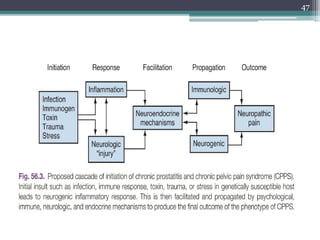
• hypothesis is that an insult such as infection,
stress, or trauma in a genetically susceptible
individual leads to neurogenic inflammation,
which is maintained by these other factors
46
47
Infection
• A history of prior sexually transmitted disease
(STD) increases the odds of prostatitis by 1.8
times .But no active infection seen.
• Burkholderia cenocepacia overrepresented in
the CP/CPPS patients
48
Inflammation
• autoimmune response with increased
lymphoproliferative response to prostate
antigens .
• These include a region of the prostatic acid
phosphatase molecule, PSA, and human seminal
vesicle secretory protein 2 (SVS2) .
• Levels of the chemokines monocyte
chemoattractant protein-1 and macrophage
inflammatory protein-1-alpha and IL-17
are elevated
49
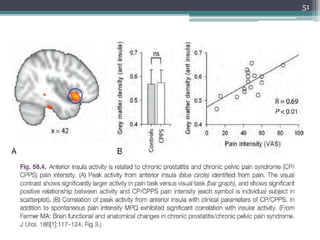
Neurologic Causes
• Central sensitization
• differences in the relationship of gray and white
matter
• lower white matter tract density in areas of
perception, integration of sensory information
and pain modulation .
• decreased connectivity between motor areas
involved in pelvic floor control and the right
posterior insula, an area involved in pain
processing and sympathetic autonomic control .
50
51
Pelvic Floor Dysfunction
• have pathological tenderness of the striated
pelvic floor muscle and
• poor to absent function in ability to relax the
pelvic floor efficiently with a single or repetitive
effort .
• An electromyogram (EMG) study of the pelvic floor
in these patients showed that , men with
CP/CPPS had
(1) greater preliminary resting hypertonicity
and instability and
(2) lowered voluntary endurance contraction
52
Psychosocial Factors
• Greater perceived stress is associated with
greater pain intensityand disability
• Helplessness and catastrophizing predict overall
pain along with urinary symptoms and
depression.
• association of pain intensity with catastrophizing,
perceived stress, and low satisfaction with
relationships including sexual functioning.
• men who reported experiencing sexual, emotional,
or physical abuse were at increased risk for
symptoms of CP/CPPS.
53
Endocrine Abnormalities
• Alterations of the hypothalamic-pituitary-
adrenal axis;
• Greater cortisol rise in men with CPPS.
• Lower baseline adrenocorticotropic hormone
(ACTH) level and
• Blunted ACTH rise in response to stress .
54
Genetics
• The conclusion is that familial factors, either
shared environmental factors or genetic factors,
play a large role in the relationship between
CP/CPPS and COPC.
• lifetime physician diagnosis of CP/CPPS with so-
called chronic overlapping pain conditions
(COPC), including fibromyalgia, chronic fatigue
syndrome, irritable bowel syndrome (IBS),
temporo-mandibular disorder, tension
headaches, and migraine headaches.
55
Biomarkers
• nerve growth factor (NGF)
• pain severity was significantly positively
associated with concentrations of matrix
metallopeptidase 9 (MMP-9) and MMP-
9/NGAL (neutrophil gelatinase-associated
lipocalin) complex, and urinary severity was
significantly positively associated with MMP-9,
MMP-9/NGAL complex, and VEGF-R1
56
Abnormal Sensory Processing
• generalized or global abnormality of sensory
processing.
• increased pain sensitivity compared with healthy
contr
57
Symptoms in Chronic Prostatitis and
Chronic Pelvic Pain Syndrome
• The symptom that distinguishes category III
prostatitis CP/CPPS from other conditions such
as BPH is pain.
• most severe symptom was pain in the pelvic region
(m/c perineum), followed by urinary frequency
and obstructive voiding symptoms.
• In 1999 the NIH set out to develop a symptom
score
.The resulting index included three domains:
pain(pain in the perineum, lower
abdomen/suprapubic area, testes, penis, pain with
ejaculation, and dysuria ), urinary symptoms,
and quality of life
58
Summary of Findings From the
Multidisciplinary Approach to Pelvic
Pain Study
1. Patients who have pain beyond the pelvis have
more severe symptoms than those with pelvic pain
only.
2. Men with COPC have more severe symptoms
than those with only urologic symptoms. the most
common being IBS .
3. Patients with bladder-focused symptoms
(bladder pain with filling and painful urgency)
report more severe symptoms than those who do
not have bladder symptoms.
4. Pain and urinary symptoms should not be
measured together as part of a composite
59
Sexual Dysfunction
• The prevalence of ED in men with CP/CPPS is
reported at 15% to 40% .
• Other symptoms of sexual dysfunction are
ejaculatory dysfunction/pain and premature
ejaculation
Anxiety and Depression
60
Association With Other Medical
Diseases
• Cardiovascular Disease :most commonly
hypertension.
• Neurologic Disease :
▫ numbness and tingling in the limbs .
▫ vertebral disk disease/ surgery
61
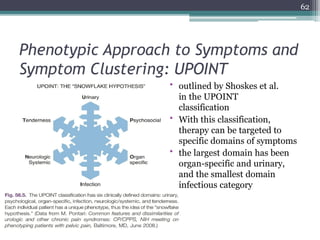
Phenotypic Approach to Symptoms and
Symptom Clustering: UPOINT
• outlined by Shoskes et al.
in the UPOINT
classification
• With this classification,
therapy can be targeted to
specific domains of symptoms
• the largest domain has been
organ-specific and urinary,
and the smallest domain
infectious category
62
Evaluation of Chronic Prostatitis and
Chronic Pelvic Pain Syndrome
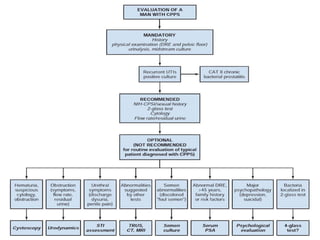
• CP/CPPS is a diagnosis of exclusion, and the
evaluation must rule out identifiable causes of
pelvic pain .
• To meet the NIH consensus definition, patients
should not have active urethritis, urogenital
cancer, urinary tract disease, functionally
significant urethral stricture, or neurologic
disease affecting the bladder .
63
• History :
• Assessment
▫ Pain. The National Institutes of Health Chronic
Prostatitis Symptom Index (NIH-CPSI) includes
sections on pain including location, frequency and
severity of pain, voiding symptoms, and interference/
quality of life .
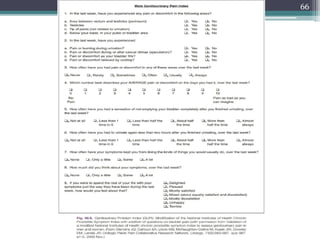
▫ A modification of the NIH-CPSI called the
Genitourinary Pain Index (GUPI) (Fig. 56.6)
contains two questions related to pain with bladder
filling or emptying and better captures bladder
symptoms
64
• Other Urologic Symptoms
▫ Voiding: The NIH-CPSI and GUPI list
only two questions on voiding dysfunction.
▫ The AUA symptom index can be useful to
assess these other voiding symptoms
▫ Sexual function: a history of erectile
dysfunction, libido, and ejaculatory
problems.
65
66
Review of Symptoms
• Neurologic
• GI :IBS
• Rheumatologic :fibromyalgia and chronic
fatigue syndrome,
• Psychological symptoms :significant anxiety,
depression, and symptoms of obsessive
compulsive behavior
67
Physical Examination
• Neurologic examination
• Abdominal examination
• Genitourinary examination An examination for
hernia, hydrocele, testicular masses, penile lesions, or
other findings of the genitalia should be performed.
• A rectal and prostate examination should be
performed. Rectal masses or hemorrhoids should be
assessed.
• On rectal examination the prostate is tender in less
than half of men (Shoskes et al., 2008); severe
tenderness suggests acute prostatitis.
• Nodularity should not be attributed to inflammation
and should prompt a consideration of prostate cancer.
68
• Muscle tenderness :During rectal
examination, palpation of the muscles lateral to
the prostate and extending to the coccyx can
identify myofascial trigger points and identify
patients that may benefit from pelvic floor
physical therapy and relaxation techniques
69
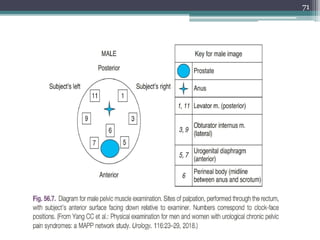
• The perineum was palpated midway between the
anus and inferior edge of the scrotum. The pelvic
floor muscles were palpated through the rectum:
the urogenital diaphragm muscles were palpated
anteriorly at the prostate apex; the obturator
muscles were palpated anteriorly and laterally;
the levator muscles were palpated posteriorly.
The figure from the study is helpful as a
roadmap to examination
70
71
• Laboratory/Office Studies
72
Urinalysis
• Men should have a urinalysis to look
for unevaluated hematuria.
• A positive urine dip must be confirmed by finding
3 or more RBC per high-power field on a
microscopic evaluation of the urine .
Assessment for infection midstream urine sample
for culture ,
recommended by the International Consultation on
Urological Diseases (ICUD) is the two-glass test,
standard diagnostic method in men with
recurrent UTIs
74
• Urine assessment for nontraditional
organisms
• Semen cultures are not recommended
• Urine cytology: optional but indicated in men
with irritative voiding symptoms
• Postvoid residual :checked by catheterization
or ultrasound to rule out urinary retention as a
cause of symptoms.
• Blood tests: APSA test is not indicated
75
• Imaging studies are optional and may be appropriate in some
patients:
• CT scan of abdomen and pelvis: Patients with concomitant
abdominal pain may require imaging with CT to exclude an
intra- abdominal process such as chronic appendicitis or
diverticulitis.
• Scrotal ultrasound: Testicular pain should be evaluated with
a scrotal ultrasound.
• Prostate ultrasound: Transrectal ultrasound has limited
utility in
men with CP/CPPS .
• MRI of lumbar and sacral spine: Patients with signs and symptoms
of lumbar radiculopathy should be considered for MRI.
• Uroflowmetry: This is an optional study in the evaluation of CP/
CPPS. It may be helpful in a young male with complaints of
decreased force of stream as an investigation into stricture
disease.
76
• Urodynamics and cystoscopy:(Optional) used
in those who fail medical therapy and have
significant voiding symptoms, decreased
uroflowmetry, and or elevated postvoid residual
urine .
• Cystoscopy can be used in men with decreased
uroflow and/ or elevated postvoid residual urine
to evaluate for urethral stricture,and in pts
with a history of pain with bladder emptying
and/or relieved by bladder emptying
suggestive of IC/BPS because in a small set of
these patients a Hunner’s ulcer is present .
77
• Prostate biopsy is not recommended for the
diagnosis of CP/ CPPS alone.
• Clinical phenotyping tool: UPOINT
78
Treatment of Chronic Prostatitis and
Chronic Pelvic Pain Syndrome
Pharmacologic Treatment
• Antibiotic Treatment: Summary of Treatment
Recommendations recommendations from the European
Association of Urology , which were antimicrobial therapy
(quinolones or tetracyclines) over a minimum of 6 weeks in
treatment-naïve patients with a duration of CPPS less than 1
year,
• The group convened by Prostate Cancer UK adds that a
repeated course of antibiotic therapy (4 to 6 weeks) should be
offered if a bacterial source is confirmed or if there is a partial
response to the first course. Repeated courses of antibiotics in
the absence of a positive urine culture is not accepted therapy.
79
• Alpha-Blocker Treatment:
• The ICUD study recommends alpha-
blockers for newly diagnosed, alpha-blocker–
naive patients who have voiding symptoms .
• The EAU guidelines recommend use of alpha-
blockers for patients with a duration of PPS less
than 1 year.
80
• Anti-Inflammatory Therapy: In conclusion,
anti-inflammatory monotherapy is not
recommended but can be used as part of multimodal
therapy , but long-term side effects have to be
considered
• Reductase Inhibitors: they may be best used in
older patients with CP/CPPS who also have
voiding symptoms from BPH.
In Younger patients side effects must be
considered. reduced volume of ejaculate, erectile
dysfunction, and decrease in libido
81
• Medications for Neuropathic Pain: pregabalin
, tricyclic antidepressants (Amitriptyline ).
• Phototherapy. pollen extract Cernilton for 12
weeks , Quercetin, a plant-derived
bioflavonoid.
• Bladder Specific: Pentosan Polysulfate
Pentosan polysulfate (PPS) is a medication used to
treat symptoms of interstitial cystitis, thought to
work by augmenting the bladder’s layer of
glycosaminoglycans, which acts as a protective
barrier, It is recommended by the EAU guidelines
but with a strength rating of weak
82
• Other Medications
• Mepartricin: reduces serum estrogen levels
and prostatic estrogen receptors in animal
models
• PDE5 Inhibitors useful to treat erectile
dysfunc-tion in men with CPPS at any age ,
Tadalafil can treat lower urinary tract
symptoms, erectile dysfunction, and possibly the
symptoms of CP/CPPS
83
Other Treatments for Chronic Prostatitis
and Chronic Pelvic Pain Syndrome
• Conservative
• Lifestyle Changes: Diet and Exercise:
• Few are sensitivity to some foods. The most
common were spicy foods, coffee, tea, chili,
and alcoholic beverages.
• Items that improved symptoms included
docusate, psyllium (dietary fiber), water, herbal
teas, and polycarbophil (fiber laxative)
• There are no specific dietary recommendations for
all patients with CP/CPPS, and they should be
individualized based on the patient’s food
sensitivities
84
• Stress Management/Psychological
Treatments: cognitive therapy
• Acupuncture: ameliorating effect on
neuropathic pain
85
Prostate-Specific Treatments
• Local Hyperthermia and Needle Ablation
▫ transrectal radiofrequency hyperthermia
▫ transurethral microwave thermotherapy
▫ Transurethral need ablation (TUNA),tried but
not recommended for treatment
Intraprostatic Injection of
Onabotulinumtoxin A. At a dose of 100 to
200 U there was significant benefit to the Botox
injection compared with saline
88
89
Surgical Therapy for Chronic Prostatitis
and Chronic Pelvic Pain Syndrome
• Surgical Therapy for Bladder Neck
Hypertrophy. Te and Kaplan reported significant
improvement in men with bladder neck
hypertrophy and symptoms of chronic prostatitis
treated with bladder neck incision.
• Neurostimulation. At this time, it appears
reasonable to offer percutaneous tibial nerve
stimulation (PTNS) as therapy in patients with
CPPS and Sacral nerve stimulation (SNS) in those
with pelvic pain who also have urinary frequency
and urgency.
• Electromagnetic Stimulation. In studies
patients sat on a chair with electromagnetic
energy for 30 minutes twice weekly for 6 weeks
showed improvements in symptoms.
• Cystoscopy and Fulguration of
Hunner’s
Ulcer
• Not Recommended :Radical
Prostatectomy
90

CPPS2sbhsjsjsjsjsnsbssjsjxuwisjxbhdiwks.pptx

  • 1.
    Chronic pelvic pain syndrome 1 DR.ANEES PUTHAWALA SAVEETHA MEDICAL COLLEGE
  • 2.
    PROSTATITIS • The firstdescription of prostatitis dates to 1838 by Verdies. • Treatment by prostate massage was described by Posner of Berlin in 1893 • Krieger and Weidner (2003) contend that the contemporary history of prostatitis began with a letter to the editor published in the Journal of Urology in 1978 by George Drach et al. (1978). This is described as the first scientific recommendations for a systematic classification of patients with symptoms of prostatitis 3
  • 3.
    Meares and Stamey(1968) • The diagnosis was based on the microscopic examination and quantitative cultures of segmented urogenital tract specimens described by Meares and Stamey (1968) and four categories presented: (1) acute bacterial prostatitis with acute infection, (2)chronic bacterial prostatitis with recurrent episodes of bacteriuria by the same organism, • (3) chronic bacterial prostatitis in which patients had symptoms of prostatitis, negative cultures, and inflammatory cells, and • (4) prostatodynia, with symptoms of prostatitis including “prostatic discomfort” but no recognizable 4
  • 4.
    Current Classification ofProstatitis • The current classification of prostatitis was developed at consensus conferences in 1995 and 1998; the National Institutes of Health (NIH) classification was published in 1999 NIH Classification I. Acute bacterial prostatitis II. Chronic bacterial prostatitis IIIA. Chronic prostatitis/pelvic pain syndrome, inflammatory IIIB. Chronic prostatitis/pelvic pain syndrome, noninflammatory IV. Asymptomatic inflammatory prostatitis 5
  • 5.
    • The NIHdefinition of category III CP/CPPS as adopted by the Chronic Prostatitis Research Network is that of symptoms of pain or discomfort in the pelvis for at least 3 of the previous 6 months . • Several exclusion criteria are also included, such as demonstration of uropathogenic bacteria detected by standard microbiologic methods, urogenital cancer, prior radiation or che-motherapy, urethral stricture, or neurologic disease affecting the bladder (Schaeffer et al., 2002b) 6
  • 6.
    Histopathology: Histology • Theterm prostatitis can refer to the presence of inflammation on a histology examination of the prostate or is also used to describe clinical syndromes manifest by genitourinary discomfort or pain described in the NIH classification. 7
  • 7.
    • A classificationsystem proposed by Nickel et al. recommended reporting inflammation in prostatitis by its anatomic location in the prostate, either • glandular (within a duct/gland epithelium or lumen), • periglandular (lies within stroma but centered around ducts and glands and approaches 50 micro m or less), or • stromal (in the stroma and >50 micro m from a gland) 8
  • 8.
    Extent of inflammationis defined as • focal (<10%), • multifocal (10%–50%), or • diffuse (> 50%). Grade • 1) or mild (individual inflammatory cells separated by distinct spaces, <100 cells); • 2) or moderate (confluent sheets of cell with no tissue destruction or lymphoid follicles, 100–300 cells); and • 3) or severe (confluent sheets of inflammatory cells with tissue destruction or nodule formation, 100–500 cells) 9
  • 9.
    Associated entities • corporaamylacea, which form from the deposition of prostatic secretions around sloughed epithelial cells; they do not usually cause inflammation unless they cause obstruction. • Prostate calculi may contribute to inflammation by causing local obstruction or by providing a nidus for bacterial growth 10
  • 10.
    Specific Cases ofProstatic Inflammation Granulomatous Prostatitis • Granulomatous prostatitis is diagnosed by the histologic finding of epithelioid granulomas with or without other infla. • It is commonly found on specimens from trans- urethral resections and prostate biopsies . • The most widely accepted grading system categorizes granulomatous prostatitis as ▫ specific, ▫ nonspecific, ▫ after transurethral resection of the prostate (TURP), 11
  • 11.
    • It iscommonly seen after intravesical Bacillus Calmette-Guerin (BCG) therapy for bladder cancer and can cause transient elevated levels of prostate-specific antigen (PSA) . • Tuberculosis can also cause granulomatous prostatitis . 12
  • 12.
    Immunoglobulin G Subclass4 (IgG4) • Prostatitis has been described from IgG4- related disease (IgG4-RD). • fibroinflammatory disease with multiorgan involvement characterized by several features: tendency to form tumorlike lesions at multiple sites, ▫ dense infiltrate of lymphocytes and ▫ IgG4 +plasma cells, ▫ characteristic pattern of fibrosis, and ▫ often,but not always, elevated levels of serum IgG4 ▫ responded to corticosteroids 13
  • 13.
    Category I Prostatitis:Acute Bacterial Prostatitis • affects men age 20 to 40 years but also has a second peak in men over the age of 60 • Causes ▫ ascending urethral infection ▫ Direct seeding from a prostate biopsy ▫ intraprostatic reflux of infected urine ▫ Hematogenous dissemination 14
  • 14.
    Risk factors ▫ unprotectedsexual intercourse, specifically insertive anal intercourse, ▫ phimosis, ▫ condom catheter use, ▫ indwelling urethral catheters, ▫ and urinary tract instrumentation, including endoscopic procedures and prostate biopsy . ▫ Dysfunctional voiding and disorders causing urinary stasis, including distal urethral stricture and BPH, ▫ after an episode of bacterial cystitis or epididymo- orchitis ▫ complications of clean intermittent 15
  • 15.
    The presentation ▫ acutesymptoms of a urinary tract infection (UTI), characteristically including urinary frequency and dysuria ▫ Urinary retention ▫ systemic infection, such as malaise, fever, and myalgias ▫ Sepsis ▫ Acute prostatitis should be considered in any man who presents with a febrile UTI. Febrile UTI in men can be from pyelonephritis, acute cystitis, or prostatitis. 16
  • 16.
    Microbiology • The mostcommon causative organism is Escherichia coli, implicated in 65% to 80% of cases . • Other common gram-negative organisms include Pseudomonas aeruginosa, Proteus mirabilis, and Klebsiella and Serratia spp. • Enterococcus spp , • Neisseria gonorrhoeae in sexually active young men . • Mycobacterium tuberculosis is a rare cause of prostatitis and is usually associated with immunodeficiency 17
  • 17.
    • An importantconcept that has emerged is the difference in bacterial cause of prostatitis and antibiotic susceptibility depending on the cause wheter it is • community acquired (E. coli ) or • was nosocomial (P. aeruginosa, enterococci, or S. aureus and has greater antimicrobial resistance and clinical failures ) . 18
  • 18.
    • Further distinctionsare noted, depending on whether the acute prostatitis is • Spontaneous (E. coli ) or • occurs after lower urinary tract instrumentation(predomi- nantly E. coli but have a much higher prevalence of Pseudomonas spp. (20%) and have a higher risk of prostate abscess ) or • prostate biopsy (E. coli, but these bacteria are more resistant to fluoroquinolones, more likely to have ESBL- producing bacteria, and more likely to have positive blood cultures ) • Thus the antibiotic selection for acute prostatitis must take into con-sideration the route of infection. 19
  • 19.
    Evaluation • History :LUTSsuch as frequency urgency and dysuria are common • Associated signs of bacteremia and sepsis can be present, including fever, chills, and sweats • assess for possible complicating factors such as diabetes, HIV, neurologic disease, and recent antibiotic use . 20
  • 20.
    • O/E • Apalpable bladder may indicate urinary retention. • Acute prostatitis is the one situation in which one may palpate a truly “boggy” prostate from edema from inflammation. • The prostate is tender and swollen in 60% to 90% of cases. • Caution should be used to avoid aggressive palpation that could lead to bacterial dissemination and sepsis 21
  • 21.
    • Laboratory tests •CBC, • urinalysis, and • midstream urine culture. Urine culture is positive in 60% to 85% of cases . • If the patient has a urethral discharge, urine can be sent for nuclear amplification tests for gonorrhea or chlamydia, • Renal function tests. 22
  • 22.
    • postvoid residualurine should be made to rule out urinary retention, preferably noninvasively with an ultrasound • Imaging studies are generally not indicated unless a prostate abscess is suspected ( transrectal ultrasound or CT scan ) • no role for prostate biopsy for acute prostatitis. 23
  • 23.
    Treatment. • Patients withsystemic signs of infection need admission for IV antibiotics, hydration, and monitoring of laboratory studies . • treated as an outpatient if they have no signs of systemic illness, can tolerate oral intake, and do not have urinary retention . • Antibiotics are the mainstay of therapy 24
  • 24.
    • Recent EAUguidelines on treating UTIs recommend the parenteral administration of high- dose bactericidal antibiotics such as a broad- spectrum penicillin, third-generation cephalosporin, or a fluoroquinolone. • In initial therapy, any of these can be combined with an aminoglycoside . • Given the rates of resistance to quinolones and the incidence of ESBL bacteria seen in these cases, a strong argument can be made to use a carbapenem antibiotic in men presenting with fever and prostatitis after a transrectal prostate biopsy 25
  • 25.
    Category II: ChronicBacterial Prostatitis • is characterized by recurrent urinary tract infections with the same organism . • The symptoms of dysuria and pain generally respond to antibiotic treatment, and, unlike men with category III CP/CPPS, they are then relatively asymptomatic between episodes . 32
  • 26.
    • Bacteria-Causing CategoryII Prostatitis , E. coli, Pseudomo-nas, Proteus, Klebsiella, and Enterobacter spp Role of Chlamydia in Prostatitis? still controversial . 33
  • 27.
    Diagnosis and Evaluation. •made by the pre-massage and post-massage test (or two-glass test). • The patient provides a midstream pre-massage urine specimen and a urine specimen (initial 10 mL) after prostatic massage to obtain expressed prostatic secretions (EPS) (Nickel et al., 2006). These specimens are then sent for culture . Shortcomings: ▫ EPS is not examined which is often the best specimen 34
  • 28.
  • 29.
    • The previousmethod was the “four-glass test” as described by Meares and Stamey which includes the first voided urine looking for urethral bacteria (VB1), • the mid-stream urine (VB2), • collection of the prostate fluid itself for culture (EPS) • post-massage urine for EPS (VB3), and 36
  • 30.
  • 31.
    • men withhuman immunodeficiency virus (HIV), cultures should be sent not only for the usual bacteria but also for more atypical organisms. • no recommended diagnostic cutoff points for bacterial counts between the two specimens obtained, but some clinics use a 10-fold increase in the post-massage urine as being diagnostic of CP II. 38
  • 32.
    • should beassessed for hematuria. • If present in the setting of infection, it should be rechecked 4 to 6 weeks after resolution of infection to look for resolution of the hematuria. • Persistent hematuria should prompt an evaluation. • Abdominal examination- to rule out other causes of abdominal/suprapubic pain . • Scrotal examination- inflammation and possible infection such as the epididymis and testis . 39
  • 33.
    • assess forbladder outlet obstruction and urinary retention. • A postvoid residual urine of more than 180 mL has been correlated with increased risk of infection. • Men younger than 45 yr old do not need imaging but need assessment for a urethral stricture. 40
  • 34.
    • Urethral stricturescan occur with a UTI in up to 41% of cases • Imaging is recommended for men with a UTI and history of diabetes, chronic kidney disease, stones, voiding difficulties, neurologic disease, poor response to antibiotics, infection with urea- splitting bacteria, or hematuria more than 1 month after the infection 41
  • 35.
    Treatment of ChronicBacterial Prostatitis (Category II) • limited to antibiotics that can penetrate the prostate and achieve therapeutic levels . • Quinolones have excellent prostate penetration . • Others with good penetration tetracyclines ,macrolides and trimethoprim, 42
  • 36.
    • EAU hasguidelines • Fluoroquinolones such as ciprofloxacin and levofloxacin are the anti-biotics of choice . • Duration of treatment is based on expert opinion; the recommendation is 4 to 6 weeks . • in cases in which the bacteria are resistant to fluoroquinolones but susceptible to TMP-SMX, a 3- month course of TMP-SMX can be given . • For chlamydial prostatitis, azithromycin was superior to Cipro and equivalent to clarithromycin. • Beyond Quinolones. netilmicin, cefoxitin , Piperacillin-tazobactam 43
  • 37.
    Adjunct treatments forrefractory chronic bacterial prostatitis • When antibiotic therapy fails to eradicate infection, the patient can be started on a daily dose of an antibiotic targeting an identified bacterial isolate. 45
  • 38.
    Etiology • Despite aconcerted research effort in the past 20 years, the cause and much of the pathogenesis of CP/CPPS remain unknown . • hypothesis is that an insult such as infection, stress, or trauma in a genetically susceptible individual leads to neurogenic inflammation, which is maintained by these other factors 46
  • 39.
  • 40.
    Infection • A historyof prior sexually transmitted disease (STD) increases the odds of prostatitis by 1.8 times .But no active infection seen. • Burkholderia cenocepacia overrepresented in the CP/CPPS patients 48
  • 41.
    Inflammation • autoimmune responsewith increased lymphoproliferative response to prostate antigens . • These include a region of the prostatic acid phosphatase molecule, PSA, and human seminal vesicle secretory protein 2 (SVS2) . • Levels of the chemokines monocyte chemoattractant protein-1 and macrophage inflammatory protein-1-alpha and IL-17 are elevated 49
  • 42.
    Neurologic Causes • Centralsensitization • differences in the relationship of gray and white matter • lower white matter tract density in areas of perception, integration of sensory information and pain modulation . • decreased connectivity between motor areas involved in pelvic floor control and the right posterior insula, an area involved in pain processing and sympathetic autonomic control . 50
  • 43.
  • 44.
    Pelvic Floor Dysfunction •have pathological tenderness of the striated pelvic floor muscle and • poor to absent function in ability to relax the pelvic floor efficiently with a single or repetitive effort . • An electromyogram (EMG) study of the pelvic floor in these patients showed that , men with CP/CPPS had (1) greater preliminary resting hypertonicity and instability and (2) lowered voluntary endurance contraction 52
  • 45.
    Psychosocial Factors • Greaterperceived stress is associated with greater pain intensityand disability • Helplessness and catastrophizing predict overall pain along with urinary symptoms and depression. • association of pain intensity with catastrophizing, perceived stress, and low satisfaction with relationships including sexual functioning. • men who reported experiencing sexual, emotional, or physical abuse were at increased risk for symptoms of CP/CPPS. 53
  • 46.
    Endocrine Abnormalities • Alterationsof the hypothalamic-pituitary- adrenal axis; • Greater cortisol rise in men with CPPS. • Lower baseline adrenocorticotropic hormone (ACTH) level and • Blunted ACTH rise in response to stress . 54
  • 47.
    Genetics • The conclusionis that familial factors, either shared environmental factors or genetic factors, play a large role in the relationship between CP/CPPS and COPC. • lifetime physician diagnosis of CP/CPPS with so- called chronic overlapping pain conditions (COPC), including fibromyalgia, chronic fatigue syndrome, irritable bowel syndrome (IBS), temporo-mandibular disorder, tension headaches, and migraine headaches. 55
  • 48.
    Biomarkers • nerve growthfactor (NGF) • pain severity was significantly positively associated with concentrations of matrix metallopeptidase 9 (MMP-9) and MMP- 9/NGAL (neutrophil gelatinase-associated lipocalin) complex, and urinary severity was significantly positively associated with MMP-9, MMP-9/NGAL complex, and VEGF-R1 56
  • 49.
    Abnormal Sensory Processing •generalized or global abnormality of sensory processing. • increased pain sensitivity compared with healthy contr 57
  • 50.
    Symptoms in ChronicProstatitis and Chronic Pelvic Pain Syndrome • The symptom that distinguishes category III prostatitis CP/CPPS from other conditions such as BPH is pain. • most severe symptom was pain in the pelvic region (m/c perineum), followed by urinary frequency and obstructive voiding symptoms. • In 1999 the NIH set out to develop a symptom score .The resulting index included three domains: pain(pain in the perineum, lower abdomen/suprapubic area, testes, penis, pain with ejaculation, and dysuria ), urinary symptoms, and quality of life 58
  • 51.
    Summary of FindingsFrom the Multidisciplinary Approach to Pelvic Pain Study 1. Patients who have pain beyond the pelvis have more severe symptoms than those with pelvic pain only. 2. Men with COPC have more severe symptoms than those with only urologic symptoms. the most common being IBS . 3. Patients with bladder-focused symptoms (bladder pain with filling and painful urgency) report more severe symptoms than those who do not have bladder symptoms. 4. Pain and urinary symptoms should not be measured together as part of a composite 59
  • 52.
    Sexual Dysfunction • Theprevalence of ED in men with CP/CPPS is reported at 15% to 40% . • Other symptoms of sexual dysfunction are ejaculatory dysfunction/pain and premature ejaculation Anxiety and Depression 60
  • 53.
    Association With OtherMedical Diseases • Cardiovascular Disease :most commonly hypertension. • Neurologic Disease : ▫ numbness and tingling in the limbs . ▫ vertebral disk disease/ surgery 61
  • 54.
    Phenotypic Approach toSymptoms and Symptom Clustering: UPOINT • outlined by Shoskes et al. in the UPOINT classification • With this classification, therapy can be targeted to specific domains of symptoms • the largest domain has been organ-specific and urinary, and the smallest domain infectious category 62
  • 55.
    Evaluation of ChronicProstatitis and Chronic Pelvic Pain Syndrome • CP/CPPS is a diagnosis of exclusion, and the evaluation must rule out identifiable causes of pelvic pain . • To meet the NIH consensus definition, patients should not have active urethritis, urogenital cancer, urinary tract disease, functionally significant urethral stricture, or neurologic disease affecting the bladder . 63
  • 56.
    • History : •Assessment ▫ Pain. The National Institutes of Health Chronic Prostatitis Symptom Index (NIH-CPSI) includes sections on pain including location, frequency and severity of pain, voiding symptoms, and interference/ quality of life . ▫ A modification of the NIH-CPSI called the Genitourinary Pain Index (GUPI) (Fig. 56.6) contains two questions related to pain with bladder filling or emptying and better captures bladder symptoms 64
  • 57.
    • Other UrologicSymptoms ▫ Voiding: The NIH-CPSI and GUPI list only two questions on voiding dysfunction. ▫ The AUA symptom index can be useful to assess these other voiding symptoms ▫ Sexual function: a history of erectile dysfunction, libido, and ejaculatory problems. 65
  • 58.
  • 59.
    Review of Symptoms •Neurologic • GI :IBS • Rheumatologic :fibromyalgia and chronic fatigue syndrome, • Psychological symptoms :significant anxiety, depression, and symptoms of obsessive compulsive behavior 67
  • 60.
    Physical Examination • Neurologicexamination • Abdominal examination • Genitourinary examination An examination for hernia, hydrocele, testicular masses, penile lesions, or other findings of the genitalia should be performed. • A rectal and prostate examination should be performed. Rectal masses or hemorrhoids should be assessed. • On rectal examination the prostate is tender in less than half of men (Shoskes et al., 2008); severe tenderness suggests acute prostatitis. • Nodularity should not be attributed to inflammation and should prompt a consideration of prostate cancer. 68
  • 61.
    • Muscle tenderness:During rectal examination, palpation of the muscles lateral to the prostate and extending to the coccyx can identify myofascial trigger points and identify patients that may benefit from pelvic floor physical therapy and relaxation techniques 69
  • 62.
    • The perineumwas palpated midway between the anus and inferior edge of the scrotum. The pelvic floor muscles were palpated through the rectum: the urogenital diaphragm muscles were palpated anteriorly at the prostate apex; the obturator muscles were palpated anteriorly and laterally; the levator muscles were palpated posteriorly. The figure from the study is helpful as a roadmap to examination 70
  • 63.
  • 64.
  • 66.
    Urinalysis • Men shouldhave a urinalysis to look for unevaluated hematuria. • A positive urine dip must be confirmed by finding 3 or more RBC per high-power field on a microscopic evaluation of the urine . Assessment for infection midstream urine sample for culture , recommended by the International Consultation on Urological Diseases (ICUD) is the two-glass test, standard diagnostic method in men with recurrent UTIs 74
  • 67.
    • Urine assessmentfor nontraditional organisms • Semen cultures are not recommended • Urine cytology: optional but indicated in men with irritative voiding symptoms • Postvoid residual :checked by catheterization or ultrasound to rule out urinary retention as a cause of symptoms. • Blood tests: APSA test is not indicated 75
  • 68.
    • Imaging studiesare optional and may be appropriate in some patients: • CT scan of abdomen and pelvis: Patients with concomitant abdominal pain may require imaging with CT to exclude an intra- abdominal process such as chronic appendicitis or diverticulitis. • Scrotal ultrasound: Testicular pain should be evaluated with a scrotal ultrasound. • Prostate ultrasound: Transrectal ultrasound has limited utility in men with CP/CPPS . • MRI of lumbar and sacral spine: Patients with signs and symptoms of lumbar radiculopathy should be considered for MRI. • Uroflowmetry: This is an optional study in the evaluation of CP/ CPPS. It may be helpful in a young male with complaints of decreased force of stream as an investigation into stricture disease. 76
  • 69.
    • Urodynamics andcystoscopy:(Optional) used in those who fail medical therapy and have significant voiding symptoms, decreased uroflowmetry, and or elevated postvoid residual urine . • Cystoscopy can be used in men with decreased uroflow and/ or elevated postvoid residual urine to evaluate for urethral stricture,and in pts with a history of pain with bladder emptying and/or relieved by bladder emptying suggestive of IC/BPS because in a small set of these patients a Hunner’s ulcer is present . 77
  • 70.
    • Prostate biopsyis not recommended for the diagnosis of CP/ CPPS alone. • Clinical phenotyping tool: UPOINT 78
  • 71.
    Treatment of ChronicProstatitis and Chronic Pelvic Pain Syndrome Pharmacologic Treatment • Antibiotic Treatment: Summary of Treatment Recommendations recommendations from the European Association of Urology , which were antimicrobial therapy (quinolones or tetracyclines) over a minimum of 6 weeks in treatment-naïve patients with a duration of CPPS less than 1 year, • The group convened by Prostate Cancer UK adds that a repeated course of antibiotic therapy (4 to 6 weeks) should be offered if a bacterial source is confirmed or if there is a partial response to the first course. Repeated courses of antibiotics in the absence of a positive urine culture is not accepted therapy. 79
  • 72.
    • Alpha-Blocker Treatment: •The ICUD study recommends alpha- blockers for newly diagnosed, alpha-blocker– naive patients who have voiding symptoms . • The EAU guidelines recommend use of alpha- blockers for patients with a duration of PPS less than 1 year. 80
  • 73.
    • Anti-Inflammatory Therapy:In conclusion, anti-inflammatory monotherapy is not recommended but can be used as part of multimodal therapy , but long-term side effects have to be considered • Reductase Inhibitors: they may be best used in older patients with CP/CPPS who also have voiding symptoms from BPH. In Younger patients side effects must be considered. reduced volume of ejaculate, erectile dysfunction, and decrease in libido 81
  • 74.
    • Medications forNeuropathic Pain: pregabalin , tricyclic antidepressants (Amitriptyline ). • Phototherapy. pollen extract Cernilton for 12 weeks , Quercetin, a plant-derived bioflavonoid. • Bladder Specific: Pentosan Polysulfate Pentosan polysulfate (PPS) is a medication used to treat symptoms of interstitial cystitis, thought to work by augmenting the bladder’s layer of glycosaminoglycans, which acts as a protective barrier, It is recommended by the EAU guidelines but with a strength rating of weak 82
  • 75.
    • Other Medications •Mepartricin: reduces serum estrogen levels and prostatic estrogen receptors in animal models • PDE5 Inhibitors useful to treat erectile dysfunc-tion in men with CPPS at any age , Tadalafil can treat lower urinary tract symptoms, erectile dysfunction, and possibly the symptoms of CP/CPPS 83
  • 76.
    Other Treatments forChronic Prostatitis and Chronic Pelvic Pain Syndrome • Conservative • Lifestyle Changes: Diet and Exercise: • Few are sensitivity to some foods. The most common were spicy foods, coffee, tea, chili, and alcoholic beverages. • Items that improved symptoms included docusate, psyllium (dietary fiber), water, herbal teas, and polycarbophil (fiber laxative) • There are no specific dietary recommendations for all patients with CP/CPPS, and they should be individualized based on the patient’s food sensitivities 84
  • 77.
    • Stress Management/Psychological Treatments:cognitive therapy • Acupuncture: ameliorating effect on neuropathic pain 85
  • 78.
    Prostate-Specific Treatments • LocalHyperthermia and Needle Ablation ▫ transrectal radiofrequency hyperthermia ▫ transurethral microwave thermotherapy ▫ Transurethral need ablation (TUNA),tried but not recommended for treatment Intraprostatic Injection of Onabotulinumtoxin A. At a dose of 100 to 200 U there was significant benefit to the Botox injection compared with saline 88
  • 79.
    89 Surgical Therapy forChronic Prostatitis and Chronic Pelvic Pain Syndrome • Surgical Therapy for Bladder Neck Hypertrophy. Te and Kaplan reported significant improvement in men with bladder neck hypertrophy and symptoms of chronic prostatitis treated with bladder neck incision. • Neurostimulation. At this time, it appears reasonable to offer percutaneous tibial nerve stimulation (PTNS) as therapy in patients with CPPS and Sacral nerve stimulation (SNS) in those with pelvic pain who also have urinary frequency and urgency.
  • 80.
    • Electromagnetic Stimulation.In studies patients sat on a chair with electromagnetic energy for 30 minutes twice weekly for 6 weeks showed improvements in symptoms. • Cystoscopy and Fulguration of Hunner’s Ulcer • Not Recommended :Radical Prostatectomy 90