Using data to improve piped
water services
ColoradoWASH Symposium 2020
The problem:
Insufficient revenue
Service quality
decreases
Subscribers invest in
private infrastructure
instead
Revenue decreases
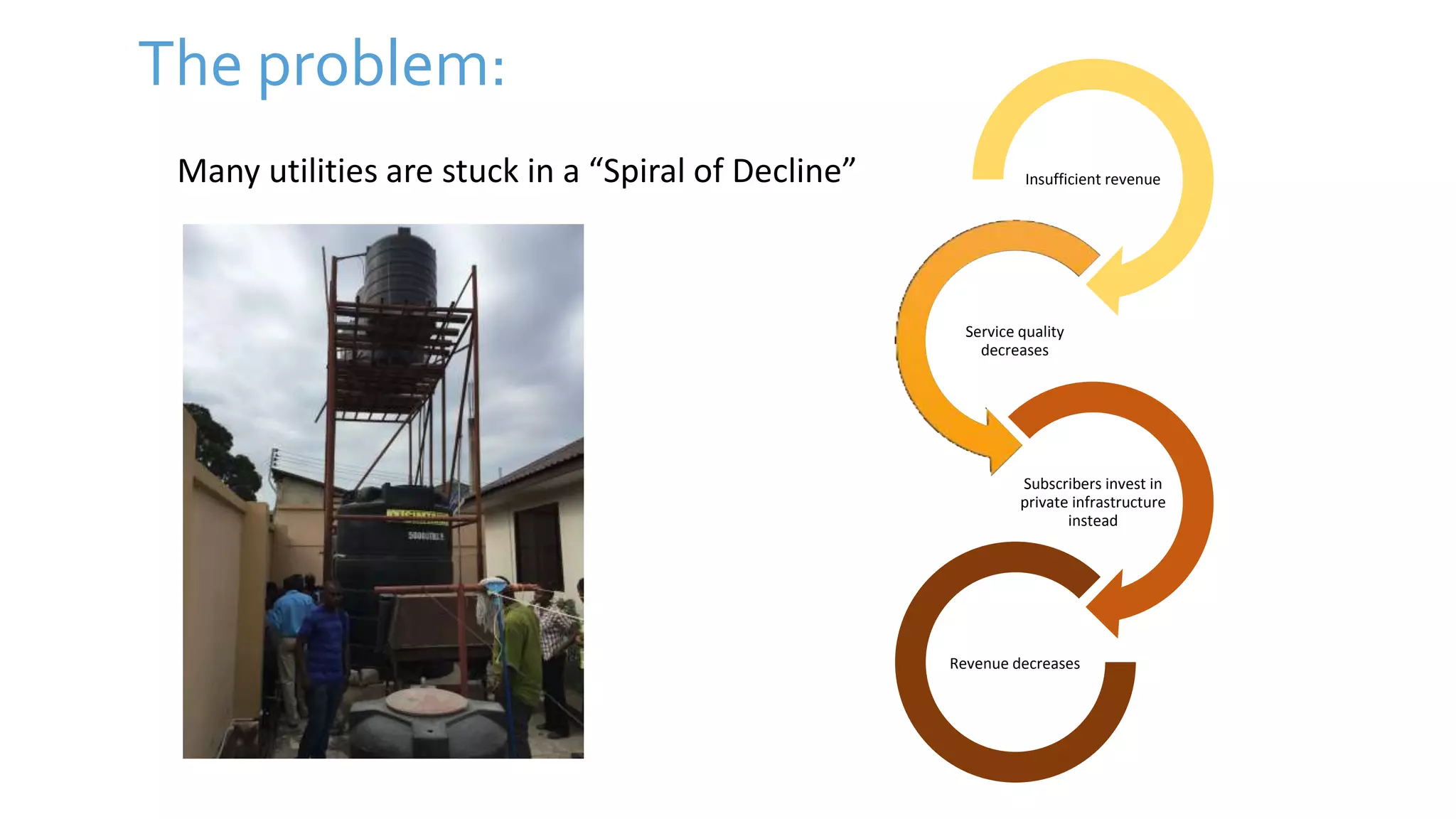
Many utilities are stuck in a “Spiral of Decline”
UtilityTurnaround
• Decrease Non-Revenue Water
• Increase efficiency in operations and
receipt collection
• Increase metering
• Improve service efficiency and
management through data driven decision
making
• Increase revenue and improved financial
management attracts investment
Result: Higher level of service increases
demand and revenue
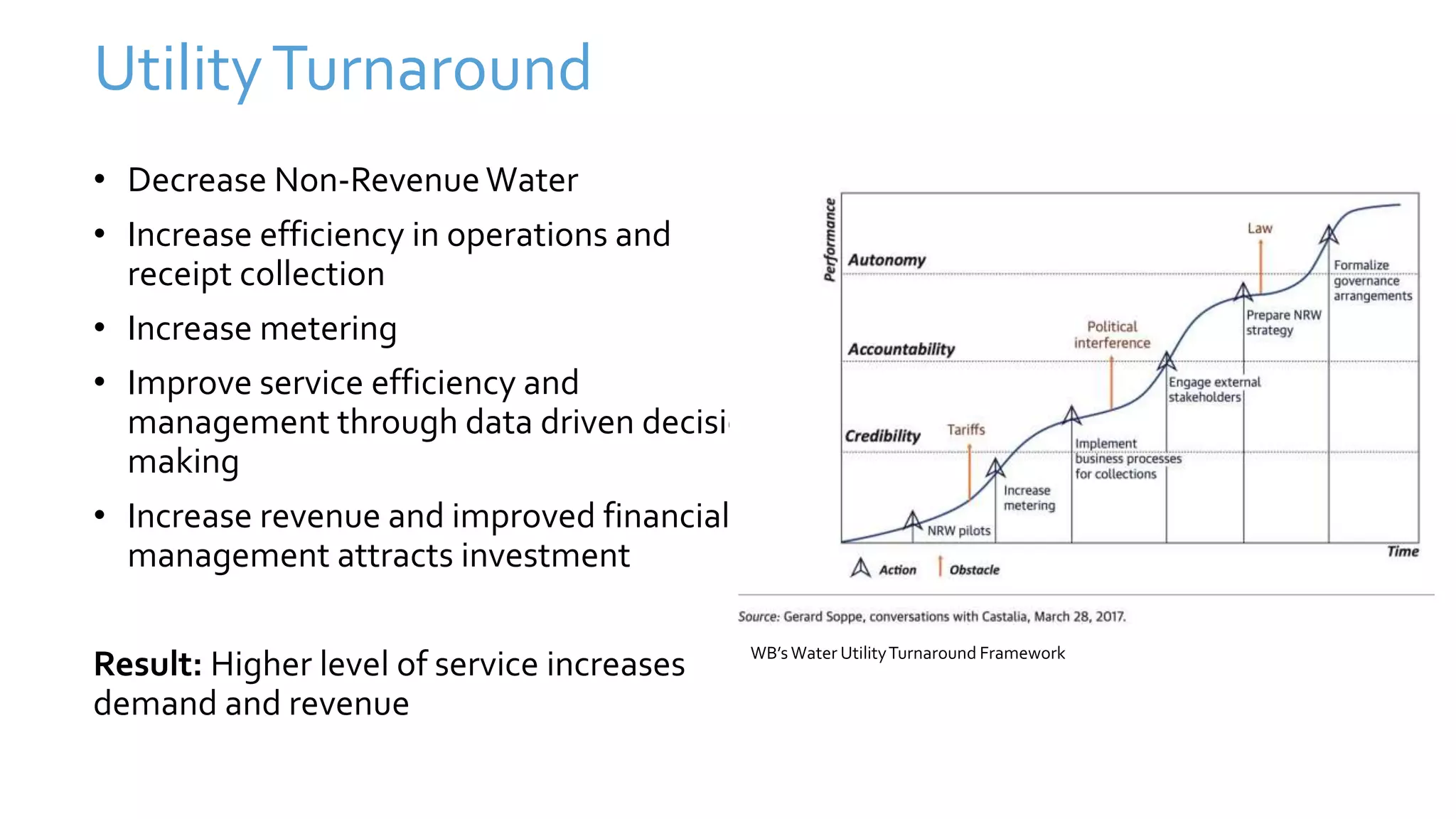
WB’s Water UtilityTurnaround Framework
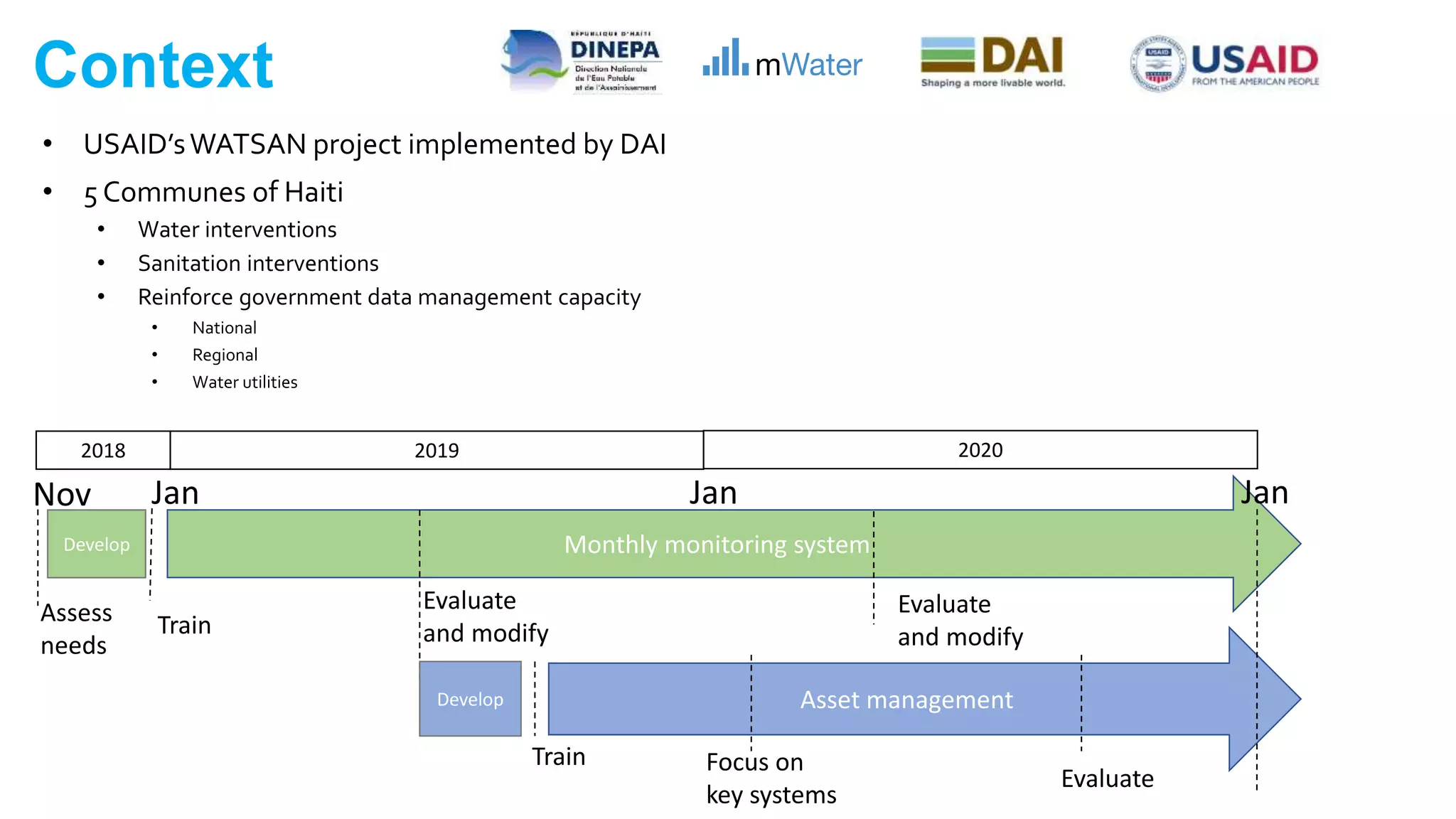
Asset management
Monthly monitoring system
Context
Nov Jan Jan Jan
2018 2019 2020
Develop
Train
Assess
needs
Evaluate
and modify
Develop
Focus on
key systems
Train
• USAID’sWATSAN project implemented by DAI
• 5 Communes of Haiti
• Water interventions
• Sanitation interventions
• Reinforce government data management capacity
• National
• Regional
• Water utilities
Evaluate
and modify
Evaluate
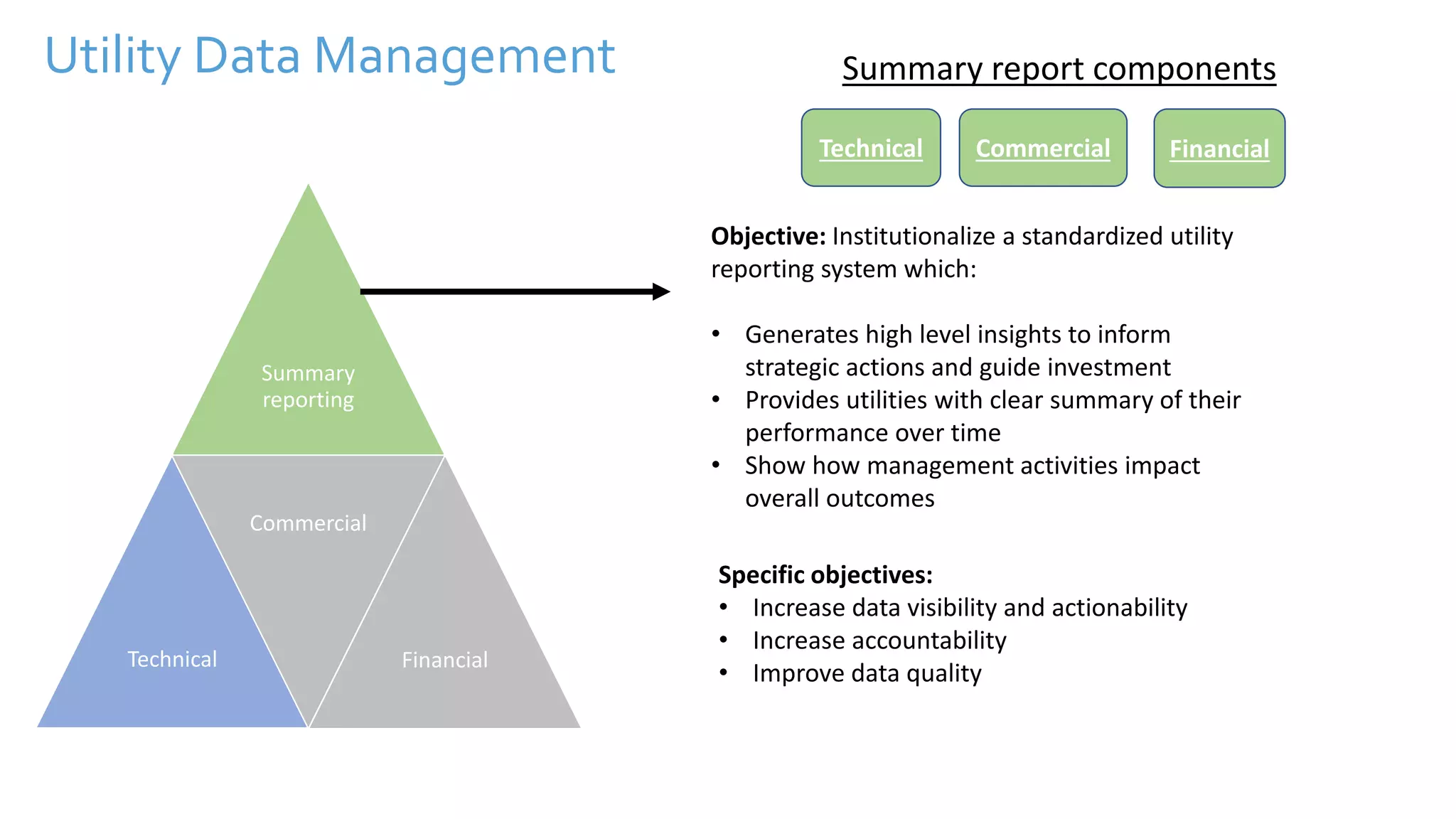
Utility Data Management
Summary
reporting
Technical
Commercial
Financial
Technical Commercial Financial
Summary report components
Specific objectives:
• Increase data visibility and actionability
• Increase accountability
• Improve data quality
Objective: Institutionalize a standardized utility
reporting system which:
• Generates high level insights to inform
strategic actions and guide investment
• Provides utilities with clear summary of their
performance over time
• Show how management activities impact
overall outcomes
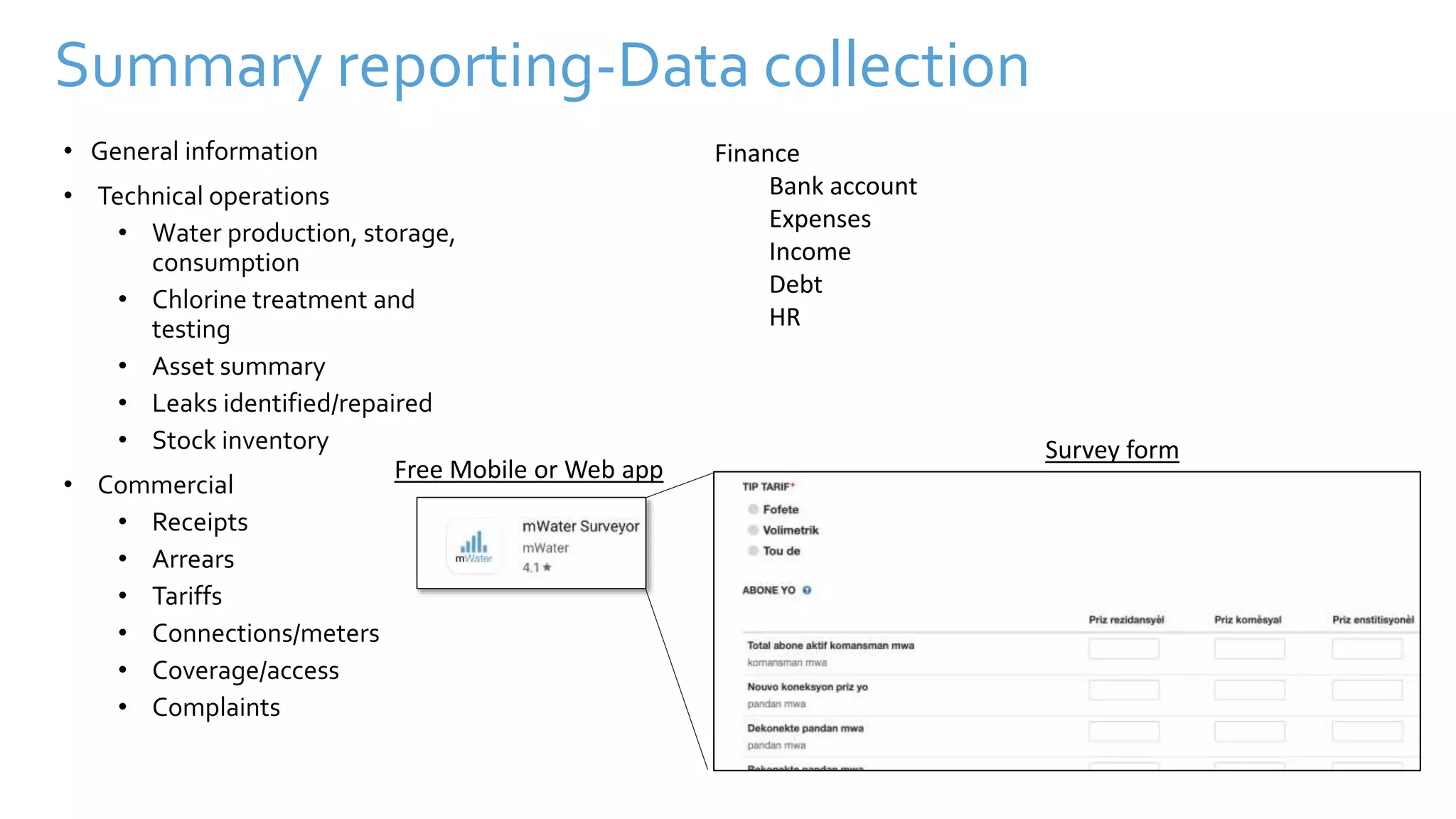
Summary reporting-Data collection
• General information
• Technical operations
• Water production, storage,
consumption
• Chlorine treatment and
testing
• Asset summary
• Leaks identified/repaired
• Stock inventory
• Commercial
• Receipts
• Arrears
• Tariffs
• Connections/meters
• Coverage/access
• Complaints
Free Mobile or Web app
Survey form
Finance
Bank account
Expenses
Income
Debt
HR
Data consumption
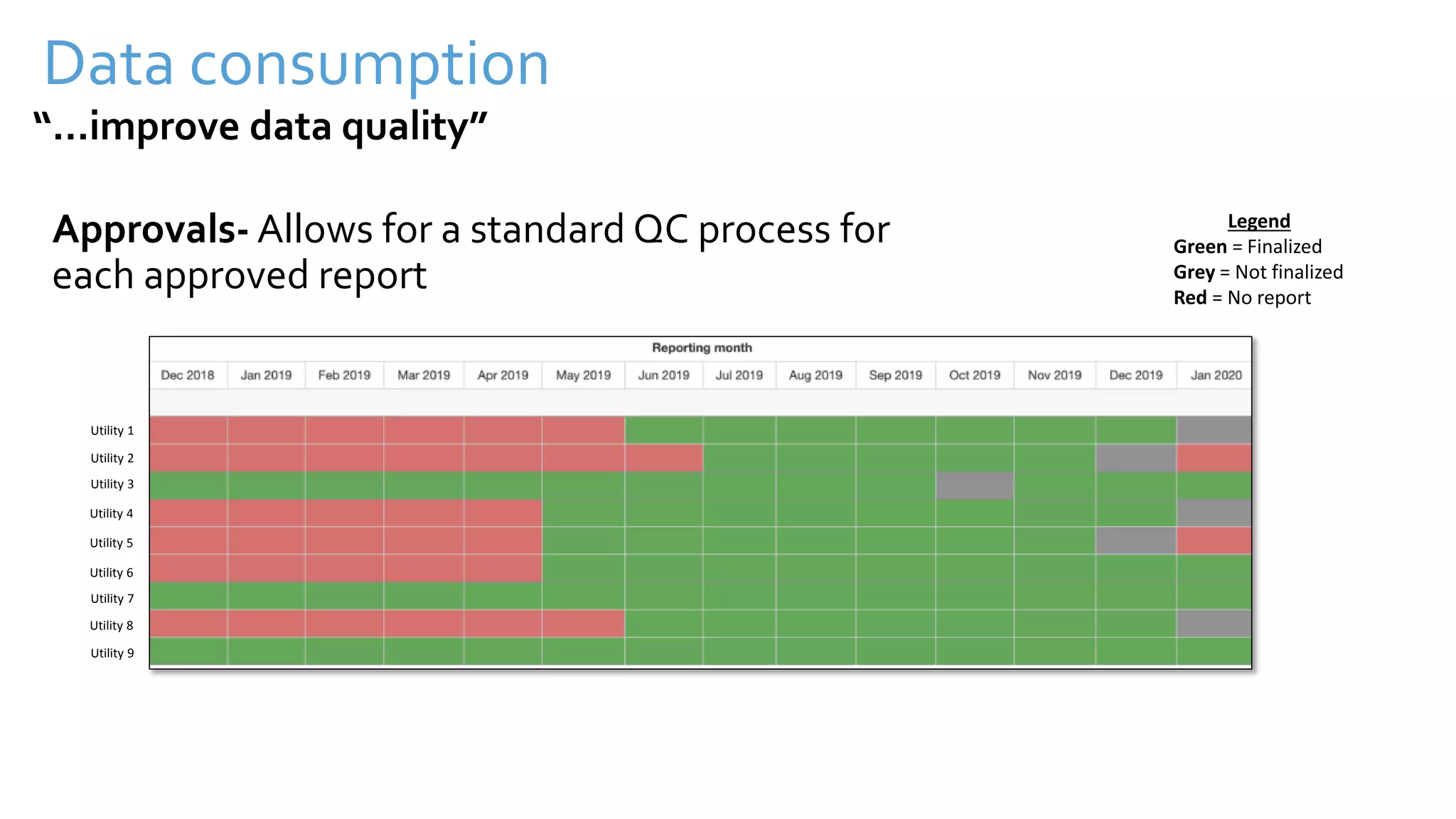
“…improve data quality”
Approvals- Allows for a standard QC process for
each approved report
Utility 1
Utility 2
Utility 3
Utility 4
Utility 5
Utility 6
Utility 7
Utility 8
Utility 9
Legend
Green = Finalized
Grey = Not finalized
Red = No report
Data consumption
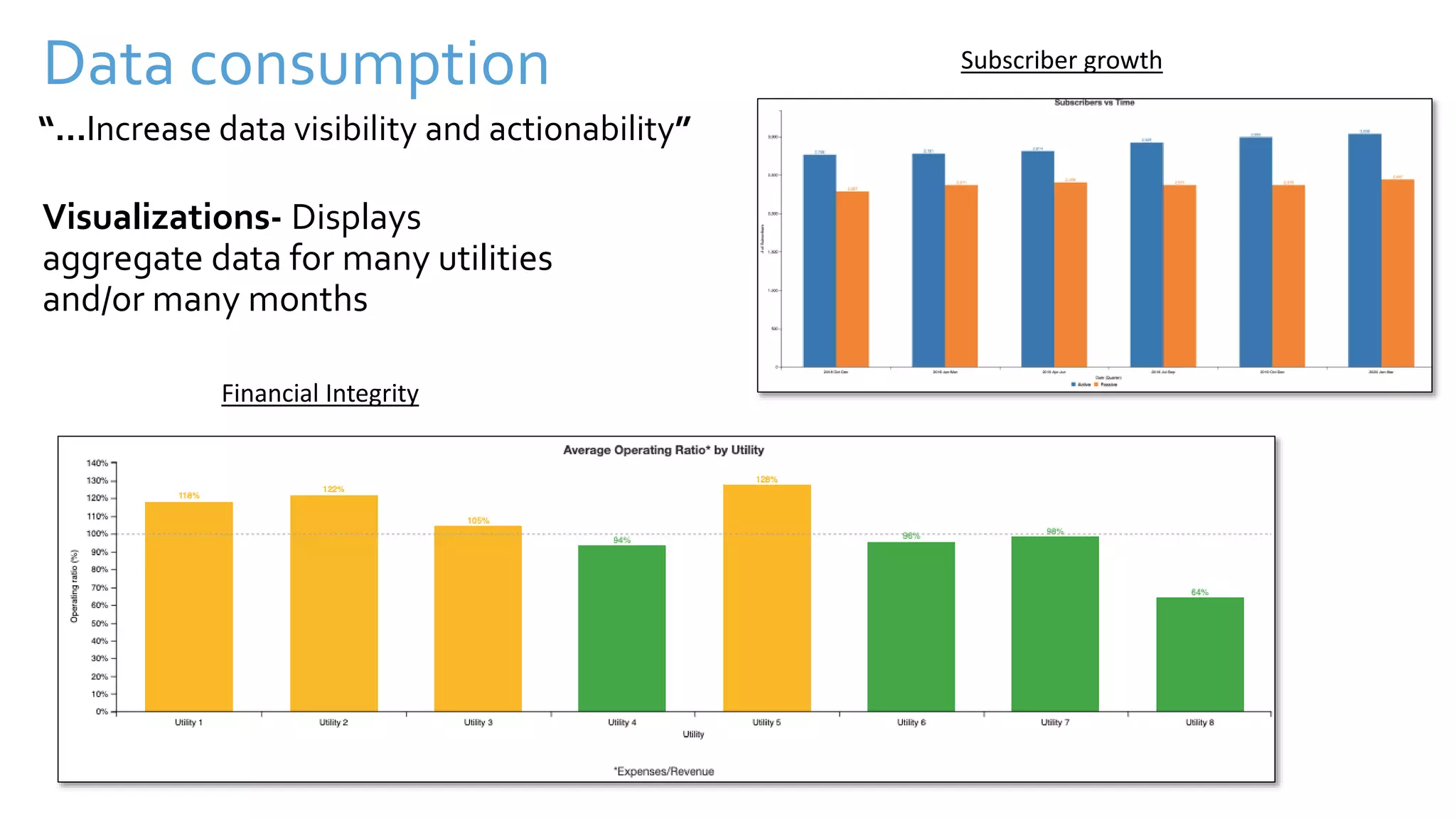
Visualizations- Displays
aggregate data for many utilities
and/or many months
Subscriber growth
Financial Integrity
“…Increase data visibility and actionability”
Data consumption
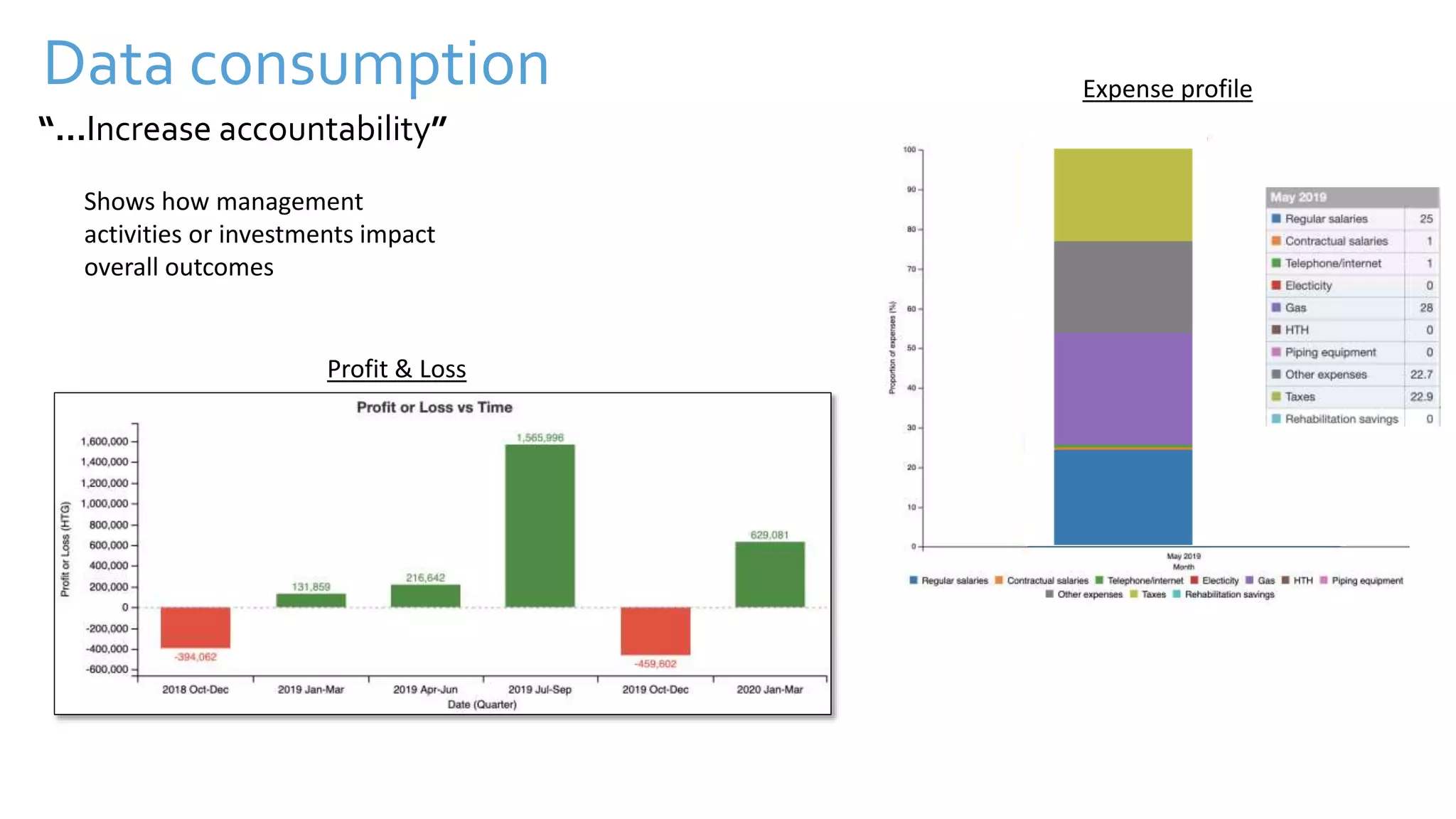
Profit & Loss
“…Increase accountability”
Shows how management
activities or investments impact
overall outcomes
Expense profile
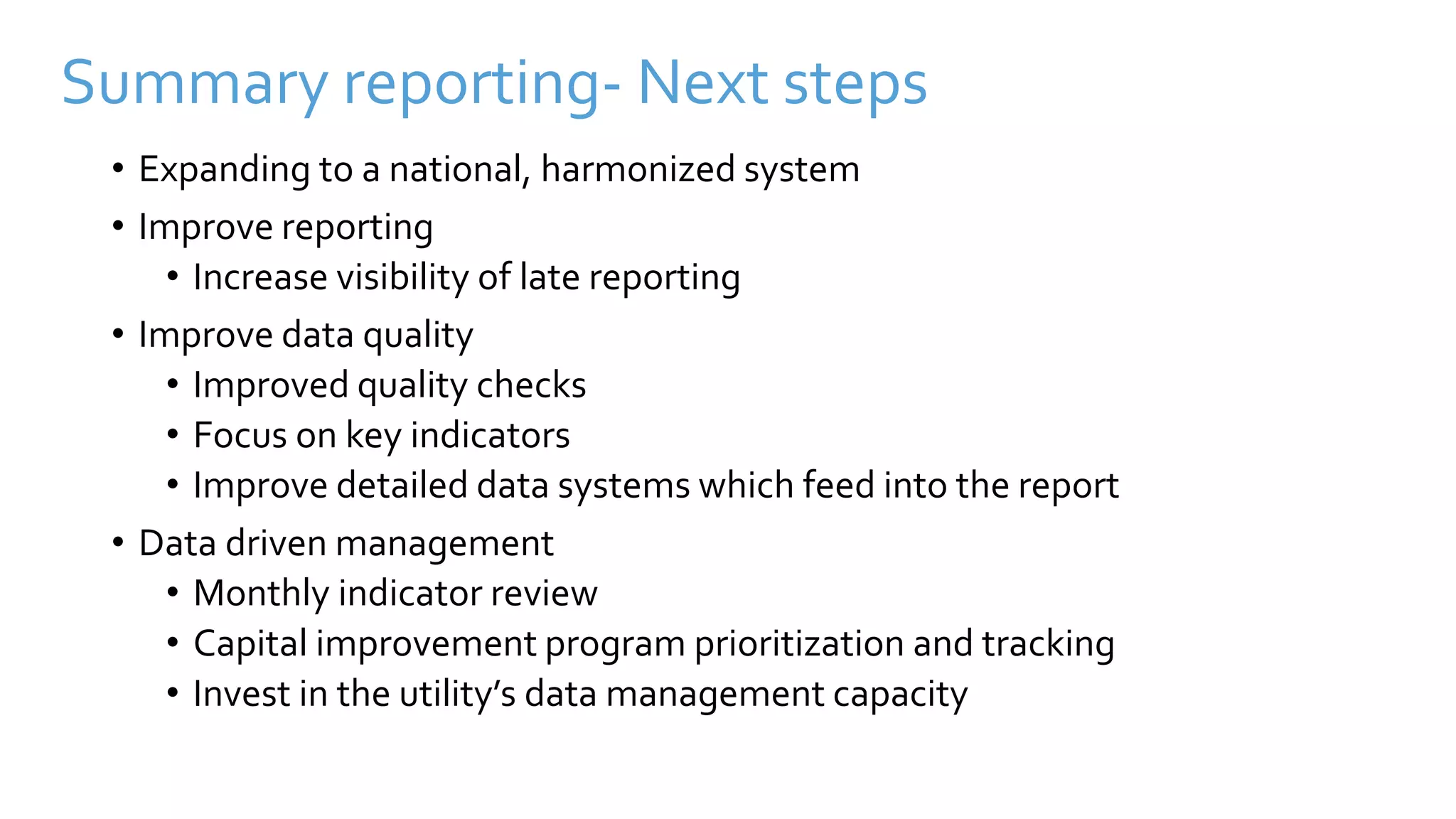
Summary reporting- Next steps
• Expanding to a national, harmonized system
• Improve reporting
• Increase visibility of late reporting
• Improve data quality
• Improved quality checks
• Focus on key indicators
• Improve detailed data systems which feed into the report
• Data driven management
• Monthly indicator review
• Capital improvement program prioritization and tracking
• Invest in the utility’s data management capacity
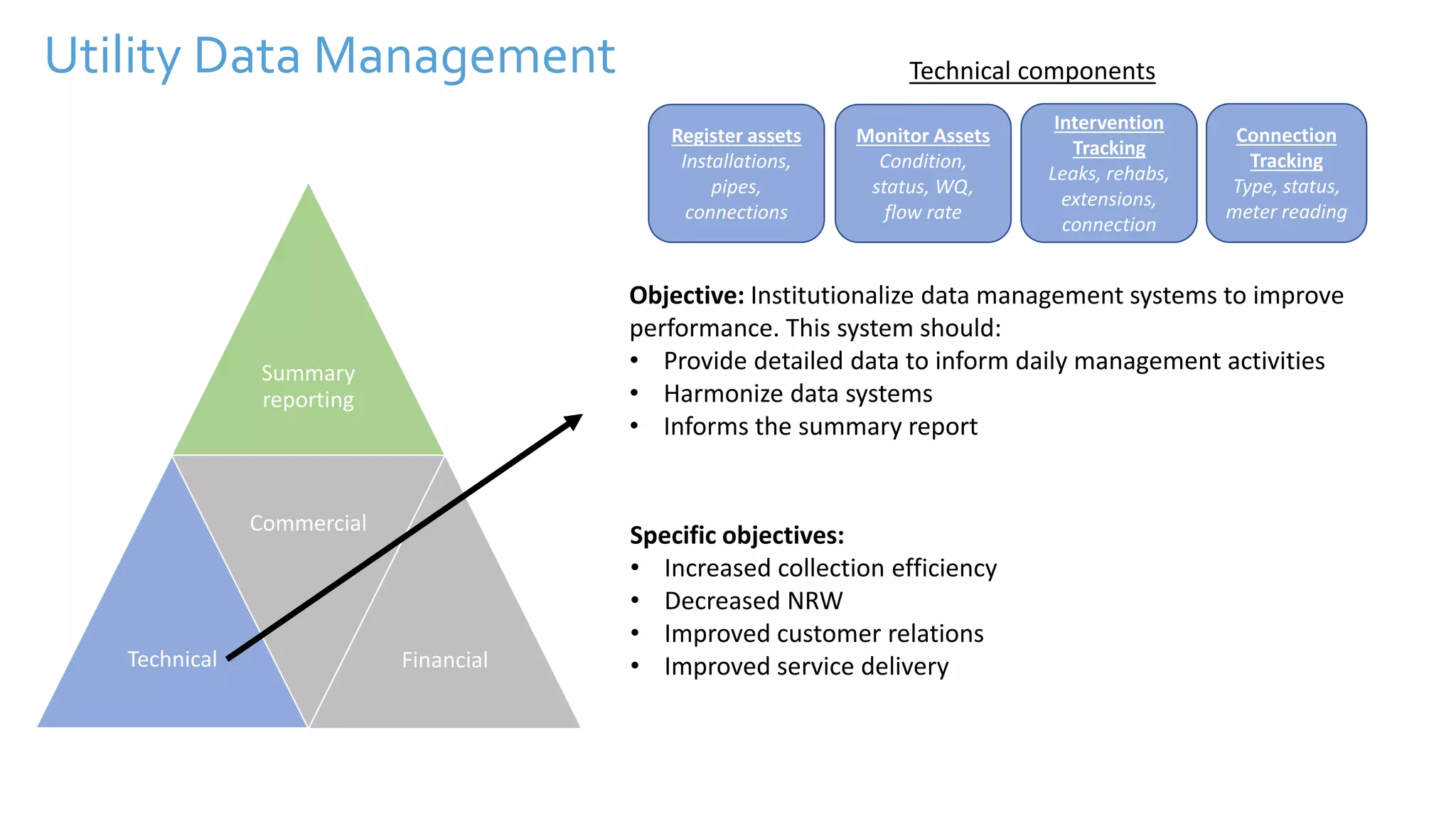
Utility Data Management
Summary
reporting
Technical
Commercial
Financial
Register assets
Installations,
pipes,
connections
Monitor Assets
Condition,
status, WQ,
flow rate
Intervention
Tracking
Leaks, rehabs,
extensions,
connection
Connection
Tracking
Type, status,
meter reading
Technical components
Specific objectives:
• Increased collection efficiency
• Decreased NRW
• Improved customer relations
• Improved service delivery
Objective: Institutionalize data management systems to improve
performance. This system should:
• Provide detailed data to inform daily management activities
• Harmonize data systems
• Informs the summary report
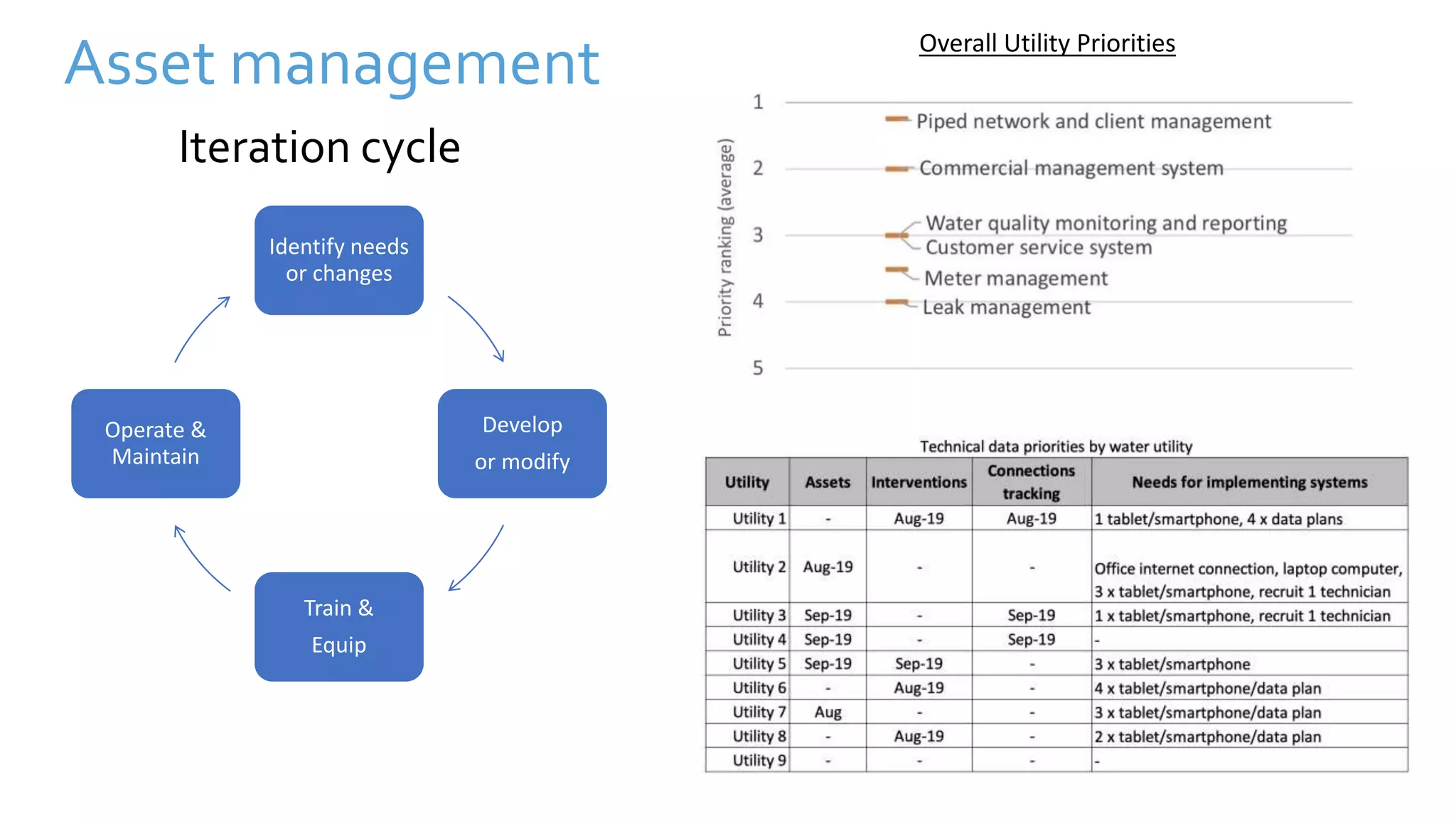
Asset management
Iteration cycle
Overall Utility Priorities
Identify needs
or changes
Develop
or modify
Train &
Equip
Operate &
Maintain
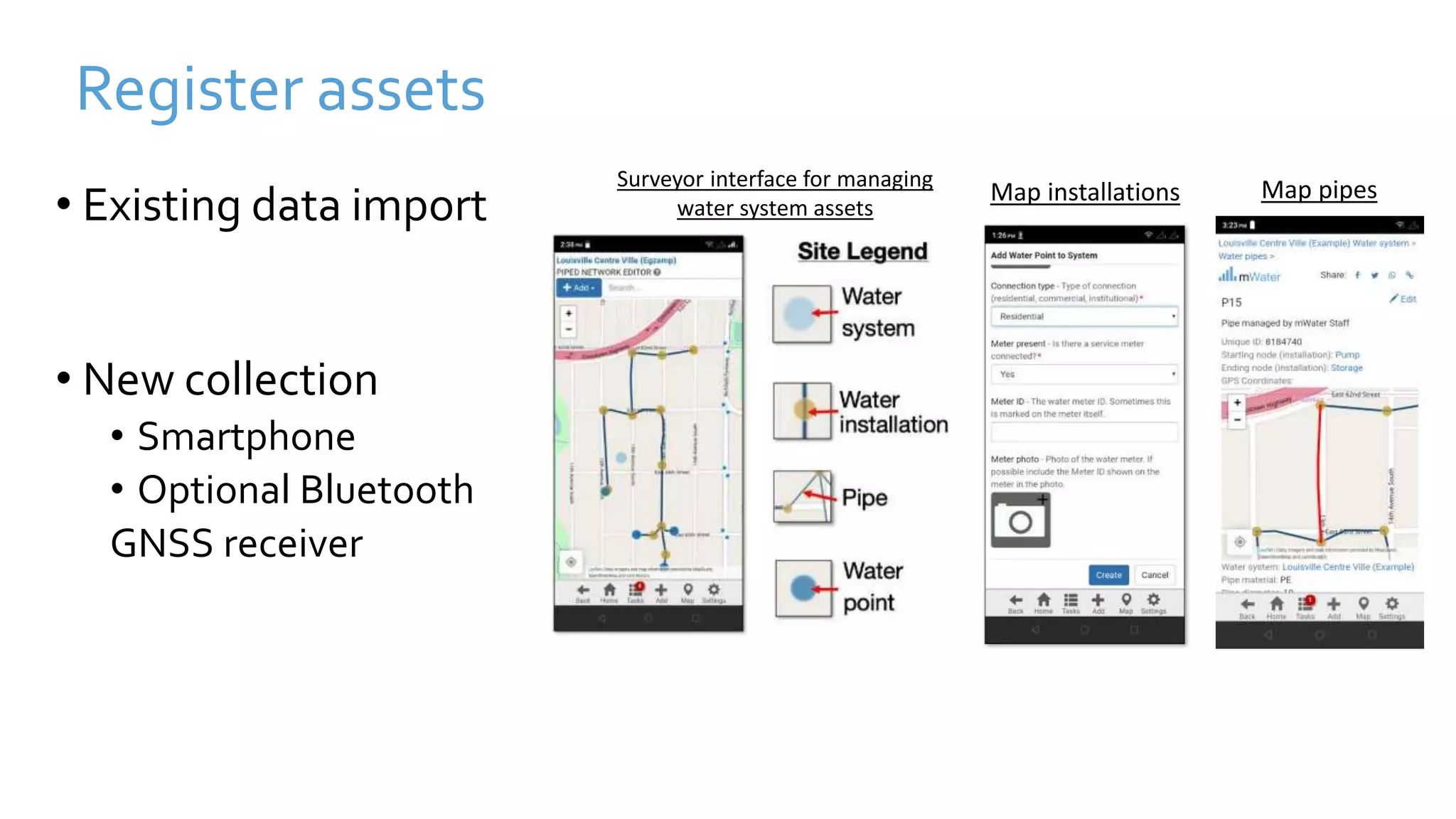
Register assets
• Existing data import
• New collection
• Smartphone
• Optional Bluetooth
GNSS receiver
Map pipes
Map installations
Surveyor interface for managing
water system assets
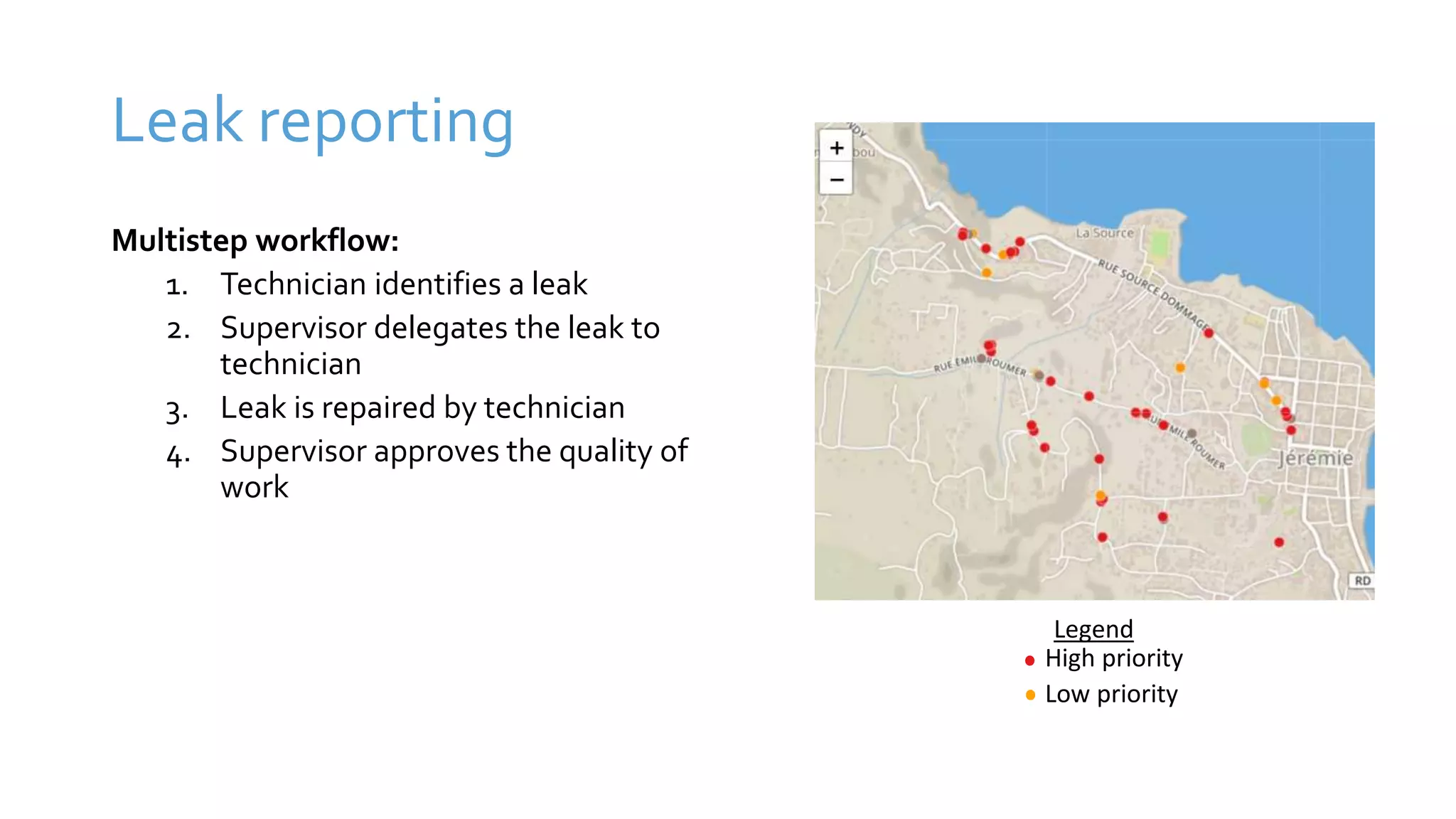
Leak reporting
Multistep workflow:
1. Technician identifies a leak
2. Supervisor delegates the leak to
technician
3. Leak is repaired by technician
4. Supervisor approves the quality of
work
High priority
Low priority
Legend
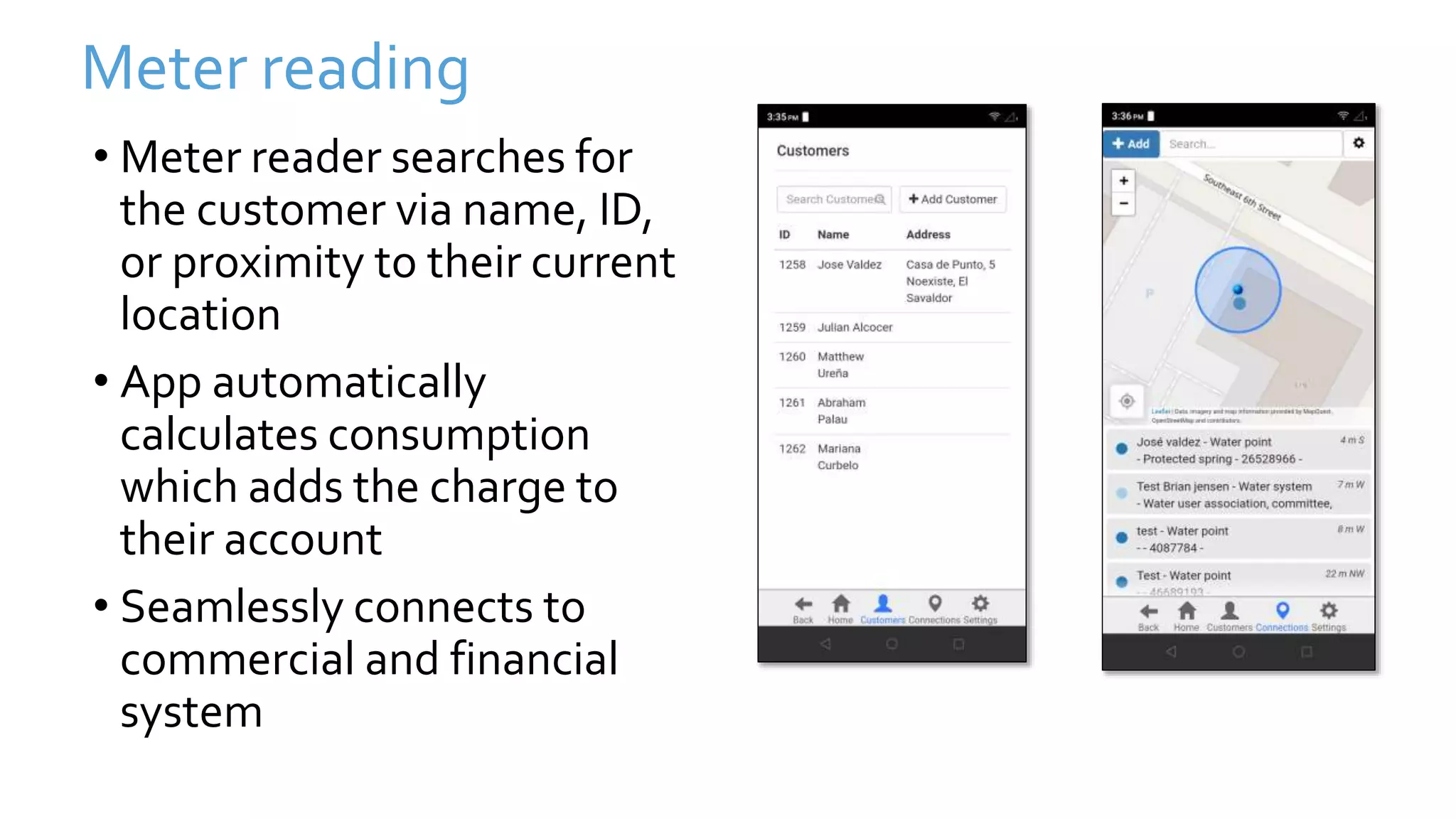
Meter reading
• Meter reader searches for
the customer via name, ID,
or proximity to their current
location
• App automatically
calculates consumption
which adds the charge to
their account
• Seamlessly connects to
commercial and financial
system
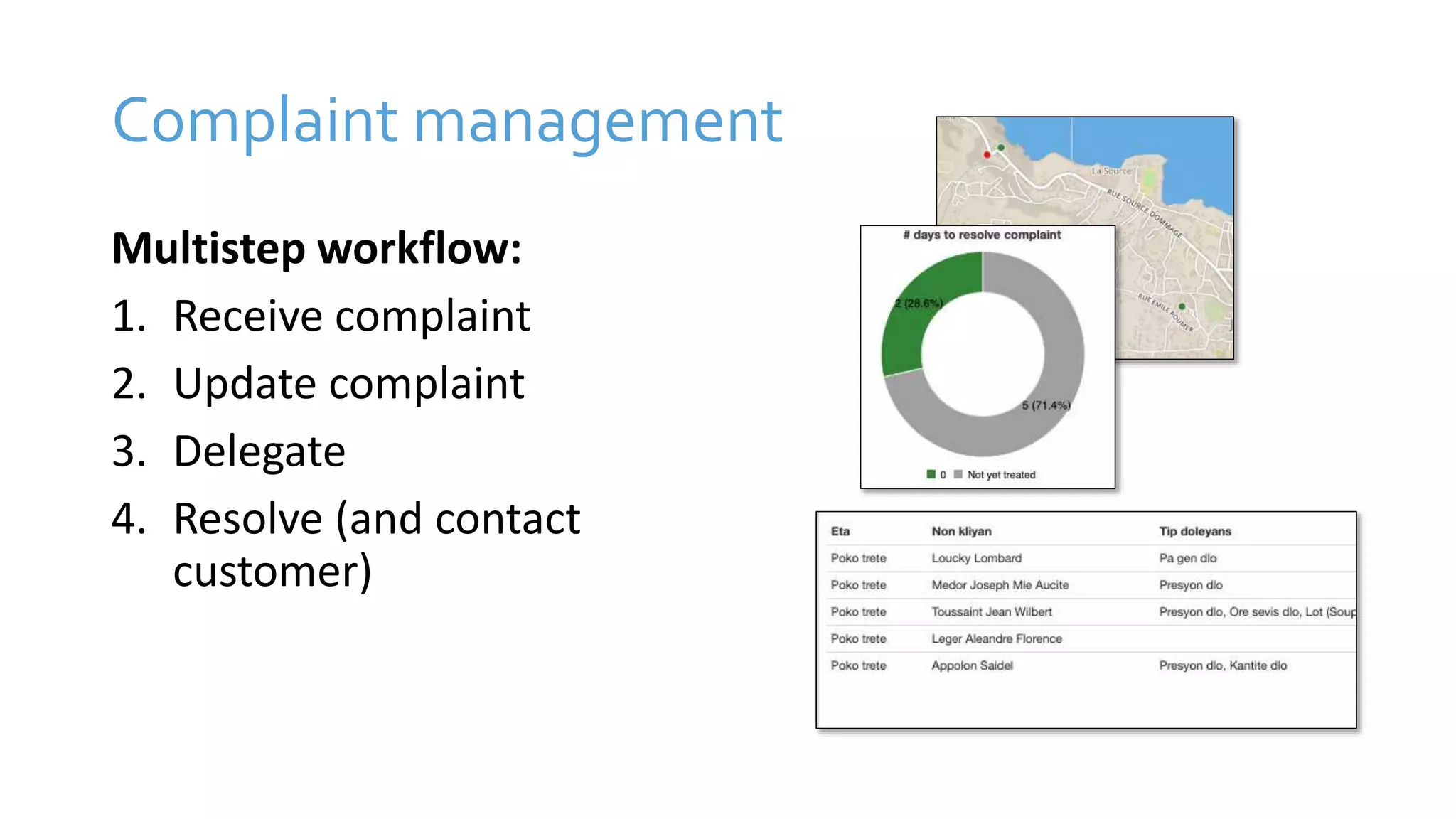
Complaint management
Multistep workflow:
1. Receive complaint
2. Update complaint
3. Delegate
4. Resolve (and contact
customer)
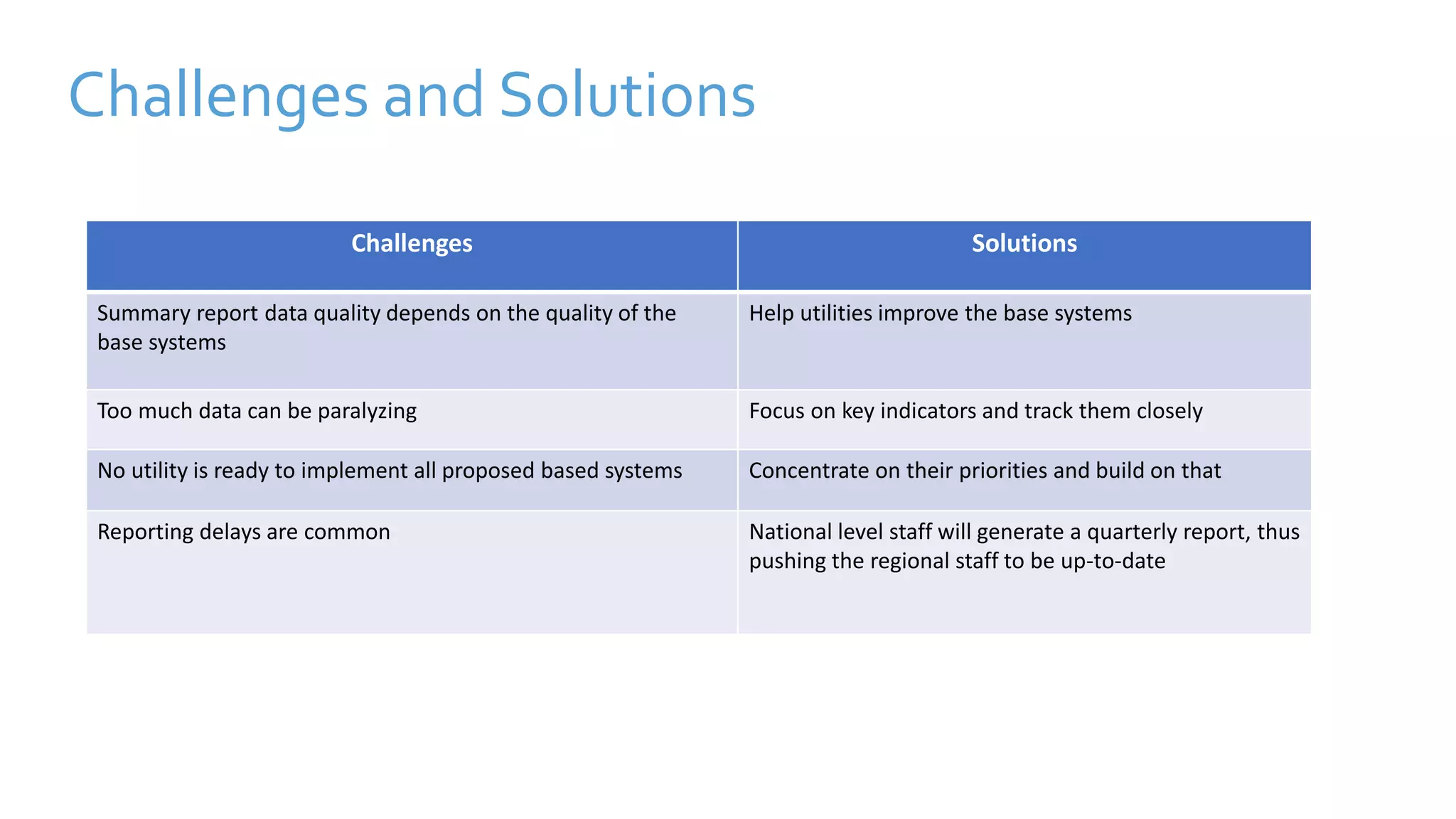
Challenges and Solutions
Challenges Solutions
Summary report data quality depends on the quality of the
base systems
Help utilities improve the base systems
Too much data can be paralyzing Focus on key indicators and track them closely
No utility is ready to implement all proposed based systems Concentrate on their priorities and build on that
Reporting delays are common National level staff will generate a quarterly report, thus
pushing the regional staff to be up-to-date
Getting started
• www.mWater.co
info@mwater.co
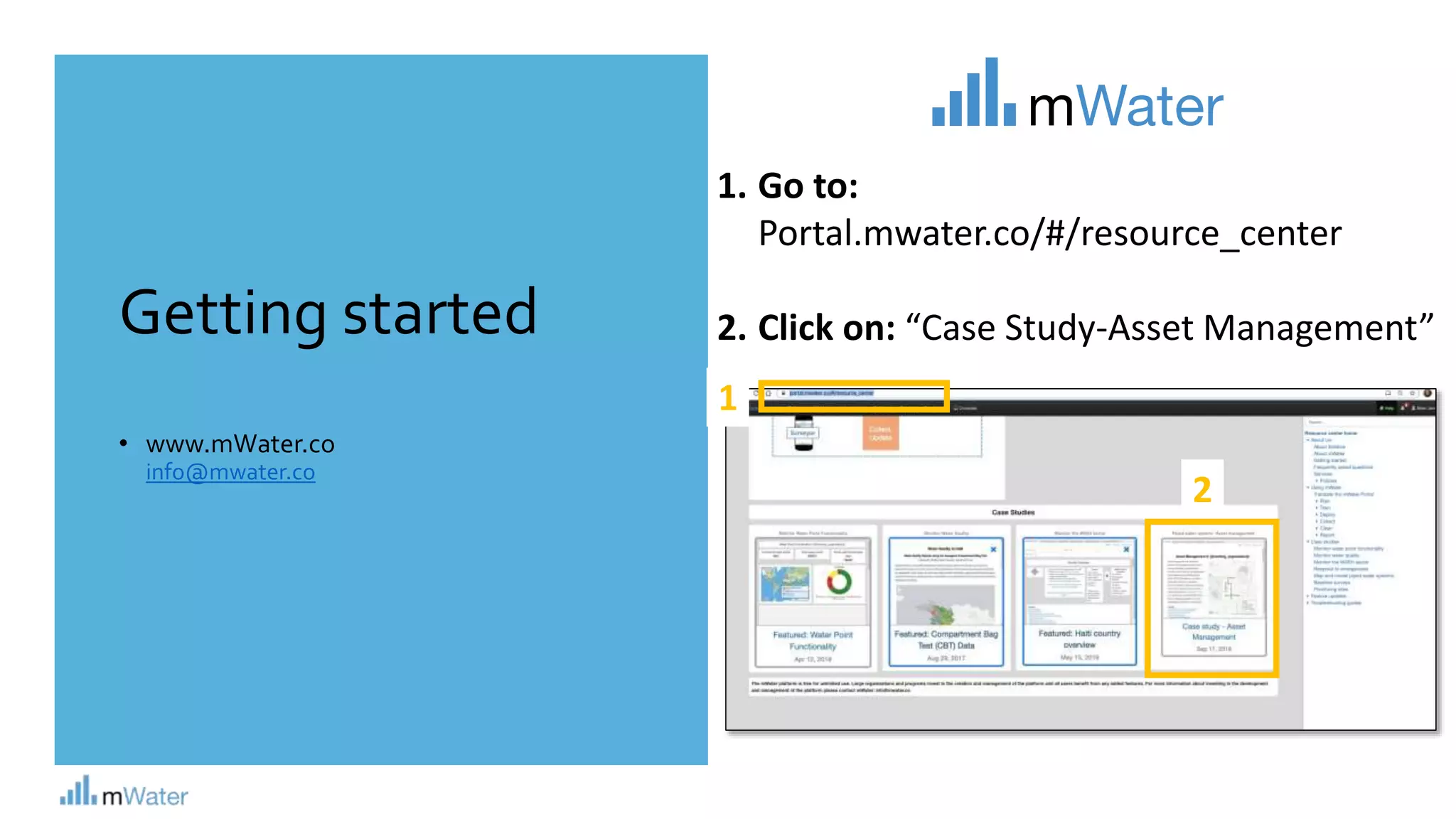
1. Go to:
Portal.mwater.co/#/resource_center
2. Click on: “Case Study-Asset Management”
2
1

mWater - Using data to improve piped water services

  • 1.
    Using data toimprove piped water services ColoradoWASH Symposium 2020
  • 2.
    The problem: Insufficient revenue Servicequality decreases Subscribers invest in private infrastructure instead Revenue decreases Many utilities are stuck in a “Spiral of Decline”
  • 3.
    UtilityTurnaround • Decrease Non-RevenueWater • Increase efficiency in operations and receipt collection • Increase metering • Improve service efficiency and management through data driven decision making • Increase revenue and improved financial management attracts investment Result: Higher level of service increases demand and revenue WB’s Water UtilityTurnaround Framework
  • 4.
    Asset management Monthly monitoringsystem Context Nov Jan Jan Jan 2018 2019 2020 Develop Train Assess needs Evaluate and modify Develop Focus on key systems Train • USAID’sWATSAN project implemented by DAI • 5 Communes of Haiti • Water interventions • Sanitation interventions • Reinforce government data management capacity • National • Regional • Water utilities Evaluate and modify Evaluate
  • 5.
    Utility Data Management Summary reporting Technical Commercial Financial TechnicalCommercial Financial Summary report components Specific objectives: • Increase data visibility and actionability • Increase accountability • Improve data quality Objective: Institutionalize a standardized utility reporting system which: • Generates high level insights to inform strategic actions and guide investment • Provides utilities with clear summary of their performance over time • Show how management activities impact overall outcomes
  • 6.
    Summary reporting-Data collection •General information • Technical operations • Water production, storage, consumption • Chlorine treatment and testing • Asset summary • Leaks identified/repaired • Stock inventory • Commercial • Receipts • Arrears • Tariffs • Connections/meters • Coverage/access • Complaints Free Mobile or Web app Survey form Finance Bank account Expenses Income Debt HR
  • 7.
    Data consumption “…improve dataquality” Approvals- Allows for a standard QC process for each approved report Utility 1 Utility 2 Utility 3 Utility 4 Utility 5 Utility 6 Utility 7 Utility 8 Utility 9 Legend Green = Finalized Grey = Not finalized Red = No report
  • 8.
    Data consumption Visualizations- Displays aggregatedata for many utilities and/or many months Subscriber growth Financial Integrity “…Increase data visibility and actionability”
  • 9.
    Data consumption Profit &Loss “…Increase accountability” Shows how management activities or investments impact overall outcomes Expense profile
  • 10.
    Summary reporting- Nextsteps • Expanding to a national, harmonized system • Improve reporting • Increase visibility of late reporting • Improve data quality • Improved quality checks • Focus on key indicators • Improve detailed data systems which feed into the report • Data driven management • Monthly indicator review • Capital improvement program prioritization and tracking • Invest in the utility’s data management capacity
  • 11.
    Utility Data Management Summary reporting Technical Commercial Financial Registerassets Installations, pipes, connections Monitor Assets Condition, status, WQ, flow rate Intervention Tracking Leaks, rehabs, extensions, connection Connection Tracking Type, status, meter reading Technical components Specific objectives: • Increased collection efficiency • Decreased NRW • Improved customer relations • Improved service delivery Objective: Institutionalize data management systems to improve performance. This system should: • Provide detailed data to inform daily management activities • Harmonize data systems • Informs the summary report
  • 12.
    Asset management Iteration cycle OverallUtility Priorities Identify needs or changes Develop or modify Train & Equip Operate & Maintain
  • 13.
    Register assets • Existingdata import • New collection • Smartphone • Optional Bluetooth GNSS receiver Map pipes Map installations Surveyor interface for managing water system assets
  • 14.
    Leak reporting Multistep workflow: 1.Technician identifies a leak 2. Supervisor delegates the leak to technician 3. Leak is repaired by technician 4. Supervisor approves the quality of work High priority Low priority Legend
  • 15.
    Meter reading • Meterreader searches for the customer via name, ID, or proximity to their current location • App automatically calculates consumption which adds the charge to their account • Seamlessly connects to commercial and financial system
  • 16.
    Complaint management Multistep workflow: 1.Receive complaint 2. Update complaint 3. Delegate 4. Resolve (and contact customer)
  • 17.
    Challenges and Solutions ChallengesSolutions Summary report data quality depends on the quality of the base systems Help utilities improve the base systems Too much data can be paralyzing Focus on key indicators and track them closely No utility is ready to implement all proposed based systems Concentrate on their priorities and build on that Reporting delays are common National level staff will generate a quarterly report, thus pushing the regional staff to be up-to-date
  • 18.
    Getting started • www.mWater.co info@mwater.co 1.Go to: Portal.mwater.co/#/resource_center 2. Click on: “Case Study-Asset Management” 2 1

Editor's Notes

  • #2 -Who I am -What I’m going to be talking about
  • #3 -Many of us are aware of the challenges that water utilities in developing countries face. -Many of these water utilities are stuck in what we call the spiral of decline -often refered to as spiral of decline -
  • #4 I’m going to talk about turning around a utility that is in the spiral of decline. Some of you may be familiar with the World Bank’s Utility Turnaround framework (2018) -This is a collaborative approach that is tailored to the realities of each utility. They are guided through a process of prioritization, goal setting, actions, measure and achievement. -Oftentimes they start with the low hanging fruit and start creating virtuous cycles which increases the utilities’ credibility, accountability and finally autonomy. -In this framework, the utilities choose priorities. -Some of these actions include:
  • #5 We used this framework as a guide in the context of:
  • #6 We started with the summary reporting system because this was a priority for the National and regional governments and was low hanging fruit.
  • #7 -Data collection includes details on each of these catefories. -Used the app -Used a form
  • #8 -One of the objectives was to improve quality and to do so we put in place a distributed approvals framework that each region would do before a report is finalized. -Each region which does the approval.
  • #9 Operating ratio is backwards if you are used to. Agree on definitions even amongst themselves. Aligning on definitions and indicators. Taxonomy and nomenclature.
  • #10 Combined
  • #11 Capital improvement program- Build these The next is to use this as a data driven management tool. This includes the key stakholders in the utility having amonthly indicator review,