C or r e sp ondence
The new engl and jour nal of medicine
n engl j med  nejm.org 1
Covid-19 and Kidney Transplantation
To the Editor: Kidney-transplant recipients ap-
pear to be at particularly high risk for critical
Covid-19 illness due to chronic immunosuppres-
sion and coexisting conditions.1
At Montefiore
Medical Center, we identified 36 consecutive
adult kidney-transplant recipients who tested
positive for Covid-19 between March 16 and
April 1, 2020. A total of 26 recipients (72%) were
male, and the median age was 60 years (range,
32 to 77). Fourteen recipients (39%) were black,
and 15 recipients (42%) were Hispanic. Twenty-
seven recipients (75%) had received a deceased-
donor kidney; 34 recipients (94%) had hyperten-
sion, 25 (69%) had diabetes mellitus, 13 (36%)
had a history of smoking tobacco or were cur-
rent smokers, and 6 (17%) had heart disease.
Thirty-five of the patients (97%) were receiving
tacrolimus, 34 (94%) were receiving prednisone,
and 31 (86%) were receiving mycophenolate
mofetil or mycophenolic acid.
The most common initial symptom was fever
(in 21 patients [58%]), and diarrhea was observed
in 8 patients (22%). Eight patients who were in
stable condition without major respiratory symp-
toms (22%) were monitored at home, and 28 pa-
tients (78%) were admitted to the hospital. Twenty-
seven of the hospitalized patients (96%) had
radiographic findings that were consistent with
viral pneumonia, and 11 (39%) received mechani-
cal ventilation. Six patients (21%) received renal
replacement therapy. At a median follow-up of
21 days (range, 14 to 28), 10 of the 36 kidney-
transplant recipients (28%) and 7 of the 11 patients
who were intubated (64%) had died. Two of the
8 patients who were monitored as outpatients died
at home; both were recent kidney-transplant re-
cipients who had received antithymocyte globu-
lin within the previous 5 weeks (see the Supple-
mentary Appendix, available with the full text of
this article at NEJM.org).
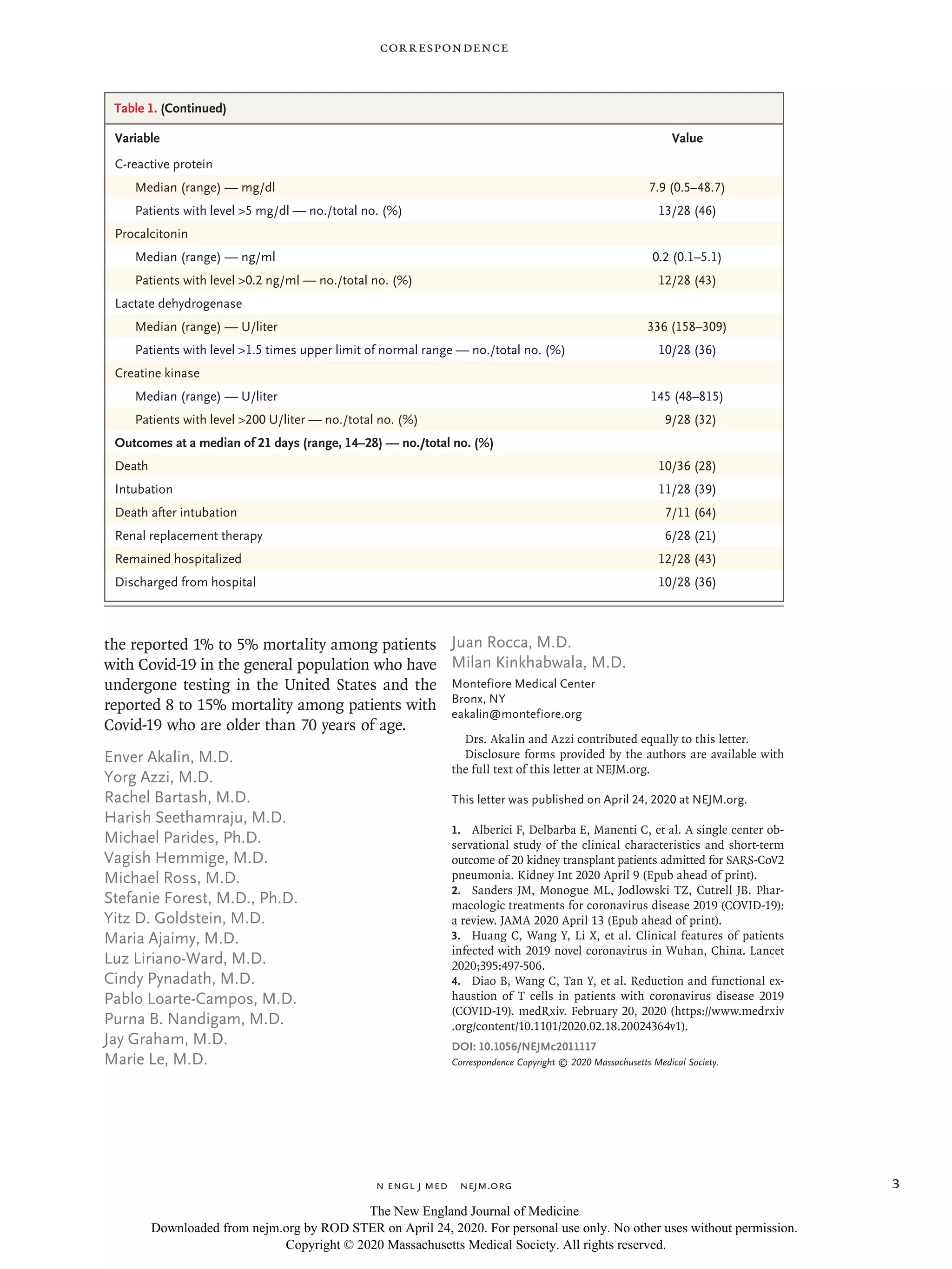
Table 1 summarizes the initial laboratory re-
sults in the 28 hospitalized patients. Twenty-two
(79%) were lymphopenic, 12 (43%) had thrombo-
cytopenia, 19 (68%) had low CD3 cell counts, 20
(71%) had low CD4 cell counts, and 8 (29%) had
low CD8 cell counts. Inflammatory markers were
measured, and 10 patients (36%) had ferritin lev-
els higher than 900 ng per milliliter, 13 (46%)
had C-reactive protein levels higher than 5 mg per
deciliter, 12 (43%) had procalcitonin levels high-
er than 0.2 ng per milliliter, and 16 (57%) had
d-dimer levels higher than 0.5 μg per milliliter.
Although effective treatment of Covid-19 is
currently unknown,2
immunosuppressive man-
agement included withdrawal of an antimetabo-
lite in 24 of 28 patients (86%). In addition, tacro-
limus was withheld in 6 of the 28 severely ill
patients (21%). Hydroxychloroquine was admin-
istered to 24 of these 28 patients (86%). Apixa-
ban was administered to patients with d-dimer
levels higher than 3.0 μg per milliliter. Six se-
verely ill patients received the CCR5 inhibitor
leronlimab (PRO 140, CytoDyn) on a compassion-
ate-use basis, and 2 received the interleukin-6 re-
ceptor antagonist tocilizumab. Interleukin-6 levels
were very elevated (range, 83 to 8175 pg per mil-
liliter) when leronlimab was initiated (on day 0)
in the 5 patients with elevated interleukin-6 lev-
els; these levels decreased markedly 3 days later
(range, 37 to 2022 pg per milliliter) (see Table S2
in the Supplementary Appendix). However, only
the 1 patient who had the lowest interleukin-6
level (at 83 pg per milliliter) remained in stable
condition without intubation.
In conclusion, at our institution, kidney-trans-
plant recipients with Covid-19 had less fever as an
initial symptom,3
lower CD3, CD4, and CD8 cell
counts,4
and more rapid clinical progression than
persons with Covid-19 in the general population.
The number of our patients with very low CD3,
CD4, and CD8 cell counts indirectly supports the
need to decrease doses of immunosuppressive
agents in patients with Covid-19, especially in
those who have recently received antithymocyte
globulin, which decreases all T-cell subsets for
many weeks. Our results show a very high early
mortality among kidney-transplant recipients with
Covid-19 — 28% at 3 weeks as compared with
The New England Journal of Medicine
Downloaded from nejm.org by ROD STER on April 24, 2020. For personal use only. No other uses without permission.
Copyright © 2020 Massachusetts Medical Society. All rights reserved.
The new engl and jour nal of medicine
n engl j med  nejm.org2
Table 1. Clinical Features and Outcomes in the Kidney-Transplant Recipients.
Variable Value
Presenting symptom — no./total no. (%)
Fever 21/36 (58)
Cough 19/36 (53)
Dyspnea 16/36 (44)
Myalgias 13/36 (36)
Diarrhea 8/36 (22)
Hospitalization — no./total no. (%) 28/36 (78)
Chest radiographic findings consistent with viral pneumonia — no./total no. (%) 27/28 (96)
Treatment — no./total no. (%)
Withdrawal of antimetabolite 24/28 (86)
Withdrawal of tacrolimus 6/28 (21)
Hydroxychloroquine 24/28 (86)
Azithromycin 13/28 (46)
Leronlimab 6/28 (21)
Tocilizumab 2/28 (7)
High-dose glucocorticoids 2/28 (7)
Laboratory values
White-cell count
Median (range) — per mm3
5300 (2100–14,700)
Patients with count <400 per mm3
— no./total no. (%) 6/28 (21)
Lymphocyte count
Median (range) — per mm3
600 (100–1900)
Patients with count <1000 per mm3
— no./total no. (%) 22/28 (79)
Platelet count
Median (range) — per mm3
146,000 (78,000–450,000)
Patients with count <150,000 per mm3
— no./total no. (%) 12/28 (43)
CD3 cell count
Median (range) — per mm3
319 (34–1049)
Patients with count <706 per mm3
— no./total no. (%) 19/28 (68)
CD4 cell count
Median (range) — per mm3
173 (6–507)
Patients with count <344 per mm3
— no./total no. (%) 20/28 (71)
CD8 cell count
Median (range) — per mm3
132 (39–654)
Patients with count <104 per mm3
— no./total no. (%) 8/28 (29)
Ferritin
Median (range) — ng/ml 1230 (191–9259)
Patients with level >900 ng/ml — no./total no. (%) 10/28 (36)
d-dimer
Median (range) — μg/ml 1.02 (0.32–5.19)
Patients with level >0.5 μg/ml — no./total no. (%) 16/28 (57)
Patients with level >3 μg/ml — no./total no. (%) 3/28 (11)
The New England Journal of Medicine
Downloaded from nejm.org by ROD STER on April 24, 2020. For personal use only. No other uses without permission.
Copyright © 2020 Massachusetts Medical Society. All rights reserved.
n engl j med  nejm.org 3
Variable Value
C-reactive protein
Median (range) — mg/dl 7.9 (0.5–48.7)
Patients with level >5 mg/dl — no./total no. (%) 13/28 (46)
Procalcitonin
Median (range) — ng/ml 0.2 (0.1–5.1)
Patients with level >0.2 ng/ml — no./total no. (%) 12/28 (43)
Lactate dehydrogenase
Median (range) — U/liter 336 (158–309)
Patients with level >1.5 times upper limit of normal range — no./total no. (%) 10/28 (36)
Creatine kinase
Median (range) — U/liter 145 (48–815)
Patients with level >200 U/liter — no./total no. (%) 9/28 (32)
Outcomes at a median of 21 days (range, 14–28) — no./total no. (%)
Death 10/36 (28)
Intubation 11/28 (39)
Death after intubation 7/11 (64)
Renal replacement therapy 6/28 (21)
Remained hospitalized 12/28 (43)
Discharged from hospital 10/28 (36)
Table 1. (Continued)
the reported 1% to 5% mortality among patients
with Covid-19 in the general population who have
undergone testing in the United States and the
reported 8 to 15% mortality among patients with
Covid-19 who are older than 70 years of age.
Enver Akalin, M.D.
Yorg Azzi, M.D.
Rachel Bartash, M.D.
Harish Seethamraju, M.D.
Michael Parides, Ph.D.
Vagish Hemmige, M.D.
Michael Ross, M.D.
Stefanie Forest, M.D., Ph.D.
Yitz D. Goldstein, M.D.
Maria Ajaimy, M.D.
Luz Liriano-Ward, M.D.
Cindy Pynadath, M.D.
Pablo Loarte-Campos, M.D.
Purna B. Nandigam, M.D.
Jay Graham, M.D.
Marie Le, M.D.
Juan Rocca, M.D.
Milan Kinkhabwala, M.D.
Montefiore Medical Center
Bronx, NY
eakalin@montefiore.org
Drs. Akalin and Azzi contributed equally to this letter.
Disclosure forms provided by the authors are available with
the full text of this letter at NEJM.org.
This letter was published on April 24, 2020 at NEJM.org.
1.	 Alberici F, Delbarba E, Manenti C, et al. A single center ob-
servational study of the clinical characteristics and short-term
outcome of 20 kidney transplant patients admitted for SARS-CoV2
pneumonia. Kidney Int 2020 April 9 (Epub ahead of print).
2.	 Sanders JM, Monogue ML, Jodlowski TZ, Cutrell JB. Phar-
macologic treatments for coronavirus disease 2019 (COVID-19):
a review. JAMA 2020 April 13 (Epub ahead of print).
3.	 Huang C, Wang Y, Li X, et al. Clinical features of patients
infected with 2019 novel coronavirus in Wuhan, China. Lancet
2020;​395:​497-506.
4.	 Diao B, Wang C, Tan Y, et al. Reduction and functional ex-
haustion of T cells in patients with coronavirus disease 2019
(COVID-19). medRxiv. February 20, 2020 (https://www​.medrxiv​
.org/​content/​10​.1101/​2020​.02​.18​.20024364v1).
DOI: 10.1056/NEJMc2011117
Correspondence Copyright © 2020 Massachusetts Medical Society.
Correspondence
The New England Journal of Medicine
Downloaded from nejm.org by ROD STER on April 24, 2020. For personal use only. No other uses without permission.
Copyright © 2020 Massachusetts Medical Society. All rights reserved.

Covid-19 and Kidey Transplantation

  • 1.
    C or re sp ondence The new engl and jour nal of medicine n engl j med  nejm.org 1 Covid-19 and Kidney Transplantation To the Editor: Kidney-transplant recipients ap- pear to be at particularly high risk for critical Covid-19 illness due to chronic immunosuppres- sion and coexisting conditions.1 At Montefiore Medical Center, we identified 36 consecutive adult kidney-transplant recipients who tested positive for Covid-19 between March 16 and April 1, 2020. A total of 26 recipients (72%) were male, and the median age was 60 years (range, 32 to 77). Fourteen recipients (39%) were black, and 15 recipients (42%) were Hispanic. Twenty- seven recipients (75%) had received a deceased- donor kidney; 34 recipients (94%) had hyperten- sion, 25 (69%) had diabetes mellitus, 13 (36%) had a history of smoking tobacco or were cur- rent smokers, and 6 (17%) had heart disease. Thirty-five of the patients (97%) were receiving tacrolimus, 34 (94%) were receiving prednisone, and 31 (86%) were receiving mycophenolate mofetil or mycophenolic acid. The most common initial symptom was fever (in 21 patients [58%]), and diarrhea was observed in 8 patients (22%). Eight patients who were in stable condition without major respiratory symp- toms (22%) were monitored at home, and 28 pa- tients (78%) were admitted to the hospital. Twenty- seven of the hospitalized patients (96%) had radiographic findings that were consistent with viral pneumonia, and 11 (39%) received mechani- cal ventilation. Six patients (21%) received renal replacement therapy. At a median follow-up of 21 days (range, 14 to 28), 10 of the 36 kidney- transplant recipients (28%) and 7 of the 11 patients who were intubated (64%) had died. Two of the 8 patients who were monitored as outpatients died at home; both were recent kidney-transplant re- cipients who had received antithymocyte globu- lin within the previous 5 weeks (see the Supple- mentary Appendix, available with the full text of this article at NEJM.org). Table 1 summarizes the initial laboratory re- sults in the 28 hospitalized patients. Twenty-two (79%) were lymphopenic, 12 (43%) had thrombo- cytopenia, 19 (68%) had low CD3 cell counts, 20 (71%) had low CD4 cell counts, and 8 (29%) had low CD8 cell counts. Inflammatory markers were measured, and 10 patients (36%) had ferritin lev- els higher than 900 ng per milliliter, 13 (46%) had C-reactive protein levels higher than 5 mg per deciliter, 12 (43%) had procalcitonin levels high- er than 0.2 ng per milliliter, and 16 (57%) had d-dimer levels higher than 0.5 μg per milliliter. Although effective treatment of Covid-19 is currently unknown,2 immunosuppressive man- agement included withdrawal of an antimetabo- lite in 24 of 28 patients (86%). In addition, tacro- limus was withheld in 6 of the 28 severely ill patients (21%). Hydroxychloroquine was admin- istered to 24 of these 28 patients (86%). Apixa- ban was administered to patients with d-dimer levels higher than 3.0 μg per milliliter. Six se- verely ill patients received the CCR5 inhibitor leronlimab (PRO 140, CytoDyn) on a compassion- ate-use basis, and 2 received the interleukin-6 re- ceptor antagonist tocilizumab. Interleukin-6 levels were very elevated (range, 83 to 8175 pg per mil- liliter) when leronlimab was initiated (on day 0) in the 5 patients with elevated interleukin-6 lev- els; these levels decreased markedly 3 days later (range, 37 to 2022 pg per milliliter) (see Table S2 in the Supplementary Appendix). However, only the 1 patient who had the lowest interleukin-6 level (at 83 pg per milliliter) remained in stable condition without intubation. In conclusion, at our institution, kidney-trans- plant recipients with Covid-19 had less fever as an initial symptom,3 lower CD3, CD4, and CD8 cell counts,4 and more rapid clinical progression than persons with Covid-19 in the general population. The number of our patients with very low CD3, CD4, and CD8 cell counts indirectly supports the need to decrease doses of immunosuppressive agents in patients with Covid-19, especially in those who have recently received antithymocyte globulin, which decreases all T-cell subsets for many weeks. Our results show a very high early mortality among kidney-transplant recipients with Covid-19 — 28% at 3 weeks as compared with The New England Journal of Medicine Downloaded from nejm.org by ROD STER on April 24, 2020. For personal use only. No other uses without permission. Copyright © 2020 Massachusetts Medical Society. All rights reserved.
  • 2.
    The new england jour nal of medicine n engl j med  nejm.org2 Table 1. Clinical Features and Outcomes in the Kidney-Transplant Recipients. Variable Value Presenting symptom — no./total no. (%) Fever 21/36 (58) Cough 19/36 (53) Dyspnea 16/36 (44) Myalgias 13/36 (36) Diarrhea 8/36 (22) Hospitalization — no./total no. (%) 28/36 (78) Chest radiographic findings consistent with viral pneumonia — no./total no. (%) 27/28 (96) Treatment — no./total no. (%) Withdrawal of antimetabolite 24/28 (86) Withdrawal of tacrolimus 6/28 (21) Hydroxychloroquine 24/28 (86) Azithromycin 13/28 (46) Leronlimab 6/28 (21) Tocilizumab 2/28 (7) High-dose glucocorticoids 2/28 (7) Laboratory values White-cell count Median (range) — per mm3 5300 (2100–14,700) Patients with count <400 per mm3 — no./total no. (%) 6/28 (21) Lymphocyte count Median (range) — per mm3 600 (100–1900) Patients with count <1000 per mm3 — no./total no. (%) 22/28 (79) Platelet count Median (range) — per mm3 146,000 (78,000–450,000) Patients with count <150,000 per mm3 — no./total no. (%) 12/28 (43) CD3 cell count Median (range) — per mm3 319 (34–1049) Patients with count <706 per mm3 — no./total no. (%) 19/28 (68) CD4 cell count Median (range) — per mm3 173 (6–507) Patients with count <344 per mm3 — no./total no. (%) 20/28 (71) CD8 cell count Median (range) — per mm3 132 (39–654) Patients with count <104 per mm3 — no./total no. (%) 8/28 (29) Ferritin Median (range) — ng/ml 1230 (191–9259) Patients with level >900 ng/ml — no./total no. (%) 10/28 (36) d-dimer Median (range) — μg/ml 1.02 (0.32–5.19) Patients with level >0.5 μg/ml — no./total no. (%) 16/28 (57) Patients with level >3 μg/ml — no./total no. (%) 3/28 (11) The New England Journal of Medicine Downloaded from nejm.org by ROD STER on April 24, 2020. For personal use only. No other uses without permission. Copyright © 2020 Massachusetts Medical Society. All rights reserved.
  • 3.
    n engl jmed  nejm.org 3 Variable Value C-reactive protein Median (range) — mg/dl 7.9 (0.5–48.7) Patients with level >5 mg/dl — no./total no. (%) 13/28 (46) Procalcitonin Median (range) — ng/ml 0.2 (0.1–5.1) Patients with level >0.2 ng/ml — no./total no. (%) 12/28 (43) Lactate dehydrogenase Median (range) — U/liter 336 (158–309) Patients with level >1.5 times upper limit of normal range — no./total no. (%) 10/28 (36) Creatine kinase Median (range) — U/liter 145 (48–815) Patients with level >200 U/liter — no./total no. (%) 9/28 (32) Outcomes at a median of 21 days (range, 14–28) — no./total no. (%) Death 10/36 (28) Intubation 11/28 (39) Death after intubation 7/11 (64) Renal replacement therapy 6/28 (21) Remained hospitalized 12/28 (43) Discharged from hospital 10/28 (36) Table 1. (Continued) the reported 1% to 5% mortality among patients with Covid-19 in the general population who have undergone testing in the United States and the reported 8 to 15% mortality among patients with Covid-19 who are older than 70 years of age. Enver Akalin, M.D. Yorg Azzi, M.D. Rachel Bartash, M.D. Harish Seethamraju, M.D. Michael Parides, Ph.D. Vagish Hemmige, M.D. Michael Ross, M.D. Stefanie Forest, M.D., Ph.D. Yitz D. Goldstein, M.D. Maria Ajaimy, M.D. Luz Liriano-Ward, M.D. Cindy Pynadath, M.D. Pablo Loarte-Campos, M.D. Purna B. Nandigam, M.D. Jay Graham, M.D. Marie Le, M.D. Juan Rocca, M.D. Milan Kinkhabwala, M.D. Montefiore Medical Center Bronx, NY eakalin@montefiore.org Drs. Akalin and Azzi contributed equally to this letter. Disclosure forms provided by the authors are available with the full text of this letter at NEJM.org. This letter was published on April 24, 2020 at NEJM.org. 1. Alberici F, Delbarba E, Manenti C, et al. A single center ob- servational study of the clinical characteristics and short-term outcome of 20 kidney transplant patients admitted for SARS-CoV2 pneumonia. Kidney Int 2020 April 9 (Epub ahead of print). 2. Sanders JM, Monogue ML, Jodlowski TZ, Cutrell JB. Phar- macologic treatments for coronavirus disease 2019 (COVID-19): a review. JAMA 2020 April 13 (Epub ahead of print). 3. Huang C, Wang Y, Li X, et al. Clinical features of patients infected with 2019 novel coronavirus in Wuhan, China. Lancet 2020;​395:​497-506. 4. Diao B, Wang C, Tan Y, et al. Reduction and functional ex- haustion of T cells in patients with coronavirus disease 2019 (COVID-19). medRxiv. February 20, 2020 (https://www​.medrxiv​ .org/​content/​10​.1101/​2020​.02​.18​.20024364v1). DOI: 10.1056/NEJMc2011117 Correspondence Copyright © 2020 Massachusetts Medical Society. Correspondence The New England Journal of Medicine Downloaded from nejm.org by ROD STER on April 24, 2020. For personal use only. No other uses without permission. Copyright © 2020 Massachusetts Medical Society. All rights reserved.