“First of all the imitation of a product. The
counterfeit is not only identical in the generic
sense of the term. It also gives the impression of
being the genuine product……originating from
the genuine manufacturer or trader”
 A counterfeit is:








An unauthorized copy;
Not conforming to the original manufacturer’s design, model,
and/or performance standards;
Not produced by the stated manufacturer or produced by
unauthorised contractors;
An off-specification, defective or used product sold as “new”
or working; or
Has incorrect or false markings and/or documentation
The

spread of counterfeit goods (commonly called
"knockoffs") has become global in recent years and the
range of goods subject to infringement has increased
significantly

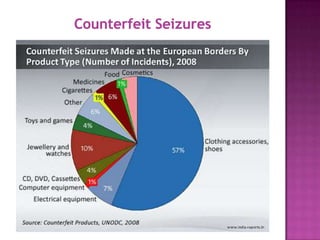
Apparel

and accessories accounted for over 50 percent
of the counterfeit goods seized by U.S Customs and
Border Control
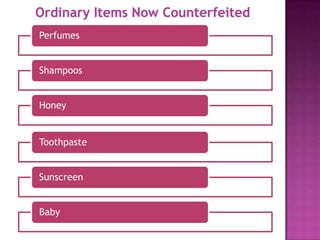
Perfumes
Shampoos
Honey

Toothpaste

Sunscreen
Baby


Demand for fake fashion continues to grow at an alarming rate
according to a new report from just-style, with captured
shipments indicating that around 20% of all athletic merchandise
is fake. Despite heightened anti-counterfeiting measures,
Canadian and US authorities expect counterfeiting to remain high
for the next six years



The 'Global market review of counterfeit apparel - forecasts to
2014,' says athletic apparel was the most affected, with captured
shipments indicating that around 20% of all merchandise in this
sector, which is typically sold in North America, is fake



industry analysts expect the proportion of counterfeiting in
certain sectors to roughly double in the 2005-2014 period
Illegal production
Main source

Authentic buyers

Anti-counterfeiting efforts
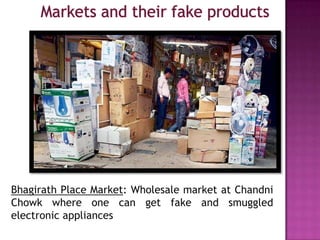
Bhagirath Place Market: Wholesale market at Chandni
Chowk where one can get fake and smuggled
electronic appliances
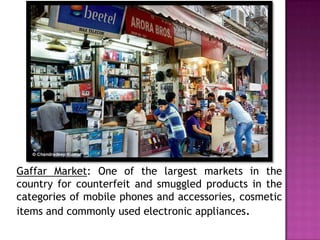
Gaffar Market: One of the largest markets in the
country for counterfeit and smuggled products in the
categories of mobile phones and accessories, cosmetic
items and commonly used electronic appliances.
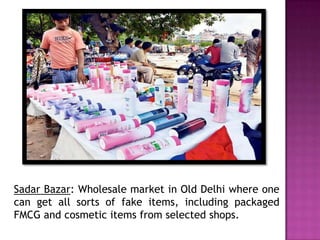
Sadar Bazar: Wholesale market in Old Delhi where one
can get all sorts of fake items, including packaged
FMCG and cosmetic items from selected shops.
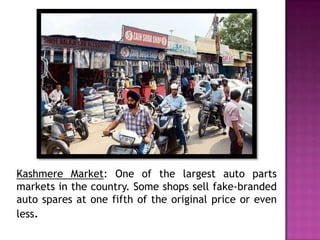
Kashmere Market: One of the largest auto parts
markets in the country. Some shops sell fake-branded
auto spares at one fifth of the original price or even
less.
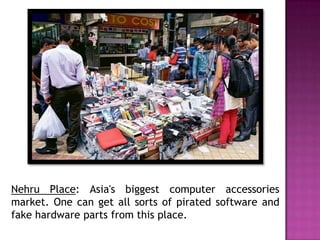
Nehru Place: Asia's biggest computer accessories
market. One can get all sorts of pirated software and
fake hardware parts from this place.
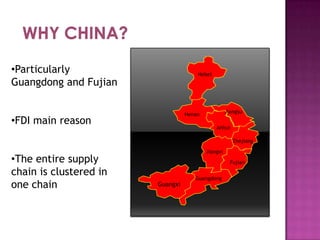
•Particularly
Guangdong and Fujian

Hebei

Jiangsu

Henan

•FDI main reason

Anhui
Zhejiang

•The entire supply
chain is clustered in
one chain

Jiangxi
Fujian

Guangxi

Guangdong
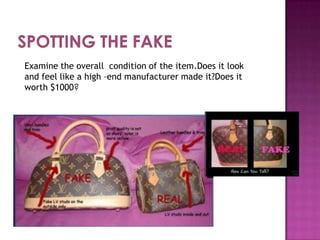
Examine the overall condition of the item.Does it look
and feel like a high –end manufacturer made it?Does it
worth $1000?
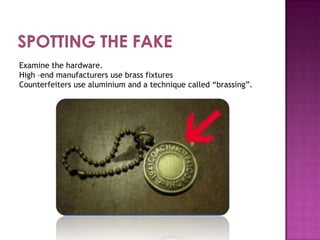
Examine the hardware.
High –end manufacturers use brass fixtures
Counterfeiters use aluminium and a technique called “brassing”.
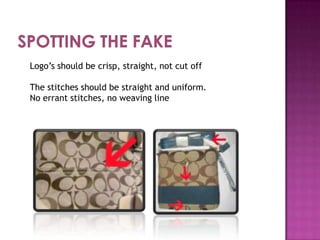
Logo’s should be crisp, straight, not cut off
The stitches should be straight and uniform.
No errant stitches, no weaving line
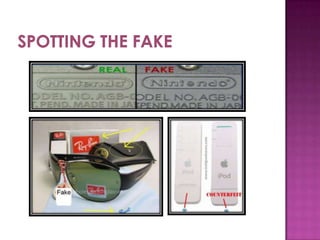
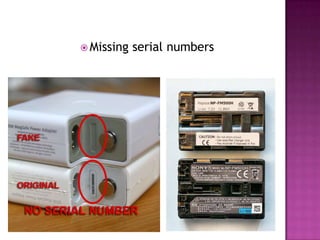
 Missing

serial numbers


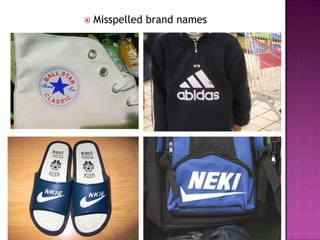
Misspelled brand names
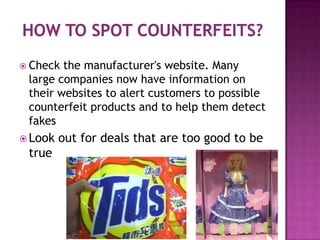
 Check

the manufacturer's website. Many
large companies now have information on
their websites to alert customers to possible
counterfeit products and to help them detect
fakes

 Look

true

out for deals that are too good to be


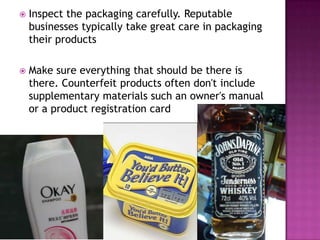
Inspect the packaging carefully. Reputable
businesses typically take great care in packaging
their products



Make sure everything that should be there is
there. Counterfeit products often don't include
supplementary materials such an owner's manual
or a product registration card
 the

economy of the countries

 legal

authorities

 consumers
 manufacturers

of luxury brand goods and
counterfeiters as well
Countries’ Situation And Legal Authorities:

 high

illiteracy rate level
 low purchasing power
 increasing unemployment rate
 ineffective law enforcement
 little risk for large profits
 low probability to get caught
 weak legal infrastructure and corruptible
public officials
Consumers – The Demand Side
 The

aspiring attitude of consumers who wish
to buy latest luxury branded products but
cannot afford the original luxury goods
 When consumers start giving more value to
the insignia of a brand on the product
instead of the other product attributes, they
tend to buy more low-price low-quality
counterfeits instead of originals
 Moreover, high power distance in various
cultures also leads to high demand for
counterfeits of luxury goods
Manufacturers - Legitimate
And Counterfeiters

 Counterfeits

of luxury brands do not require
much effort to be sold, nor do they require
much money to be manufactured
 The amount of money and time invested is
lower
 Ease of imitating brands due to
advancements in technology
 Highly fragmented channels of distribution


Innovation is undermined



Criminal networks gain financially



The environment is negatively affected



Workers are worse off. Moreover in countries
where counterfeiting and piracy is widespread



Foreign direct investment may be lower



the structure of trade may be affected
At the national level, two of the principal
challenges in combating
counterfeiting and piracy are:
 find

ways to enhance enforcement

 raise

awareness of counterfeiting and piracy
issues

Counterfeiting of goods

  • 2.
    “First of allthe imitation of a product. The counterfeit is not only identical in the generic sense of the term. It also gives the impression of being the genuine product……originating from the genuine manufacturer or trader”  A counterfeit is:       An unauthorized copy; Not conforming to the original manufacturer’s design, model, and/or performance standards; Not produced by the stated manufacturer or produced by unauthorised contractors; An off-specification, defective or used product sold as “new” or working; or Has incorrect or false markings and/or documentation
  • 3.
    The spread of counterfeitgoods (commonly called "knockoffs") has become global in recent years and the range of goods subject to infringement has increased significantly Apparel and accessories accounted for over 50 percent of the counterfeit goods seized by U.S Customs and Border Control
  • 5.
  • 6.
     Demand for fakefashion continues to grow at an alarming rate according to a new report from just-style, with captured shipments indicating that around 20% of all athletic merchandise is fake. Despite heightened anti-counterfeiting measures, Canadian and US authorities expect counterfeiting to remain high for the next six years  The 'Global market review of counterfeit apparel - forecasts to 2014,' says athletic apparel was the most affected, with captured shipments indicating that around 20% of all merchandise in this sector, which is typically sold in North America, is fake  industry analysts expect the proportion of counterfeiting in certain sectors to roughly double in the 2005-2014 period
  • 7.
    Illegal production Main source Authenticbuyers Anti-counterfeiting efforts
  • 10.
    Bhagirath Place Market:Wholesale market at Chandni Chowk where one can get fake and smuggled electronic appliances
  • 11.
    Gaffar Market: Oneof the largest markets in the country for counterfeit and smuggled products in the categories of mobile phones and accessories, cosmetic items and commonly used electronic appliances.
  • 12.
    Sadar Bazar: Wholesalemarket in Old Delhi where one can get all sorts of fake items, including packaged FMCG and cosmetic items from selected shops.
  • 13.
    Kashmere Market: Oneof the largest auto parts markets in the country. Some shops sell fake-branded auto spares at one fifth of the original price or even less.
  • 14.
    Nehru Place: Asia'sbiggest computer accessories market. One can get all sorts of pirated software and fake hardware parts from this place.
  • 16.
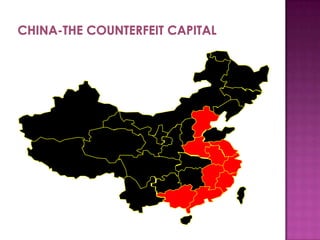
    •Particularly Guangdong and Fujian Hebei Jiangsu Henan •FDImain reason Anhui Zhejiang •The entire supply chain is clustered in one chain Jiangxi Fujian Guangxi Guangdong
  • 17.
    Examine the overallcondition of the item.Does it look and feel like a high –end manufacturer made it?Does it worth $1000?
  • 18.
    Examine the hardware. High–end manufacturers use brass fixtures Counterfeiters use aluminium and a technique called “brassing”.
  • 19.
    Logo’s should becrisp, straight, not cut off The stitches should be straight and uniform. No errant stitches, no weaving line
  • 21.
  • 22.
  • 23.
     Check the manufacturer'swebsite. Many large companies now have information on their websites to alert customers to possible counterfeit products and to help them detect fakes  Look true out for deals that are too good to be
  • 24.
     Inspect the packagingcarefully. Reputable businesses typically take great care in packaging their products  Make sure everything that should be there is there. Counterfeit products often don't include supplementary materials such an owner's manual or a product registration card
  • 25.
     the economy ofthe countries  legal authorities  consumers  manufacturers of luxury brand goods and counterfeiters as well
  • 26.
    Countries’ Situation AndLegal Authorities:  high illiteracy rate level  low purchasing power  increasing unemployment rate  ineffective law enforcement  little risk for large profits  low probability to get caught  weak legal infrastructure and corruptible public officials
  • 27.
    Consumers – TheDemand Side  The aspiring attitude of consumers who wish to buy latest luxury branded products but cannot afford the original luxury goods  When consumers start giving more value to the insignia of a brand on the product instead of the other product attributes, they tend to buy more low-price low-quality counterfeits instead of originals  Moreover, high power distance in various cultures also leads to high demand for counterfeits of luxury goods
  • 28.
    Manufacturers - Legitimate AndCounterfeiters  Counterfeits of luxury brands do not require much effort to be sold, nor do they require much money to be manufactured  The amount of money and time invested is lower  Ease of imitating brands due to advancements in technology  Highly fragmented channels of distribution
  • 29.
     Innovation is undermined  Criminalnetworks gain financially  The environment is negatively affected  Workers are worse off. Moreover in countries where counterfeiting and piracy is widespread  Foreign direct investment may be lower  the structure of trade may be affected
  • 30.
    At the nationallevel, two of the principal challenges in combating counterfeiting and piracy are:  find ways to enhance enforcement  raise awareness of counterfeiting and piracy issues