 Litigation prevention
 Cost-effective resolution of lawsuits
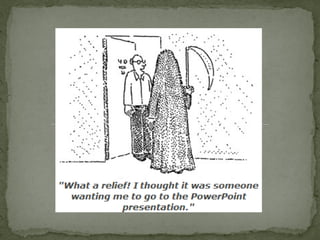
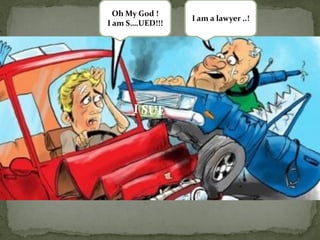
Oh My God !
I am S….UED!!!
I am a lawyer ..!
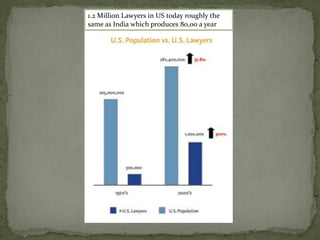
1.2 Million Lawyers in US today roughly the
same as India which produces 80,00 a year
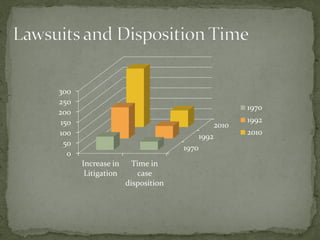
1970
1992
2010
0
50
100
150
200
250
300
Increase in
Litigation
Time in
case
disposition
1970
1992
2010
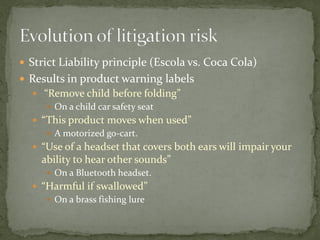
 Strict Liability principle (Escola vs. Coca Cola)
 Results in product warning labels
 “Remove child before folding”
 On a child car safety seat
 “This product moves when used”
 A motorized go-cart.
 “Use of a headset that covers both ears will impair your
ability to hear other sounds”
 On a Bluetooth headset.
 “Harmful if swallowed”
 On a brass fishing lure
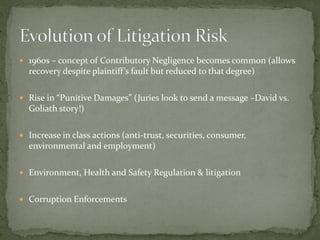
 1960s – concept of Contributory Negligence becomes common (allows
recovery despite plaintiff’s fault but reduced to that degree)
 Rise in “Punitive Damages” (Juries look to send a message –David vs.
Goliath story!)
 Increase in class actions (anti-trust, securities, consumer,
environmental and employment)
 Environment, Health and Safety Regulation & litigation
 Corruption Enforcements
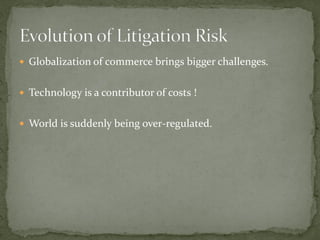
 Globalization of commerce brings bigger challenges.
 Technology is a contributor of costs !
 World is suddenly being over-regulated.
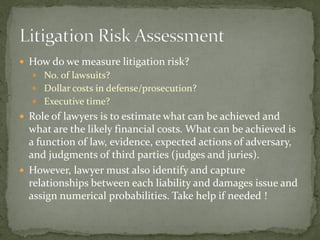
 How do we measure litigation risk?
 No. of lawsuits?
 Dollar costs in defense/prosecution?
 Executive time?
 Role of lawyers is to estimate what can be achieved and
what are the likely financial costs. What can be achieved is
a function of law, evidence, expected actions of adversary,
and judgments of third parties (judges and juries).
 However, lawyer must also identify and capture
relationships between each liability and damages issue and
assign numerical probabilities. Take help if needed !
 Post SOX, focus on Governance, Risk and Compliance
 Policies & Procedures (code of conduct, gifts & entertainment, use of
company resources, etc.)
 Training & Communications
 Testing
 Due diligence – employees, vendors, counterparties..
 Accounting and financial controls
 Develop risk map & plan strategy
 Product risk
 Enterprise risk
 Customer & counterparty risk
 Regulatory risk
 Environmental risk
 Market risk
 Employment risk
 Negotiation
 Mediation
 Conciliation
 Arbitration
 Outright settlement for certain types of litigation
 Types of litigation the company faces (historical data analysis)
 Frequency
 Work with insurance and risk management teams to determine causes
 Determine legal basis for liability and evidence that leads to damage
awards
 Business intelligence – internal and external
 Implement preventive practices
 Ongoing review (matter management applications can be helpful)
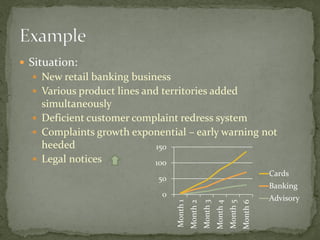
 Situation:
 New retail banking business
 Various product lines and territories added
simultaneously
 Deficient customer complaint redress system
 Complaints growth exponential – early warning not
heeded
 Legal notices
0
50
100
150
Month1
Month2
Month3
Month4
Month5
Month6
Cards
Banking
Advisory
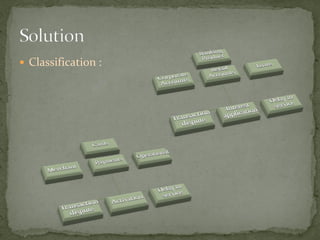
 Classification :
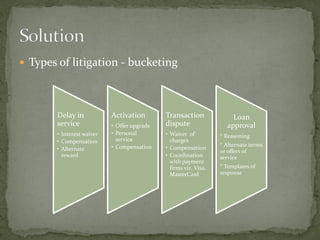
 Types of litigation - bucketing
Delay in
service
• Interest waiver
• Compensation
• Alternate
reward
Activation
• Offer upgrade
• Personal
service
• Compensation
Transaction
dispute
• Waiver of
charges
• Compensation
• Coordination
with payment
firms viz. Visa,
MasterCard
Loan
approval
* Reasoning
* Alternate terms
or offers of
service
* Templates of
response
 Training of customer service resources
 Use of templates
 Determine compensation levels – delegation of
authority
 Employ lawyers with different skills/attributes –
create a special cell
 Strategy predicated on settlement
 Significant reduction in litigation – automation of
process – saving of legal resources & costs
Objective:
 Predictability & Certainty
 Can satisfy each other’s interest
 Better financial deal
 Retain business relationships
How to?
 Determine corporate objectives and bearable costs
 Disclaimer: THIS DOES NOT AFFORD A ONE-STOP
SOLUTION
 Replication of model in HR area (Disciplinary Actions,
Terminations, etc.)
 Collections
 Vendor disputes
 Data collection and analysis is critical for any litigation
management
 Outside counsel fees
 Out of pocket expenses
 Litigation budgets vs. actual costs
 In-house time spent in managing litigation (legal, finance,
human resources, operations, management..)
 Categories of lawsuits
 Estimated net present value
 Probability and reserves
 Final judgments – favorable/unfavorable
A good matter management application can be useful.
 ‘Phase &Task’ tool developed for litigation management
 Online tool to prepare detailed costs estimate broken down
in phases
 After client approval, Lawyers post their time against
“Tasks” with details of work performed
 Actual costs versus estimates are tracked in real time for
each phase
 Clients have access to review reports in real time
 Automatic email alerts are available for certain triggers viz.
costs hitting 75% of estimates
 Predictability and no surprises for client in billing
 Cost consequences known if case is not settled and drives
into next phase
KL Presentation

KL Presentation

  • 4.
     Litigation prevention Cost-effective resolution of lawsuits
  • 5.
    Oh My God! I am S….UED!!! I am a lawyer ..!
  • 6.
    1.2 Million Lawyersin US today roughly the same as India which produces 80,00 a year
  • 7.
  • 8.
     Strict Liabilityprinciple (Escola vs. Coca Cola)  Results in product warning labels  “Remove child before folding”  On a child car safety seat  “This product moves when used”  A motorized go-cart.  “Use of a headset that covers both ears will impair your ability to hear other sounds”  On a Bluetooth headset.  “Harmful if swallowed”  On a brass fishing lure
  • 9.
     1960s –concept of Contributory Negligence becomes common (allows recovery despite plaintiff’s fault but reduced to that degree)  Rise in “Punitive Damages” (Juries look to send a message –David vs. Goliath story!)  Increase in class actions (anti-trust, securities, consumer, environmental and employment)  Environment, Health and Safety Regulation & litigation  Corruption Enforcements
  • 10.
     Globalization ofcommerce brings bigger challenges.  Technology is a contributor of costs !  World is suddenly being over-regulated.
  • 12.
     How dowe measure litigation risk?  No. of lawsuits?  Dollar costs in defense/prosecution?  Executive time?  Role of lawyers is to estimate what can be achieved and what are the likely financial costs. What can be achieved is a function of law, evidence, expected actions of adversary, and judgments of third parties (judges and juries).  However, lawyer must also identify and capture relationships between each liability and damages issue and assign numerical probabilities. Take help if needed !
  • 13.
     Post SOX,focus on Governance, Risk and Compliance  Policies & Procedures (code of conduct, gifts & entertainment, use of company resources, etc.)  Training & Communications  Testing  Due diligence – employees, vendors, counterparties..  Accounting and financial controls  Develop risk map & plan strategy  Product risk  Enterprise risk  Customer & counterparty risk  Regulatory risk  Environmental risk  Market risk  Employment risk
  • 14.
     Negotiation  Mediation Conciliation  Arbitration  Outright settlement for certain types of litigation
  • 15.
     Types oflitigation the company faces (historical data analysis)  Frequency  Work with insurance and risk management teams to determine causes  Determine legal basis for liability and evidence that leads to damage awards  Business intelligence – internal and external  Implement preventive practices  Ongoing review (matter management applications can be helpful)
  • 16.
     Situation:  Newretail banking business  Various product lines and territories added simultaneously  Deficient customer complaint redress system  Complaints growth exponential – early warning not heeded  Legal notices 0 50 100 150 Month1 Month2 Month3 Month4 Month5 Month6 Cards Banking Advisory
  • 17.
  • 18.
     Types oflitigation - bucketing Delay in service • Interest waiver • Compensation • Alternate reward Activation • Offer upgrade • Personal service • Compensation Transaction dispute • Waiver of charges • Compensation • Coordination with payment firms viz. Visa, MasterCard Loan approval * Reasoning * Alternate terms or offers of service * Templates of response
  • 19.
     Training ofcustomer service resources  Use of templates  Determine compensation levels – delegation of authority  Employ lawyers with different skills/attributes – create a special cell  Strategy predicated on settlement  Significant reduction in litigation – automation of process – saving of legal resources & costs
  • 20.
    Objective:  Predictability &Certainty  Can satisfy each other’s interest  Better financial deal  Retain business relationships How to?  Determine corporate objectives and bearable costs  Disclaimer: THIS DOES NOT AFFORD A ONE-STOP SOLUTION
  • 21.
     Replication ofmodel in HR area (Disciplinary Actions, Terminations, etc.)  Collections  Vendor disputes
  • 22.
     Data collectionand analysis is critical for any litigation management  Outside counsel fees  Out of pocket expenses  Litigation budgets vs. actual costs  In-house time spent in managing litigation (legal, finance, human resources, operations, management..)  Categories of lawsuits  Estimated net present value  Probability and reserves  Final judgments – favorable/unfavorable A good matter management application can be useful.
  • 23.
     ‘Phase &Task’tool developed for litigation management  Online tool to prepare detailed costs estimate broken down in phases  After client approval, Lawyers post their time against “Tasks” with details of work performed  Actual costs versus estimates are tracked in real time for each phase  Clients have access to review reports in real time  Automatic email alerts are available for certain triggers viz. costs hitting 75% of estimates  Predictability and no surprises for client in billing  Cost consequences known if case is not settled and drives into next phase