Download to read offline
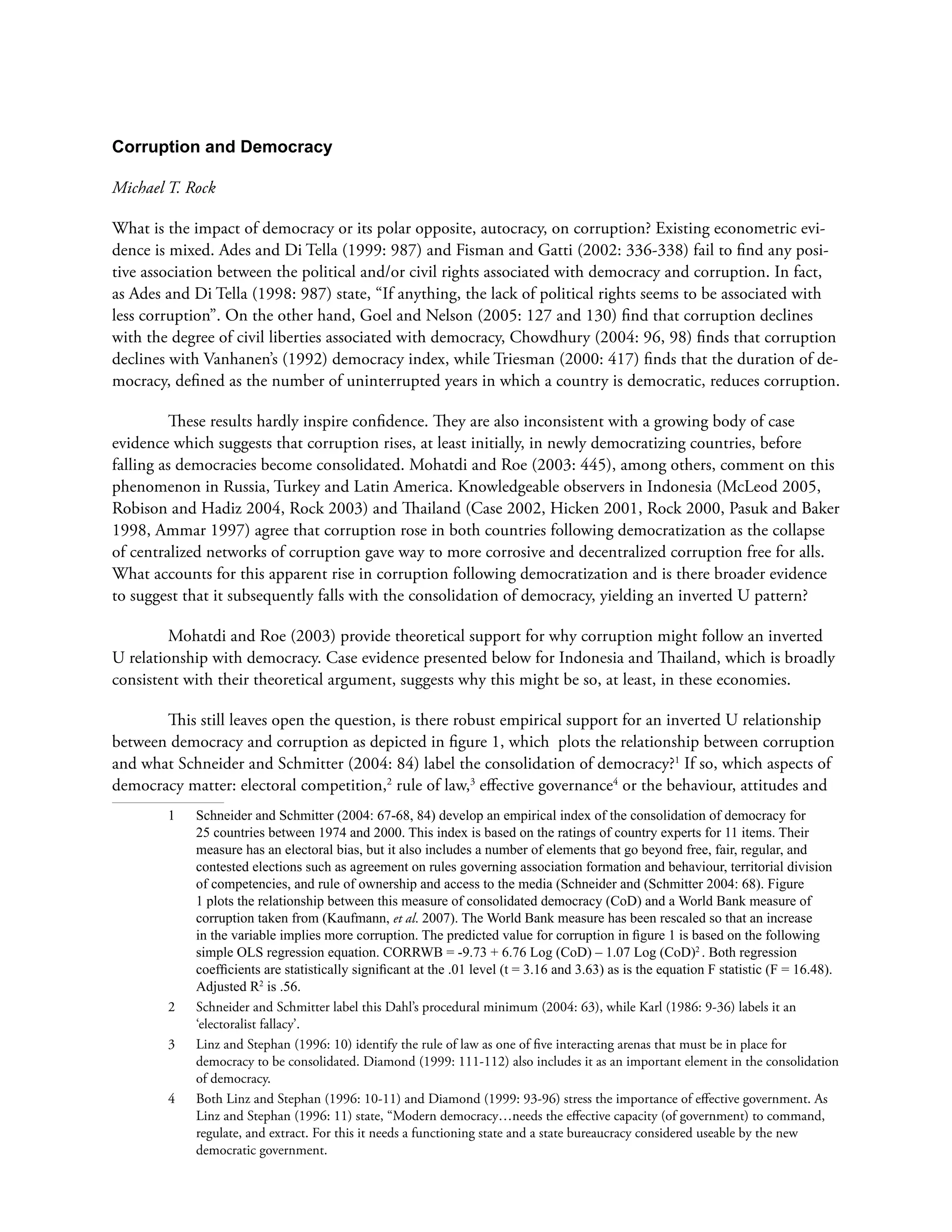

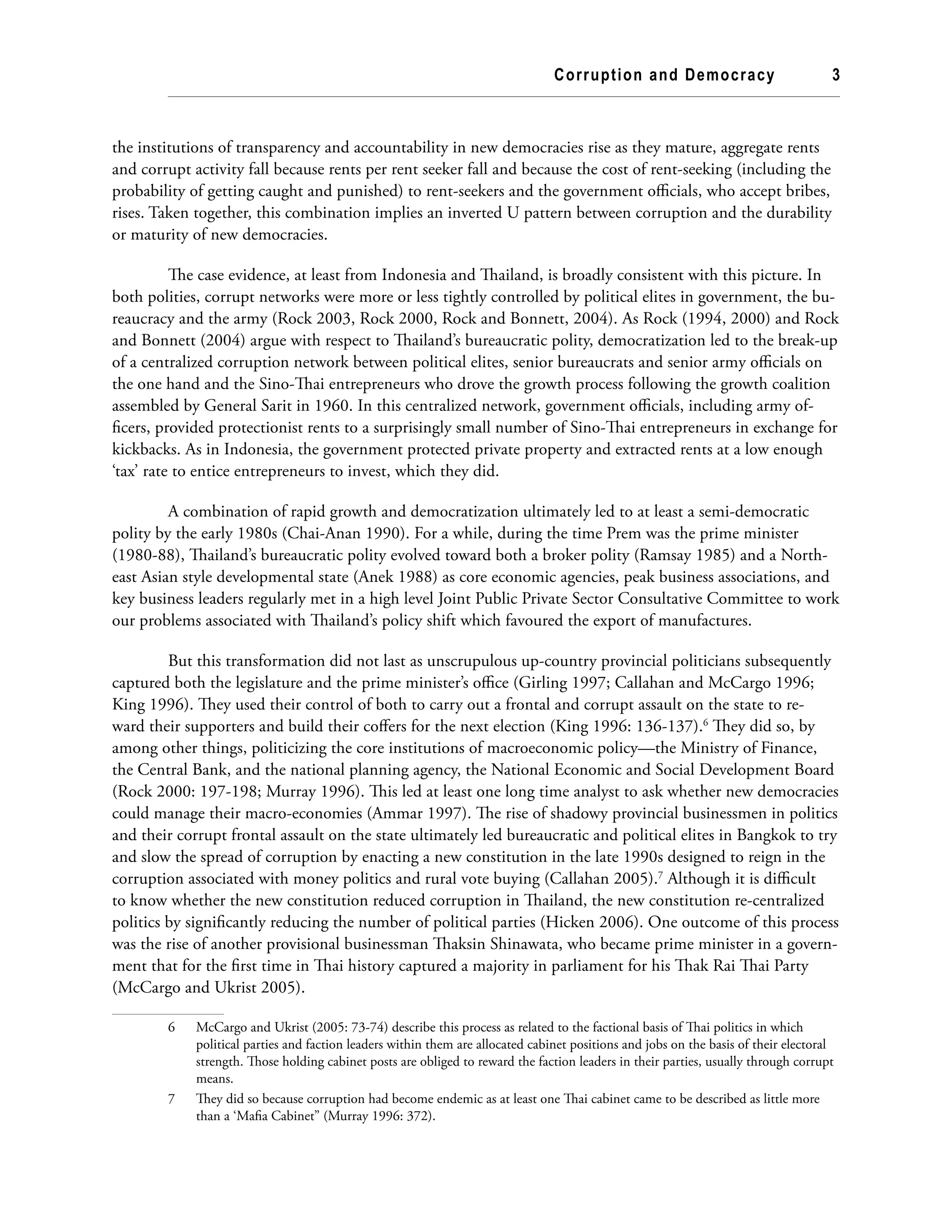

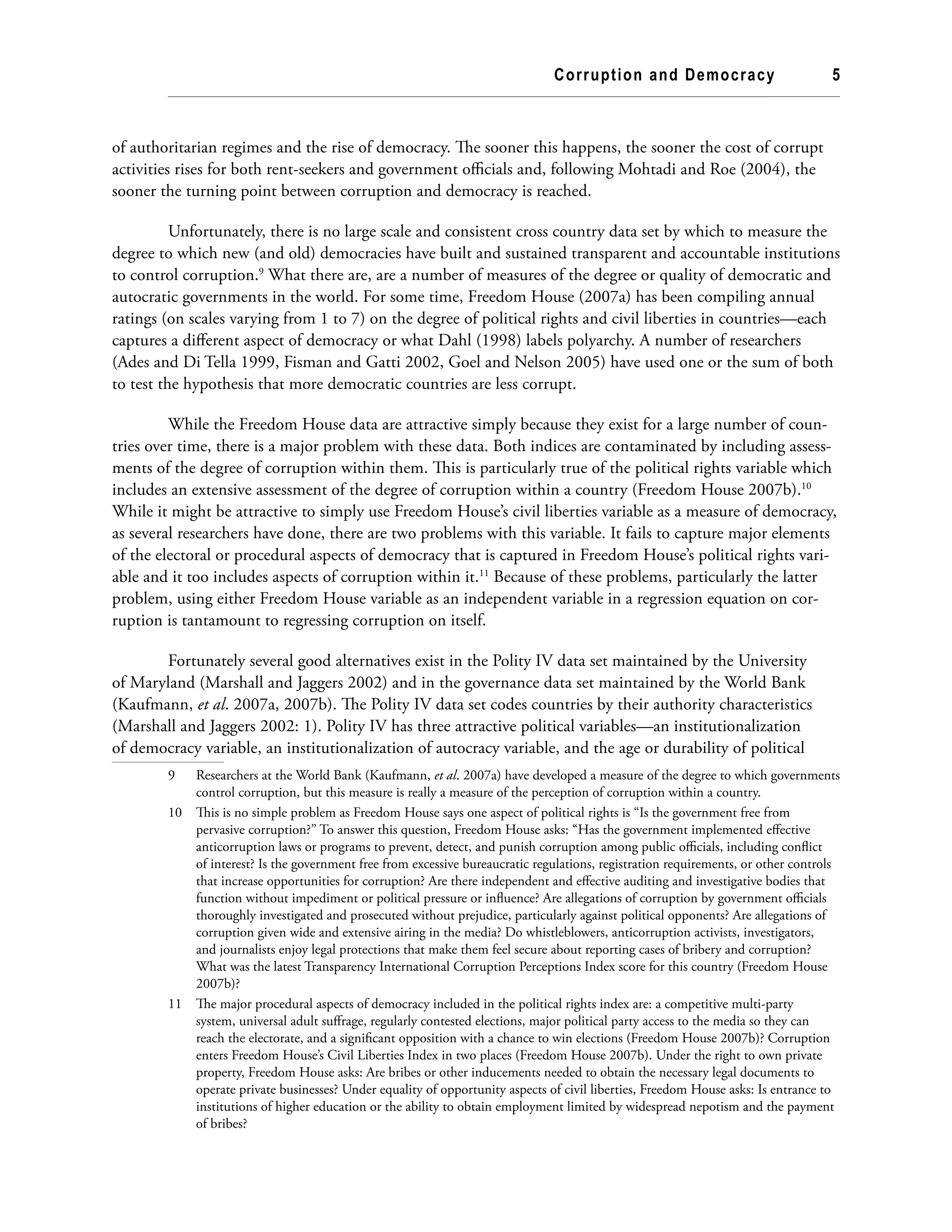


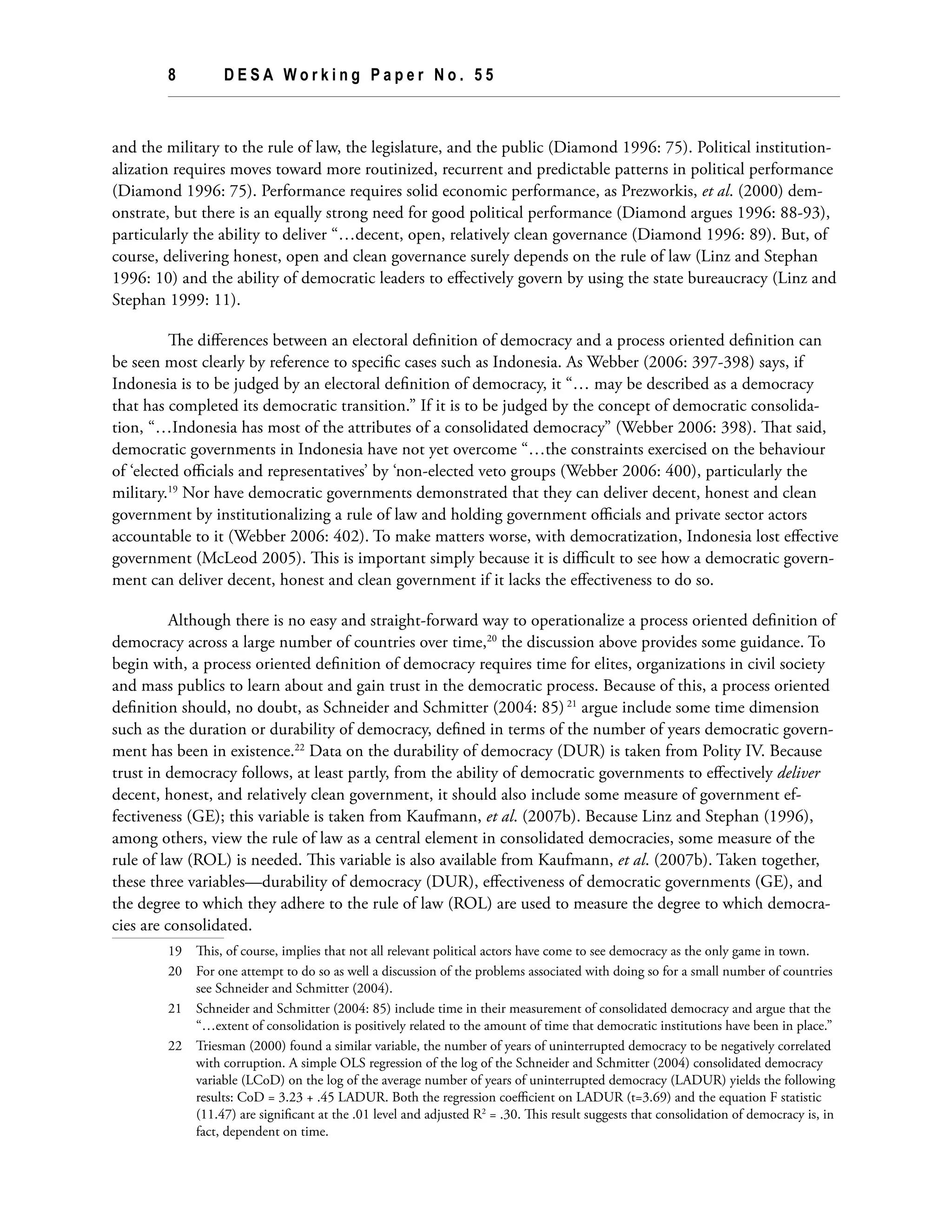


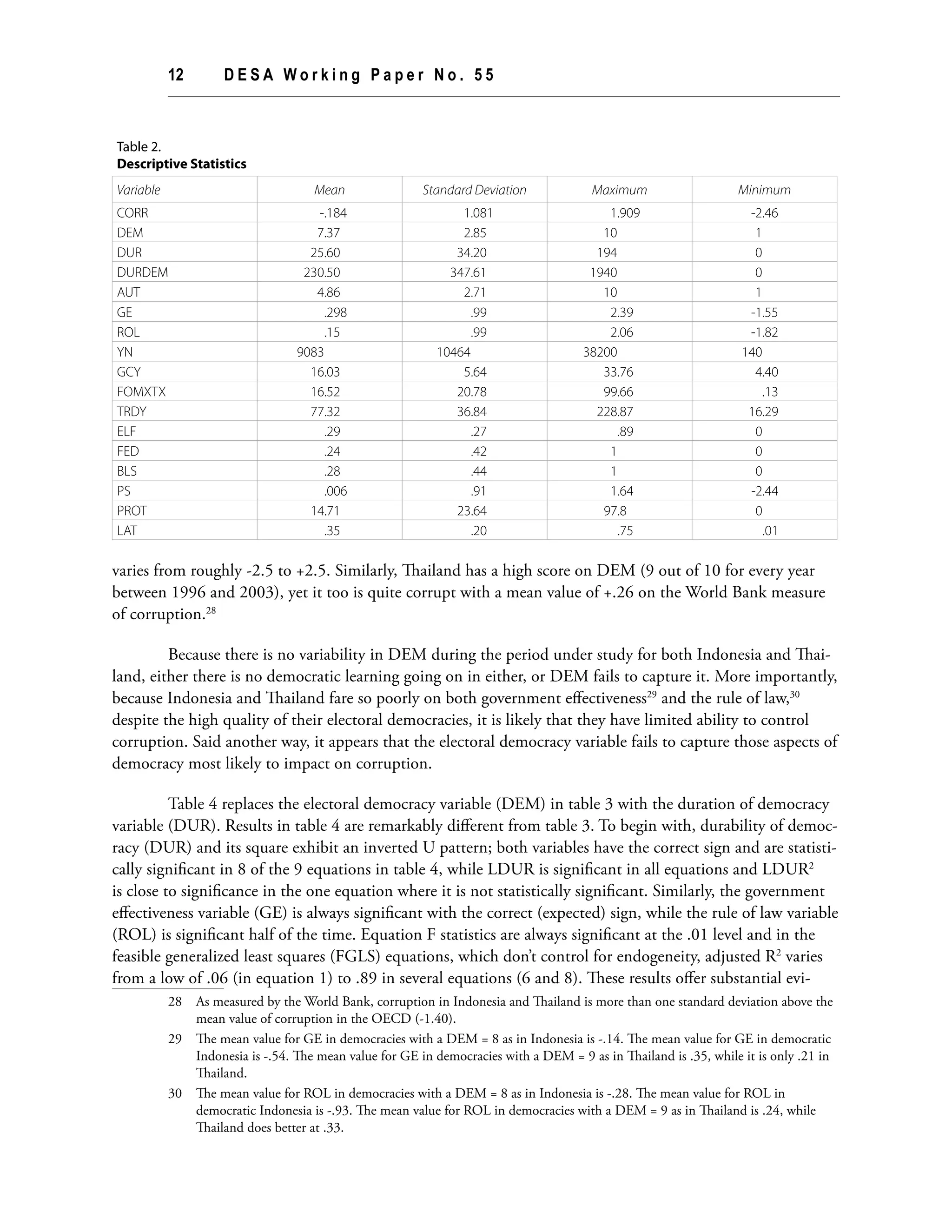
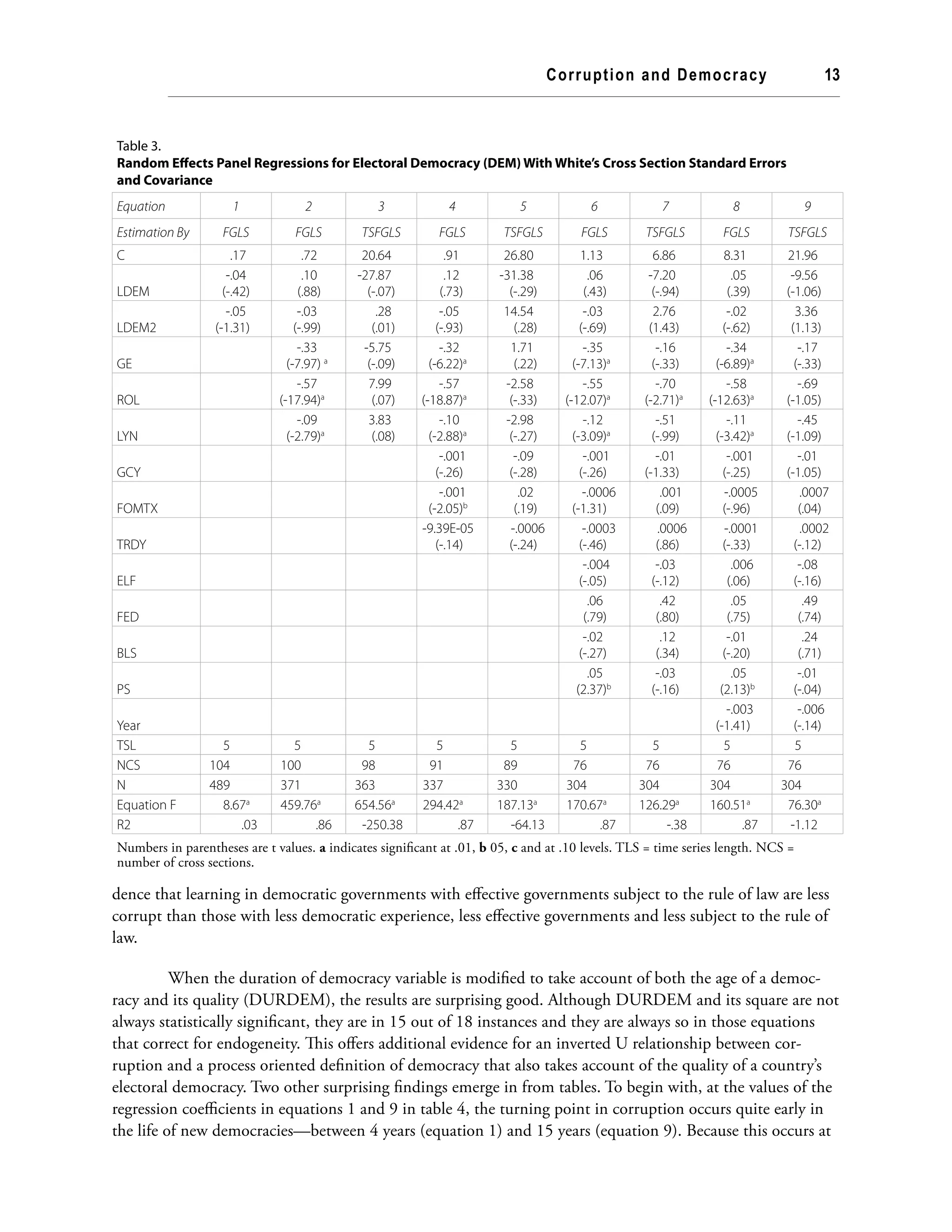



This document discusses the relationship between corruption and democracy. It reviews literature showing mixed results but presents a theoretical argument and case studies from Indonesia and Thailand that support an inverted U relationship, where corruption initially rises with democratization as centralized corruption networks break down, but then falls as democracy becomes more consolidated. The document tests this relationship empirically using a panel data set from 1996-2003, controlling for other factors. It finds empirical support for an inverted U relationship between corruption and more process-oriented definitions of democracy.


